January 6, 1858

in Thoreau’s Journal:

181206.jpg

We are rained and snowed on with gems…What a world we live in! Where are the jewelers’ shops? There is nothing handsomer than a snow-flake and a dew-drop.

Also:

January 6, 1859:

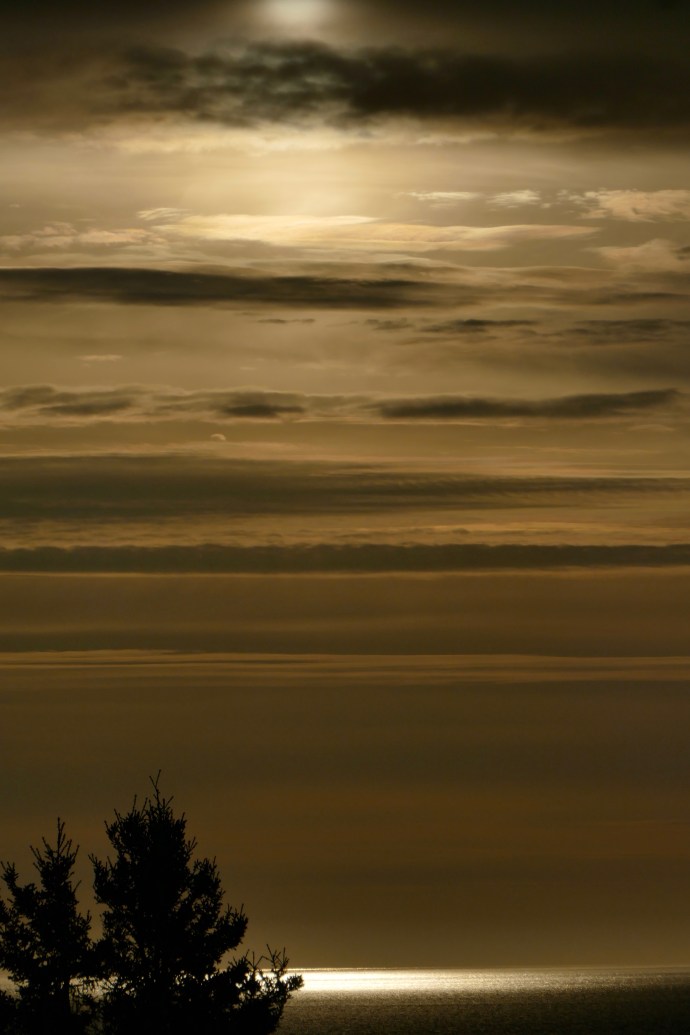
I felt my spirits rise when I had got out of the road into the open fields, and the sky had a new appearance. I stepped along more buoyantly. There was a warm sunset in the wooded valleys, a yellowish tinge on the pines. Reddish dun-colored clouds, like dusky flames, stood over it, and then streaks of blue sky were seen here and there. The life, the joy that is in blue sky after a storm. There is no account of the blue sky in history. Before, I walked in the ruts of travel, now I adventured….

And

January 6, 1838
 
As a child looks forward to the coming of the summer, so could we contemplate with quiet joy the circle of the seasons returning without fail eternally.

FrostSnow.jpg

January 5, 1856

in Thoreau’s Journal:

P1030183.jpg

What a world we live in, where myriads of these little disks, so beautiful to the most prying eye, are whirled down on every traveler’s coat, the observant and the unobservant, on the restless squirrel’s fur, on the far-stretching fields and forests, the wooded dells and the mountaintops.

January 4, 1858

in Thoreau’s Journal:

That bright and warm reflection of sunlight from the insignificant edging of stubble was remarkable. I was coming down stream over the meadow on the ice, within four or five rods of the eastern shore, the sun on my left about a quarter of an hour above the horizon. The ice was soft and sodden, of a dull lead color, quite dark and reflecting no light, as I looked eastward, but my eyes caught, by accident, a singular, sunny brightness, reflected from the narrow border of stubble only three or four inches high, and as many feet wide perhaps, which rose along the edge of the ice at the foot of the hill. It was not a mere brightening of the bleached stubble, but the warm and yellow light of the sun, which, as it appeared, it was peculiarly fitted to reflect. It was that amber light from the west which we sometimes witness after a storm, concentrated on the stubble, for the hill beyond was merely a dark russet, spotted with snow. All the yellow rays seemed to be reflected by this insignificant stubble alone, and when I looked for generally at little above it, seeing it with the upper part of my eye,…the reflected light made its due impression….separated from the proper color of the stubble, and it glowed almost like a low, steady, and serene fire. It was precisely as if the sunlight had mechanically slid over the ice, and lodged against the stubble. It will be enough to say of something warmly and sunnily bright, that it glowed like lit stubble. It was remarkable that looking eastward this was the only evidence of the light in the west.

P1130066.jpg

January 3, 1854

 in Thoreau’s Journal:

It is now fairly winter–we have passed the line–have put the autumn behind us–have forgotten what these withered herbs that rise above the snow here & there are–what flowers they every bore–

P2106249.jpg

They are fishing on Walden this P.M.

January 2, 1859

in Thoreau’s Journal:

Going up the hill through Stow’s young oak wood-land, I listen to the sharp, dry rustle of the withered oak leaves. This is the voice of the wood now. It would be comparatively still and more dreary here in other respects, if it were not for these leaves that hold on. It sounds like the roar of the sea, and is inspiriting like that, suggesting how all the land is sea-coast to the aerial ocean. It is the sound of the surf, the rut, of an unseen ocean, ––billows of air breaking on the forest like water on itself or on sand and rocks. It rises and falls, swells and dies away, with agreeable alternation, as the sea surf does. Perhaps the landsmen can foretell a storm by it.

26172689_10215677296746842_2303945473588953361_o.jpg

It is remarkable how universal these grand murmurs are, these backgrounds of sound, ––the surf, the wind in the forest, waterfalls, etc., ––which yet to the ear and in their origin are essentially one voice, the earth voice…

January 1, 1853

in Thoreau’s Journal:

01.jpg

This morning we have something between ice and frost on the trees, etc….What a crash of jewels as you walk!… I saw a prinos bush full of large berries by the wall in Hubbard’s field.  Standing on the west side, the contrast of the red berries with their white incrustation or prolongation on the north was admirable.  I thought I had never seen the berries so dazzlingly bright

December 31, 1853

 in Thoreau’s Journal:

31.jpg

It is a remarkable sight, this snow-clad landscape, the fences and bushes half-buried, and the warm sun on it…the town and country is now so still, no rattle of wagons nor even jingle of sleigh bells, every tread being as with woolen feet.

December 30, 1841

in Thoreau’s Journal:

When the snow is falling thick and fast, the flakes nearest you seem to be driving straight to the ground, while the more distant seem to float in the air in a quivering bank, like feathers, or like birds at play, and not as if sent on any errand.

30.jpg

So, at a little distance, all the works of nature proceed with sport and frolic. They are more in the eye, and less in the deed.

December 29, 1856

 in Thoreau’s Journal:

29.jpg

We must go out and re-ally ourselves to Nature every day.  We must make root, send out some little fibre at least, even every winter day….

Staying in the house breeds a sort of insanity always.

December 28

1852 in Thoreau’s Journal:  

One moment of life costs many hours.–– hours not of business but of preparation & invitation. Yet the man who does not betake himself at once & desperately to sawing–is called a loafer– though he may be knocking at the doors of heaven–all the while which shall surely be opened to him–– That aim in life is highest which requires the highest & finest discipline.

P1120734.jpg

How much––What infinite leisure it requires–as of a lifetime, to appreciate a single phenomenon! You must camp down beside it as if for life–having reached your land of promise & give yourself wholly to it. It must stand for the whole world for you––symbolical of all things.

1840 in Thoreau’s Journal:

28B.jpg

The snow hangs on the trees as the fruit of the season.

December 27, 1857

 in Thoreau’s Journal:

What interesting contrasts our climate affords. In July you rush panting into the pond to cool yourself in the tepid water, when the stones on the bank are so heated that you cannot hold one tightly in your hand…

P1040740.jpg

— Now you walk on the same pond frozen, amid the snow, with numbered fingers and feet, and see the water target bleached and stiff in the ice.

December 26, 1853

 in Thoreau’s Journal:
 

This forenoon it snowed pretty hard for some hours, the first snow of any consequence thus far. It is about three inches deep. I go out at 2:30 P.M. just as it ceases. Now is the time before the wind rises, or the sun has shone to go forth and see the snow on the trees. The clouds have lifted somewhat, but are still spitting snow a little. The vapor of the steam engine does not rise high in the misty air…

P1045290.jpg

December 25, 1856

 in Thoreau’s Journal:

IMG_0447.jpg

Take long walks in stormy weather, or through deep snows in the fields and woods, if you would keep your spirits up. Deal with brute nature. Be cold and hungry and weary.

December 24, 1841

 in Thoreau’s Journal:

I want to go soon and live away by the pond where I shall hear only the wind whispering among the reeds. It will be success if I shall have left myself behind. But my friends ask what I will do when I get there!

P1298612.jpg

Will it not be employment enough to watch the progress of the seasons?

December 23, 1851

in Thoreau’s Journal:

It is pleasant walking in the woods now when the sun is just coming out & shining on the woods freshly covered with snow— At a distance the oak woods look very venerable—a fine hale wintry aspect things wear—and the pines also snowed up even suggest comfort.

P2106225.jpg

Where the boughs cross each other much snow is caught—which now in all woods is gradually tumbling down—

December 20, 1840

 in Thoreau’s Journal:

My home is as much of nature as my heart embraces. If I only warm my house, then is that only my home. But if I sympathize with the heats and colds, the sounds and silence of nature, and share the respose and equanimity that reign around me in the fields,

P1078247.jpg

then are they my house, as much as if the kettle sang and fagots crackled, and the clock ticked on the wall.

December 18, 1859

 in Thoreau’s Journal:

Apples are thawed now, and are very good. Their juice is the best kind of bottled cider that I know.

P1120375.jpg

They are all good in this state, and your jaws are the cider press.