in Thoreau’s Journal:
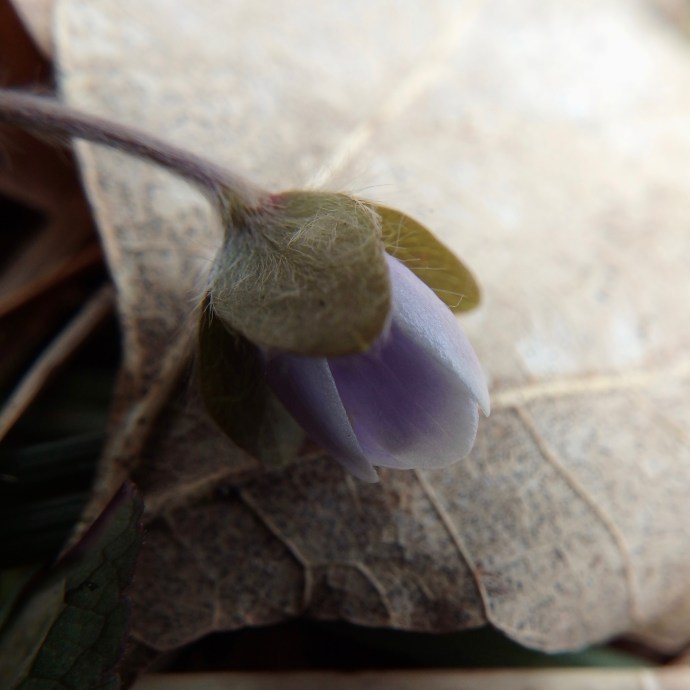
As to which are the earliest flowers, it depends on the character of the season, and ground bare or not, meadows wet or dry, etc., etc., also on the variety of soils and localities within your reach.
in Thoreau’s Journal:
As to which are the earliest flowers, it depends on the character of the season, and ground bare or not, meadows wet or dry, etc., etc., also on the variety of soils and localities within your reach.
in Thoreau’s Journal:
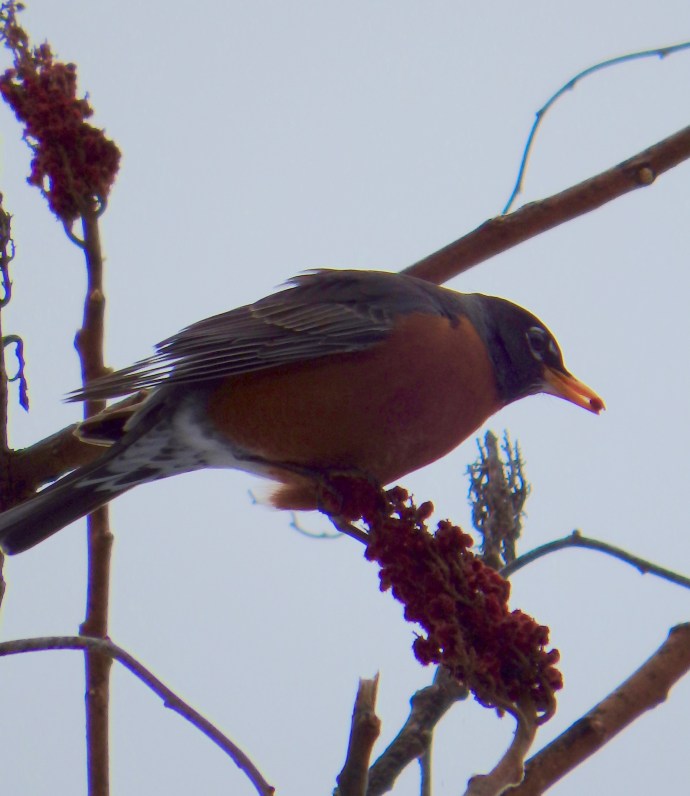
The robin is the singer at present, such is its power and universality being heard in garden and wood.
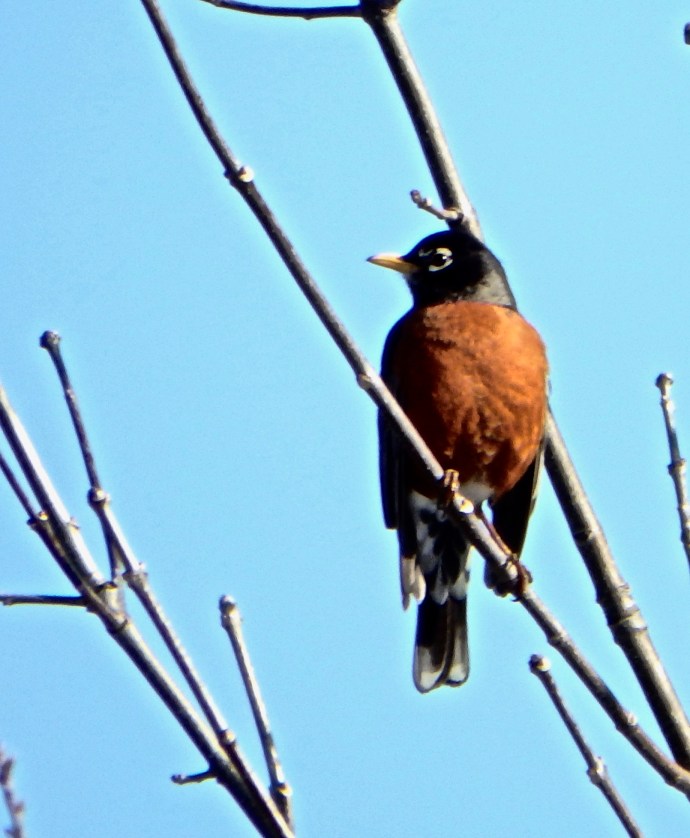
Morning and evening he does not fail, perched on some elm or the like, and in rainy days it is one long morning or evening.
in Thoreau’s Journal:
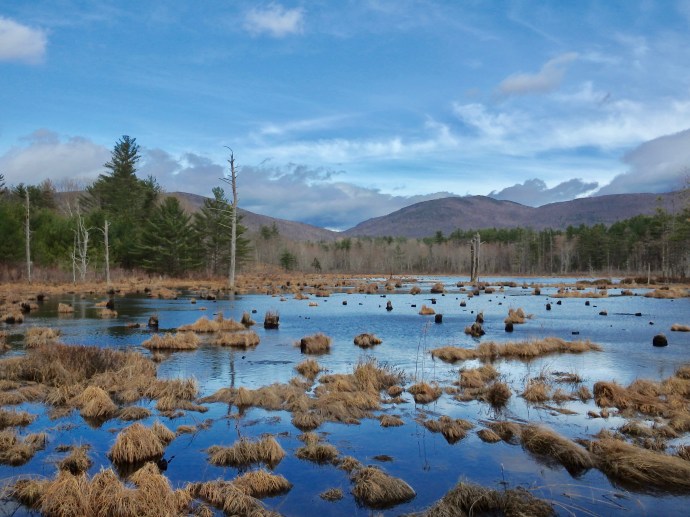
Begin to look off the hills and see the landscape again through a slight haze, with warm wind on the cheek.
in Thoreau’s Journal:
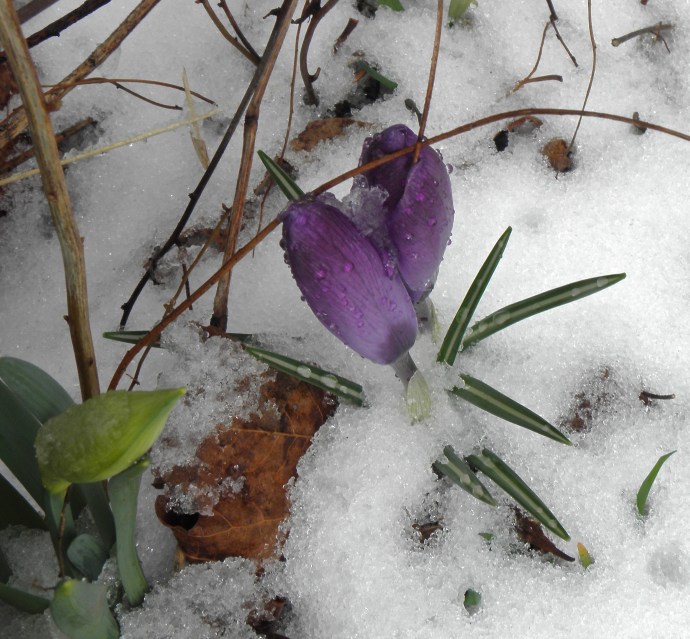
The birds are eager to sing as the flowers to bloom, after raw weather has held them in check.
in Thoreau’s Journal:
I see small flocks of robins running on the bared portions of the meadow….
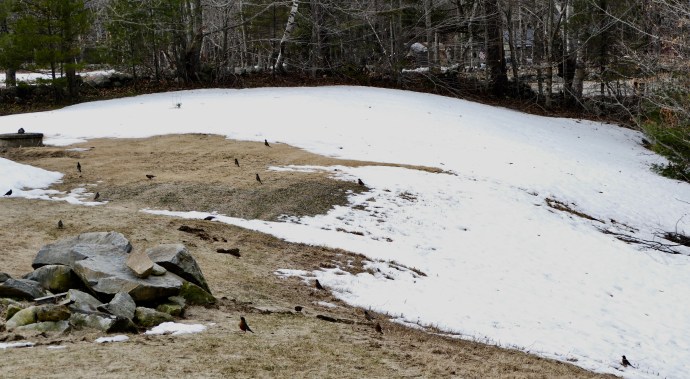
April 2, 2018 Photo
in Thoreau’s Journal:
To the river-side and Merrick’s pasture. The sun is up. The water in the meadows is perfectly smooth and placid, reflecting the hills and clouds and trees. The air is full of the notes of birds, song-sparrows, redwings, robins (singing a strain) bluebirds, and I hear also a lark, as if all the earth had burst forth into song. The influence of this April light has reached them, for they live out-of-doors all the night, and there is no danger they will oversleep themselves such a morning.
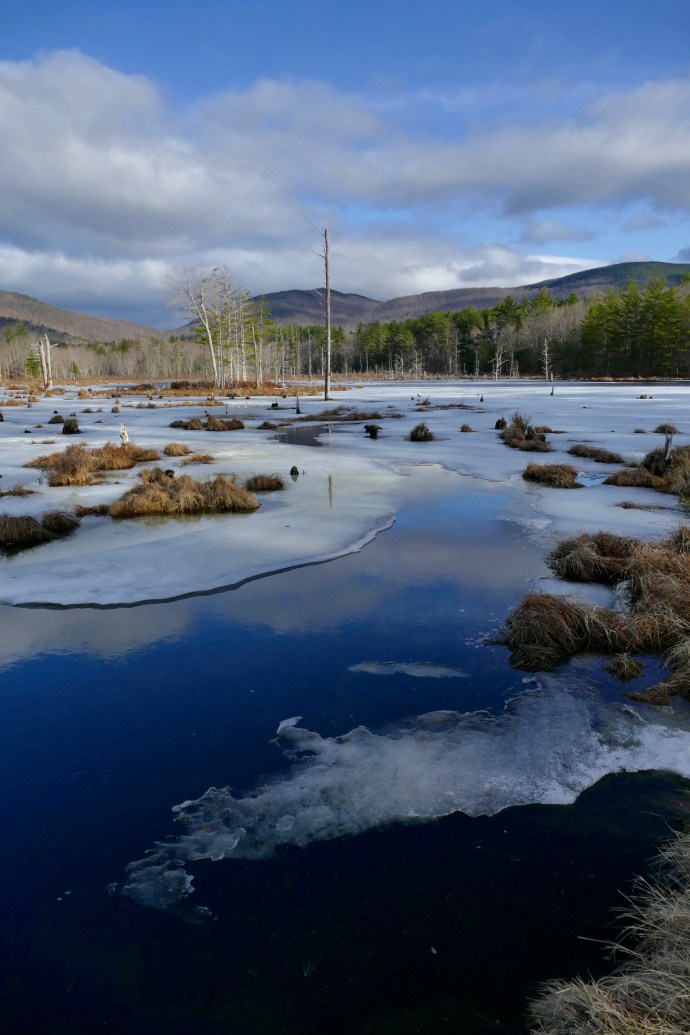
A few weeks ago, before the birds had come, there came to my mind in the night the twittering sound of birds in the early dawn of a spring morning––a semi-prophecy of it––and last night I attended mentally, as if I heard the spray-like dreaming sound of the mid-summer frog, and realized how glorious and full of revelations it was. The clouds are white, watery, not such as we had in the winter. I see in this fresh morning the shells left by the muskrats along the shore, and their galleries leading into the meadow, and the bright red cranberries washed up along the the shore in the old water-mark. Suddenly there is a blur on the placid surface of the waters, a rippling mistiness produced, as it were, by a slight morning breeze, and I should be sorry to show it to a stranger now. So is it with our minds.
in Thoreau’s Journal:
Walden is all white ice, but little melted about the shore.
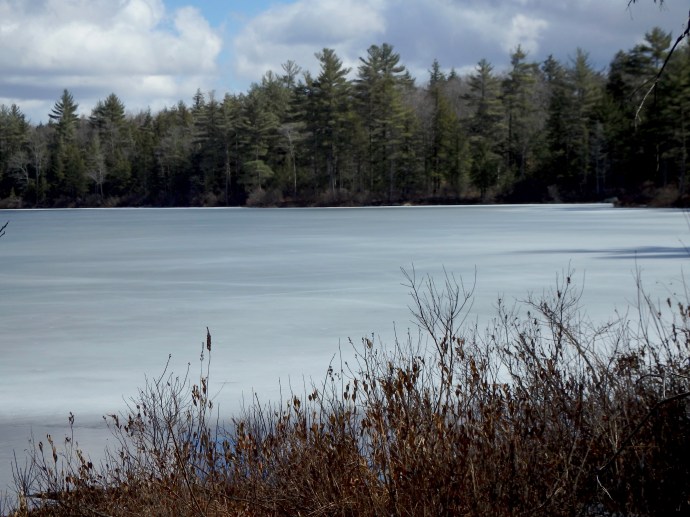
The very sight of it when I get so far on the causeway, though I hear the spring note of the chickadee from over the ice, carries my thoughts back at once some weeks toward winter, and a chill comes over them.
in Thoreau’s Journal:
It is suddenly warm, and this amelioration of the weather is incomparably the most important fact in this vicinity. It is incredible what a revolution in our feelings and in the aspect of nature this warmer weather has produced. Yesterday the earth was simple to barrenness, and dead, bound out. Out of doors there was nothing but the wind and withered grass, and the cold though sparkling blue water, and you were driven in upon yourself.

Now, you would think there was a sudden awakening in the very crust of the earth, as if flowers were expanding and leaves putting forth; but not so….No, the change is mainly in us. We feel as if we had obtained a new lease of life.
in Thoreau’s Journal:
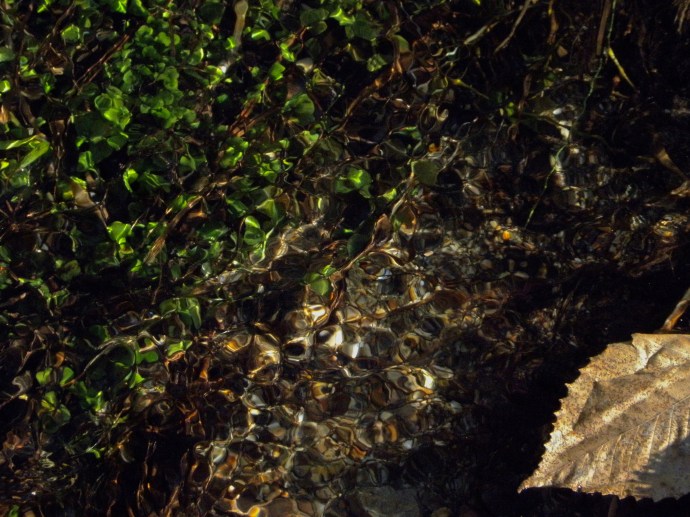
I go to Fair Haven via the Andromeda Swamps. The snow is a foot and more in depth there still. There is a little bare ground in and next to the swampy woods at the head of Well Meadow, where the springs and little black rills are flowing. I see already one blade, three or four inches long, of that purple or lake grass, lying flat on some water, between snow-clad banks, – the first leaf with a rich bloom on it.
 dosa
dosa
How silent are the footsteps of Spring! …The spring advances in spite of snow and ice and cold even….In warm recesses in meadows and clefts, in rocks in the midst of ice and snow, nay, even under the snow, vegetation commences and steadily advances.
in Thoreau’s Journal:
As I sit two thirds up the sunny side of Ball Hill, looking over the meadows, now almost completely bare, the crows, by their swift flight and scolding, reveal to me some large bird of prey hovering over the river.
in Thoreau’s Journal:
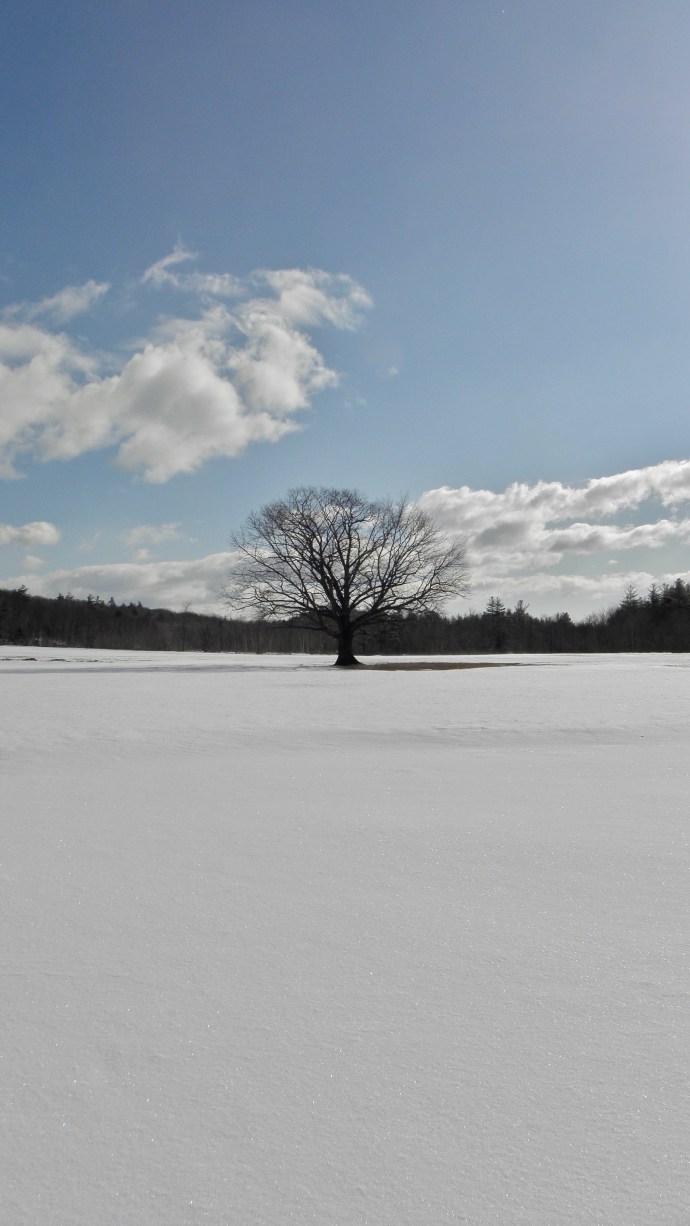
I run about these cold, blustering days, on the whole, perhaps, the worst to bear in the year (partly because they disappoint expectation) looking almost in vain for some animal or vegetable life stirring…
in Thoreau’s Journal:

It is remarkable how modest and unobtrusive these early flowers are.
in Thoreau’s Journal:
You take your walk some pretty cold and windy, but sunny, March day through rustling woods, perhaps, glad to take shelter in the hollows or on the south side of hills or woods.

in Thoreau’s Journal:

I thought the other day, How we enjoy a warm and pleasant day at this season!
We dance like gnats in the sun.
in Thoreau’s Journal:
We describe only what we have had time to digest and dispose of in our minds, without being conscious that there were other things really more novel and interesting to us, which will not fail to occur to us and impress us suitably at last.

How little that occurs to us are we prepared at once to appreciate.
in Thoreau’s Journal:
When I think what were the various sounds and notes, the migrations and works, and changes of fur and plumage which ushered in the spring and marked the other seasons of the year,
I am reminded that this my life in nature, this particular round of natural phenomena which I call a year, is lamentably incomplete.
I listen to [a] concert in which so many parts are wanting. The whole civilized country is to some extent turned into a city, and I am that citizen whom I pity. Many of those animal migrations and other phenomena by which the Indians marked the season are no longer to be observed.
I seek acquaintance with Nature, ––to know her moods and manners.
in Thoreau’s Journal:
As soon as those spring mornings arrive in which the birds sing,
I am sure to be an early riser….
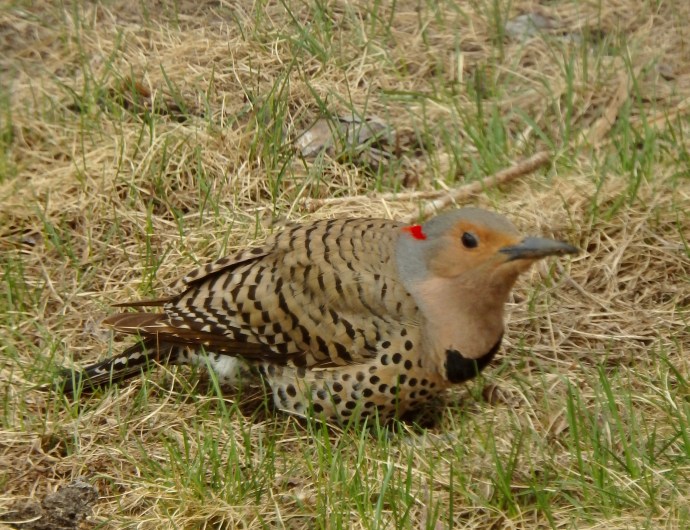
I have an appointment with Spring.
in Thoreau’s Journal:
River skimmed over at Willow Bay last night. Thought I should find ducks cornered up by the ice. They get behind this hill for shelter….I crawled far on my stomach and got a near view of them….

in Thoreau’s Journal:
We notice the color of the water especially at this season, when it is recently revealed (and in the fall) because there is little color elsewhere. It shows best in a clear air, contrasting with the russet shores.

in Thoreau’s Journal:
We are interested in the phenomena of nature mainly as children are, or as we are in games of chance. They are more or less exciting. Our appetite for novelty is insatiable. We do not attend to ordinary things, though they are most important, but to extraordinary ones.
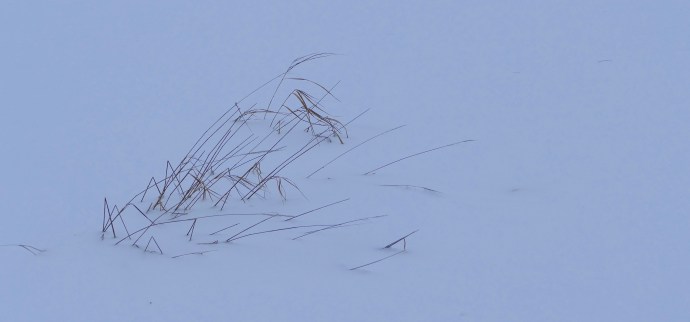
While it is only moderately hot or cold, or wet or dry, nobody attends to it, but when nature goes to an extreme in any of these directions we are all on the alert with excitement….this is a perfectly legitimate amusement only we should know that each day is peculiar and has its kindred excitements.


You must be logged in to post a comment.