in Thoreau’s Journal:

Fair thoughts and a serene mind make fair days.
in Thoreau’s Journal:
Fair thoughts and a serene mind make fair days.
in Thoreau’s Journal:
There is a good deal of ice on the north sides of woods and in and about the sheltered swamps.
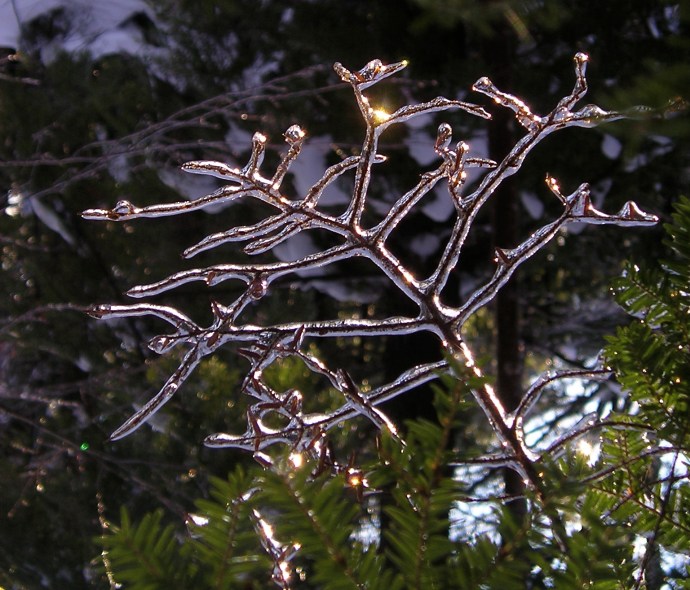
As we go southwestward through the cassandra hollows toward the declining sun, they look successively both by their form and color, like burnished silvery shields in the midst of which we walked, looking toward the sun.
in Thoreau’s Journal:
Cold as the weather is and has been, almost all the brook is open in the meadow there, an artery of black water in the midst of the snow, and there are many sink-holes, where the water is exposed at the bottom of dimple in the snow. Indeed, in some places these little black spots are distributed very thickly, the snow in swells covering the intervening tussocks.
in Thoreau’s Journal:
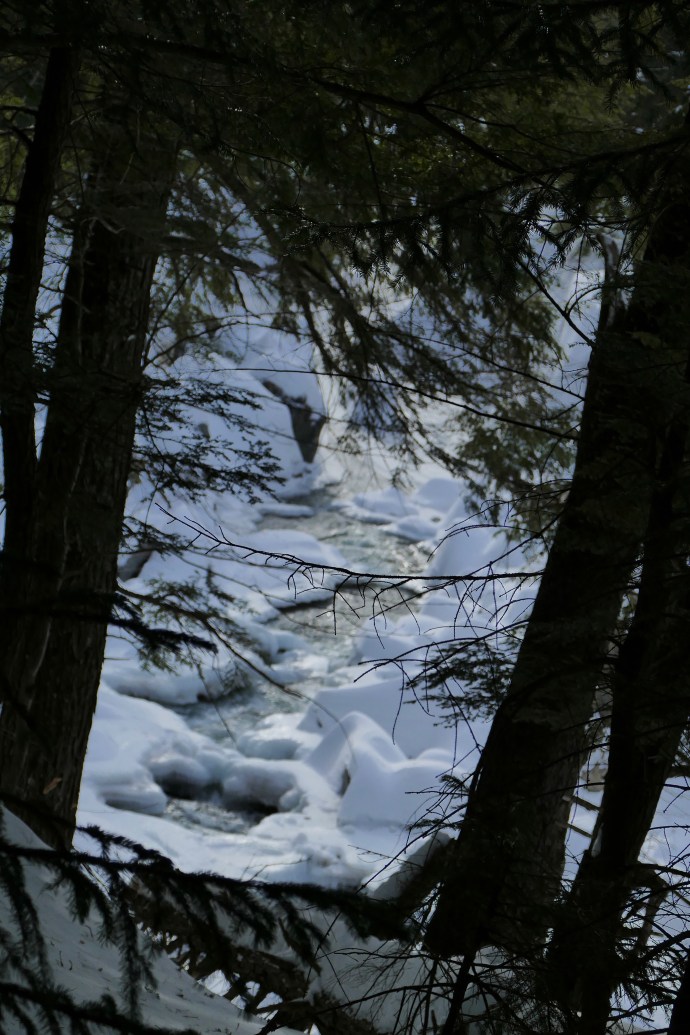
This forenoon I walk up the Assabet to see it. The hemlocks are perhaps a richer sight than any tree. –– such Christmas trees, thus, sugared, as were never seen. On one side you see more or less greenness,

but when you stand due north they are unexpectedly white and rich, so beautifully still, and then you look under them you see some great rock, or rocks, all hoary with the same, and a finer frost on the very fine dead hemlock twigs there and on hanging roots and twigs, quite like the cobwebs in a grist-mill covered with meal, –– and it implies a stillness like that; or it is like the lightest down glued on.
in Thoreau’s Journal:

The surface of the snow, now that the sun has shone on it so long, is not so light and downy, almost impalpable, as it was yesterday, but is somewhat flattened down and looks even as if had had a skim-coat of whitewash. I can see sparkles on it, but they are finer than at first and therefore less dazzling.
in Thoreau’s Journal:

To live in relations of truth and sincerity with men is to dwell in a frontier country.
in Thoreau’s Journal:
I was describing, the other day, my success in solitary and distant woodland walking outside the town.
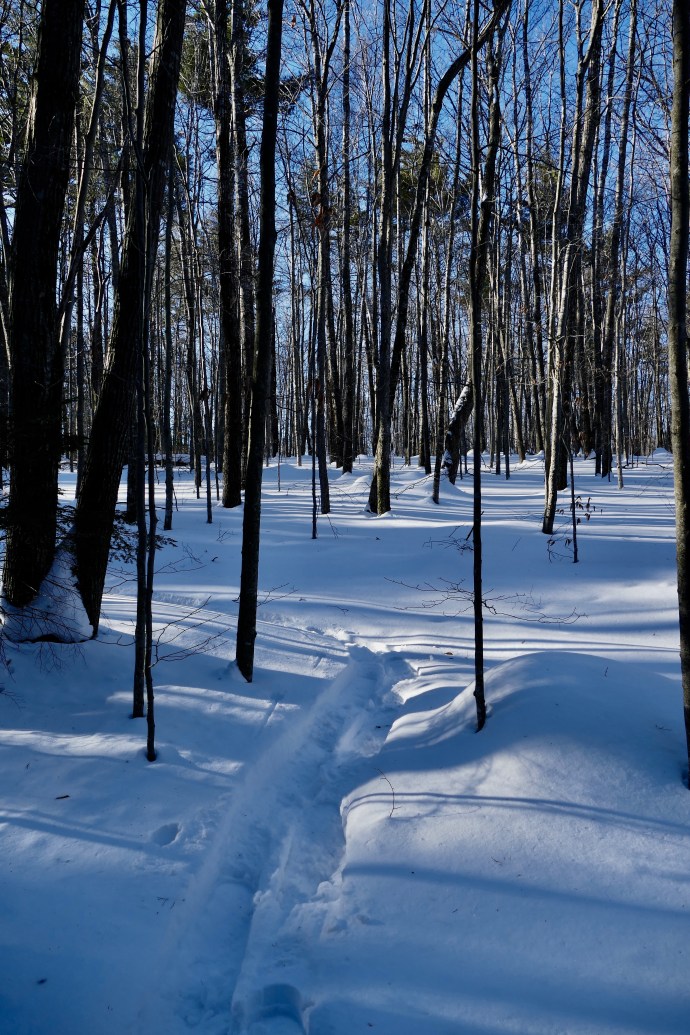
I do not go there to get my dinner, but to get the sustenance which dinners only preserve me to enjoy, without which dinners are a vain repetition. But how little men can help me in this, only by having a kindred experience.
in Thoreau’s Journal:
Such is the piercing wind, no man loiters between his house and barn.
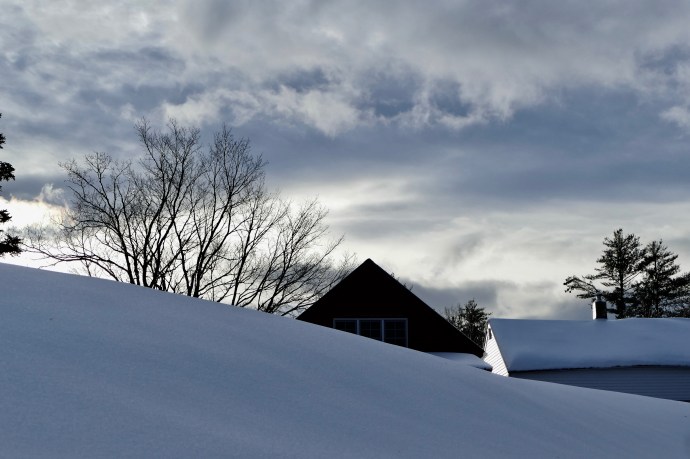
The road track is soon obliterated, and the path which leads round to the back of the house, dug this morning, is filled again….
in Thoreau’s Journal:

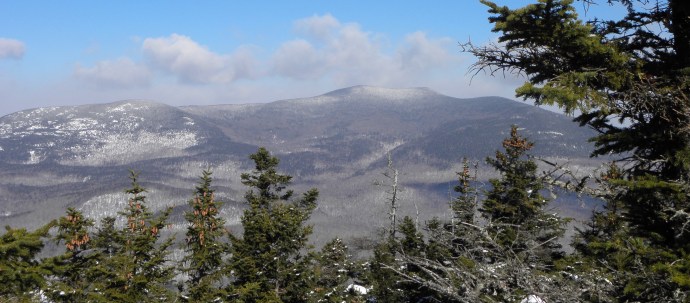
Snows again…The snow is very moist, with large flakes.
in Thoreau’s Journal:
I wish to forget a considerable part of every day, all mean, narrow, trivial men….and therefore i come out to these solitudes where the problem of existence is simplified. I get a mile or two from the town, into the stillness and solitude of nature, with rocks, trees, weeds, snow about me.

I enter some glade in the woods, perchance, where a few weeds and dry leaves alone lift themselves above the surface of the snow, and it is as if I had come to an open window. I see out and around myself. Our sky-lights are thus far away from the ordinary resorts of men. I am not satisfied with ordinary windows. I must have a true sky-light….
in Thoreau’s Journal:

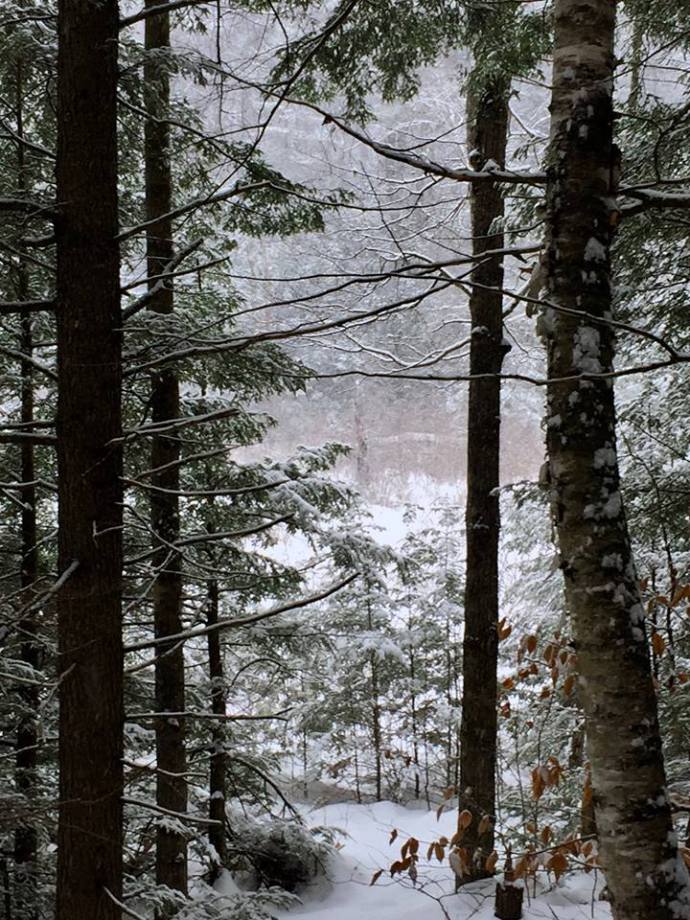
We are rained and snowed on with gems…What a world we live in! Where are the jewelers’ shops? There is nothing handsomer than a snow-flake and a dew-drop.
Also:
January 6, 1859:
I felt my spirits rise when I had got out of the road into the open fields, and the sky had a new appearance. I stepped along more buoyantly. There was a warm sunset in the wooded valleys, a yellowish tinge on the pines. Reddish dun-colored clouds, like dusky flames, stood over it, and then streaks of blue sky were seen here and there. The life, the joy that is in blue sky after a storm. There is no account of the blue sky in history. Before, I walked in the ruts of travel, now I adventured….
And

in Thoreau’s Journal:

What a world we live in, where myriads of these little disks, so beautiful to the most prying eye, are whirled down on every traveler’s coat, the observant and the unobservant, on the restless squirrel’s fur, on the far-stretching fields and forests, the wooded dells and the mountaintops.
in Thoreau’s Journal:
That bright and warm reflection of sunlight from the insignificant edging of stubble was remarkable. I was coming down stream over the meadow on the ice, within four or five rods of the eastern shore, the sun on my left about a quarter of an hour above the horizon. The ice was soft and sodden, of a dull lead color, quite dark and reflecting no light, as I looked eastward, but my eyes caught, by accident, a singular, sunny brightness, reflected from the narrow border of stubble only three or four inches high, and as many feet wide perhaps, which rose along the edge of the ice at the foot of the hill. It was not a mere brightening of the bleached stubble, but the warm and yellow light of the sun, which, as it appeared, it was peculiarly fitted to reflect. It was that amber light from the west which we sometimes witness after a storm, concentrated on the stubble, for the hill beyond was merely a dark russet, spotted with snow. All the yellow rays seemed to be reflected by this insignificant stubble alone, and when I looked for generally at little above it, seeing it with the upper part of my eye,…the reflected light made its due impression….separated from the proper color of the stubble, and it glowed almost like a low, steady, and serene fire. It was precisely as if the sunlight had mechanically slid over the ice, and lodged against the stubble. It will be enough to say of something warmly and sunnily bright, that it glowed like lit stubble. It was remarkable that looking eastward this was the only evidence of the light in the west.
in Thoreau’s Journal:
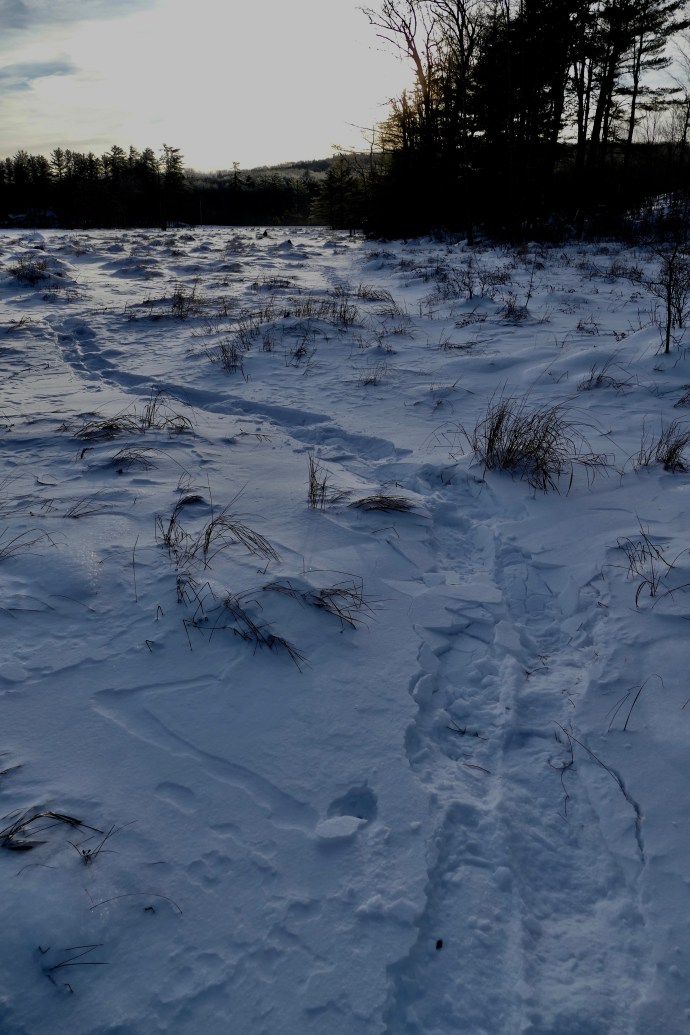
It is now fairly winter–we have passed the line–have put the autumn behind us–have forgotten what these withered herbs that rise above the snow here & there are–what flowers they every bore–

They are fishing on Walden this P.M.
in Thoreau’s Journal:
Going up the hill through Stow’s young oak wood-land, I listen to the sharp, dry rustle of the withered oak leaves. This is the voice of the wood now. It would be comparatively still and more dreary here in other respects, if it were not for these leaves that hold on. It sounds like the roar of the sea, and is inspiriting like that, suggesting how all the land is sea-coast to the aerial ocean. It is the sound of the surf, the rut, of an unseen ocean, ––billows of air breaking on the forest like water on itself or on sand and rocks. It rises and falls, swells and dies away, with agreeable alternation, as the sea surf does. Perhaps the landsmen can foretell a storm by it.

It is remarkable how universal these grand murmurs are, these backgrounds of sound, ––the surf, the wind in the forest, waterfalls, etc., ––which yet to the ear and in their origin are essentially one voice, the earth voice…
in Thoreau’s Journal:
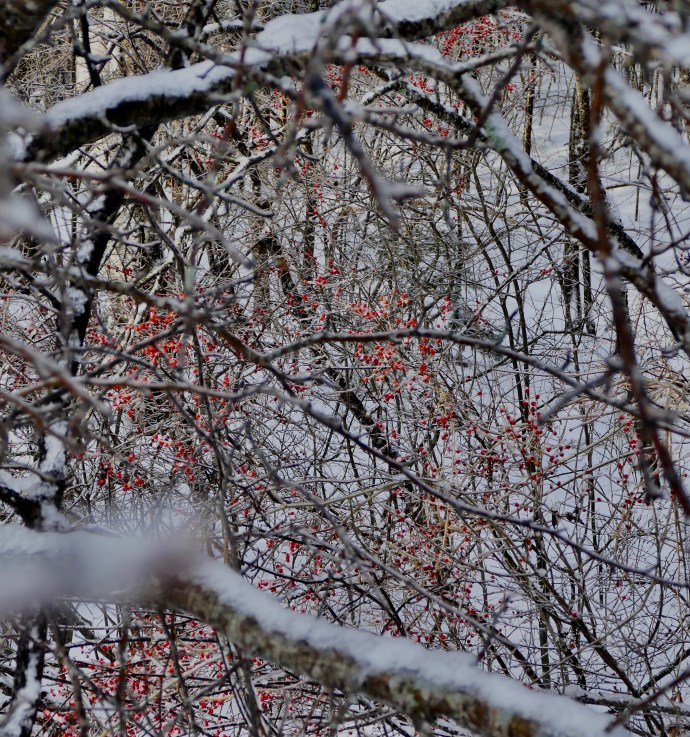
This morning we have something between ice and frost on the trees, etc….What a crash of jewels as you walk!… I saw a prinos bush full of large berries by the wall in Hubbard’s field. Standing on the west side, the contrast of the red berries with their white incrustation or prolongation on the north was admirable. I thought I had never seen the berries so dazzlingly bright
in Thoreau’s Journal:

It is a remarkable sight, this snow-clad landscape, the fences and bushes half-buried, and the warm sun on it…the town and country is now so still, no rattle of wagons nor even jingle of sleigh bells, every tread being as with woolen feet.
in Thoreau’s Journal:
When the snow is falling thick and fast, the flakes nearest you seem to be driving straight to the ground, while the more distant seem to float in the air in a quivering bank, like feathers, or like birds at play, and not as if sent on any errand.

So, at a little distance, all the works of nature proceed with sport and frolic. They are more in the eye, and less in the deed.
in Thoreau’s Journal:

We must go out and re-ally ourselves to Nature every day. We must make root, send out some little fibre at least, even every winter day….
Staying in the house breeds a sort of insanity always.


You must be logged in to post a comment.