in Thoreau’s Journal:
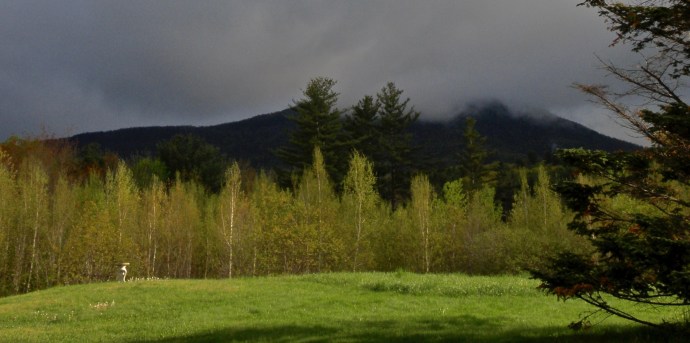
The birches at a distance appear as in a thin green veil—in their expanding leaves.
in Thoreau’s Journal:
The birches at a distance appear as in a thin green veil—in their expanding leaves.
in Thoreau’s Journal:
If I am overflowing with life—am rich in experience for which I lack expression—then nature will be my language full of poetry—all nature will fable & every natural phenomenon be a myth.
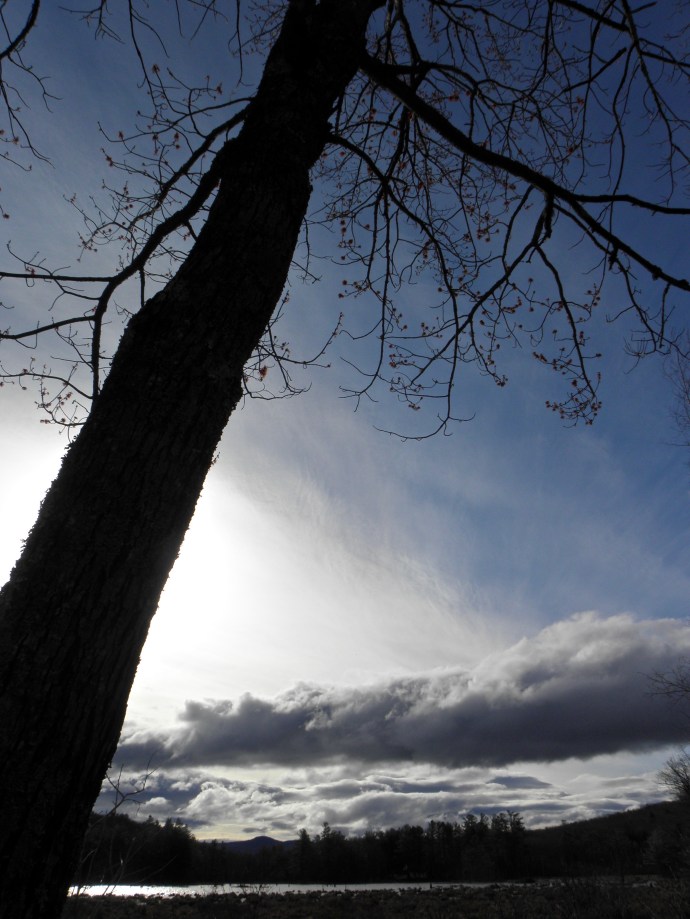
The man of Science who is not seeking for expression but for a fact to be expressed merely—studies nature as a dead language— I pray for such inward experience as will make nature significant.
in Thoreau’s Journal 1852:
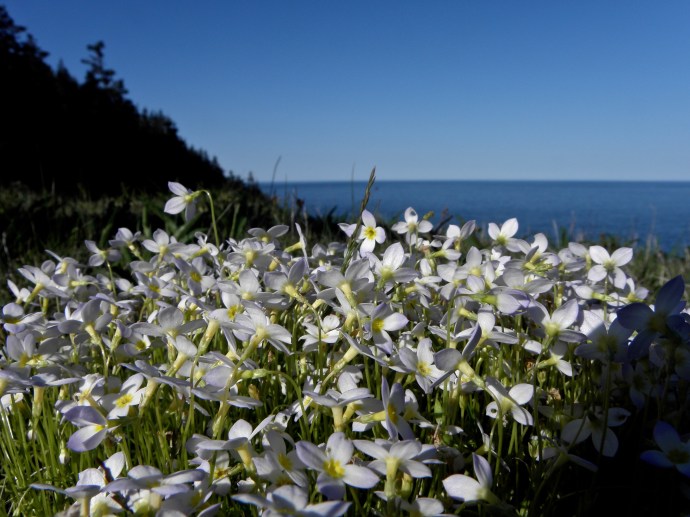
The bluet (sometimes at least?) begins with a kind of lilac blue—fading through white delicately tinged with blue-to white.
in Thoreau’s Journal 1858:
A dandelion perfectly gone to seed, a complete globe, a system in itself.

in Thoreau’s Journal
It is wonderful what a variety of flowers may grow within the range of a walk & how long some very conspicuous ones may escape the most diligent walker—


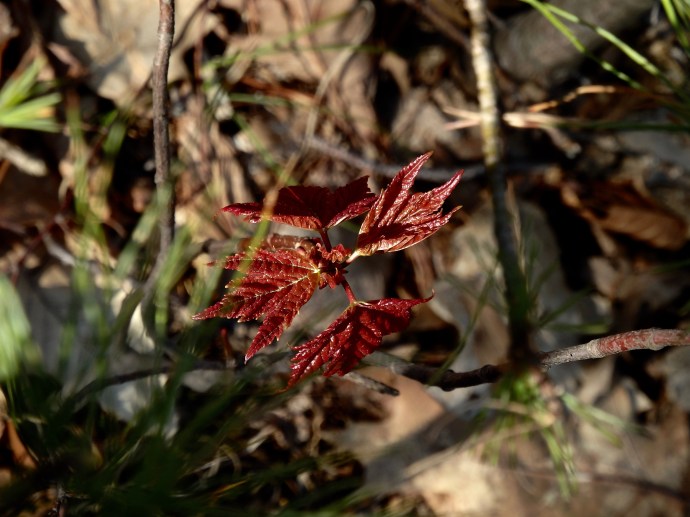
If you do not chance to visit their localities the right week or fortnight-when their signs are out. It is a flaming leaf The very leaf has flowered-not the ripe tints of autumn but the rose in the cheek of infancy-a more positive flowering.
in Thoreau’s Journal:
When I hear a bird singing I cannot think of any words that will imitate it—
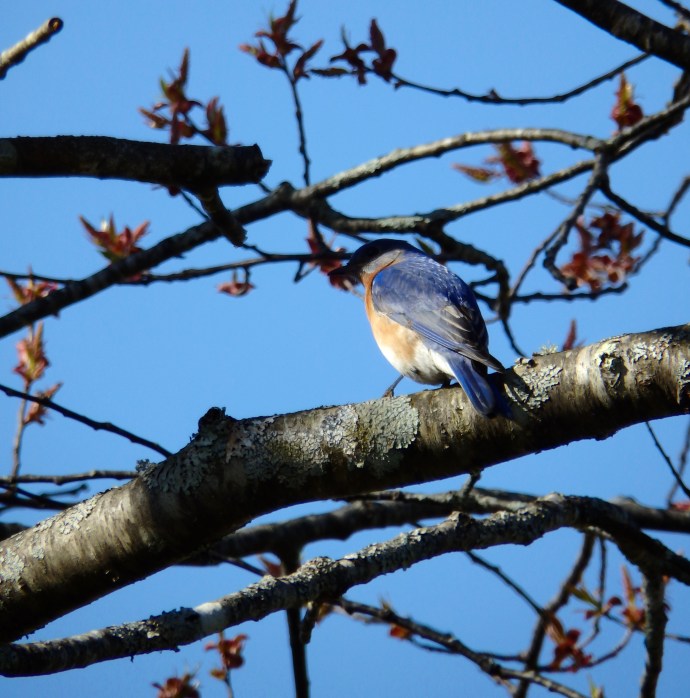
What word can stand in place of a bird’s note!
in Thoreau’s Journal:
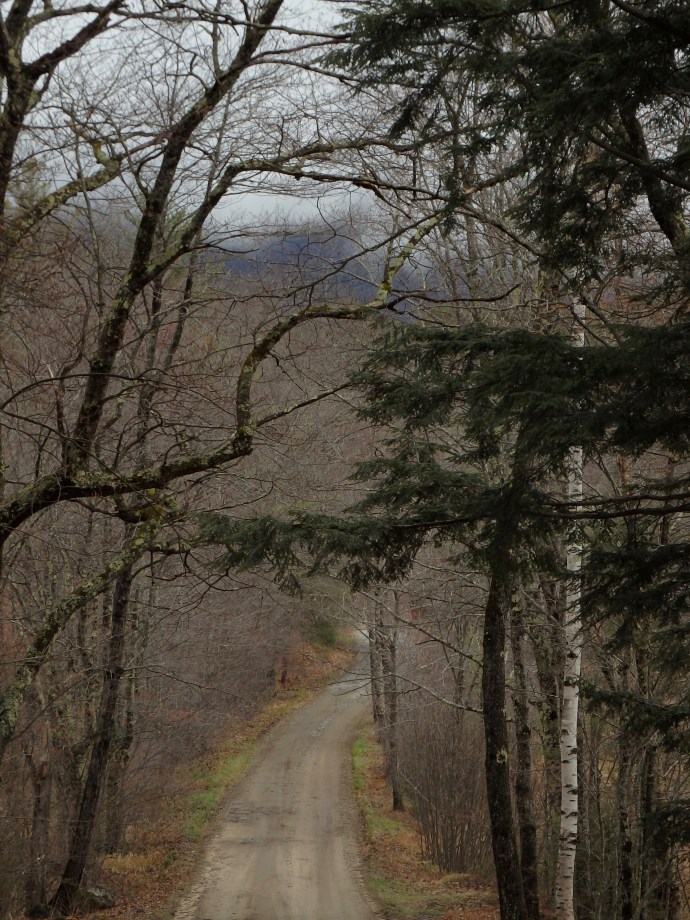
The Female Maple is more crimson—the male more scarlet. The horse-chestnut buds are so advanced that they are larger than the leaves of any tree.— The elder—the wild cherry thimble-berries—sweet-briars, cultivated cherry & apples &c White birches hazels-aspens-hornbeams-maples &c &c not quite the hickory and alder-are opening their budsThe alders are beginning to. It is pleasant when the road winds along the side of a hill with a thin fringe of wood through which to look into the low land— It furnishes both shade & frame for your pictures…
in Thoreau’s Journal:
Leave the cut. The woods are now dry & the ground feels crisp under my feet…The shade is even agreeable today. I smell the pines lately; is it because they are starting.? O the huckleberry bird! The viola pedata budded, ready to blossom….Every part of the world is beautiful today— — The bright shimmering water—the fresh light-green grass springing up on the hills—tender firm moss-like before it waves.— the very faint blue sky without distinct clouds is least beautiful of all, having yielded its beauty to the earth….the beautiful etherial not misty blue of the horizon—& its mts., as if painted.
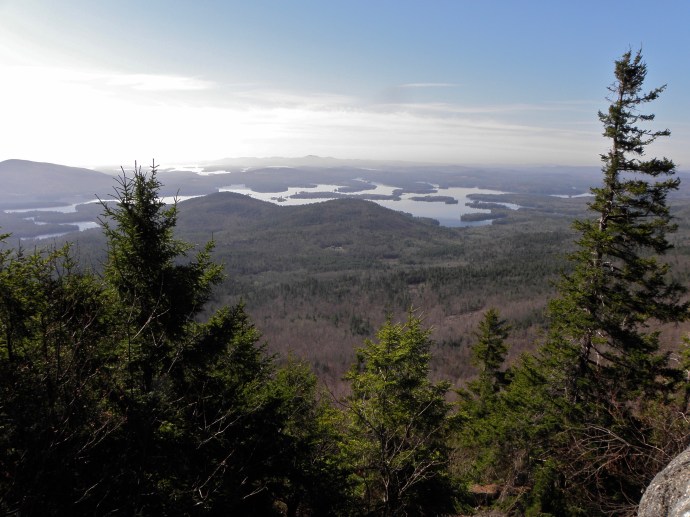
Now all buds may swell methinks—now the summer may begin for all creatures. The wind appears to be a little N of W. The waters still high have a shimmering sparkle over a great part of their surface…
As I can throw my voice into my head & sing very loud & clear there, so I can throw my thoughts into a higher chamber, & think louder & clearer above the earth than men will understand.
in Thoreau’s Journal:
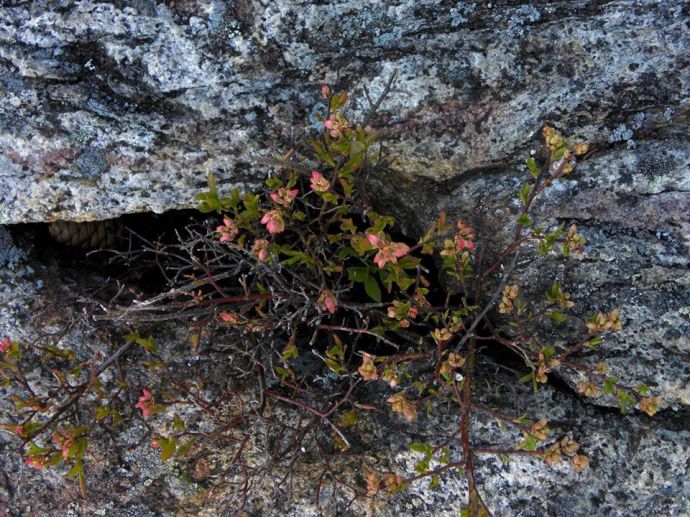
The Vaccinium Pennsylvanicum, ap. yesterday. The vacillans, resinosum, (?) and early high blueberry will bloom in a few days.
in Thoreau’s Journal:
How cheering & glorious any landscape viewed from an eminence! for every one has its horizon & sky.

It is so easy to take wide views.
in Thoreau’s Journal:
I am surprised by the tender yellowish green of the aspen leaf just expanded suddenly, even like a fire seen in the sun, against the dark-brown twigs of the wood, through these leaflets are yet but thinly dispersed. It is very enlivening.
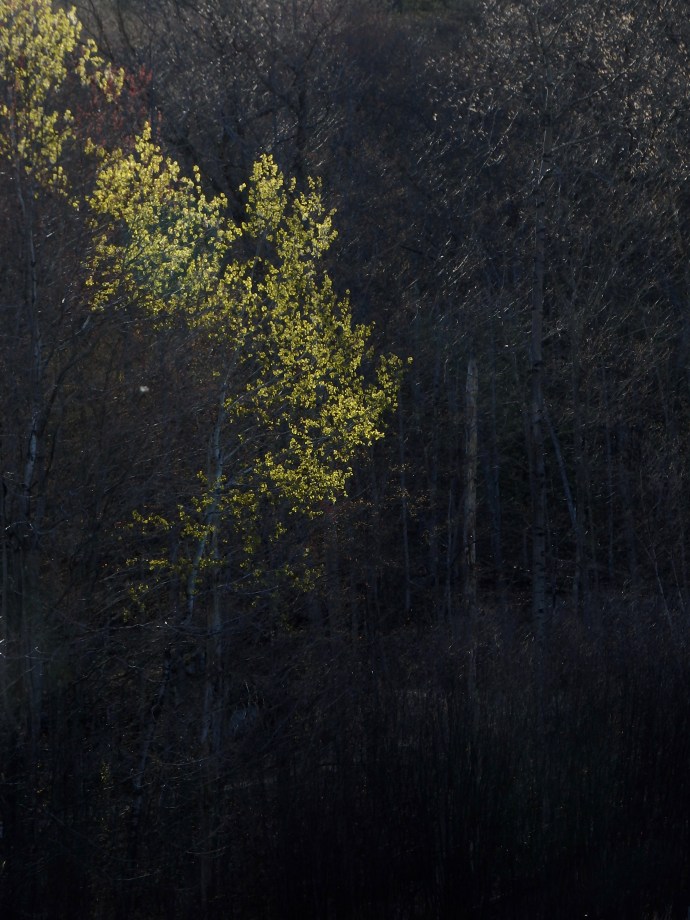
April 30, 2016 Photo:
in Thoreau’s Journal:
All distant landscapes—seen from hill tops are veritable pictures—which will be found to have no actual existence to him who travels to them….

As I looked today from Mt. Tabor in Lincoln to the Waltham Hill I saw the same deceptive slope—the near hill melting into the slope from the base of the near hill to the summit of the further one—a succession of copeswoods—but I knew that there intervened a valley 2 or 3 miles wide studded with houses & orchards & drained by a considerable stream….
in Thoreau’s Journal:
I observe today the bright crimson? perfect flowers of the maple—crimson styles—sepals & petals (crimson or scarlet?)
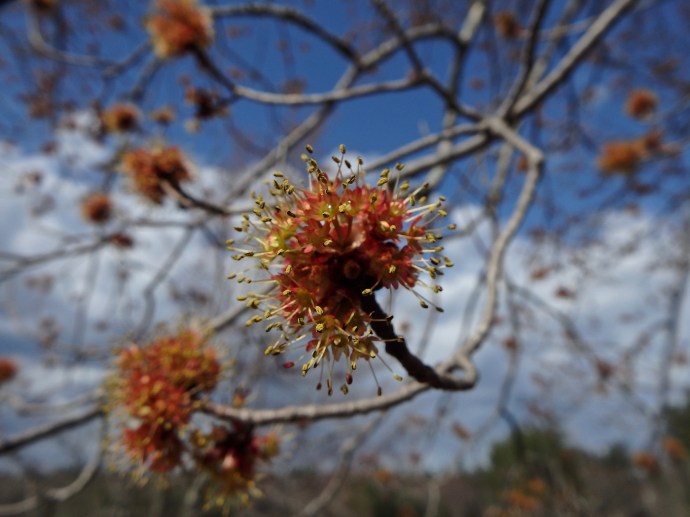
whose leaves are not yet-very handsome in the sun as you look to the sky-& the hum of small bees from them.
in Thoreau’s Journal:
The may-flower on the point of blossoming— I think I may say that it will blossom to-morrow. It is singularly unpretending—not seeking to exhibit or display its simple beauty. It is the most delicate flower both to eye & to scent as yet—
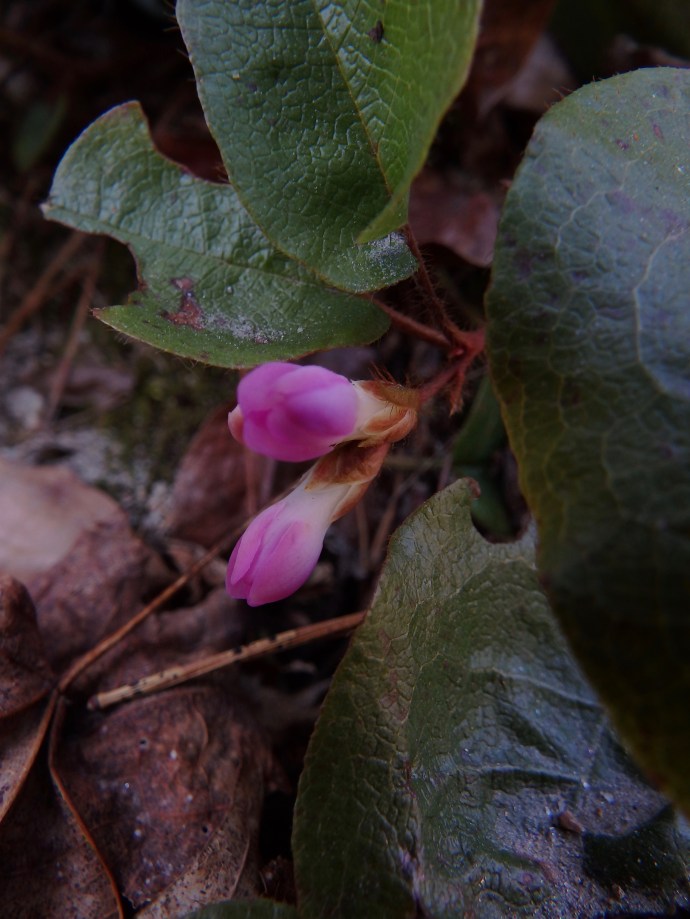
Its weather worn leaves do not adorn it. It if had fresh spring leaves it would be more famous & sought after.
in Thoreau’s Journal:

Pleasant to see lakes like platters full of water.––
in Thoreau’s Journal:
On Conantum Cliffs whose seams dip to the NW at an angle of 50º (?) and run NE and SW I find today for the first time the early saxifrage saxifrage vernalis in blossom—growing high and dry in the narrow seams where there is no soil for it but a little green moss.—

following thus early after the bare rock—it is one of the first flowers not one in the spring of the year but in the spring of the world.—It an take advantage of a perpendicular cliff where the snow cannot lie & fronting the S.
In exactly the same places grows the columbine…
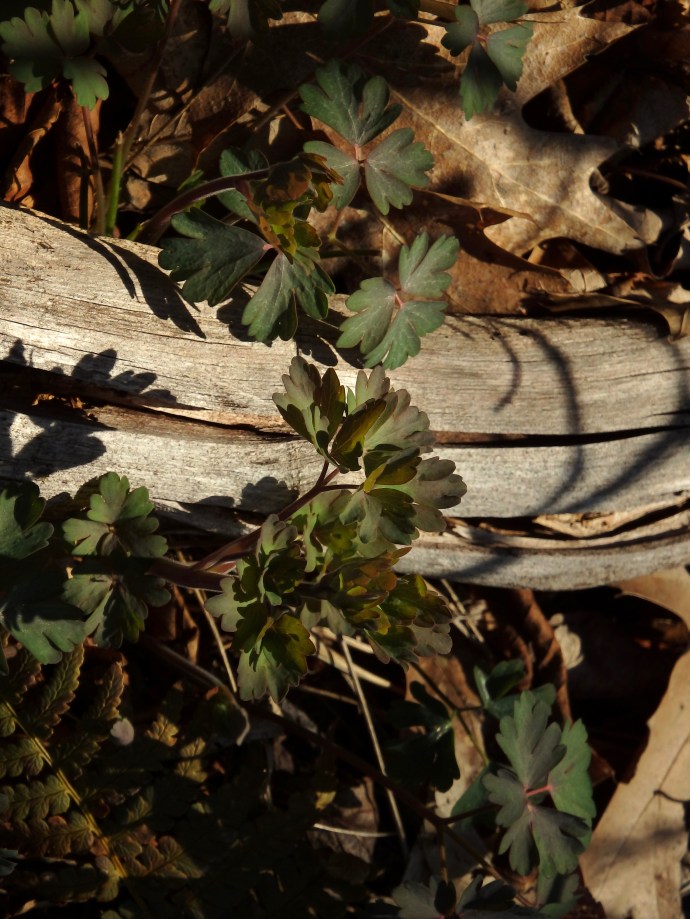
April 21, 2016: Photos on a local cliff, Sandwich, New Hampshire

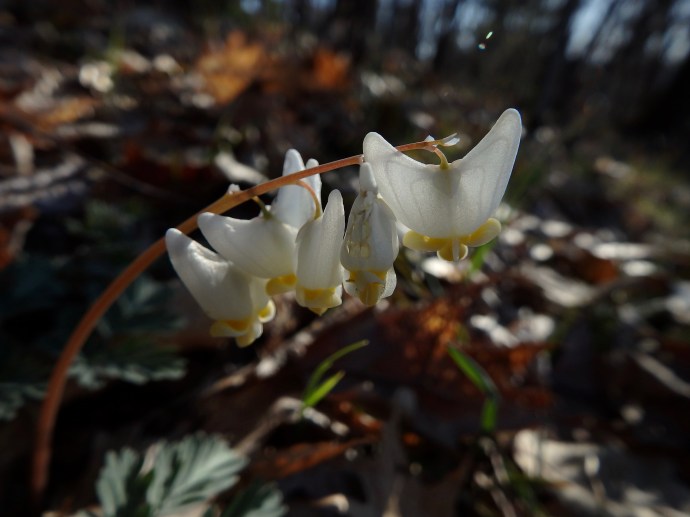

in Thoreau’s Journal:

It is a great art to saunter.
in Thoreau’s Journal:
The first partridge drums in one or two places—As if the earth’s pulse now beat audibly with the increased flow of life. It slightly flutters all Nature & makes her heart palpitate— Also, as I stand listening for the wren, & sweltering in my great-coat—I hear the woods filled with the hum of insects—as if my hearing were affected—& thus the summer quire begins—
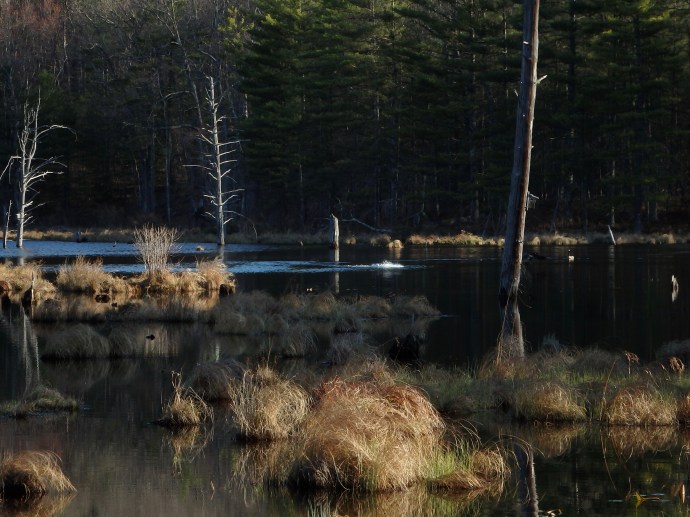
The silent spaces have begun to be filled with notes of birds and insects & the peep & croak & snore of frogs—even as living green blades are everywhere pushing up amid the sere ones.
in Thoreau’s Journal:

The rattlesnake plantain has fresh leaves.
April 23, 2016: Photo
___________________________
April, 24, 1859 in Thoreau’s Journal
There is a season for everything, and we do not notice a given phenomenon except at that season, if indeed it can be called the same phenomenon at any other season. There is a time to watch the ripples on Ripple Lake, to look for arrowheads, to study the rocks and lichens, a time to walk on sandy deserts, and the observor of nature must improve the seasons as much as the farmer his. So boys fly kites and play ball and hawkie at particular times all over the state. We must not be governed by rigid rules, as by the almanac, but let the seasons rule us. The moods and thoughts of man are revolving just as steadily and incessantly as nature’s. Take time by the forelock. Now or never! You must live in the present, launch yourself on every wave, find your eternity in each moment. Fools stand on their island opportunities and look toward another land. There is no other land; there is no other life but this one or the life of this. Where the good husbandman is, there is good soil. Take any other course and life will be a succession of regrets. Let us see vessels sailing prosperously before the wind, and not simply stranded barks. There is no world for penitent and regretful.
in Thoreau’s Journal:
The first April showers are even fuller of promise & a certain moist serenity than the sunny days….The tinge of green is gradually increasing in the face of the russet earth…

Now that the very earliest shrubs are beginning to unfold…
in Thoreau’s Journal:
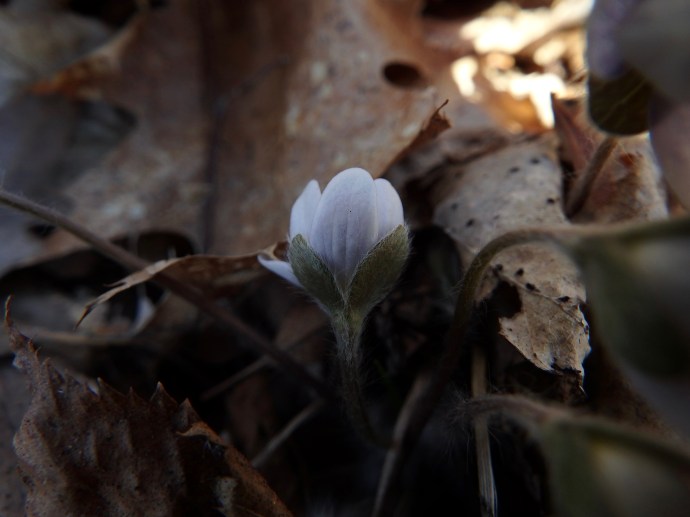
I want things to be incredible,––too good to appear true…. If you would be wise, learn science and then forget it.


You must be logged in to post a comment.