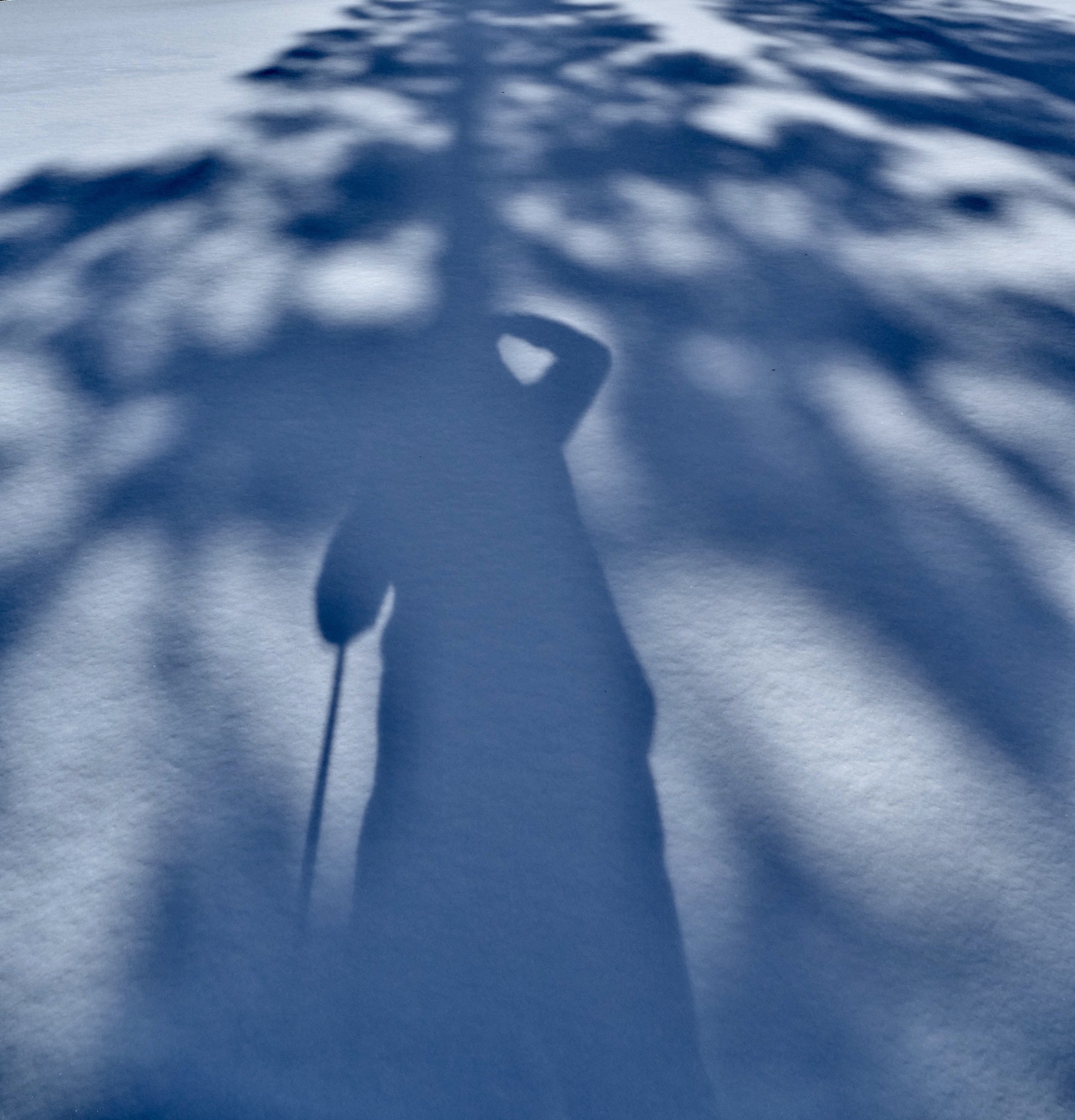
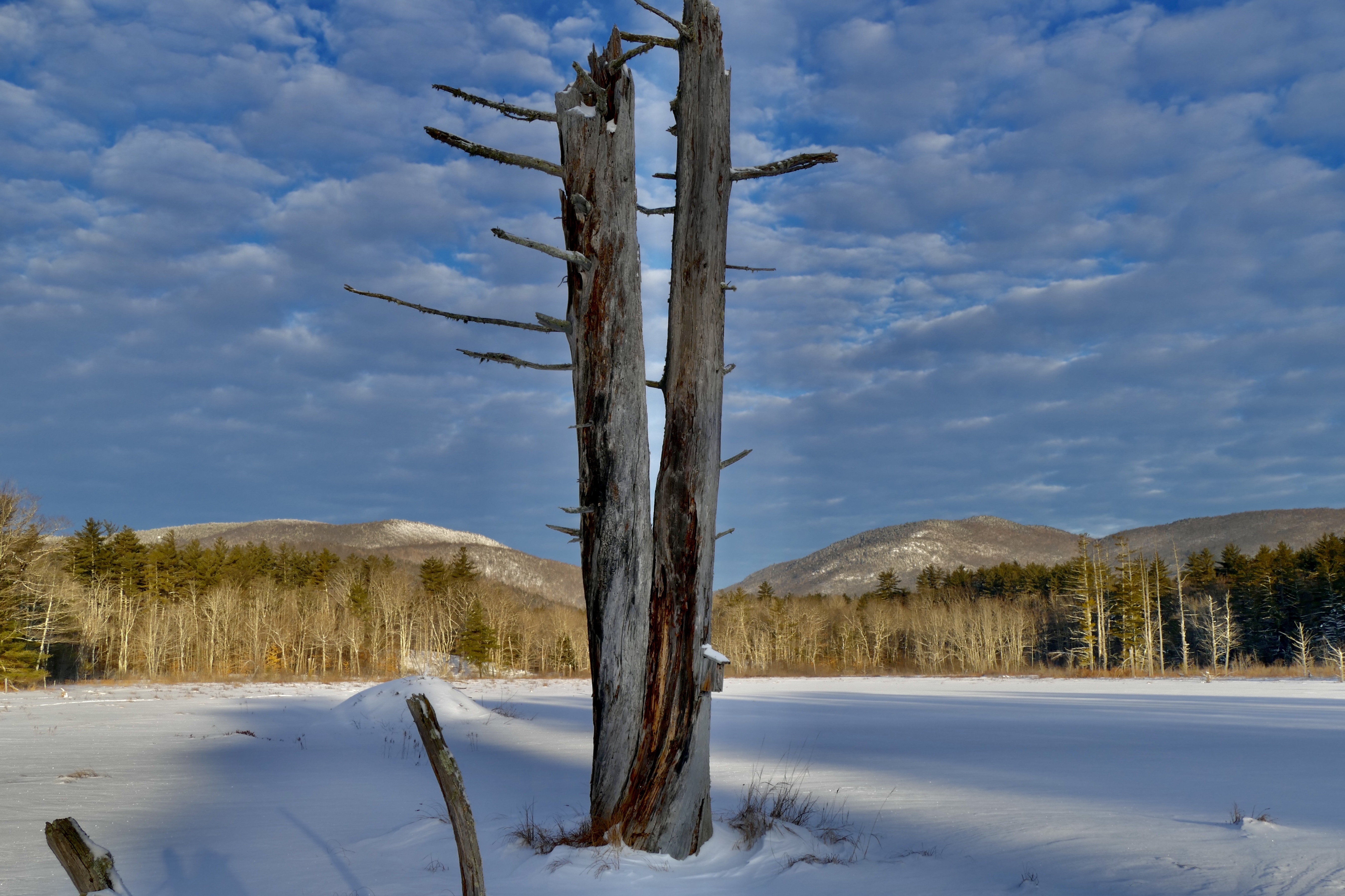
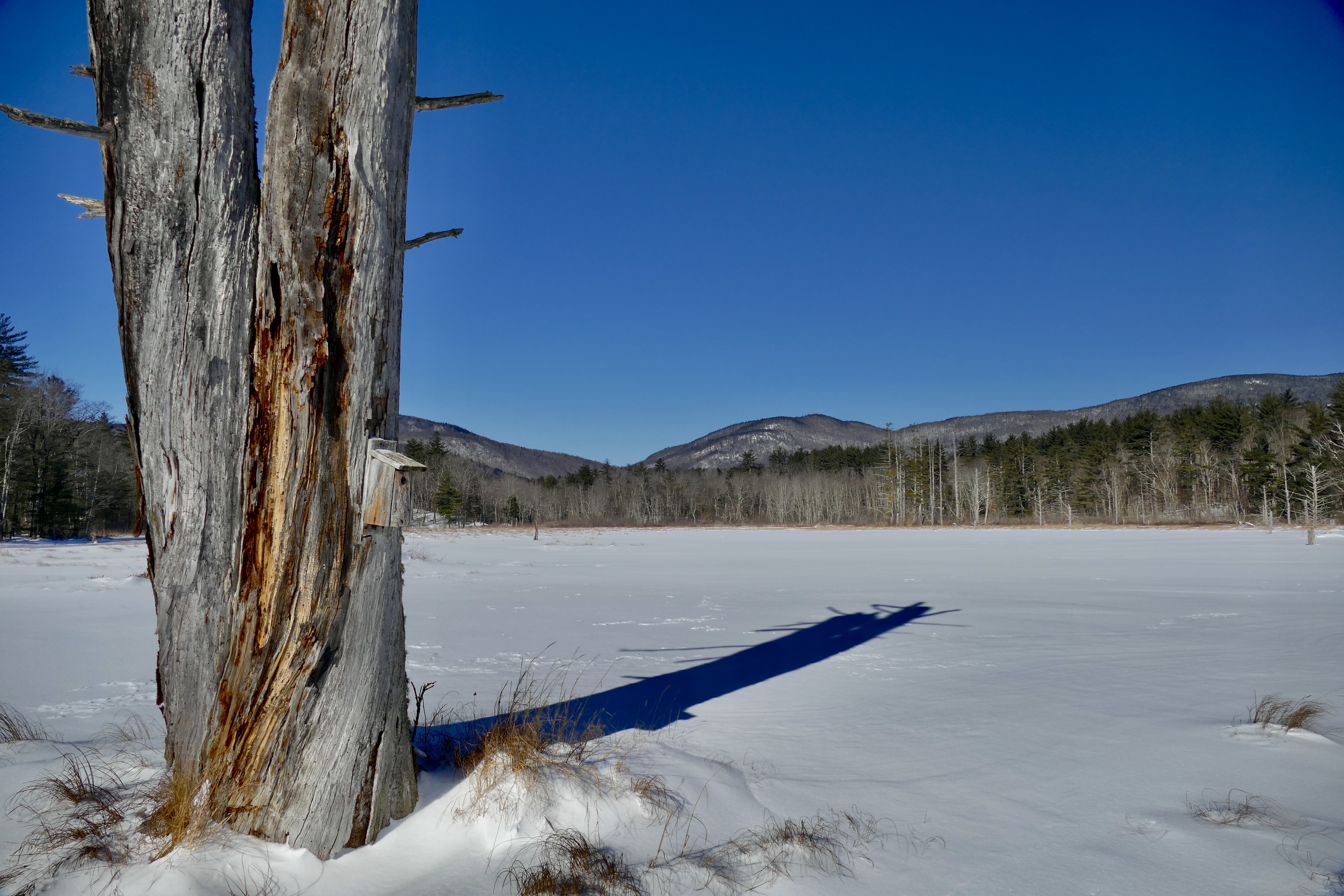
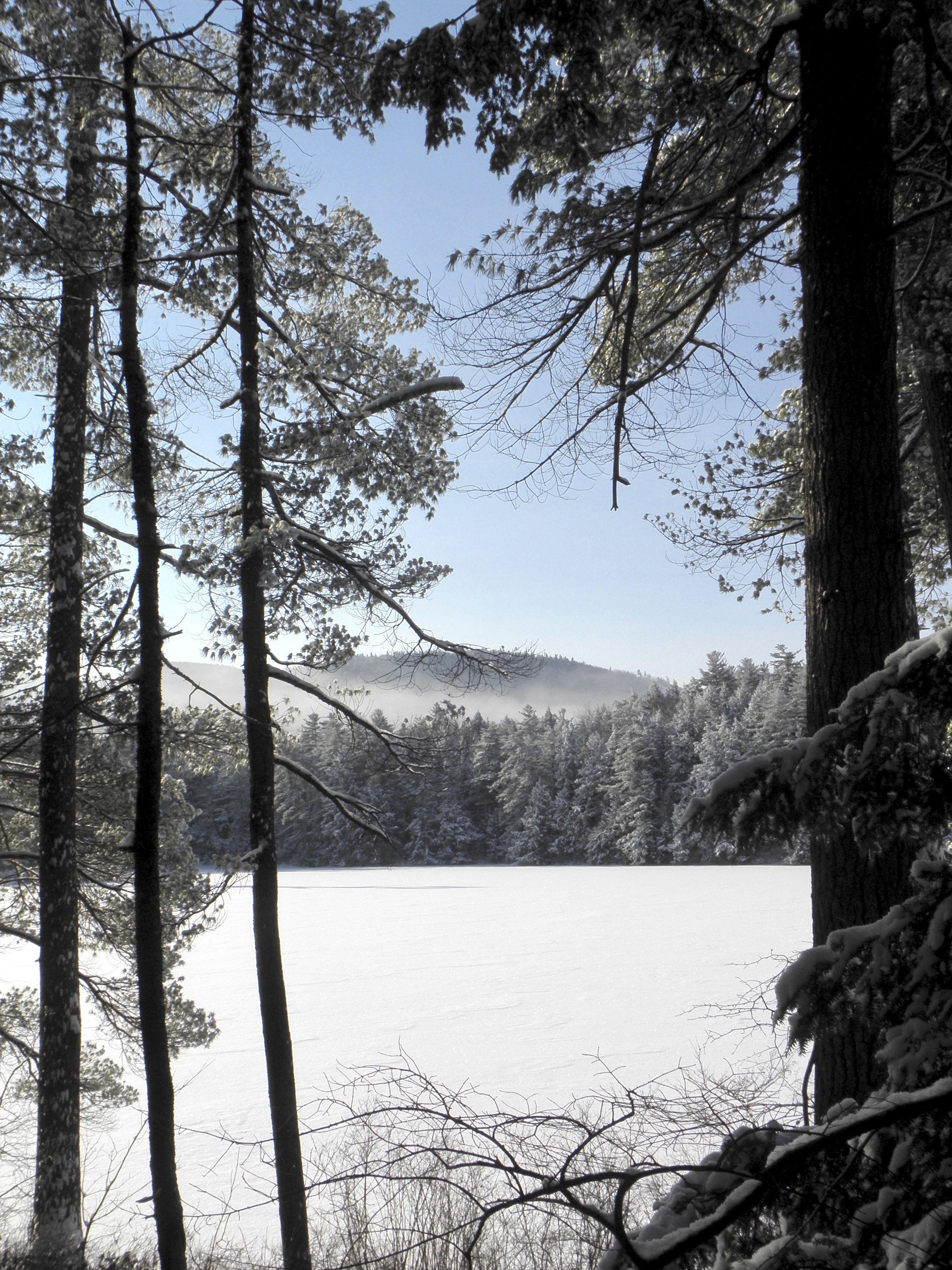
The winter is coming when I shall walk the sky. The ice is a solid sky on which we walk. It is the inverted year. There is an annual light in the darkness of the winter night. The shadows are blue, as the sky is forever blue. In winter we are purified and translated. The earth does not absorb our thoughts. It becomes a Valhalla.
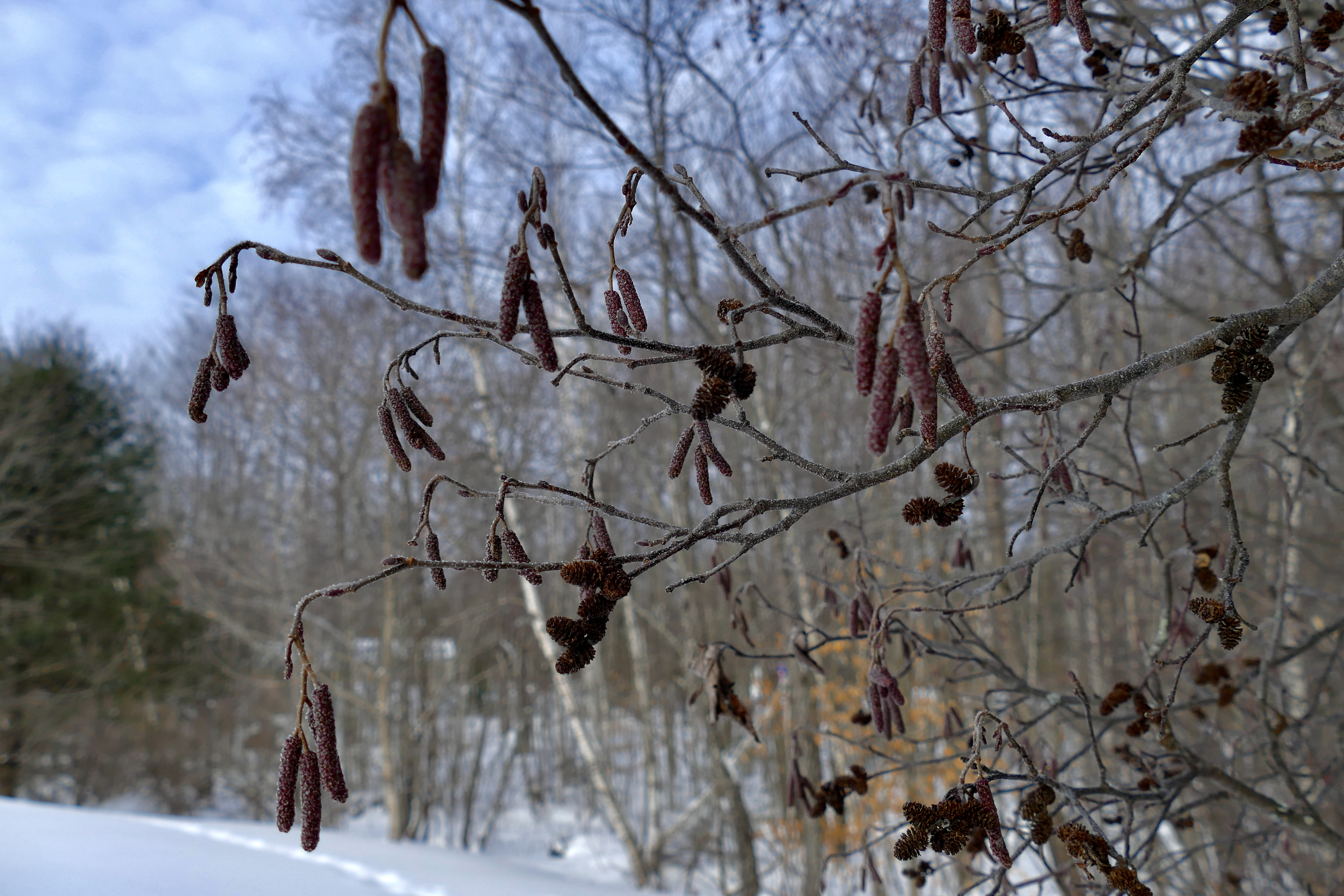
When I read of the catkins of the alder and the willow, etc., scattering their yellow pollen, they impress me as a vegetation which belongs to the earliest and most innocent dawn of nature; as if they must have preceded other trees in the order of creation, as they precede them annually in their blossoming and leafing. In the winter we so value the semblance of fruit that even the dry black female catkins of the alder are an interesting sight, not to mention, on shoots rising a foot or two above these, the red or mulberry male catkins, in little parcels, dangling at a less than right angle with the stems, and the short female ones at their bases. For how many aeons did the willow shed its yellow pollen annually before man was created!
My Journal is that of me which would else spill over and run to waste.— gleanings from the field which in action I reap. I must not live for it, but in it for the gods—
They are my correspondent to whom daily I send off this sheet post-paid. I am clerk in their counting room and at evening transfer the account from day-book to ledger.
When I select one here and another there, and strive to join sundered thoughts, I make but a partial heap after all— Nature strews her nuts and flowers broadcast, and never collects them into heaps— A man does not tell us all he has thought upon truth or beauty at a sitting—but from his last thought on the subject wanders through a varied scenery of upland meadow and woodland to his next— Sometimes a single and casual thought rises naturally and inevitably with a queenly majesty and escort like the stars in the east. Fate has surely enshrined it in this hour and circumstances for some purpose— What she has joined together, let not man put asunder.— Shall I transplant the primrose by the river’s brim—to set it beside its sister on the mountain? This was the soil it grew in—this the hour it bloomed in—if sun, wind, and rain came here to cherish and expand it–shall not we come here to pluck it? — Shall we require it to grow in a conservatory for our convenience?
A mild, thawy day. The needles of the pine are the touch-stone for the air—any change in that element is revealed to the practiced eye by their livelier green or increased motion. They are the tell-tales. Now they are (the white pine) a cadaverous, misty blue—anon a lively silvery light plays on them —& they seem to erect themselves unusually—while the pitch pines are a brighter yellowish green than usual—The sun loves to nestle in the boughs of the pine & pass rays through them.
The scent of bruised pine leaves where a sled has passed is a little exciting to me now…
I would meet the morning and evening on very sincere ground. When the sun introduces me to a new day, I silently say to myself, “Let us be faithful all round.
We will do justice and receive it.” Something like this is the secret charm of Nature’s demeanor towards us, strict conscientiousness, and disregard of us when we have ceased to have regard for ourselves. So she can never offend us. How true she is, and never swerves. In her most genial moment her laws are as steadfastly and relentlessly fulfilled….as in her sternest.
We are constantly invited to be what we are; as to something worthy and noble.
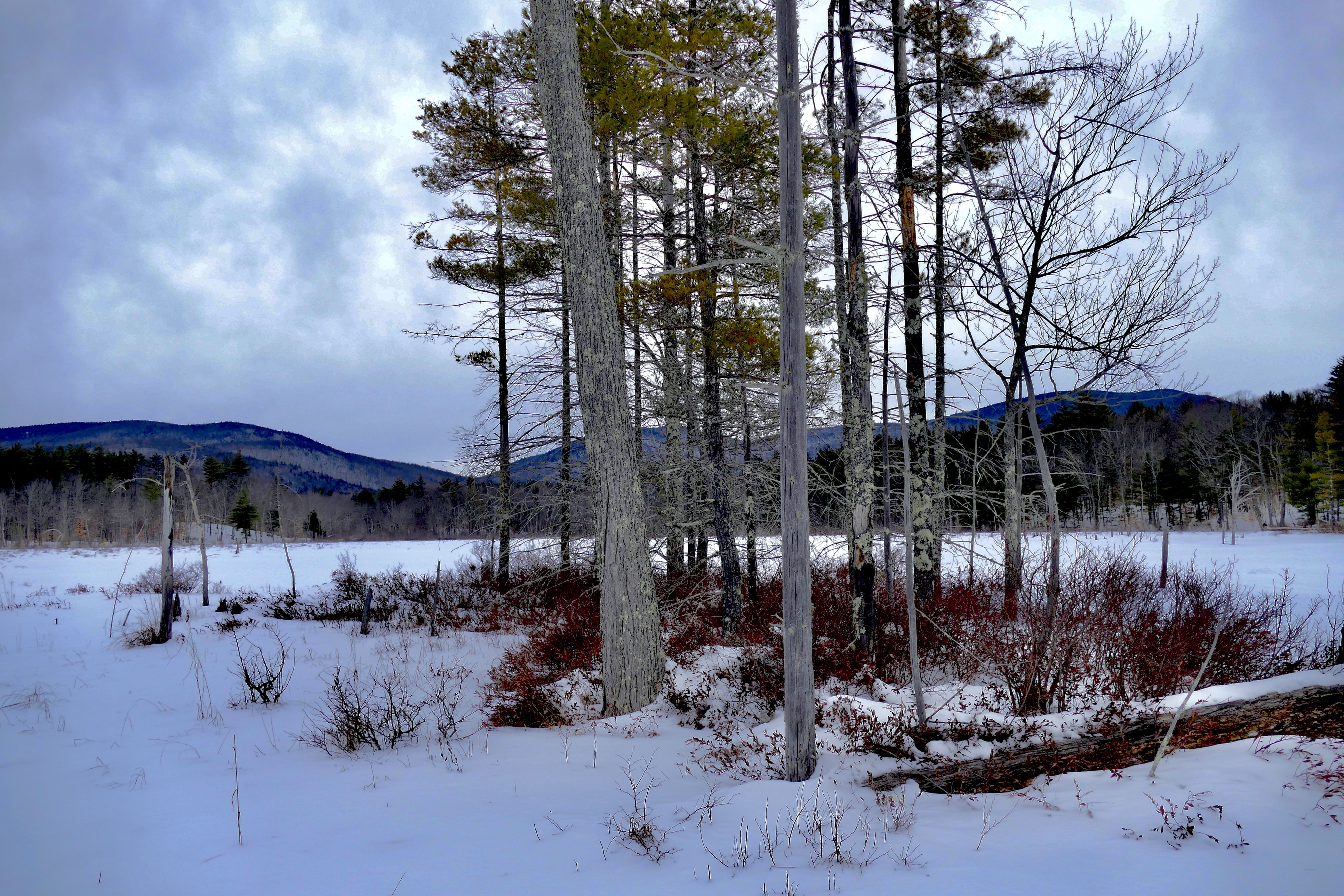
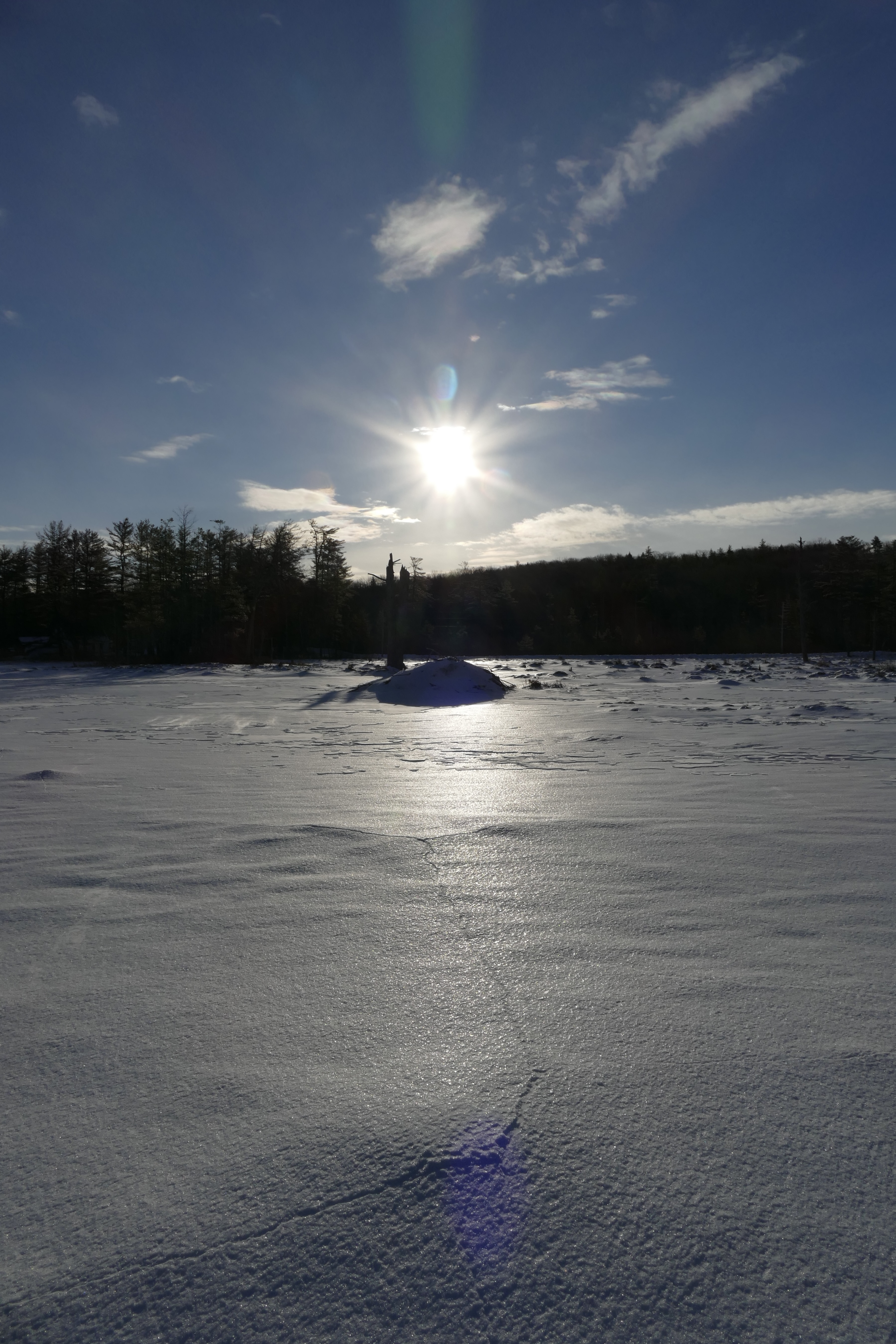
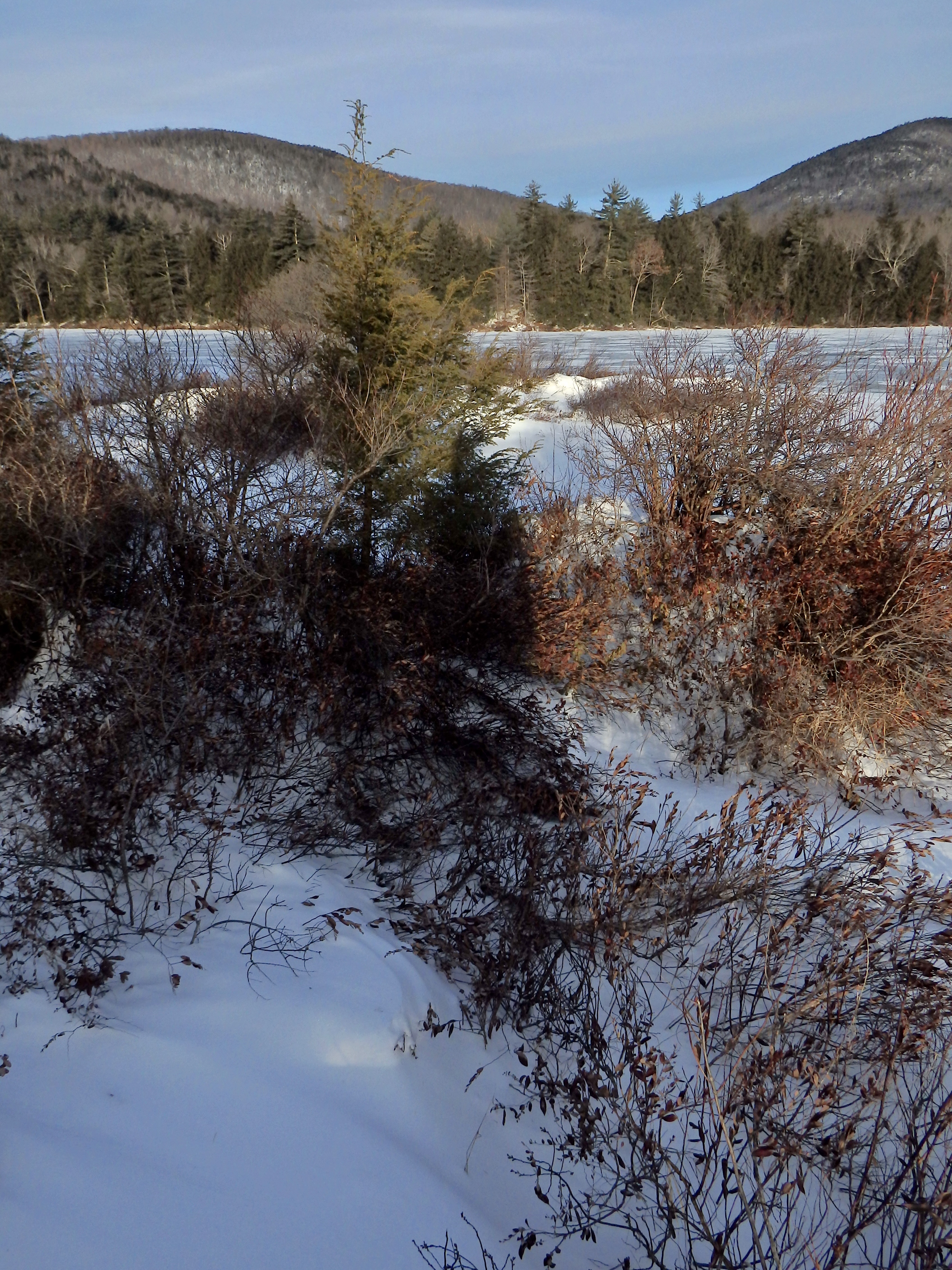
There is a few inches of snow perfectly level which now for nearly a week has covered the ice— Going toward the sun you are snow-blinded–– At each clump of willows on the meadow it looks as if there were a hillock––out of which they grow–– This appearance is produced by the willow twigs holding up the ice to height at which it was frozen after the last thaw about 2 feet above the present level.— It forms a regularly rounded hillock. We look at every track in the snow — Every little while there is the track of a fox across the river—turning aside sometimes to a muskrats cabin or a point of ice—where he has left some traces— frequently the larger track of a hound which has followed his trail— It is much easier & pleasanter to walk thus on the river—the snow being shallow & level —& there is no such loud squeaking or cronching of the snow as in the road—and This road is so wide that you do not feel confined in it—& you never meet travelers with whom you have no sympathy. The winter, cold & bound out as it is, is thrown to us like a bone to a famishing dog, & we are expected to get the marrow out of it. While the milkmen in the outskirts are milking so many scores of cows before sunrise these winter mornings, it is our task to milk the winter itself. It is true it is like a cow that is dry & our fingers are numb—& there is none to wake up us— Some desert the field & go into winter quarters in the city— They attend the oratorios while the only music that we hear is the squeaking of the snow under our boots. But the winter was not given to us for no purpose— We must thaw its cold with our genialness. We are tasked to find out & appropriate all the nutriment it yields— If it is a cold & hard season—its fruit no doubt is the more concentrated & nutty. It took the cold & bleakness of November to ripen the walnut—but the human brain is the kernel which the winter itself matures— Not till then does its shell come off— The seasons were not made in vain— Because the fruits of the earth are already ripe—we are not to suppose there is no fruit left for winter to ripen. — It is for man the seasons and the all the fruits exist. The winter was made to concentrate & harden & mature the kernel of his brain—to give tone & firmness & consistency to his thought— Then is the great harvest of the year—the harvest of thought— All previous harvests are stubble to this—mere fodder & green crop. Now we burn with a purer flame like the stars, our oil is winter-strained. We are islanded in Atlantic & Pacific—& Indian Oceans of thought— Bermudas or Friendly or Spice Islands—
Men lie behind the barrier of a relation as effectually concealed as the landscape by a mist; and when at length some unforeseen accident throws me into a new attitude toward them, I am astounded, as if for the first time I saw the sun on the hill-side.—
They lie out before me like a new order of things.— As when the master meets his pupil as a man.— Then first do we stand under the same heavens—and master and pupil alike go down the resistless ocean stream together.
Our life should be so active and progressive as to be a journey. Our meals should all be of journey-cake and hasty pudding. We should be more alert, see the sun rise, not keep fashionable hours, enter a house, our own house, as a khan, a caravansary.
At noon I did not dine; I ate my journey-cake. I quenched my thirst at a spring or a brook. As I sat at the table, the hospitality was so perfect and the repast so sumptuous that I seemed to be breaking my fast upon a bank in the midst of an arduous journey, that the water seemed to be a living spring, the napkins grass, the conversation free as the winds; and the servants that waited on us were our simple desires.
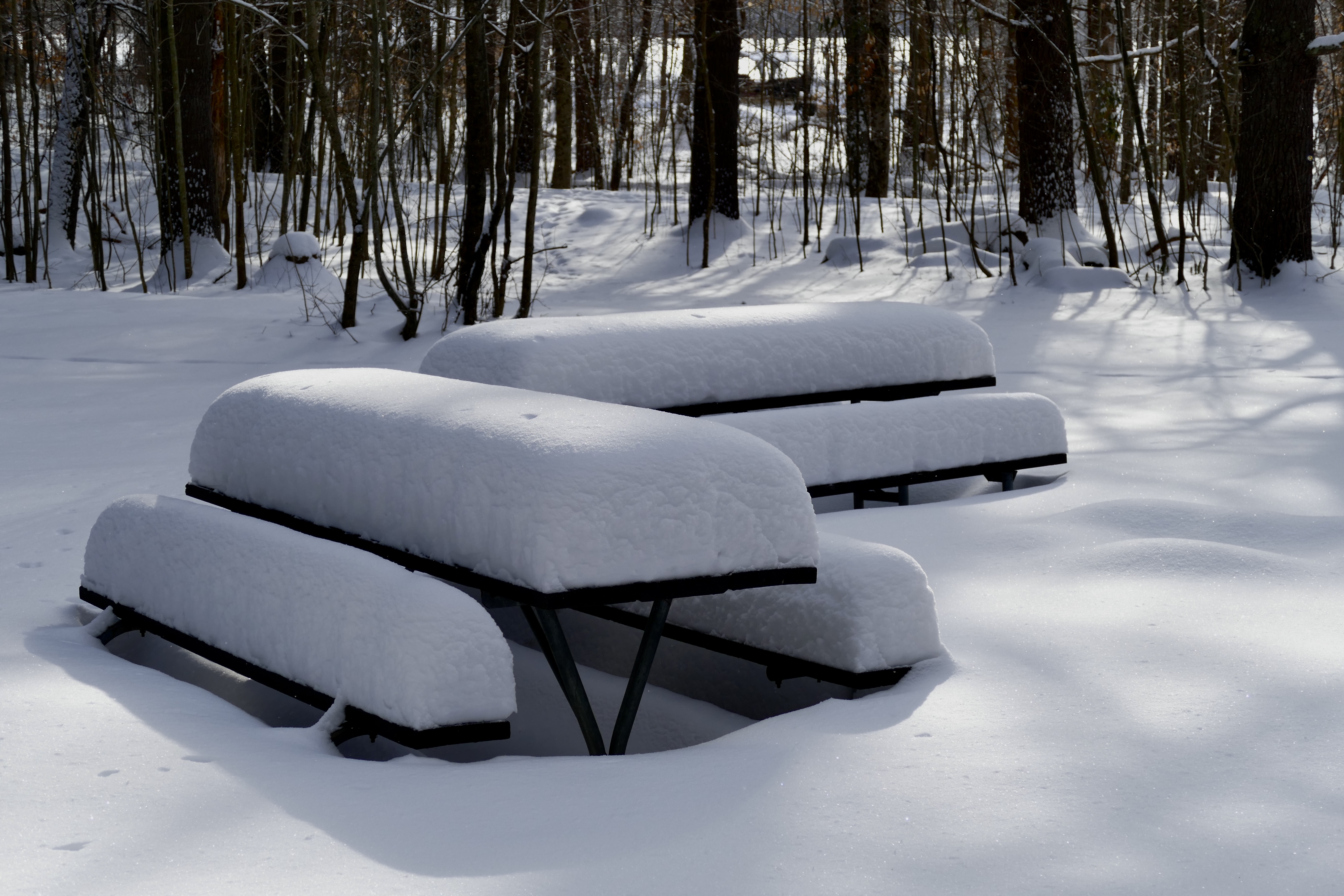
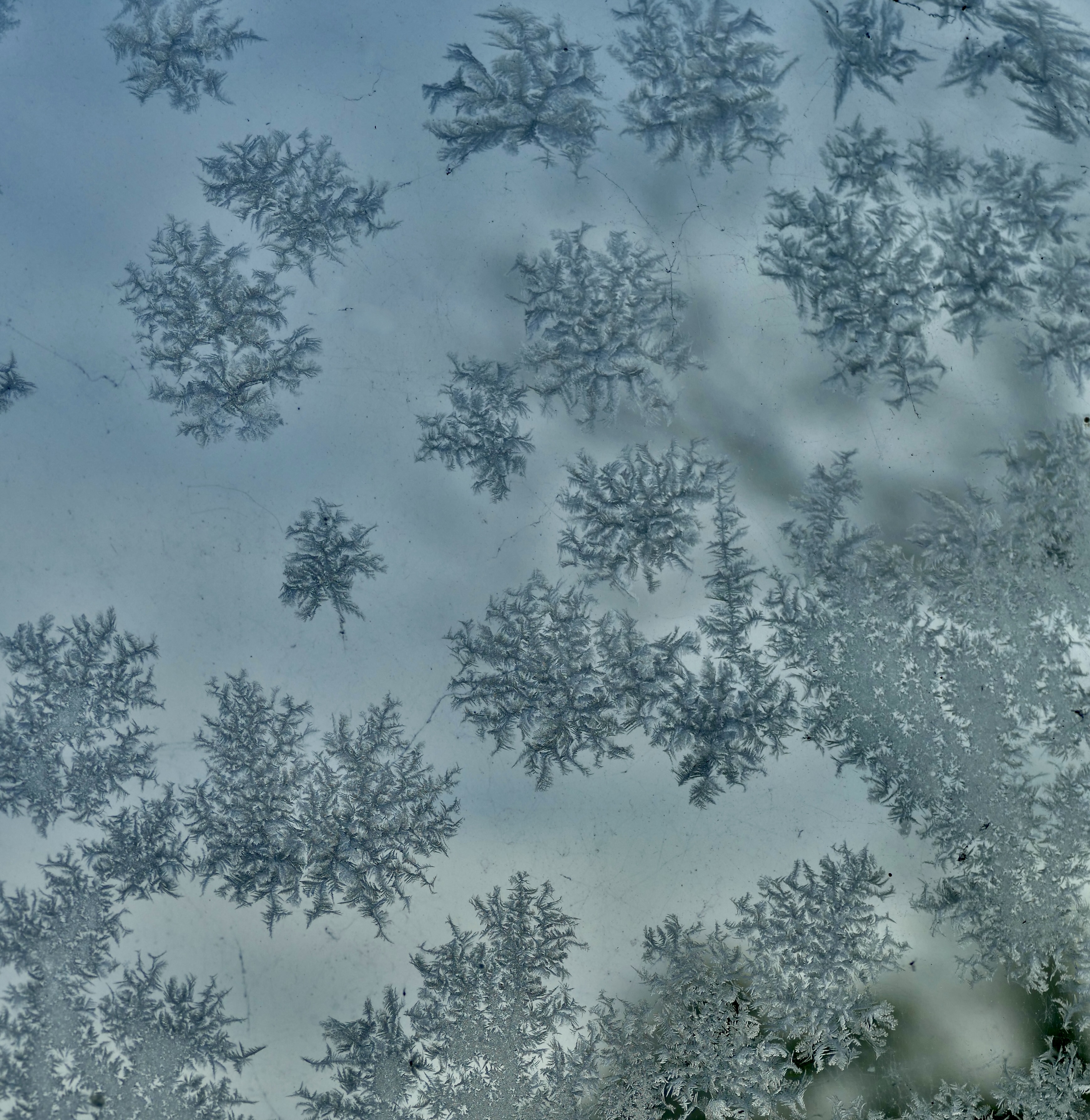
The snow falls on no two trees alike, but the forms it assumes are as various as those of the twigs and leaves which receive it. They are, as it were, predetermined by the genius of the tree. So one divine spirit descends alike on all, but bears a peculiar fruit in each. The divinity subsides on all men, as the snowflakes settle on the fields and ledges and takes the form of the various clefts and surfaces on which it lodges.
Having gone a quarter of a mile beyond the bridge, where C. calls this his Spanish Brook, I looked back from the top of the hill on the south into this deep dell, Where the white pines stood thick, rising one above another, reflecting the sunlight, so soft and warm by contrast with the snow, as never in summer ,
—for the idea of warmth prevailed over the cold which the snow suggested, though I saw through and between them to a distant snow-clad hill, and also to oaks red with their dry leaves, —and maple limbs were mingled with the pines, I was on the verge of seeing something, but I did not. If I had been alone and had had more leisure, I might have seen something to report.
A journal is a record of experiences & growth–not a preserve of things well done or said. I am occasionally reminded of a statement which I have made in conversation & immediately forgotten–which would read much better than what I put in my journal. It is a ripe dry fruit of long past experience which falls from me easily without giving pain or pleasure–
The charm of the journal must consist in a certain greenness–though freshness–& not in maturity. Here I cannot afford to be remembering what I said or did–my scurf cast off–but what I am & aspire to become.








 allandibiase.com
You must be logged in to post a comment.