in Thoreau’s Journal:
-5º. A cold day; Two or three inches of dry snow last night. Grows colder apace toward night.
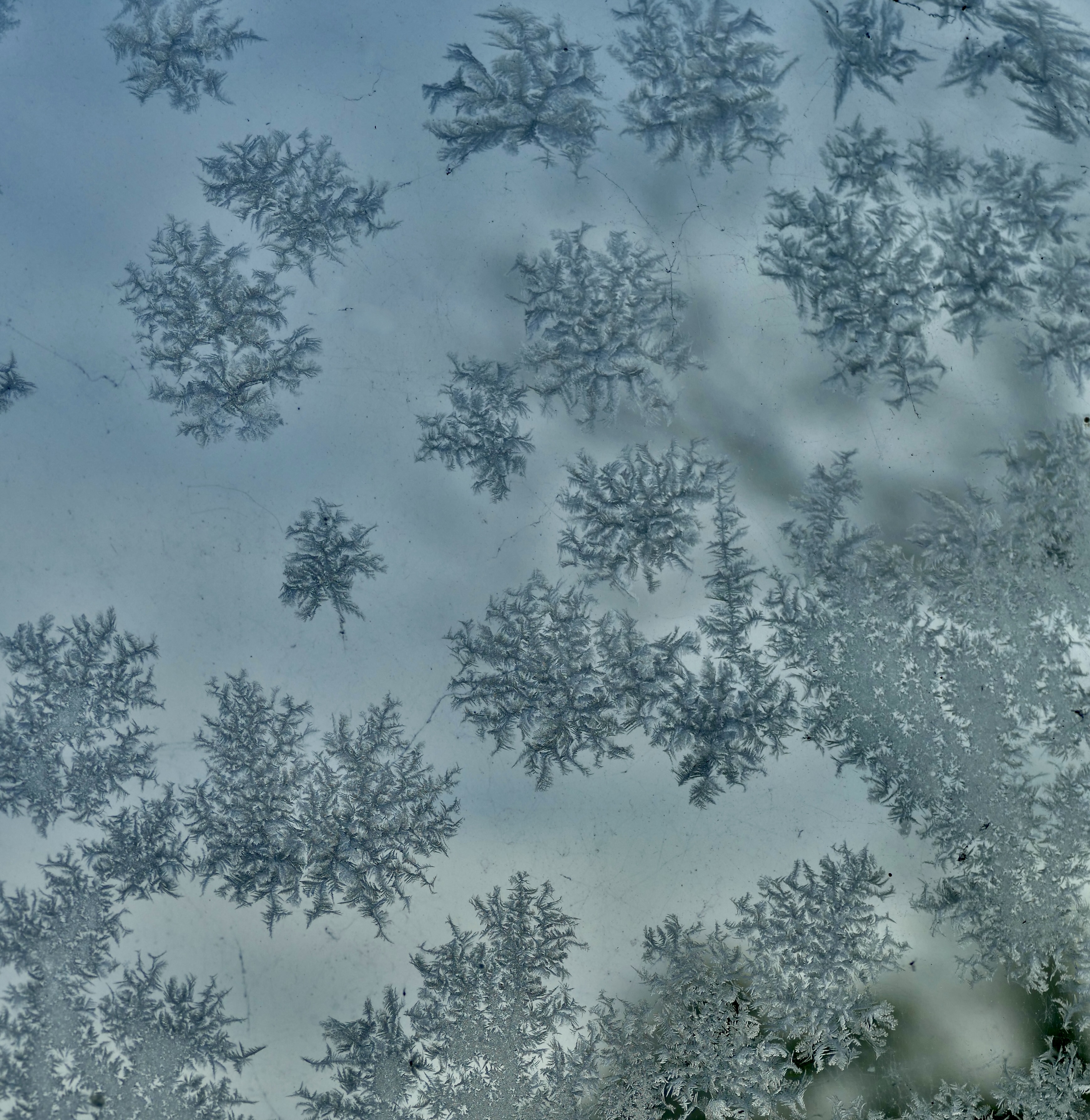
Frost forms on windows.
in Thoreau’s Journal:
-5º. A cold day; Two or three inches of dry snow last night. Grows colder apace toward night.
Frost forms on windows.
in Thoreau’s Journal:
Surely the ice is a great & absorbing phenomenon– Consider how much of the surface of the town it occupies–

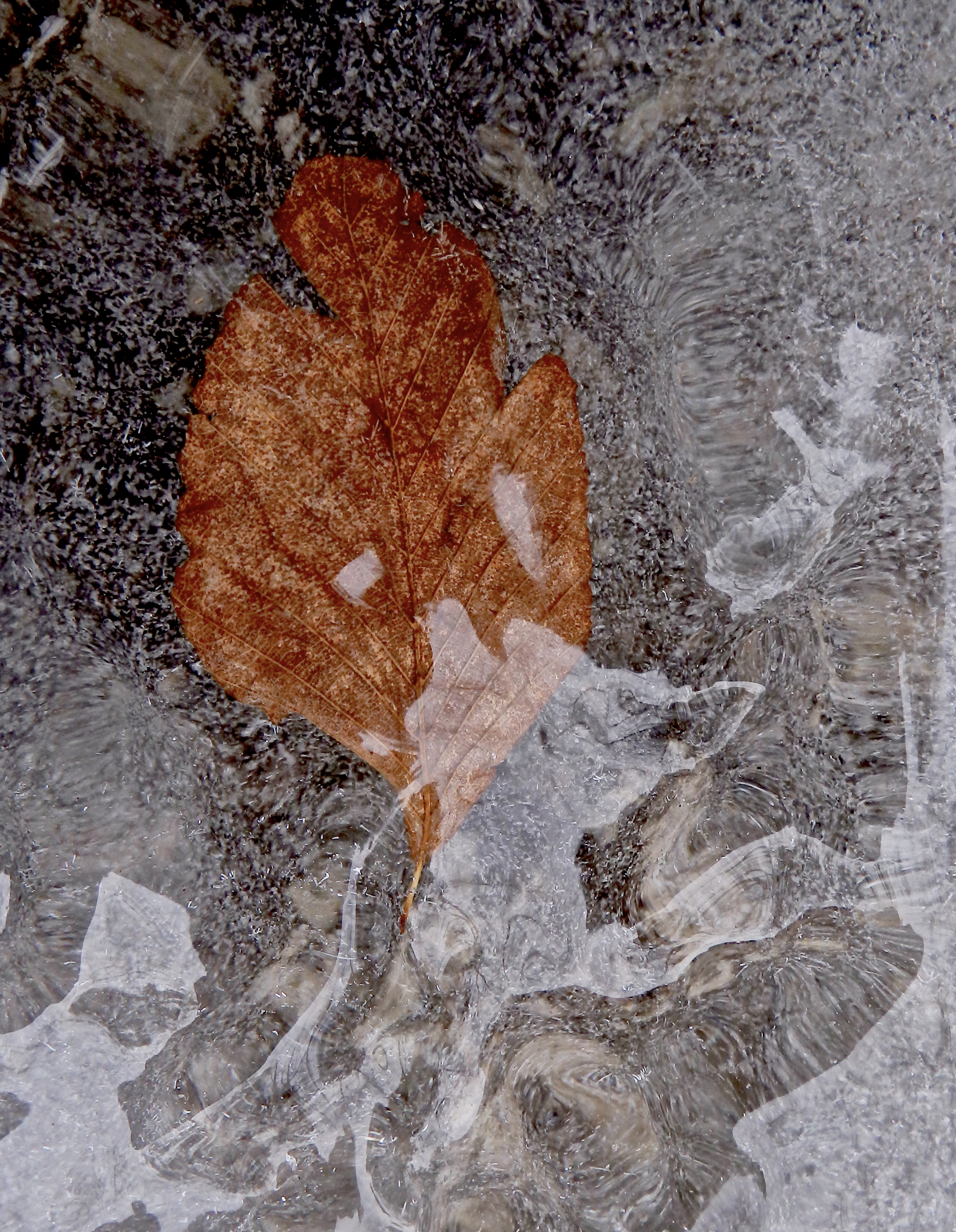
How much attention it monopolizes! We do not commonly distinguish more than one kind of water in the river–but what various kinds of ice there are!
in Thoreau’s Journal:
Up river on ice & snow to Fair Haven Pond––
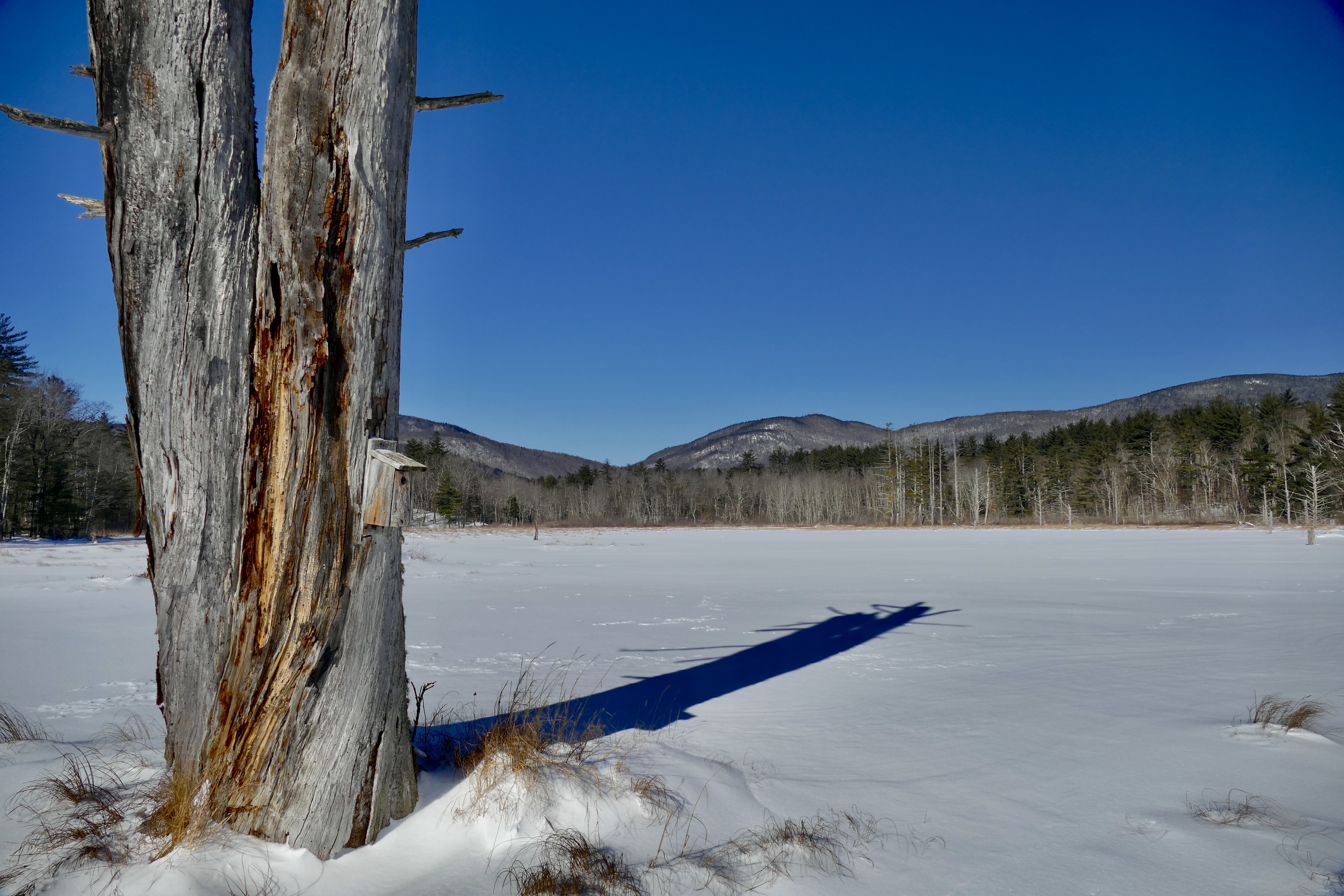
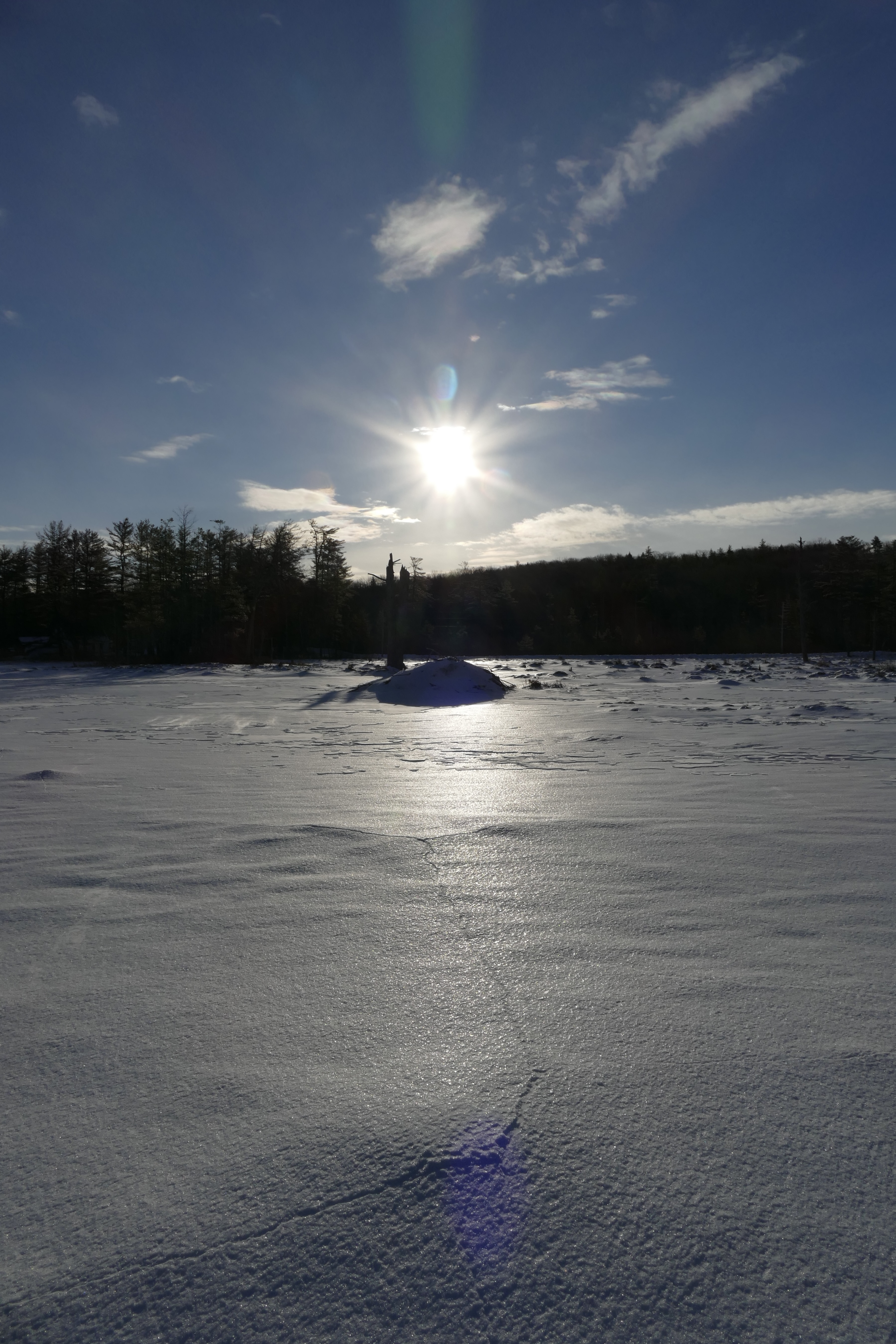
There is a few inches of snow perfectly level which now for nearly a week has covered the ice— Going toward the sun you are snow-blinded–– At each clump of willows on the meadow it looks as if there were a hillock––out of which they grow–– This appearance is produced by the willow twigs holding up the ice to height at which it was frozen after the last thaw about 2 feet above the present level.— It forms a regularly rounded hillock. We look at every track in the snow — Every little while there is the track of a fox across the river—turning aside sometimes to a muskrats cabin or a point of ice—where he has left some traces— frequently the larger track of a hound which has followed his trail— It is much easier & pleasanter to walk thus on the river—the snow being shallow & level —& there is no such loud squeaking or cronching of the snow as in the road—and This road is so wide that you do not feel confined in it—& you never meet travelers with whom you have no sympathy. The winter, cold & bound out as it is, is thrown to us like a bone to a famishing dog, & we are expected to get the marrow out of it. While the milkmen in the outskirts are milking so many scores of cows before sunrise these winter mornings, it is our task to milk the winter itself. It is true it is like a cow that is dry & our fingers are numb—& there is none to wake up us— Some desert the field & go into winter quarters in the city— They attend the oratorios while the only music that we hear is the squeaking of the snow under our boots. But the winter was not given to us for no purpose— We must thaw its cold with our genialness. We are tasked to find out & appropriate all the nutriment it yields— If it is a cold & hard season—its fruit no doubt is the more concentrated & nutty. It took the cold & bleakness of November to ripen the walnut—but the human brain is the kernel which the winter itself matures— Not till then does its shell come off— The seasons were not made in vain— Because the fruits of the earth are already ripe—we are not to suppose there is no fruit left for winter to ripen. — It is for man the seasons and the all the fruits exist. The winter was made to concentrate & harden & mature the kernel of his brain—to give tone & firmness & consistency to his thought— Then is the great harvest of the year—the harvest of thought— All previous harvests are stubble to this—mere fodder & green crop. Now we burn with a purer flame like the stars, our oil is winter-strained. We are islanded in Atlantic & Pacific—& Indian Oceans of thought— Bermudas or Friendly or Spice Islands—
in Thoreau’s Journal:
Men lie behind the barrier of a relation as effectually concealed as the landscape by a mist; and when at length some unforeseen accident throws me into a new attitude toward them, I am astounded, as if for the first time I saw the sun on the hill-side.—
They lie out before me like a new order of things.— As when the master meets his pupil as a man.— Then first do we stand under the same heavens—and master and pupil alike go down the resistless ocean stream together.
in Thoreau’s Journal:
Our life should be so active and progressive as to be a journey. Our meals should all be of journey-cake and hasty pudding. We should be more alert, see the sun rise, not keep fashionable hours, enter a house, our own house, as a khan, a caravansary.
At noon I did not dine; I ate my journey-cake. I quenched my thirst at a spring or a brook. As I sat at the table, the hospitality was so perfect and the repast so sumptuous that I seemed to be breaking my fast upon a bank in the midst of an arduous journey, that the water seemed to be a living spring, the napkins grass, the conversation free as the winds; and the servants that waited on us were our simple desires.
in Thoreau’s Journal:

The snow falls on no two trees alike, but the forms it assumes are as various as those of the twigs and leaves which receive it. They are, as it were, predetermined by the genius of the tree. So one divine spirit descends alike on all, but bears a peculiar fruit in each. The divinity subsides on all men, as the snowflakes settle on the fields and ledges and takes the form of the various clefts and surfaces on which it lodges.
in Thoreau’s Journal:
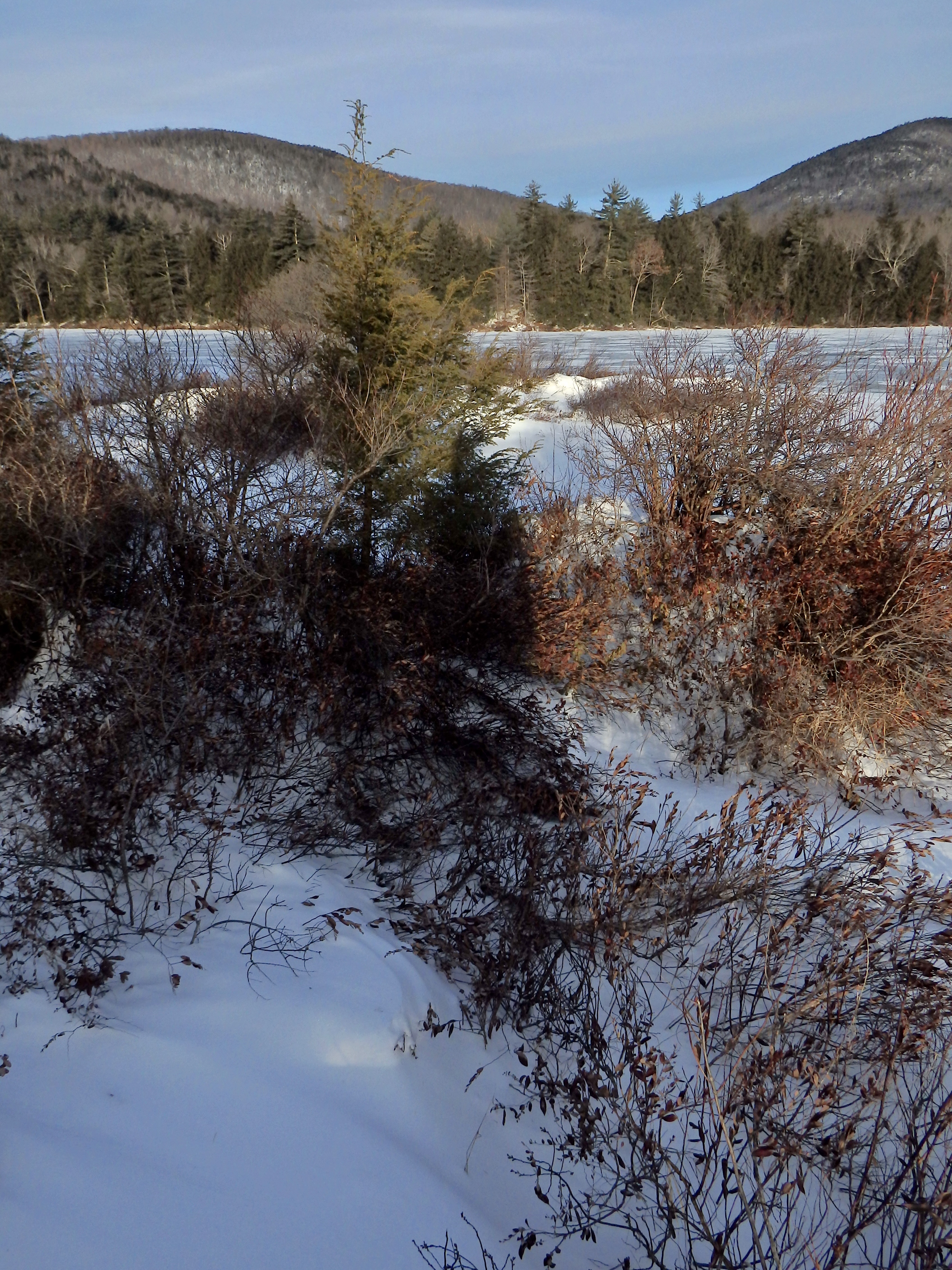
Let us preserve religiously—secure—protect—the coincidence of our life with the life of nature.—
in Thoreau’s Journal:
Having gone a quarter of a mile beyond the bridge, where C. calls this his Spanish Brook, I looked back from the top of the hill on the south into this deep dell, Where the white pines stood thick, rising one above another, reflecting the sunlight, so soft and warm by contrast with the snow, as never in summer ,

—for the idea of warmth prevailed over the cold which the snow suggested, though I saw through and between them to a distant snow-clad hill, and also to oaks red with their dry leaves, —and maple limbs were mingled with the pines, I was on the verge of seeing something, but I did not. If I had been alone and had had more leisure, I might have seen something to report.
in Thoreau’s Journal:
A journal is a record of experiences & growth–not a preserve of things well done or said. I am occasionally reminded of a statement which I have made in conversation & immediately forgotten–which would read much better than what I put in my journal. It is a ripe dry fruit of long past experience which falls from me easily without giving pain or pleasure–
The charm of the journal must consist in a certain greenness–though freshness–& not in maturity. Here I cannot afford to be remembering what I said or did–my scurf cast off–but what I am & aspire to become.
in Thoreau’s Journal:
To insure health a man’s relation to nature—must come very near to a personal one—he must be conscious of a friendliness in her—when human friends part or die she must stand in the gap to him. I cannot conceive of any life which deserves the name, unless there is a certain tender relation to nature— This it is which makes winter warm—& supplies society in the desert & wilderness— Unless nature sympathizes with & speaks to us, as it were, the most fertile & blossoming regions are barren & dreary…
I do not see that I can live tolerably without affection for Nature. If I feel no softening toward the rocks, what do they signify? I do not think much of that chemistry that can extract corn and potatoes out of a barren [soil], but rather of that chemistry that can extract thoughts and sentiments out of the life of a man on any soil. It is in vain to write on the seasons unless you have the seasons in you.
in Thoreau’s Journal:
What is it that I see from one mile to two miles distant in the horizon on all sides from my window, but the woods, which still, almost without exception, encircle our New England towns. They still bound almost every view. They have been driven off only so far. Where still wild creatures haunt.
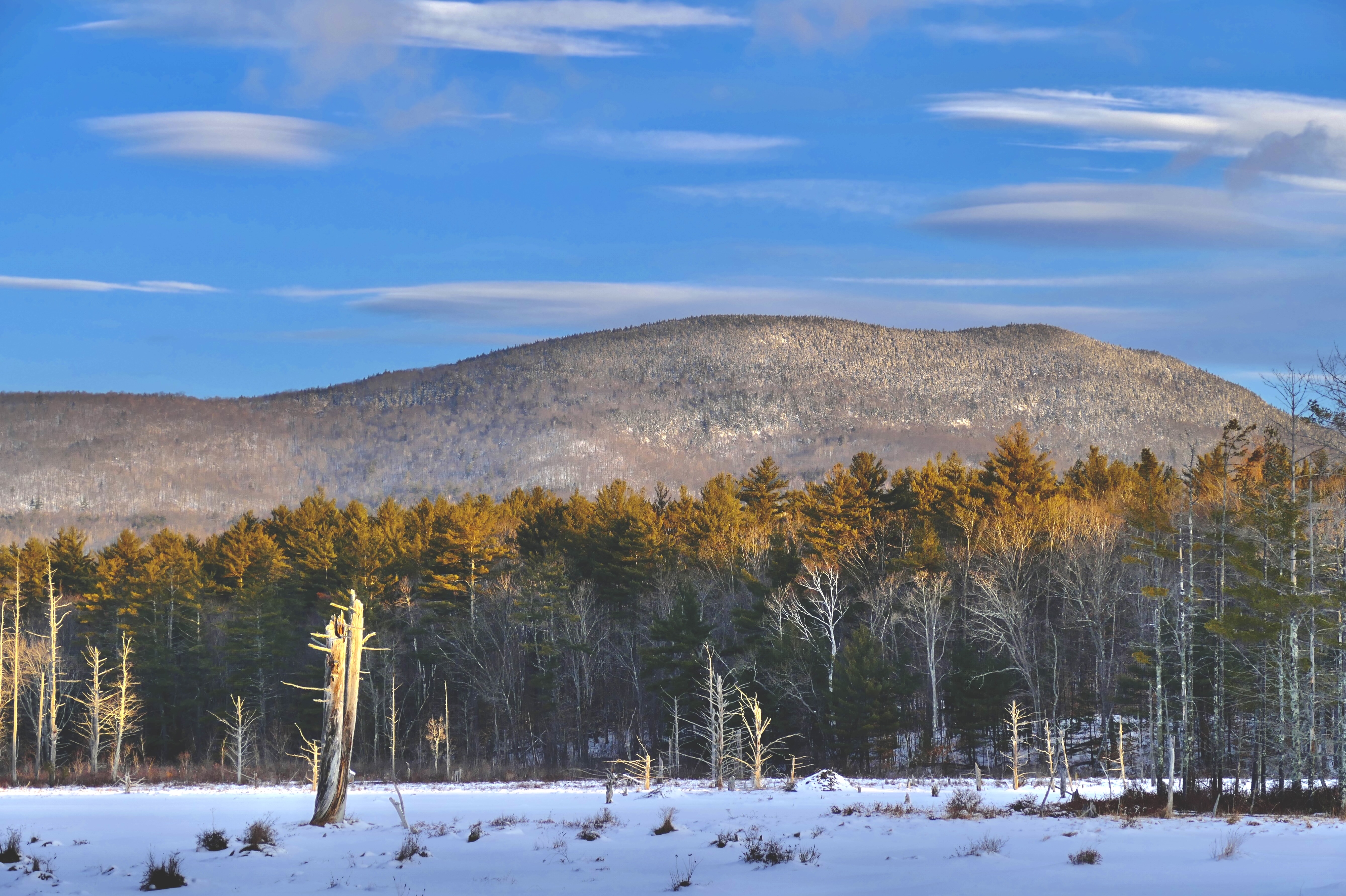
How long will these last? Is this a universal and permanent feature? Have the oldest countries retained it? Is it not an interesting and important question whether these are decreasing or not? Look out what window I will, my eyes rest in the distance on a forest! Is this fact of no significance? Is this circumstance of no value ? Why such pains in old countries to plant gardens and parks? A certain sample of wild nature, a certain primitiveness.
in Thoreau’s Journal:
Man is the artificer of his own happiness. Let him beware how he complains of the disposition of circumstances, for it is his own disposition he blames. If this is sour, or that rough, or the other steep, let him think if it be not his work. If his look curdles all hearts, let him not complain of a sour reception; if he hobble in this gait, let him not grumble at the roughness of the way; if he is weak in the knees, let him not call on the hill steep.

This was the pith of the inscription on the wall of the Swedish inn: “You will find at Trolhate excellent bread, meat, and wine, provided you bring them with you.”
in Thoreau’s Journal:
I do not know but it is too much to read one newspaper in a week, for I now take the weekly Tribune, and for a few days past, it seems to me, I have not dwelt in Concord; the sun, the clouds, the snow, the trees say not so much to me. You cannot serve two masters. It requires more than a day’s devotion to know and to possess the wealth of a day. To read of things distant and sounding betrays us into slighting these which are then apparently near and small. We learn to look abroad for our mind and spirit’s daily nutriment, and what is this dull town to me? what are these plain fields and the aspects of this earth and these skies? All summer and far into the fall I unconsciously went by the newspapers and the news, and now I find it was because the morning and the evening were full of news to me.

My walks were full of incidents. I attended not to the affairs of Europe, but to my own affairs in Concord fields.
in Thoreau’s Journal:

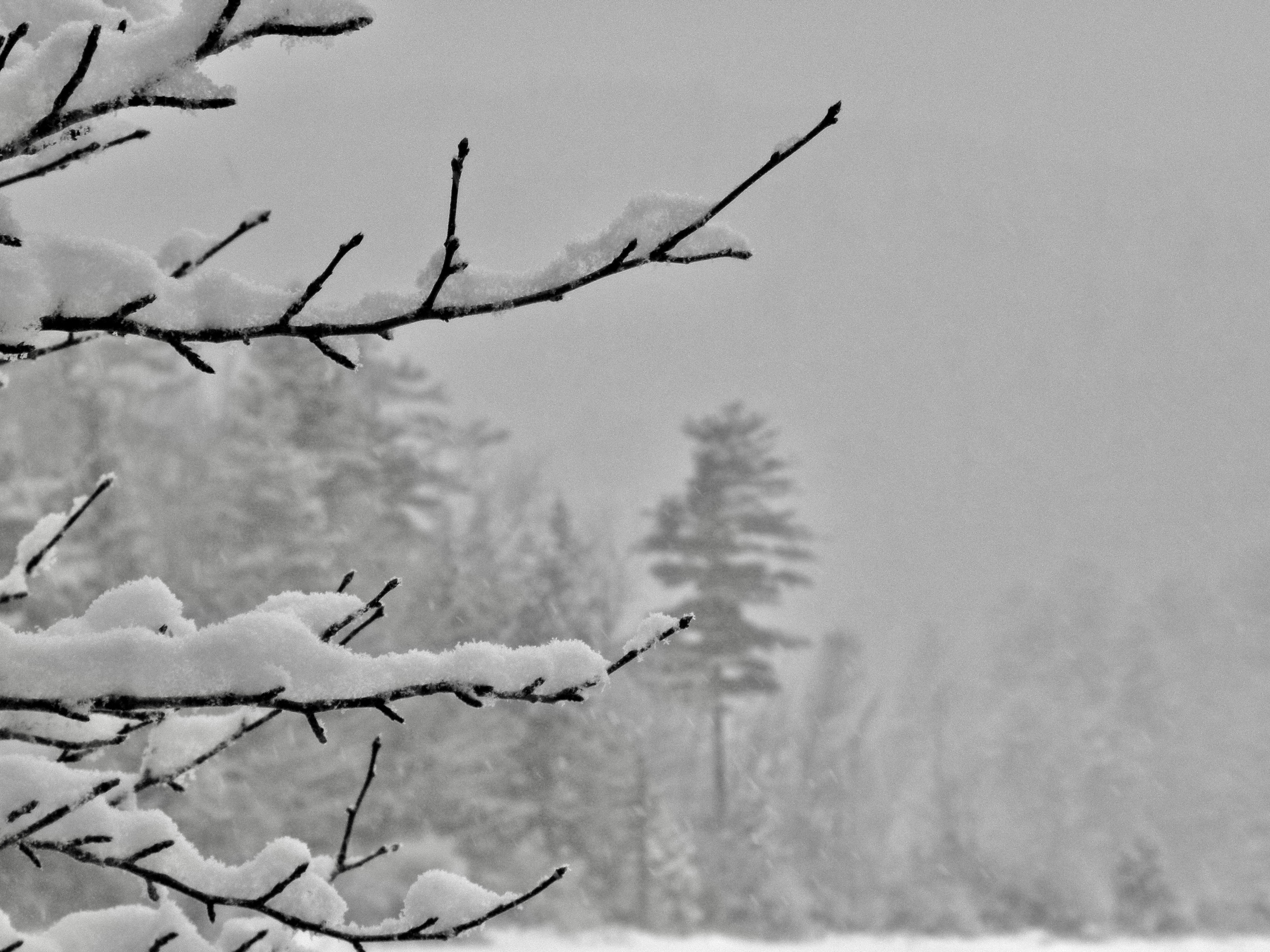
P. M. — The damp snow still drives from the northwest nearly horizontally over the fields, while I go with C. toward the Cliffs and Walden. There is not a single fresh track on the back road, and the aspect of the road and trees and houses is very wintry. Though considerable snow has fallen, it lies chiefly in drifts under the walls. We went through the Spring Woods, over the Cliff, by the wood-path at its base to Walden, and thence by the path to Brister’s Hill, and by road home. It was worth the while to see what a burden of damp snow lay on the trees notwithstanding the wind.
in Thoreau’s Journal:
To Walden, to learn the temperature of the water….This is a very mild, melting winter day, but clear and bright. Yet I see the blue shadows on the snow at Walden. The snow lies very level there, about ten inches deep, and, for the most part, bears me as I go across with my hatchet. I think I never saw a more elysian blue than my shadow.
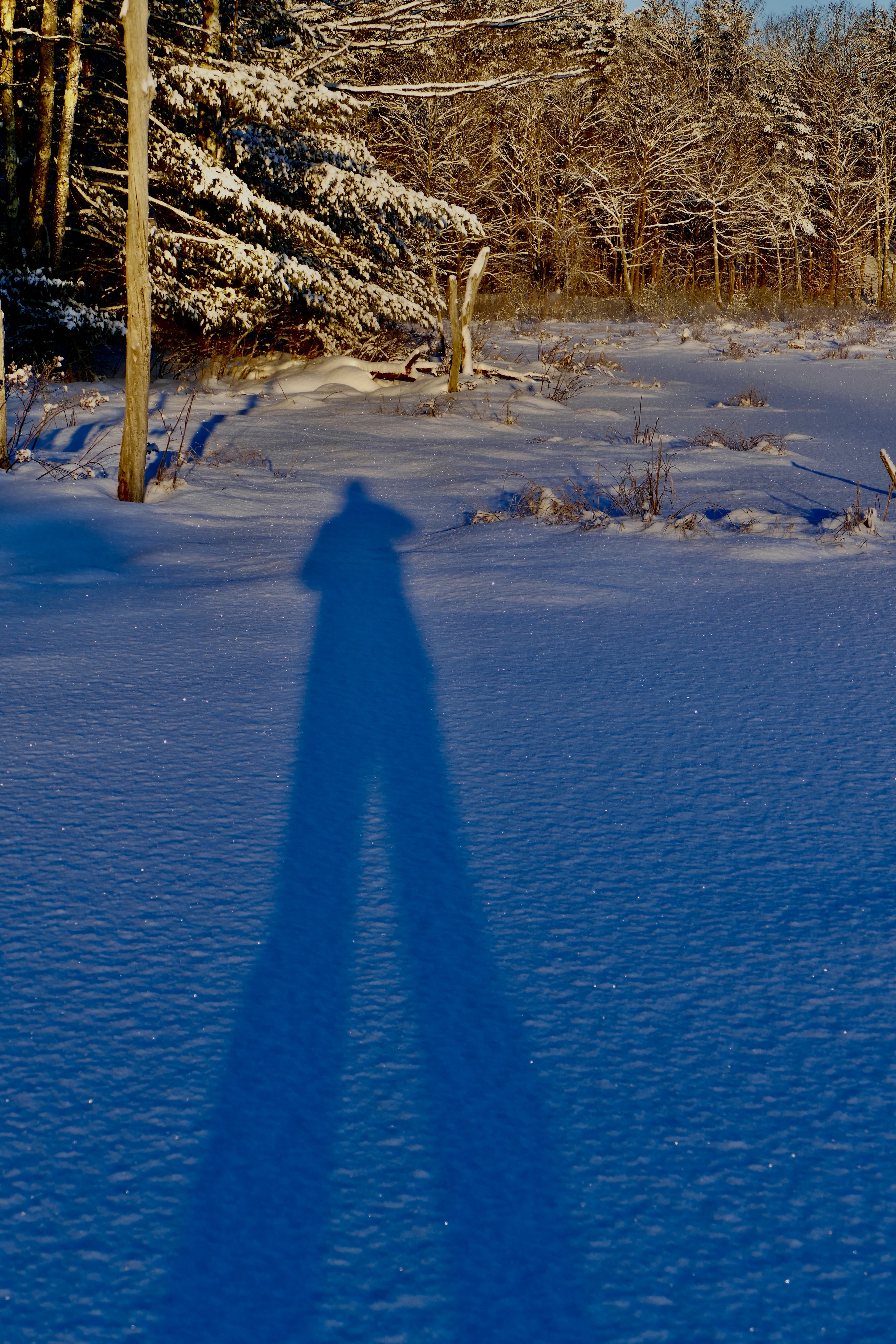
I am turned into a tall blue Persian from my cap to my boots, such as no mortal dye can produce, with an amethystine hatchet in my hand. I am in raptures with my own shadow. Our very shadows are no longer black but a celestial blue.
in Thoreau’s Journal:
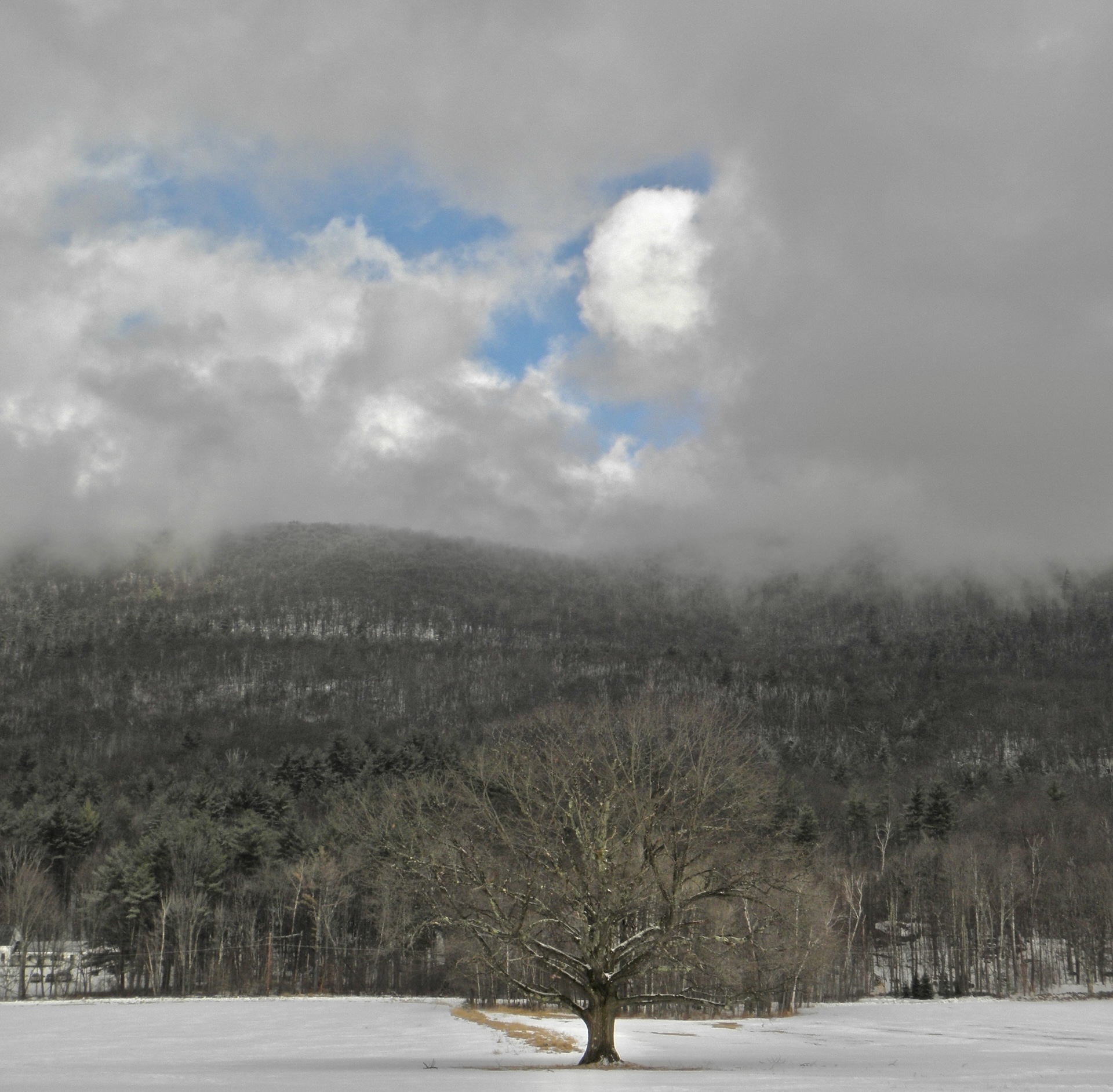
The endless variety in the forms and texture of the clouds! —some fine, some coarse grained.

in Thoreau’s Journal:

…every twig and trunk and blade of withered sedge is thus covered or cased with ice
in Thoreau’s Journal:
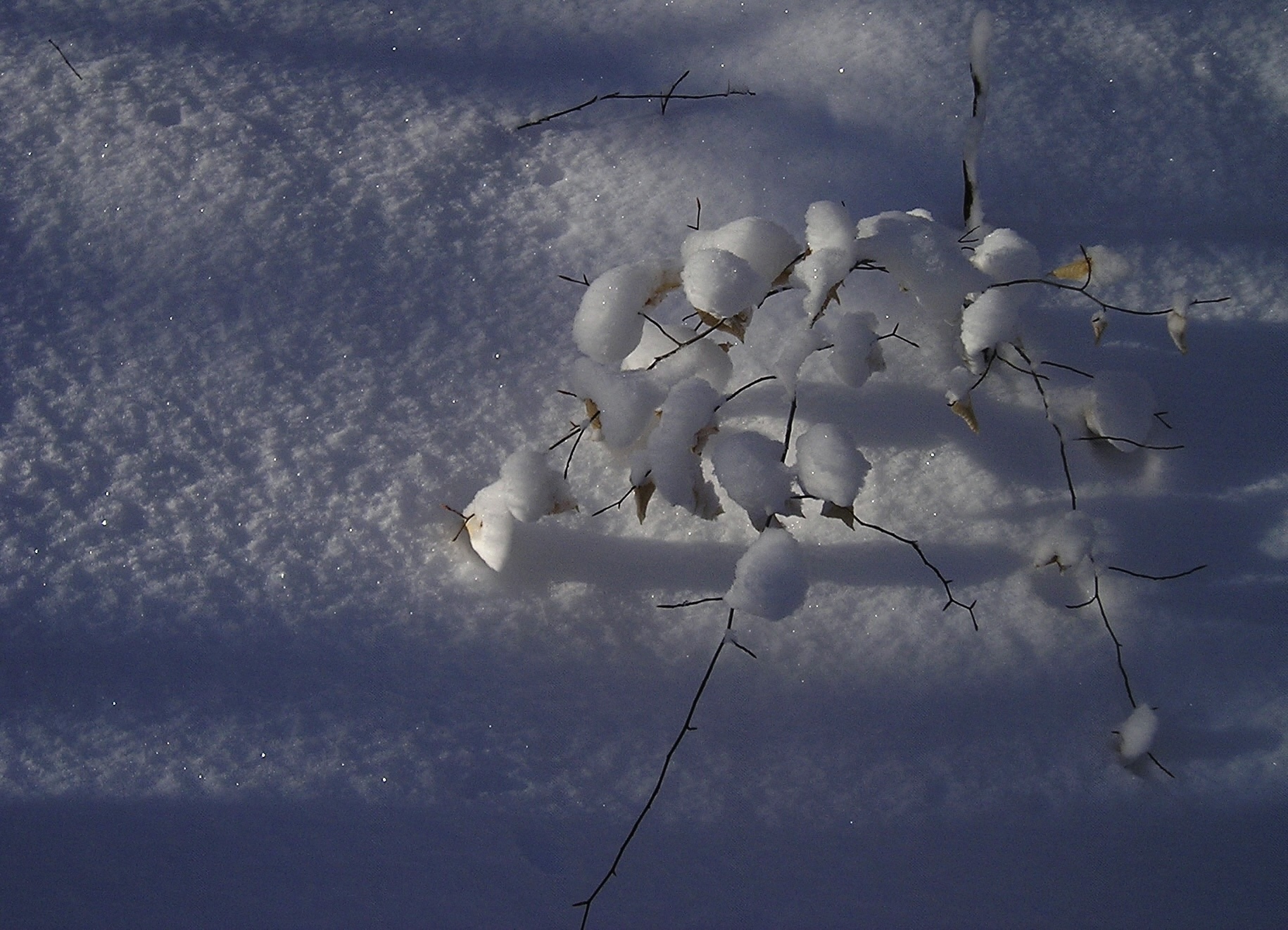
There is a still life in America that is little observed or dreamed of….
in Thoreau’s Journal:
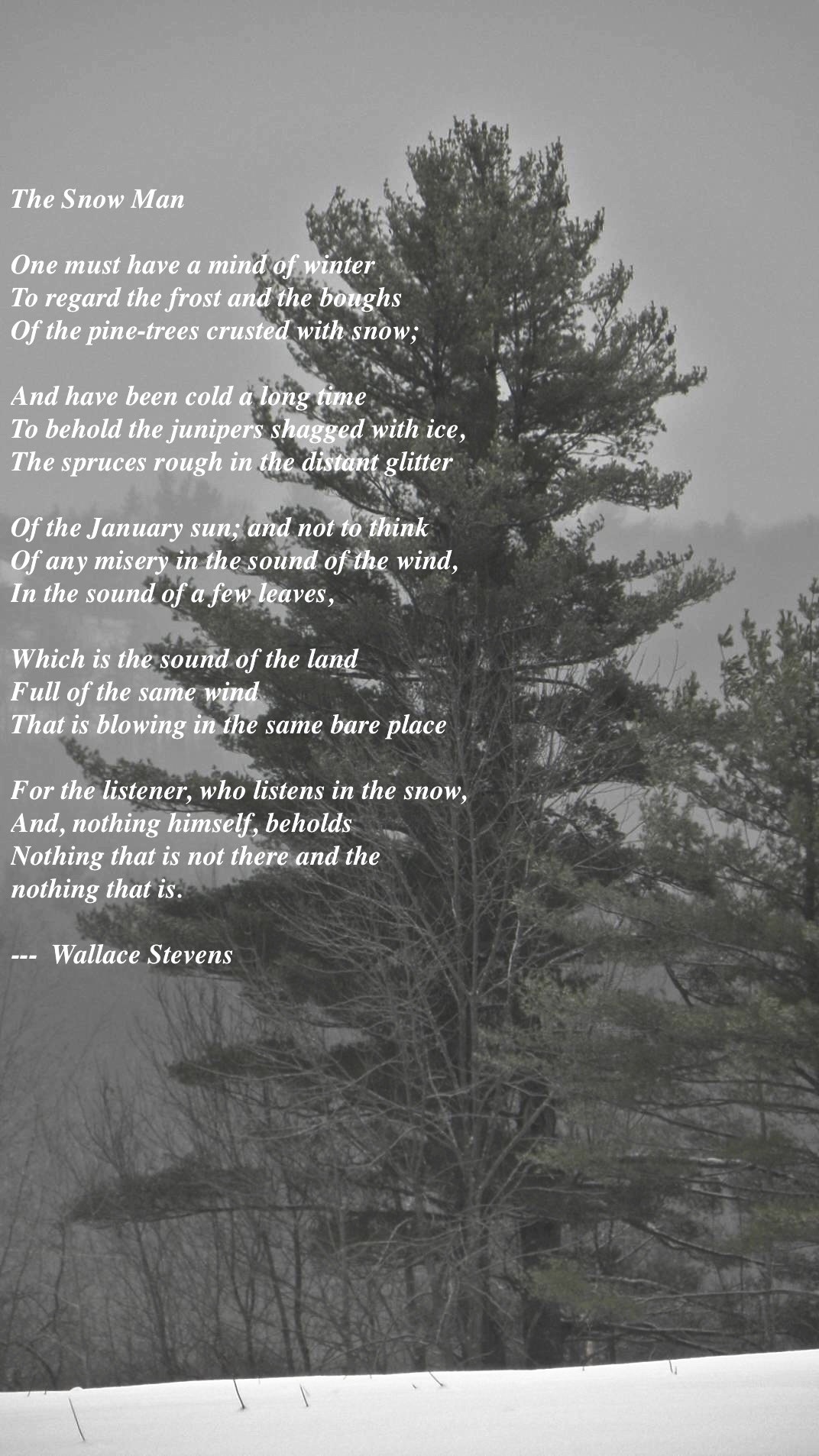
White walls of snow rest on the boughs of trees, in height two or three times their thickness. These white irregular arms give the forest a wintry and picturesque look at a distance. The evergreens, especially the pitch pine, often bear large irregular white burdens, agreeably diversified and loopholed by the interstices of the plumes.
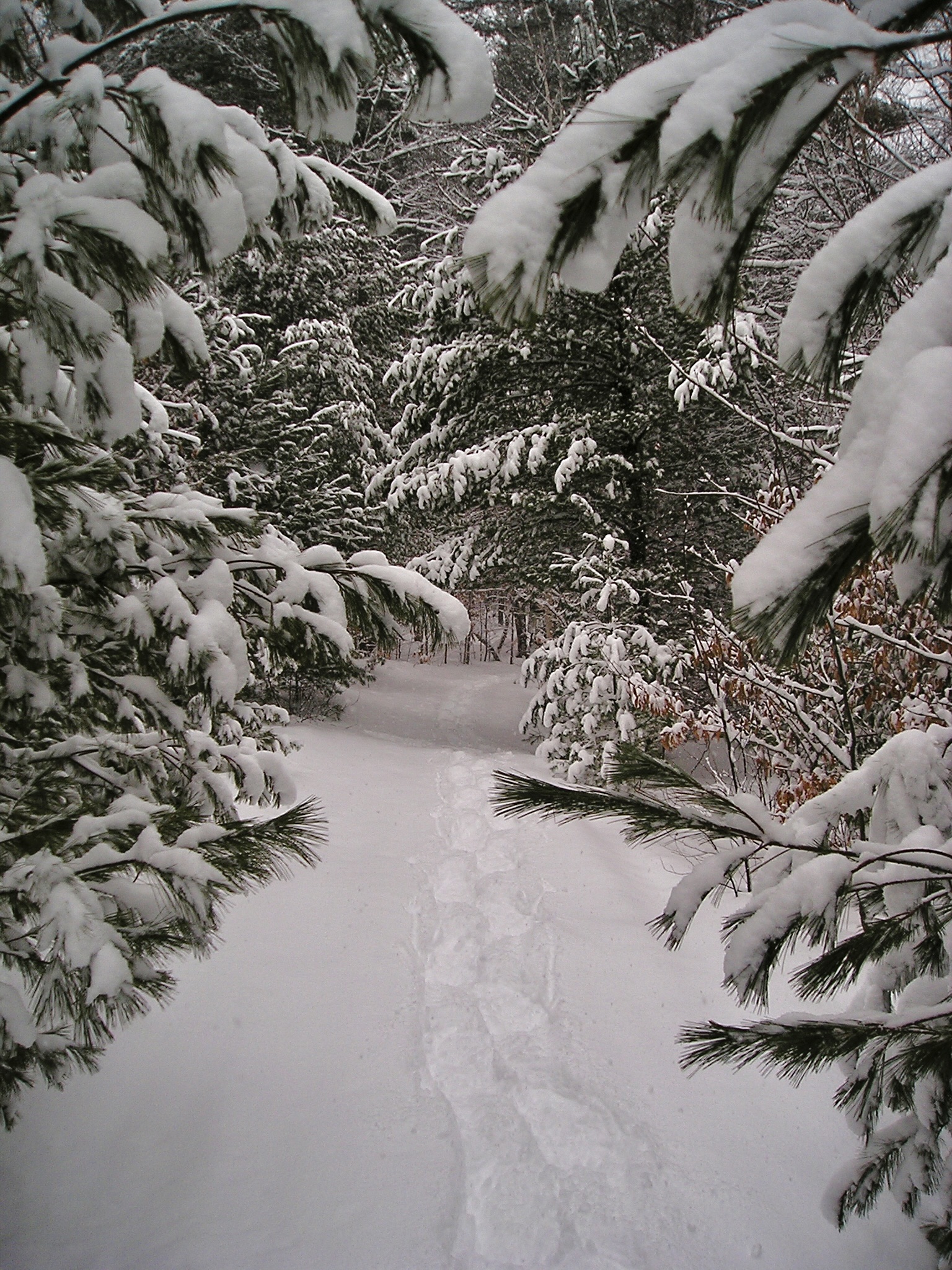
But it is only when fresh that this snow on the trees is beautiful. Already, before the storm is over, the surface of the snow in the high woods is full of indentations and hollows where some of this burden has fallen.
in Thoreau’s Journal:
I hear one thrumming a guitar below stairs. It reminds me of moments that I have lived. What a comment upon our life is the least strain of music! It lifts me above the mire and dust of the universe. I soar or hover with clean skirts over a field of my life. It is ever life within life, in concentric spheres. The field wherein I toil or rust at any time is at the same time the field for such different kinds of life! The farmer’s boy or hired man has an instinct which tells him as much indistinctly, and hence his dreams and his restlessness; hence, even, it is that he wants money to realize his dreams with. The identical field where I am leading my humdrum life, let but a strain of music be heard there, is seen to be the field of some unrecorded crusade or tournament the thought of which excites in us an ecstasy of joy.

The way in which I am affected by this faint thrumming advertises me that there is still some health and immortality in the springs of me. What an elixir is sound! I, who but lately came and went and lived under a dish cover, live now under the heavens. It releases me; it bursts my bonds. Almost all, perhaps all, our life is, speaking comparatively, a stereotyped despair; i.e., we never at any time realize the full grandeur of our destiny. We forever and ever and habitually underrate our fate.


You must be logged in to post a comment.