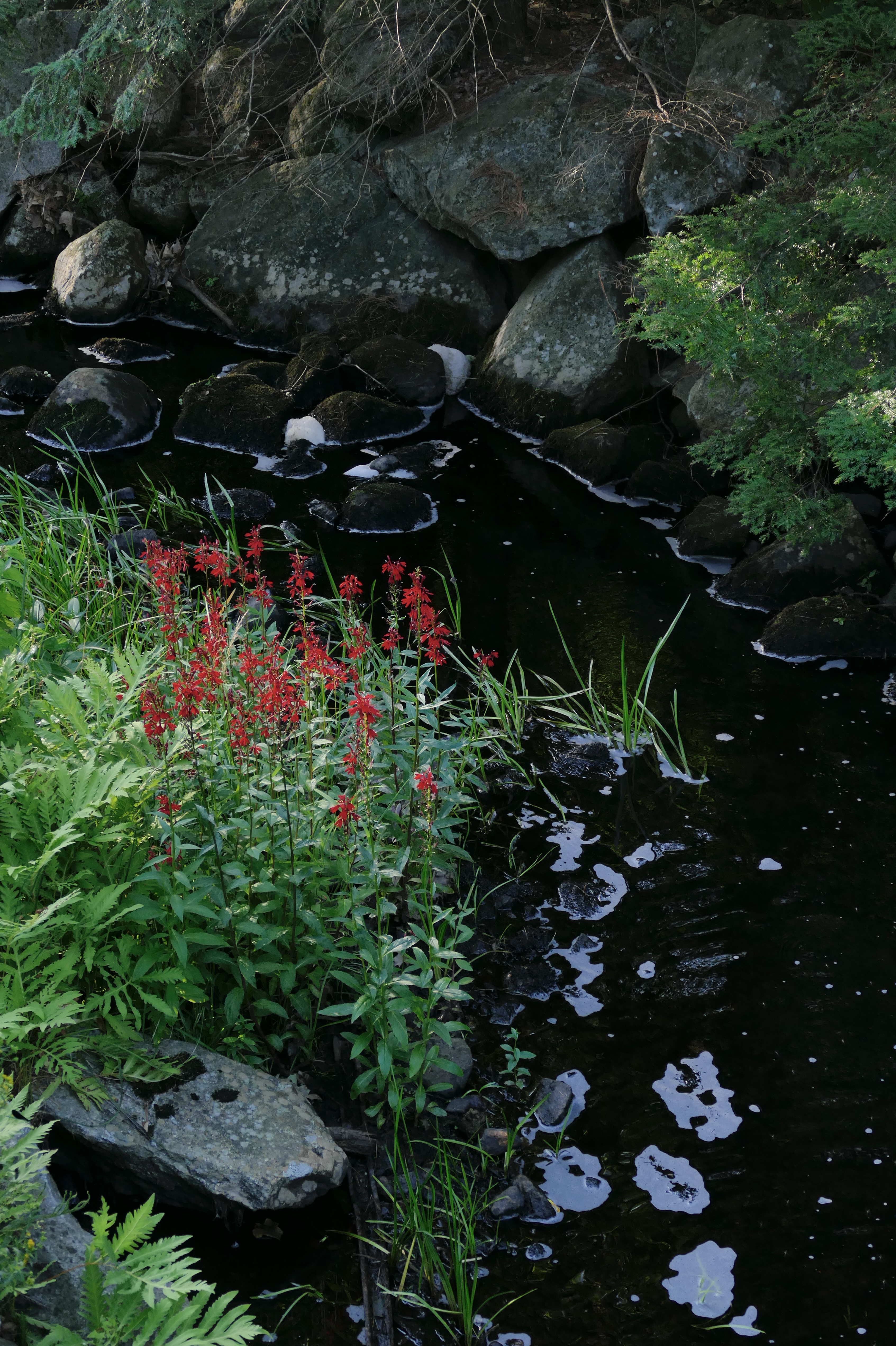
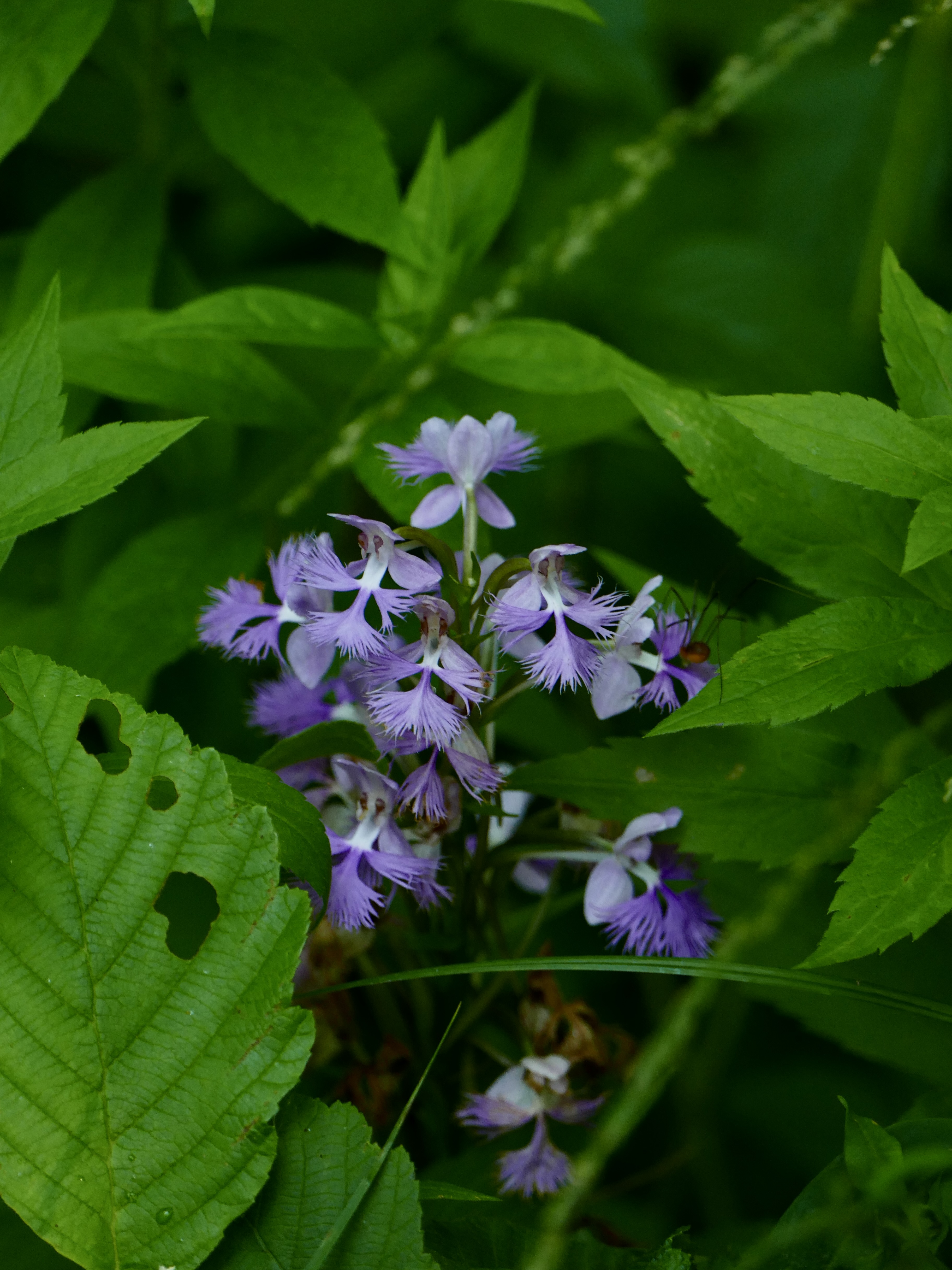
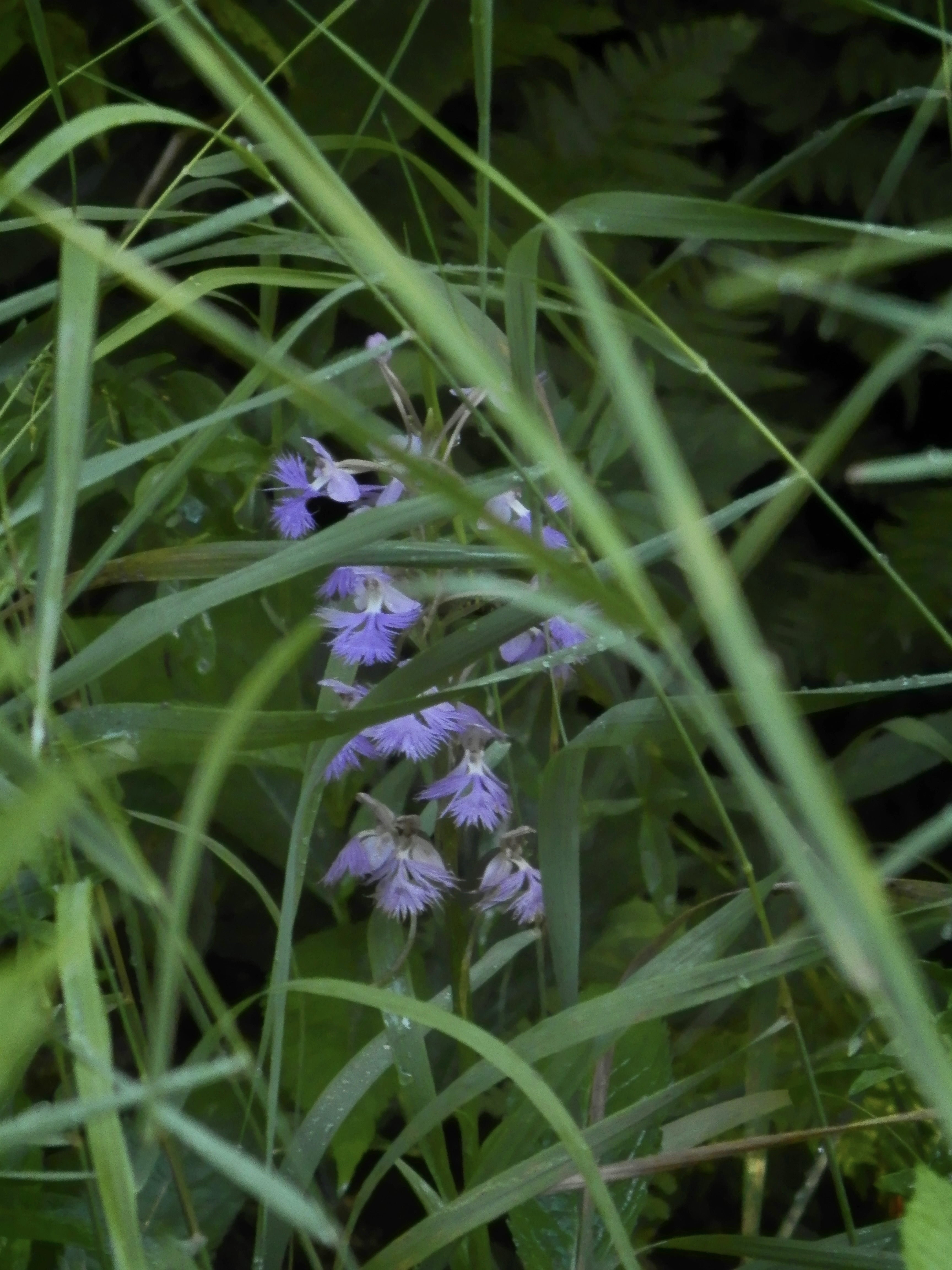
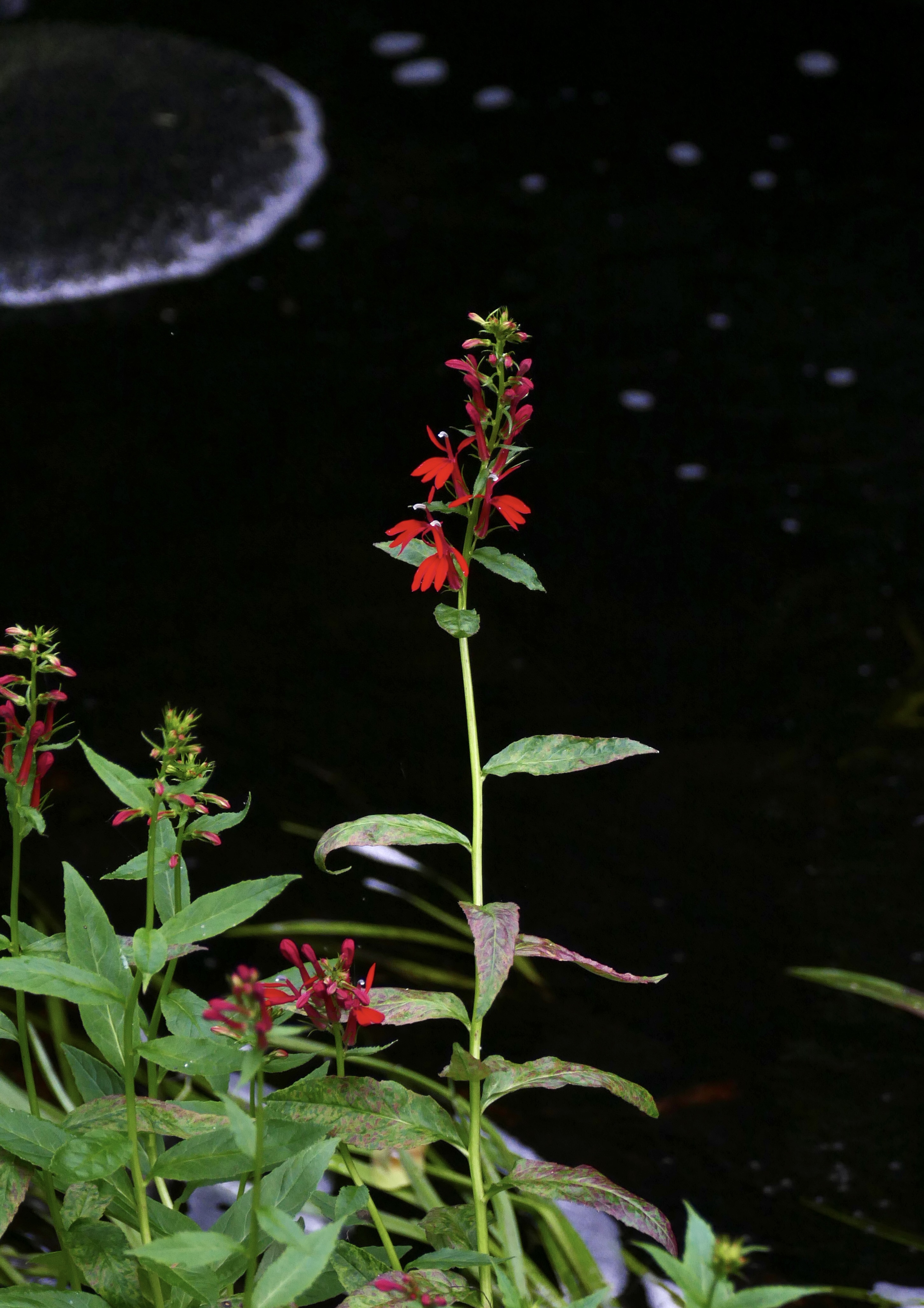
I love to follow up the course of the brook & see the cardinal flowers which stand in its midst above the rocks––their brilliant scarlet the more interesting in this open but dark cellar like wood––the small purple fringed orchises with the long dense spikes––all flower––for that is often all that is seen above the leaves of other plants–– Is not this the last flower of this peculiar flower kind; (i.e. all flower & color––the leaves subordinated)?
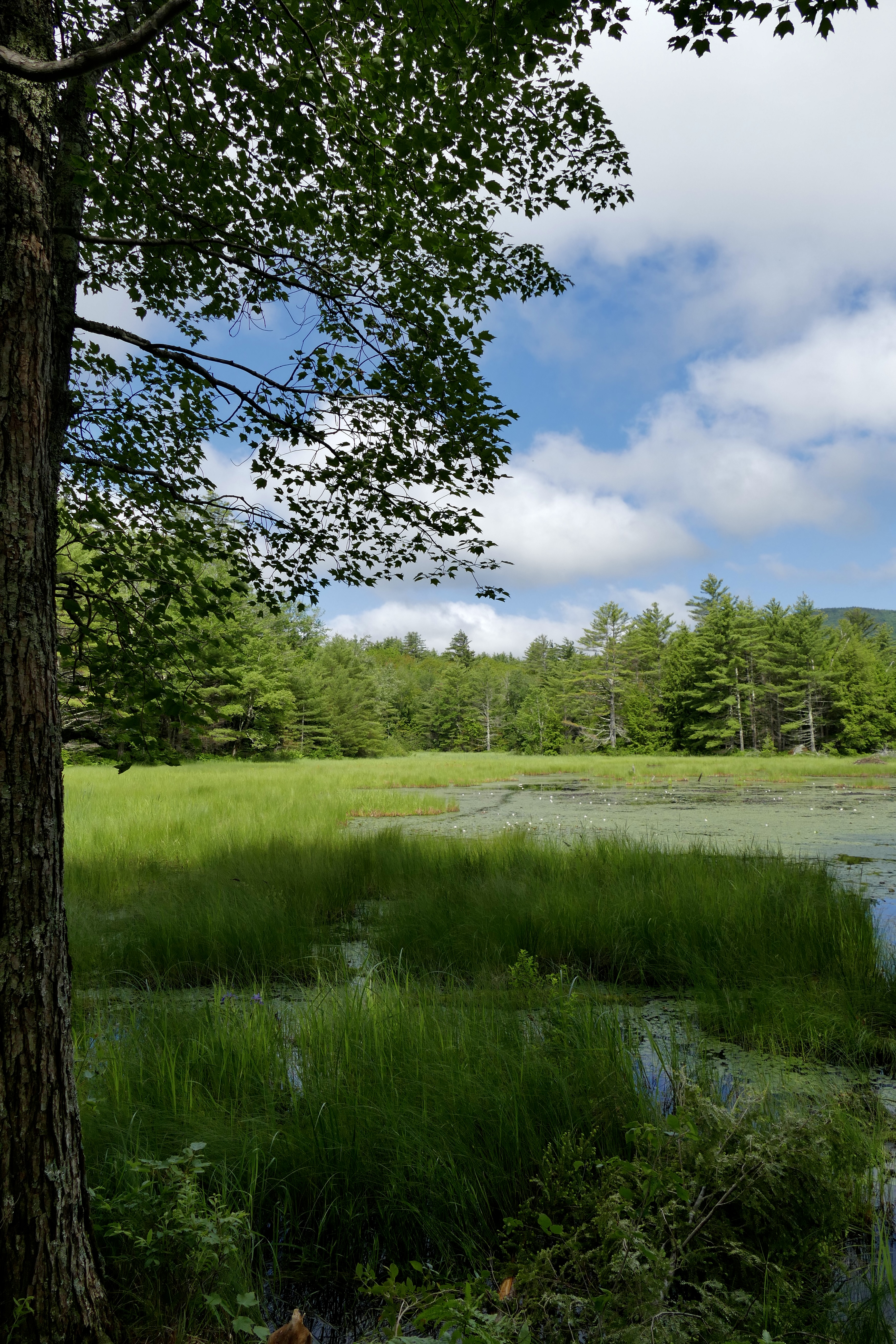
As I wade through the middle of the meadows in sedge up to my middle and look afar over the waving and rustling bent tops of the sedge (all are bent northeast by the southwest wind) toward the distant mainland, I feel a little as if caught by a rising tide on flats far from the shore. I am, as it were, cast away in the midst of the sea. It is a level sea of waving and rustling sedge about me. The grassy sea.
You feel somewhat as you would if you were standing in water at an equal distance from the shore. To-day I can walk dry over the greater part of the meadows, but not over the lower parts, where pipes, etc., grow; yet many think it has not been so dry for ten years!
My attic chamber has compelled me to sit below with the family at evening for a month. I feel the necessity of deepening the stream of my life; I must cultivate privacy. It is very dissipating to be with people too much. As C. says, it takes the edge off a man’s thoughts to have been much in society. I cannot spare my moonlight and my mountains for the best of man I am likely to get in exchange––
I am inclined now for a pensive evening walk
Methinks we think of spring mornings and autumn evenings. I go via Hubbard Path. Chelone say two days X at Conants meadow beyond Wheelers. July has been to me a trivial month. It began hot and continued drying, then rained some toward the middle, bringing anticipations of the fall, and then was hot again about the 20th. It has been a month of haying, heat, low water, and weeds. Birds have grown up and flown more or less in small flocks, though I notice a new sparrow’s nest and eggs and perhaps a catbird’s eggs lately. The woodland quire has steadily diminished in volume.
At the bass I now find that that memorable hum has ceased and the green berries are formed. Now blueberries, huckleberries, and low blackberries are in their prime. The fever-bush berries will not be ripe for two or three weeks.
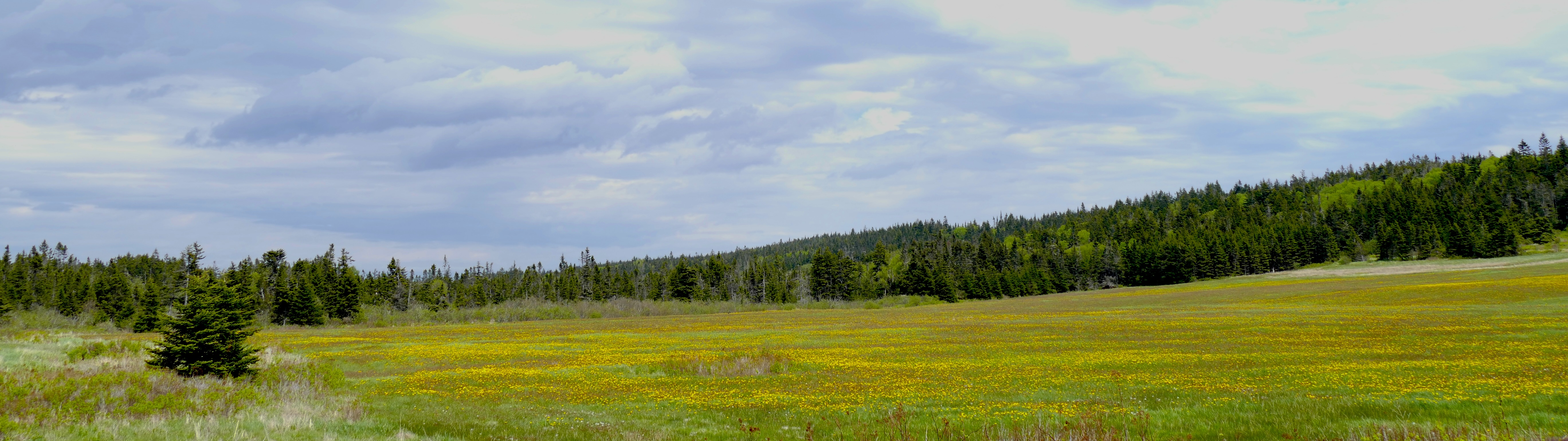
How much of beauty–of color as well as form–on which our eyes daily rest goes unperceived by us! No one but a botanist is likely to perceive nicely the different shades of green which the open surface of the earth is clothed–not even a landscape painter if he does not know the species of sedges and grasses which paint it. With respect to the color of grass, most of those even who attend peculiarly to the aspects of Nature only observe that it is more or less dark or light, green or brown, or velvety, fresh or parched, etc. But if you are studying grasses you look for another and different beauty, and you find it, in the wonderful variety of color, etc., presented by the various species. Take the bare, unwooded earth now, and consider the beautiful variety of shades (or tints ?) of green that clothe it under a bright sun. The pastured hills of Conantum, now just imbrowned (probably by the few now stale flowering tops of the red-top which the cows have avoided as too wiry), present a hard and solid green or greenish brown, just touched here and there delicately with light patches of sheep’s fescue (though it may be only its radical leaves left), as if a dew lay on it there, —and this has some of the effect of a watered surface, —and the whole is dotted with a thousand little shades of projecting rocks and shrubs. Then, looking lower at the meadow in Miles’s field, that is seen as a bright-yellow and sunny stream (yet with a slight tinge of glaucous) between the dark-green potato-fields, flowing onward with windings and expansions, and, as it were, with rips and waterfalls, to the river meadows.
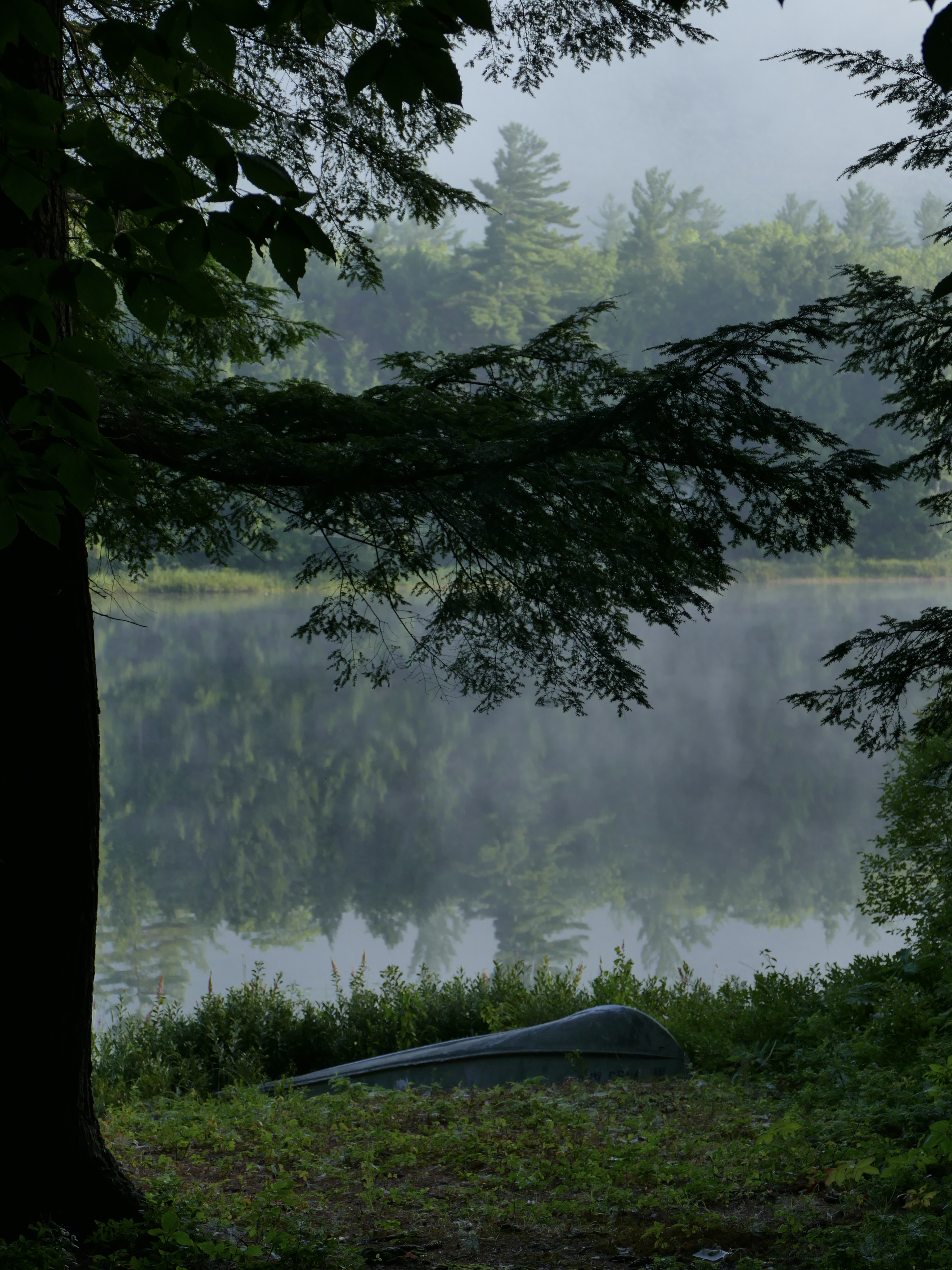
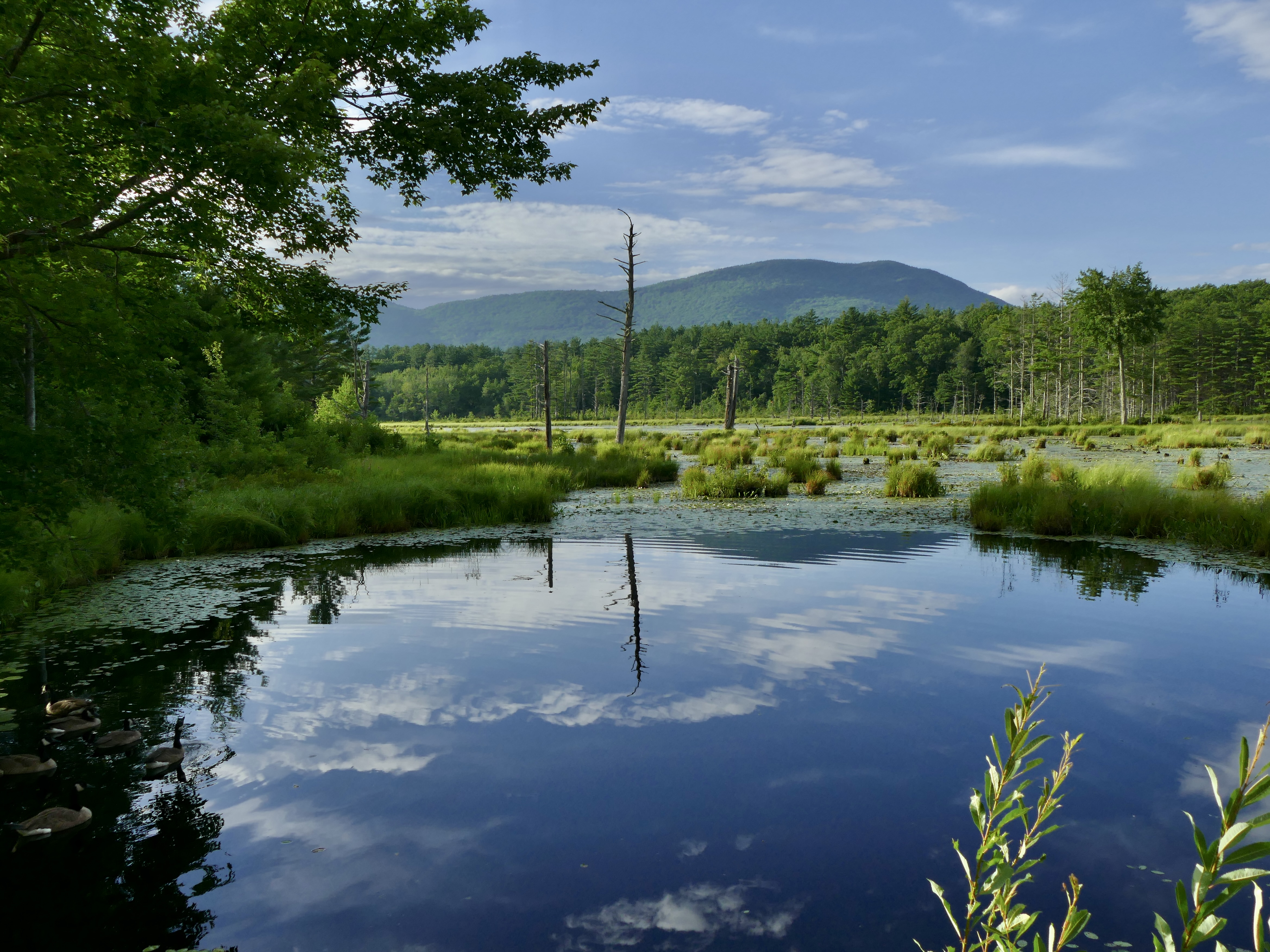
As I look out through the woods westward there, I see, sleeping and gleaming through the stagnant, misty, glaucous dog-day air, i. e. blue mist, the smooth silvery surface of Fair Haven Pond. There is a singular charm about it in this setting.
The surface has a dull, gleaming polish on it, though draped in this glaucous mist.
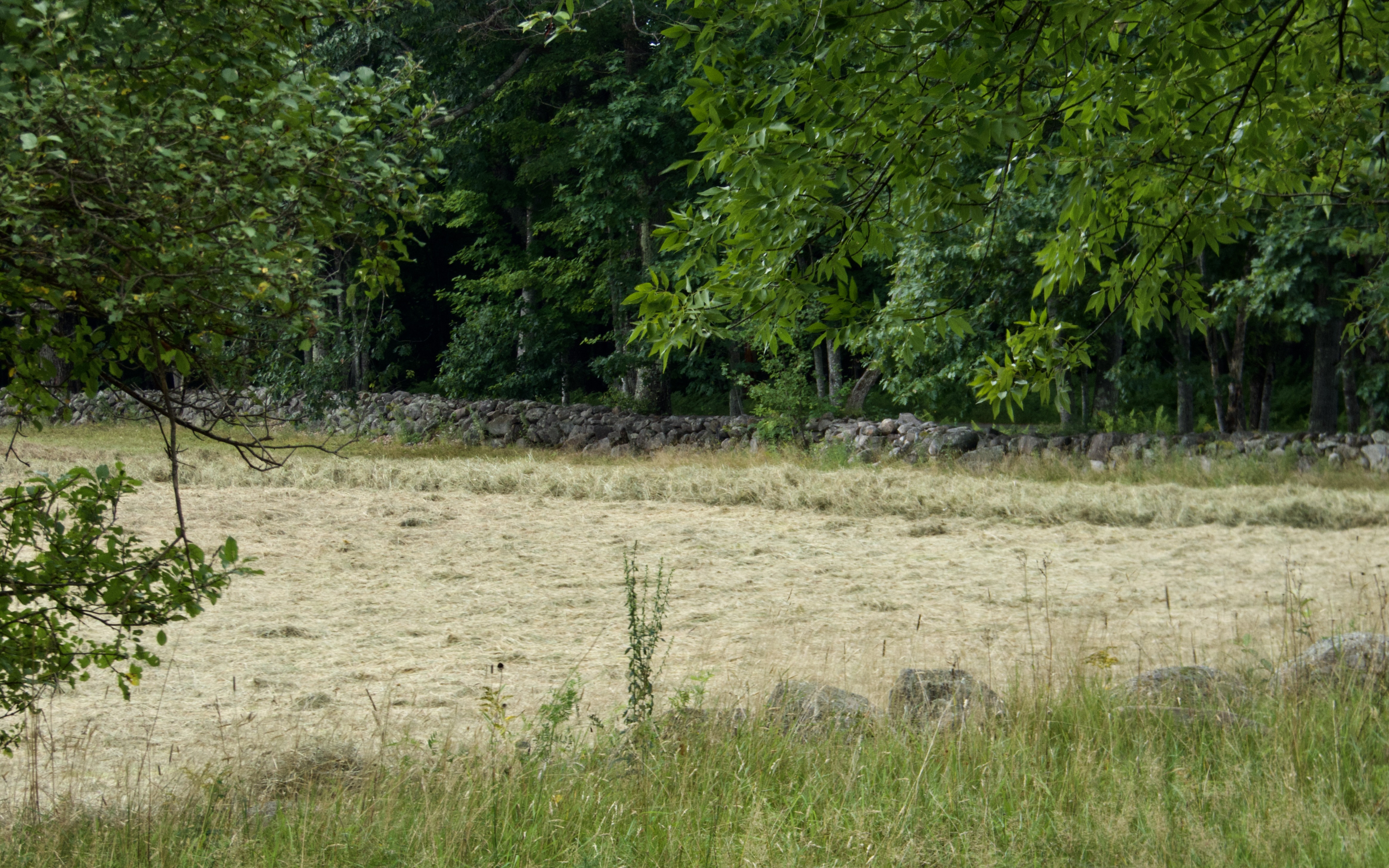
In every meadow you see far or near the lumbering hay-cart with its mountainous load––& the rakers & mowers in white shirts––
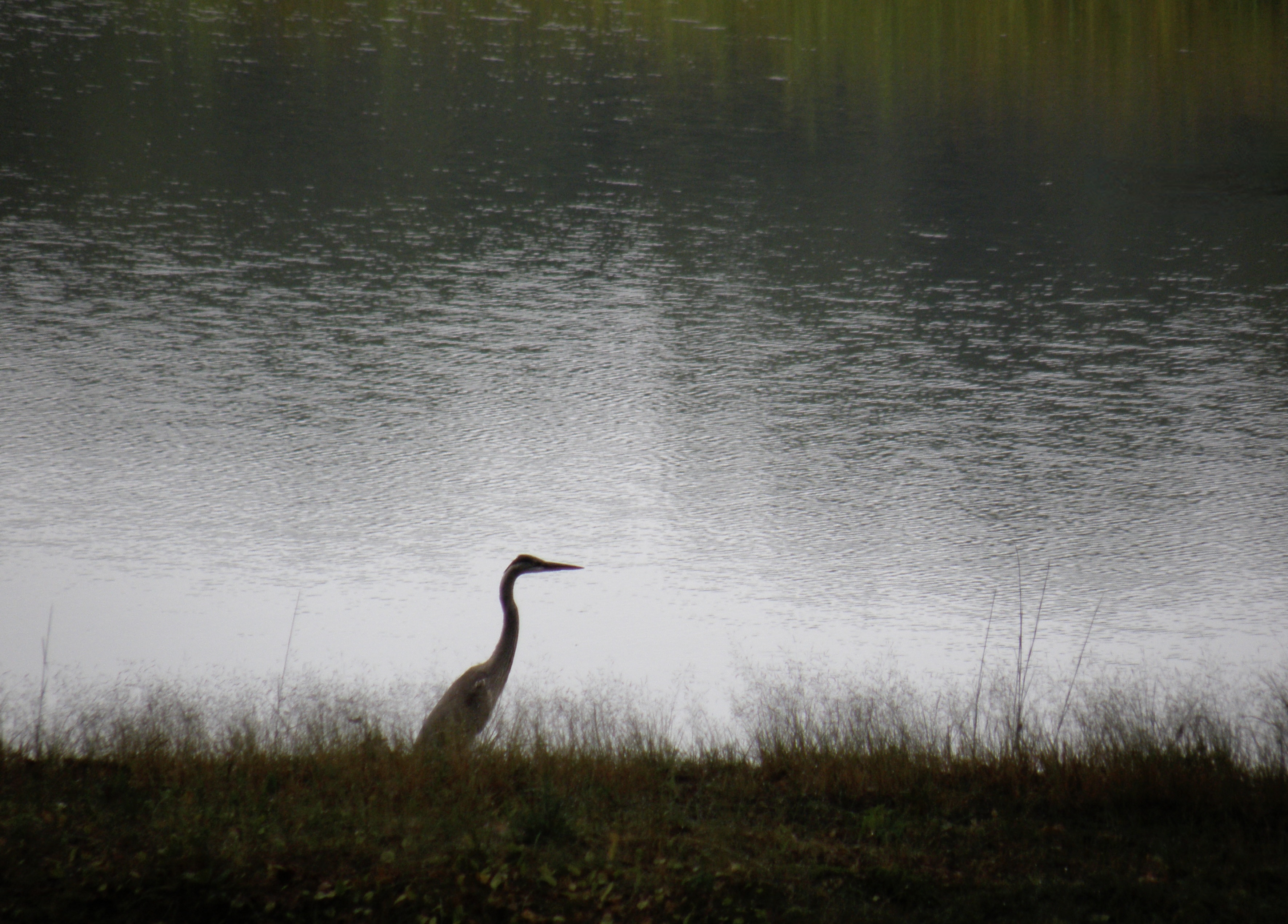
The bittern hardly knows where to lay its eggs. By the way I have heard no stake driver for some time. If the meadows were untouched I should no doubt see many more of the rare white & the beautiful smaller purple orchis there as I now see a few—along the shaded brooks & meadow’s edge.
I am interested in an indistinct prospect, a distant view, a mere suggestion often, revealing an almost wholly new world to me. I rejoice to get, and am apt to present, a new view. But I find it impossible to present my view to most people. In effect, it would seem that they do not wish to take a new view in any case.
Heat lightning flashes, which reveal a distant horizon to our twilight eyes. But my fellows simply assert that it is not broad day, which everybody knows, and fail to perceive the phenomenon at all. I am willing to pass for a fool in my often desperate, perhaps foolish, efforts to persuade them to lift the veil from off the possible and future, which they hold down with both their hands, before their eyes. The most valuable communication or news consists of hints and suggestions. When a truth comes to be known and accepted, it begins to be bad taste to repeat it. Every individual constitution is a probe employed in a new direction, and a wise man will attend to each one’s report.
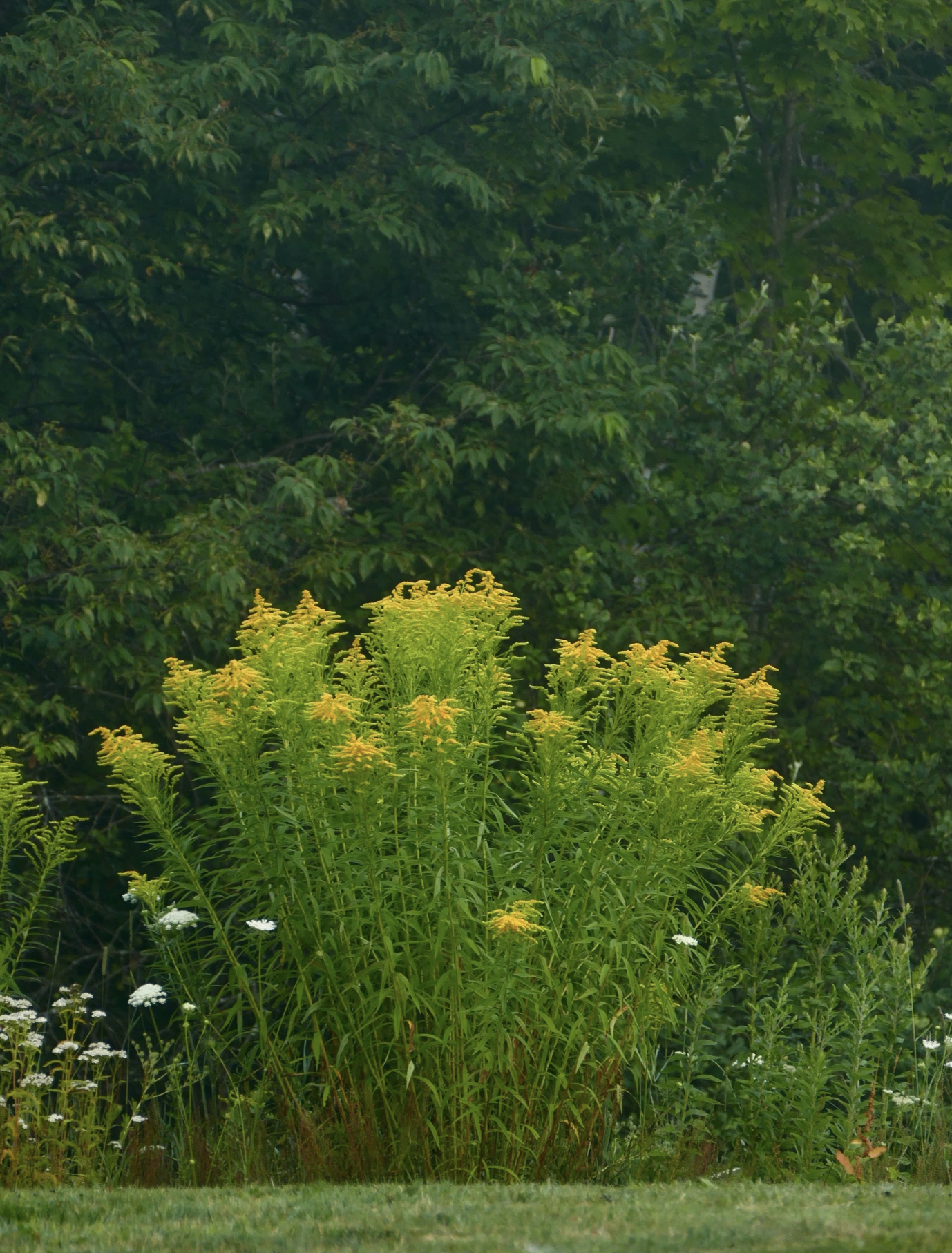
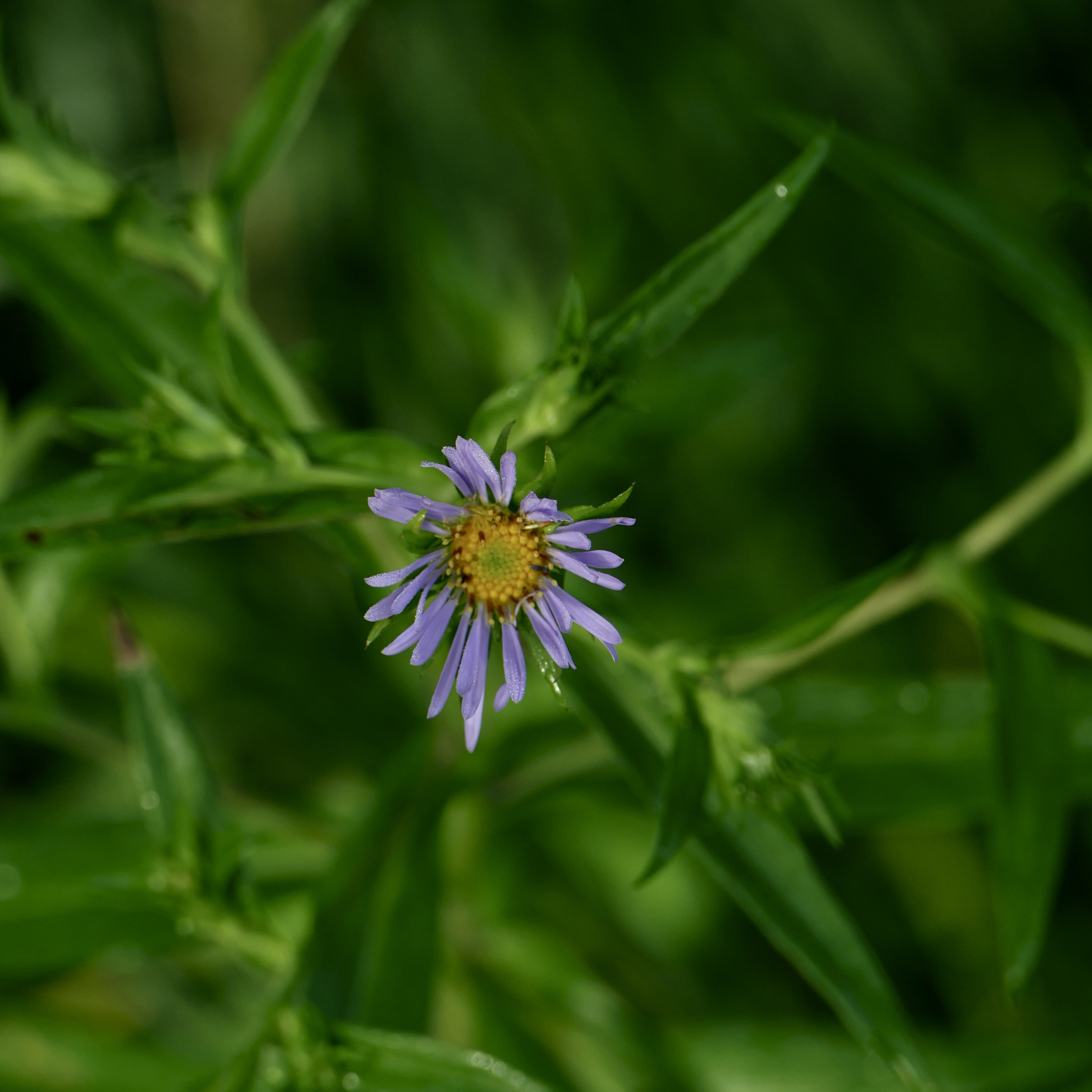
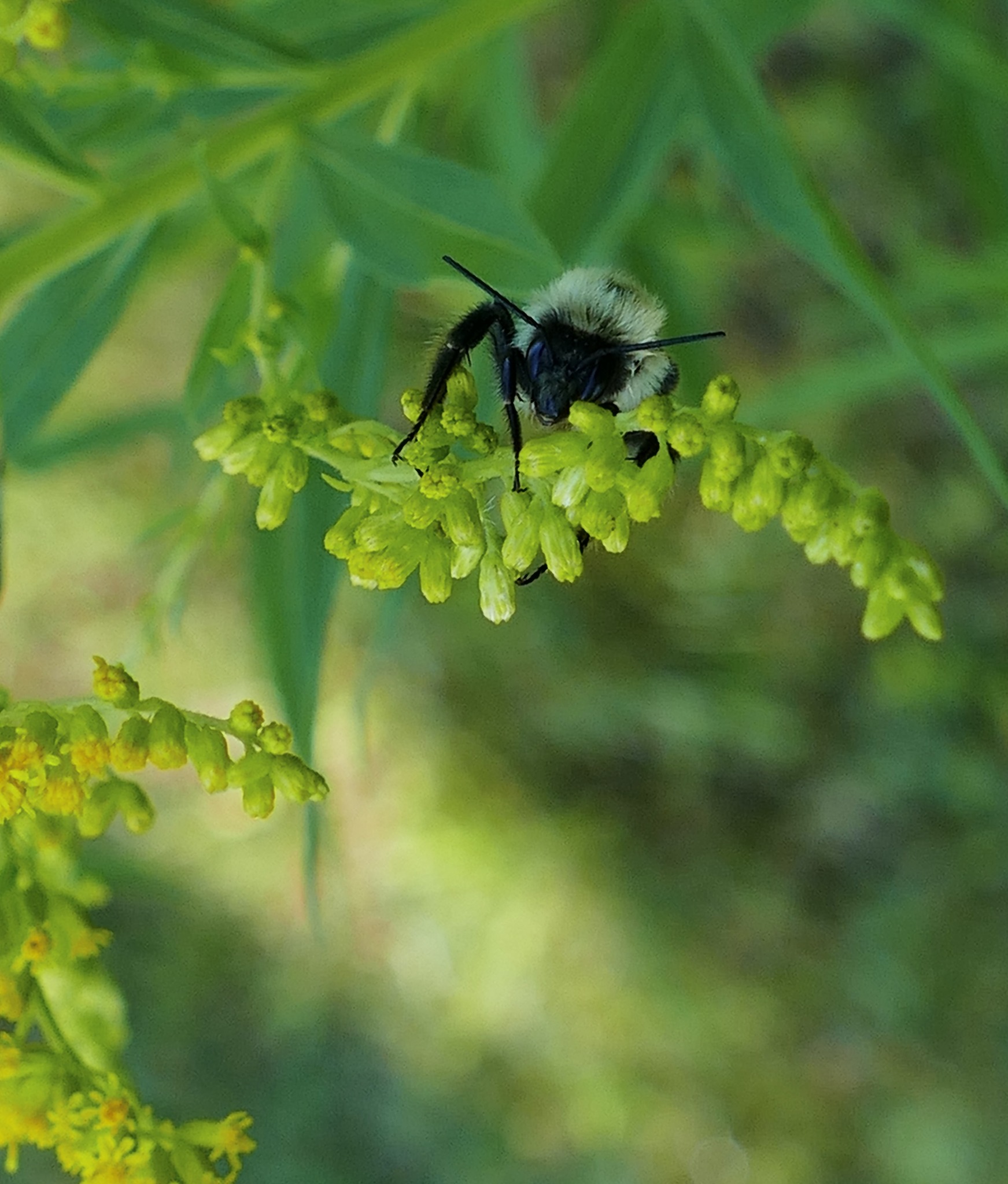
Solidago altissima (?) beyond the Corner Bridge, out some days at least, but not rough-hairy. Goldenrod and asters have fairly begun ; i. e. there are several kinds of each out.
It is pleasing to behold at this season contrasted shade and sunshine on the side of neighboring hills. They are not so attractive to the eye when all in the shadow of a cloud or wholly open to the sunshine. Each must enhance the other….
Above all there is the Cardinal flower just opened––close to the water’s edge––remarkable for its intense scarlet color––contrasting with the surrounding green….It has been a clear cool breezy day for the season.
One reason why the lately shorn fields shine so and reflect so much light is that a lighter-colored and tender grass, which has been shaded by the crop taken off, is now exposed, and also a light and fresh grass is springing up there.
Yet I think it is not wholly on this account, but in a great measure owing to a clearer air after rains which have succeeded to misty weather. I am going over the hill through Ed. Hosmer’s orchard, when I observe this light reflected from the shorn fields….
A comfortable breeze blowing. Methinks I can write better in the afternoon, for the novelty of it— if I should go abroad this morning— My genius makes distinctions which my understanding cannot— and which my senses do not report. If I should reverse the usual— go forth & saunter in the fields all the forenoon then sit down in my chamber in the afternoon, which it is so unusual for me to do—it would be like a new season to me & the novelty of it inspire me. The wind has fairly blown me out doors—the elements were so lively & active— & I so sympathized with them that I could not sit while the wind went by.
And I am reminded that we should especially improve the summer to live out of doors— When we may so easily it behoves us to break up this custom of sitting in the house. for it is but a custom—and I am not sure that it has the sanction of common sense. A man no sooner gets up than he sits down again….Is the literary man to live always or chiefly sitting in a chamber—through which Nature enters by a window only? What is the use of the summer? ….but here outdoors is the place to store up influences.
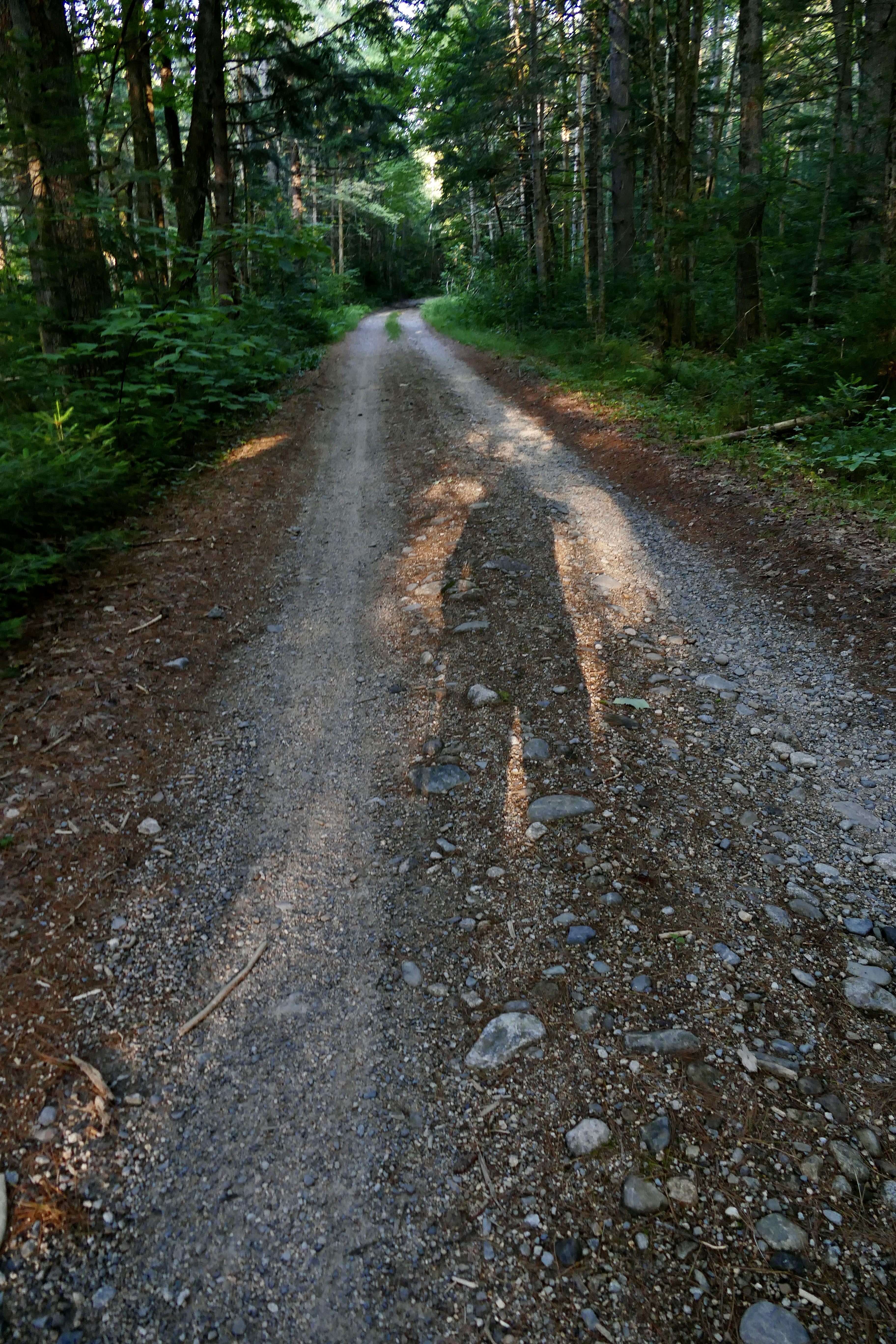
The forenoon is fuller of light. The butterflies on the flowers look like other & frequently larger flowers themselves. Now I yearn for one of those old meandering dry uninhabited roads which lead away from towns––which lead us away from temptation, which conduct to the outside of earth––over its uppermost crust––where you may forget in what country you are traveling––where no farmer can complain that you are treading down his grass––no gentlemen who has recently constructed a seat in the country that you are trespassing––on which you can go off at half cock––and waive adieu to the village––along which you may travel like a pilgrim––going nowither. Where travelers are not too often to be met. Where my spirit is free––where the walls & fences are not cared for––where your head is more in heaven than your feet are on the earth––which have long reaches––where you can see the approaching traveller half a mile off and be prepared for him––not so luxuriant a soil as to attract men––some root and stump fences which do not need attention–– Where travelers have no occasion to stop––but pass along and leave you to your thoughts–– Where it makes no odds which way you face whether you are going or coming––whether it is morning or evening––mid noon or mid-night–– Where earth is cheap enough by being public. Where you can walk and think with least obstruction––there being nothing to measure progress by. Where you can pace when your breast is full and cherish your moodiness. Where you are not in false relations with men––are not dining nor conversing with them….It must simply be the way and the life.
The gentle susurrus from the leaves of the trees on shore is very enlivening, as if Nature were freshening, awakening to some enterprise.
There is but little wind, but its sound, incessantly stirring the leaves at a little distance along the shore, heard not seen, is very inspiriting. It is like an everlasting dawn or awakening of nature to some great purpose.
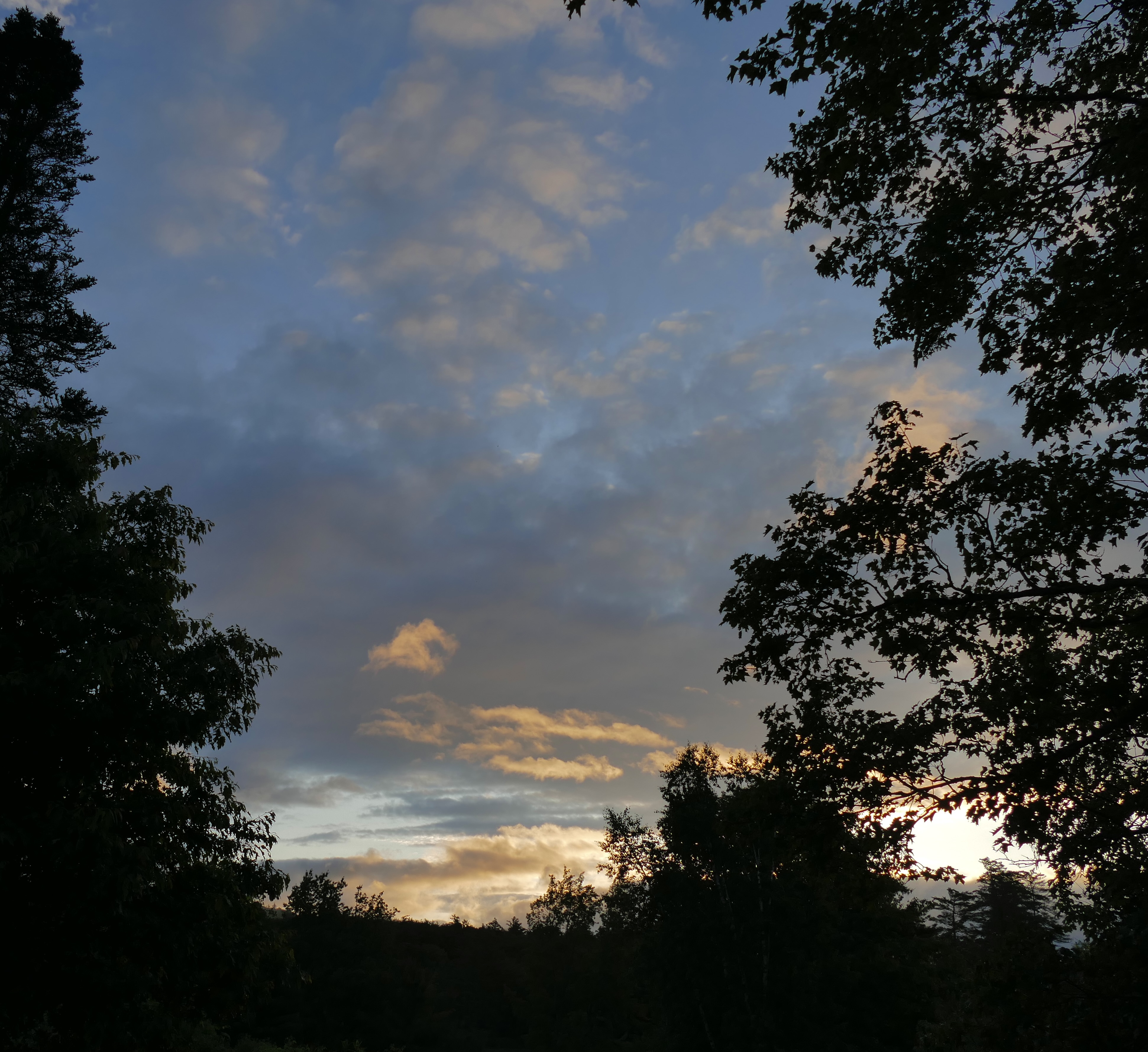
It is a test question affecting the youth of a person, —Have you knowledge of the morning? Do you sympathize with that season of nature? Are you abroad early, brushing the dews aside? If the sunrises on you slumbering, if you do not hear the morning cock-crow, if you do not witness the blushes of Aurora, if you are not acquainted with Venus as the morning star, what relation have you to wisdom and purity? You have then forgotten your Creator in the days of your youth! Your shutters were darkened till noon!






 allandibiase.com
You must be logged in to post a comment.