in Thoreau’s Journal:

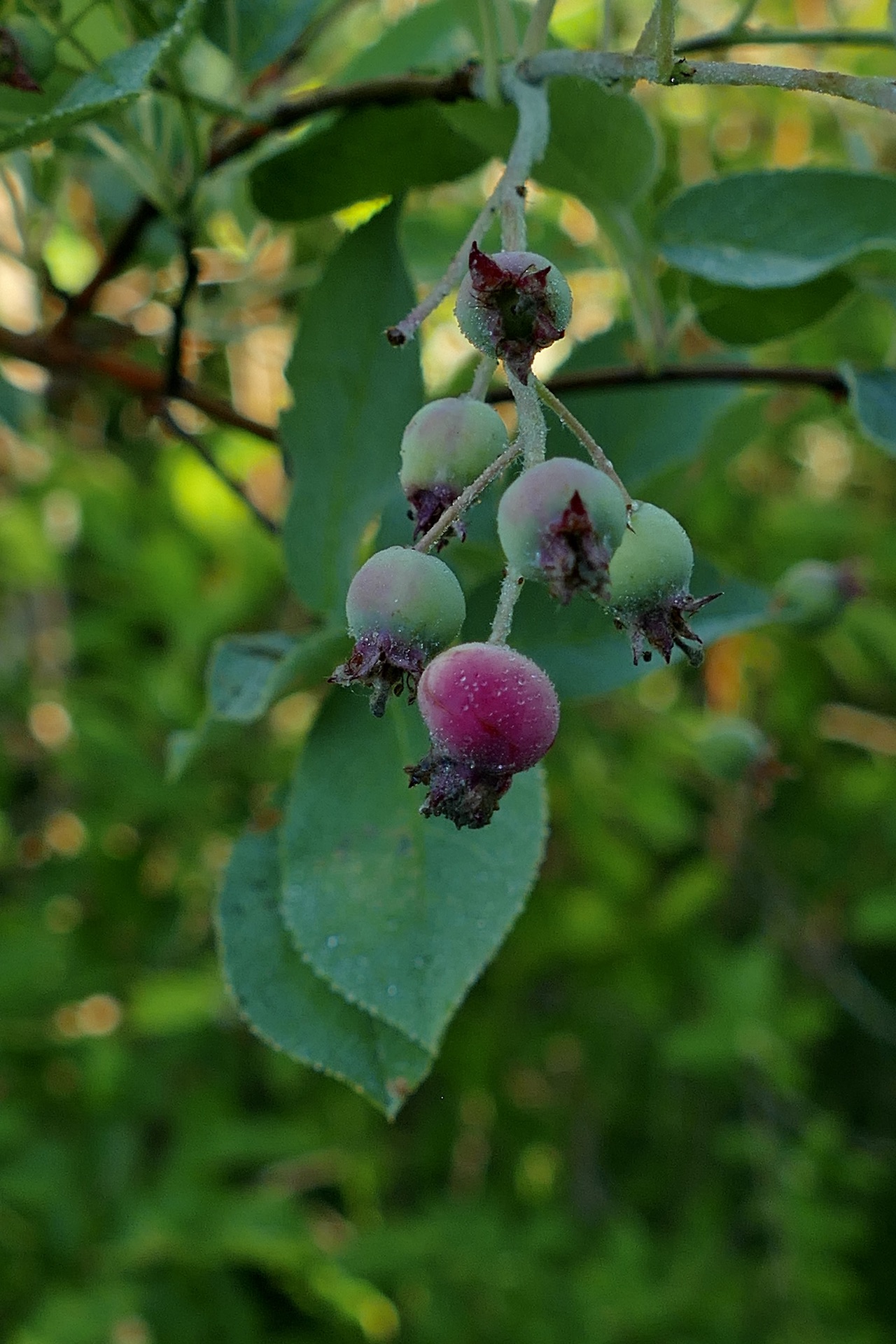
It is but a step from flowers to fruit.
in Thoreau’s Journal:
It is but a step from flowers to fruit.
in Thoreau’s Journal:
This is June–the month of grass & leaves. The deciduous trees are investing the evergreens & revealing how dark they are. Already the aspens are trembling again, and a new summer is offered me– I feel a little fluttered in my thoughts as if I might be too late. Each season is but an infinitesimal point. It no sooner comes than it is gone. It has no duration. It simply gives a tone & hue to my thought. Each annual phenomenon is a reminiscence & prompting. Our thoughts & sentiments answer to the revolutions of the seasons, as 2 cog-wheels fit into each other–We are conversant with only one point of contact at a time–from which we receive a prompting & impulse & instantly pass to a new season or point of contact.

A year is made up of a certain series & number of sensations & thoughts–which have their language in nature. Now I am ice–now I am sorrel. Each experience reduces itself to a mood of the mind. I see a man grafting, for instance–What this imports chiefly is not apples to the owner–or bread to the grafter–but a mood or certain train of thought to my mind.
in Thoreau’s Journal:
I am interested in each contemporary plant in my vicinity, and have attained to a certain acquaintance with the larger ones. They are cohabitants with me of this part of the planet, and they bear familiar names. Yet how essentially wild they are! as wild, really, as those strange fossil plants whose impressions I see on my coal. Yet I can imagine that some race gathered those too with as much admiration, and knew them as intimately as I do these, that even they served for a language of the sentiments. Stigmariae stood for a human sentiment in that race’s flower language. Chickweed, or a pine tree, is but little less wild. I assume to be acquainted with these, but what ages between me and the tree whose shade I enjoy!
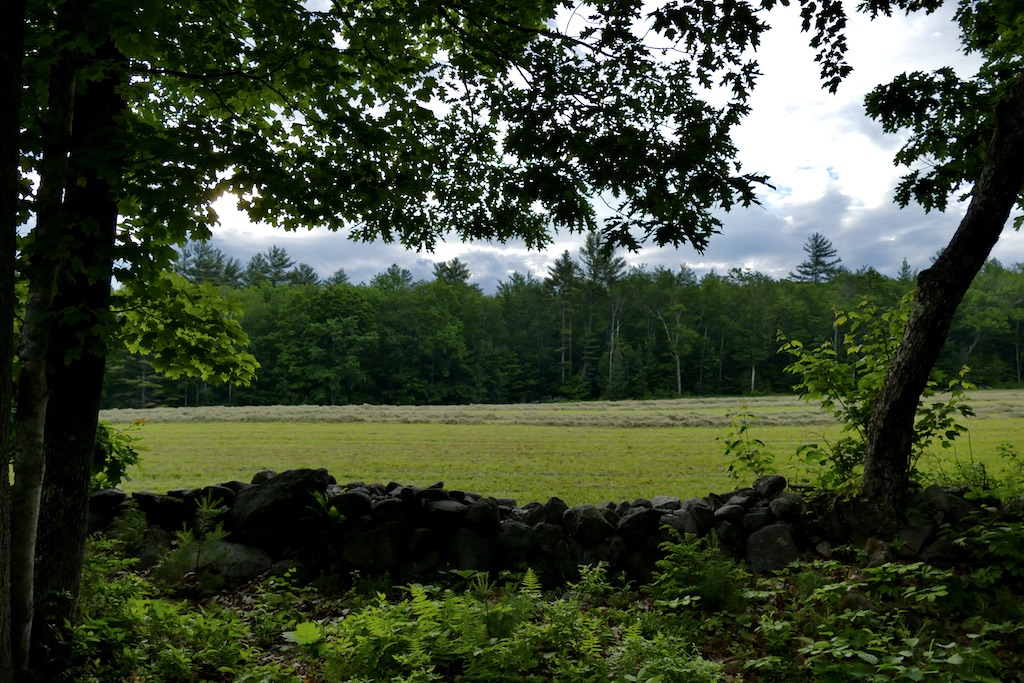
It is as if it stood substantially in a remote geographical period.
in Thoreau’s Journal:
The clear brightness of June was well represented yesterday by the buttercups— (R. bilbosa) along the roadside—
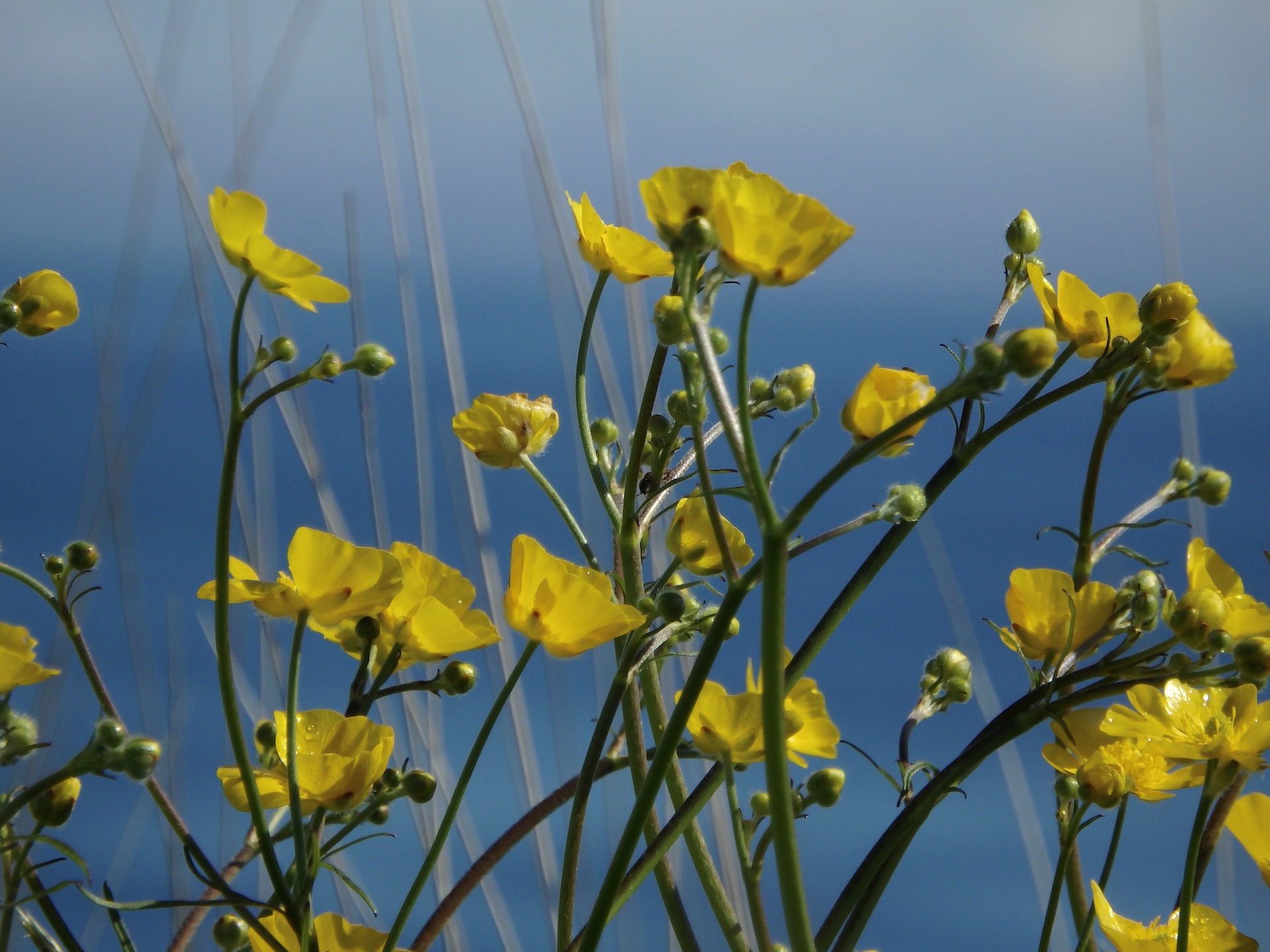
Their yellow so glossy & varnished within, but not without. Surely there is no reason why the new butter should not be yellow now—
in Thoreau’s Journal:
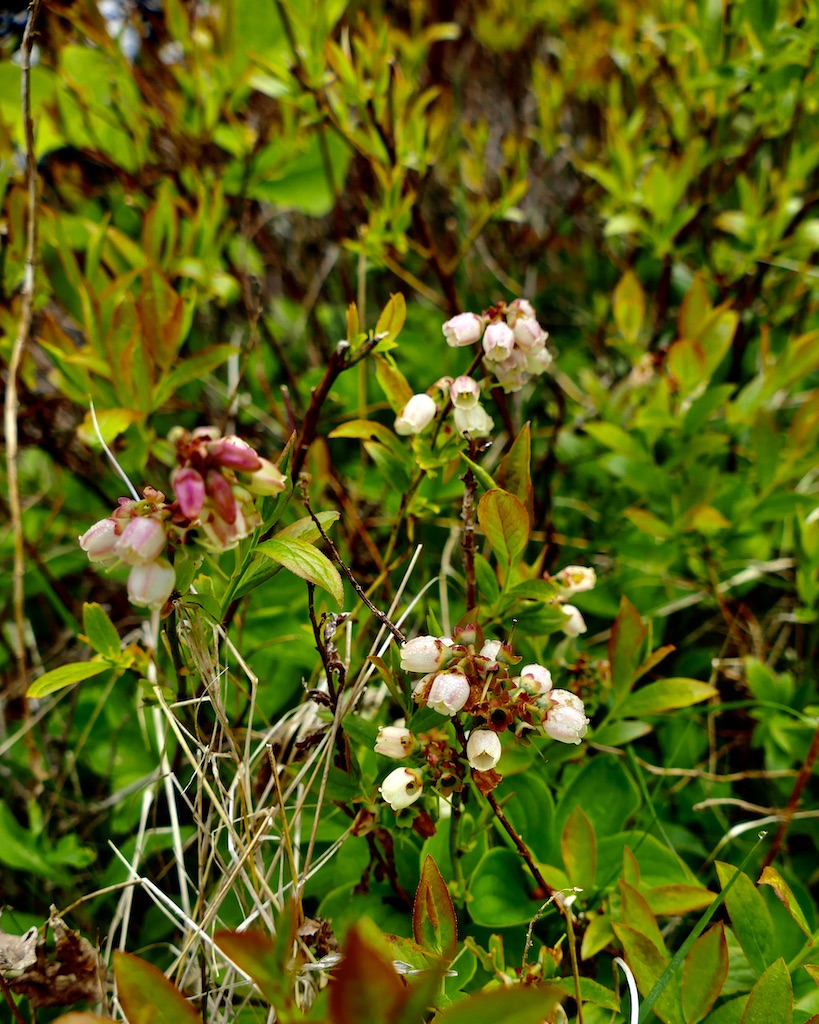
Going up Fair Haven Hill the blossoms of the huckleberries & blue berries imparted a sweet scent to the whole hill-side.
in Thoreau’s Journal:
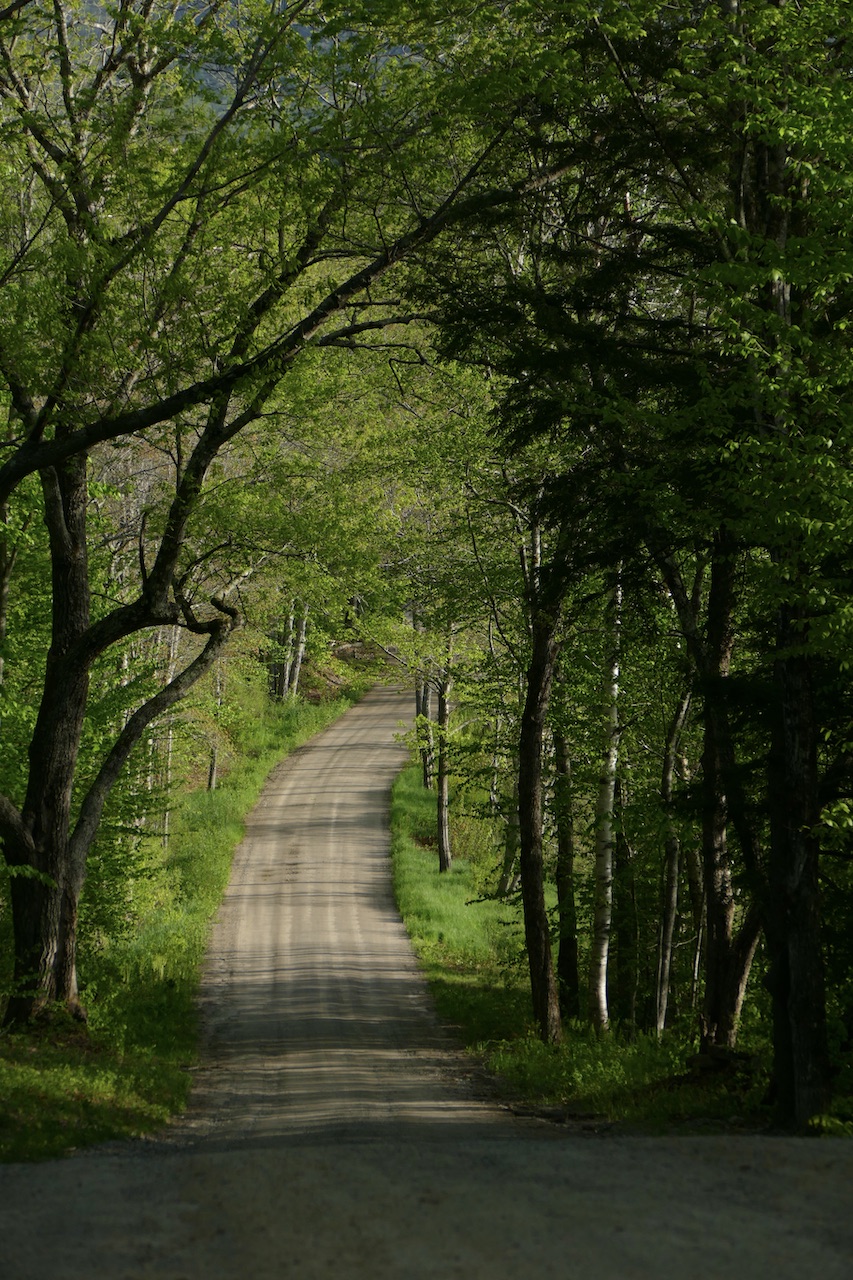
I would fain be present at the birth of shadow. It takes place with the first expansion of the leaves.
in Thoreau’s Journal:
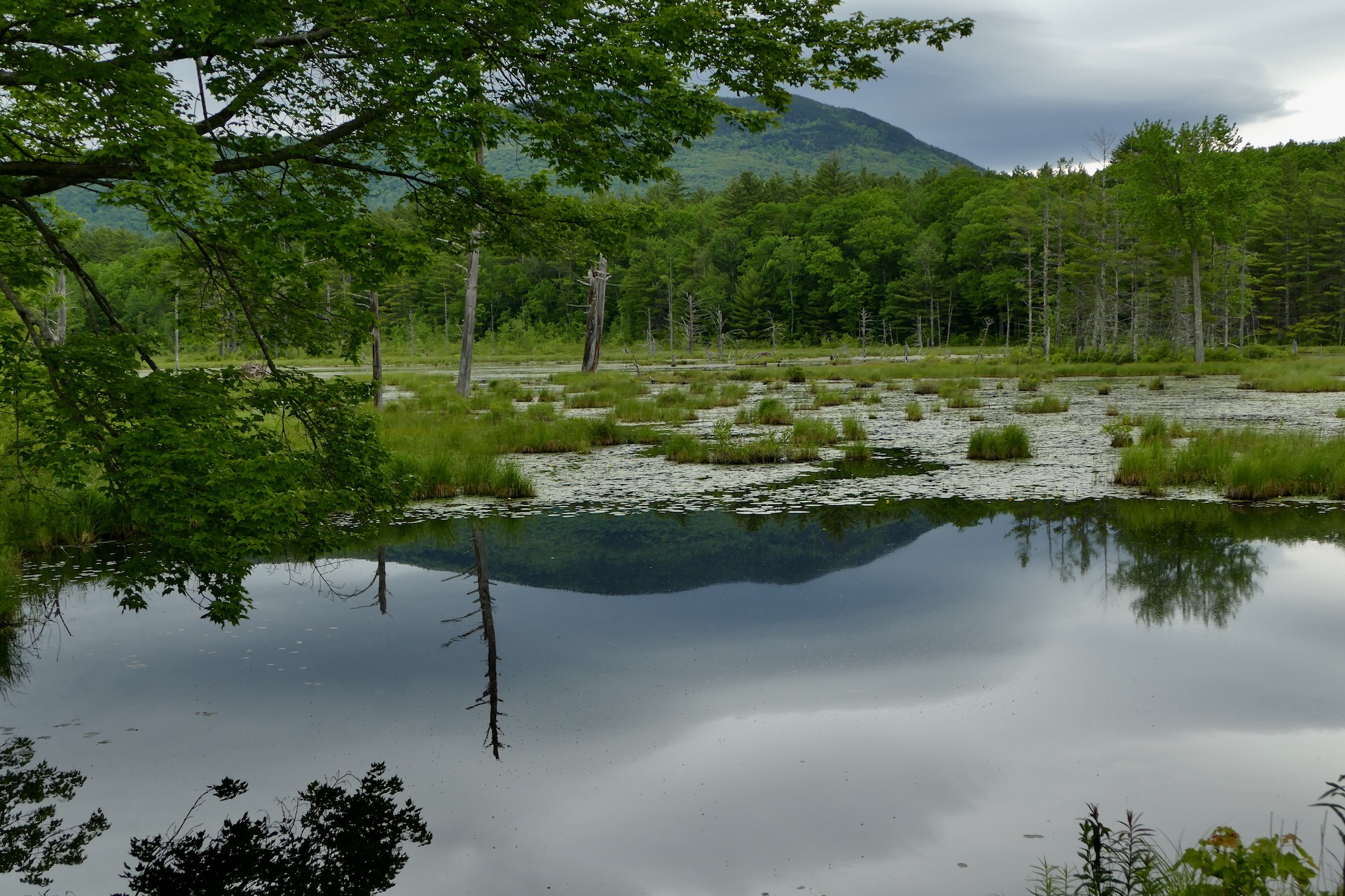
It is now the season of growth. The first bloom of the year is over.

in Thoreau’s Journal:
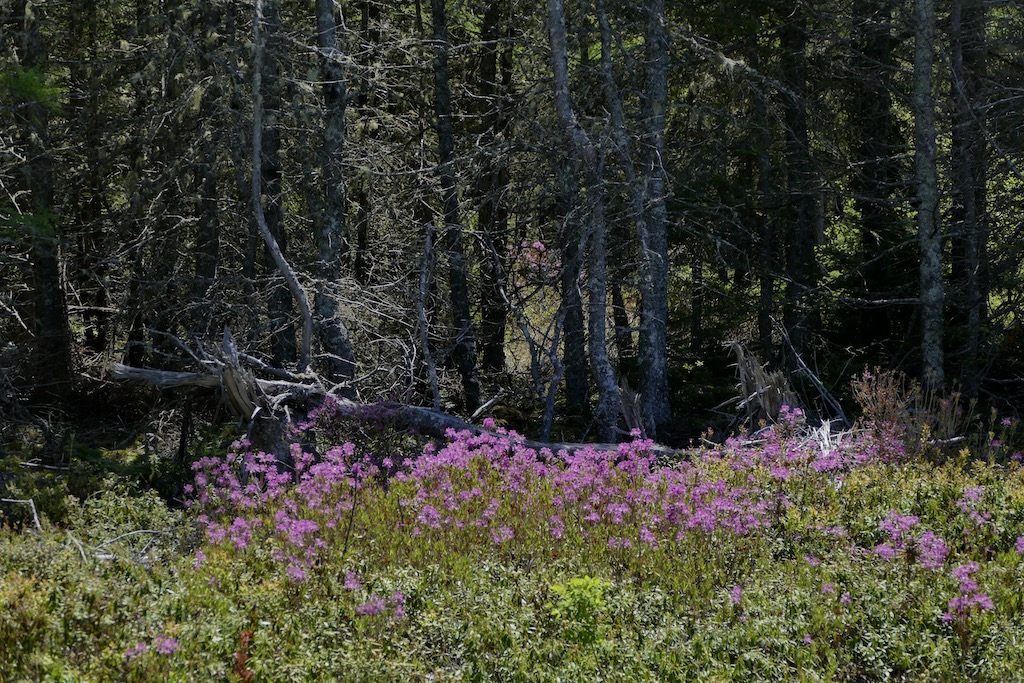

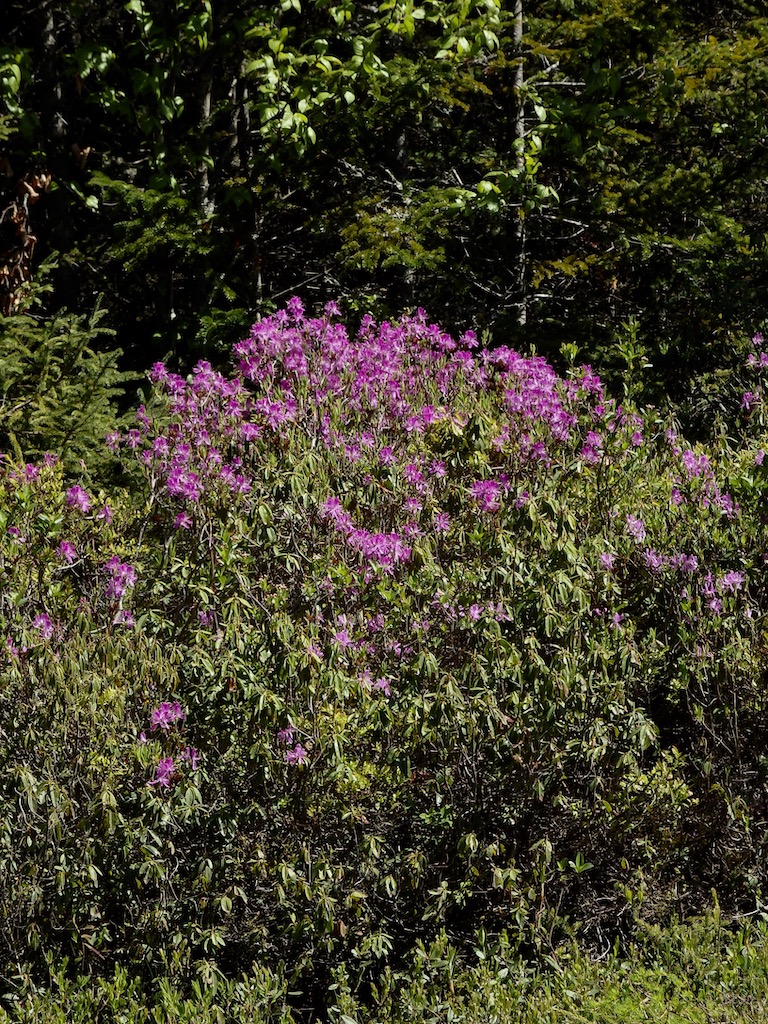
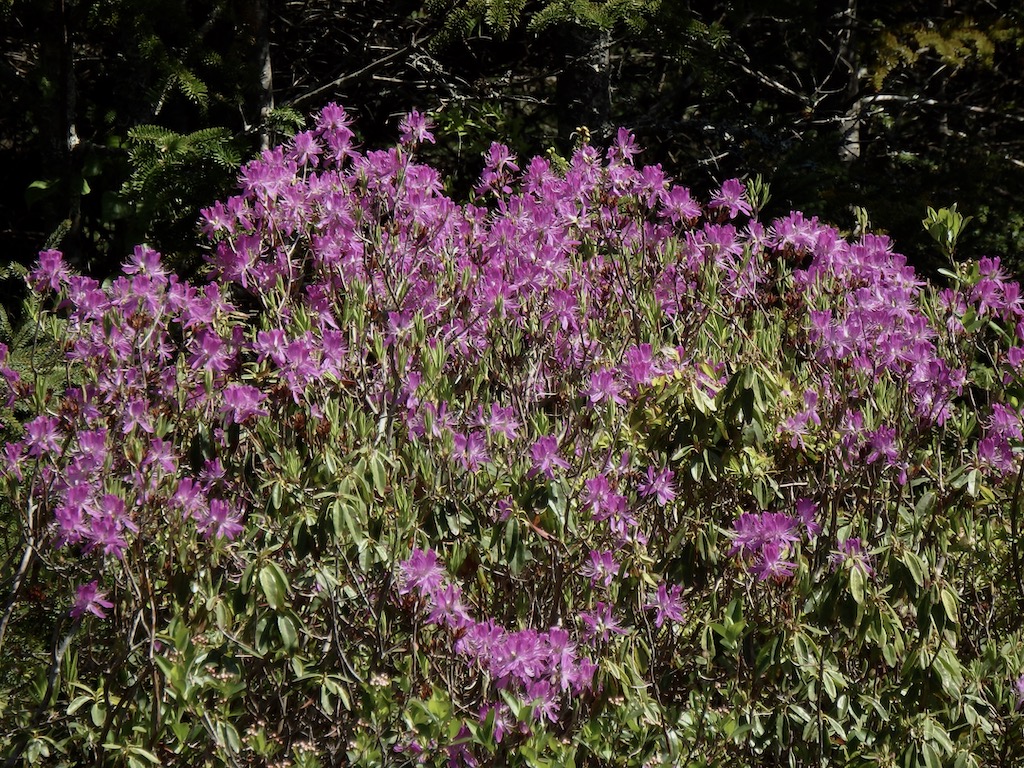
Rhodora now in its prime.
in Thoreau’s Journal:
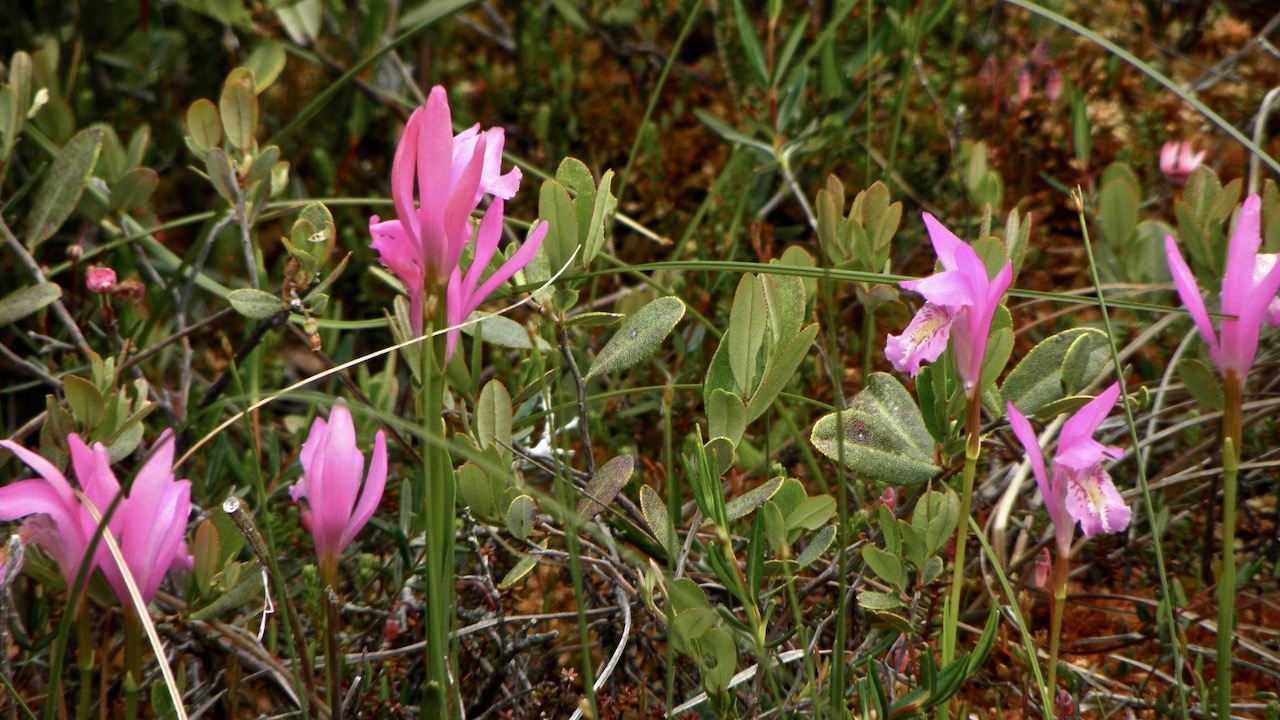
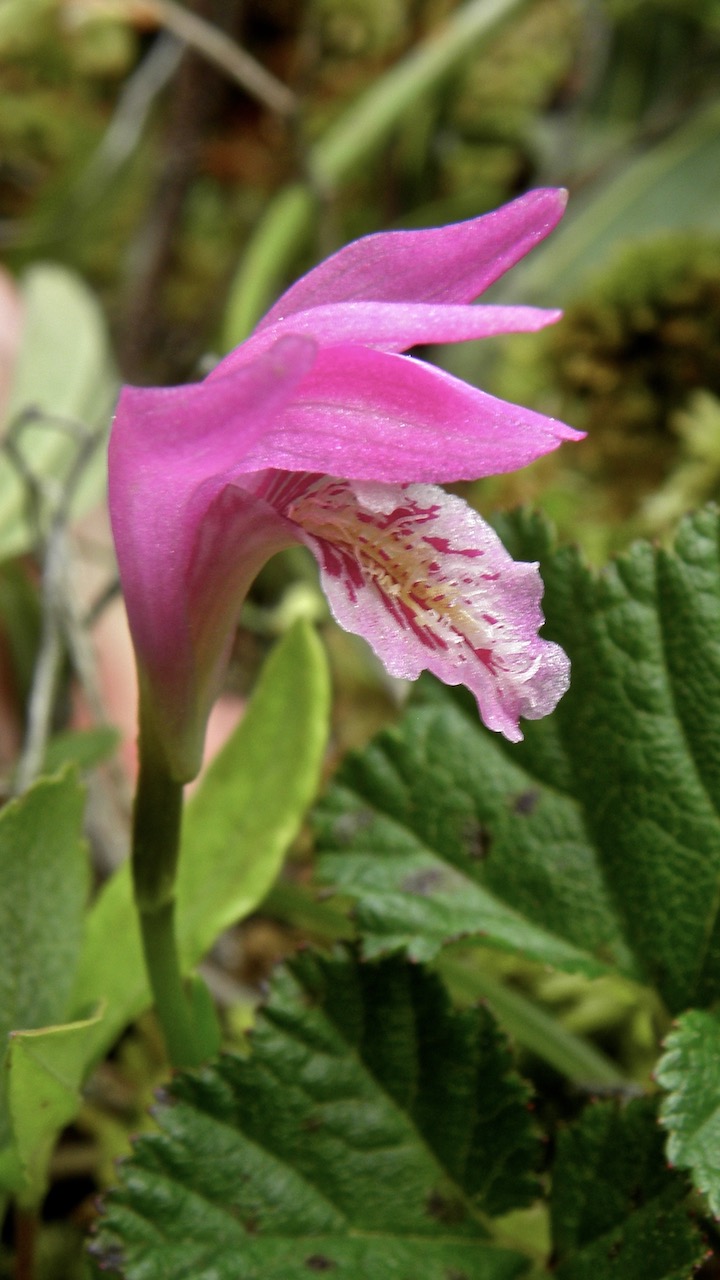
I am surprised to find arethusa abundantly out in Hubbards Close, maybe 2 or 3 days though not yet at Arethusa Meadow probably on account of the recent freshet. It is so leafless that it shoots up unexpectedly. It is all color, a little hook of purple flame projecting from the meadow into the air. Some are comparatively pale. This high-colored plant shoots up suddenly, all flower, in meadows where it is wet walking. A superb flower.
in Thoreau’s Journal:
That exceedingly neat & interesting little flower blue-eyed grass now claims our attention.
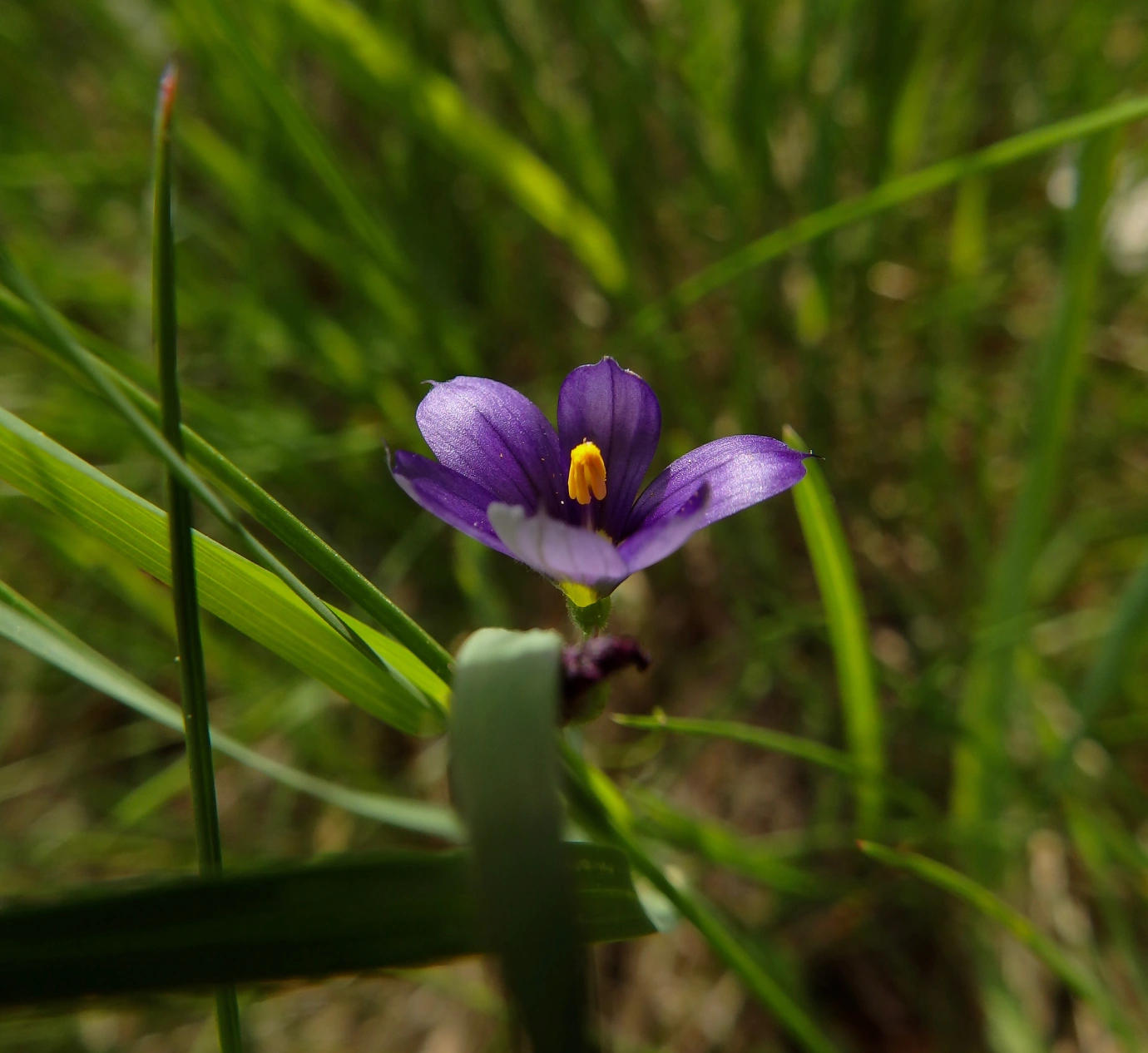
The barrenest pastures wear now a green & luxuriant aspect.
in Thoreau’s Journal:
The bulbous arethusa out a day or two––prob. yesterday….Though in a measure prepared for it, still its beauty surprised me––it is by far the highest & richest color yet.
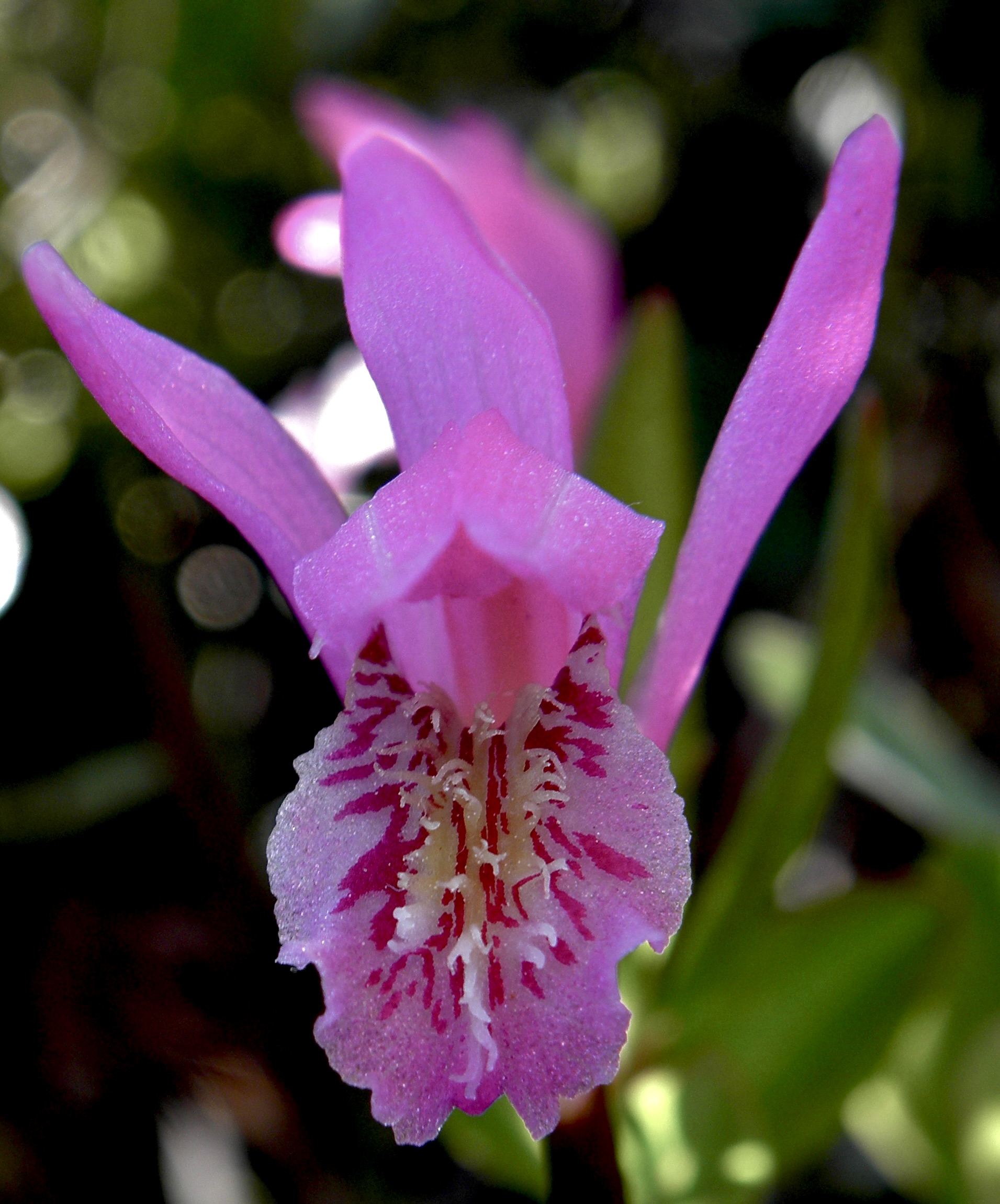
Its intense color in the midst of the green meadow made it look twice as large as reality. It looks very foreign in the midst of our plants.––
in Thoreau’s Journal:
The fringed polygala near the Corner Spring is a delicate flower with very fresh tender green leaves & red-purple blossoms.
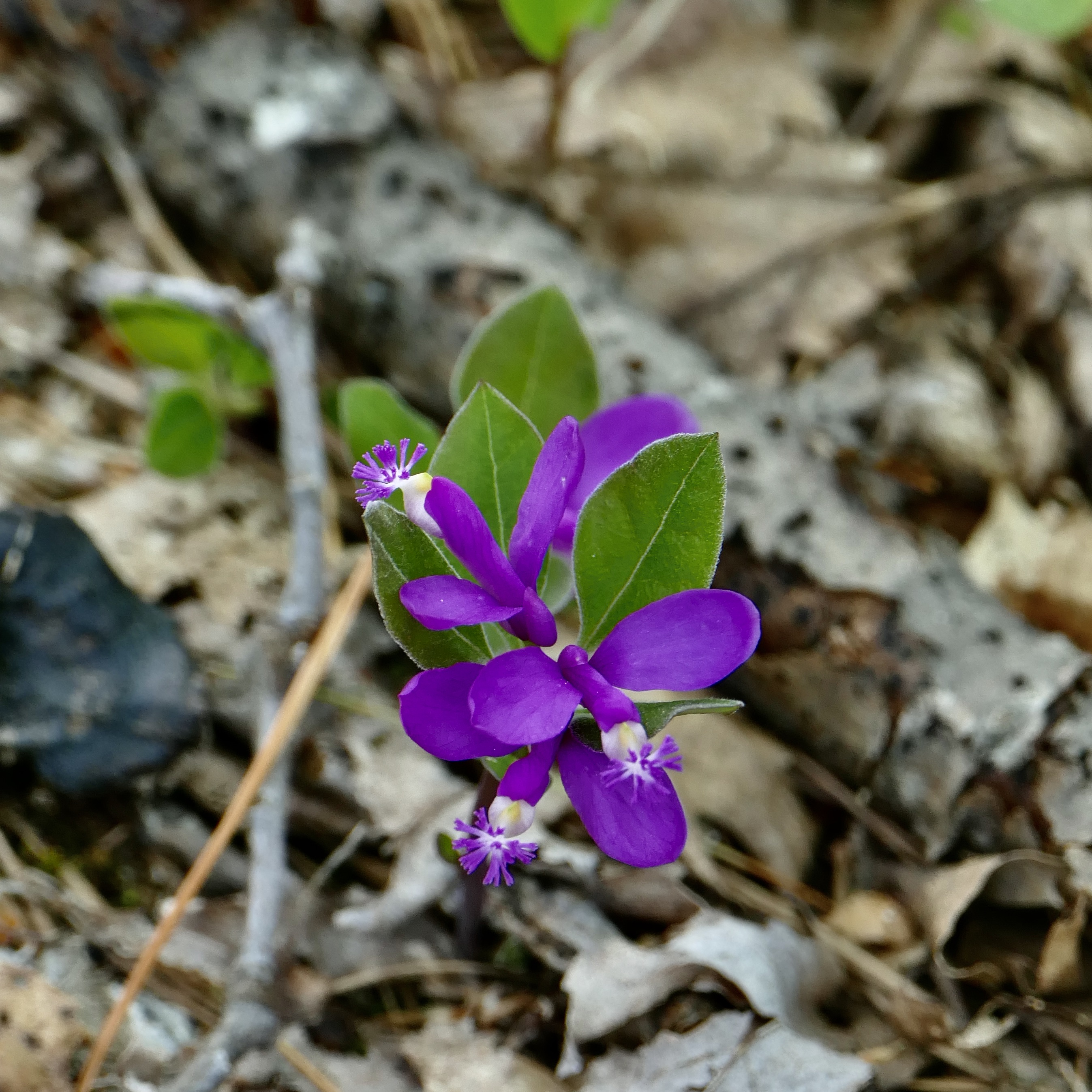
Beautiful from the contrast of its clear red purple flowers with its clear green leaves.
in Thoreau’s Journal:
The air is full of the odor of apple blossoms–– Yet the air is fresh as from the salt water.

The meadow smells sweet as you go along low places in the road at sundown. To night I hear many crickets. They have commenced their song. They bring in the summer.
in Thoreau’s Journal:
A fine, freshening air, a little hazy, that bathes and washes everything, saving the day from extreme heat. Walked to the hills south of Wayland by the road by Deacon Farrar’s. First vista just beyond Merron’s (?), looking west down a valley, with a verdant-columned elm at the extremity of the vale and the blue hills and horizon beyond. These are the resting-places in a walk. We love to see any part of the earth tinged with blue, cerulean, the color of the sky, the celestial color. I wonder that houses are not oftener located mainly that they may command particular rare prospects, every convenience yielding to this. The farmer would never suspect what it was you were buying, and such sites would be the cheapest of any. A site where you might avail yourself of the art of Nature for three thousand years, which could never be materially changed or taken from you, a noble inheritance for your children. The true sites for human dwellings are unimproved. They command no price in the market. Men will pay something to look into a travelling showman’s box, but not to look upon the fairest prospects on the earth.
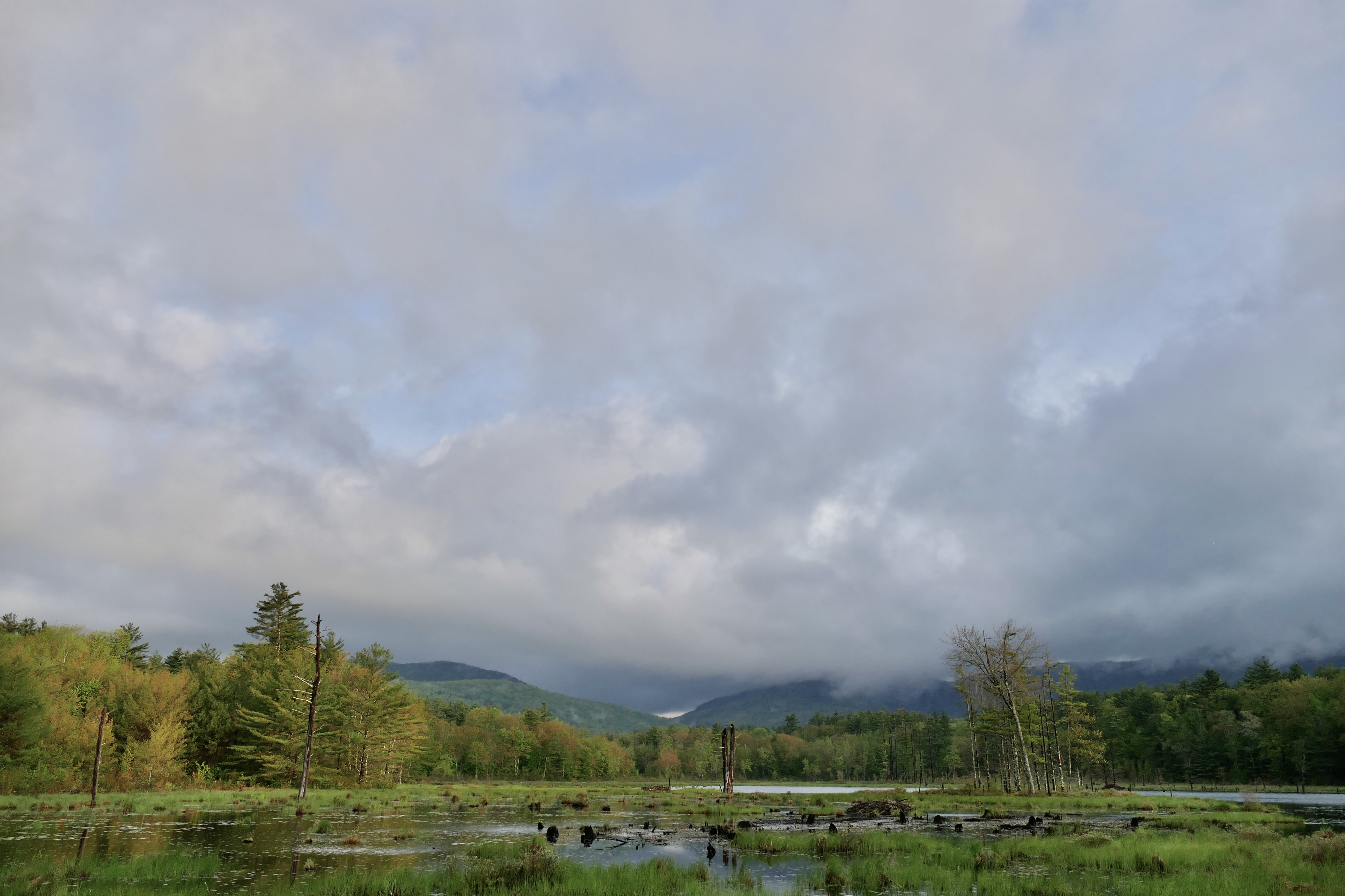
A vista where you have the near green horizon contrasted with the distant blue one, terrestrial with celestial earth. The prospect of a vast horizon must be accessible in our neighborhood. Where men of enlarged views may be educated. An unchangeable kind of wealth, a real estate.
in Thoreau’s Journal:
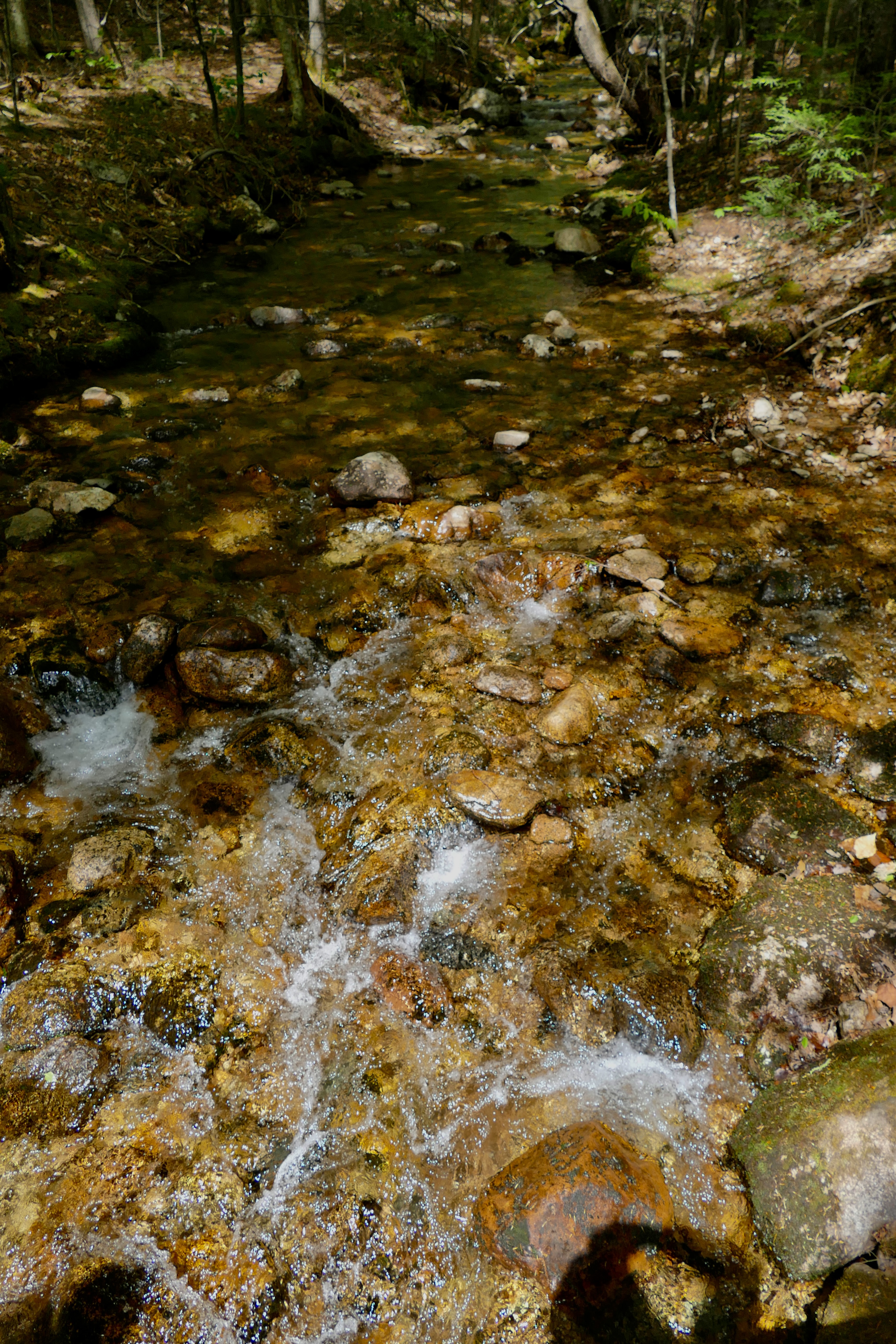
How perfectly new and fresh the world is seen to be, when we behold a myriad sparkles of brilliant, white sunlight on a rippled stream. So remote from dust and decay, more bright than the flash of an ey
in Thoreau’s Journal:
Every new flower that opens, no doubt, expresses a new mood of the human mind.
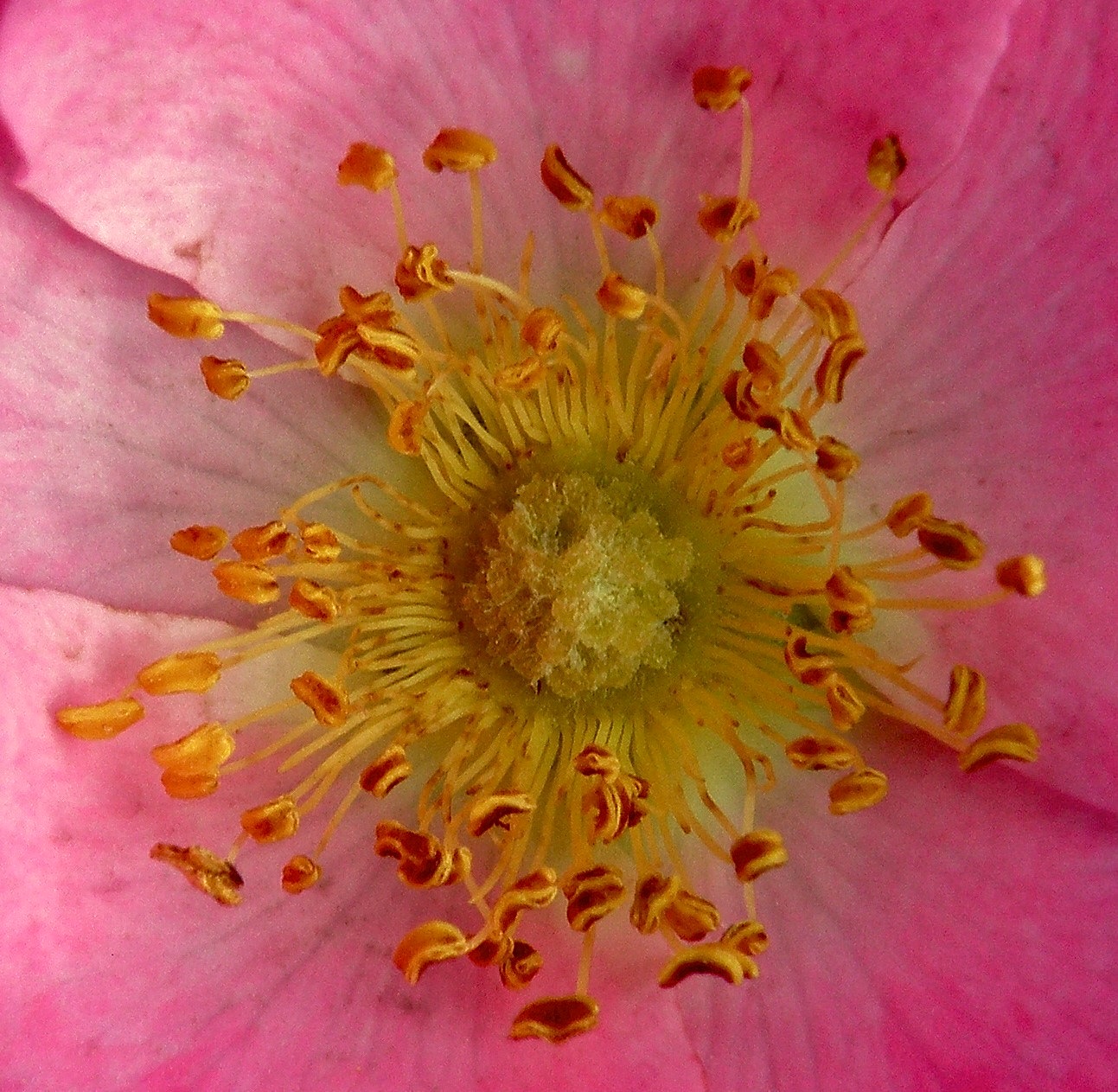
Have I any dark or ripe orange-yellow thoughts to correspond? The flavor of my thoughts begins to correspond.
in Thoreau’s Journal:
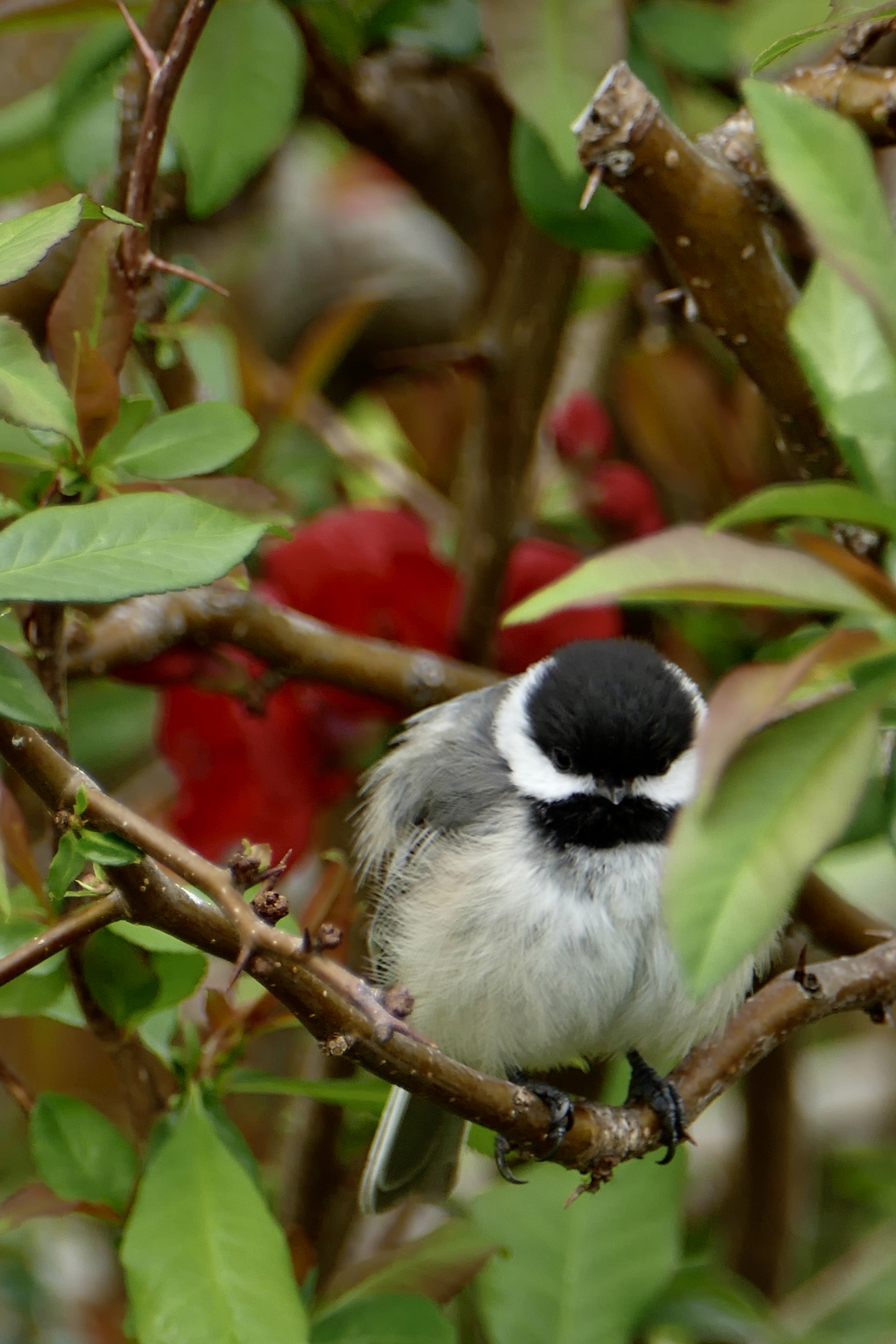
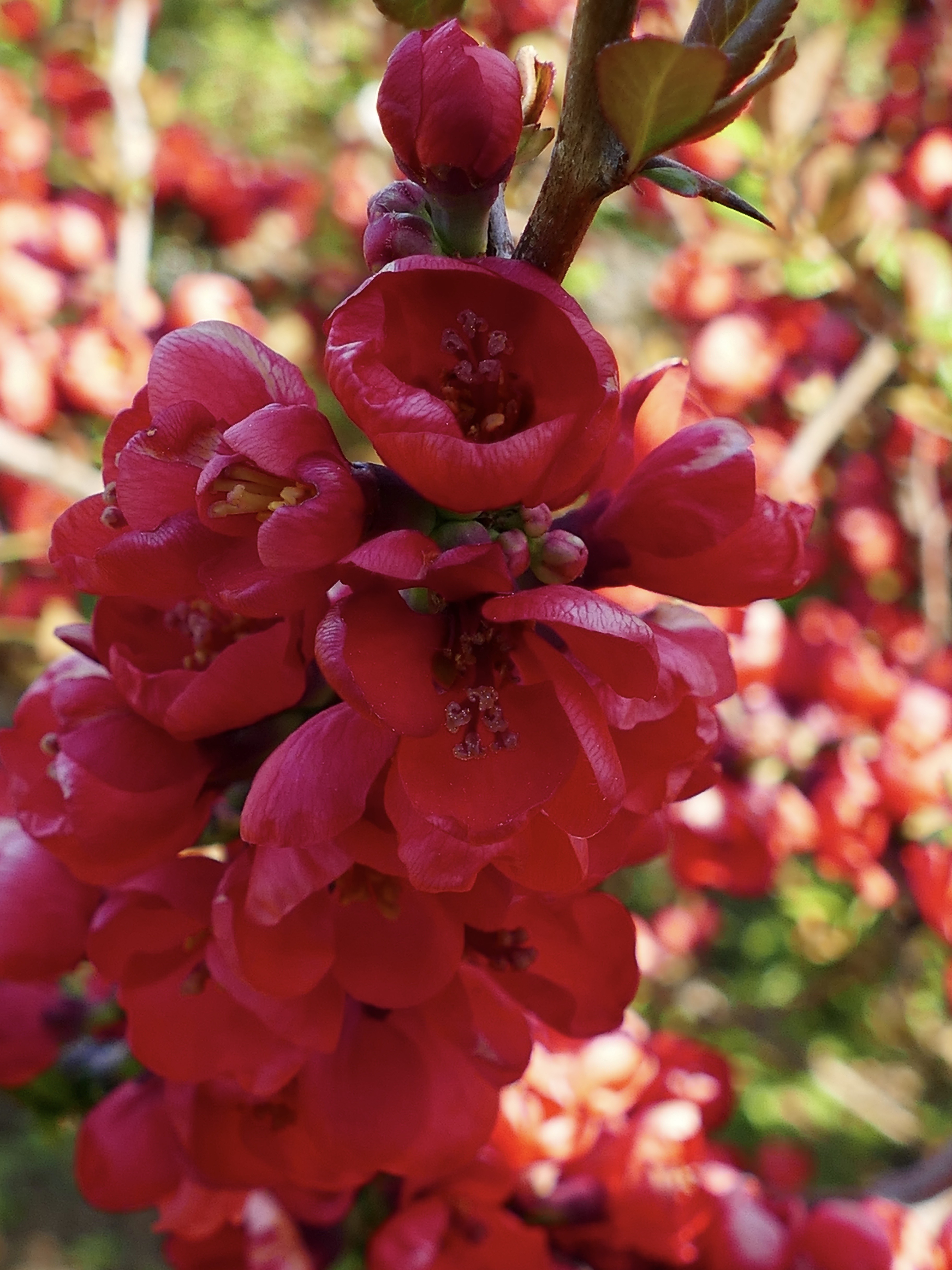
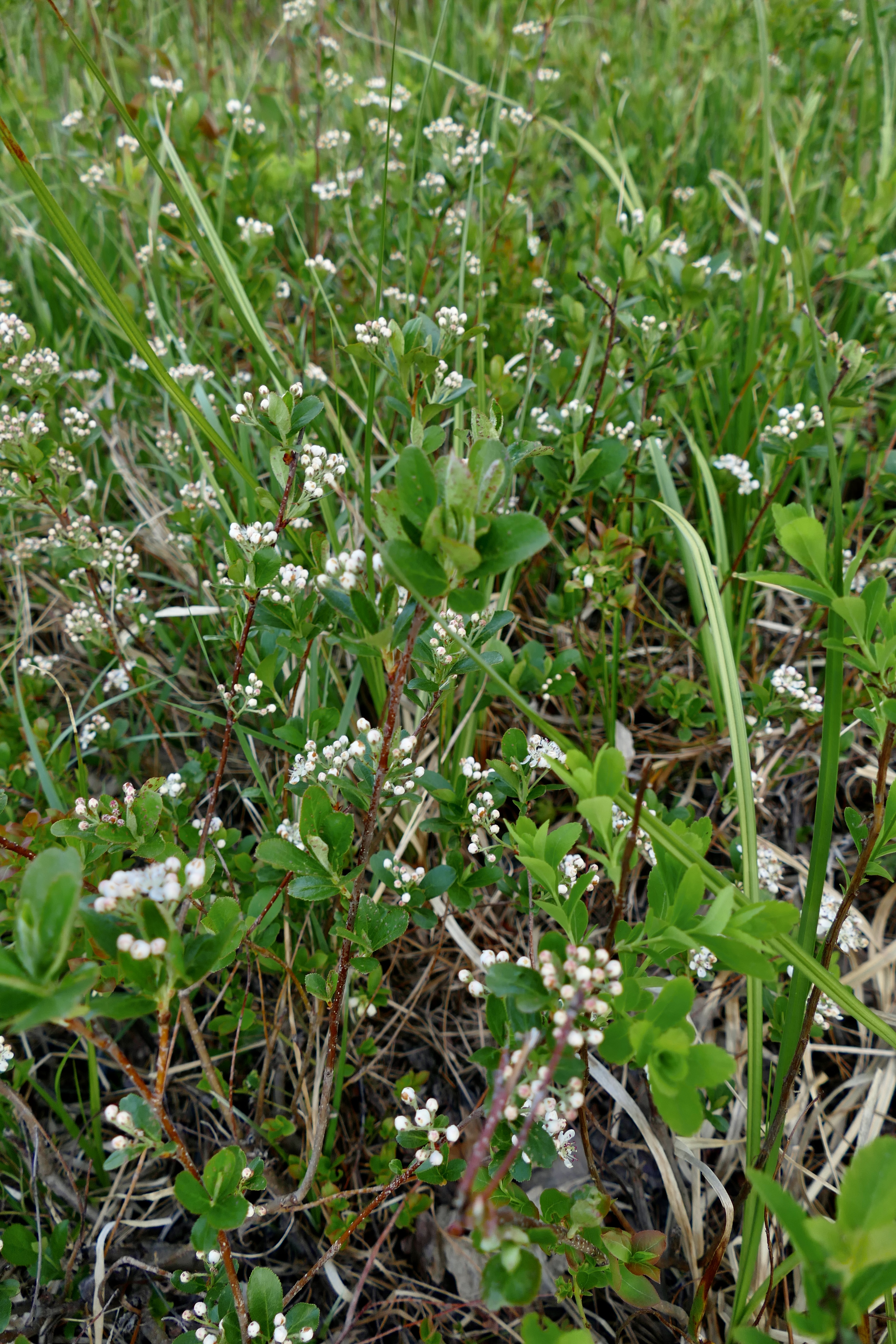
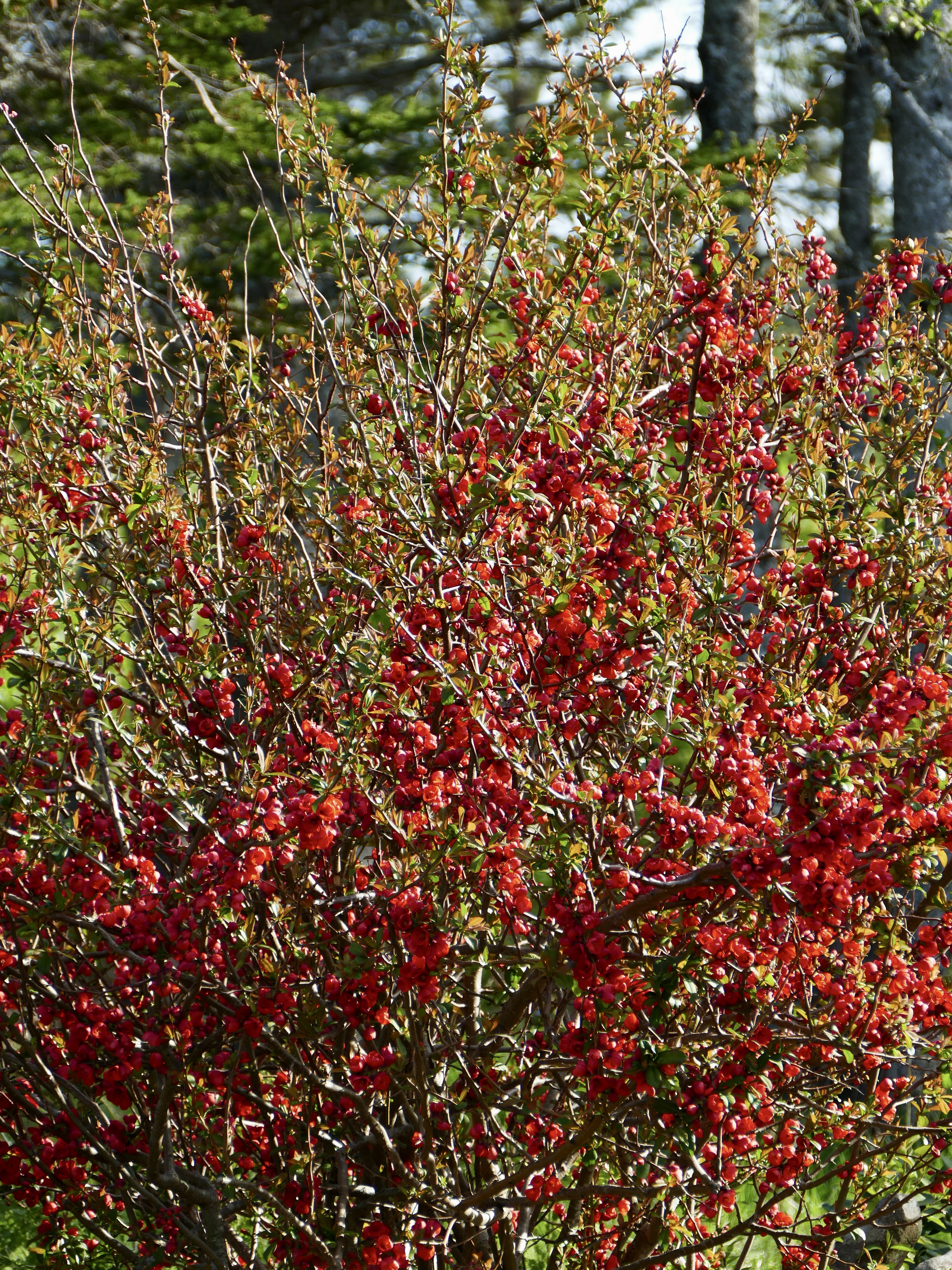
Our quince blossomed yesterday. Saw many low blackberries in bloom to-day.
in Thoreau’s Journal:

Only that thought and that expression are good which are musical.
in Thoreau’s Journal:
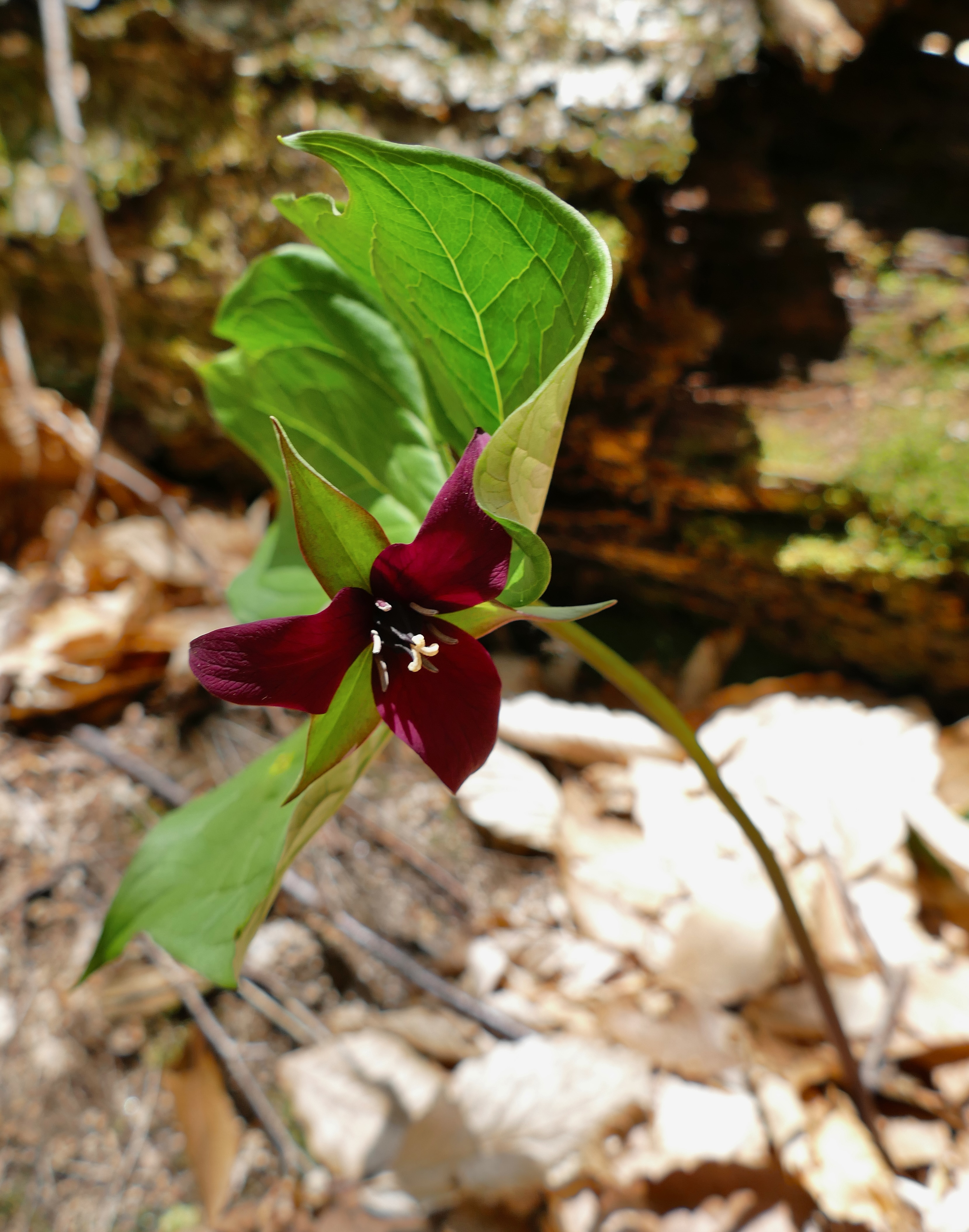
No thought but is connected as strictly as a flower, with the earth.
in Thoreau’s Journal:
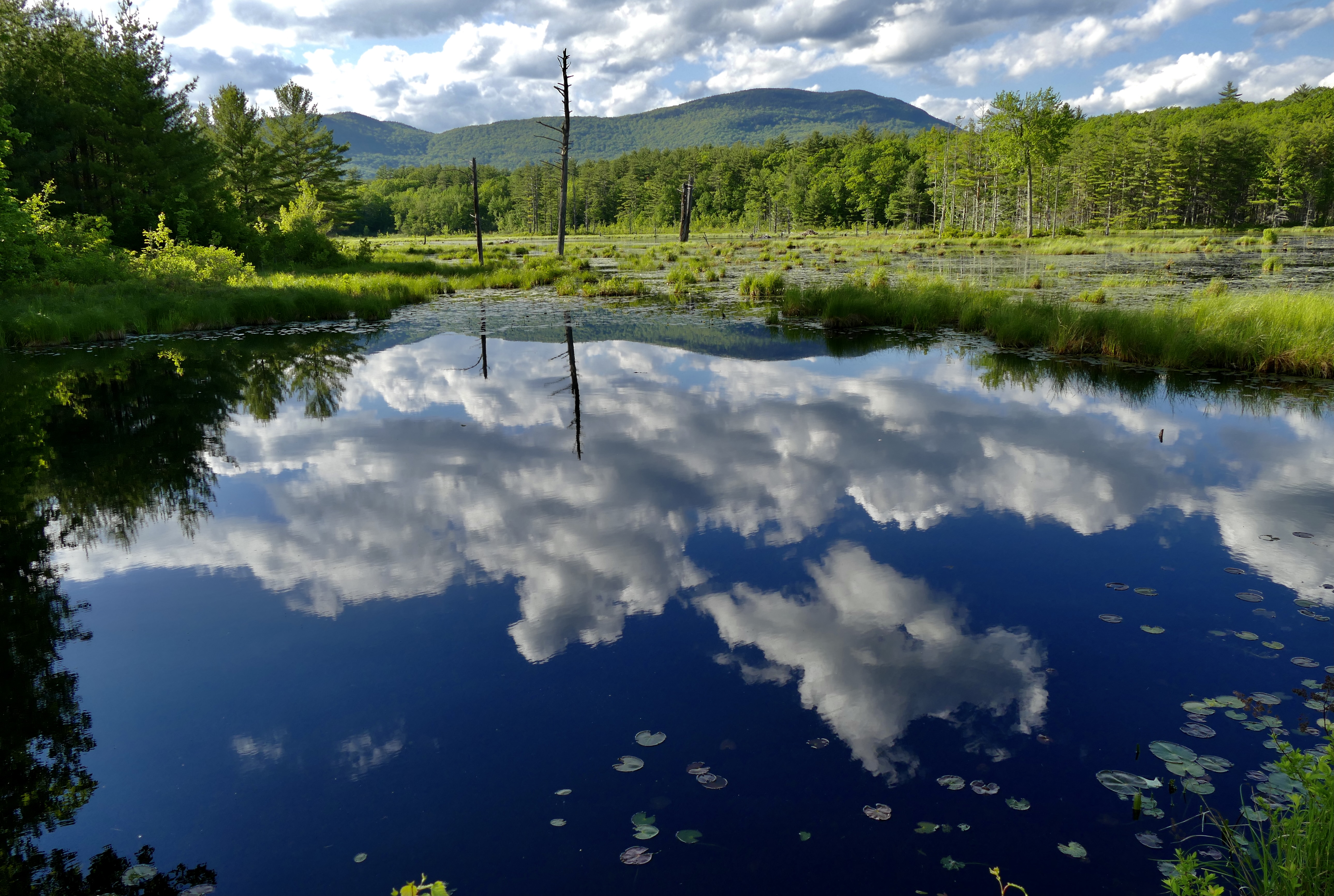
This is the season when the meadow grass is seen waving in the wind at the same time that the shadows of clouds are passing over it.
 allandibiase.com
You must be logged in to post a comment.