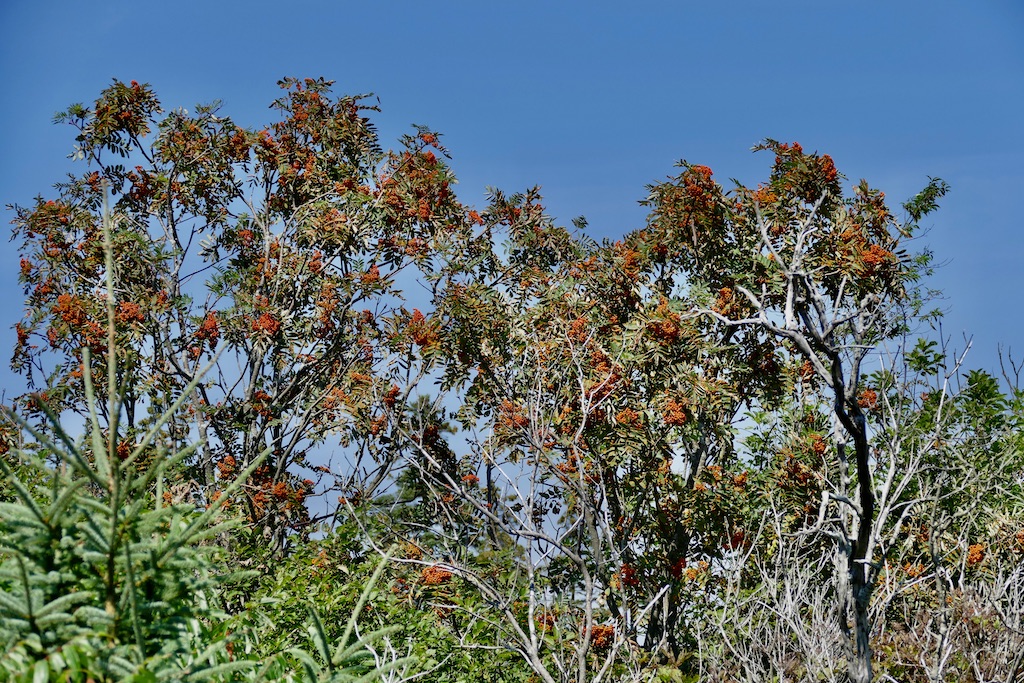
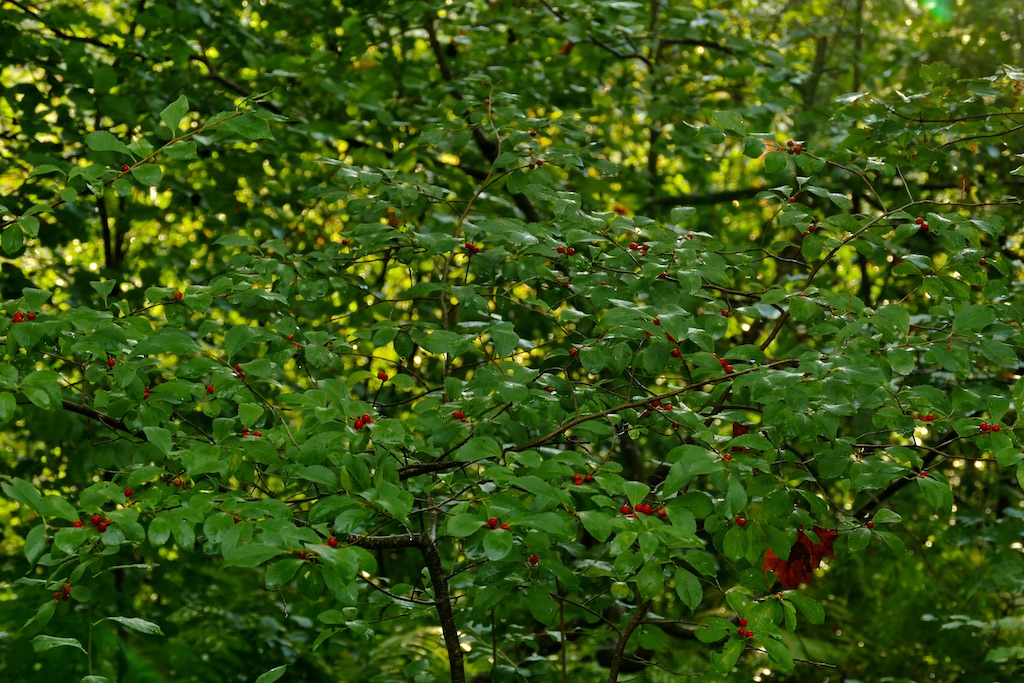
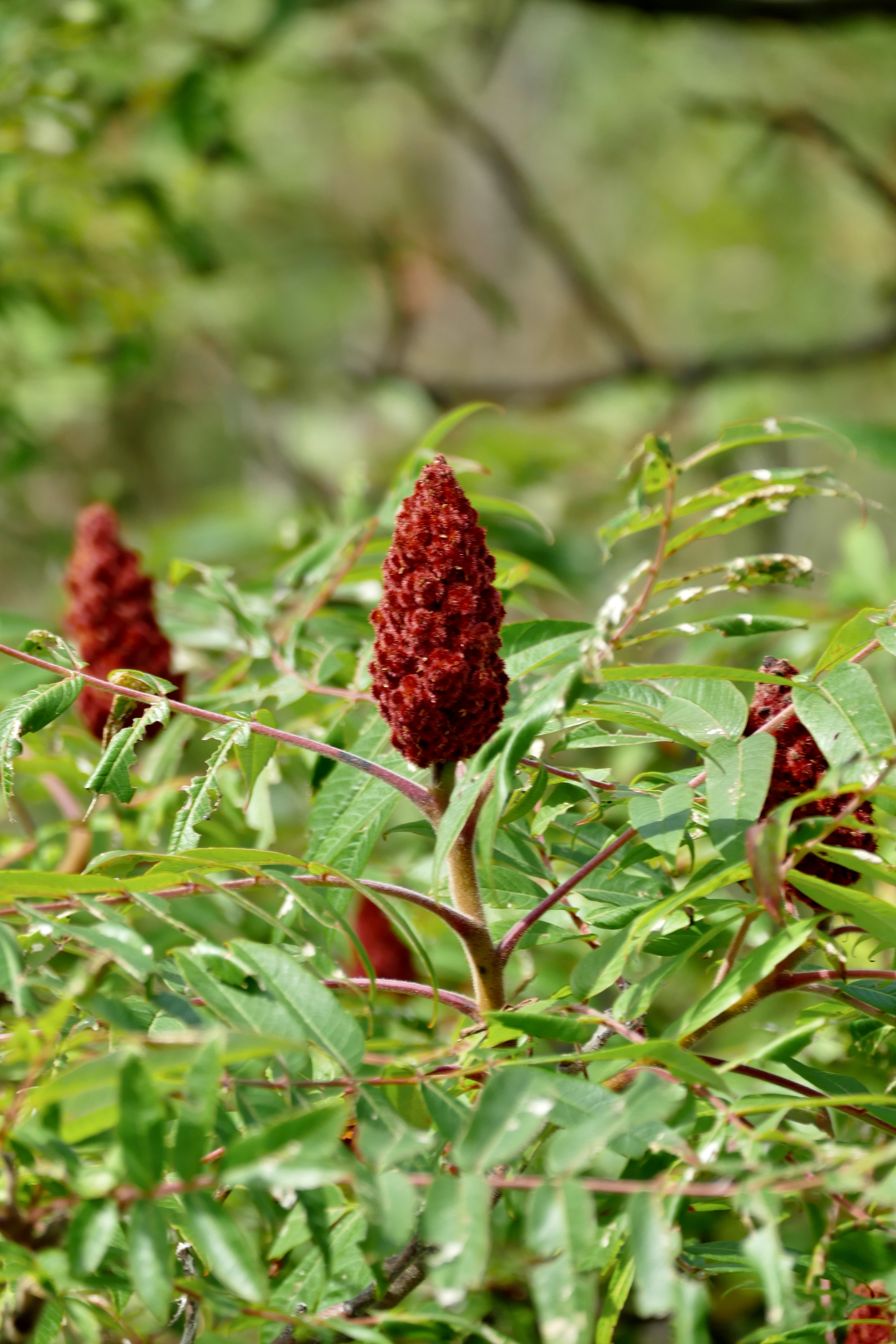
The mountain-ash trees are alive with robins and cherry-birds nowadays, stripping them of their fruit (in drooping clusters). It is exceedingly bitter and austere to my taste. Such a tree fills the air with the watch-spring-like note of the cherry-birds coming and going.
As I go through the fields, endeavoring to recover my tone and sanity and to perceive things truly and simply again,
after having been perambulating the bounds of the town all the week, and dealing with the most commonplace and worldly-minded men, and emphatically trivial things, I feel as if I had committed suicide in a sense.
I have given myself up to nature– I have tried so many Springs & summers & autumns and winters as if I had nothing else to do but to live them–& imbibe whatever nutriment they had for me– I have spent a couple of years, for instance, with the flowers chiefly, having none other so binding engagement as to observe when they opened– I could have afforded to spend a Whole fall observing the changing tints of the foliage.
Ah how I have thriven on solitude & poverty– I cannot overstate this advantage. I do not see how I could have enjoyed it–if the public had been expecting as much of me as there is danger now that they will– If I go abroad lecturing how shall I ever recover the lost winter? It has been my vacation–my season of growth & expansion–a prolonged youth–
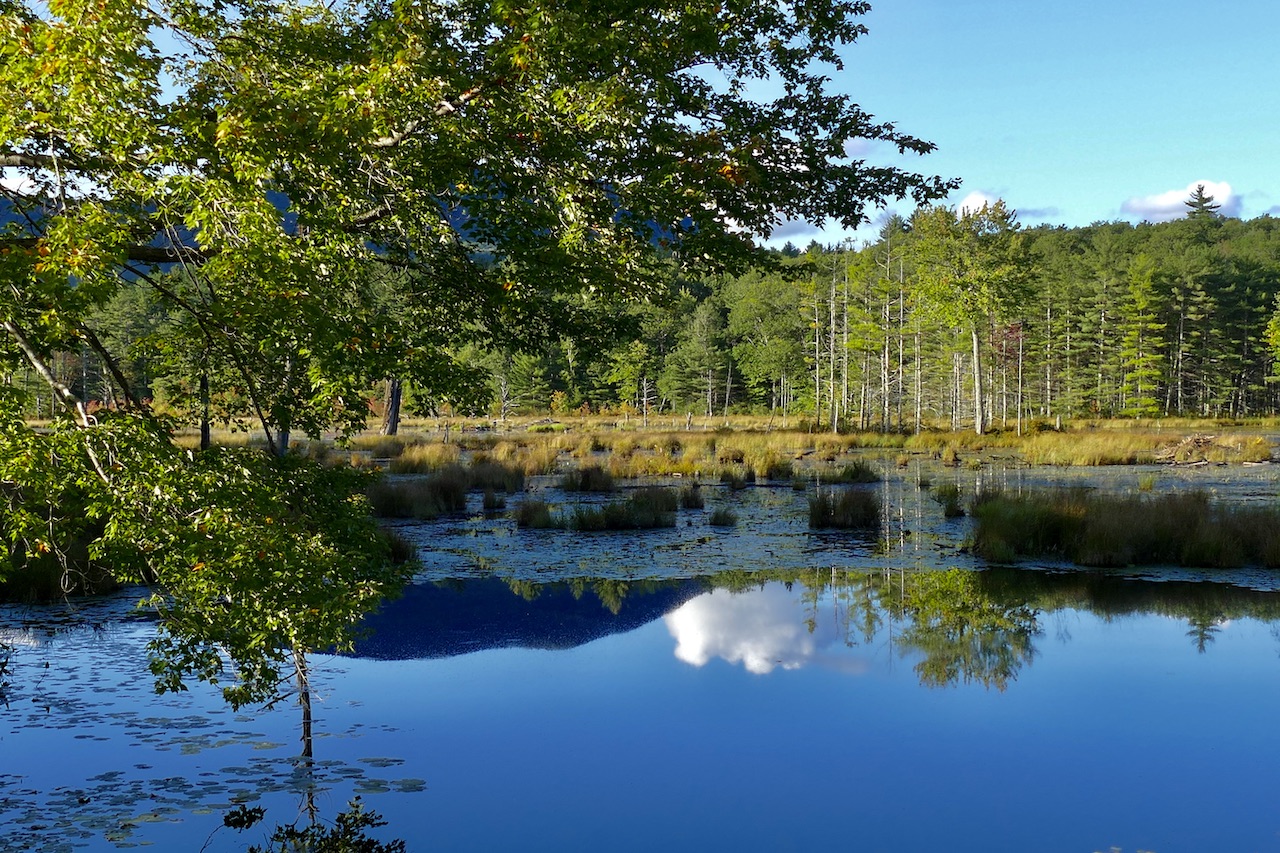
The rippled blue surface of Fair Haven from the Cliffs—with its smooth white border where weeds preserve the surface smooth––a placid sliver plated rim–– The pond is like the sky with a border of whitish clouds in the horizon.
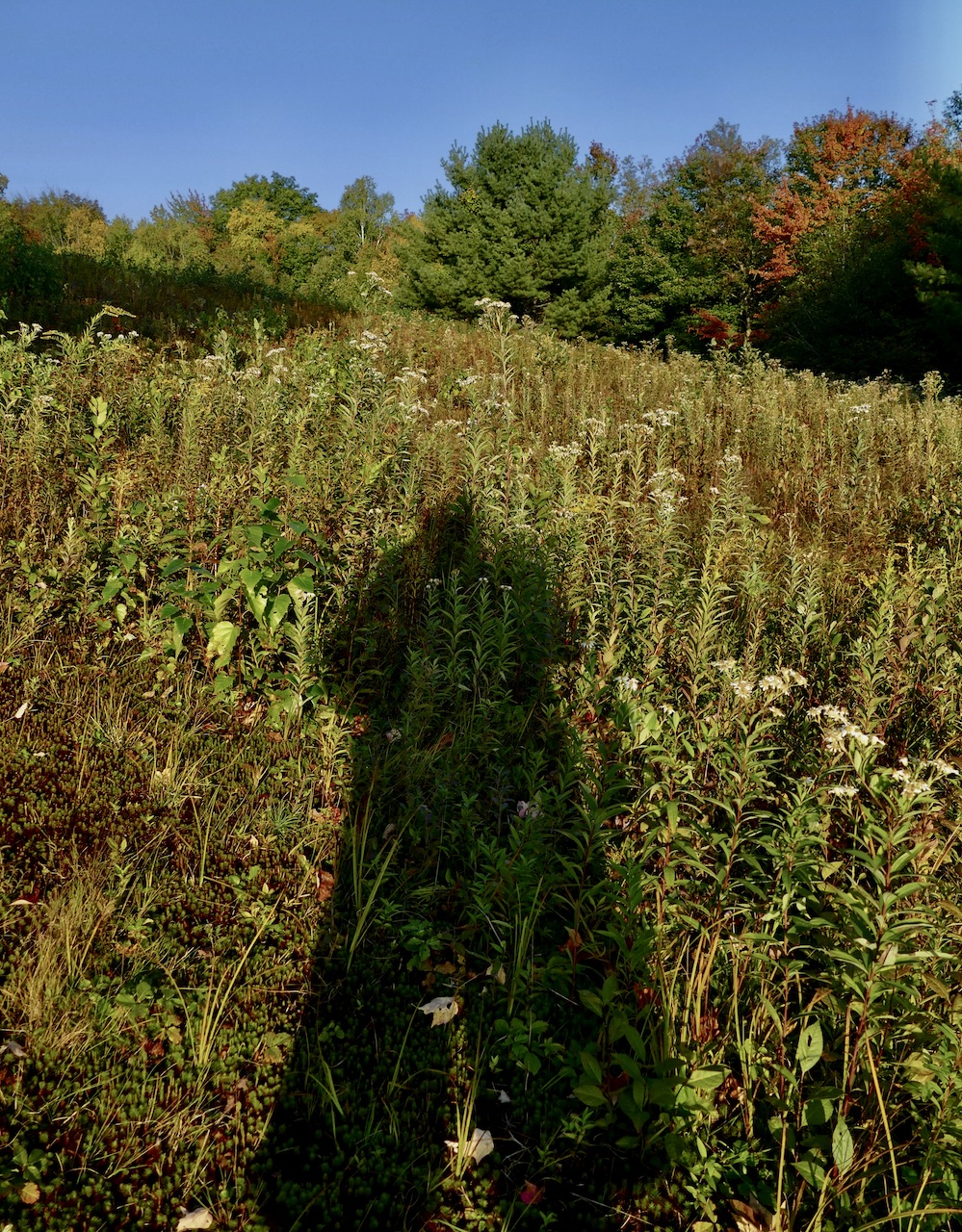
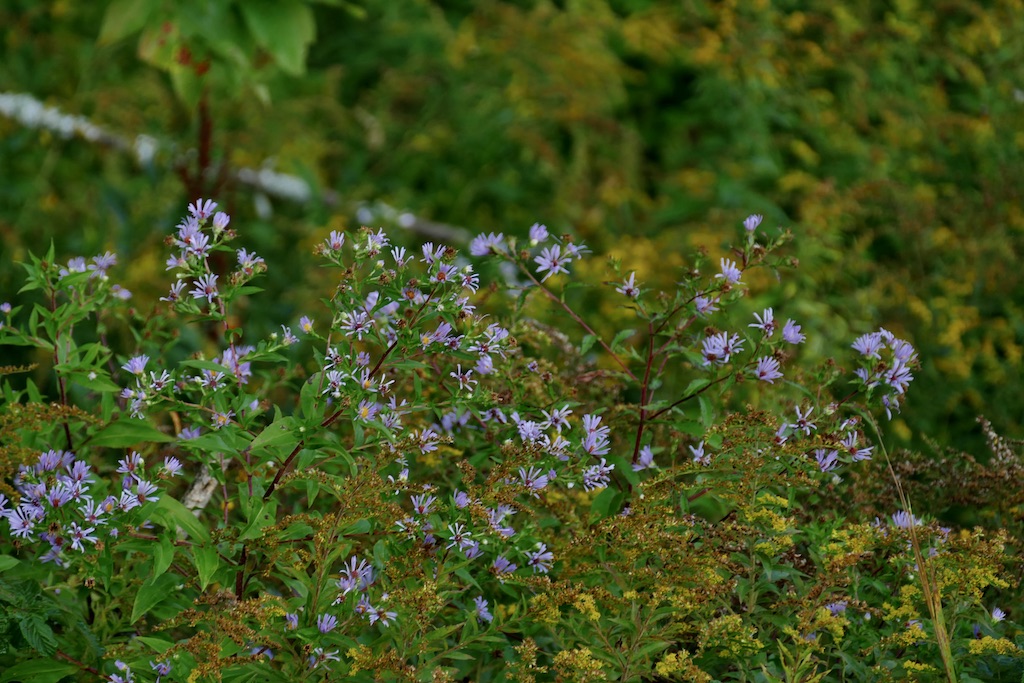
Now for the Aster Tradescanti along low roads, like the Turnpike, swarming with butterflies and bees. Some of them are pink. However unexpected are these later flowers! You thought that Nature had about wound up her affairs. You had seen what she could do this year, and had not noticed a few weeds by the roadside, or mistook them for the remains of summer flowers now hastening to their fall; you thought you knew every twig and leaf by the roadside, and no- thing more was to be looked for there; and now, to your surprise, these ditches are crowded with millions of little stars. They suddenly spring up and face you, with their legions on each side the way, as if they had lain in ambuscade there. The flowering of the ditches. Call them travellers’ thoughts, numerous though small, worth a penny at least, which, sown in spring and summer, in the fall spring up unobserved at first, successively dusted and washed, mingled with nettles and beggar-ticks as a highway harvest. A starry meteoric shower, a milky way, in the flowery kingdom in whose aisles we travel.
Let the traveller bethink himself, elevate and expand his thoughts somewhat, that his successors may oftener hereafter be cheered by the sight of an Aster Novae-Angliae or spectabilis here and there, to remind him that a poet or philosopher has passed this way. The gardener with all his assiduity does not raise such a variety, nor so many successive crops on the same space, as Nature in the very roadside ditches. There they have stood, begrimed with dust and the wash of the road so long, and made acquaintance with passing sheep and cattle and swine, gathering a trivial experience, and now at last the fall rains have come to wash off some of that dust, and even they exhibit these dense flowery panicles as the result of all that experience, as pure for an hour as if they grew by some wild brook-side.
Asters various shades of blue and especially the smaller kinds of dense flowering white ones are more than ever—by the roadsides….The golden glow of autumn concentrated—more golden than the sun….The earth wears different colors or liveries at different seasons. If I come by at this season a golden blaze will salute me here from a thousand suns. How earnestly & rapidly each creature—each flower is fulfilling its part while its day lasts! Nature never lost a day—nor a moment — As the planet in its orbit & around its axis—so do the seasons— —so does time revolve with a rapidity inconceivable.
I must walk more with free senses–– It is as bad to study stars & clouds as flowers & stones–– I must let my senses wander as my thoughts––my eyes see without looking. Carlyle said that how to observe was to look––but I say that is rather to see––& the more you look the less you will observe––I have the habit of attention to such excess that my senses get no rest––but suffer from a constant strain. Be not preoccupied with looking. Go not to the object. Let it come to you….What I need is not to look at all––but a true sauntering of the eye.
Signs of frost last night in M. Miles’s cleared swamp. Potato vines black.
How much farther it is back to frost from the greatest heat of summer, i. e. from the 6th [of this month] back to the 1st of June, three months, than forward to it, four day
It requires a different intention of the eye in the same locality to see different plants…. I find that when I am looking for the former, I do not see the latter in their midst. How much more, then, it requires different intentions of the eye and of the mind to attend to different departments of knowledge ! How differently the poet and the naturalist look at objects! A man sees only what concerns him. A botanist absorbed in the pursuit of grasses does not distinguish the grandest pasture oaks.
He as it were tramples down oaks unwittingly in his walk.
While the grass is fresh the earth is in its vigor. The greenness of the grass is the best symptom or evidence of the earth’s youth or health.
Perhaps it will be found that when the grass ceases to be fresh & green or after June—the birds have ceased to sing—& the fireflies too no longer in myriads sparkle in the meadows—
Perhaps a history of the year would be a history of the grass, or of a leaf, regarding the grass-blades as leaves, for it is equally true that the leaves soon lose their freshness and soundness, and become the prey of insects and of drought…
The scenery, when it is truly seen, reacts on the life of the seer. How to live. How to get the most life. As if you were to teach the young hunter how to entrap his game. How to extract its honey from the flower of the world. That is my every-day business. I am as busy as a bee about it.
Our moments of inspiration are not lost though we have no particular poem to show for them; for those experiences have left an indelible impression, and we are ever and anon reminded of them.
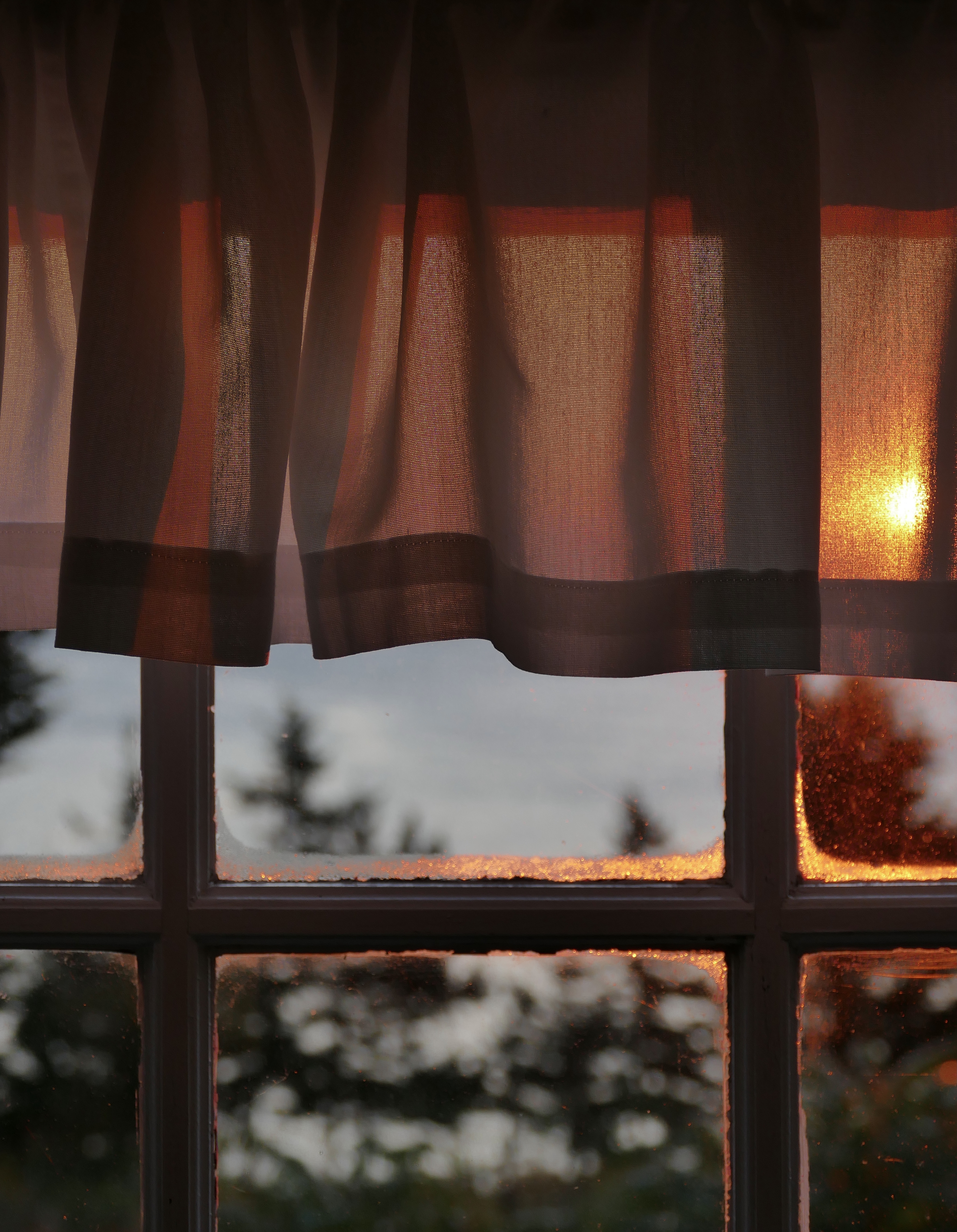
It is cooler these days and nights, and I move into an eastern chamber in the morning, that I may sit in the sun. The water, too, is cooler when I bathe in it, and I am reminded that this recreation has its period. I feel like a melon or other fruit laid in the sun to ripen. I grow, not gray, but yellow.
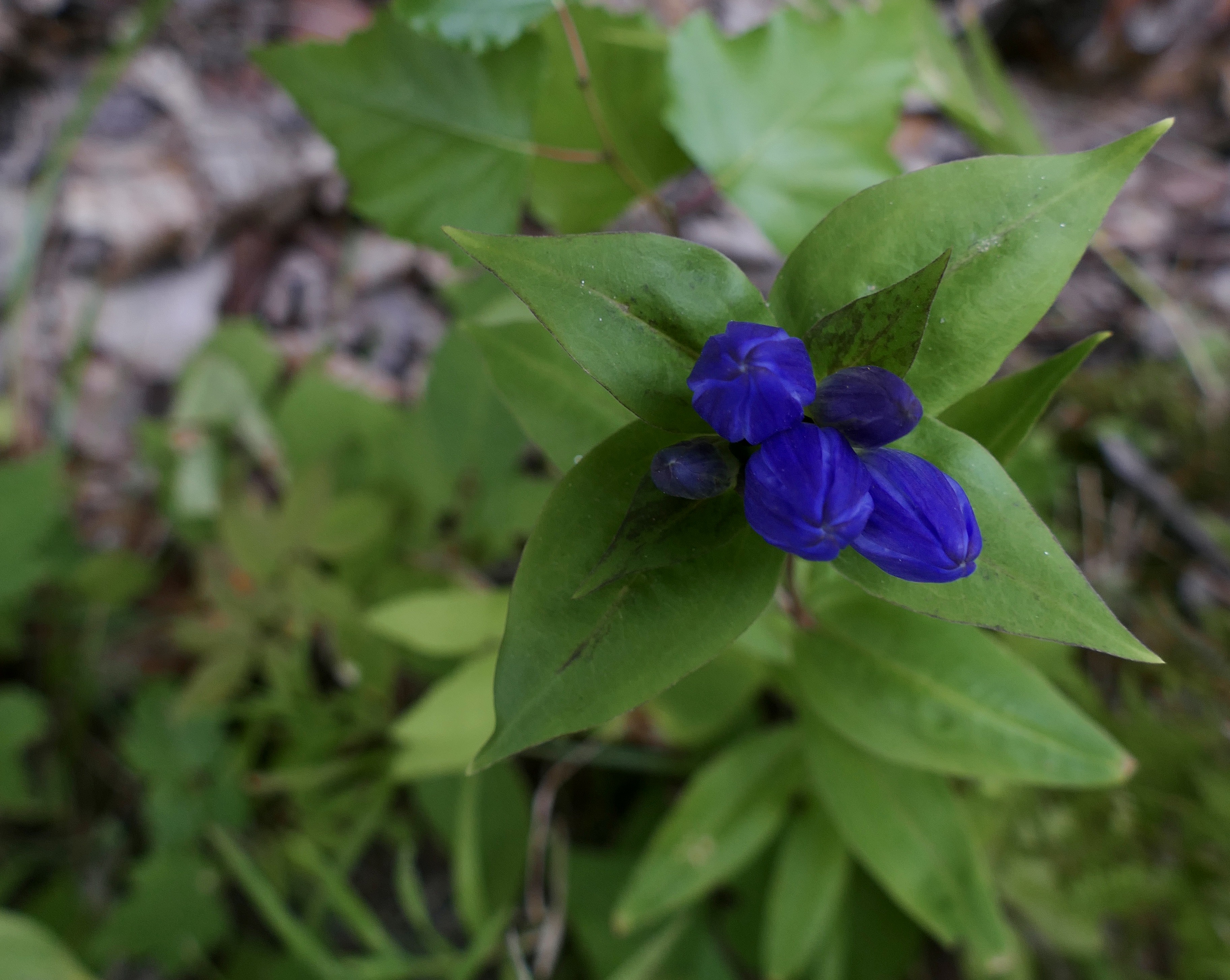
The Soapwort gentian out abundantly in Flints-Bridge Lane—ap. for a week—a surprisingly deep faintly purplish blue….it has the flowering of the sky. The sky has descended & kissed the earth….Why come these blue flowers thus late in the year.











 allandibiase.com
You must be logged in to post a comment.