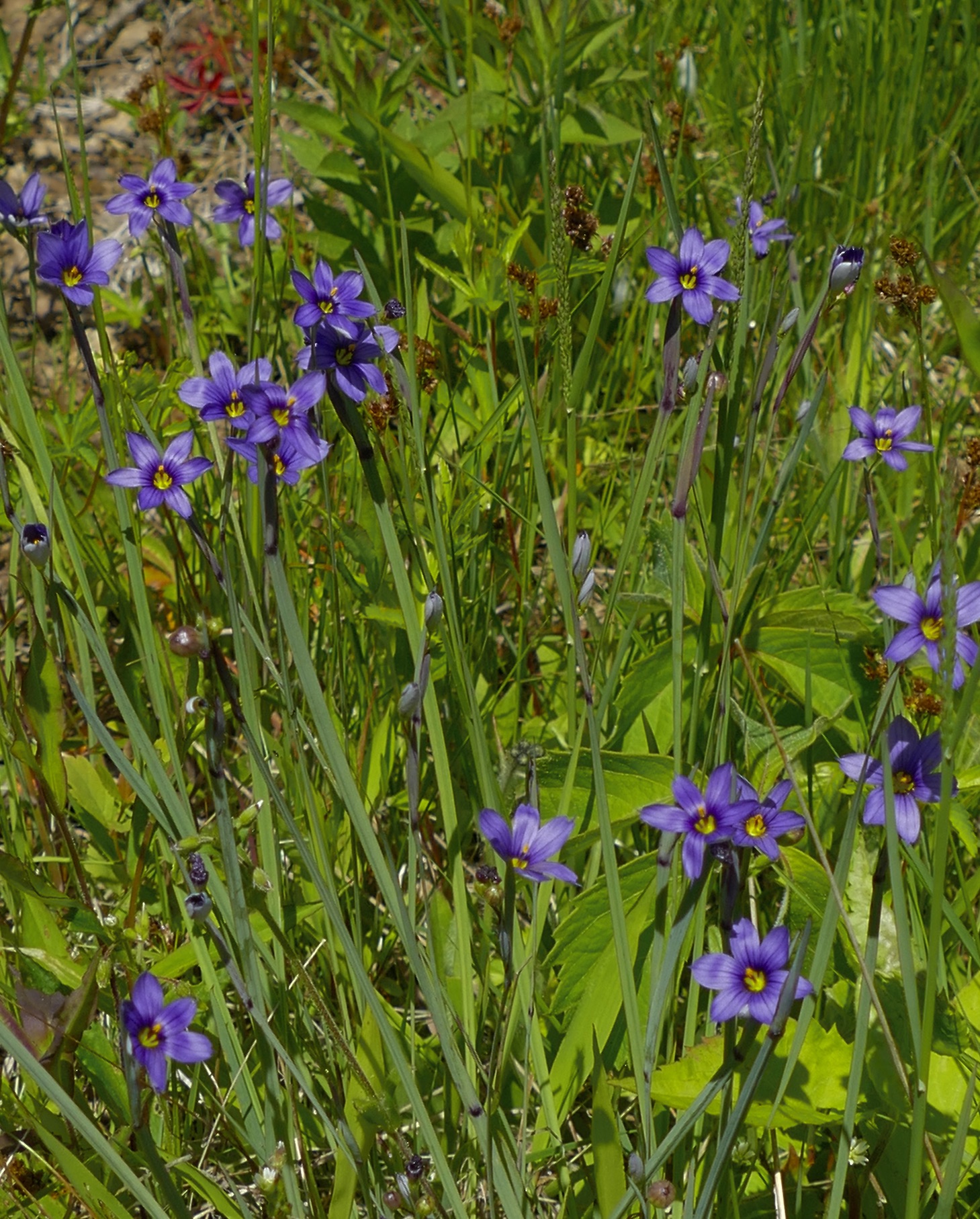
The fields are blued with blue eyed grass a slaty blue. The epilobium shows some color in its spikes. How rapidly new flowers infold—as if nature would get through her work too soon. One has as much as he can do to observe how flowers successively unfold. It is a flowery revolution to which but few attend. Hardly too much attention can be bestowed on flowers. We follow we march after the highest color—that is our flag—our standard—our “color.” Flowers were made to be seen not overlooked. Their bright colors imply eyes—spectators.—
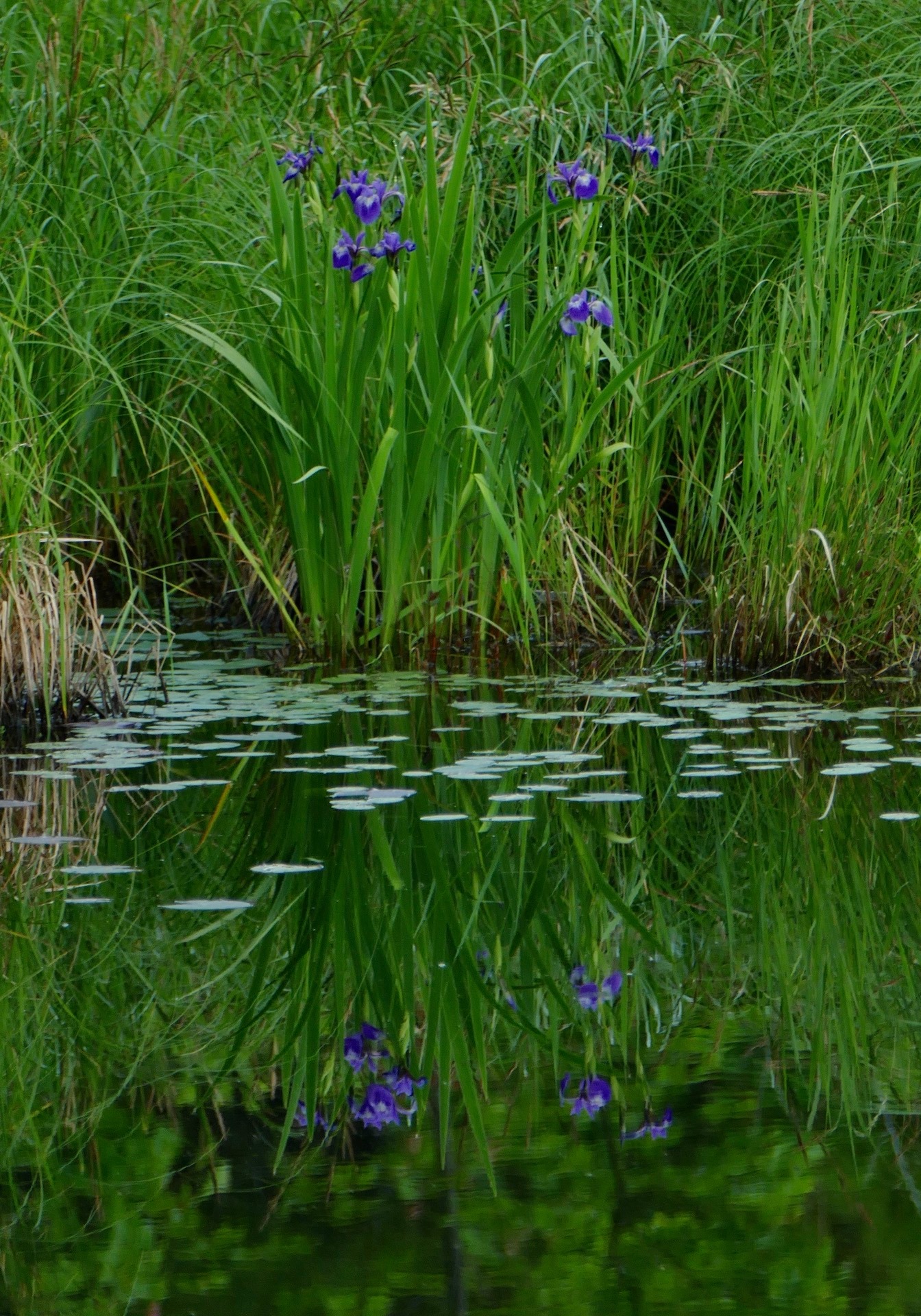
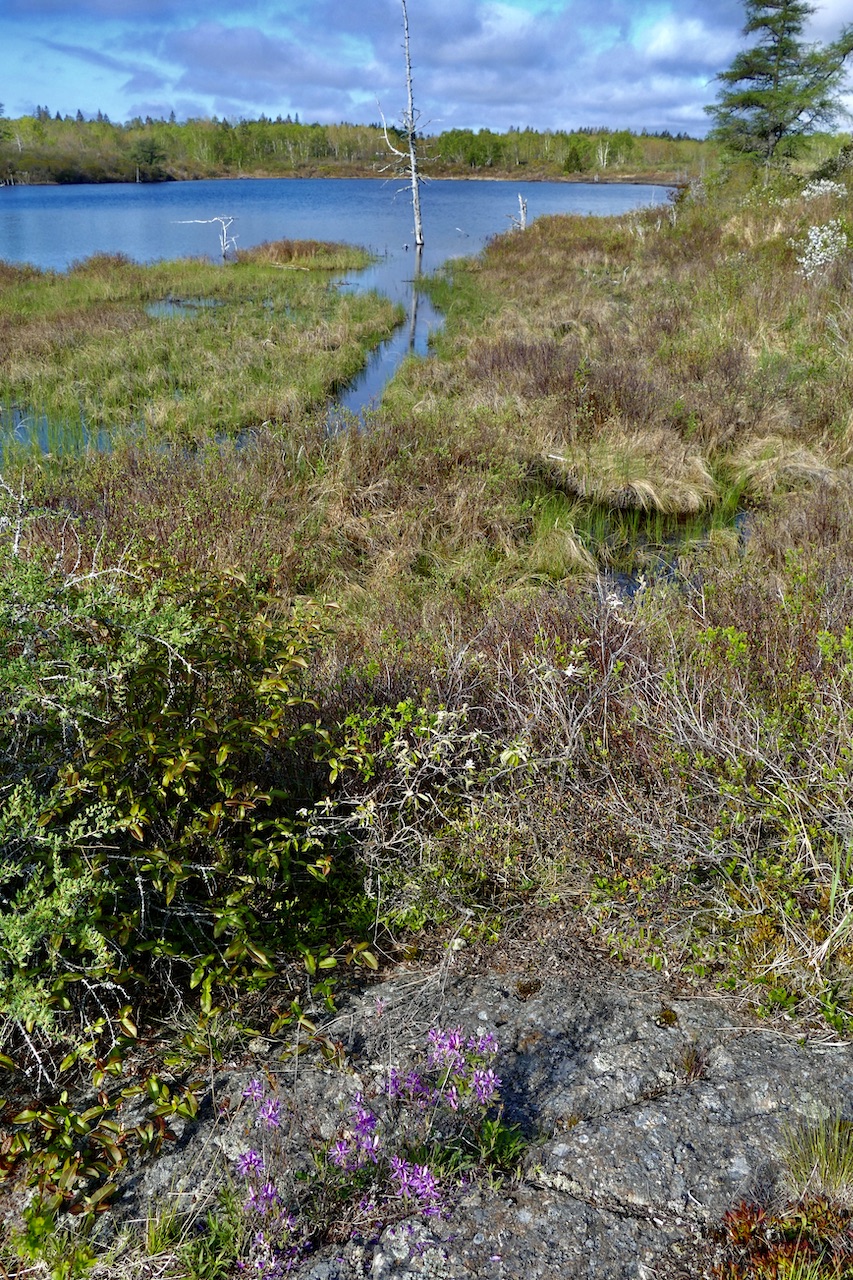
The blue flag (Iris versicolor) grows in this pure water, rising from the stony bottom all around the shores, and is very beautiful, ––not too high-colored, ––especially its reflections in the water. There was something in its bluish blade which harmonized with the greenish water.
By night no flowers, at least no variety of colors. The pinks are no longer pink; they only shine faintly, reflecting more light. Instead of flowers underfoot, stars overhead.
My shadow has the distinctness of a second person, a certain black companion bordering on the imp, and I ask, “Who is this?” which I see dodging behind me as I am about to sit down on a rock.
No one to my knowledge, has observed the minute differences in the seasons. Hardly two nights are alike. The rocks do not feel warm to-night, for the air is warmest; nor does the sand particularly. A book of the seasons, each page of which should be written out-of-doors, or in its own locality wherever it may be.
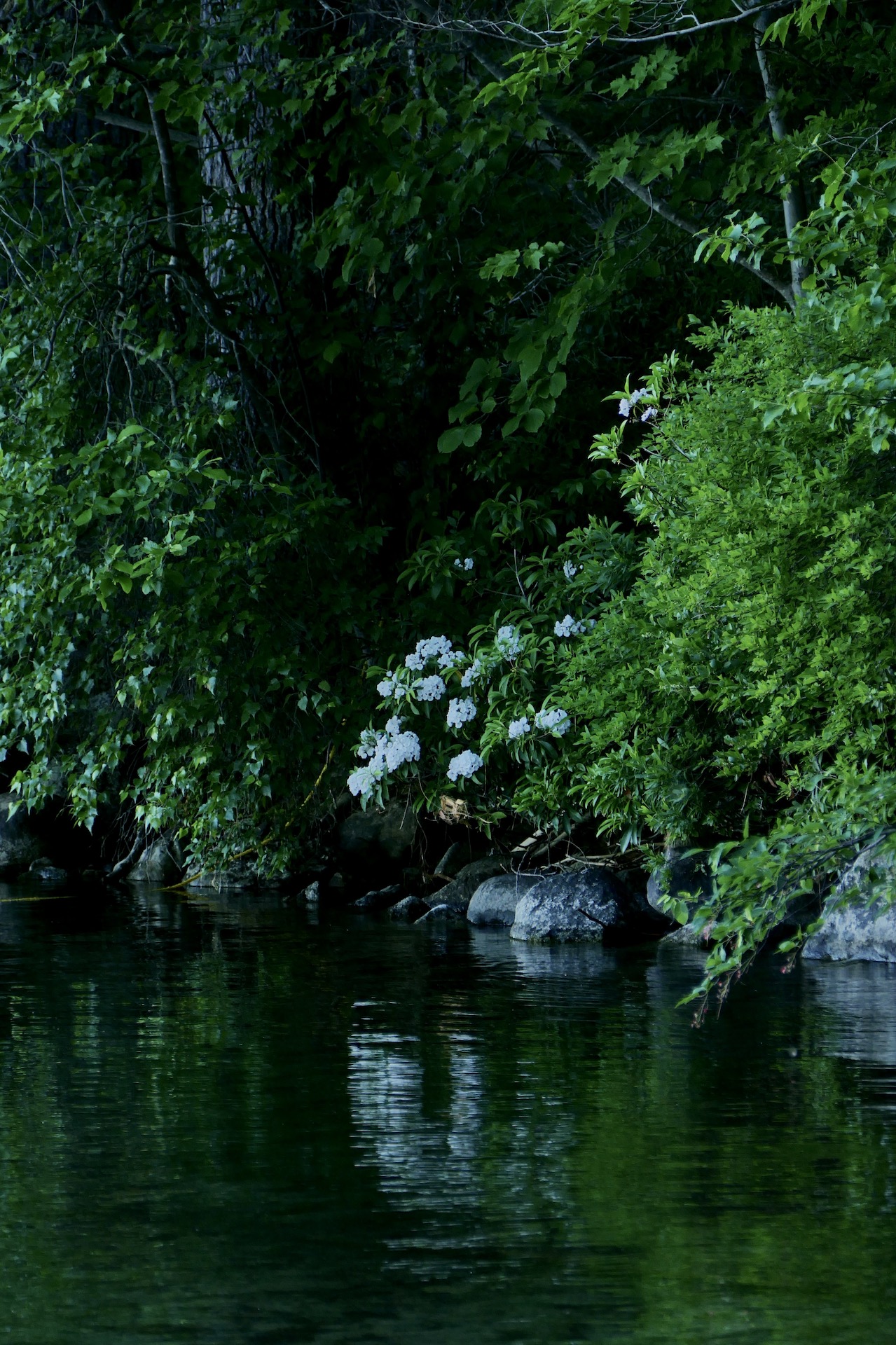
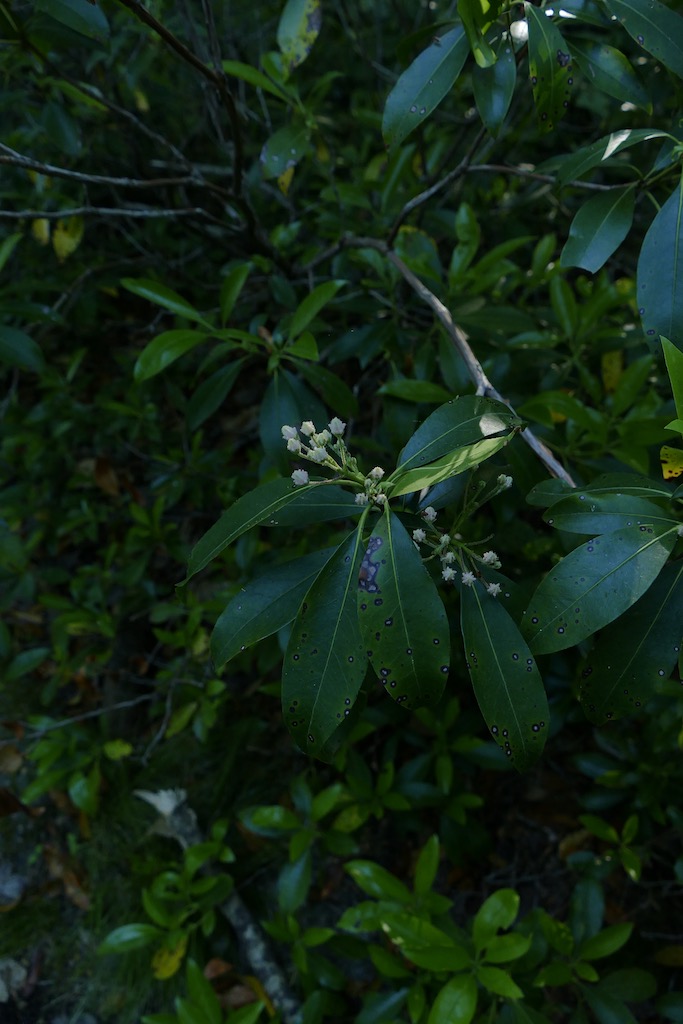
The mountain laurel will begin to bloom to-morrow. The frost some weeks since killed most of the buds and shoots, except where they were protected by trees or by themselves, and now new shoots have put forth and grow four or five inches from the sides of what were the leading ones. It is a plant which plainly requires the protection of the wood.
Find the great fringed orchis out apparently two or three days. Two are almost fully out, two or three only budded. A large spike of peculiarly delicate pale-purple flowers growing in the luxuriant and shady swamp amid hellebores, ferns, golden senecios, etc., etc. It is remarkable that this, one of the fairest of all our flowers, should also be one of the rarest, ––for the most part not seen at all. I think that no other but myself in Concord annually finds it. That so queenly a flower should annually bloom so rarely and in such withdrawn and secret places as to be rarely seen by man!
The village belle never sees this more delicate belle of the swamp. How little relation between our life and its! Most of us never see it or hear of it. The seasons go by to us as if it were not. A beauty reared in the shade of a convent, who has never strayed beyond the convent bell. Only the skunk or owl or other inhabitant of the swamp beholds it. In the damp twight of the swamp, where it is wet to the feet. How little anxious to display its attractions ! It does not pine because man does not admire it. How independent on our race! It lifts its delicate spike amid the hellebore and ferns in the deep shade of the swamp. I am inclined to think of it as a relic of the past as much as the arrowhead, or the tomahawk I found on the 7th.
My practicalness is not to be trusted to the last. To be sure, I go upon my legs for the most part, but, being hard-pushed and dogged by a superficial common sense which is bound to near objects by beaten paths,
I am off the handle, as the phrase is, ––I am like those guinea-fowl which Charles Darwin saw at the Cape de Verd Islands. He says,”They avoided us like partridges on a rainy day in September, running with their heads cocked up; and if pursued, they readily took to the wing.
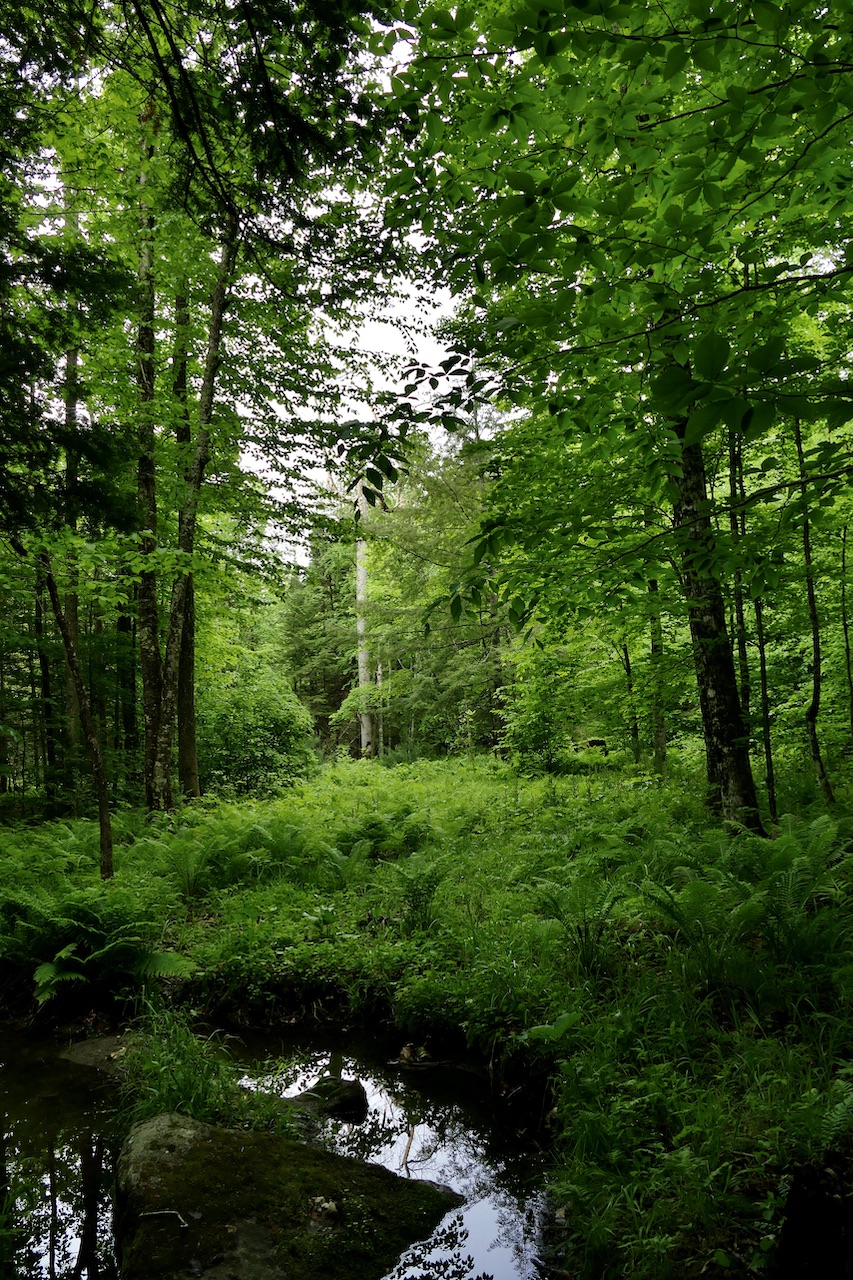
Not only the foliage begins to look dark and dense, but many ferns are fully grown, as the cinnamon and interrupted, perfectly recurved over the bank and shore, adding to the leafy impression of the season. The Osmunda regalis looks later and more tender, reddish-brown still. It preserves its habit of growing in circles, though it may be on a steep bank and one half the circle in the water.
The new leaves are now very fair, pure, unspotted green, commonly more or less yellowish. The swamp white oak leaf looks particularly tender and delicate. The red maple is much harder and more matured. Yet the trees commonly are not so densely leaved but that I can see through them; e. g., I see through the red oak and the bass (below Dove Rock), looking toward the sky. They are a mere network of light and shade after all. The oak may be a little the thickest. The white ash is considerably thinner than either.
The grass and foliage are particularly fresh and green after the two days of rain, and we mark how the darkening elms stand along the highways. Like wands or wreaths seen against the horizon, they streak the sky with green.
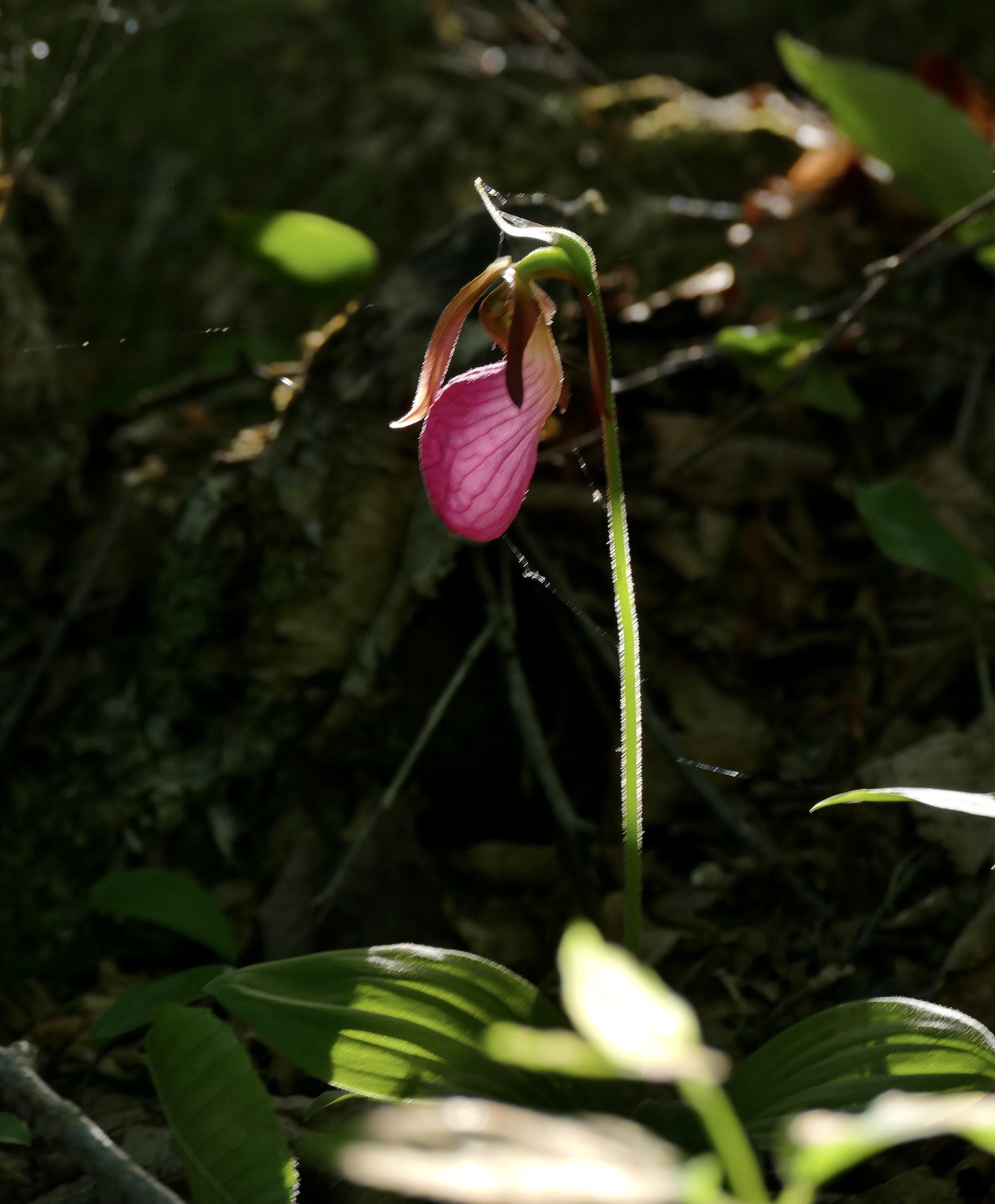
The first of June, when the lady’s slipper and the wild pink have come out in sunny places on the hill-sides, then the summer is begun according to the clock of the seasons.
I sit here this fourth of June, looking out on men and nature from this that I call my perspective window, through which all things are seen in their true relations. This is my upper empire, bounded by four walls, viz., three of boards yellow-washed, facing the north, west, and south, respectively, and the fourth of plaster, likewise yellow-washed, fronting the sunrise, — to say nothing of the purlieus and outlying provinces, unexplored as yet but by rats.
The words of some men are thrown forcibly against you and adhere like burs.
These are the clear breezy days of early June, when the leaves are young and few and the sorrel not yet in its prime. Perceive the meadow fragrance. The roads are strewn with red maple seed. The pine shoots have grown generally from three to six inches, and begin to make a distant impression, even at some distance, of white and brown above their dark green.
The foliage of deciduous trees is still rather yellow-green than green.
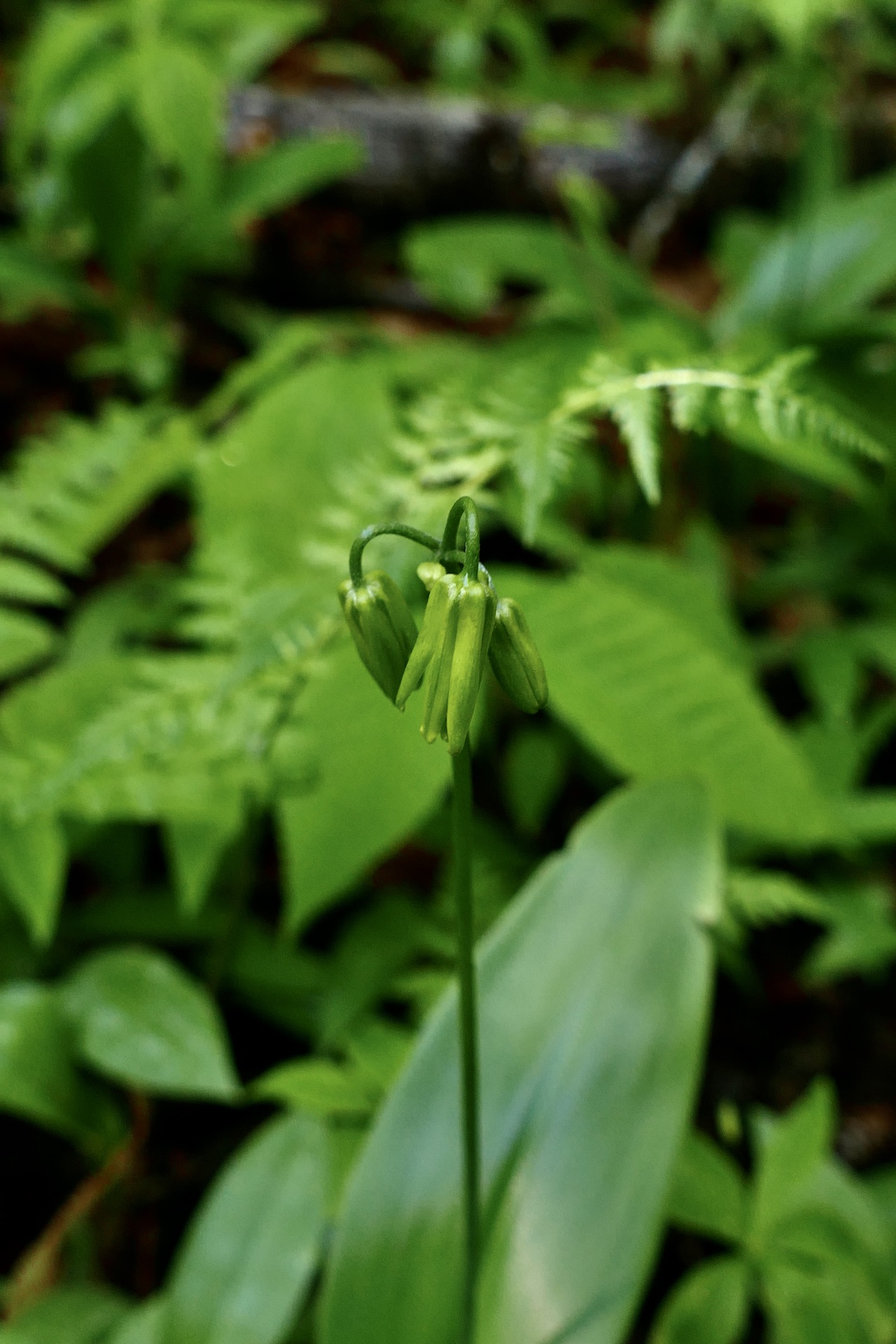
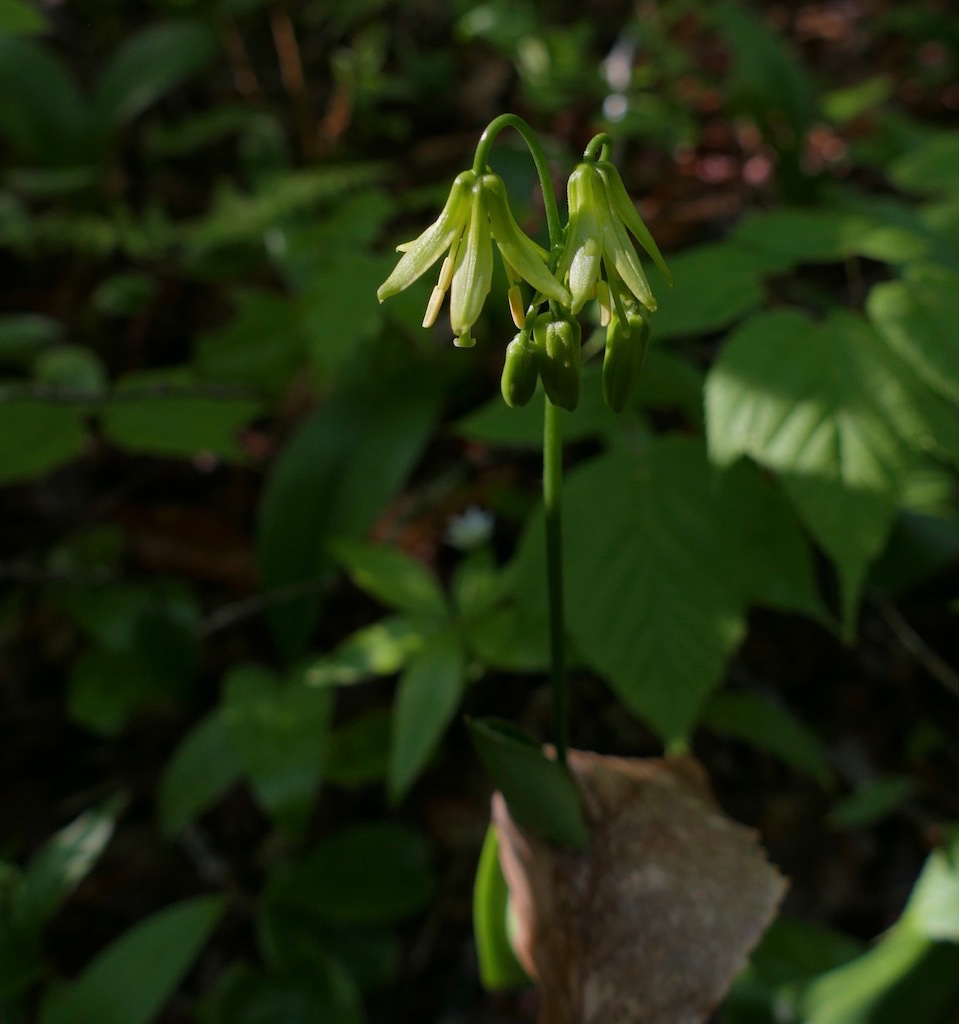
Clintonia Borealis a day or two….This is perhaps the most interesting & neatest of what I may call the liliaceous? plants we have–– Its beauty at present consists chiefly in its commonly 3 very handsome rich clear dark green leaves….They are perfect in form & color––broadly oblanceolate with a deep channel down the middle––uninjured by insects––arching over from a center at the ground sometimes very symmetrically disposed in a triangular fashion––& from their midst arises a scape a foot high with one or more umbels of “green bell—shaped flowers”––: yellowish green nodding or bent downward––but without fragrance–– In fact the flower is all green both leaves & corolla–– The leaves alone––& many have no scape––would detain the walker.
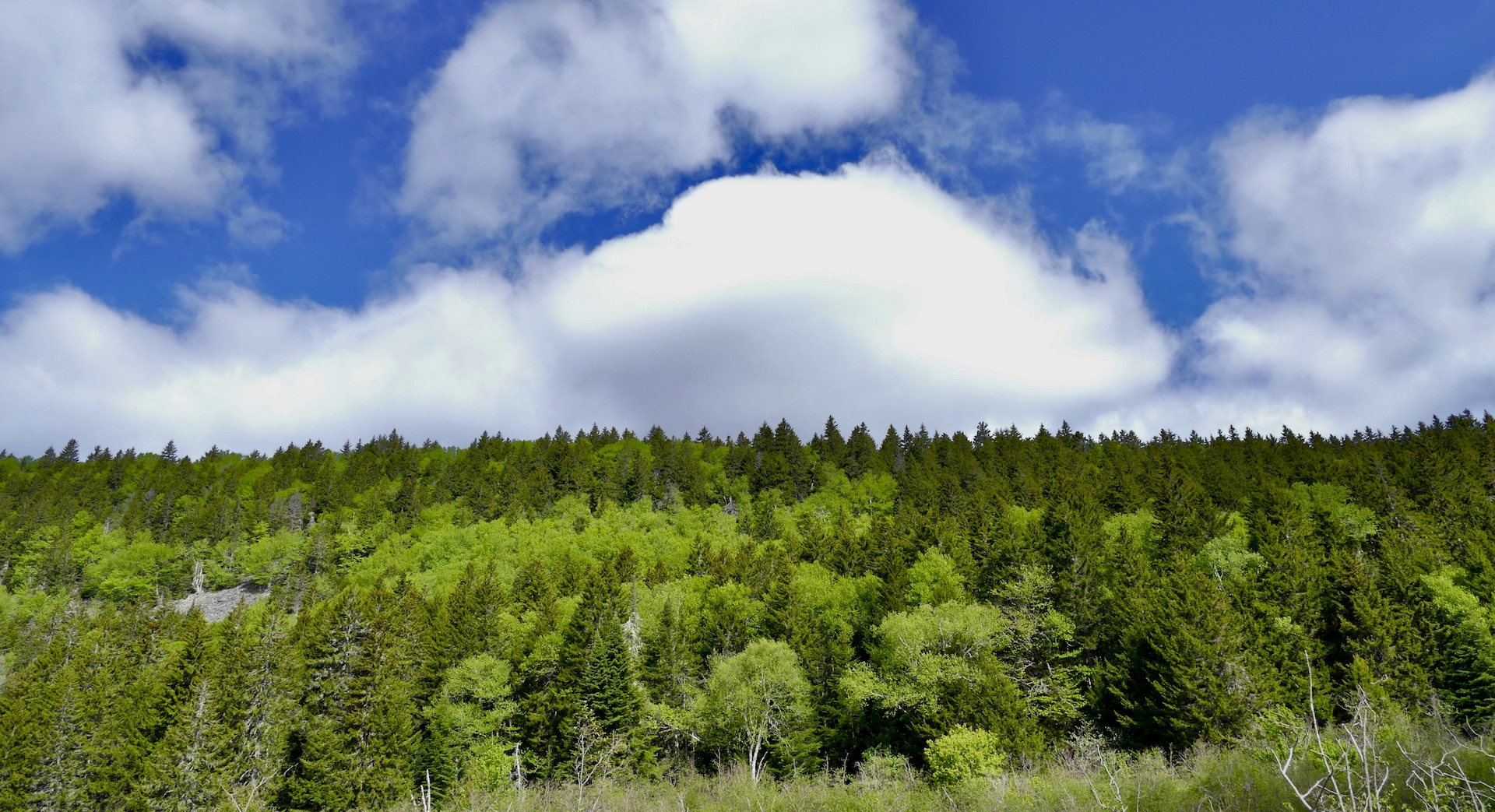
Within little more than a fortnight the woods, from bare twigs, have become a sea of verdure, and young shoots have contended with one another in the race.
The leaves have unfurled all over the country like a parasol. Shade is produced, and the birds are concealed and their economies go forward uninterruptedly, and a covert is afforded to the animals generally.
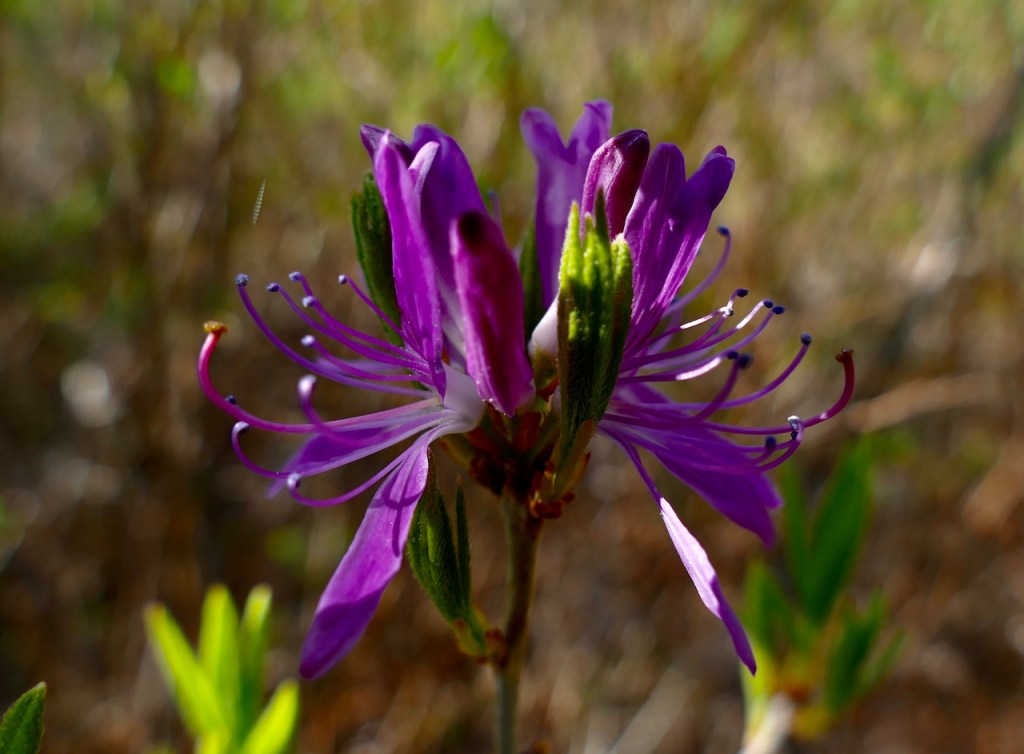
Some incidents in my life have seemed far more allegorical than actual; they were so significant that they plainly served no other use. That is, I have been more impressed by their allegorical significance and fitness; they have been like myths or passages in a myth, rather than mere incidents or history which have to wait to become significant. Quite in harmony with my subjective philosophy. This, for instance: that, when I thought I knew the flowers so well, the beautiful purple azalea or pinxter-flower should be shown to me by the hunter who found it. Such facts are quite above the level of the actual. They are all just such events as my imagination prepares me for, no matter how incredible. Perfectly in keeping with my life and characteristic. Ever and anon something will occur which my philosophy has not dreamed of. The limits of the actual are set some thoughts further off. That which had seemed a rigid wall of vast thickness unexpectedly proves a thin and undulating drapery. The boundaries of the actual are no more fixed and rigid than the elasticity of our imaginations. The fact that a rare and beautiful flower which we never saw, perhaps never heard of, for which therefore there was no place in our thoughts, may at length be found in our immediate neighborhood, is very suggestive.
It is evident that the virtues of plants are almost completely unknown to us, and we esteem the few with which we are better acquainted unreasonably above the many which are comparatively unknown to us.
It would be worth the while to ask ourselves weekly, Is our life innocent enough? Do we live inhumanely, toward man or beast in thought or act? To be serene and successful we must be at one with the universe. The least conscious and needless injury inflicted on any creature is to its extent a suicide. What peace –– or life –– can a murderer have?
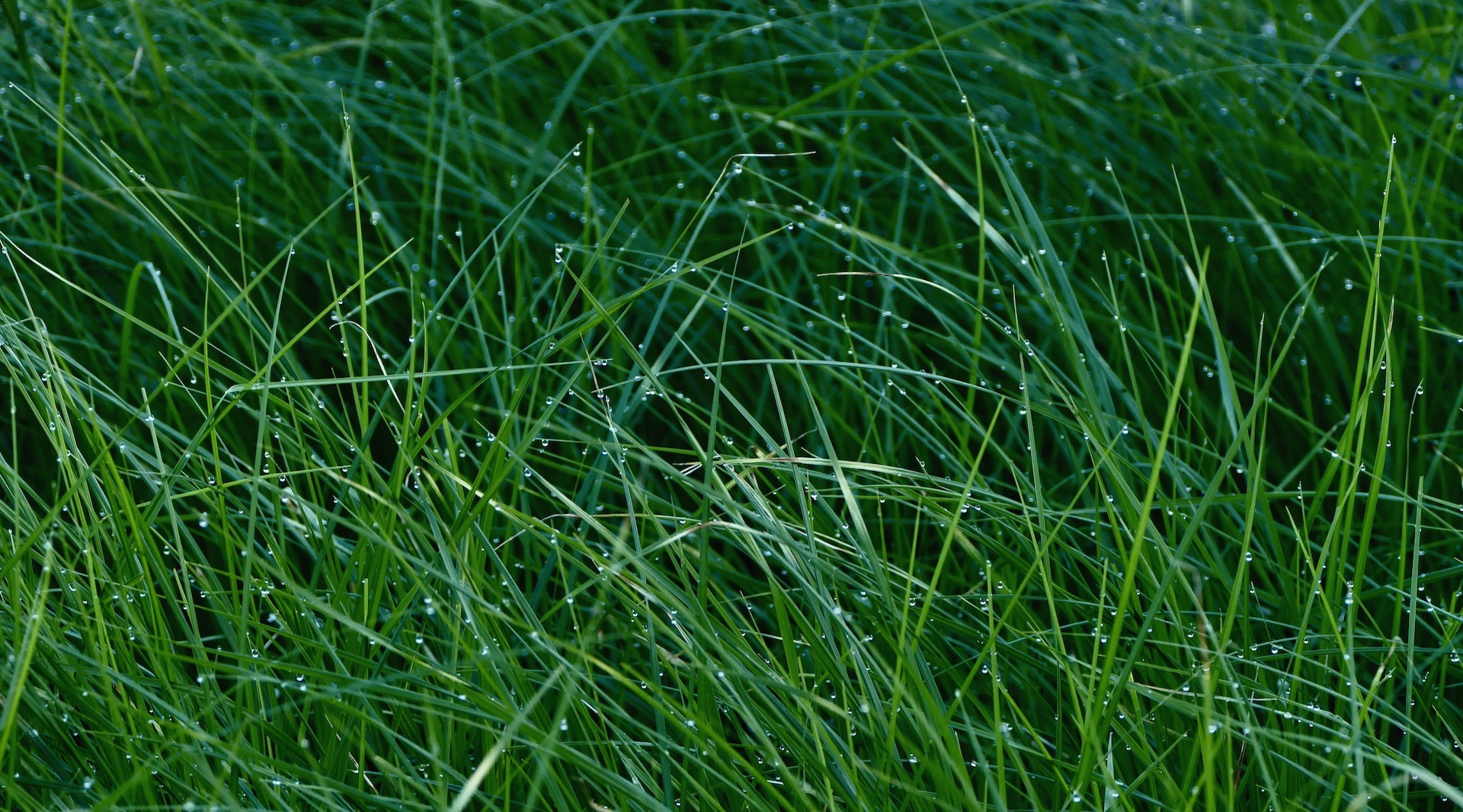
Still a very strong wind from northerly, and hazy and rather cool for season. The fields now begin to wear the aspect of June, their grass just beginning to wave; the light-colored withered grass seen between the blades, foliage thickening and casting darker shadows over the meadows, elm-tree-tops thick in distance, deciduous trees rapidly investing evergreens, haze with the strong wind. How important the dark evergreens now seen through the haze in the distance and contrasting with the gauze-like, as yet thin-clad deciduous trees!









 allandibiase.com
You must be logged in to post a comment.