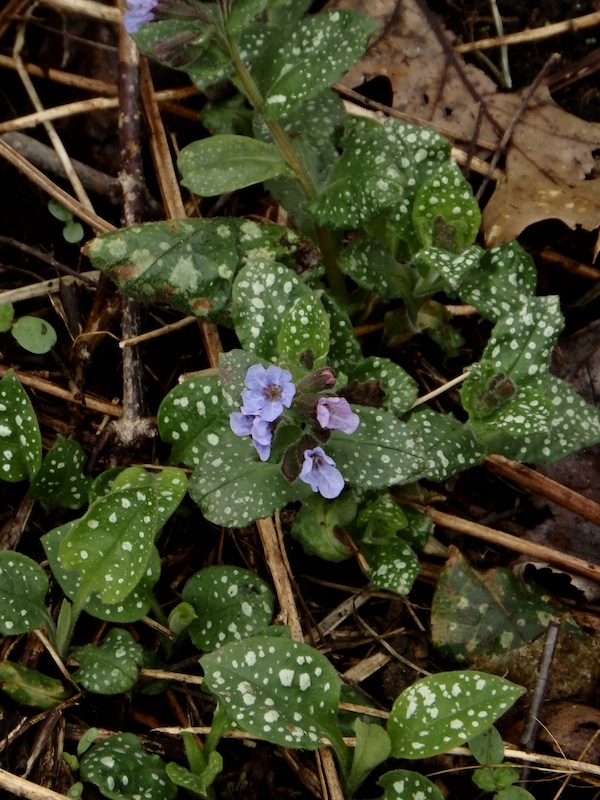
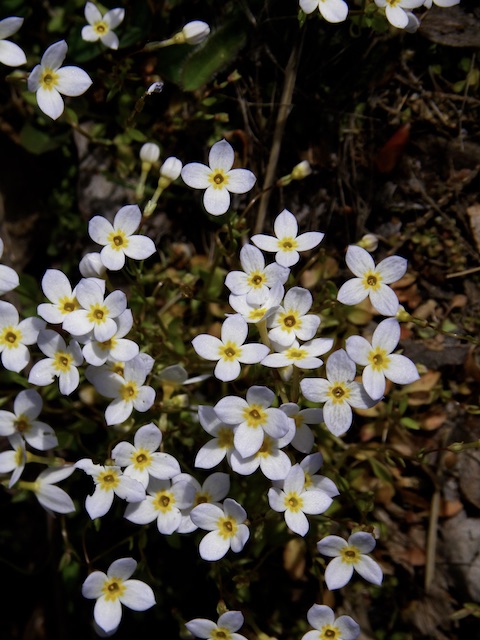
Bluets out on the bank by Tarbell’s spring brook, maybe a day or two.
This was a very warm as well as pleasant day, but at one o’clock there was the usual fresh easterly wind and sea-turn, and before night it grew quite cold for the season. The regularity of the recurrence of this phenomenon is remarkable. I have noticed [it], at least, on the 24th late in the day, the 28th and the 29th about 3 p. m., and to-day at 1 p. M. It has been the order. Early in the afternoon, or between one and four, the wind changes (I suppose, though I did not notice its direction in the forenoon), and a fresh cool wind from the sea produces a mist in the air.
It often happens that a man is more humanely related to a cat or dog than to any human being. What bond is it relates us to any animal we keep in the house but the bond of affection? In a degree we grow to love each other.
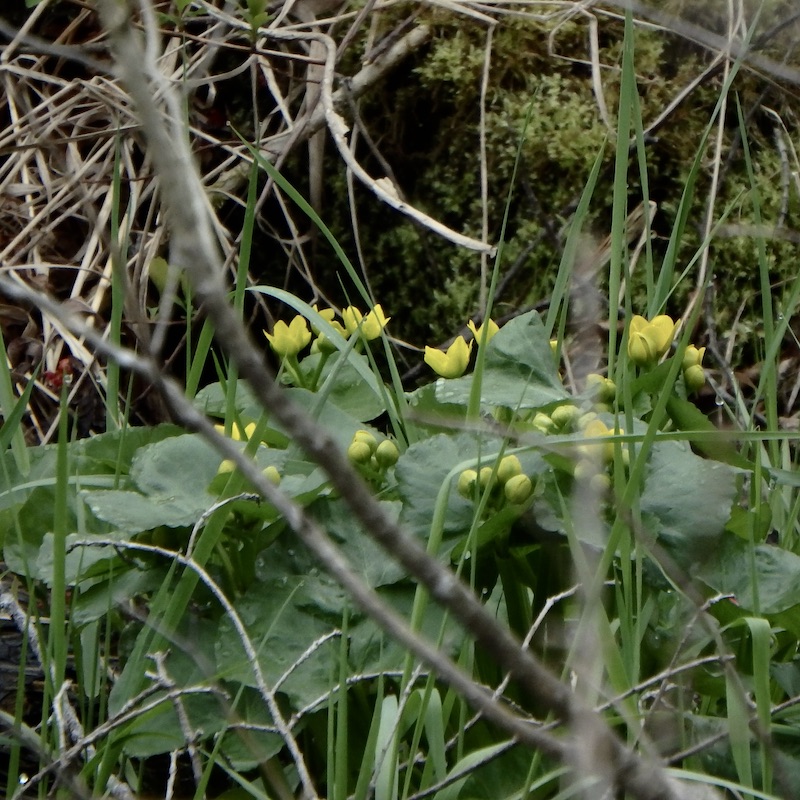
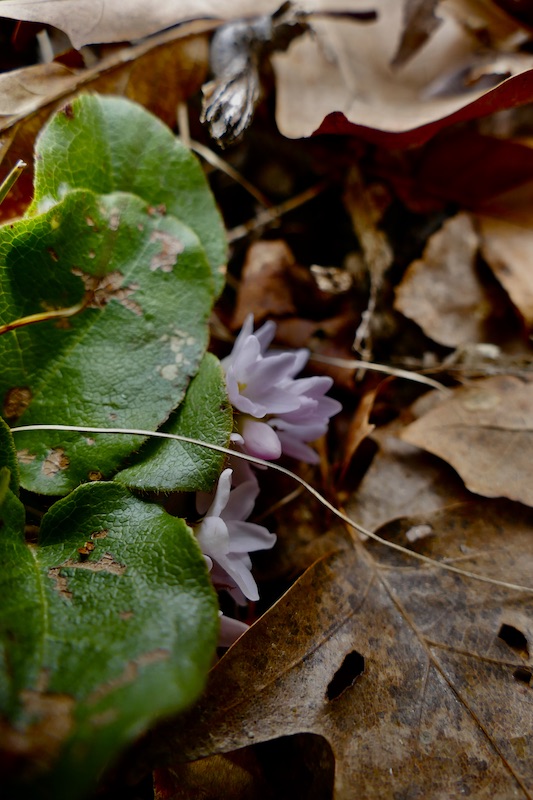
It is astonishing how soon and unexpectedly flowers appear, when the fields are scarcely tinged with green. Yesterday, for instance, you observed only the radical leaves of some plants; to-day you pluck a flower.
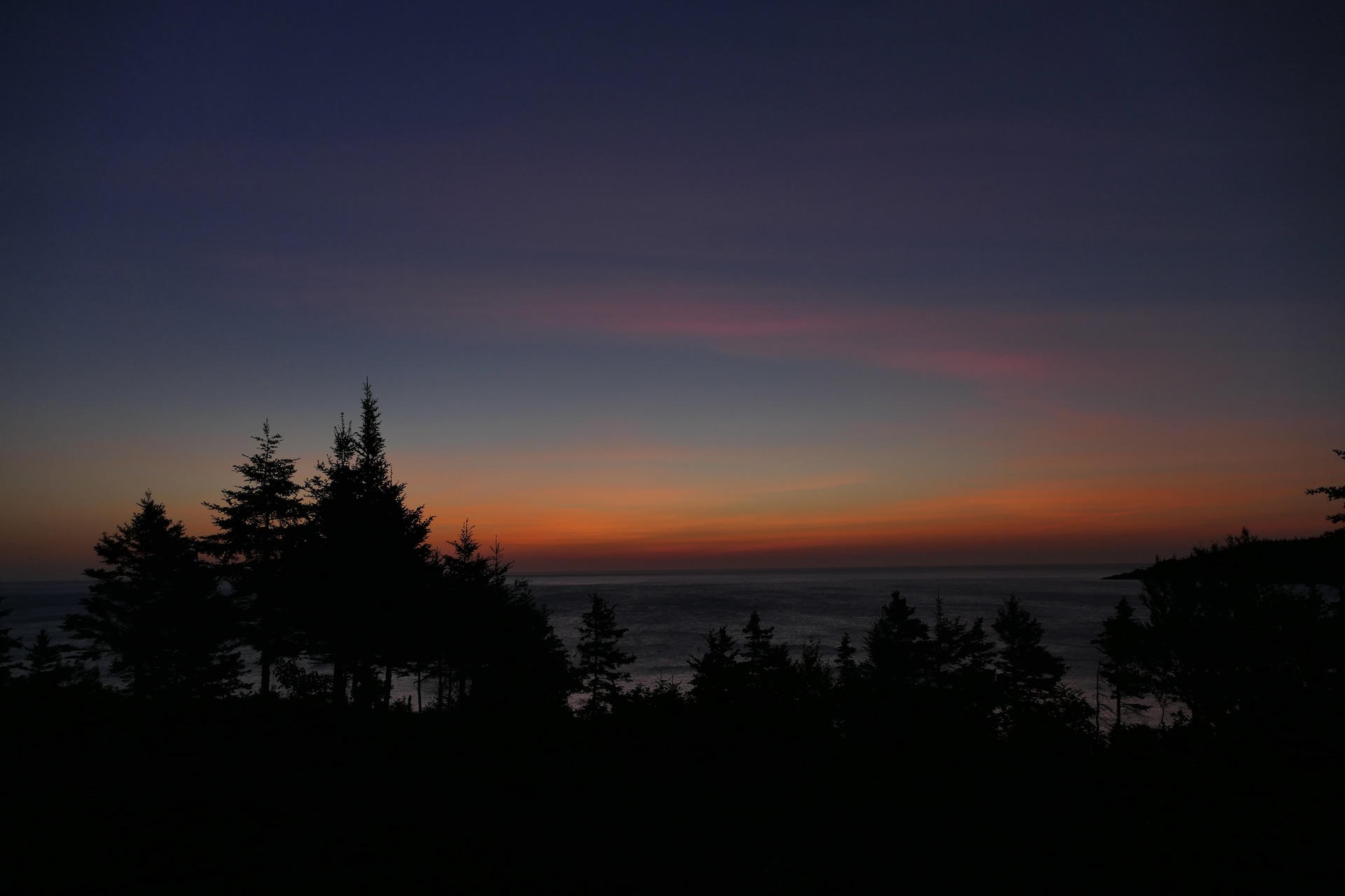
When I hear a robin sing at sunset, I cannot help contrasting the equanimity of Nature with the bustle and impatience of man. We return from the lyceum and caucus with such stir and excitement, as if a crisis were at hand; but no natural scene or sound sympathizes with us, for Nature is always silent and unpretending as at the break of day. She but rubs her eyelids.
How rarely a mans love for nature becomes a ruling principle with him, like a youth’s affection for a maiden, but more enduring! All nature is my bride.
That nature which to one is a stark and ghastly solitude is a sweet, tender, and genial society to another.
The most interesting fact perhaps at present is these few tender yellow blossoms these half expanded sterile aments of the willow––seen through the rain & cold signs of the advancing year––pledges of the sun’s return. Anything so delicate both in structure in color & in fragrance contrasts strangely with surrounding nature & feeds the faith of man. The fields are acquiring a greenish tinge…
…As Cawley loved a garden, so I a forest. Observe all kinds of coincidences—as what kinds of birds come with what flowers. An East Wind, I hear the clock strike plainly 10 or 11 PM.
Sat on the smooth river bank under Fair Haven— The sun-light in the wood across the stream.
The scent of the earliest spring flowers! I smelt the willow catkins today. Tender––& innocent––after this rude winter––yet slightly sickening–– –– Yet full of vernal promise. The odor–– How unlike any thing that winter affords––or nature has afforded this 6 months! A mild sweet vernal scent–– Not highly spiced & intoxicating as some erelong––but attractive to bees–– That early yellow smell. The odor of spring––of life developing amid buds––of the earth’s epithalamium–– The first flowers are not the highest scented––as catkins––as the first birds are not the finest singers––as the black-birds & song sparrows &c. The beginnings of the year are humble. But though this fragrance is not rich––it contains & prophecies all others in it.




 allandibiase.com
You must be logged in to post a comment.