We were walking along the sunny hillside on the south of Fair Haven Pond (on the 4th), which the choppers had just laid bare, when, in a sheltered and warmer place, we heard a rustling amid the dry leaves on the hillside and saw a striped squirrel eying us from its resting-place on the bare ground. It sat still till we were within a rod, then suddenly dived into its hole, which was at its feet, and disappeared. The first pleasant days of spring come out like a squirrel and go in again.
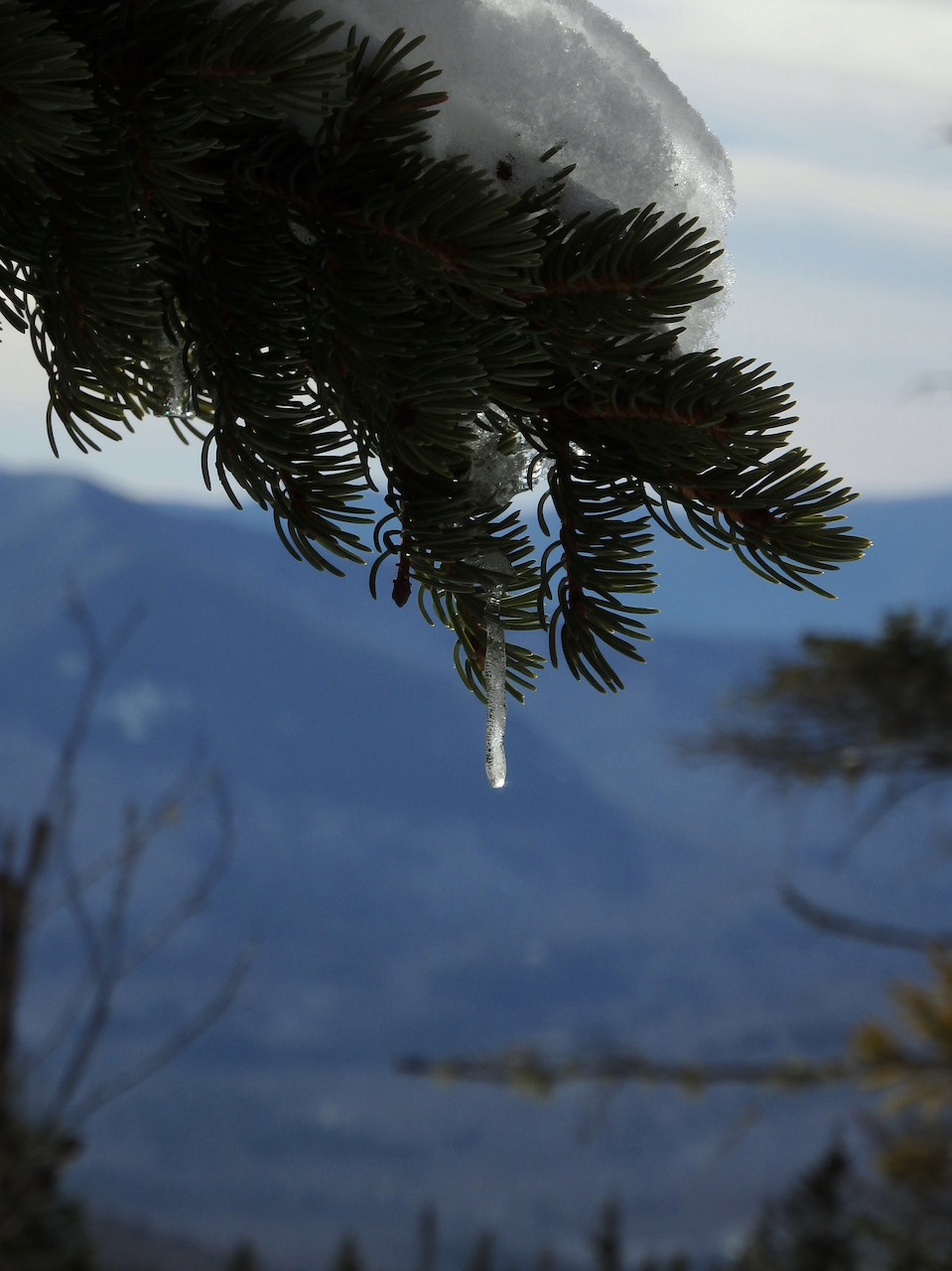
The snow is softening. Methinks the lichens are a little greener for it. A thaw comes, and then the birches, which were gray on their white ground before, appear prettily clothed in green. I see various kinds of insects out on the snow now. On the rock this side the Leaning Hemlocks, is the track of an otter.
I must not forget the lichen-painted boles of the beeches….The habit of looking at things microscopically, as the lichens on the trees and rocks, really prevents my seeing aught else in a walk.
Up river on ice to Fairhaven Pond…The air is fresher & the sky clearer in the morning –– We have this morning the clear cold continent sky of January. The river is frozen solidly & I do not have to look out for openings. Now I can take that walk along the river highway & the meadow––which leads me under––the boughs of the maples & the swamp white oaks &c which in summer overhang the water––there I can now stand at my ease & study their phenomena––amid the sweet gale & button bushes projecting above the snow & ice. I see the shore from the water side–– A liberal walk––so level & wide & smooth without under brush.
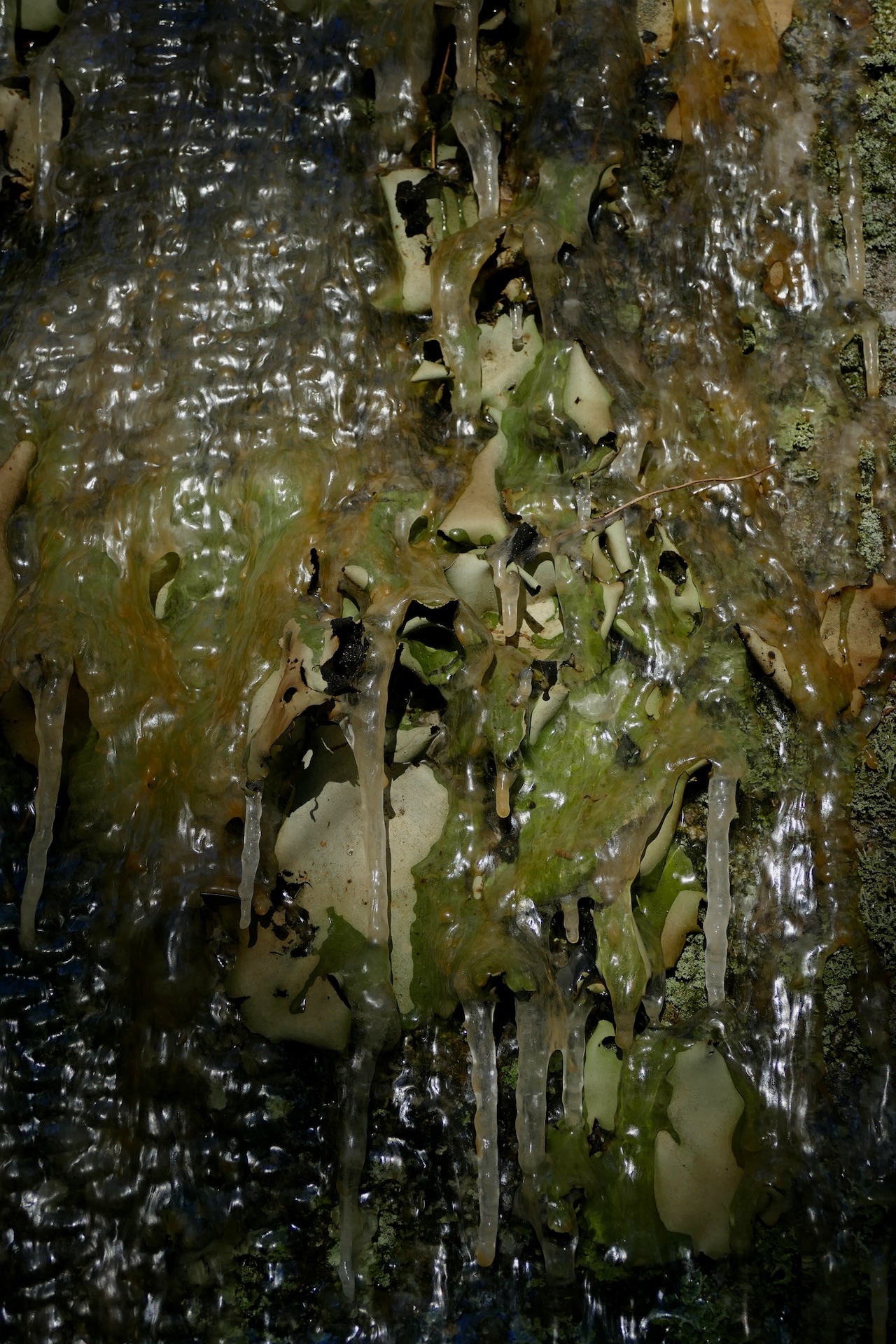
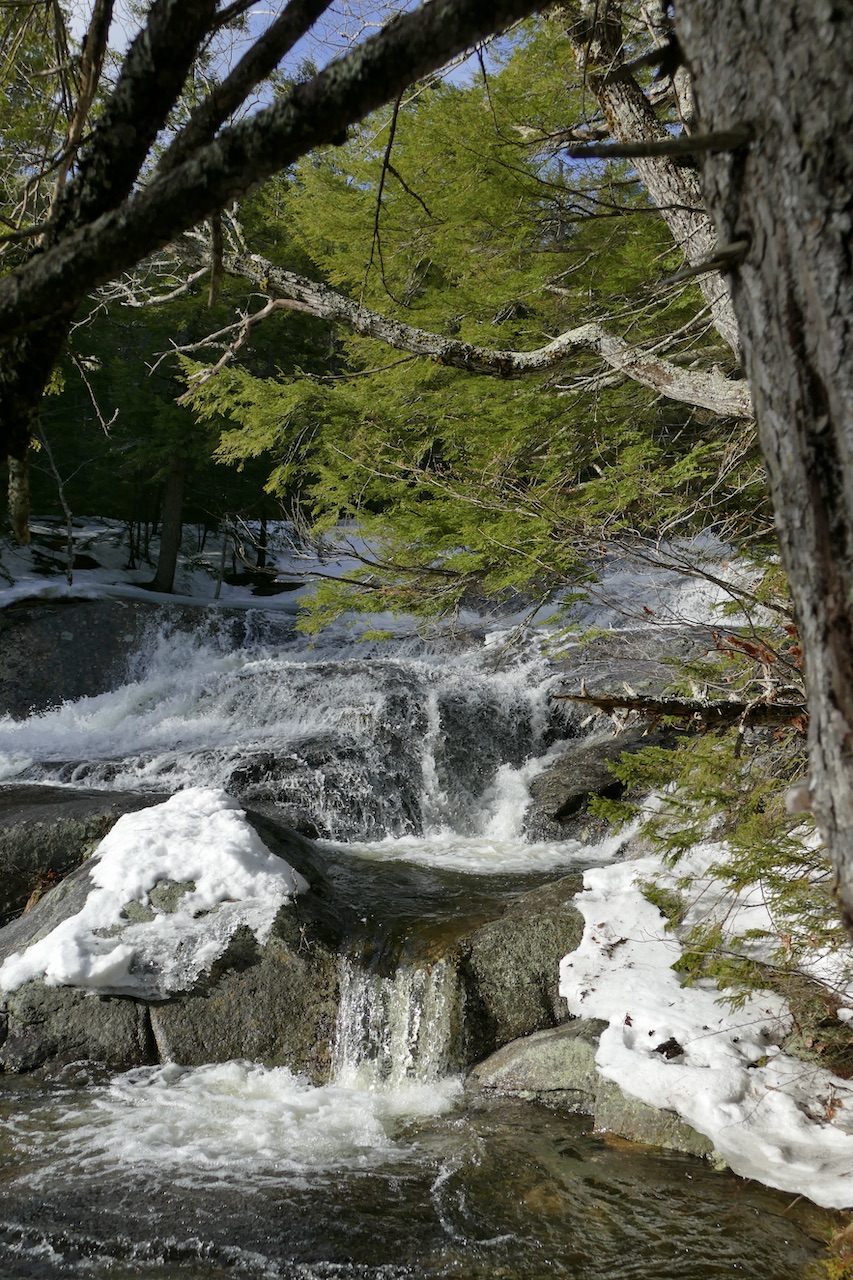
I go along below the north end of the Cliffs. The rocks in the usual place are buttressed with icy columns, for water in almost imperceptible quantity is trickling down the rocks. It is interesting to see how the dry black or ash-colored umbilicaria, which get a little moisture when the snow melts and trickles down along a seam or shallow channel of the rock, become relaxed and turn olive-green and enjoy their spring, while a few inches on each side of this gutter or depression in the face of the rock they are dry and crisp as ever. Perhaps the greater part of this puny rill is drunk up by the herbage on its brink.
What produces the peculiar softness of the air yesterday & today—as if it were the air of the south suddenly pillowed amid our wintry hills— We have suddenly a different sky—a different atmosphere.
It is as if the subtlest possible soft vapour were diffused through the atmosphere. Warm Air has come to us from the S. But charged with moisture—which will yet distill in rain or congeal into snow & hail—
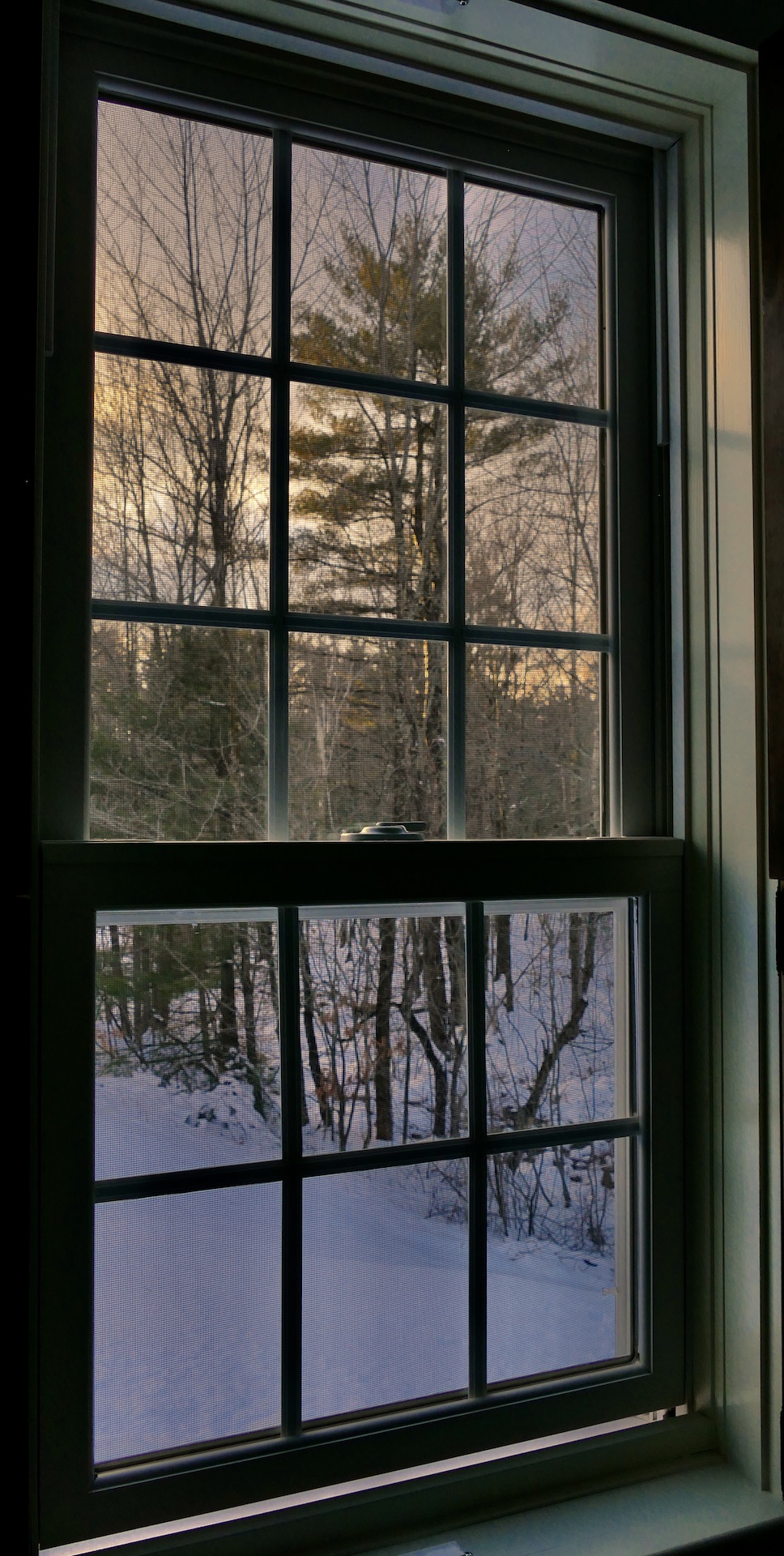
Here is our first spring morning according to the almanac. It is remarkable that the spring of the almanac and of nature should correspond so closely. The morning of the 26th was good winter, but there came a plentiful rain in the afternoon, and yesterday and to-day are quite spring like. This morning the air is still, and, though clear enough, a yellowish light is widely diffused throughout the east now just after sunrise. The sunlight looks and feels warm, and a fine vapor fills the lower atmosphere. I hear the phcebe or spring note of the chickadee, and the scream of the jay is perfectly repeated by the echo from a neighboring wood. For some days past the surface of the earth, covered with water, or with ice where the snow is washed off, has shone in the sun as it does only at the approach of spring, methinks. And are not the frosts in the morning more like the early frosts in the fall, ––common white frosts ?
To-day it snows again, covering the ground. To get the value of the storm, we must be out a long time and travel far in it, so that it may fairly penetrate our skin, and we be, as it were, turned inside out to it, and there be no part in us but is wet or weather-beaten, so that we become storm men instead of fair-weather men.
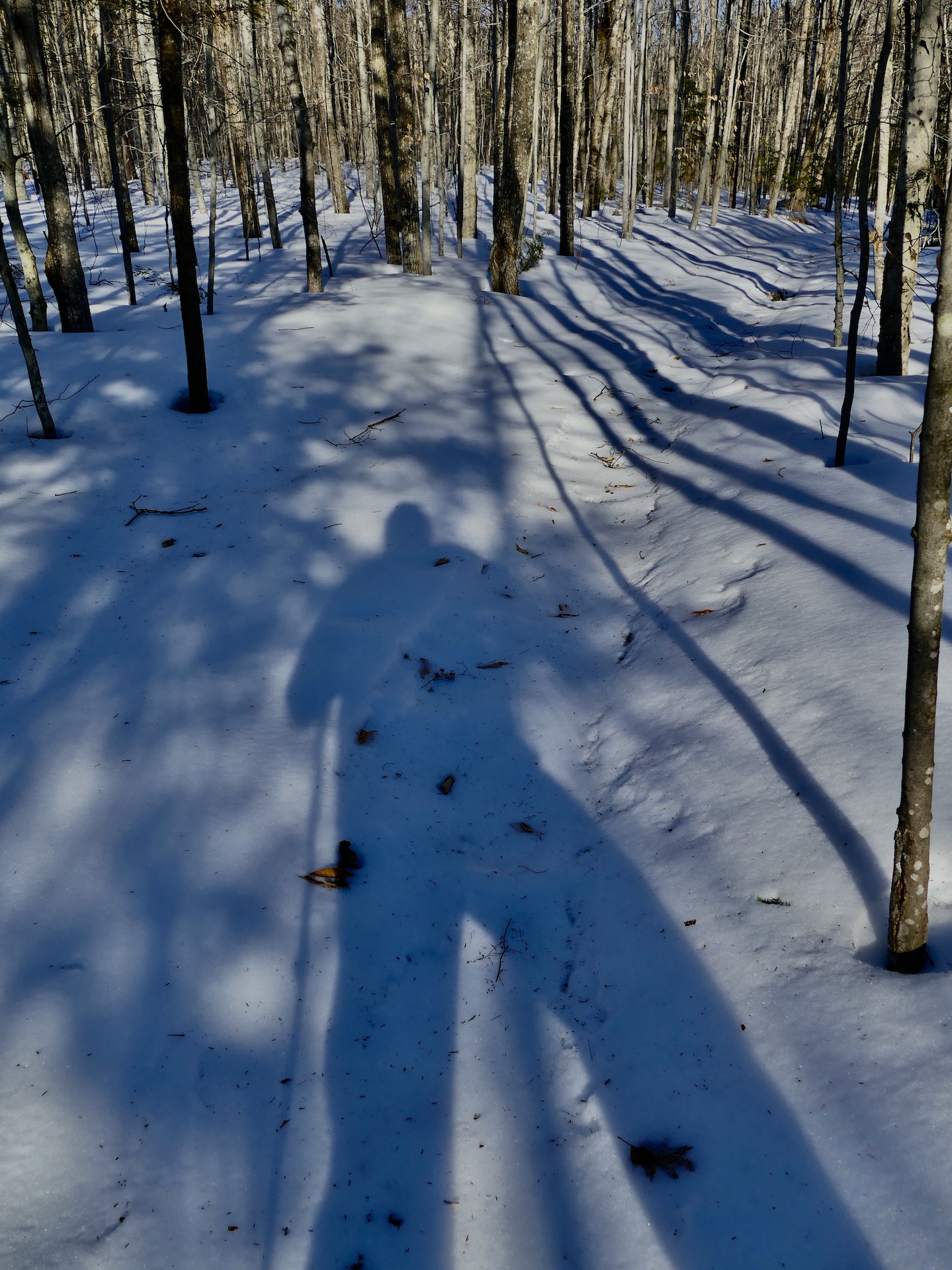
Walking in the woods, it may be some afternoon, the shadow of the wings of a thought flits across the landscape of my mind, and I am reminded how little eventful are our lives. What have been all these wars and rumors of wars, and modern discoveries and improvements, so called? A mere irritation in the skin. But this shadow which is so soon past, and whose substance is not detected, suggests that there are events of importance whose interval is to us a true historic period.
A sharp cutting air— This is a pretty good winter morning however— Not one of the rarer. There are from time to time mornings—both in summer & winter when especially the world seems to begin anew—beyond which memory need not go—for not behind them is yesterday and our past life—when as in the morning of a hoar frost there are visible the effects of a certain creative energy—the world has visibly been recreated in the night—mornings of creation I call them.
In the midst of these marks of a creative energy recently active—while the sun is rising with more than usual splendor I look back—I look back for the era of this creation not into the night but to a dawn for which no man every rose early enough.
A morning which carries us back beyond the Mosaic creation—where crystallizations are fresh & unmelted. It is the poet’s hour. Mornings when men are new born—men who have the seeds of life in them. It should be part of my religion to abroad then. This is not one of those mornings—but a clear cold airy winter day.
It is surprising how much room there is in nature, —if man will follow his proper path…
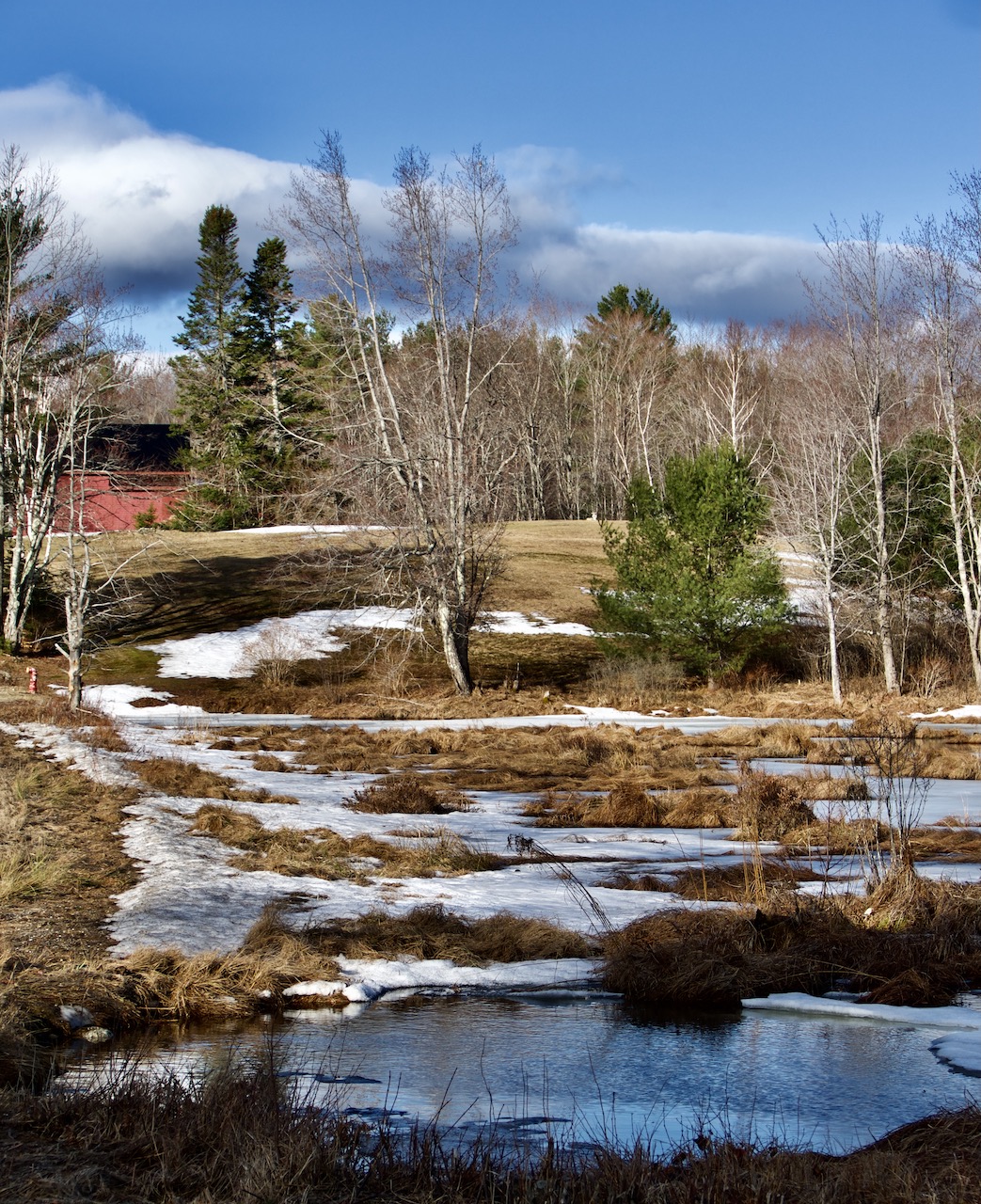
A fine spring morning. The ground is almost completely bare again. There has been a frost in the night. Now at half past eight it is melted and wets my feet like a dew. The water on the meadow this still bright morning is smooth as in April. I am surprised to hear the strain of a song-sparrow from the river side, and as I cross from the causeway to the hill, thinking of the bluebird,
I that instant hear one’s note from deep in the softened air…Their short rich warble curls through the air…It seems to be one of those early springs of which we have heard, but which we have never experienced.
What evidence is there of spring? This light & warm sun–which compels us to throw our outside coats open wide–or take them off–even to seek the shade for coolness– — This rapidly melting snow & these sparkling currents by the roadside– this softened ice–but above all the warble of a single blue-bird that came to us out of the softened air.
We have to go into retirement religiously, and enhance our meetings by rarity and a degree of unfamiliarity. Would you know why I see thee so seldom my friend? In solitude I have been making up a packet for thee.
We now notice the snow on the mountains….I think there can be no more arctic scene than these mountains, on the edge of the horizon, completely crusted over with snow, the sun shining on them….the snow has a singular smooth and crusty appearance, and by contrast you see even single evergreens rising here and there above it….
What is the relation between a bird and the ear that appreciates its melody, to whom, perchance, it is more charming and significant than to any one else? Certainly they are intimately related, and the one was made for the other. It is a natural fact. If I were to discover that a certain kind of stone by the pond shore was affected, say partially disintegrated by a particular natural sound, as of a bird or insect, I see that one could not be completely described without describing the other. I am that stone by the pond side.
Considering the melon-rind arrangement of the clouds, by an ocular illusion the bars appearing to approach each other in the east and west horizons, I am prompted to ask whether the melons will not be found to lie in this direction oftenest.
I had not been out long to-day when it seemed that a new Spring was already born—not quite weaned it is true, but verily entered upon existence. Nature struck up “the same old song in the grass”, despite eighteen inches of snow, and I contrived to smuggle away a grin of satisfaction by a smothered—“pshaw—and is that all?”
Perhaps the peculiarity of those western vistas was partly owing to the shortness of the days when we naturally look to the heavens & make the most of the little light.— When we live an arctic life. When the woodchopper’s axe reminds us of twilight at 3 o’clock p.m. When the morning & the evening literally make the whole day.
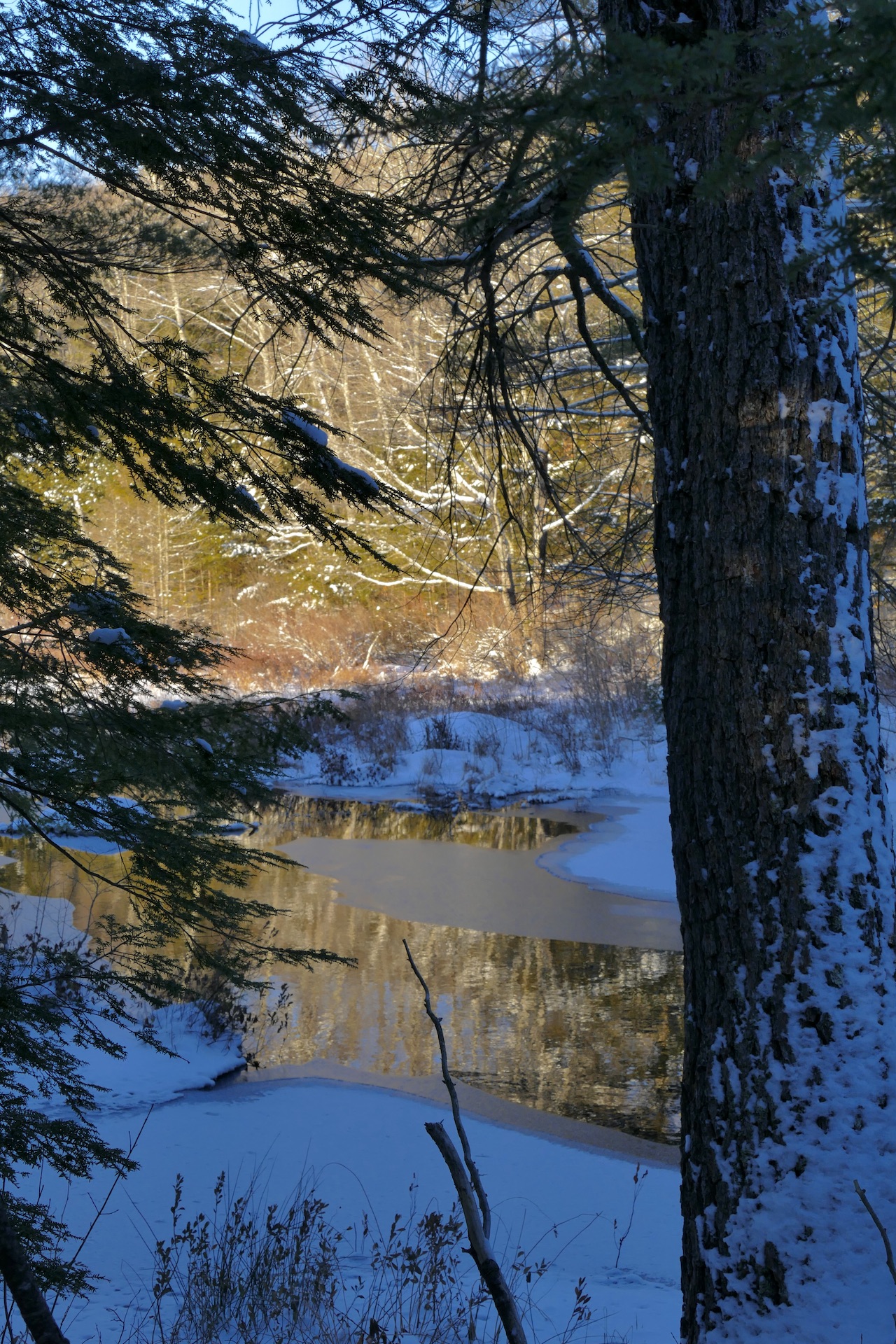
It is a moist & starry snow–lodging on trees–leaf bough & trunk. The pines are well laden with it. How handsome, though wintry the side of a high pine wood–well greyed with the snow that has lodged on it– & the smaller pitch pines converted into marble or alabaster–with their lowered plumes–like rams-heads’ drawings.
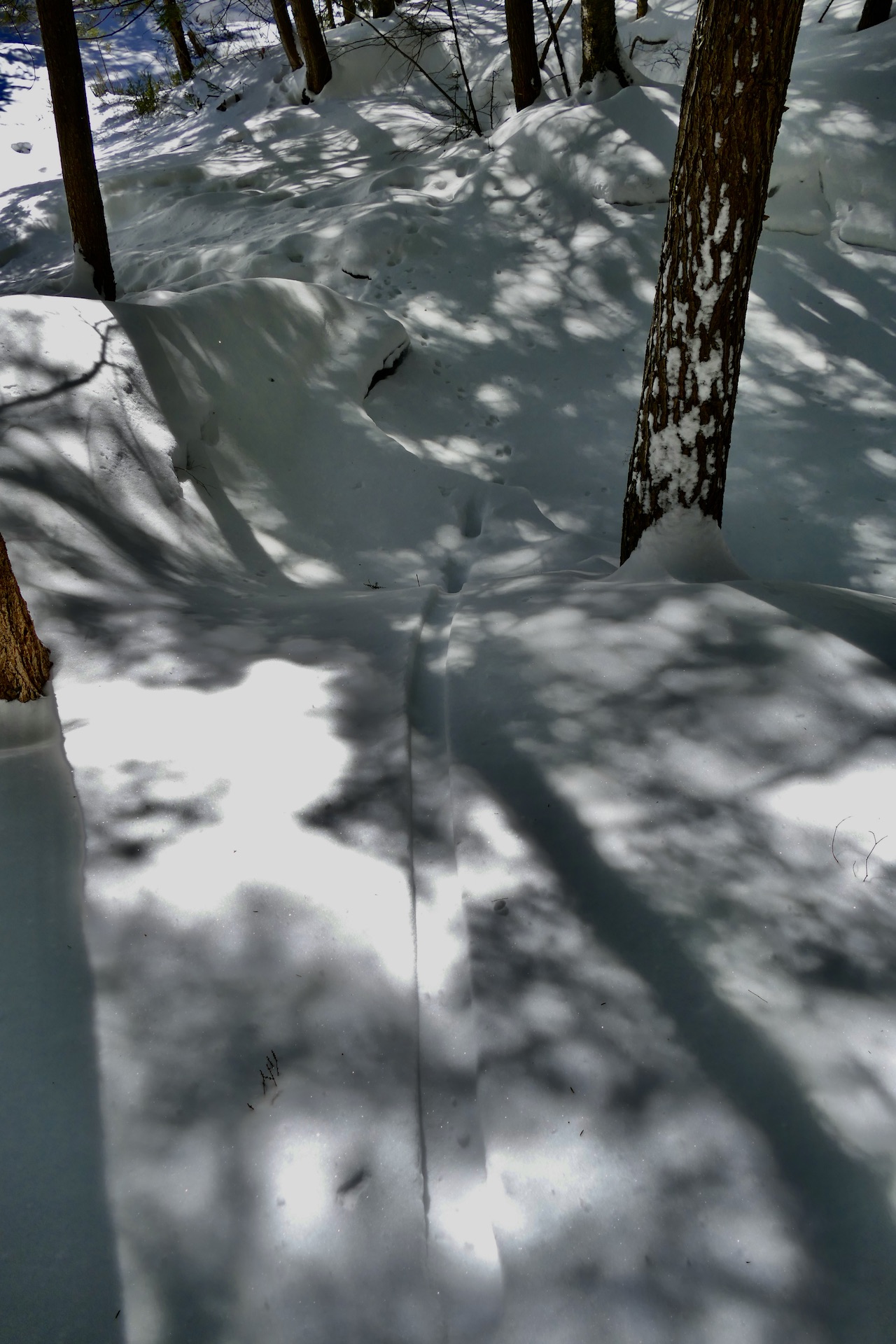
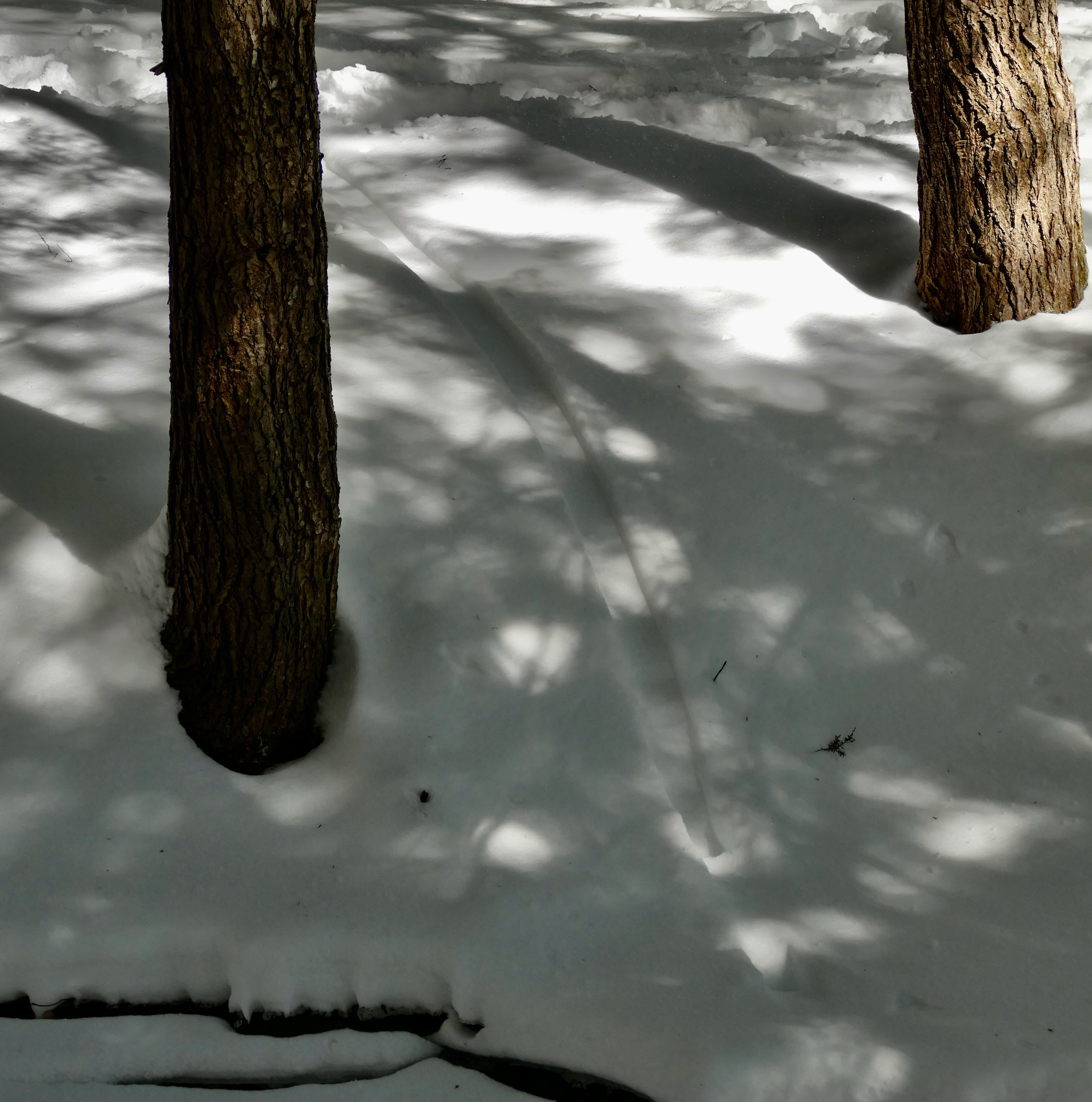
The character of the wood paths is wholly changed by the new fallen snow–- not only all tracks are concealed–but the pines drooping over it–& half concealing or filling it, it is merely a long chink or winding open space between the trees–











 allandibiase.com
You must be logged in to post a comment.