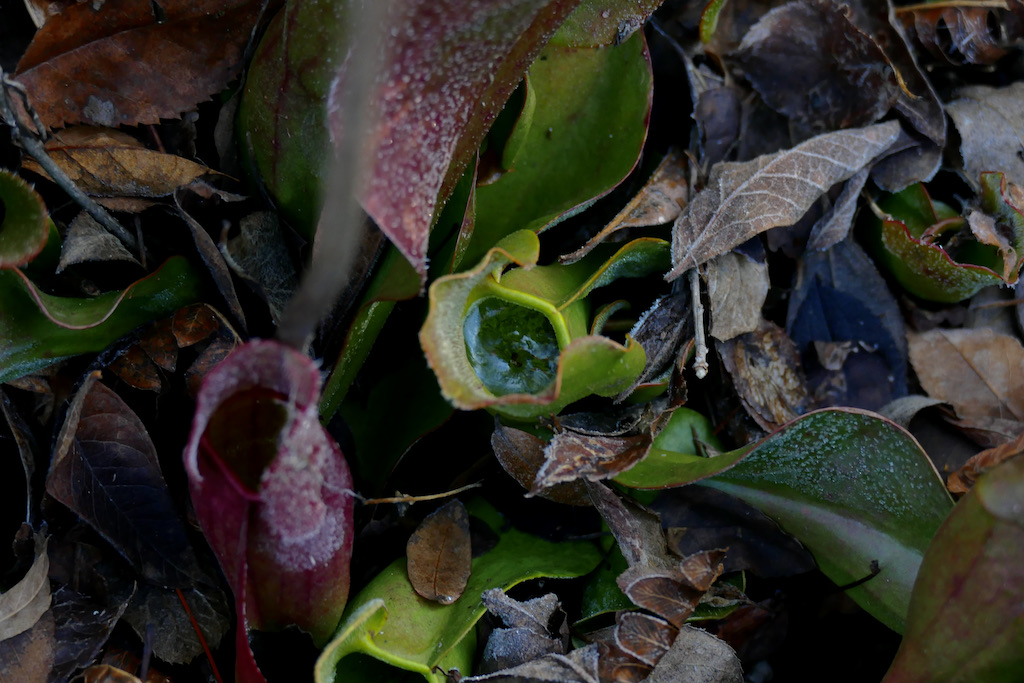
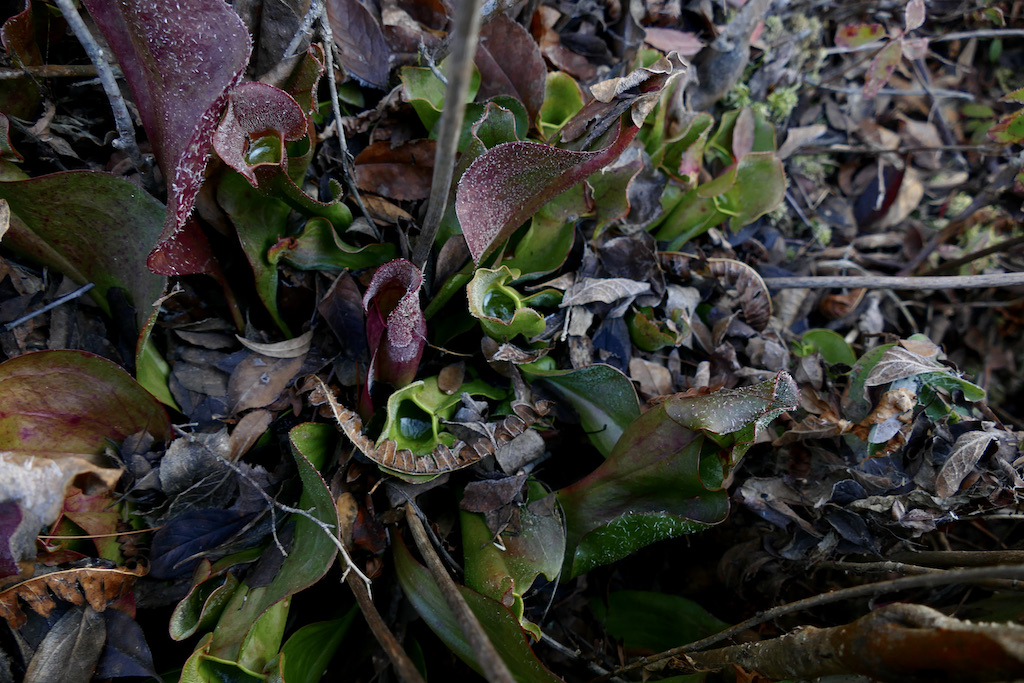
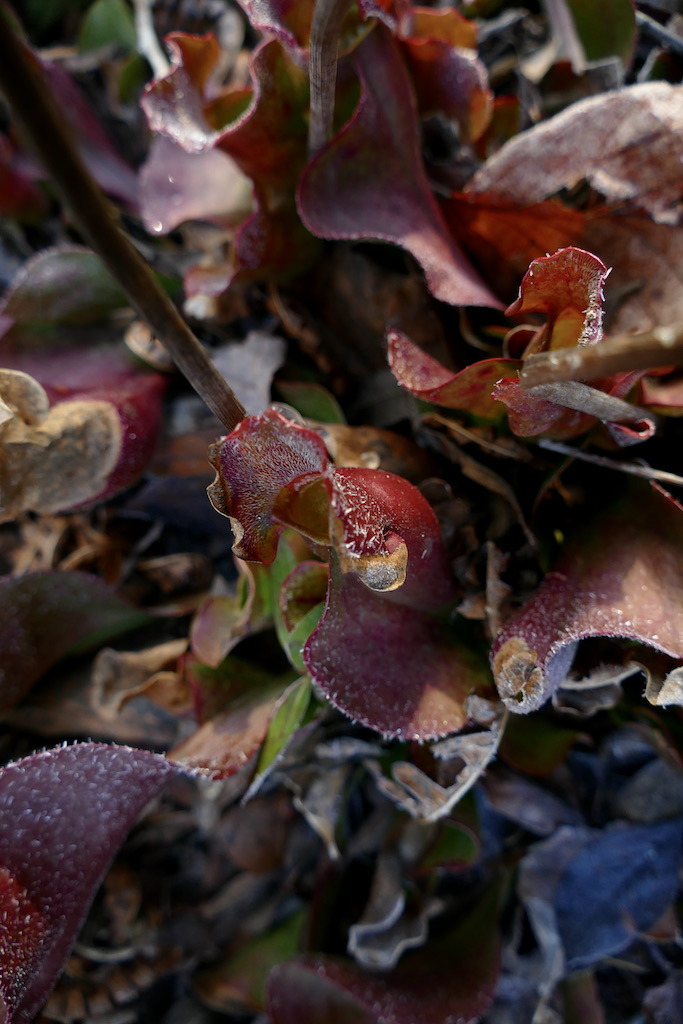
This is the third warm day, the warmest of all. The Andromeda Ponds methinks look redder. I walked through one. The lowest growth is sphagnum, fresh, large, and handsome, some green, some red, into which occasionally I slumped nearly a foot. Some lamb kill is mixed with the andromeda. A few islands of gray high blueberry bushes, with round red buds, rise here and there mixed with the panicled andromeda, large cottongrass, now prostrate, etc. The pitcher-plant leaves are still for the most part green and uninjured here, though full of ice.
Many have holes in their sides, through which insects appear to have eaten out. However, the external ear or handle is also eaten through, so the agent may have been without.
When, as now, in January a south wind melts the snow, and the bare ground appears, covered with sere grass and occasionally wilted green leaves which seem in doubt whether to let go their greenness quite or absorb new juices against the coming year, — in such a season a perfume seems to exhale from the earth itself and the south wind melts my integuments also. Then is she my mother earth.
I derive a real vigor from the scent of the gale wafted over the naked ground, as from strong meats, and realize again how man is the pensioner of Nature. We are always conciliated and cheered when we are fed by an influence, and our needs are felt to be part of the domestic economy of Nature.
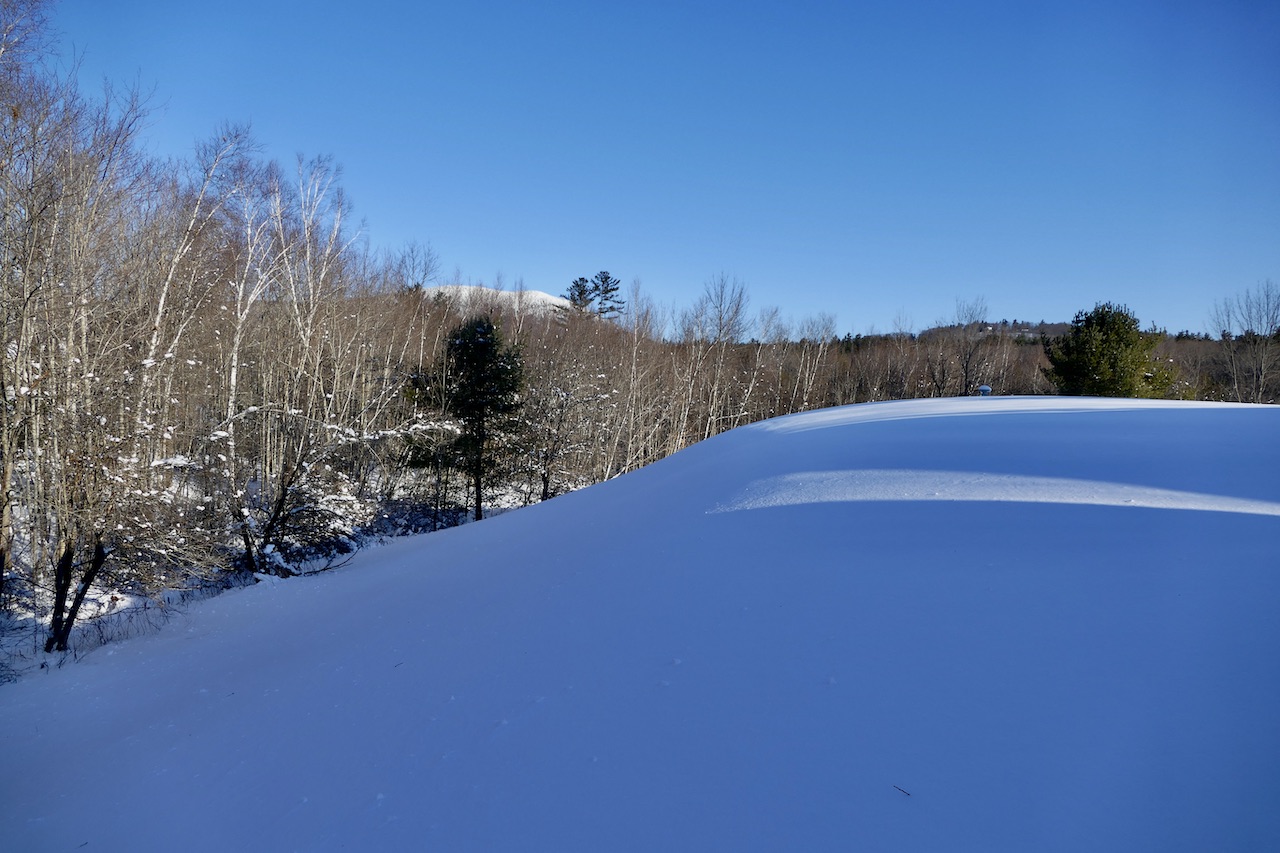
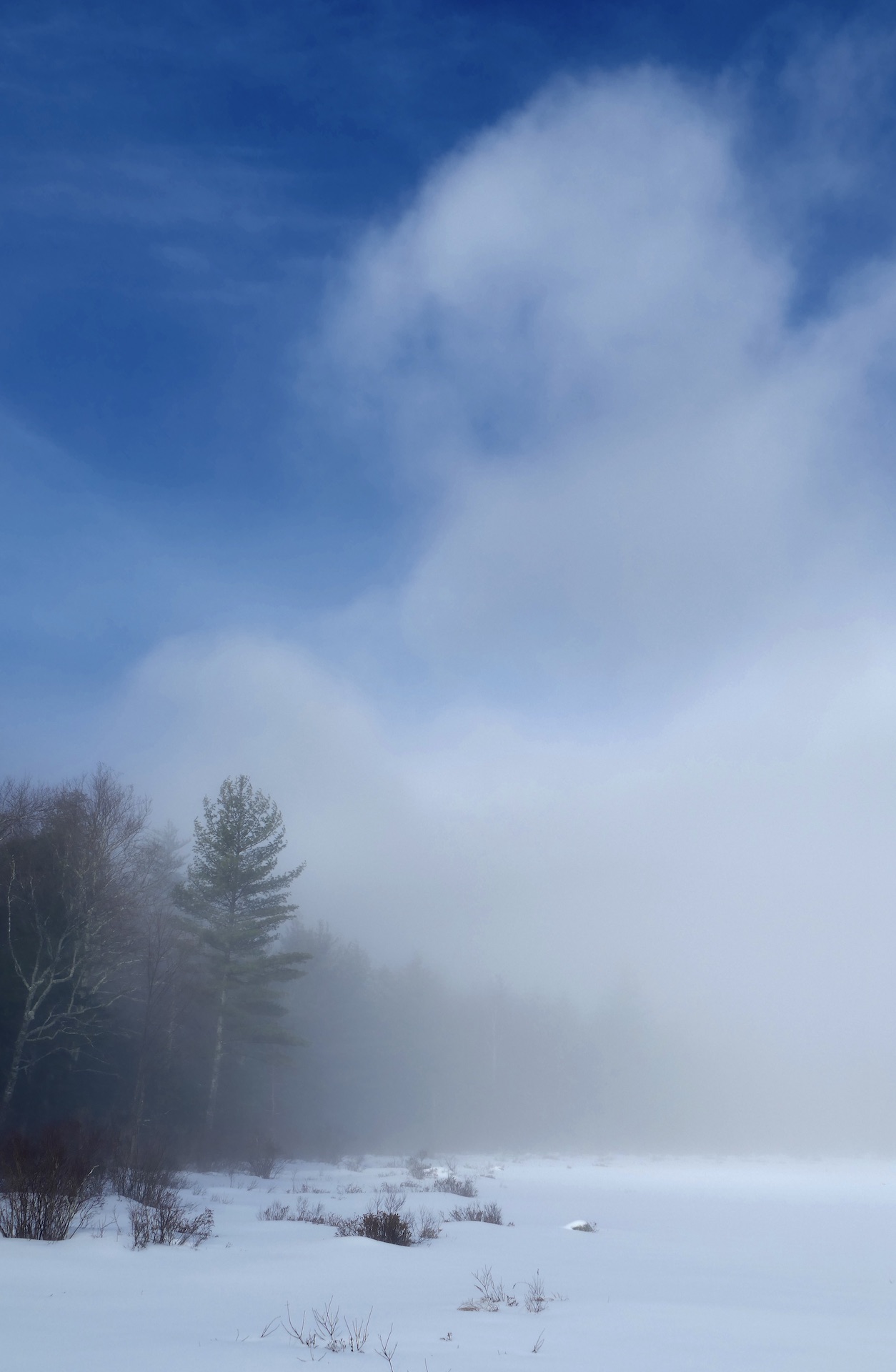
The life, the joy that is in blue sky after a storm. There is no account of the blue sky in history. Before I walked in the ruts of travel, now I adventured….
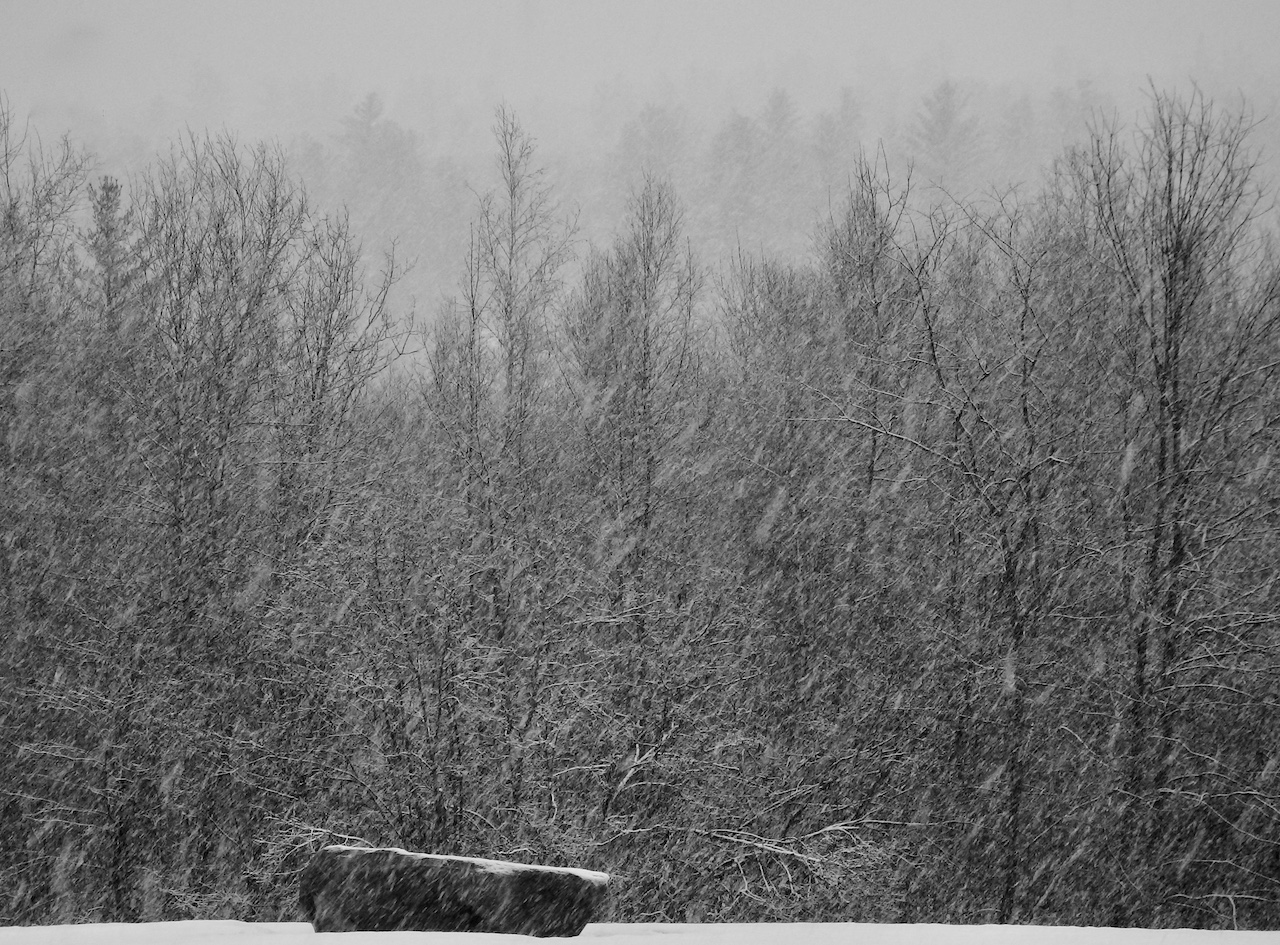
High wind and howling and driving snow- storm all night, now much drifted. There is a great drift in the front entry and at the crack of every door and on the window-sills. Great drifts on the south of walls….
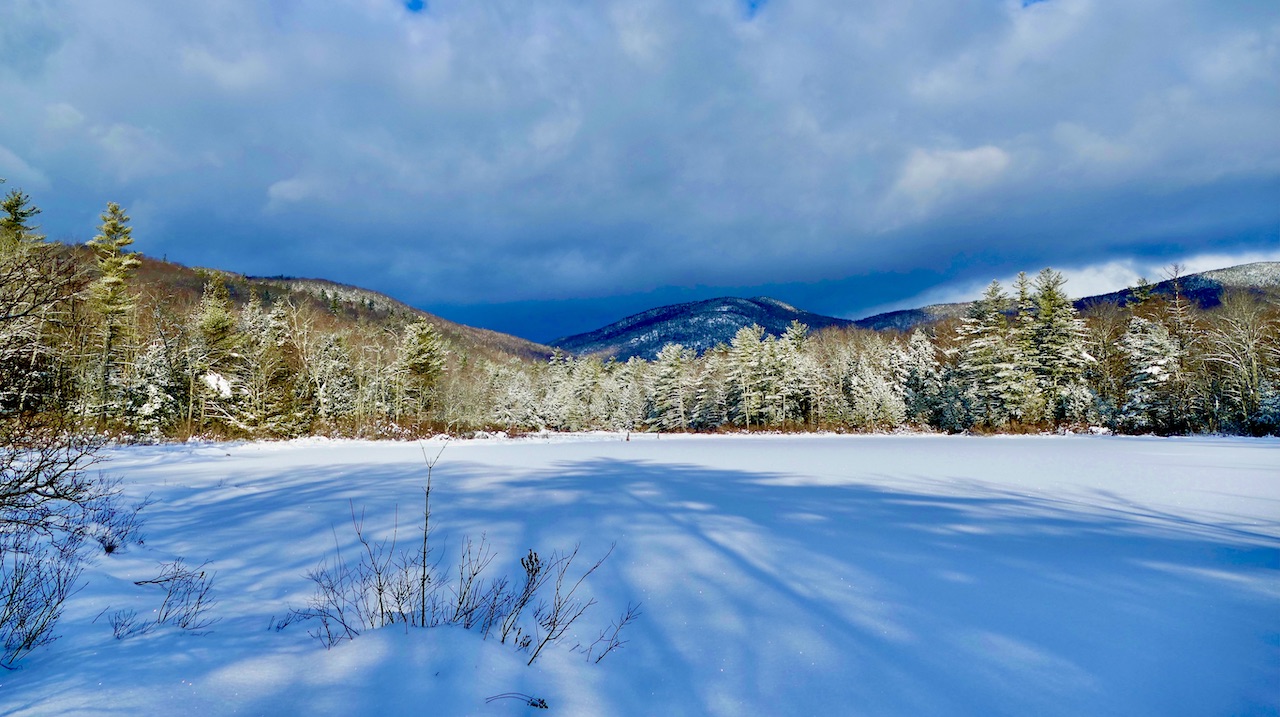
Now, at 4.15, the blue shadows are very distinct on the snow-banks…
The exquisite purity of the snow & the gracefulness of its curves are remarkable…
Around some houses there is not a single track– Neither man woman nor child–dog nor cat nor fowl has stirred out today.– There has been no meeting. Yet this afternoon since the storm it has not been very bad travelling.
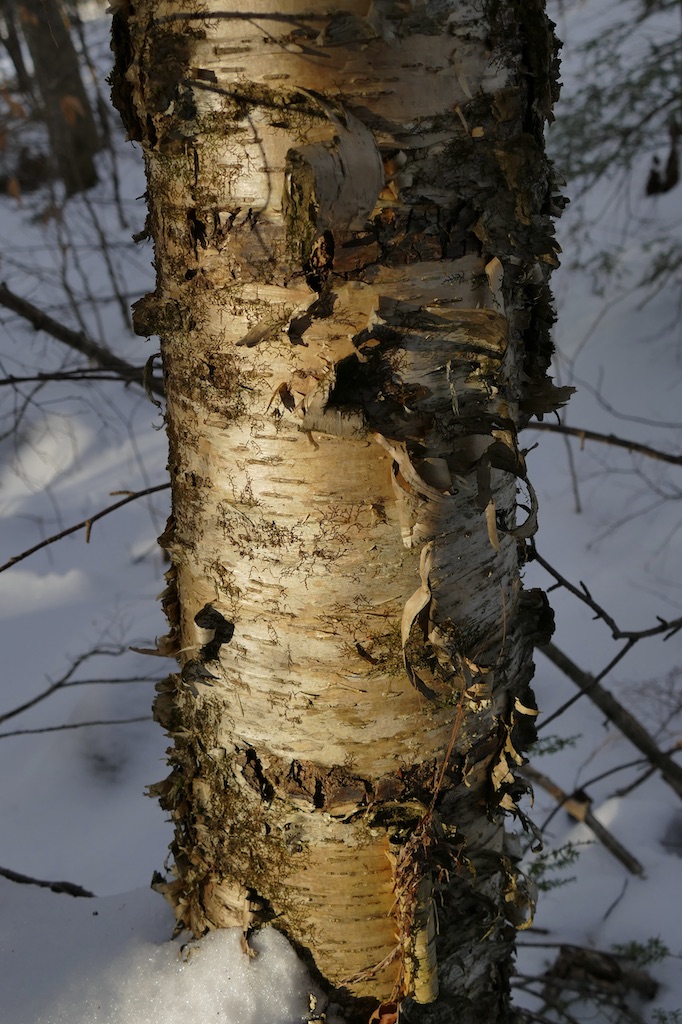
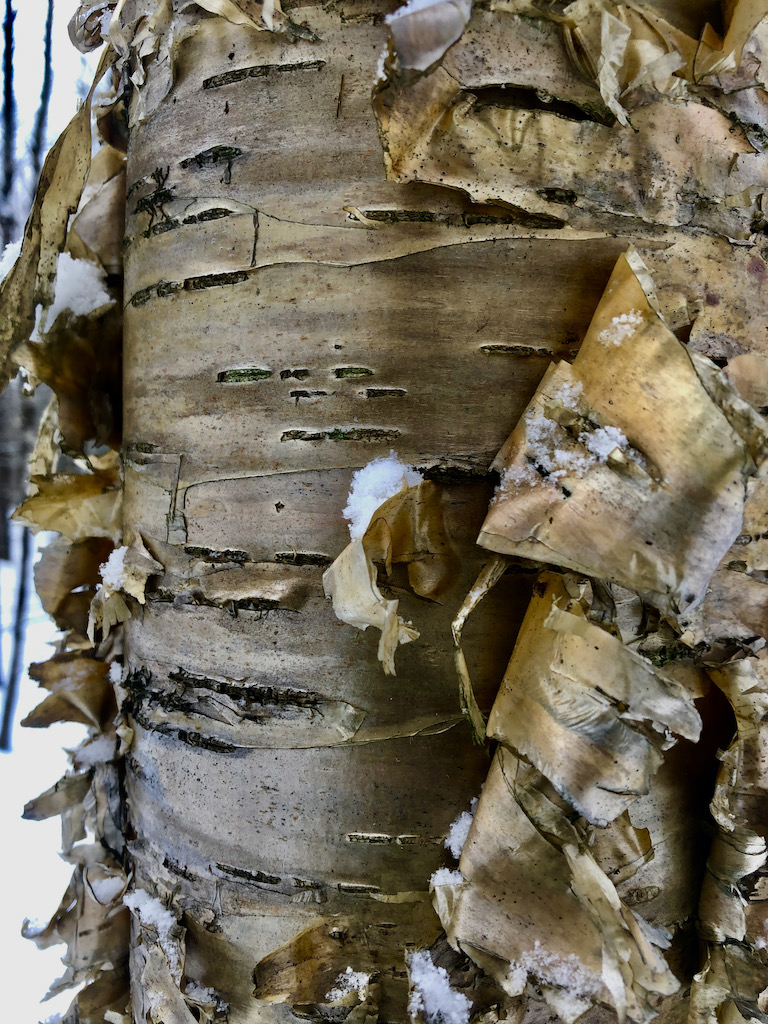
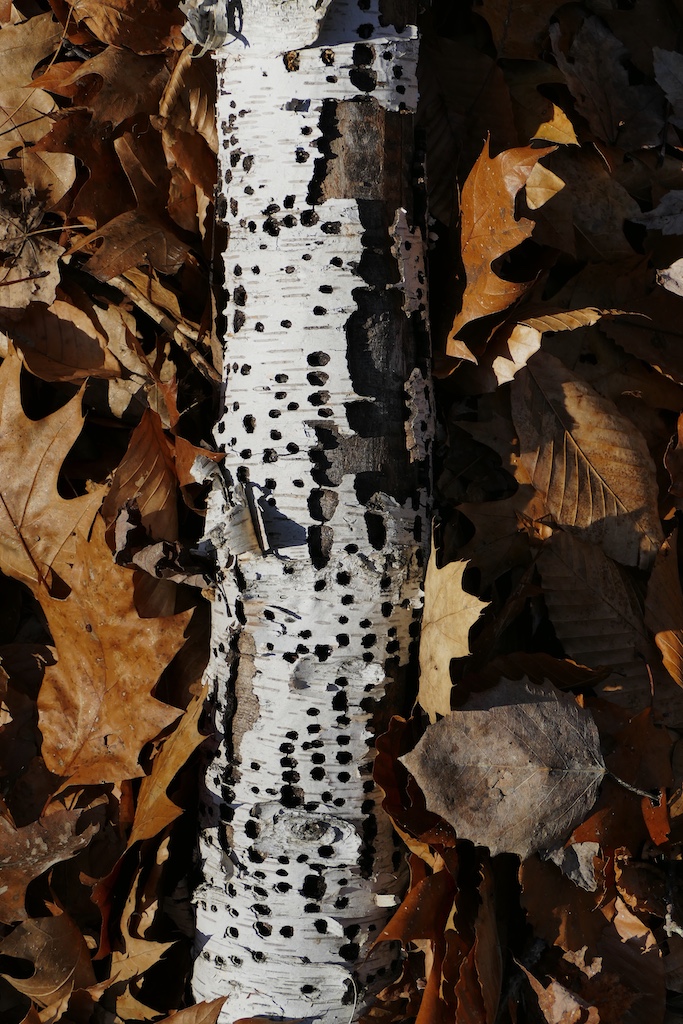
….I went through the swamp, and the yellow birches sent forth a yellow gleam which each time made my heart beat faster. Occasionally you come to a dead and leaning white birch, beset with large fungi like ears or little shelves, with rounded edge above. I walked with the yellow birch.
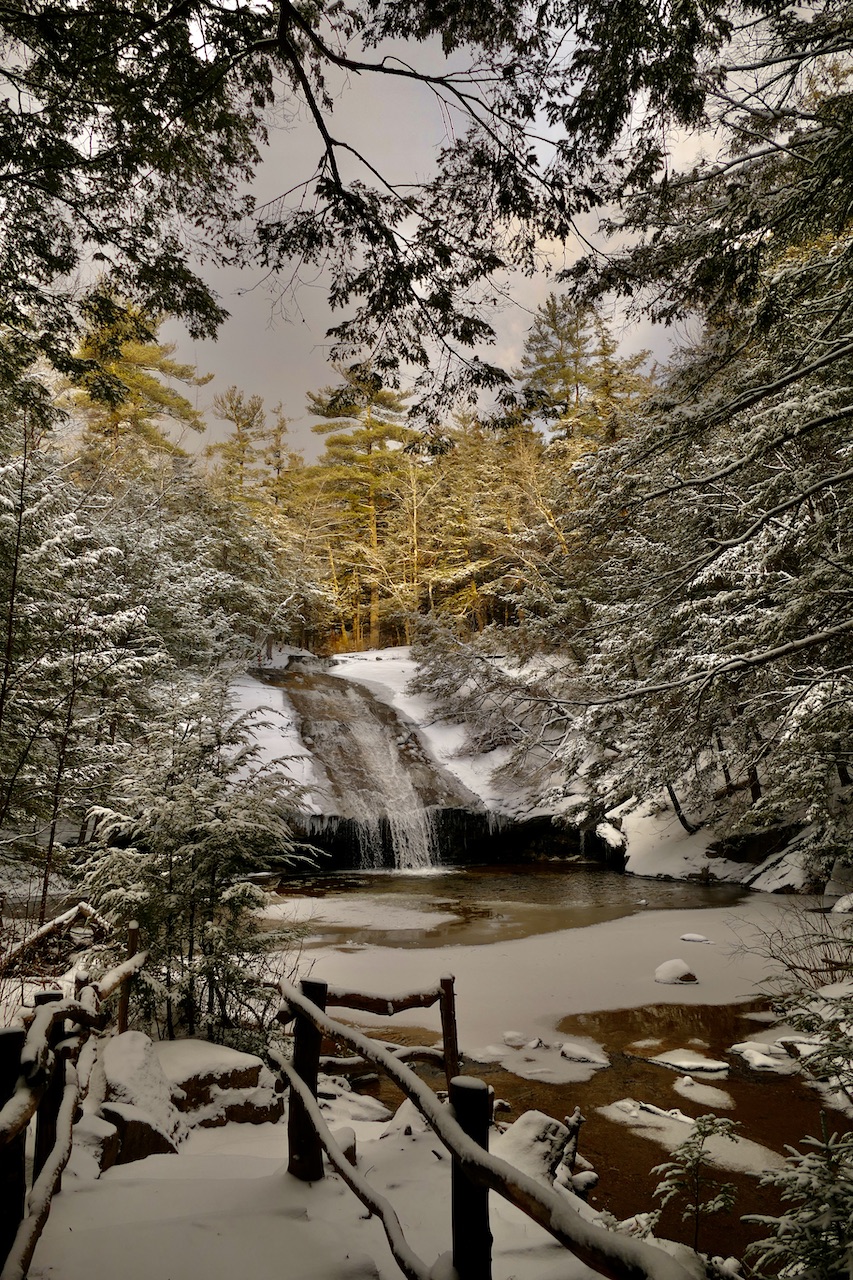
What are the natural features which make a township handsome? A river, with its waterfalls and meadows, a lake, a hill, a cliff or individual rocks, a forest, and ancient trees standing singly. Such things are beautiful; they have a high use which dollars and cents never represent. If the inhabitants of a town were wise, they would seek to preserve these things, though at a considerable expense; for such things educate far more than any hired teachers or preachers, or any at present recognized system of school education. I do not think him fit to be the founder of a state or even of a town who does not foresee the use of these things, but legislates chiefly for oxen, as it were.
Going up the hill thro’ Stow’s young oak wood-land—I listen to the sharp dry rustle of the withered oak leaves— This is the voice of the wood now. It would be comparatively still & more dreary here in other respects if it were not for these leaves that hold on— It sounds like the roar of the seas—& is enlivening & inspiriting like that—suggesting how all the land is sea coast to the aerial ocean— It is the sound of the surf—the surf of an unseen Ocean billow of air breaking in the forest—like water on itself or on sand & rocks— It rises & falls—sweeps & dies away—with agreeable alternation as the sea-surf does. Perhaps the the landsman can foretell a storm by it. It is remarkable how universal these grand murmurs are—these backgrounds of sound—the surf—the wind in the forest—water falls—&c which yet to the ear & in their origins are essentially one voice—the Earth voice—
Saturday. This morning we have something between ice and frost on the trees, etc. The whole earth, as last night, but much more, is encased in ice, which on the plowed fields makes a singular icy coat a quarter of an inch or more in thickness. About 9 o’clock a. m., I go to Lee’s via Hubbard’s Wood and Holden’s Swamp and the riverside, for the middle is open. The stones and cow-dung, and the walls too, are all cased in ice on the north side. The latter look like alum rocks. This, not frozen mist or frost, but frozen drizzle, collected around the slightest cores, gives prominence to the least withered herbs and grasses. Where yesterday was a plain, smooth field, appears now a teeming crop of fat, icy herbage. The stems of the herbs on their north sides are enlarged from ten to a hundred times. The addition is so universally on the north side that a traveller could not lose the points of compass to-day, though it should [be] never so dark, for every blade of grass would serve to guide him, telling from which side the storm came yesterday. These straight stems of grasses stand up like white batons or sceptres, and make conspicuous foreground to the landscape, from six inches to three feet high. C. thought that these fat, icy branches on the withered grass and herbs had no nucleus, but looking closer I showed him the fine black wiry threads on which they impinged, which made him laugh with surprise. The very cow- dung is incrusted, and the clover and sorrel send up a dull-green gleam through their icy coat, like strange plants. The pebbles in the plowed land are seen as through a transparent coating of gum. Some weeds bear the ice in masses, some, like the trumpet-weed and tansy, in balls for each dried flower. What a crash of jewels as you walk ! The most careless walker, who never deigned to look at these humble weeds before, cannot help observing them now. This is why the herbage is left to stand dry in the fields all winter. Upon a solid foundation of ice stand out, pointing in all directions between northwest and northeast, or within the limits of ninety degrees, little spicula or crystallized points, half an inch or more in length.
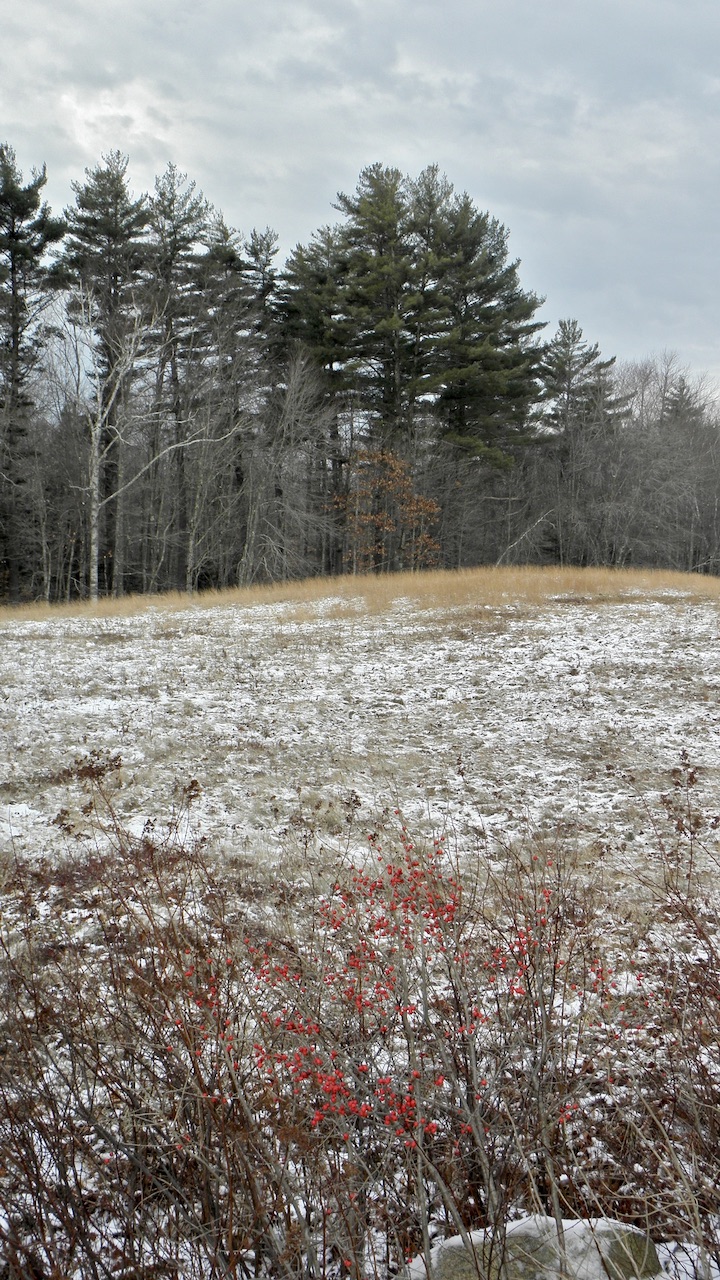
Upon the dark, glazed plowed ground, where a mere wiry stem rises, its north side is thickly clad with these snow-white spears, like some Indian’s head-dress, as if it had attracted all the frost. I saw a prinos bush full of large berries, by the wall in Hubbard’s field. Standing on the west side, the contrast of the red berries with their white incrustation or prolongation on the north was admirable. I thought I had never seen the berries so dazzlingly bright. The whole north side of the bush, berries and stock, was beautifully incrusted. And when I went round to the north side, the redness of the berries came softened through and tingeing the allied snow-white bush, like an evening sky beyond. These adjoined snow or ice berries being beset, within the limits of ninety degrees on the north, with those icy prickles or spicula, between which the red glow and sometimes the clear red itself appeared, gave it the appearance of a raspberry bush full of over-ripe fruit.
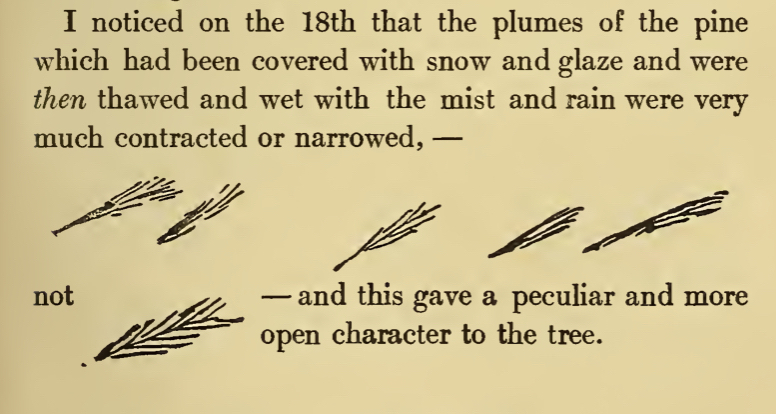
Standing on the north side of a bush or tree, looking against the sky, you see only a white ghost of a tree, without a mote of earthiness, but as you go round it, the dark core comes into view. It makes all the odds imaginable whether you are travelling north or south. The drooping birches along the edges of woods are the most feathery, fairy-like ostrich plumes of the trees, and the color of their trunks increases the delusion. The weight of the ice gives to the pines the forms which northern trees, like the firs, constantly wear, bending and twisting the branches; for the twigs and plumes of the pines, being frozen, remain as the wind held them, and new portions of the trunk are exposed. Seen from the north, there is no greenness in the pines, and the character of the tree is changed. The willows along the edge of the river look like sedge in meadows. The sky is overcast, and a fine snowy hail and rain is falling, and these ghost-like trees make a scenery which reminds you of Spitzbergen. I see now the beauty of the causeway, by the bridge alders below swelling into the road, over topped by willows and maples. The fine grasses and shrubs in the meadow rise to meet and mingle with the drooping willows, and the whole make an indistinct impression like a mist, and between this the road runs toward those white ice-clad ghostly or fairy trees in the distance, —toward spirit-land. The pines are as white as a counterpane, with raised embroidery and white tassels and fringes. Each fascicle of leaves or needles is held apart by an icy club surmounted by a little snowy or icy ball. Finer than the Saxon arch is this path running under the pines, roofed, not with crossing boughs, but drooping ice-covered twigs in irregular confusion. See in the midst of this stately pine, towering like the solemn ghost of a tree, the white ice-clad boughs of other trees appearing, of a different character; sometimes oaks with leaves incrusted, or fine-sprayed maples or walnuts. But finer than all, this red oak, its leaves incrusted like shields a quarter of an inch thick, and a thousand fine spicula, like long serrations at right angles with their planes, upon their edges. It has an indescribably rich effect, with color of the leaf coming softened through the ice, a delicate fawn-color of many shades. Where the plumes of the pitch pine are short and spreading close upon the trunk, sometimes perfect cups or rays are formed. Pitch pines present rough, massy grenadier plumes, with each a darker spot or cavity in the end, where you look in to the buds.
I listen to the booming of the pond as if it were a reasonable creature. I return at last in a rain, and am coated with a glaze, like the fields.
Being at Cambridge day before yesterday, Sibley told me that Agassiz told him that Harris was the greatest entomologist in the world, and gave him permission to repeat his remark. As I stood on the top of a ladder, he came along with his hand full of papers and inquired, ” Do you value autographs?” ” No, I do not,” I answered slowly and gravely. “Oh, I did n’t know but you did. I had some of Governor Dunlap,” said he, retreating.
After talking with Uncle Charles the other night about the worthies of this country, Webster and the rest, as usual considering who were geniuses and who not, I showed him up to bed, and when I had got into bed myself, I heard his chamber door opened, after eleven o’clock, and he called out, in an earnest, stentorian voice, loud enough to wake the whole house, “Henry! was John Quincy Adams a genius?” “No, I think not,” was my reply. “Well, I didn’t think he was,” answered he.
As a nation the people never utter one great and healthy word— From side all nations present only the symptoms of disease…In society you will not find health but in nature— You must converse much with the field and woods if you would imbibe such health into your mind and spirit as you covet for your body….I should like to keep some books of natural history always by me as a sort of elixir—the reading of which would restore the tone of my system—and secure me true and cheerful views of life….To the soul that contemplates some trait of natural beauty no harm nor disappointment can come. The doctrines of despair—of spiritual or political servitude—no priestcraft nor tyranny—was ever taught by such as drank in the harmony of nature.
Whole weeks or months of my summer life slide away in thin volumes like mist or smoke—till at length some warm morning perchance I see a sheet of mist blow down the brook to the swamp—its shadow flitting across the fields which have caught a new significance from that accident. And as that vapor is raised above the earth so shall the next weeks be elevated above the plane of the actual— Or when the setting sun slants across the pastures—and the cows low to my inward ear—and only enhance the stillness—and the eve is as the dawn—a beginning hour and not a final one—as if it would never have done— With its clear western amber inciting men to lives of as limpid purity— Then do other parts of my days work shine than I had thought at noon—for I discover the real purport of my toil—As when the husbandman has reached the end of the furrow and looks back—he can best tell where the pressed earth shines most.
I have observed of a clear winters morning that the woods have their southern window as well as the house, through which the first beams of the sun stream along their aisles and corridors.
The sun goes up swiftly behind the limbs of the white pine, as the sashes of a window.
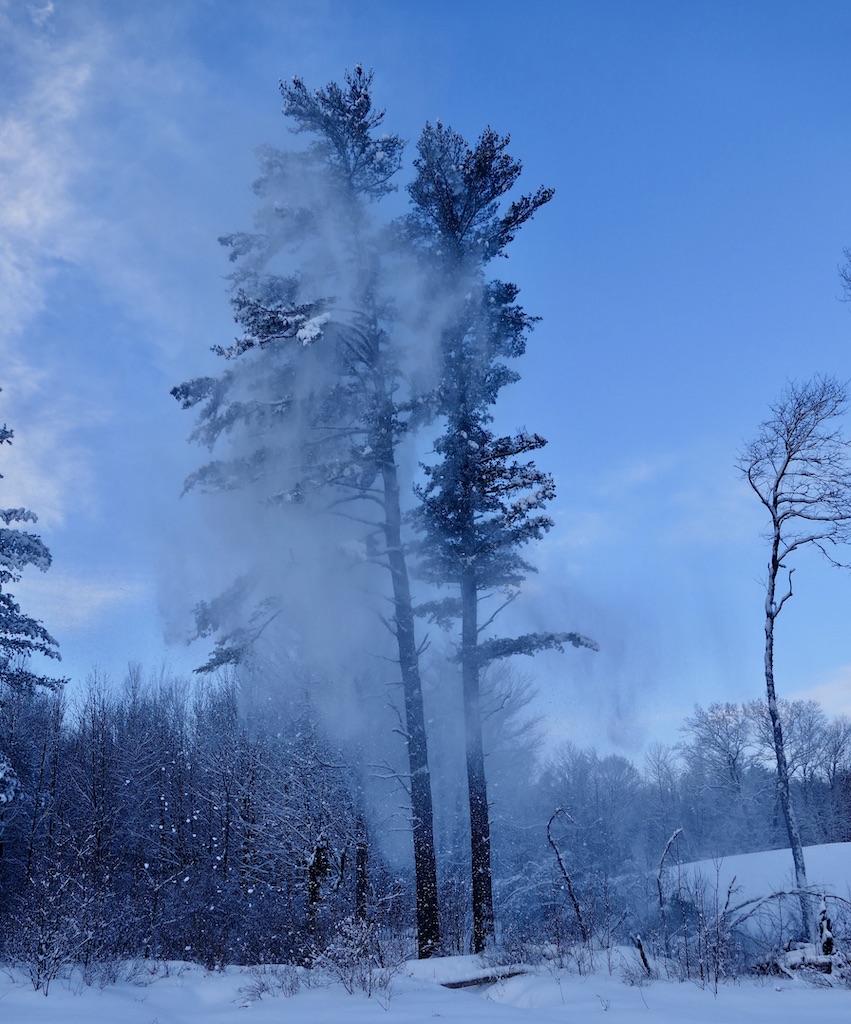
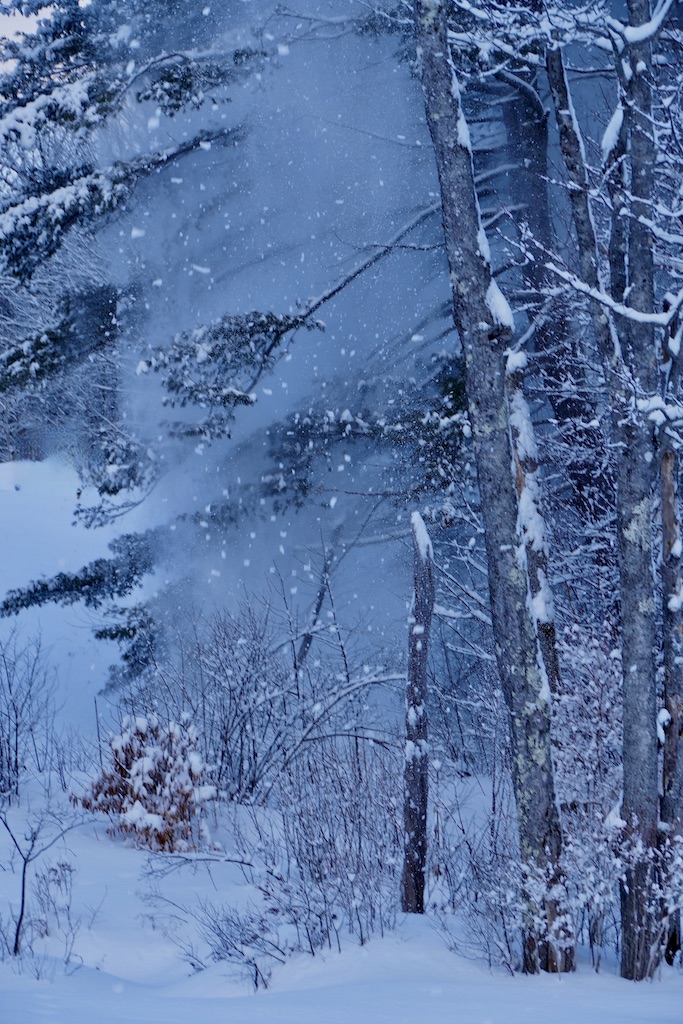
The snow blows like spray, fifteen feet high, across the fields, while the wind roars in the trees as in the rigging of a vessel. It is altogether like the ocean in a storm.
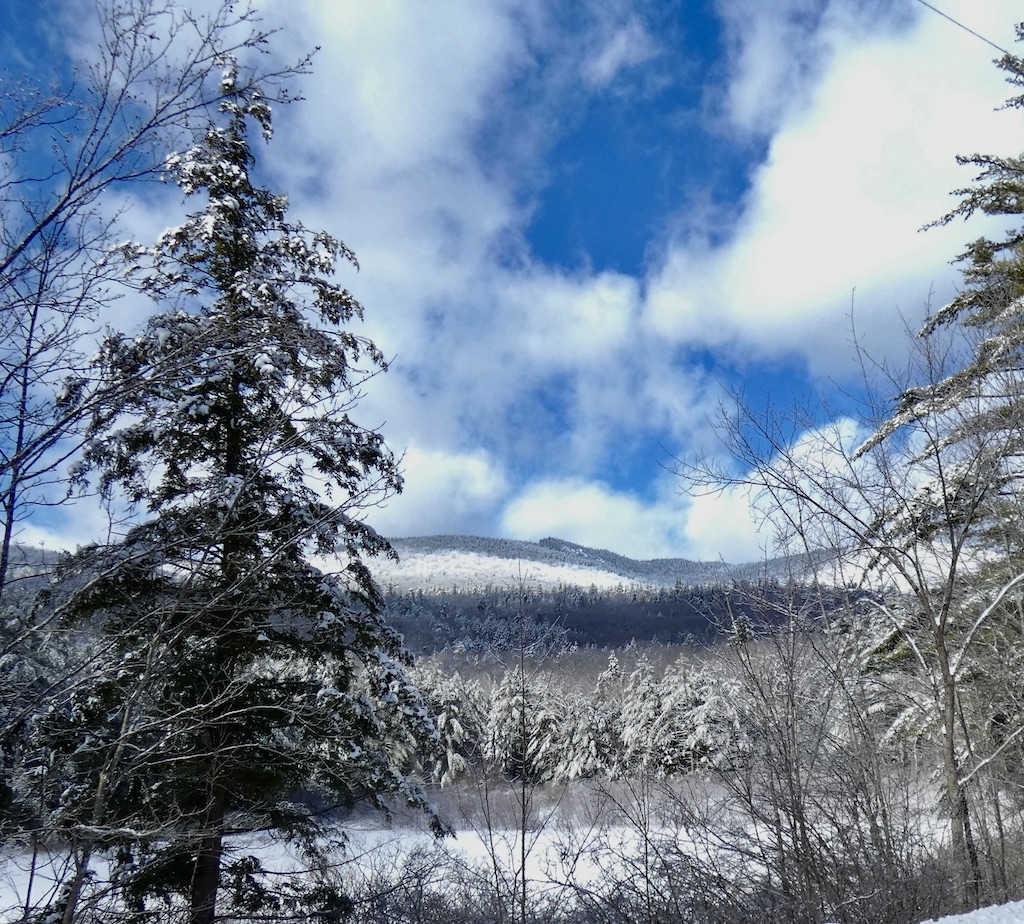
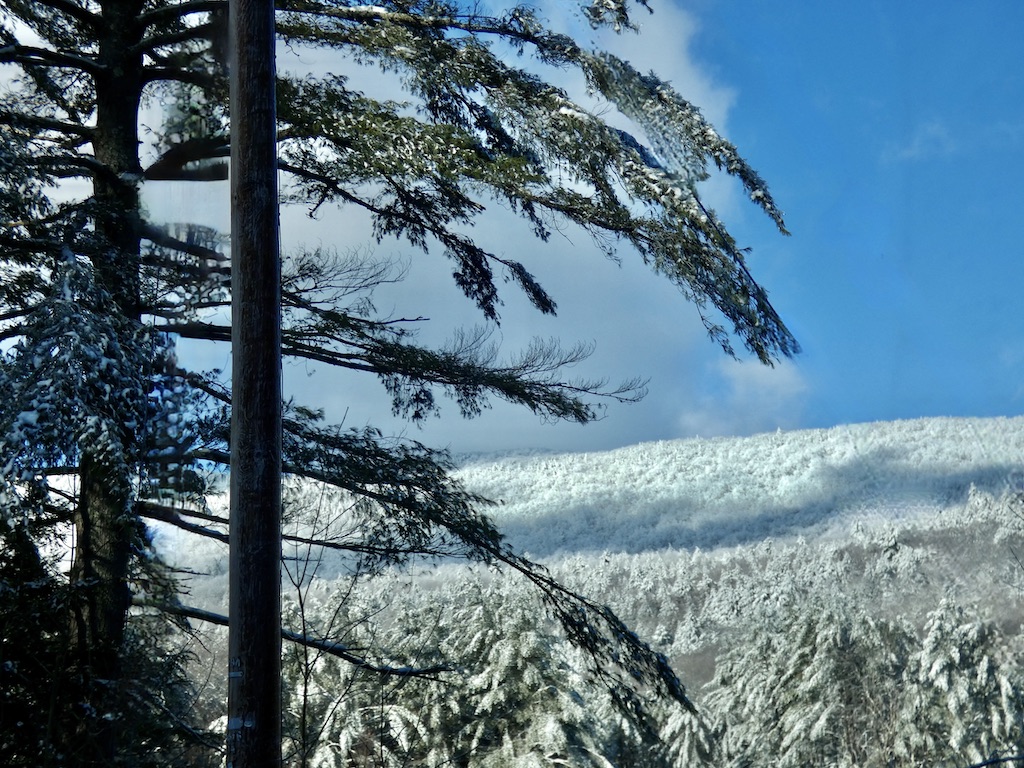
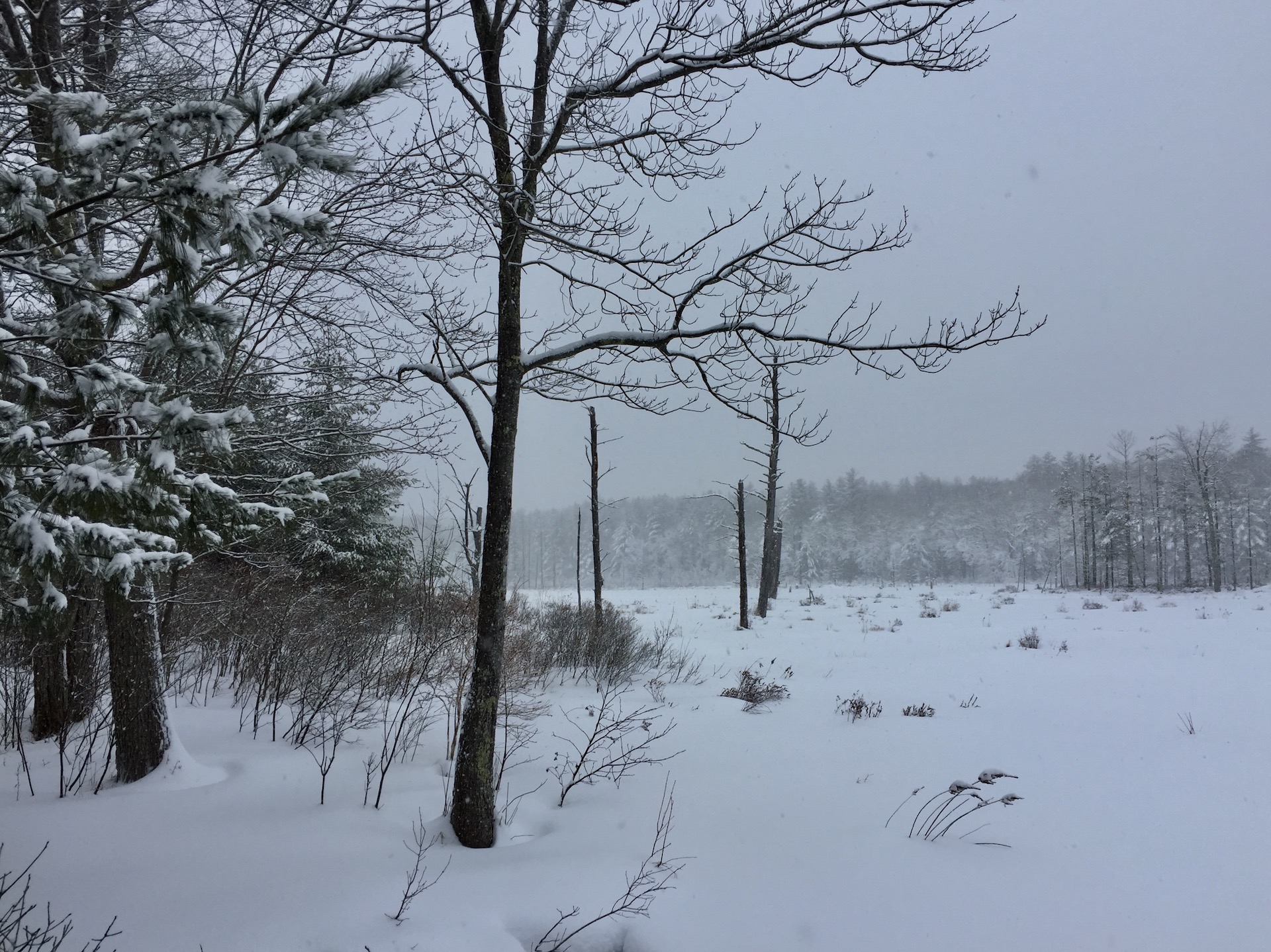
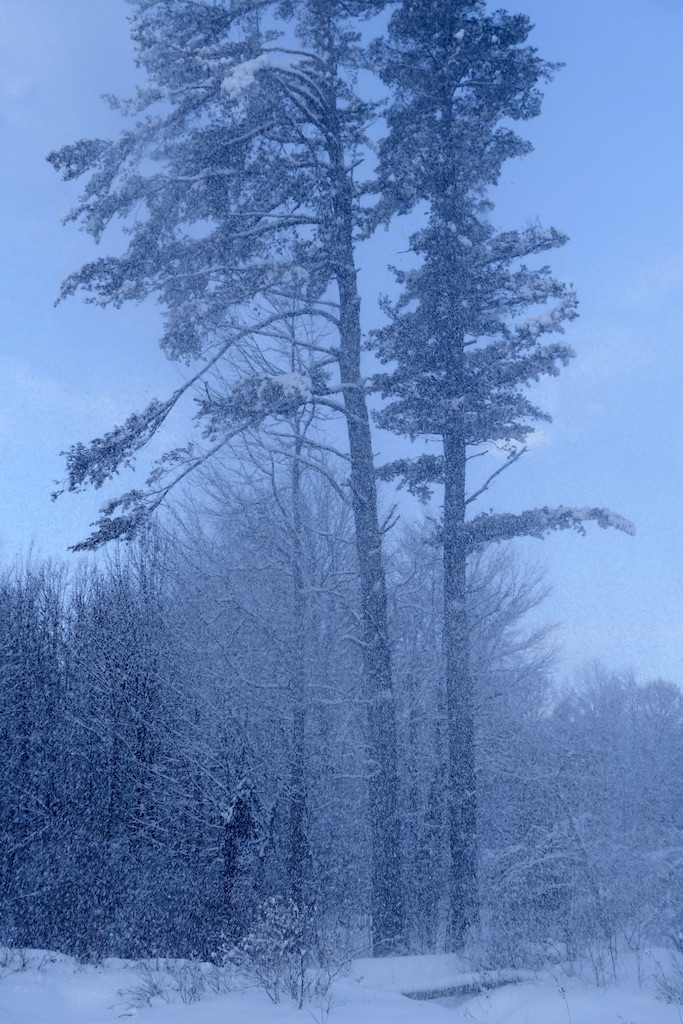
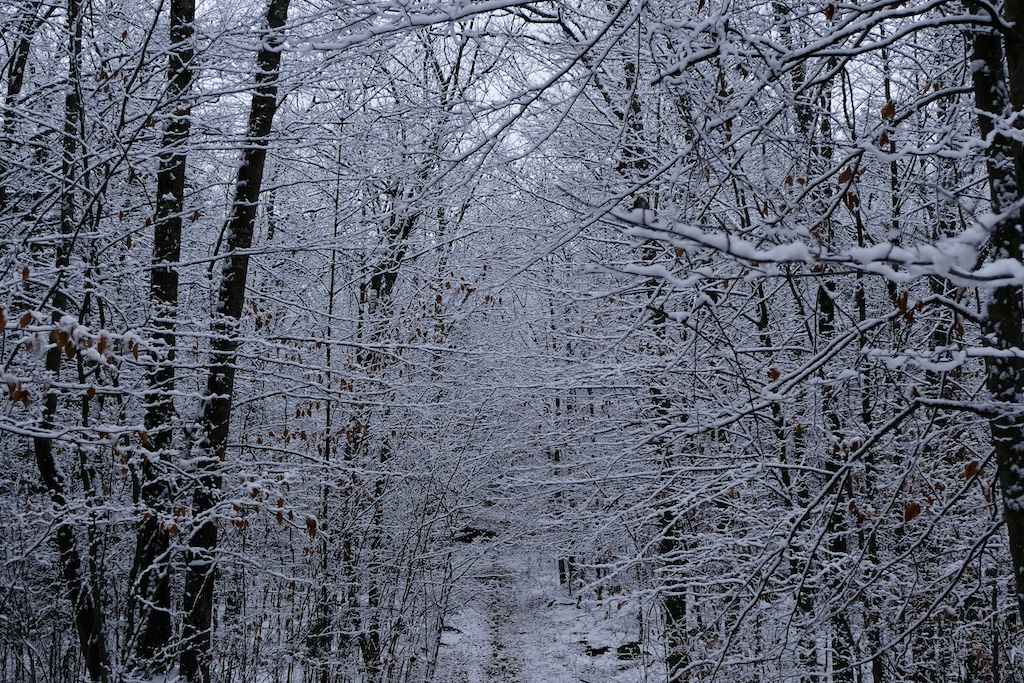
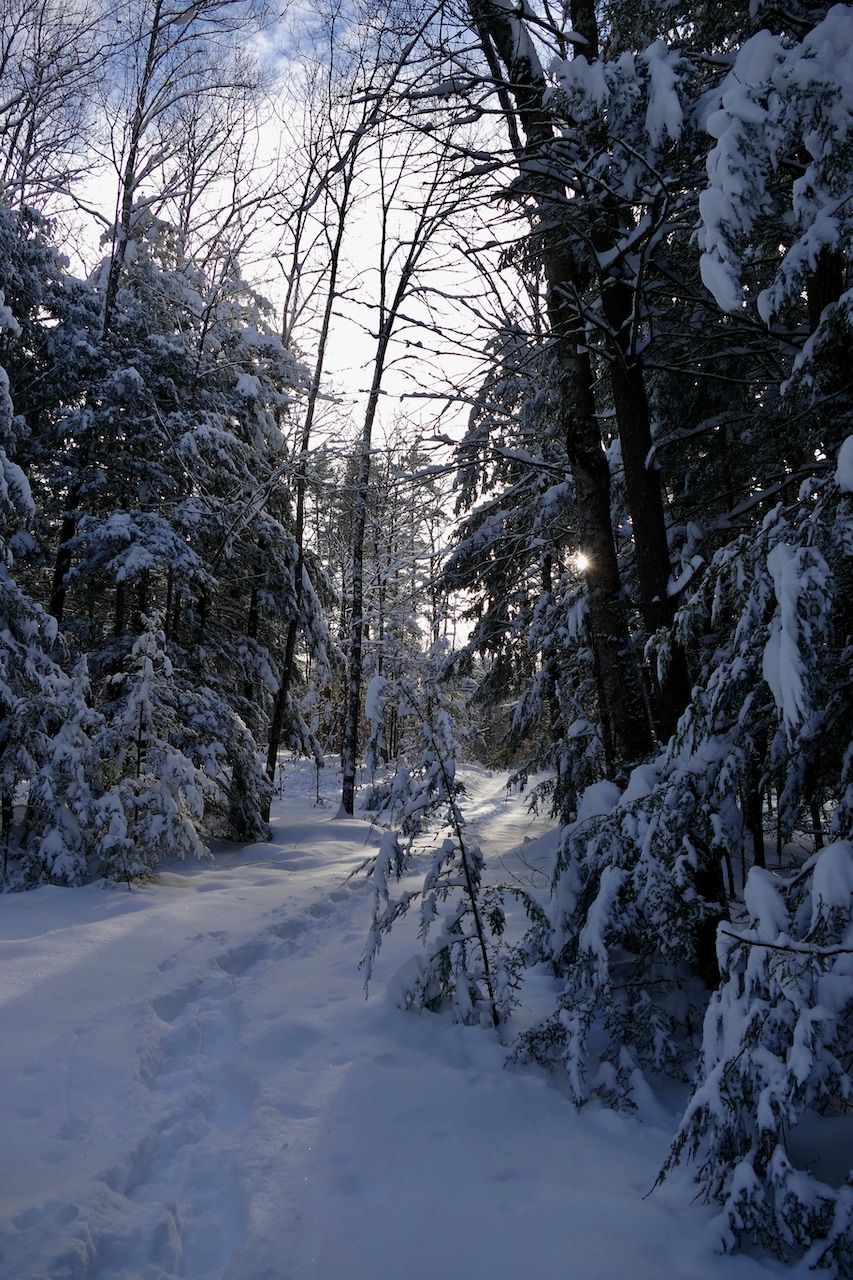
The snow has fallen so gently that it forms an upright wall on the slenderest twig. The agreeable maze which the branches make is come obvious than ever, and every twig thus laden is as still as the hillside itself…The sight of the pure and trackless road up Brister’s Hill, with branches and trees supporting snowy burdens bending over it on each side, would tempt us to begin life again.
Take long walks in stormy weather, or through deep snows in the fields and woods, if you would keep your spirits up. Deal with brute nature. Be cold and hungry and weary.
A slight whitening of snow last evening—the 2nd whitening of the winter—just enough to spoil the skating now 10 days old on the ponds— Walden skimmed over in the widest part, but some acres still open—will prob. freeze entirely to-night if this weather holds….
You cannot go out so early but you will find the track of some wild creature.














 allandibiase.com
You must be logged in to post a comment.