in Thoreau’s Journal:

Sunlight on pine needles is an event of a winter day.
in Thoreau’s Journal:
Sunlight on pine needles is an event of a winter day.
in Thoreau’s Journal:

Nothing stands up more free from blame in this world than a pine-tree.
in Thoreau’s Journal:

This plain sheet of snow which covers the ice of the pond is not such a blankness as is unwritten, but such as is unread. All colors are in white. It is such simple diet to my senses as the grass and the sky. There is nothing fantastic in them. Their simple beauty has sufficed men from the earliest times.— they have never criticized the blue sky and the green grass.

in Thoreau’s Journal:

Apples are thawed now, and are very good. Their juice is the best kind of bottled cider that I know. They are all good in this state, and your jaws are the cider press.
in Thoreau’s Journal:
It is pretty poor picking out of doors to-day. There ‘s but little comfort to be found. You go stumping over bare frozen ground, sometimes clothed with curly yellowish withered grass like the back of half-starved cattle late in the fall, now beating this ear, now that, to keep them warm. It is comparatively summer-like under the south side of woods and hills.
When I returned from the South the other day, I was greeted by withered shrub oak leaves which I had not seen there. It was the most homely and agreeable object that met me. I found that I had no such friend as the shrub oak thereabouts. A farmer once asked me what shrub oaks were made for, not knowing any use they served. But I can tell him that they do me good. They are my parish ministers, regularly settled. They never did any man harm that I know….

Now you have the foliage of summer painted in brown. Go through the shrub oaks. All growth has ceased; no greenness meets the eye, except what there may be in the bark of this shrub. The green leaves are all turned to brown, quite dry and sapless. The little buds are sleeping at the base of the slender shrunken petioles. Who observed when they passed from green to brown? I do not remember the transition; it was very gradual. But these leaves still have a kind of life in them. They are exceedingly beautiful in their withered state. If they hang on, it is like the perseverance of the saints. Their colors are as wholesome, their forms as perfect, as ever. Now that the crowd and bustle of summer is passed, I have leisure to admire them. Their figures never weary my eye. Look at the few broad scallops in their sides. When was that pattern first cut? With what a free stroke the curve was struck! With how little, yet just enough, variety in their forms! Look at the fine bristles which arm each pointed lobe, as perfect now as when the wild bee hummed about them, or the chewink scratched beneath them. What pleasing and harmonious colors within and without, above and below! The smooth, delicately brown-tanned upper surface, acorn-color, the very pale (some silvery or ashy) ribbed under side. How poetically, how like saints or innocent and beneficent beings, they give up the ghost! How spiritual! Though they have lost their sap, they have not given up the ghost. Rarely touched by worm or insect, they are as fair as ever. These are the forms of some:—

When was it ordained that this leaf should turn brown in the fall?


in Thoreau’s Journal:
Would you be well, see that you are attuned to each mood of nature.
in Thoreau’s Journal:
in Thoreau’s Journal:
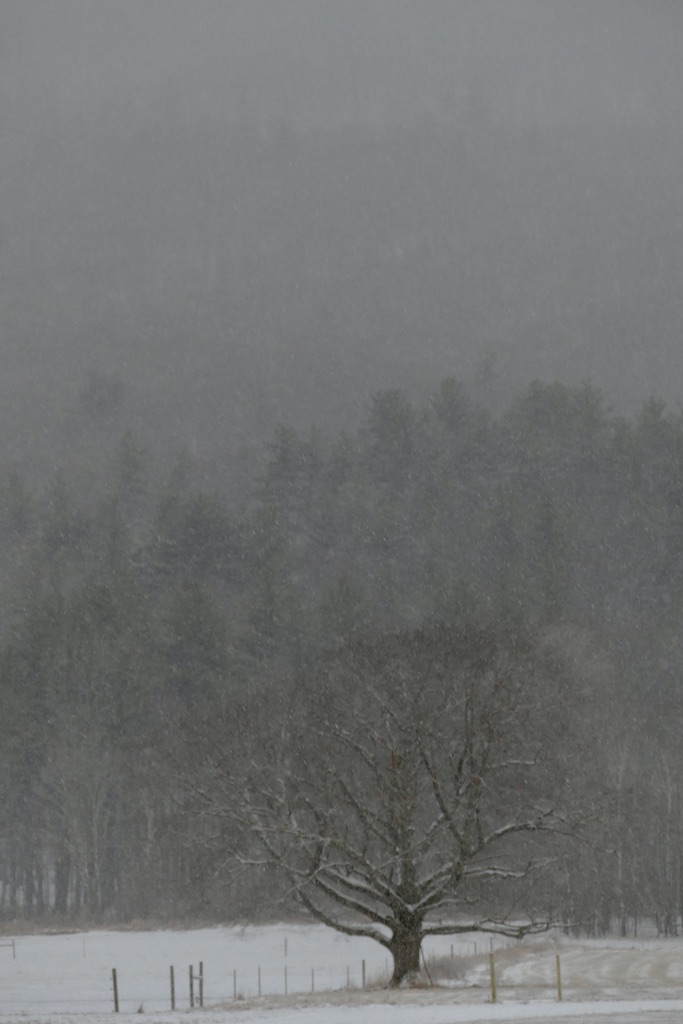
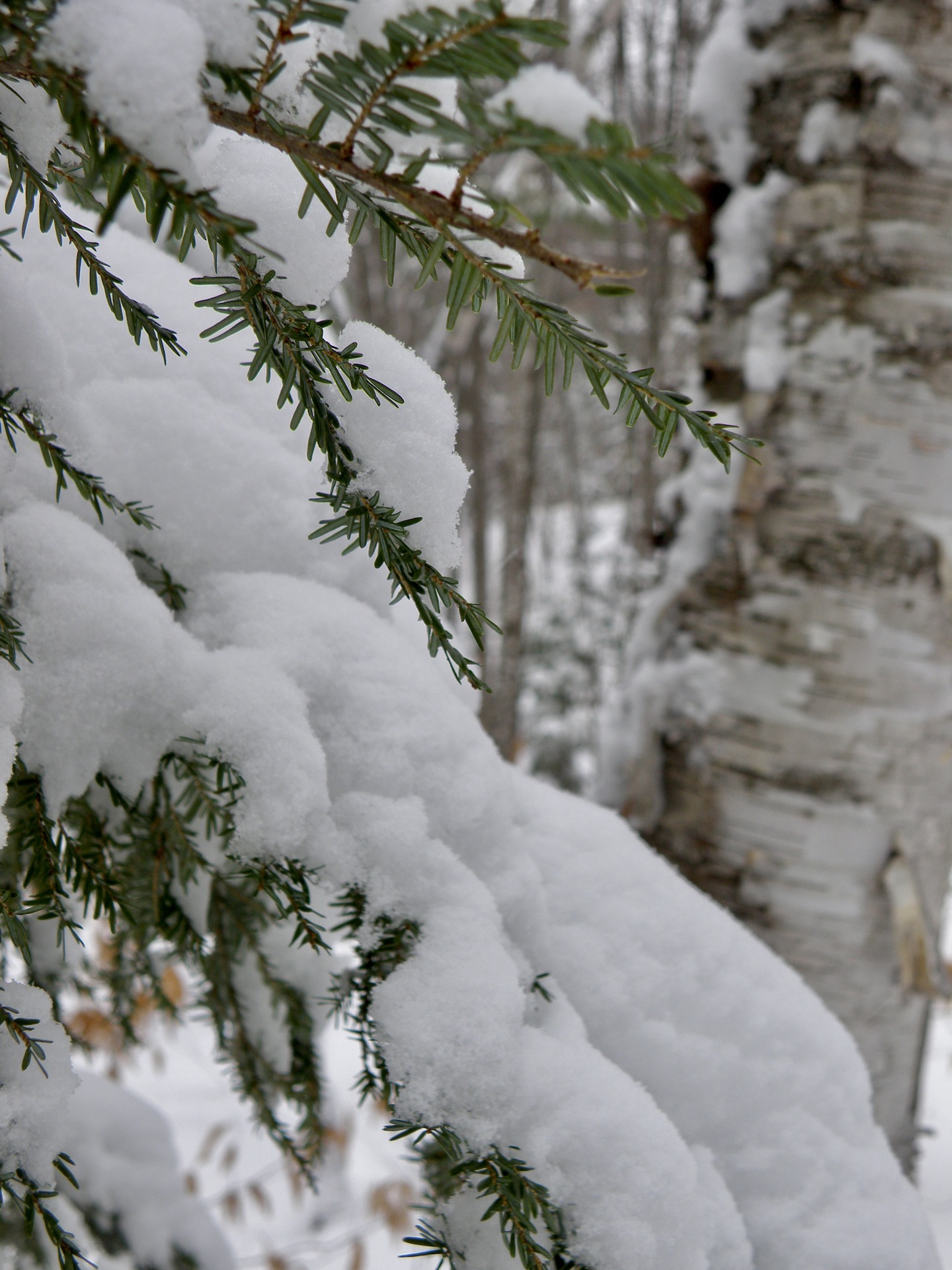
It began to snow again last evening, but soon ceased, and now it has turned out a fine winter morning, with half an inch of snow on the ground, the air full of mist, through which the smokes rise up perfectly straight; and the mist is frozen in minute leafets on the fences and trees and the needles of the pines, silvering them.
I stood by Bigelow the blacksmith’s forge yesterday, and saw him repair an axe. He burned the handle out, then, with a chisel, cut off the red-hot edge even, there being some great gaps in it, and by hammering drew it out and shaped it anew, —all in a few minutes. It was interesting to see performed so simply and easily, by the aid of fire and a few rude tools….
P. M. — To Pink Azalea Woods.
The warm sun has quite melted the thin snow on the south sides of the hills, but I go to see the tracks of animals that have been out on the north sides. First, getting over the wall under the walnut trees on the south brow of the hill, I see the broad tracks of squirrels, probably red, where they have ascended and descended the trees, and the empty shells of walnuts which they have gnawed left on the snow. The snow is so very shallow that the impression of their toes is the more distinctly seen. It imparts life to the landscape to see merely the squirrels’ track in the snow at the base of the walnut tree. You almost realize a squirrel at every tree. The attractions of nature are thus condensed or multiplied. You see not merely bare trees and ground which you might suspect that a squirrel had left, but you have this unquestionable and significant evidence that a squirrel has been there since the snow fell, — as conclusive as if you had seen him.
A little further I heard the sound [of] a downy wood- pecker tapping a pitch pine in a little grove, and saw him inclining to dodge behind the stem. He flitted from pine to pine before me. Frequently, when I pause to listen, I hear this sound in the orchards or streets. This was in one of these dense groves of young pitch pines.
Suddenly I heard the screwing mew and then the whir of a partridge on or beneath an old decaying apple tree which the pines had surrounded. There were several such, and another partridge burst away from one. They shoot off swift and steady, showing their dark-edged tails, almost like a cannon-ball. I saw one’s track under an apple tree and where it had pecked a frozen-thawed apple.
Then I came upon a fox-track made last night, leading toward a farmhouse, —Wheeler’s, where there are many hens, — running over the side of the hill parallel with Wheeler’s new wall. He was dainty in the choice of his ground, for I observed that for a mile he had adhered to a narrow cow-path, in which the snow lay level, for smoothness. Sometimes he had cantered, and struck the snow with his foot between his tracks. Little does the farmer think of the danger which threatens his hens.
In a little hollow I see the sere gray pennyroyal rising above the snow, which, snuffed, reminds me of garrets full of herbs.
Now I hear, half a mile off, the hollow sound of woodchopping, the work of short winter days begun, which is gradually laying bare and impoverishing our landscape. In two or three thicker woods which I have visited this season, I was driven away by this ominous sound.
Further over toward the river, I see the tracks of a deer mouse on a rock, which suddenly come to an end where apparently it had ascended a small pine by a twig which hung over it. Sometimes the mark of its tail was very distinct. Afterwards I saw in the pasture westward where many had run about in the night. In one place many had crossed the cow-path in which I was walking, in one trail, or the same one had come and gone many times. In the large hollows where rocks have been blasted, and on the sides of the river, I see irregular spaces of dark ice bare of snow, which was frozen after the snow ceased to fall. But this ice is rotten and mixed with snow. I am surprised to see the river frozen over for the most part with this thin and rotten snow ice, and the drooping or bent alders are already frozen into this slush, giving to the stream a very wintry aspect. I see some squirrel-tracks about a hole in a stump.
At the azalea meadow or swamp, the red tops of the osiers, which are very dense and of a uniform height, are quite attractive, in the absence of color at this season. Any brighter and warmer color catches our eye at this season. I see an elm there whose bark is worn quite smooth and white and bare of lichens, showing exactly the height at which the ice stood last winter.
Looking more closely at the light snow there near the swamp, I found that it was sprinkled all over (as with pellets of cotton) with regular star-shaped cottony flakes with six points, about an eighth of an inch in diameter and on an average a half an inch apart. It snowed geometry.

How snug and warm a hemlock looks in the winter!
That by the azalea looks thus: There is a tendency in the limbs to arrange themselves ray-wise about a point one third from the base to the top. What singular regularity in the outline of a tree!
I noticed this morning successive banks of frost on the windows, marked by their irregular waving edges, like the successive five, ten, and fifteen fathom lines which mark the depth of the shores on charts.
Thus by the snow I was made aware in this short walk of the recent presence there of squirrels, a fox, and countless mice, whose trail I had crossed, but none of which I saw, or probably should have seen before the snow fell. Also I saw this afternoon the track of one sparrow, probably a tree sparrow, which had run among the weeds in the road.

in Thoreau’s Journal
This morning it is snowing, and the ground is whitened. The countless flakes, seen against the dark evergreens like a web that is woven in the air, impart a cheerful and busy aspect to nature. It is like a grain that is sown, or like leaves that have come to clothe the bare trees. Now, by 9 o’clock, it comes down in larger flakes, and I apprehend that it will soon stop. It does.
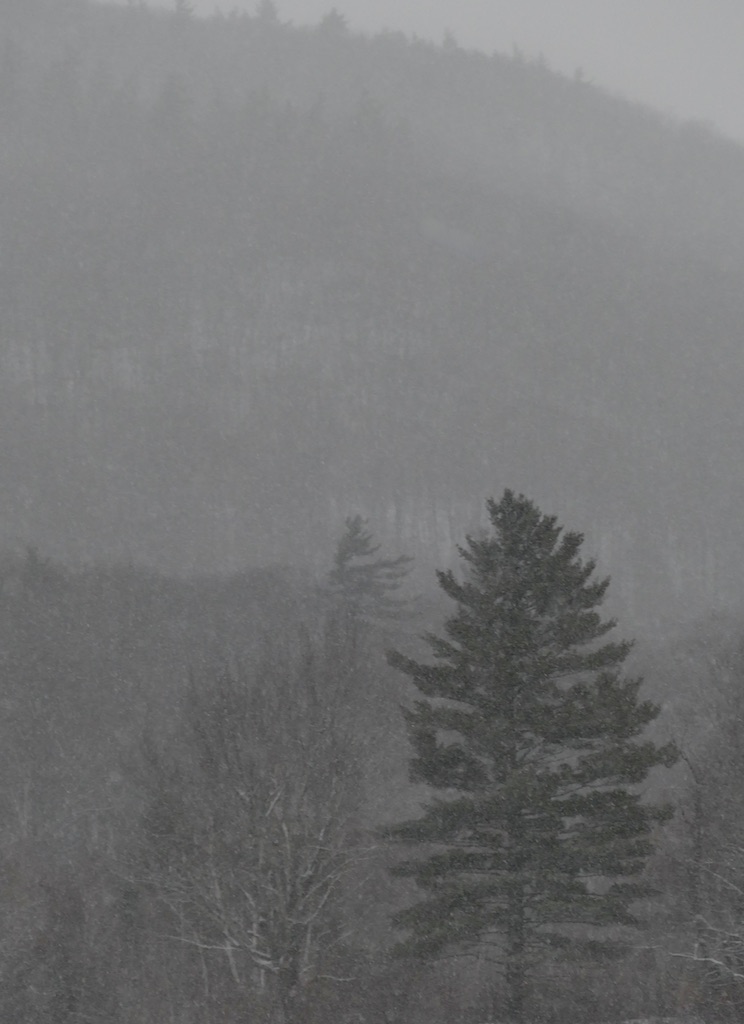
How pleasant a sense of preparedness for the winter, —plenty of wood in the shed and potatoes and apples, etc., in the cellar, and the house banked up! Now it will be a cheerful sight to see the snows descend and hear the blast howl.

in Thoreau’s Journal:

There are times when thought elbows her way through the underwood of words to the clear blue beyond….
in Thoreau’s Journal:
Beauty and music are not mere traits and exceptions. They are the rule and character. It is the exception that we see and hear. Then I try to discover what it was in the vision that charmed and translated me. What if we could daguerreotype our thoughts and feelings! for I am surprised and enchanted often by some quality which I cannot detect. I have seen an attribute of another world and condition of things. It is a wonderful fact that I should be affected, and thus deeply and powerfully, more than by aught else in my experience — that this fruit should be borne in me, sprung from a seed finer than the spores of fungi, floated from other atmospheres! finer than the dust caught in the sails of vessels a thousand miles from land! Here the invisible seeds settle, and spring, and bear flowers and fruits of immortal beauty.

in Thoreau’s Journal:

Get in my boat, in the snow. The bottom is coated with a glaze.
in Thoreau’s Journal:
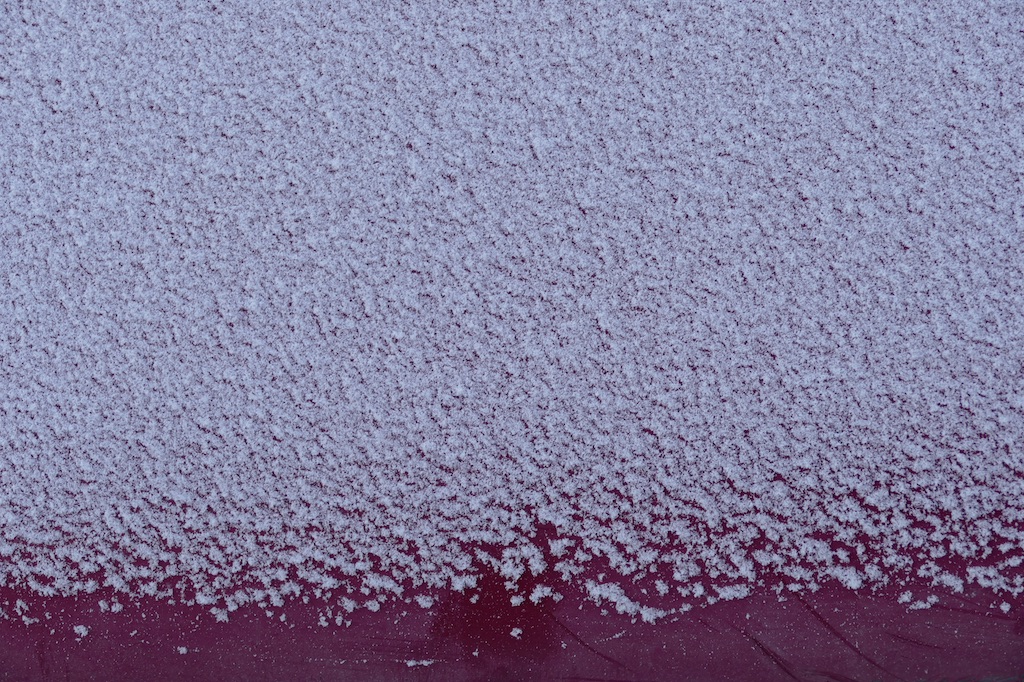
A bewitching stillness reigns through all the woodland, and over all the snow-clad landscape.
Indeed, the winter day in the woods or fields has commonly the stillness of twilight.

The pond is perfectly smooth and full of light.
in Thoreau’s Journal:
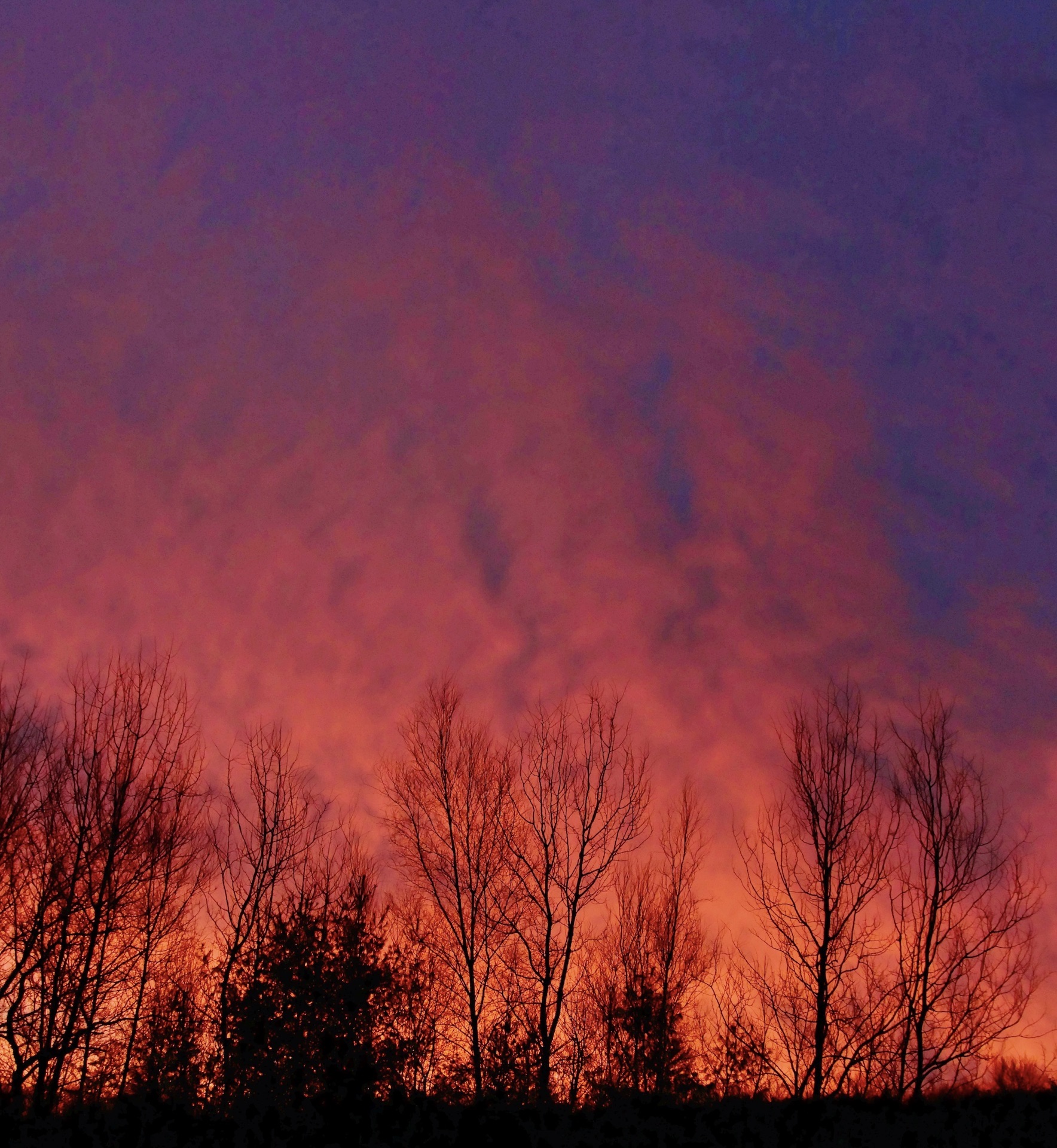
7 A. M. – How can we spare to be abroad in the morning red, to see the forms of the leafless eastern trees against the dun sky and hear the cocks crow, when a thin low mist hangs over the ice and frost in meadows?
in Thoreau’s Journal:
It is a fair, sunny, and warm day in the woods for the season. We eat our dinners on the middle of the line, amid the young oaks in a sheltered and very unfrequented place. I cut some leafy shrub oaks and cast them down for a dry and springy seat. As I sit there amid the sweet-fern, talking with my man Briney, I observe the recent shoots of the sweet-fern —which, like many larger uses and trees, have a few leaves in a tuft still at their extremities —toward the sun are densely covered with a bright, warm, silvery down, which looks like frost, so thick and white. Looking the other way, I see none of it, but the bare reddish twigs. Even this is a cheering and compensating discovery in my otherwise barren work. I get thus a few positive values, answering to the bread and cheese which make my dinner. I owe thus to my weeks at surveying a few such slight but positive discoveries…

I would rather sit at this table with the sweet-fern twigs between me and the sun than at the king’s.
in Thoreau’s Journal:
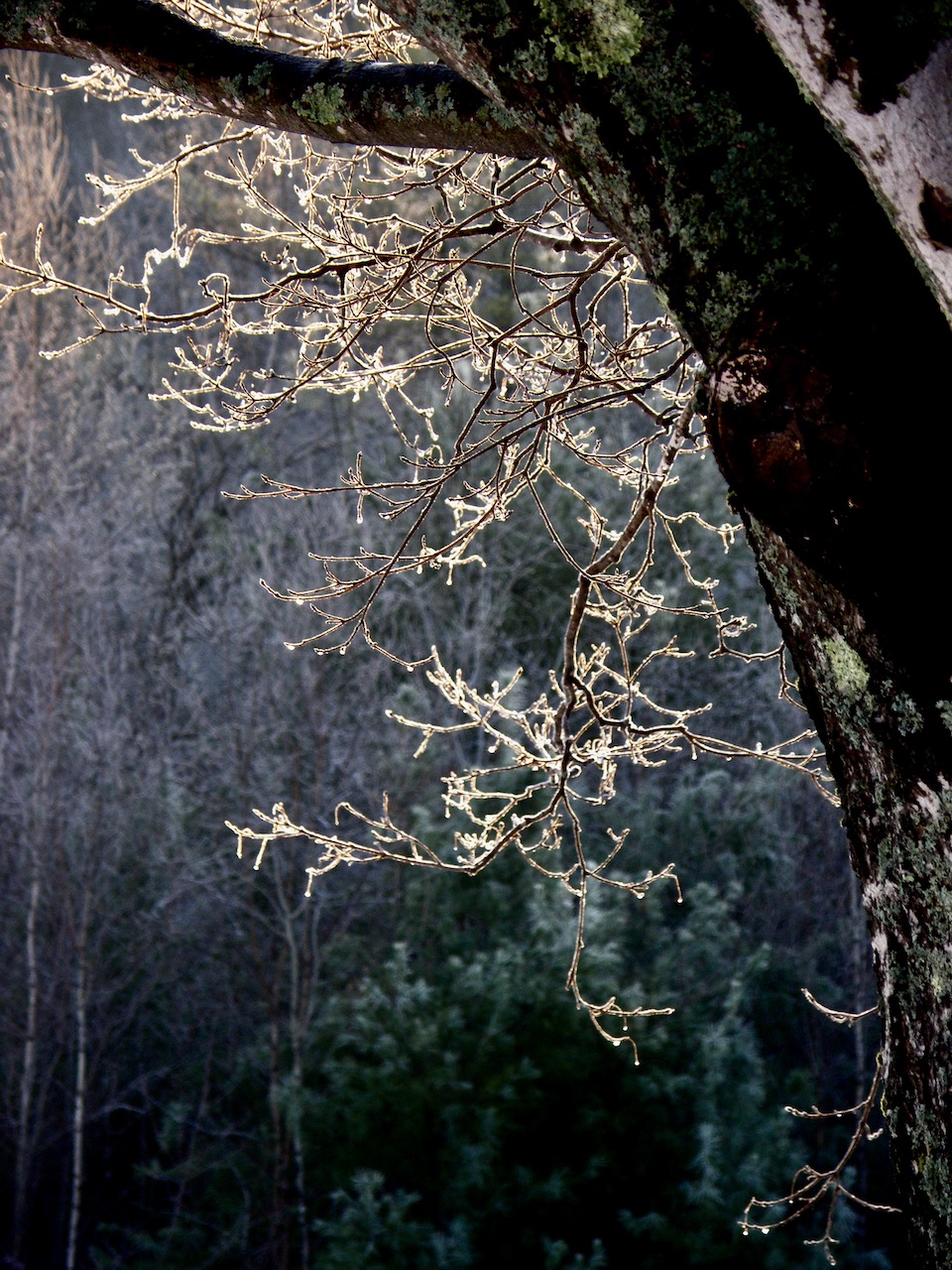
Go out at 9 AM to see the glaze. It is already half fallen, melting off. The dripping trees and wet falling ice will wet you through like rain in the woods. It is a lively sound, a busy tinkling, the incessant brattling and from time to time rushing, crashing sound of this falling ice, and trees suddenly erecting themselves when relieved of their loads. It is now perfect only on the north sides of woods which the sun has not touched or affected. Looking at a dripping tree between you and the sun, you may see here or there one or another rainbow color, a small brilliant point of light.
in Thoreau’s Journal:
Many living leaves are very dark red now the only effect of the frost on them—the checker-berry—andromeda—low cedar and more or less lambkill—&c.

Saw & heard a downy woodpecker on an apple tree—have not many winter birds, like this & the chickadee, a sharp note like tinkling glass or icicles — The chip of the tree-sparrow also & whistle of the shrike is not wintry in the same way?—& The sonorous hooting owl— But not so the jay & E. linaria —& still less the crow. Now for the short days & early twilight—in which I hear the sound of wood chopping.
December 4, 1853 in Thoreau’s Journal:
The coldest day yet, clear with considerable wind, after the first cloudless morning for a week or two. Goose Pond apparently froze over last night, all but a few rods, but not thick enough to bear. I see a lizard on the bottom under the ice. No doubt I have sometimes mistaken them for tadpoles. (Flint’s Pond only skimmed a little at the shore, like the river.)
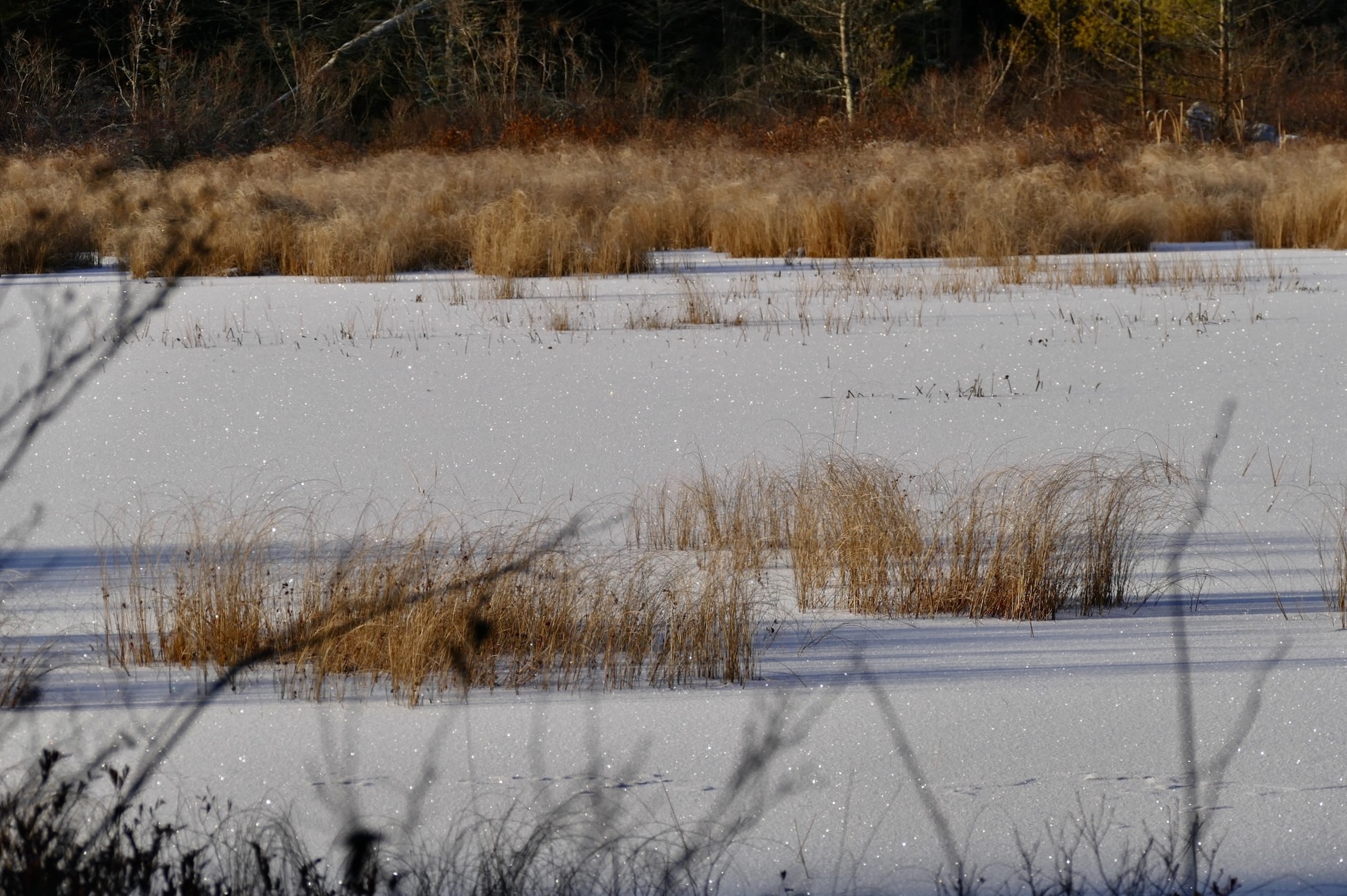
The ice of Goose Pond already has a dusty look. It shows the crystals distinctly.
in Thoreau’s Journal:
Look at the trees bare or rustling with sere brown leaves—except the evergreens—their buds dormant at the foot of the leaf-stalks. Look at the fields russet & withered—& the various sedges & weeds with dry bleached culms— Such is our relation to nature at the present, —such plants are we. We have no more sap—nor verdure—nor color now—
….but even in winter we maintain a temperate cheer—& a serene inward life—not destitute of warmth & melody— Only the cold evergreens wear the aspect of summer now and shelter the winter birds.
in Thoreau’s Journal:
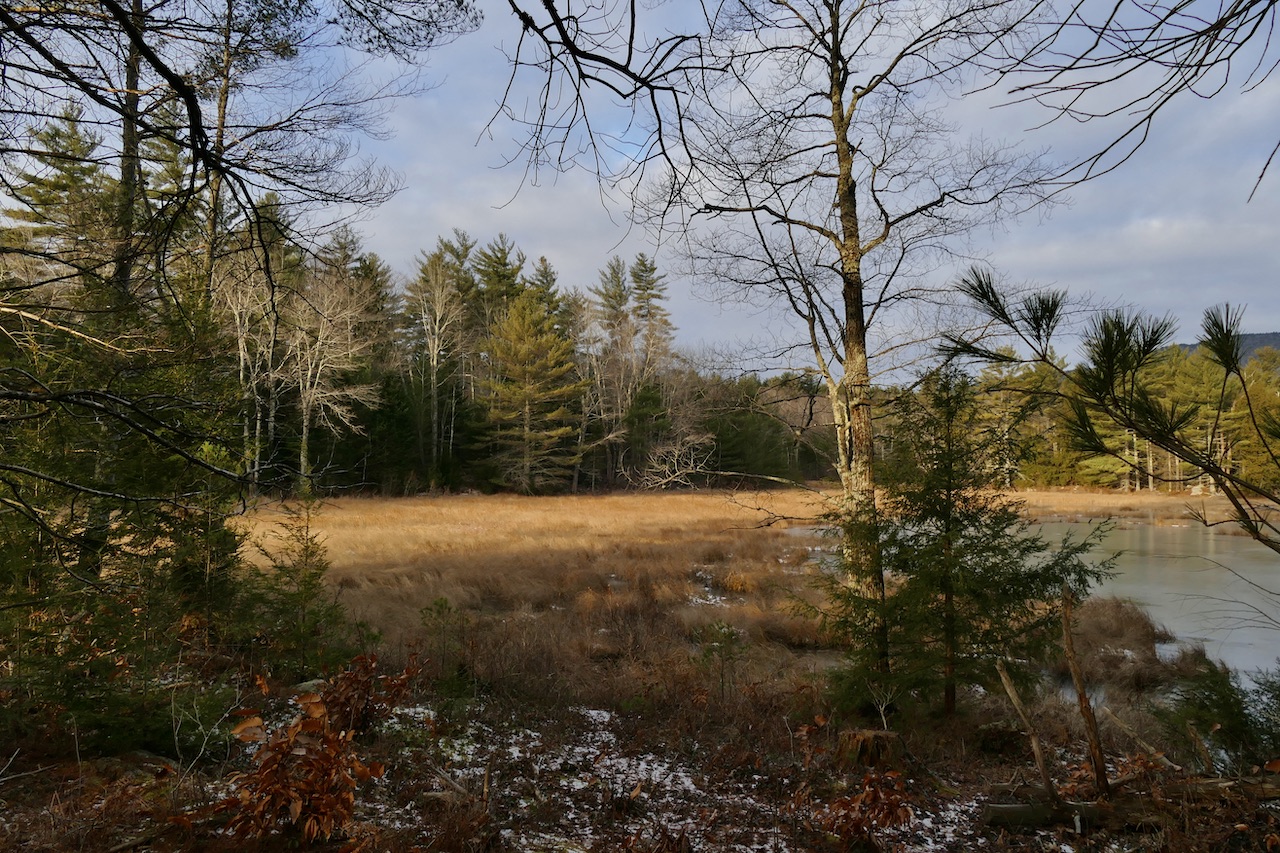
Returning, the water is smoother and more beautiful than before. The ripples we make produce ribbed reflections or shadows….all the water behind us, as we row, and even on the right and left at a distance, is perfectly unruffled…The reflections after sunset were distinct and glorious, the heaven into which we unceasingly rowed.

 allandibiase.com
You must be logged in to post a comment.