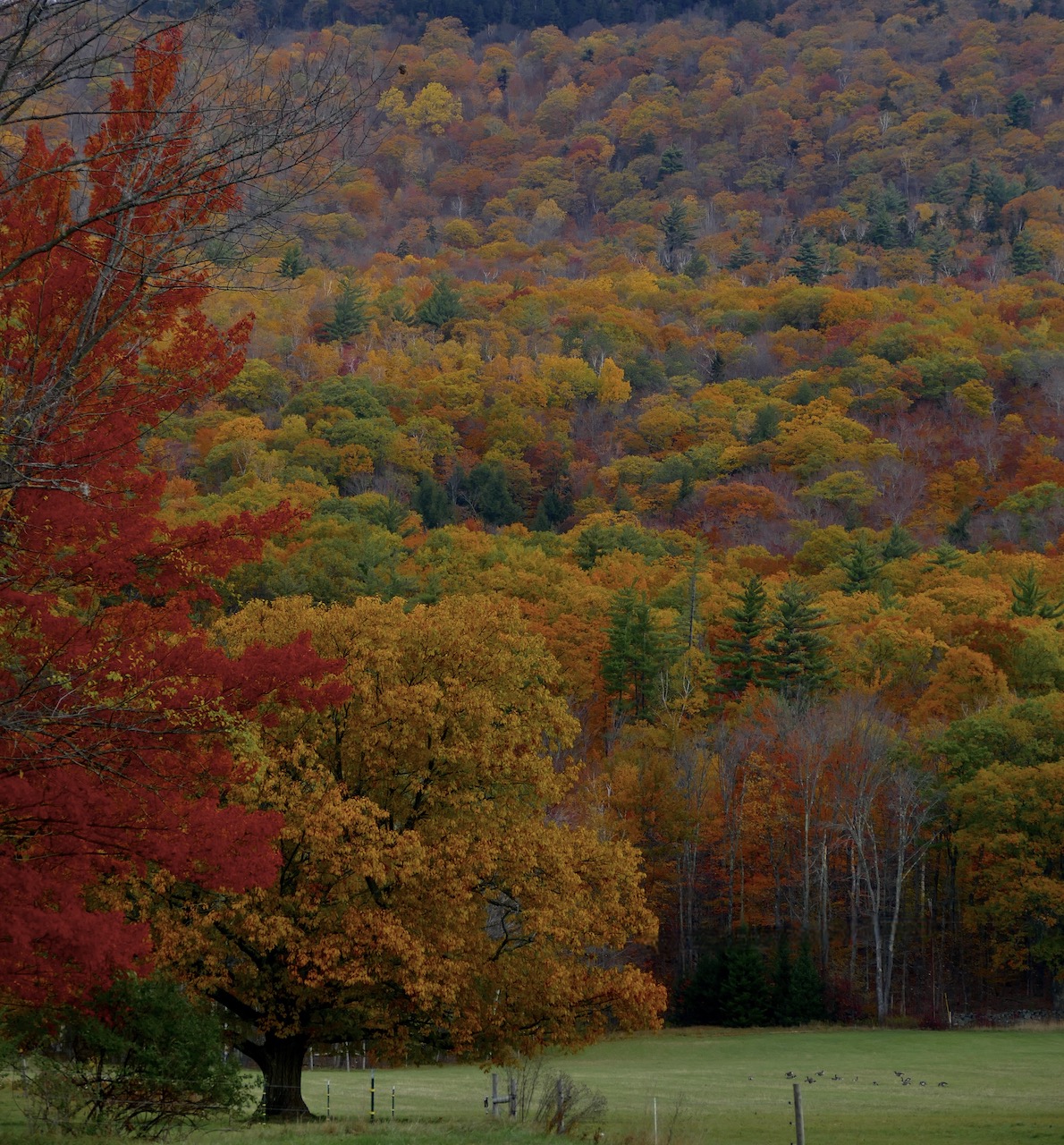
Think how much the eyes of painters—both artisans & artists—& of the manufacturer of cloth & paper—& the paper stainers—&c are to be educated by these autumnal colors. The stationer’s envelopes may be of very various tints—yet not so various as those of the leaves of a simple tree sometimes—If you want a different shade or tint of a particular color you have only to look further within or without the tree—or the wood. The eye might thus be taught to distinguish color & appreciate a difference of shade or tint.
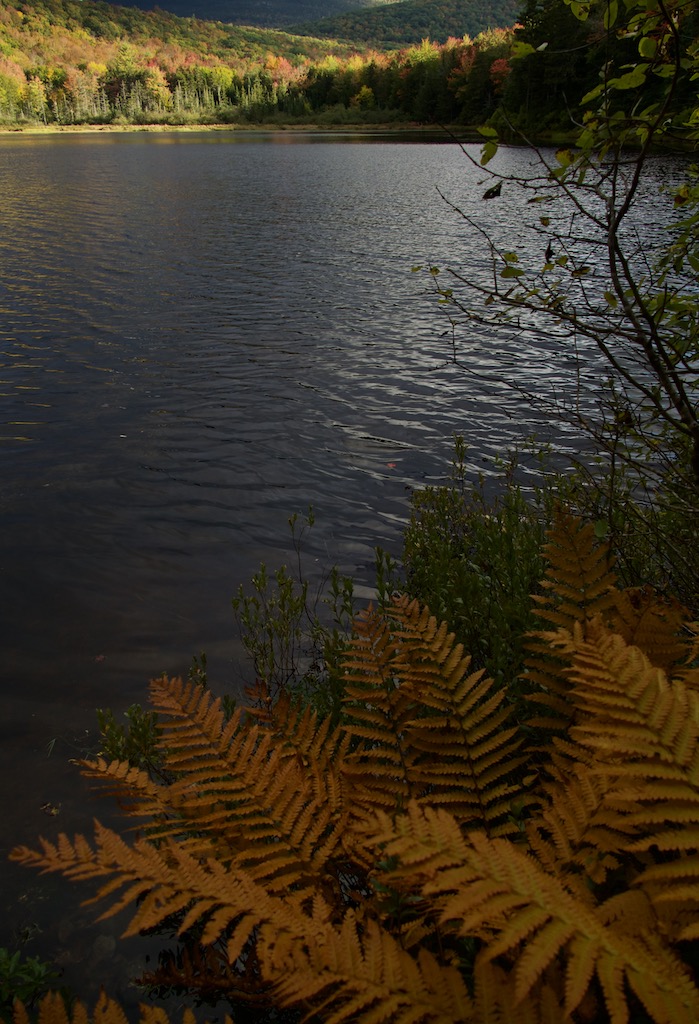
This is a remarkable feature in the landscape now—the abundance of dead weeds. The frosts have done it. Winter comes on gradually. The red maples have lost their leaves before the rock maple which is now loosing its leaves at top first. All the country over the frosts have come & sered the tenderer herbs along all brook sides— How unobserved this change until it has taken place.
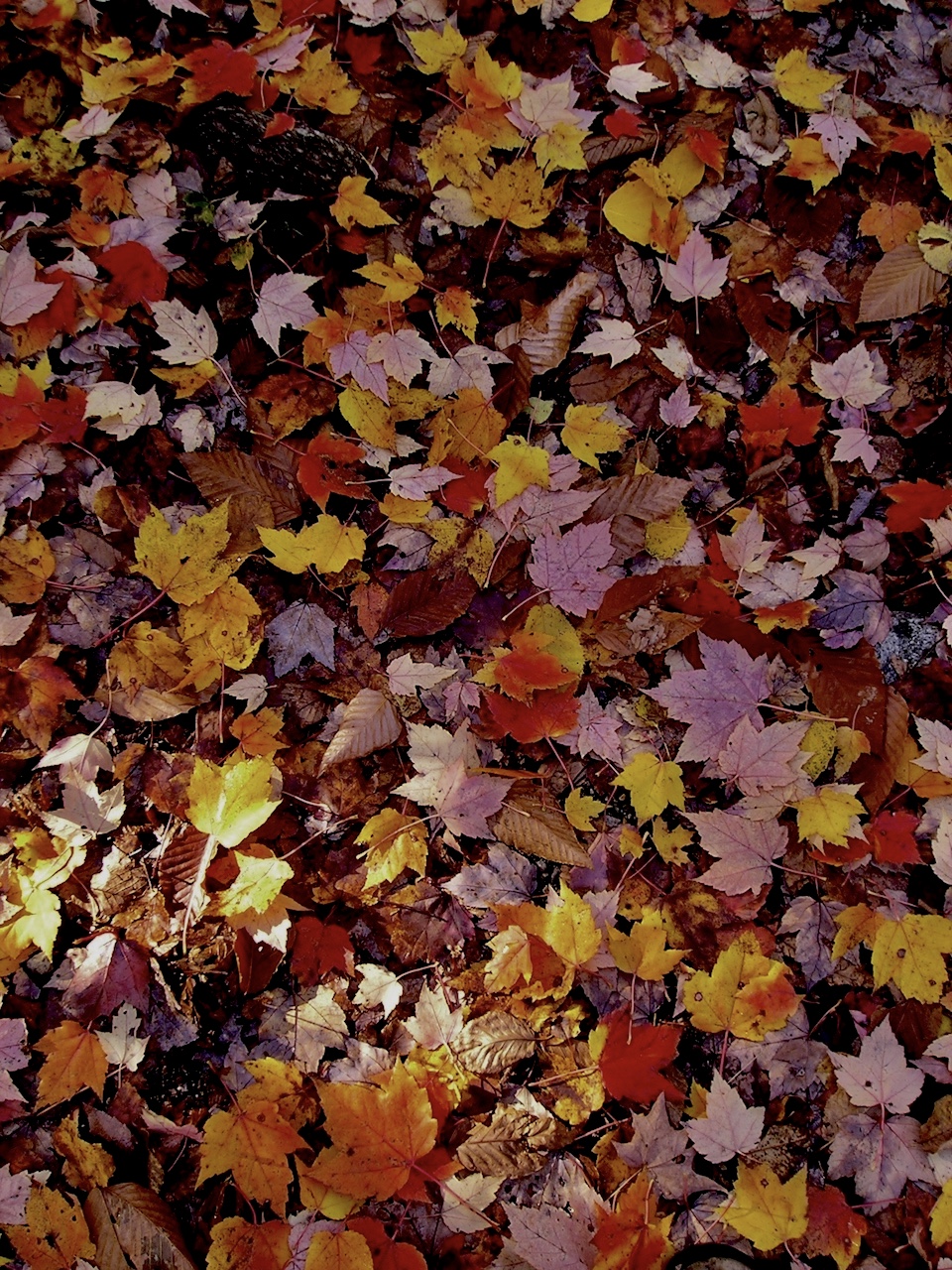
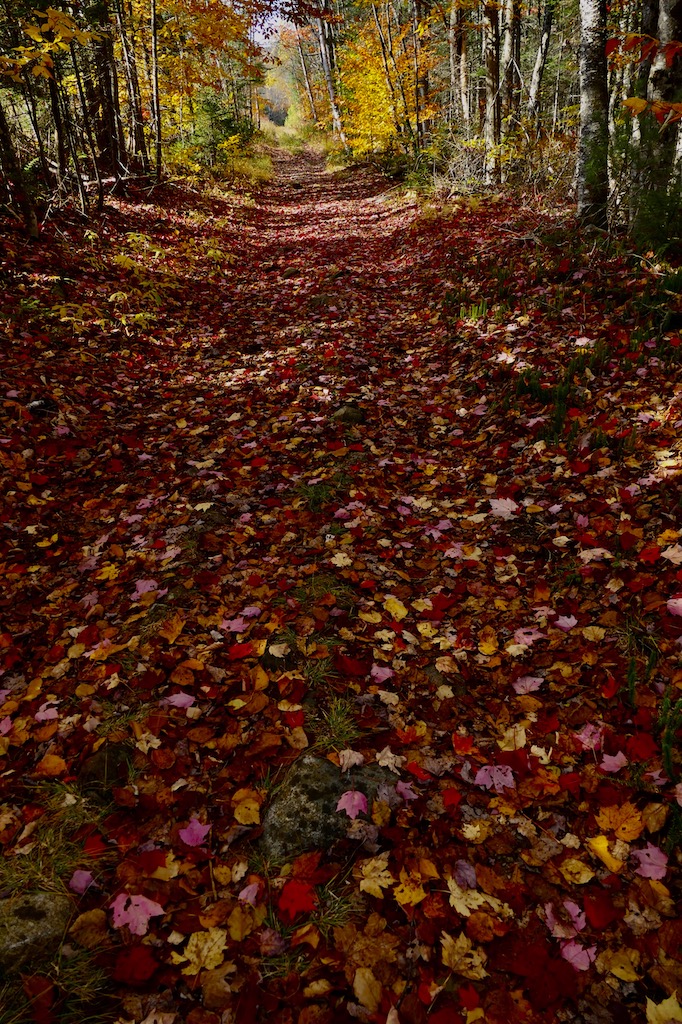
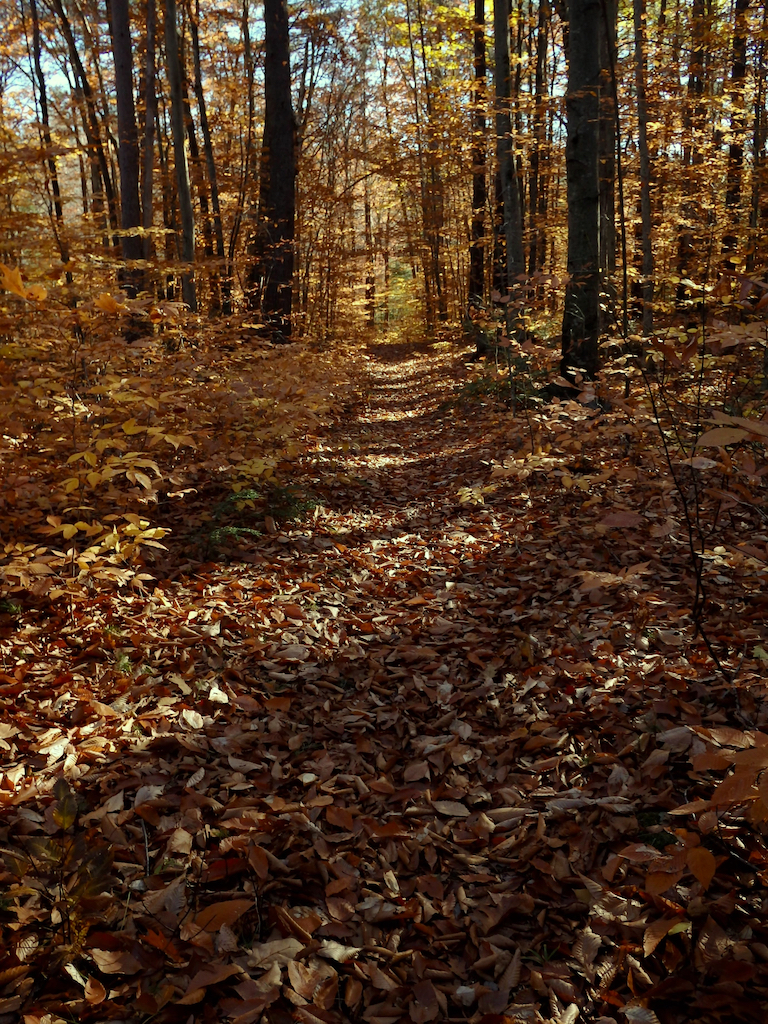
How pleasant to walk over beds of these fresh crisp & rustling fallen leaves…How beautiful they go to their graves—how gently lay themselves down—& turn to mould! Painted of a thousand hues and fit to make the beds of us living.
It is a very singular & agreeable surprise to come upon this conspicuous & handsome—& withal flower [fringed gentian] at this season when flowers have passed out of our minds & memories—the latest of all to begin to bloom unless it be the Witch hazel—
When, excepting the latter, flowers are reduced to that small Spartan cohort—hardy, but for the most part unobserved, which linger till the snow buries them—& those interesting re-appearing flowers which though fair & fresh & tender hardly delude us with the prospect of a new spring—& which we pass by indifferent as if they only bloomed to die.
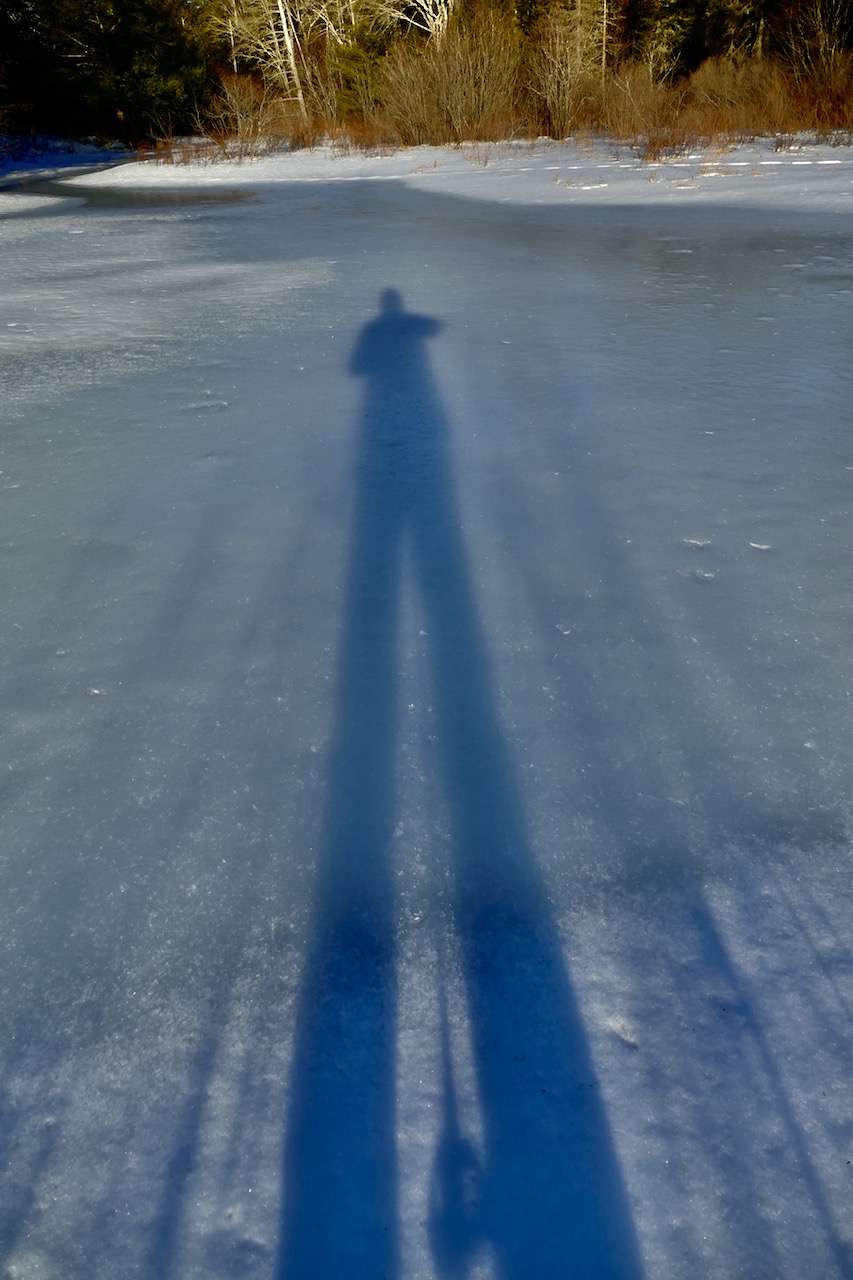
Why flee so soon to the theatres, lectures-rooms, and museums of the city? If you will stay here a while, I will promise you strange sights. You shall walk on water.
All these brooks and rivers and ponds shall be your highway. You shall see the whole earth covered a foot or more deep with purest white crystals in which you slump or over which you glide, and all the trees and stubble glittering in icy armor.
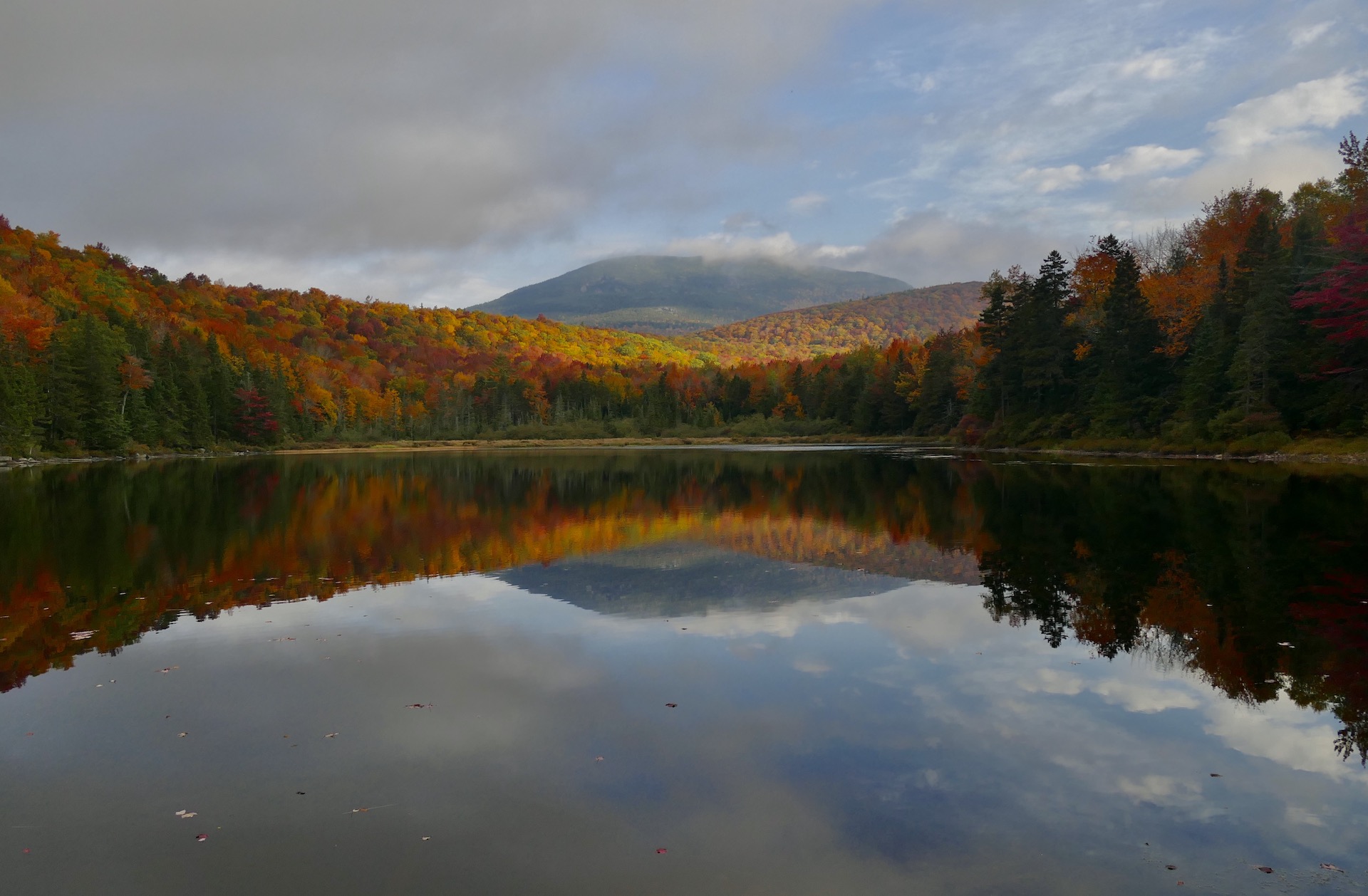
I think that the principal stages in the autumnal changes of trees are these, thus far, as I remember, this year: ––
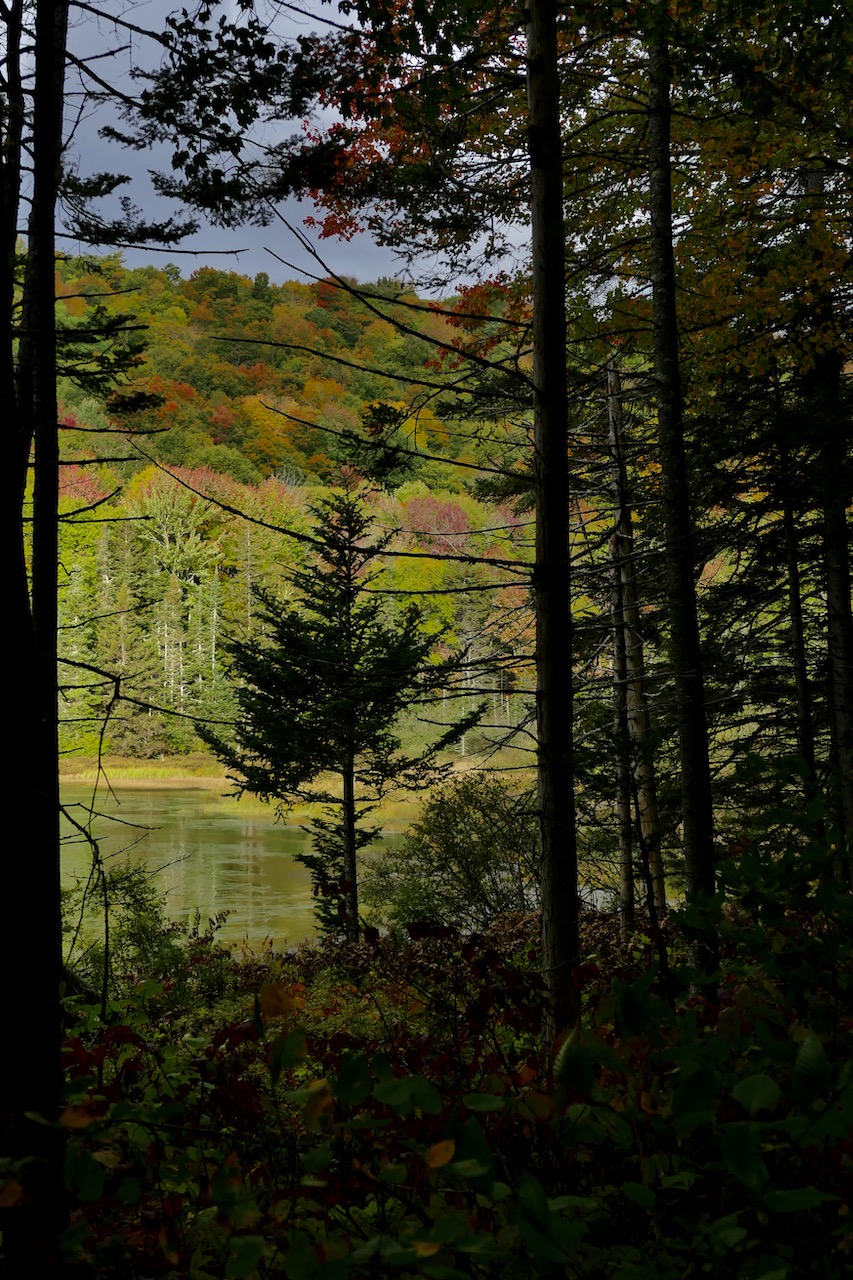
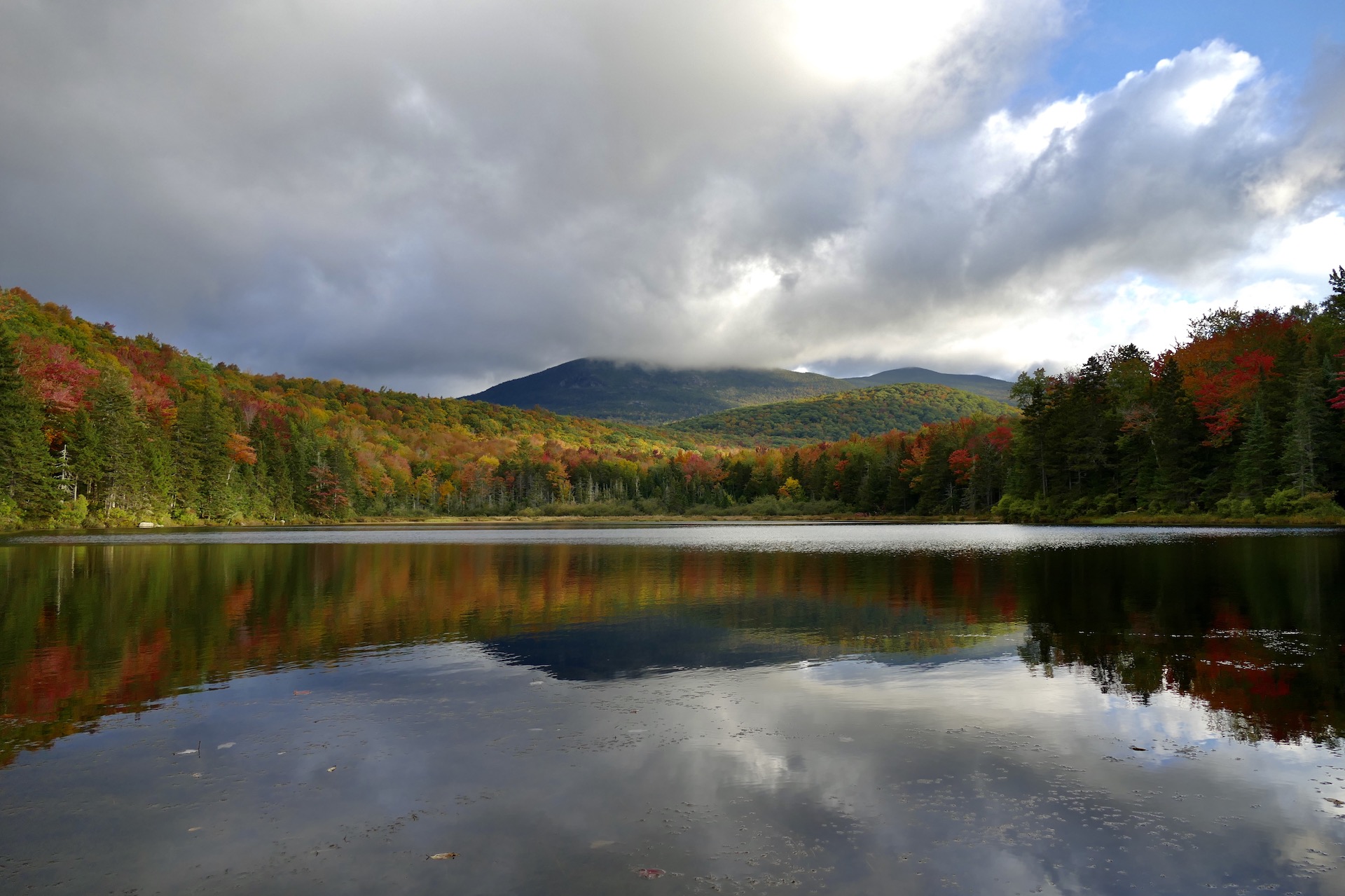
First, there were in September the few prematurely blushing white maples, or blazing red ones in water, that reminded us of October. Next, the red maple swamps blazed out in all their glory, attracting the eyes of all travellers and contrasting with other trees. And hard upon these came the ash trees and yellowing birches, and walnuts, and elms, and the sprout-land oaks, the last streaking the hillsides far off, often occupying more commanding positions than the maples. All these add their fires to those of the maples. But even yet the summer is unconquered. Now the red maple fires are gone out (very few exceptions), and the brightness of those accompanying fires is dulled, their leaves falling; but a general, though duller, fire, yellowish or red, growing more reddish, has seized the masses of the forest, and betrays the paucity of the evergreens, but mingled with it are the delicate tints of aspens, etc., and, beneath, of protected underwoods whose exposed specimens gave us such promise.
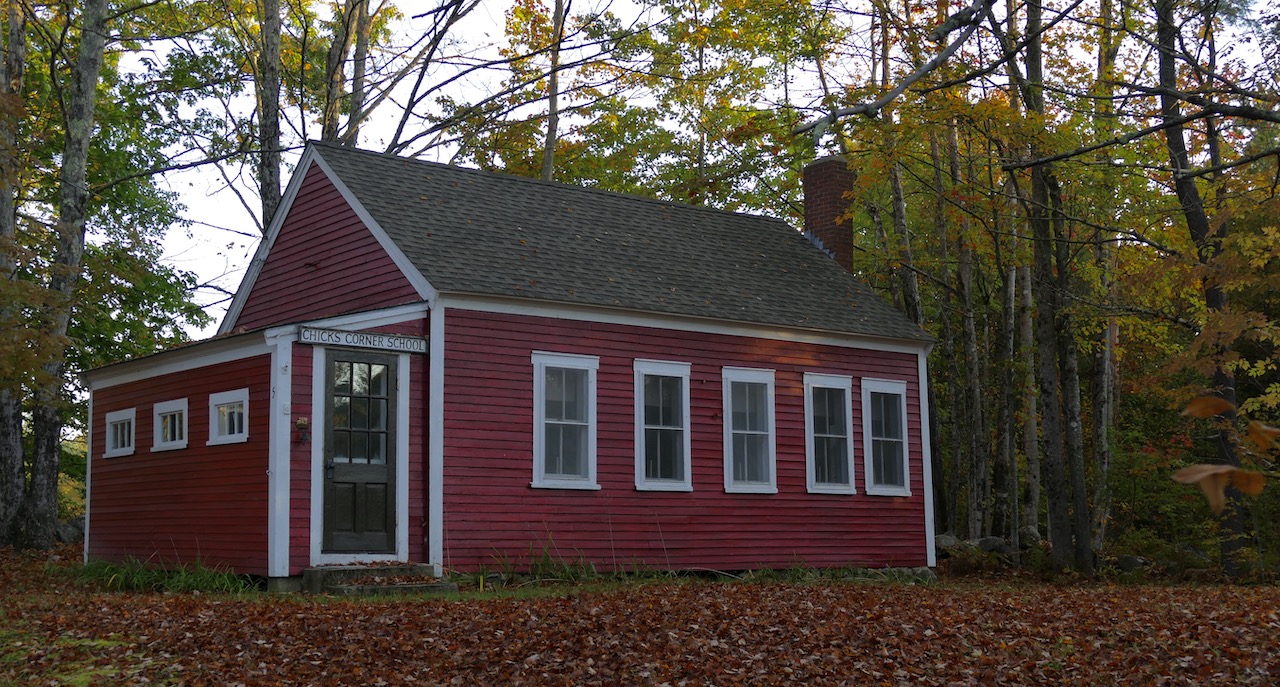
Each town should have a park, or rather a primitive forest, of five hundred or a thousand acres, where a stick should never be cut for fuel, a common possession forever, for instruction and recreation. We hear of cow-commons and ministerial lots, but we want men-commons and lay lots, inalienable forever. Let us keep the New World new, preserve all the advantages of living in the country. There is meadow and pasture and wood-lot for the town’s poor. Why not a forest and huckleberry-field for the town’s rich? All Walden Wood might have been preserved for our park forever, with Walden in its midst, and the Easterbrooks Country, an unoccupied area of some four square miles, might have been our huckleberry-field. If any owners of these tracts are about to leave the world without natural heirs who need or deserve to be specially remembered, they will do wisely to abandon their possession to all, and not will them to some individual who perhaps has enough already. As some give to Harvard College or another institution, why might not another give a forest or huckleberry-field to Concord? A town is an institution which deserves to be remembered. We boast of our system of education, but why stop at schoolmasters and schoolhouses? We are all schoolmasters, and our schoolhouse is the universe. To attend chiefly to the desk or schoolhouse while we neglect the scenery in which it is placed is absurd. If we do not look out we shall find our fine schoolhouse standing in a cow-yard at last.
To White Pond. Another, the tenth or eleventh of these memorable days. I am glad to reach the shade of Hubbard’s Grove. The coolness is refreshing. It is indeed a golden autumn….Let your capital be simplicity and contentment…..
I take all these walks to every point of the compass, and it is always harvest-time with me. I am always gathering my crop from these woods and fields and waters, and no man is in my way or interferes with me. My crop is not their crop. To-day I see them gathering in their beans and corn, and they are a spectacle to me, but are soon out of my sight. I am not gathering beans and corn. Do they think there are no fruits but such as these? I am a reaper; I am not a gleaner. I go reaping, cutting as broad a swath as I can, and bundling and stacking up and carrying it off from field to field, and no man knows nor cares. My crop is not sorghum nor Davis seedlings. There are other crops than these, whose seed is not distributed by the Patent Office. I go abroad over the land each day to get the best I can find, and that is never carted off even to the last day of November, and I do not go as a gleaner.
I am struck by the superfluity of light in the atmosphere in the autumn––as if the earth absorbed none––& out of this profusion of dazzling light came the autumnal tints. Can it because there is less vapor?
The autumnal tints have not been so bright as usual this year, but why it is hard to say. The summer has been peculiarly cool, as well as wet, and it may be that the leaves have been the more inclined to decay before coming to maturity. Also, apparently, many leaves are killed by the mere frosts before ripening, the locust for instance, —and the frost came early this year, —just as melons and squashes before they have turned yellow; i.e., the leaves fall while they are still green.
How agreeable to the eye at this season the color of new fallen leaves….sere & crisp. When freshly fallen with their forms & their veins still distinct they have a certain life in them still….
You make a great noise now walking in the woods on account of the dry leaves—especially chestnut & oak—& maples that cover the ground….
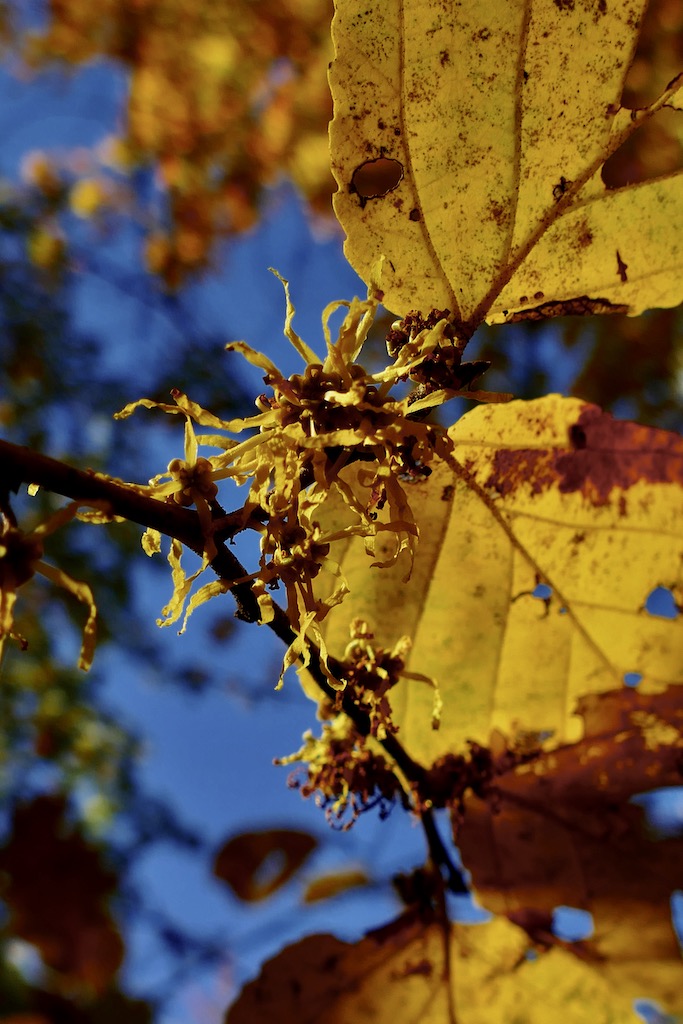
The witch hazel here is in full blossom on this magical hill-side—while its broad yellow leaves are falling—some bushes are completely bare of leaves, and leather-colored they strew the ground. It is an extremely interesting plant—October & November’s child—and yet reminds me of the very earliest spring— Its blossoms smell like the spring—like the willow catkins—by their color as well as fragrance they belong to the saffron dawn of the year.— Suggesting amid all these signs of Autumn—falling leaves & frost—that the life of nature—by which she eternally flourishes, is untouched.
It stands here in the shadow on the side of the hill while the sunlight from over the top of the hill lights up its topmost sprays & yellow blossoms. Its spray so jointed and angular is not to be mistaken for any other. I lie on my back with joy under its boughs. While its leaves fall—its blossoms spring. The autumn then is indeed a spring. All the year is a spring. I see two blackbirds high over head going south, but I am going north in my thoughts with these hazel blossoms.
It has come to this, — that the lover of art is one, and the lover of nature another, though true art is but the expression of our love of nature. It is monstrous when one cares but little about trees but much about Corinthian columns, and yet this is exceedingly common.
When I turn round halfway up Fair Haven Hill, by the orchard wall, and look northwest, I am surprised for the thousandth time by the beauty of the landscape and sit down to behold it in my leisure…..
I do not know how to entertain those who cannot take long walks….I give up my forenoon to them, and get along pretty well, the very elasticity of the air and promise of the day abetting me, but they are as heavy as dumplings by mid-afternoon. If they can’t walk, why won’t they take an honest nap in the afternoon and let me go?
There is not now that profusion, and consequent confusion, of events which belongs to a summer walk. There are few flowers, birds, insects, or fruits now, and hence what does occur affects us as more simple and significant, as the cawing of a crow or the scream of a jay. The latter seems to scream more fitly and with more freedom through the vacancies occasioned by fallen maple leaves.












 allandibiase.com
You must be logged in to post a comment.