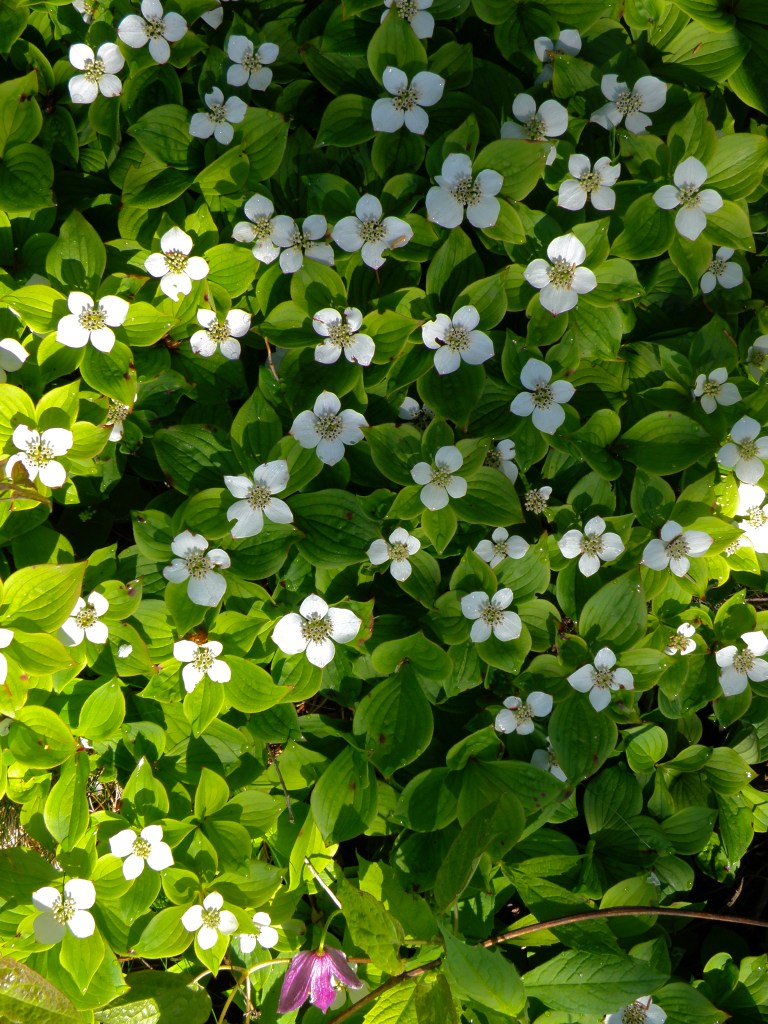
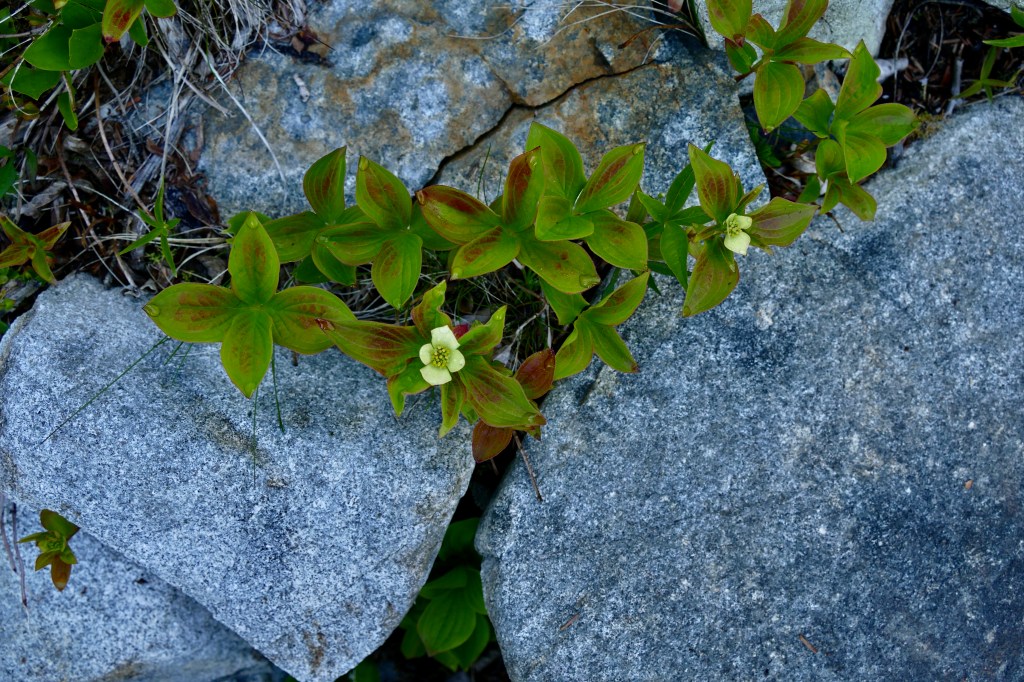
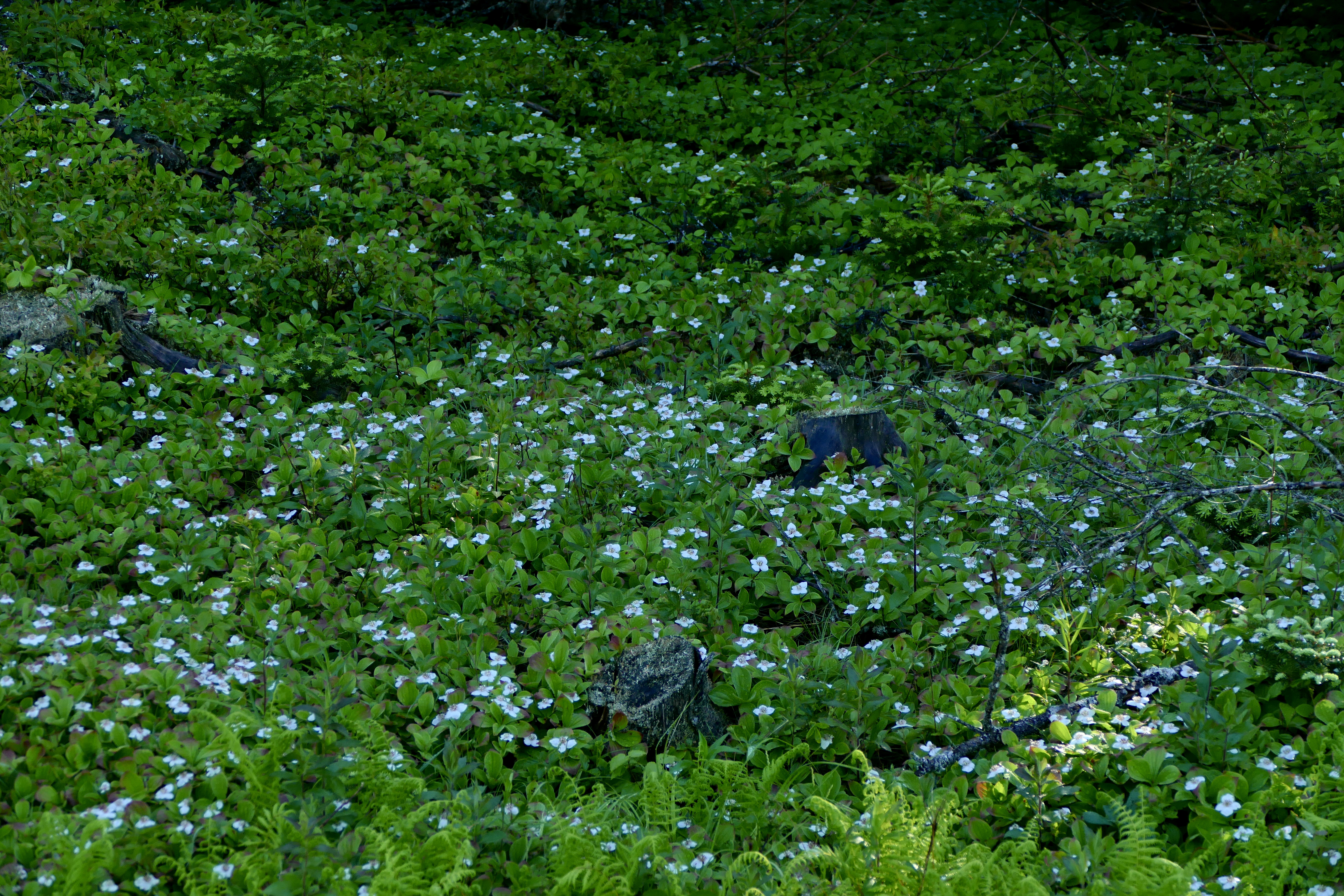
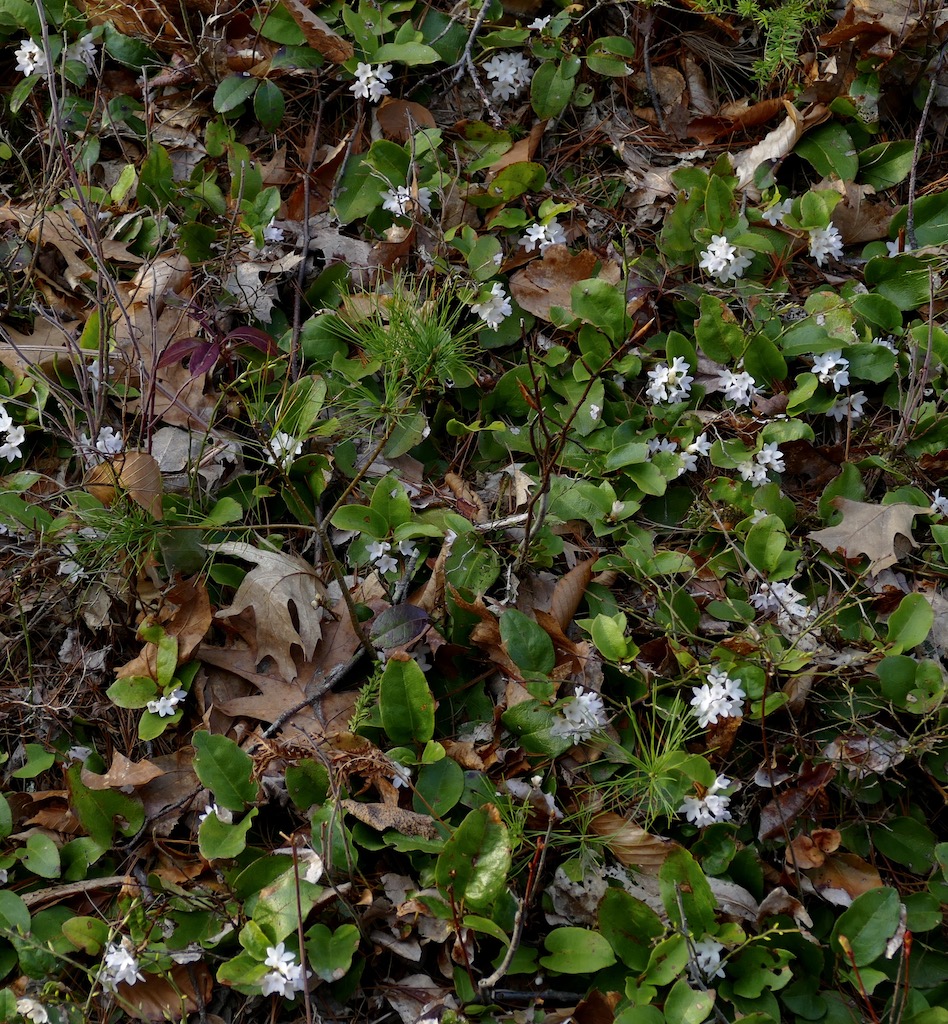
Cornus Canadensis just out. Probably the C.florida should be set down to-day, since it just begins to shed pollen and its involucre is more open. It is a fair but cool and windy day, a strong northwest wind, and the grass, to which the rain has given such a start, conspicuously waves, showing its lighter under side, and the buttercups toss in the wind. The pitch and white pines have grown from one to five inches.
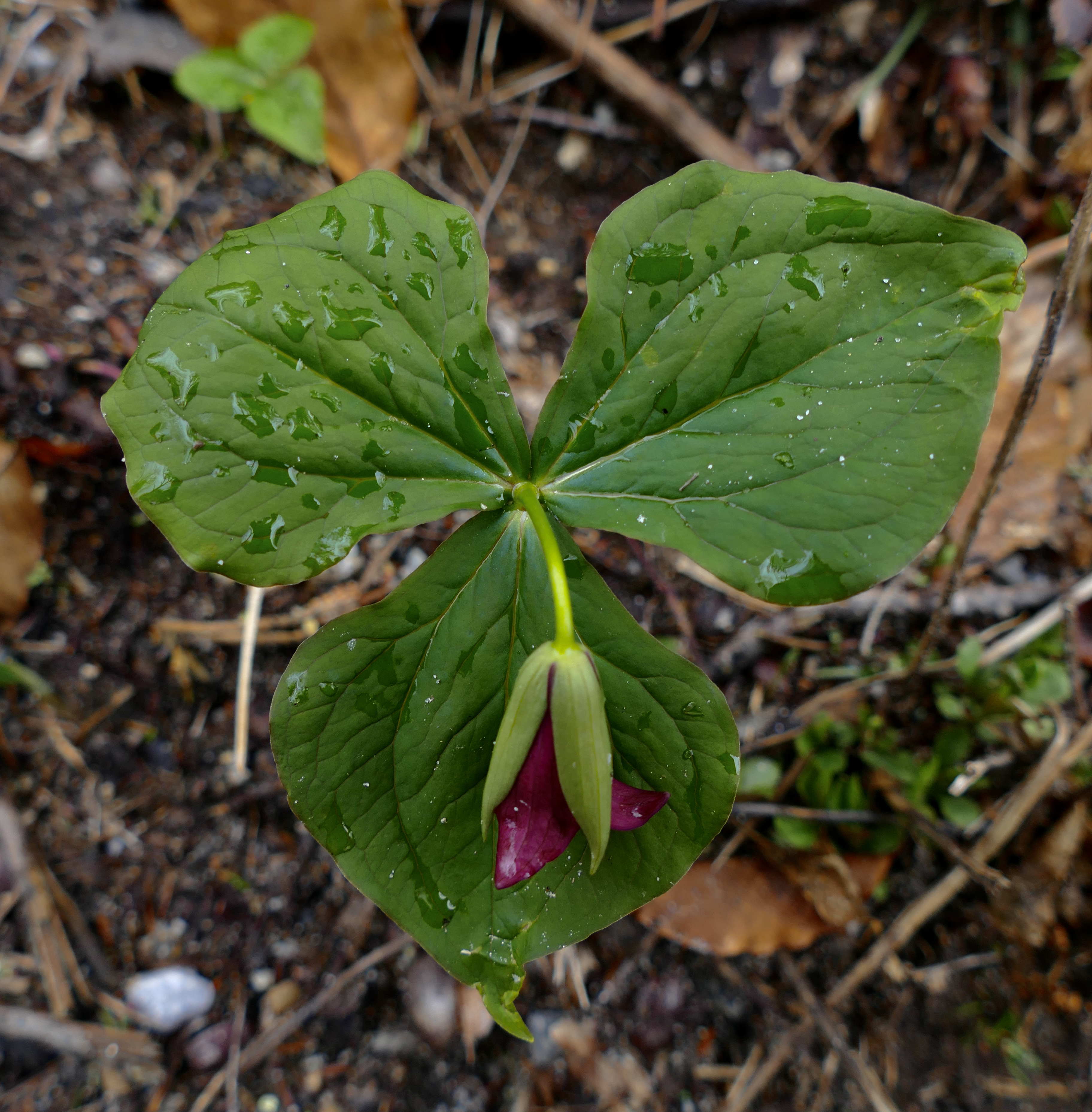
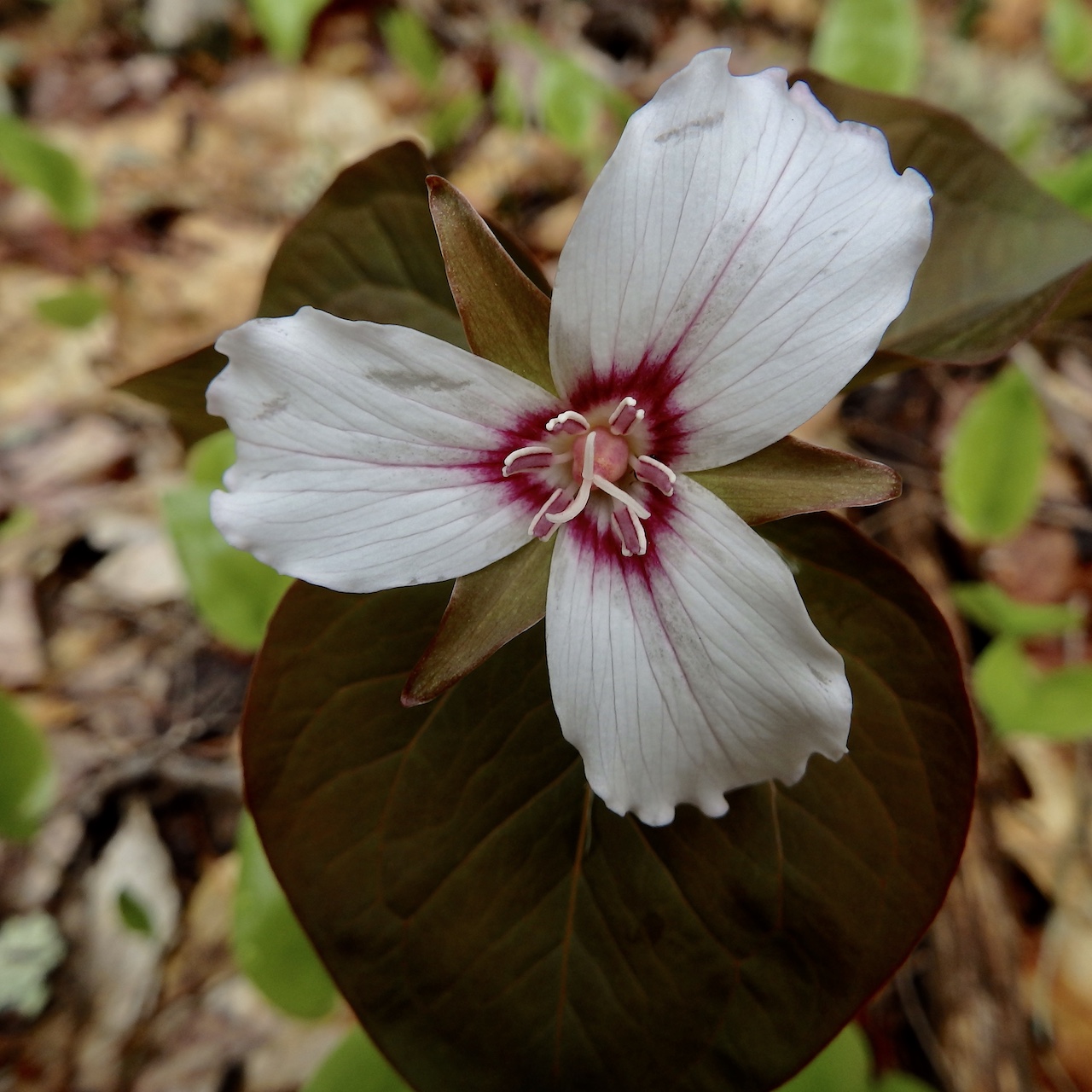
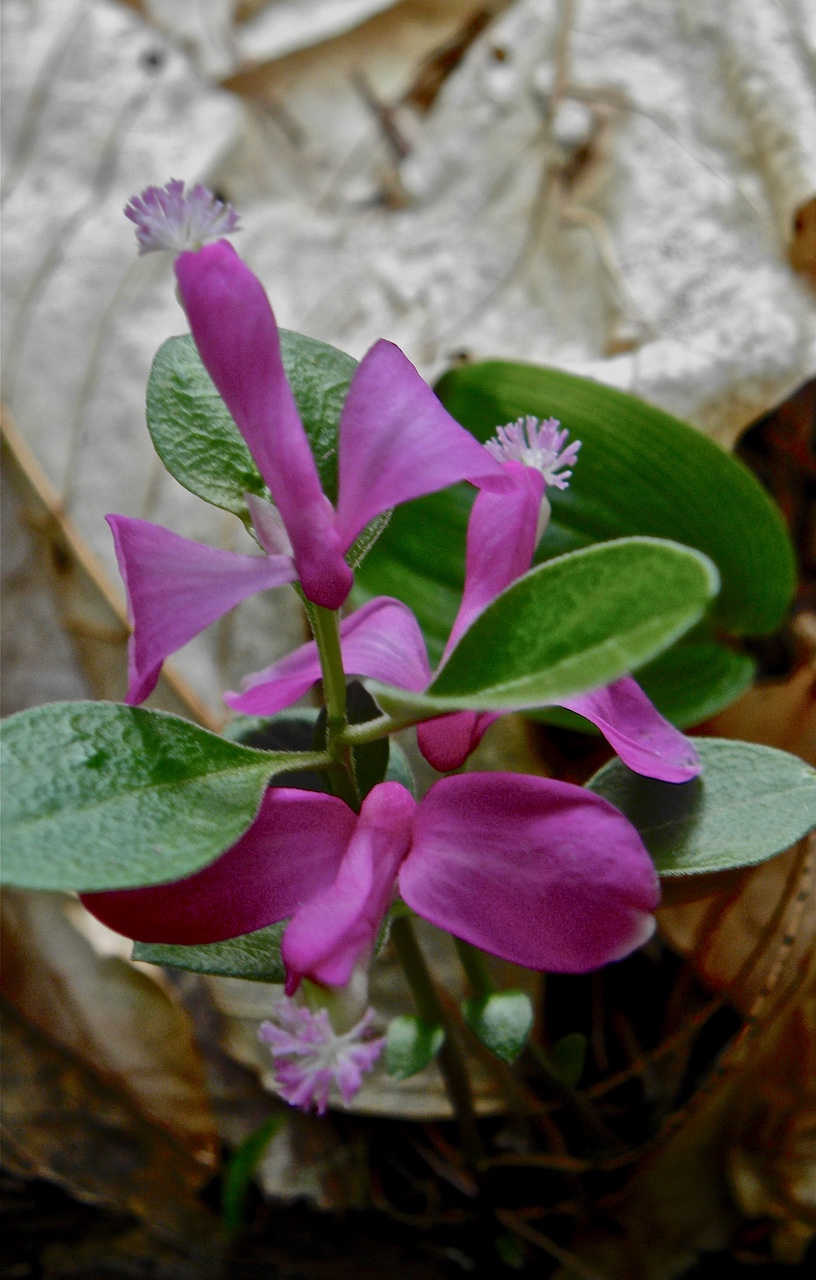
Found the arum triphyllum & the nodding trillium or wake Robin in Conant’s swamp. An ash also in bloom there—& the sassafras quite striking— Also the Fringed Polygala by Conantum wood.
The Rhodora in blossom—a delicate colored flower….
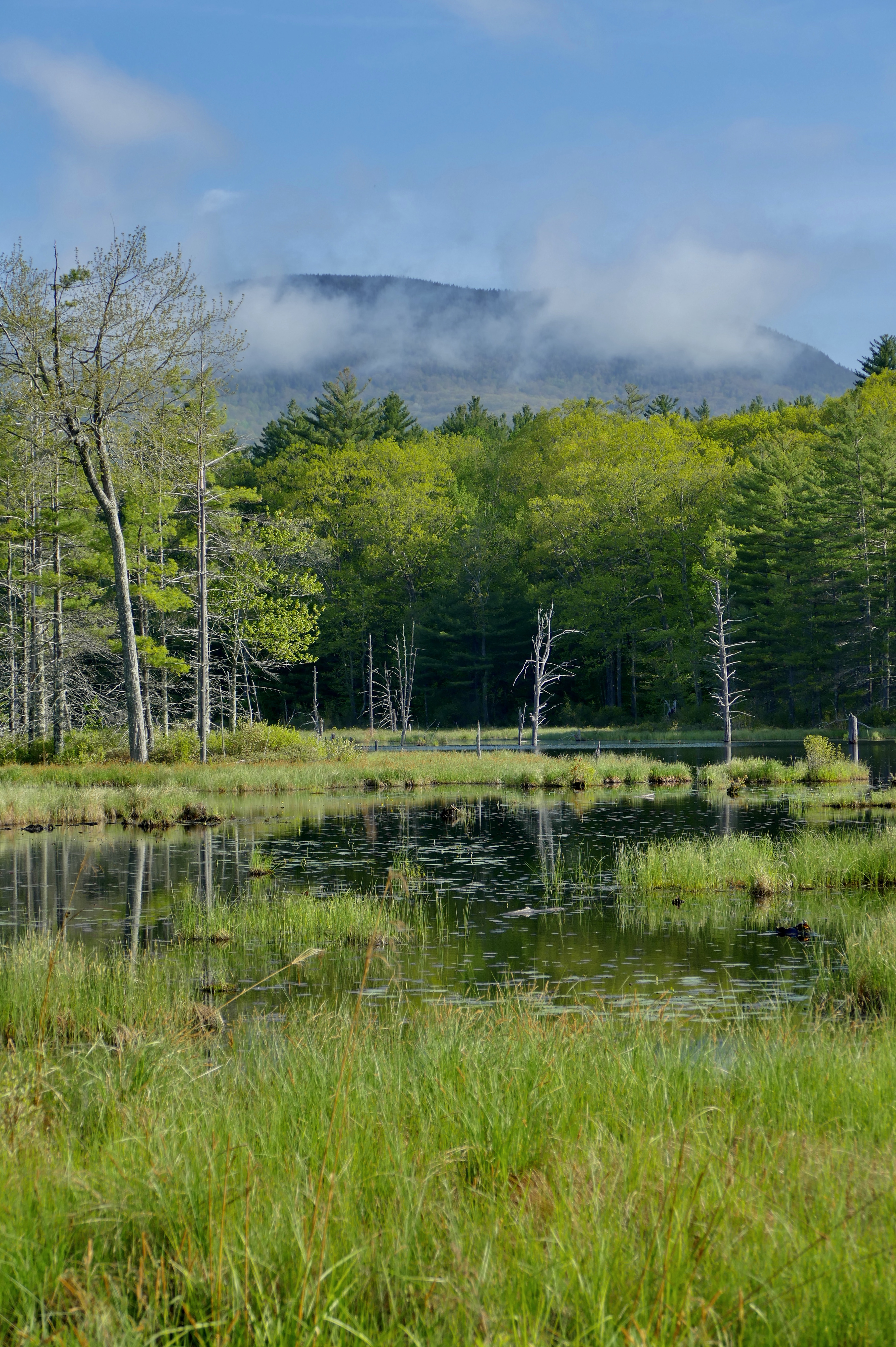
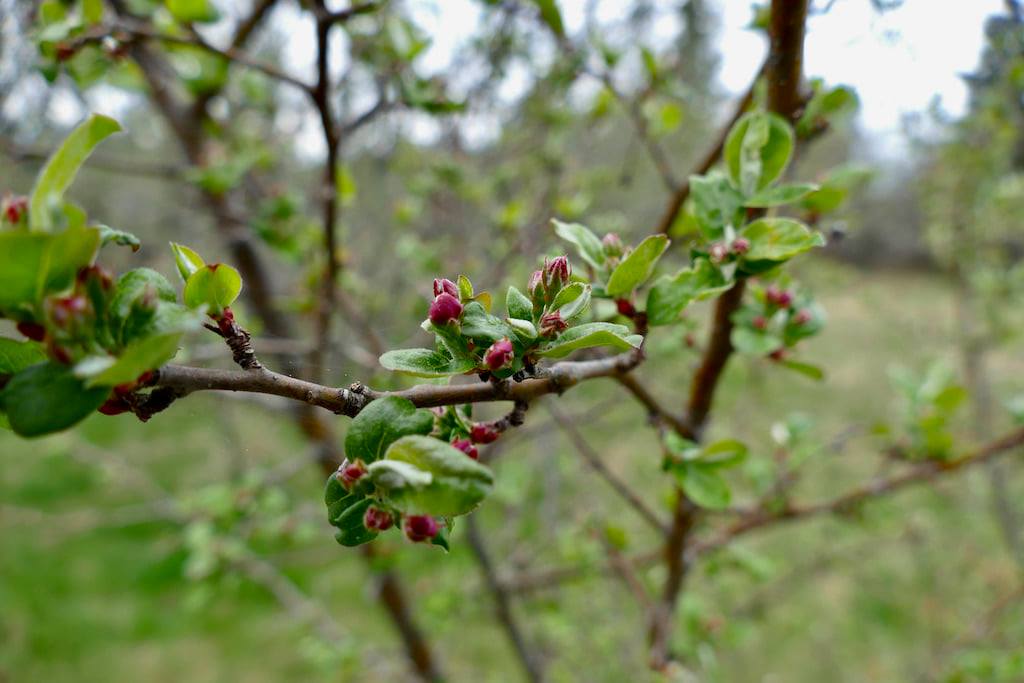
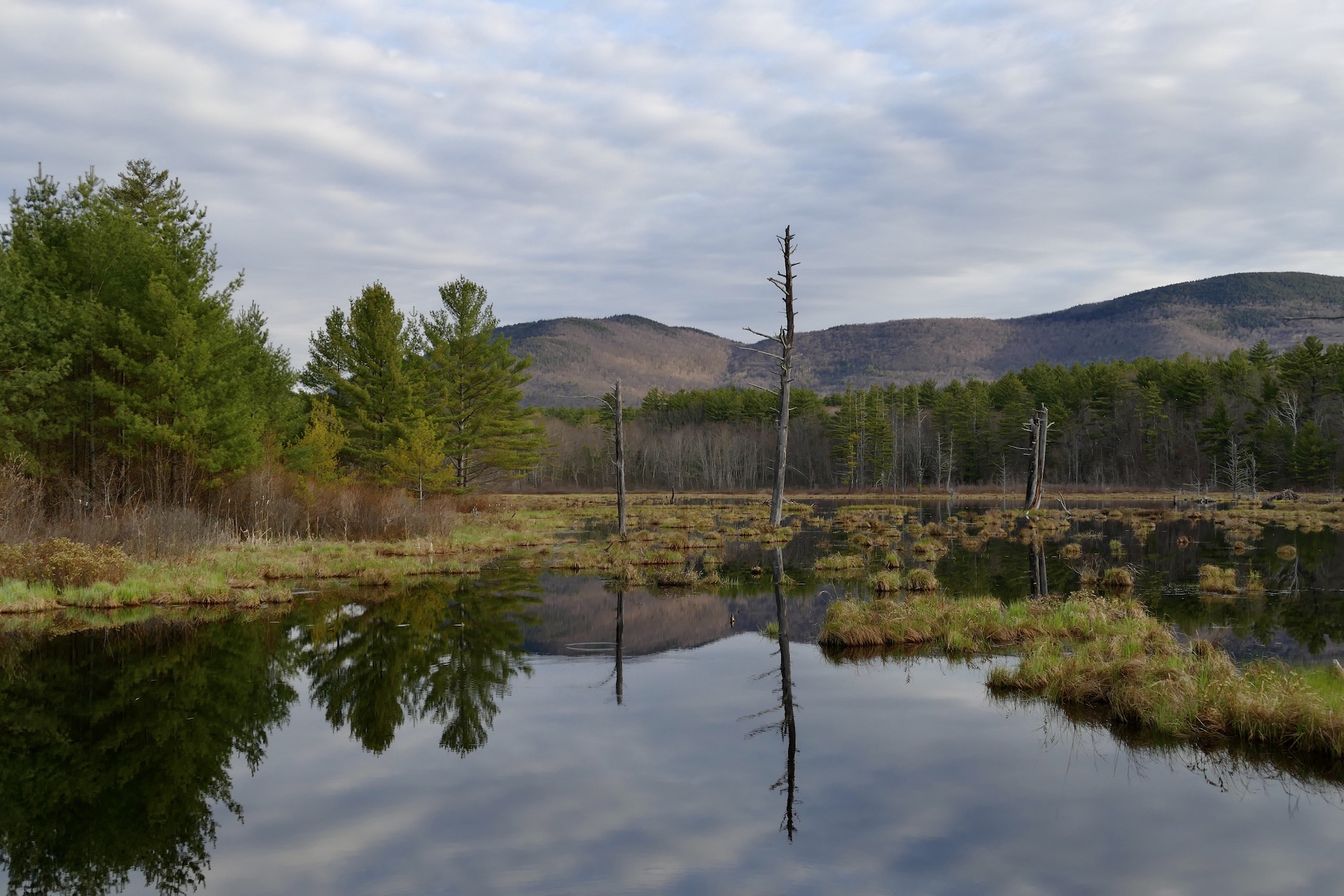
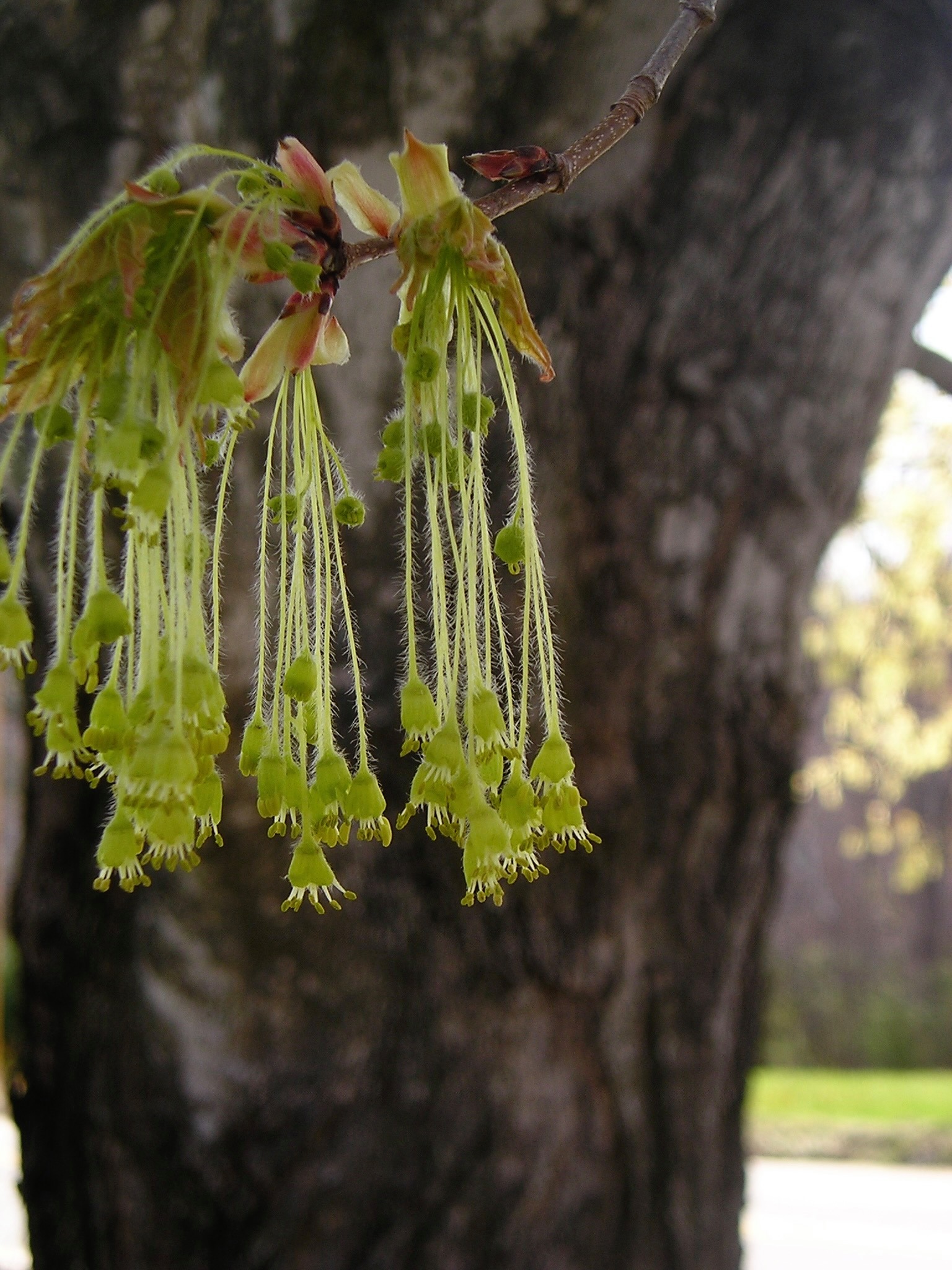
The landscape is most beautiful looking towards the sun (in the orchard on Fair Haven) at four. First, there is this green slope on which I sit, looking down between the rows of apple trees just being clothed with tender green, —sometimes underneath them to the sparkling water, or over through them, or seeing them against the sky. Secondly, the outline of this bank or hill is drawn against the water far below ; the river still high, a beautifully bright sheen on the water there, though it is elsewhere a dull slaty-blue color, a sober rippled surface. A fine sparkling shimmer in front, owing to the remarkable clearness of the atmosphere (clarified by the May storm?). Thirdly, on either side of the wood beyond the river are patches of bright, tender, yellowish, velvety green grass in meadows and on hillsides. It is like a short furred mantle now and bright as if it had the sun on it. Those great fields of green affect me as did those early green blades by the Corner Spring, —like a fire flaming up from the earth. The earth proves itself well alive even in the skin. No scurf on it, only a browner color on the barren tops of hills. Fourthly, the forest, the dark-green pines, wonderfully distinct, near and erect, with their distinct dark stems, spiring tops, regularly disposed branches, and silvery light on their needles. They seem to wear an aspect as much fresher and livelier as the other trees, ––though their growth can hardly be perceptible yet, —as if they had been washed by the rains and the air. They are now being invested with the light, sunny, yellowish-green of the deciduous trees. This tender foliage, putting so much light and life into the landscape, is the remarkable feature at this date. The week when the deciduous trees are generally and conspicuously expanding their leaves. The various tints of gray oaks and yellowish-green birches and aspens and hickories, and the red or scarlet tops where maple keys are formed (the blossoms are now over), —these last the high color (rosaceous?) in the bouquet. And fifthly, I detect a great stretch of high-backed, mostly bare, grassy pasture country between this and the Nashua, spotted with pines and forests, which I had formerly taken for forest uninterrupted. And finally, sixthly, Wachusett rising in the background, slightly veiled in bluish mist. — toward which all these seem to slope gradually upward, — and those grassy hillsides in the foreground, seen but as patches of bare grassy ground on a spur of that distant mountain.
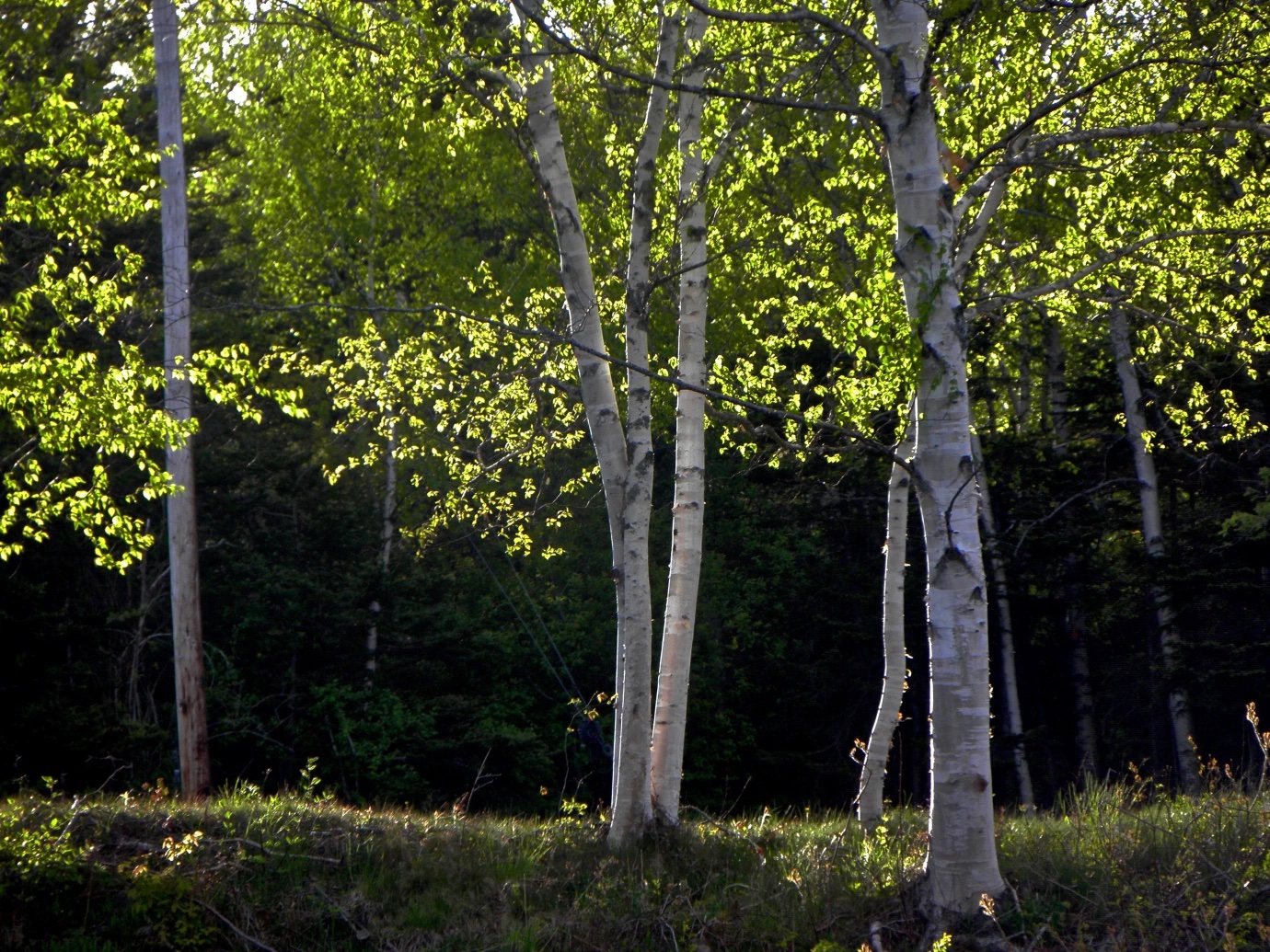
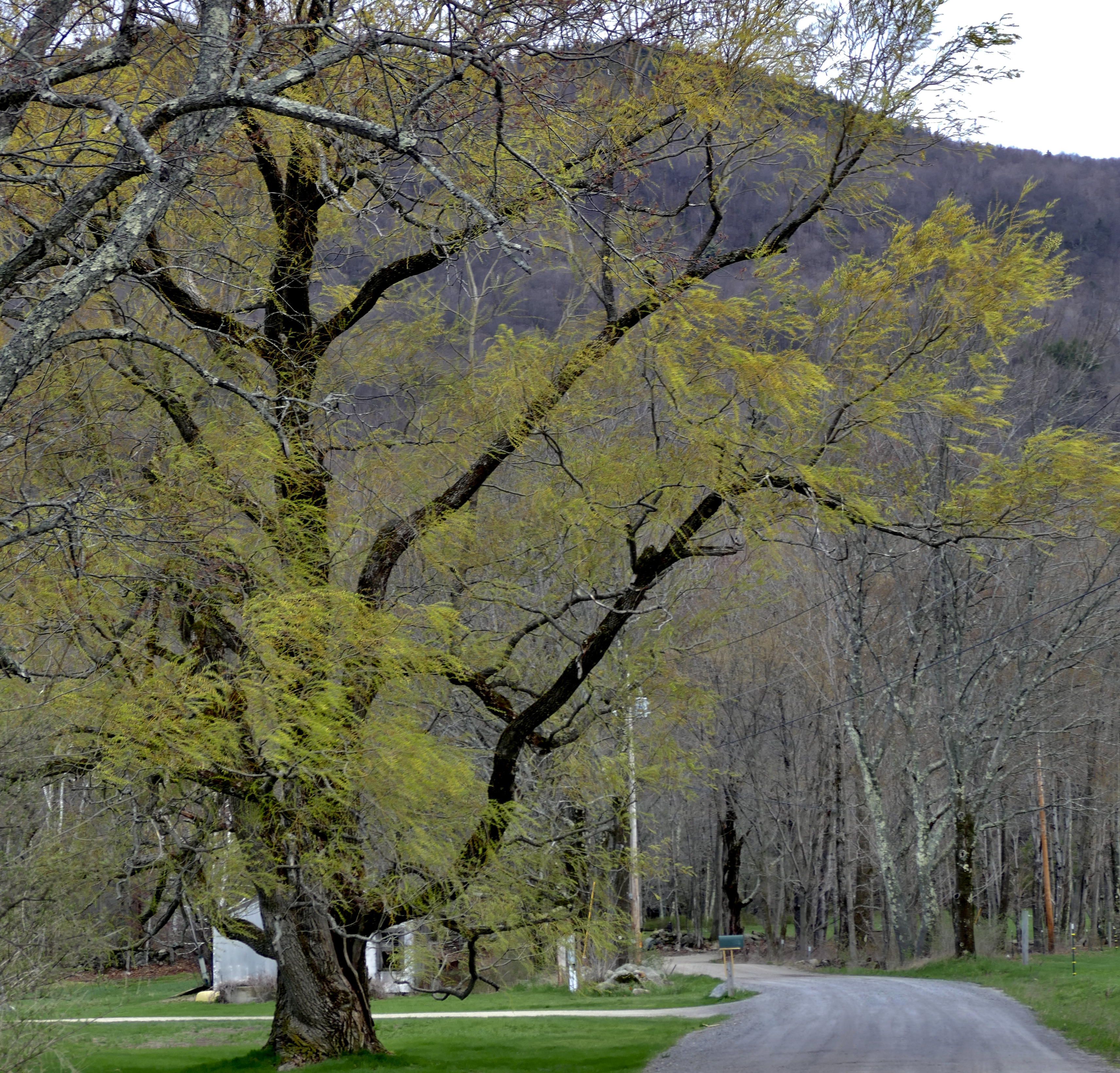
The sun on the young foliage of birches, alders, etc., on the opposite side of the pond has an enchanting effect. The sunshine has a double effect. The new leaves abet it, so fresh and tender, not apprehending their insect foes. Now the sun has come out after the May storm, how bright, how full of freshness and tender promise and fragrance is the new world! The woods putting forth w leaves; it is a memorable season. So hopeful! These young leaves have the beauty of flowers….here is life in these fresh and varied colors, life in the motion of the wind and the waves; all make it a flowing, washing day. It is a good day to saunter….Do I smell the young birch leaves at a distance? Most trees are beautiful when leafing out, but especially the birch. After a storm at this season, the sun comes out and lights up the tender expanding leaves, and all nature is full of light and fragrance, and the birds sing without ceasing, and the earth is a fairyland. The birch leaves are so small that you see the landscape through the tree, and they are like silvery and green spangles in the sun, fluttering about the tree.
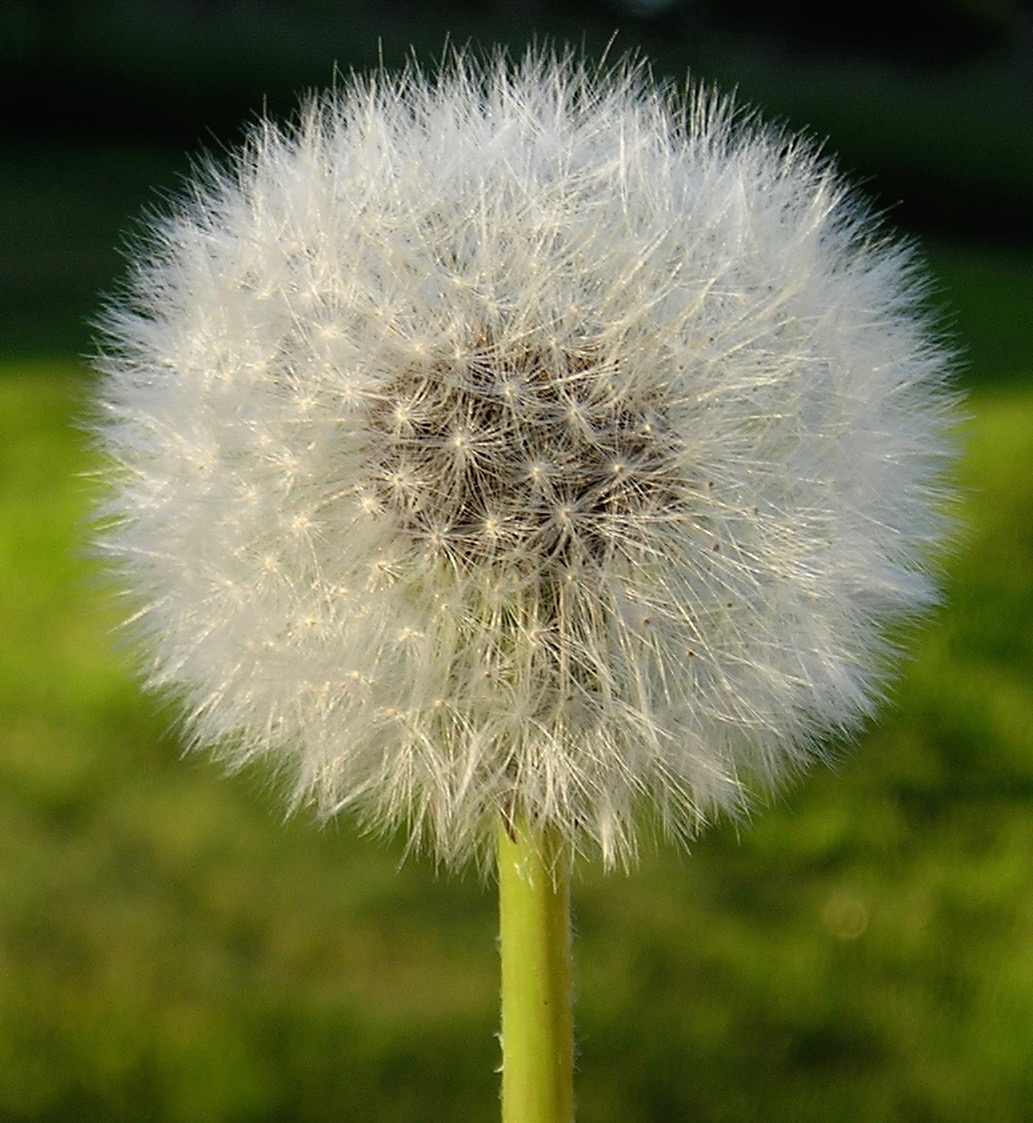
I was ready to say that I had seen no more beautiful flower than the dandelion. That has the vernal scent. How many flowers have no peculiar, but only this simple vernal, fragrance ?
I looked again on the forest from this hill, which view may contrast with that of last Sunday. The mist produced by the leafing of the deciduous trees has greatly thickened now and lost much of its reddishness in the lighter green of expanding leaves, has become a brownish or yellowish green, except where it has attained distinctness in the light-green foliage of the birch, the earliest distinct foliage visible in extensive great masses at a great distance, the aspen not being common. The pines and other evergreens are now fast being merged in a sea of foliage.
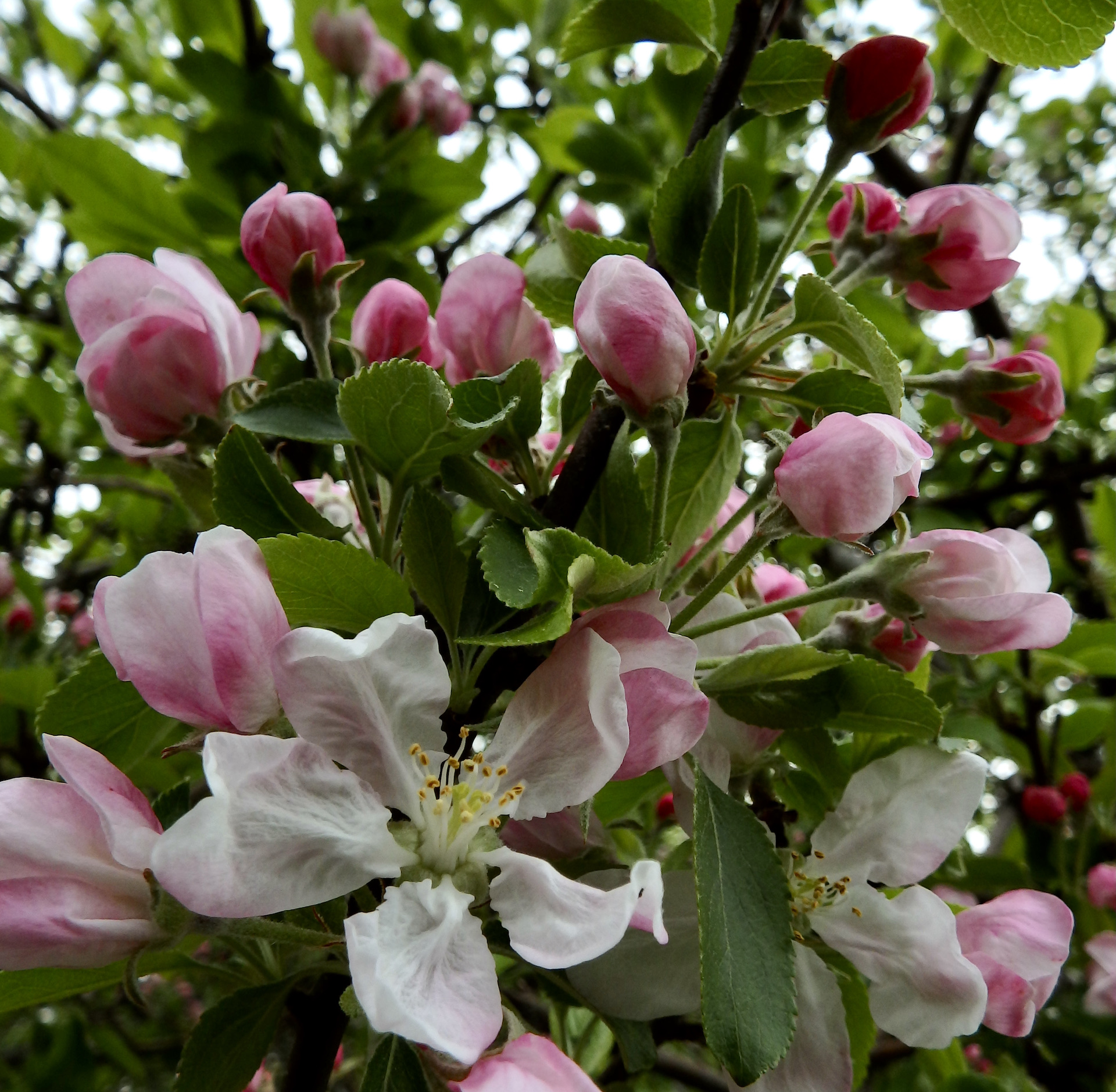
Some grass is seen to wave in the distance on the side of N. Barrett’s warm hill, showing the lighter under sides. That is a soft, soothing, June-like impression when the most forward grass is seen to wave and the sorrel looks reddish. The year has the down of youth on its cheek. This, too, is the era of the bobolink, now, when apple trees are ready to burst into bloom.
Now it is too late to retreat from the summer adventure. You have passed the Rubicon, and will spend your summer here.
He is the richest who has most use for nature as raw material of tropes and symbols with which to describe his life. If these gates of golden willows affect me, they correspond to the beauty and promise of some experience on which I am entering.
If I am overflowing with life, am rich in experience for which I lack expression, then nature will be my language full of poetry — all nature will fable, and every natural phenomenon be a myth. The man of science, who is not seeking for expression but for a fact to be expressed merely, studies nature as a dead language. I pray for such inward experience as will make nature significant.
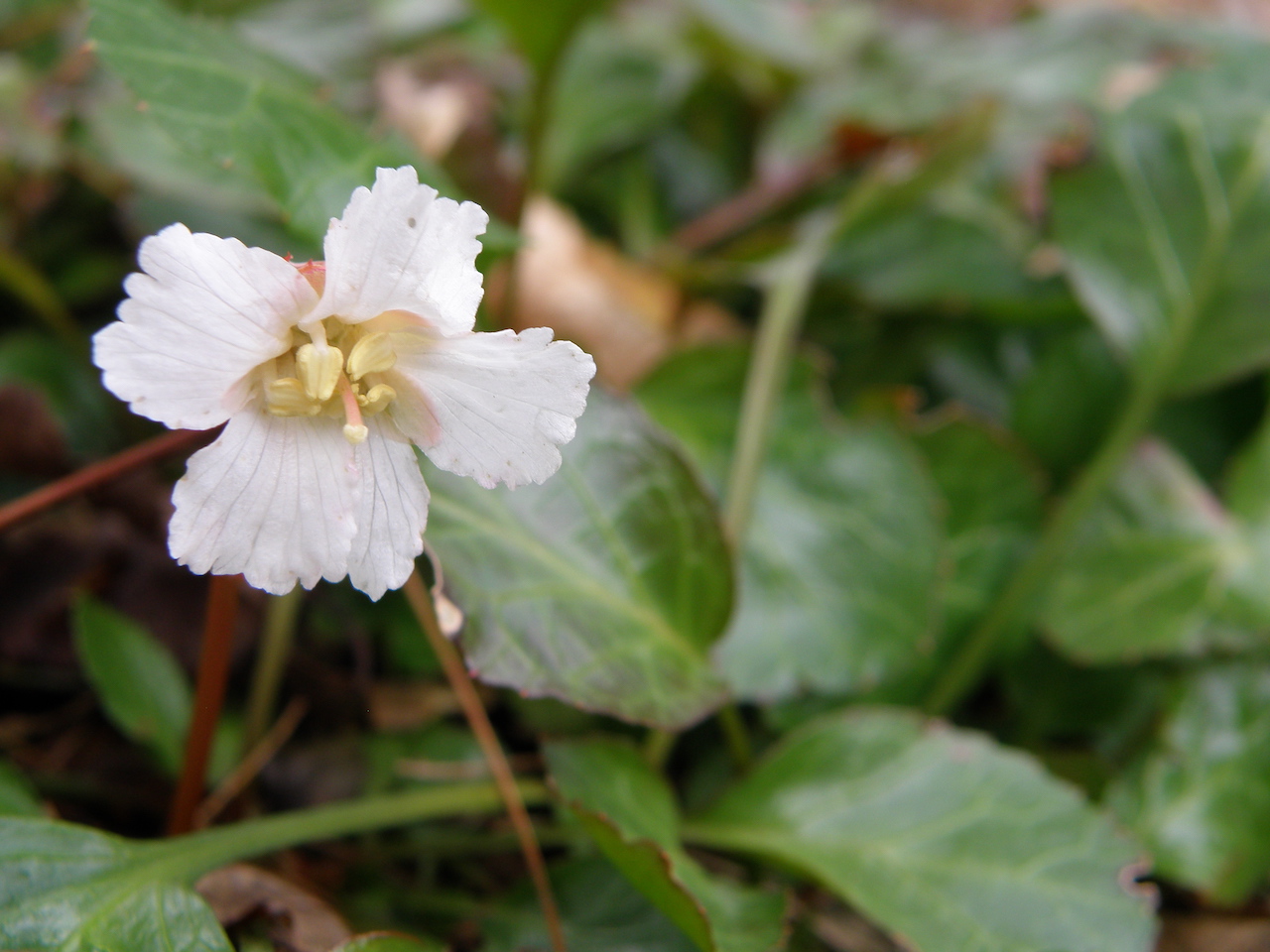
It is wonderful what a variety of flowers may grow within the range of a walk & how long some very conspicuous ones may escape the most diligent walker—If you do not chance to visit their localities the right week or fortnight––when their signs are out.
—To epigaea via Clamshell Hill. There is no such thing as pure objective observation. Your observation, to be interesting, i. e. to be significant, must be subjective. The sum of what the writer of whatever class has to report is simply some human experience, whether he be poet or philosopher or man of science. The man of most science is the man most alive, whose life is the greatest event. Senses that take cognizance of outward things merely are of no avail. It matters not where or how far you travel, —the farther commonly the worse, —but how much alive you are. If it is possible to conceive of an event outside to humanity, it is not of the slightest significance, though it were the explosion of a planet. Every important worker will report what life there is in him. It makes no odds into what seeming deserts the poet is born. Though all his neighbors pronounce it a Sahara, it will be a paradise to him; for the desert which we see is the result of the barrenness of our experience. No mere willful activity whatever, whether in writing verses or collecting statistics, will produce true poetry or science. If you are really a sick man, it is indeed to be regretted, for you cannot accomplish so much as if you were well. All that a man has to say or do that can possibly concern mankind, is in some shape or other to tell the story of his love, ––to sing; and if he is fortunate and keeps alive, he will be forever in love. This alone is to be alive to the extremities. It is a pity that this divine creature should ever suffer from cold feet; a still greater pity that the coldness so often reaches to his heart. I look over the report of the doings of a scientific association and am surprised that there is so little life to be reported; I am put off with a parcel of dry technical terms. Anything living is easily and naturally expressed in popular language. I cannot help suspecting that the life of these learned professors has been almost as inhuman and wooden as a rain-gauge or self-registering magnetic machine. They communicate no fact which rises to the temperature of blood-heat. It doesn’t all amount to one rhyme.
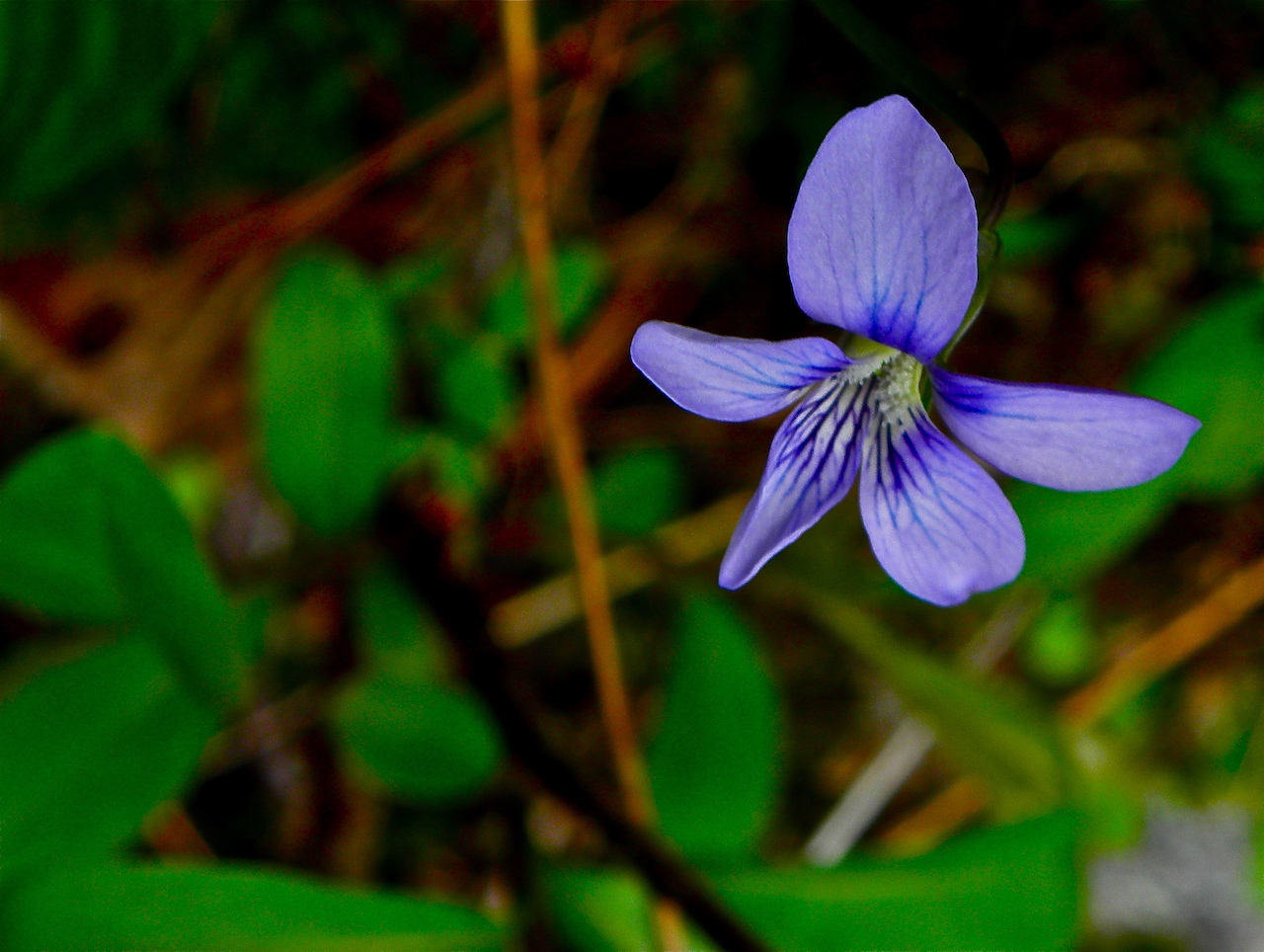
Crossing that first Conantum field, I perceive a peculiar fragrance in the air (not the meadow fragrance), like that of vernal flowers or of expanding buds. The ground is covered with the mouse-ear in full bloom, and it may be that in part. It is a temperate southwest breeze, and this is a scent as of willows (flowers and leafets), bluets, violets, shad-bush, mouse-ear, etc., combined; or perhaps the last chiefly; at any rate it is very perceptible. The air is more genial, laden with the fragrance of spring flowers.
I, sailing in the spring ocean, getting in from my winter voyage, begin to smell the land. Such a scent perceived by a mariner would be very exciting. I not only smell the land breeze, but I perceive in it the fragrance of spring flowers. I draw near to the land; I begin to lie down and stretch myself on it. After my winter voyage I begin to smell the land.
Looking from the Cliff, now, about 6 a. m., the landscape is as if seen in a mirage, the Cliff being in shadow, and that in the fresh and dewy sunshine (not much dew yet). Cool sunlight. The landscape lies in a fresh morning light; the earth and water smell fresh and new; the water is marked by a few smooth streaks. The atmosphere suits the grayish-brown landscape, — the still ashy maple swamps and now nearly bare shrub oaks. The white pine, left here and there over the sprout-land, is never more beautiful than with the morning light ––the early sunlight and the dew ––on it. (Dew comes with grass? and for it?) Before the water is rippled and morning song of the birds is quenched.









 allandibiase.com
You must be logged in to post a comment.