We talk much about education, and yet none will assume the office of an educator. I never gave anyone the whole advantage of myself. I never afforded him the culture of my love. How can I talk of charity, who at last withhold the kindness which alone makes charity desirable? The poor want nothing less than me myself, and I shirk charity by giving rags and meat.
The cat-tail down puffs and swells in your hand like a mist, or the conjurer’s trick of filling a hat with feathers, for when you have rubbed off a but a thimbleful, and can close and conceal the wound completely, the expanded down fills your hand to overflowing. Apparently there is a spring to the fine elastic threads which compose the down, which, after having been so long closely packed, on being the least relieved at the base, spring open apace into the form of parachutes to convey the seed afar. Where birds or the winds or ice have assaulted them, this has spread like an eruption. Again, when I rub off the down of its spike with my thumb, I am surprised at the sensation of warmth it imparts to my hand, as it flushes over it magically, at the same time revealing a faint purplish-crimson tinge at the base of the down, as it rolls off and expands. It is a very pleasing experiment to try.
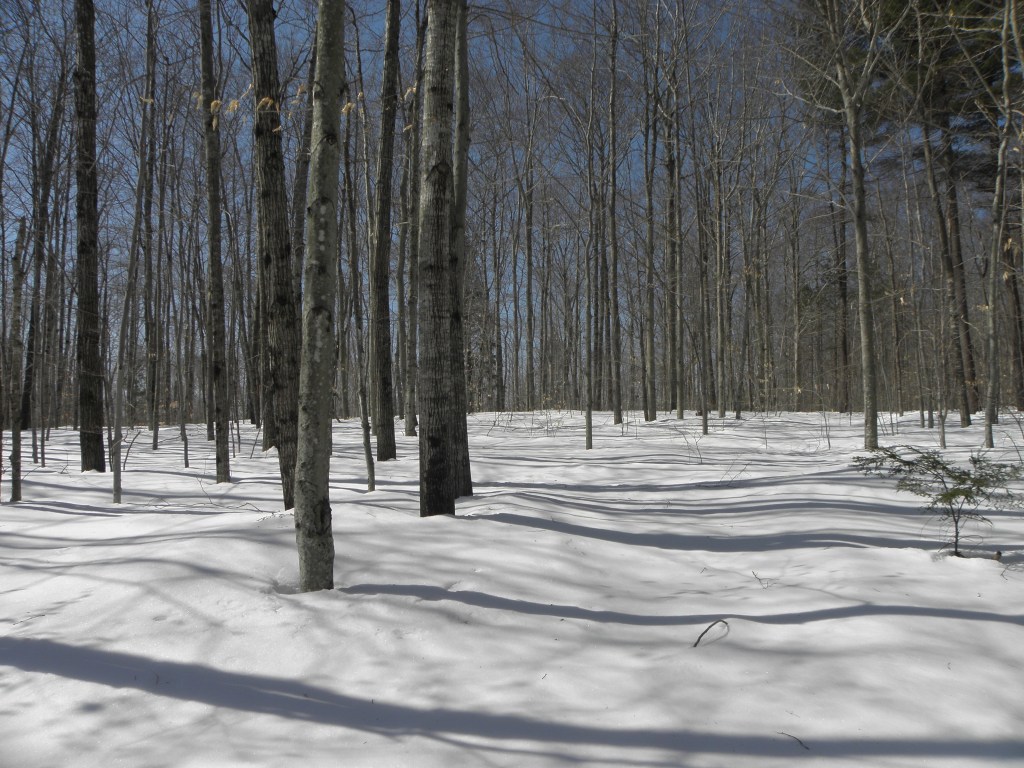
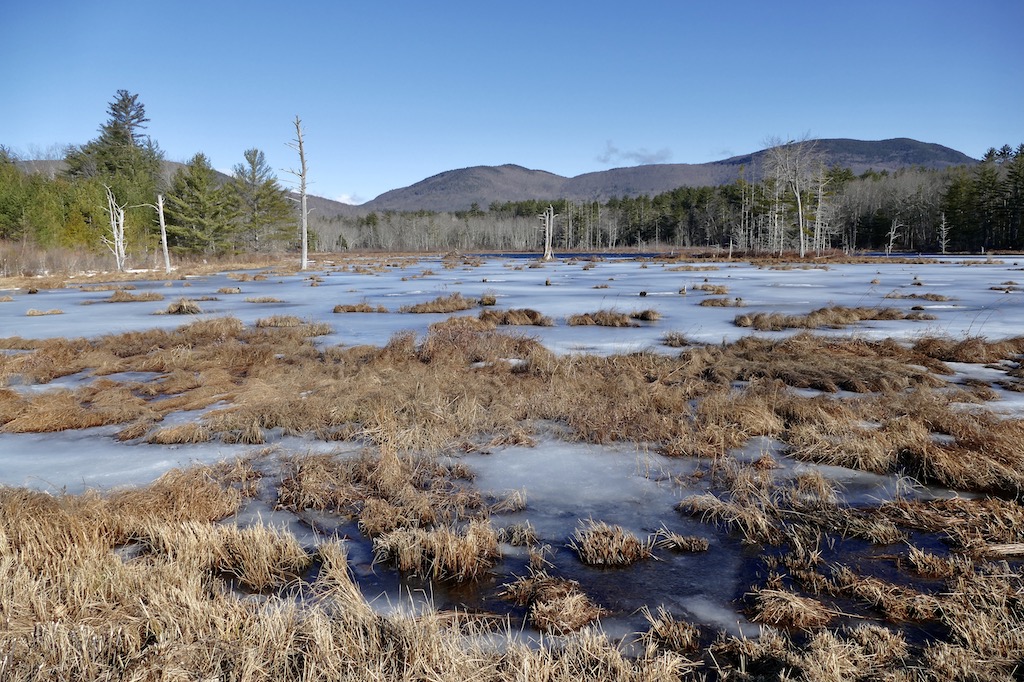
Some of the phenomena of an average March are increasing warmth, melting the snow and ice, and gradually the frost in the ground; cold and blustering weather, with high, commonly northwest winds for many days together; misty and other rains taking out frost, whitenings of snow, and winter often back again, both its cold and snow; bare ground and open waters, and more or less of a freshet; some calm and pleasant days reminding us of summer, with a blue haze or a thicker mist over the woods at last, in which perchance, we take off our coats a while, and sit without a fire; the ways getting settled, and some greenness appearing on south banks; April-like rains after the frost is chiefly out; ploughing and planting of peas, etc., just beginning, and the old leaves getting dry in the woods.
The peculiarity of to-day is that now first you perceive that dry, warm, summer-presaging scent from dry oak and other leaves, on the sides of hills and ledges. You smell the summer from afar. The warmth makes a man young again. There is also some dryness, almost dustiness, in the roads. The mountains are white with snow, and sure as the wind is northwest it is wintry; but now it is more westerly. The edges of the mountain snow melt into the sky. It is affecting to be put into communication with such distant objects by the power of vision, —actually to look into rich lands of promise. In this spring breeze, how full of life the silvery pines, probably the under sides of their leaves. Goose Pond is wholly open. Unexpectedly dry and crispy the grass is getting in warm places.
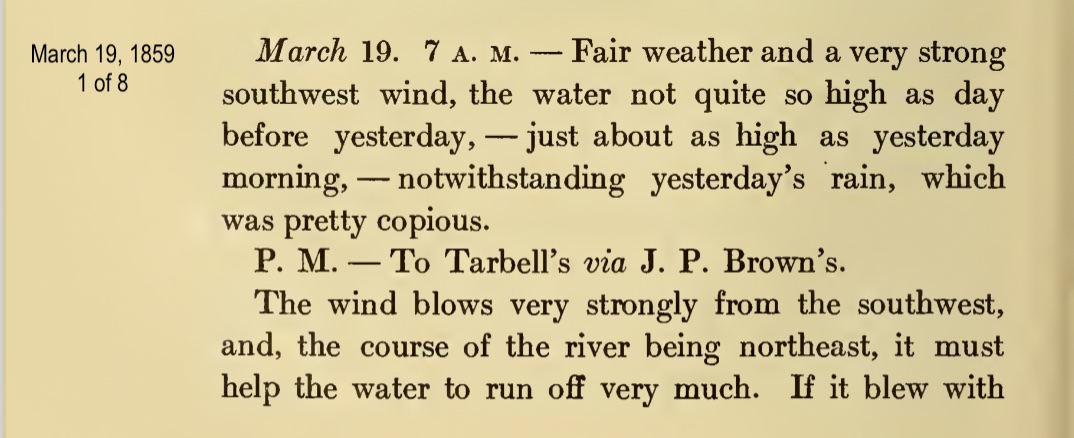
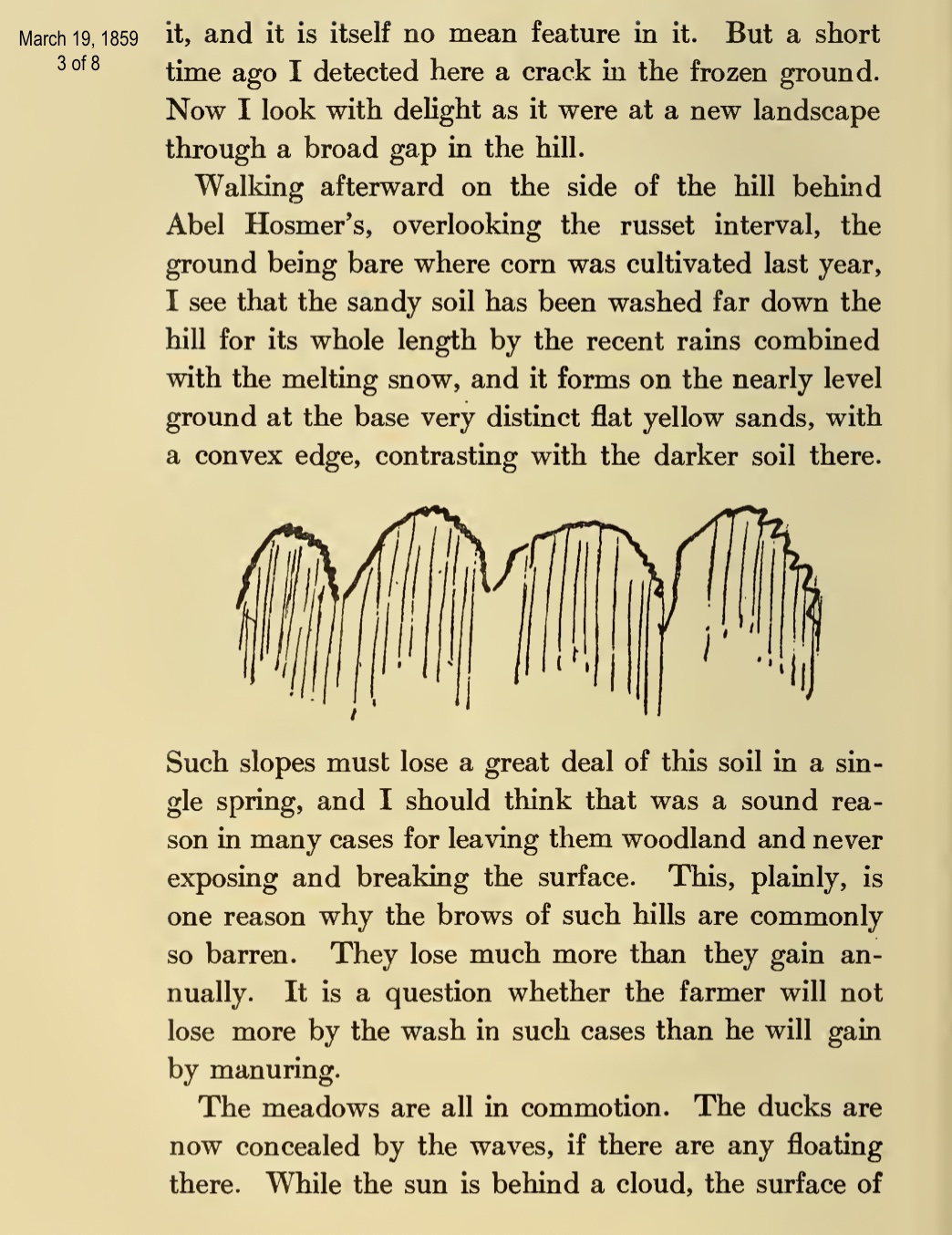
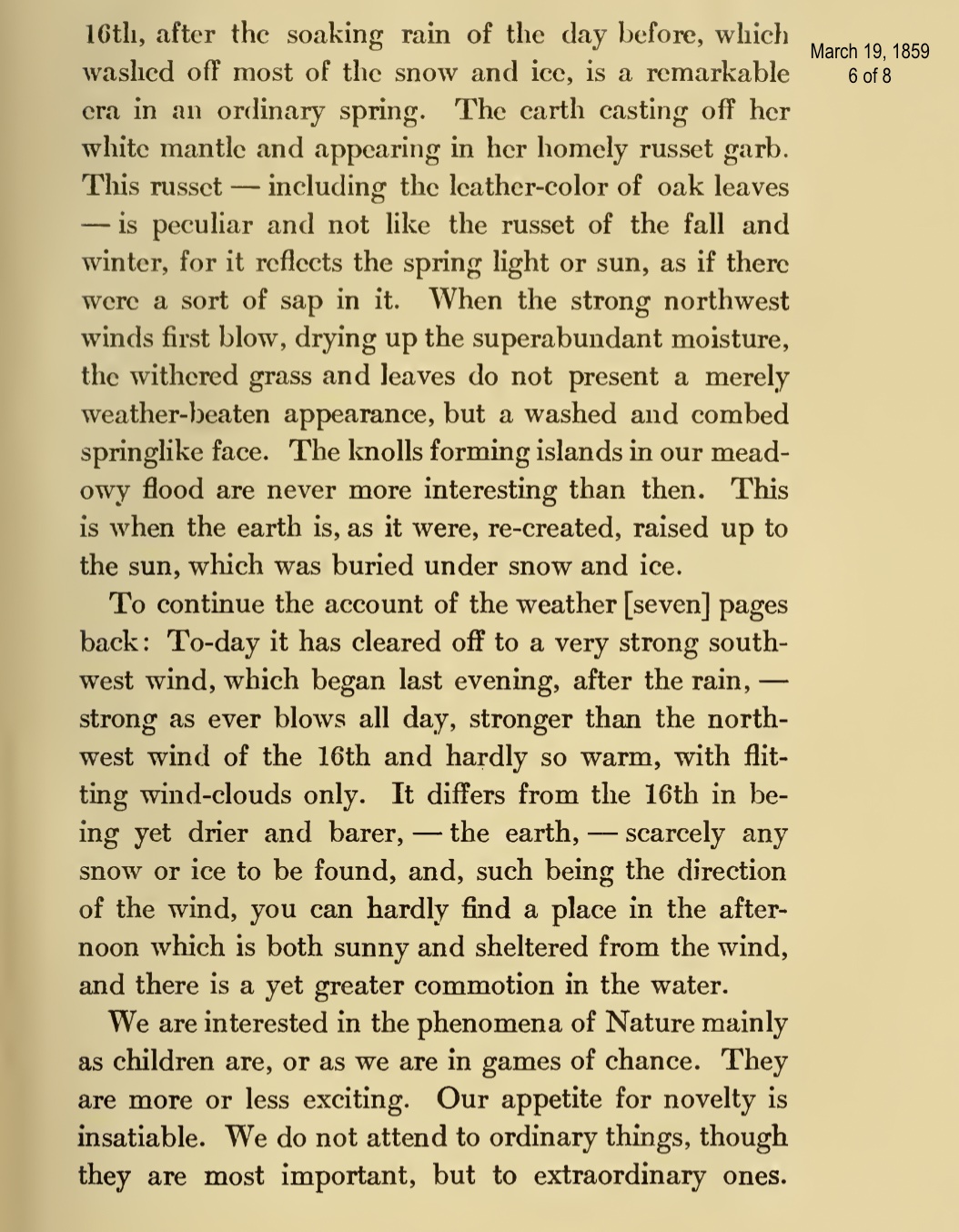
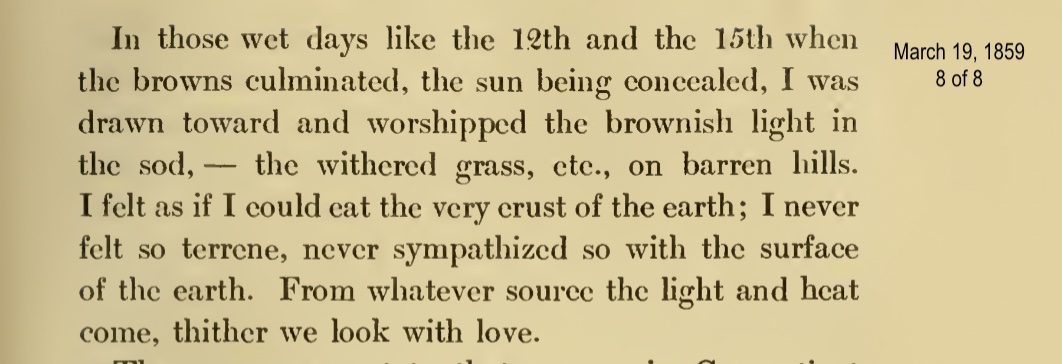
[Occasionally I think it’s interesting to see Thoreau’s entire entry for a particular day, not necessarily for the content, but to be able to see how his mind moved from observation to observation and what impressed itself upon him enough for him to note and write it down. A sustained and detailed entry in the Journal is an opportunity to simulate being there with him in time and place. Imagine writing this much by hand about your observations and activities, say, for today, March 19, 2021 and I think you’ll get a glimpse of his genius. Although it’s commonplace to wonder what he would have done with a camera or camcorder, that he did this with words is quite something else and in many ways much richer.]
Each new year is a surprise to us. We find we had virtually forgotten the note of each bird, and when we hear it again, it is remembered like a dream, reminding us of a previous state of existence. How happens it that the associations it awakens are always pleasing, never saddening, reminiscences of our sanest hours. The voice of nature is always encouraging.
When I get two thirds up the hill, I look round, and am for the hundredth time surprised by the landscape of the river valley and the horizon with its distant blue-scalloped rim…The wind blows strong but warm from west by north (so that I have to hold my paper tight while I write this), making the copses creak and roar, but the sharp tinkle of a song-sparrow is heard through it all.
But, ah! the needles of the pine, how they shine…Every third tree is lit with the most subdued but clear, ethereal light, as if it were the most delicate frost-work in a winter morning, reflecting no heat, but only light. And as they rock and wave in the strong wind, even a mile off, the light courses up and down them as over a field of grain…At sight of this my spirit is like a lit tree.
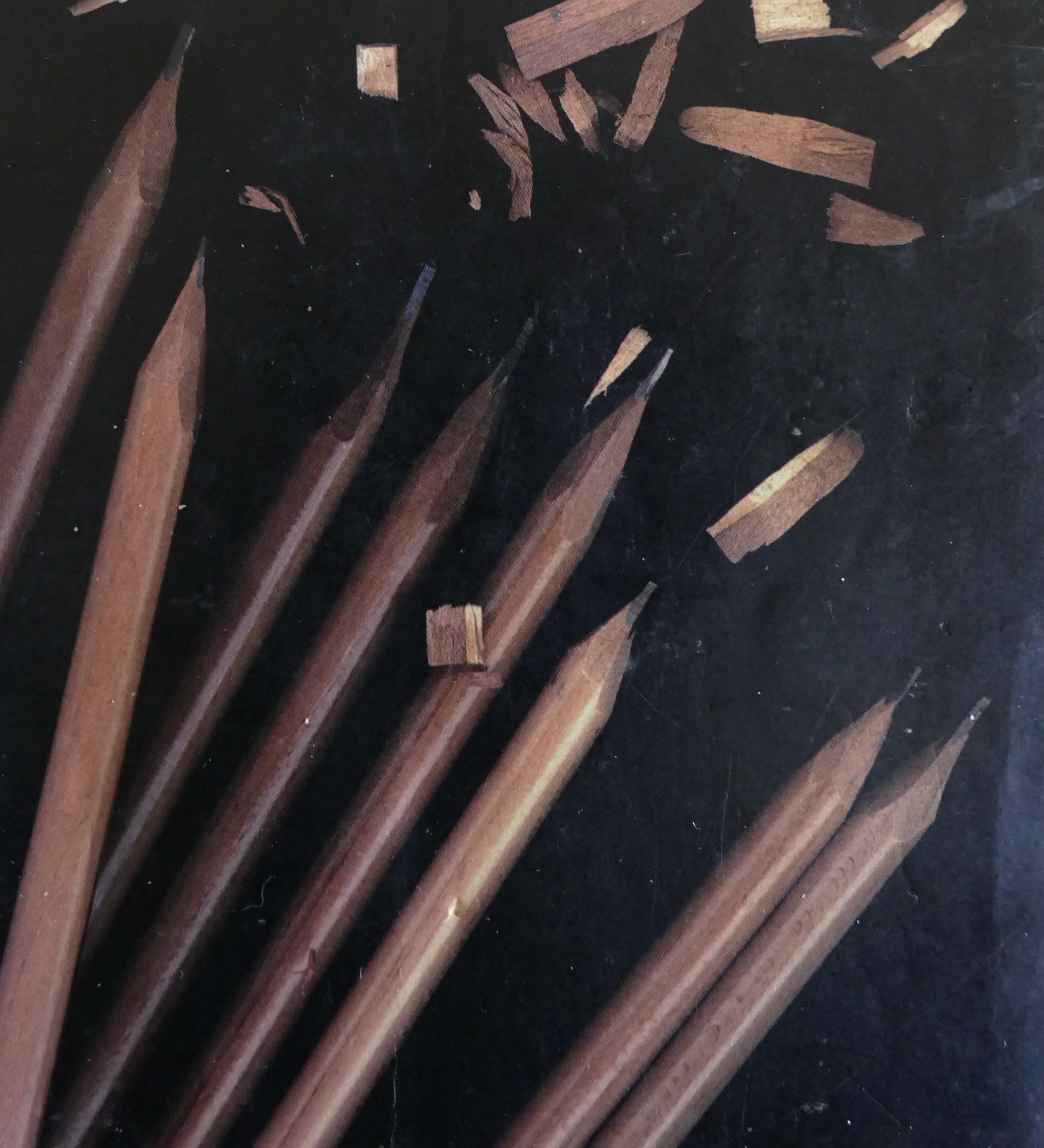
Thursday. I have been making pencils all day, and then at evening walked to see an old schoolmate who is going to help make the Welland Canal navigable for ships round Niagara. He cannot see any such motives and modes of living as I; professes not to look beyond the securing of certain “creature comforts.” And so we go silently different ways, with all serenity, I in the still moonlight through the village this fair evening to write these thoughts in my journal, and he, forsooth, to mature his schemes to ends as good, maybe, but different. So are we two made, while the same stars shine quietly over us. If I or he be wrong, Nature yet consents placidly. She bites her lip and smiles to see how her children will agree. So does the Welland Canal get built, and other conveniences, while I live. Well and good, I must confess. Fast sailing ships are hence not detained. What means this changing sky, that now I freeze and contract and go within myself to warm me, and now I say it is a south wind, and go all soft and warm along the way? I sometimes wonder if I do not breathe the south wind.
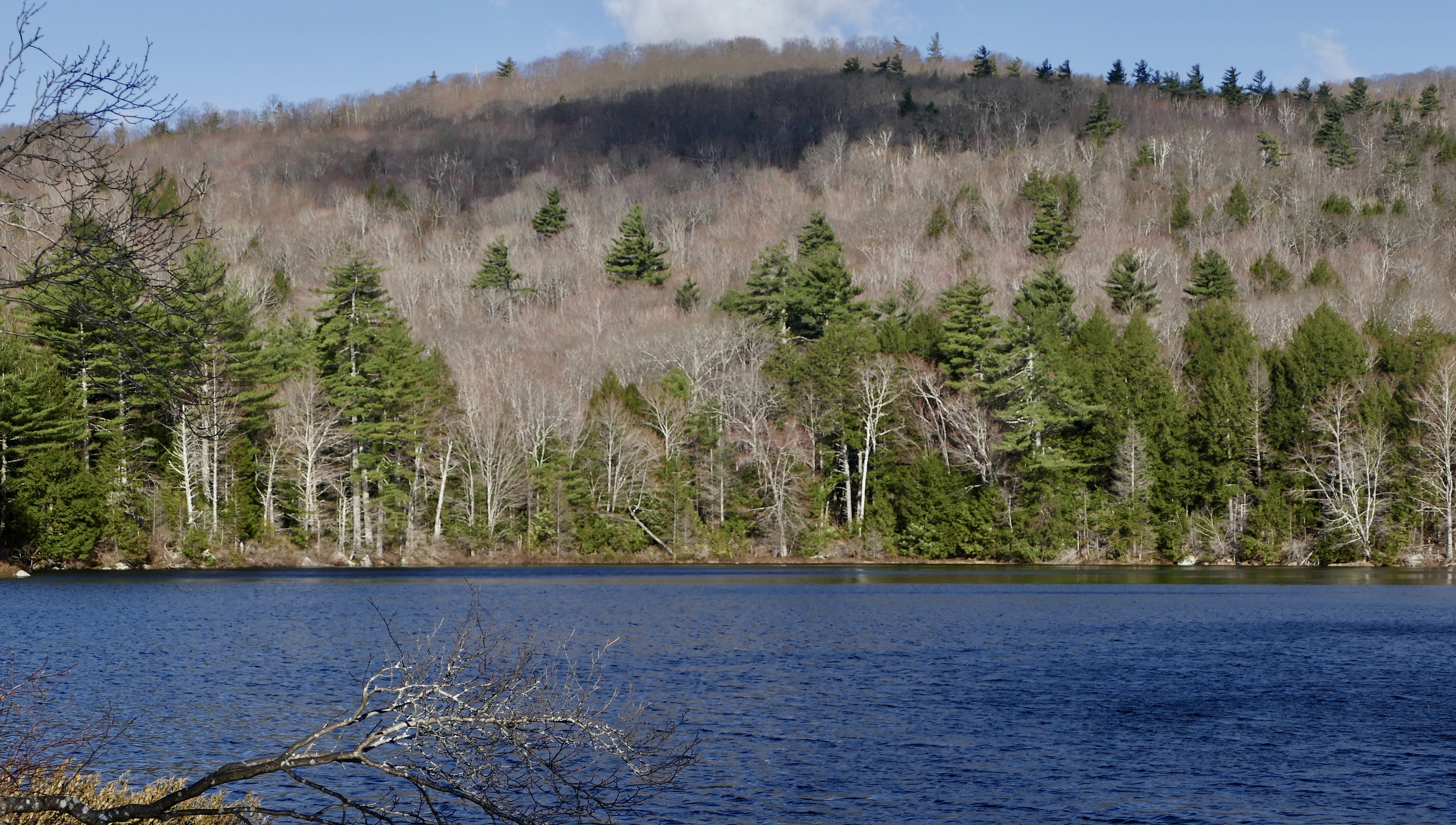
A new phase of the spring is presented, a new season has come…we no longer see dripping, saturated russet and brown banks through rain, hearing at intervals the alarm notes of early robins, banks which reflect a yellowish light, but we see the bare and now pale-brown and dry russet hills. The earth has cast off her white coat and come forth in her clean-washed, sober russet, early spring dress. As we look over the lively tossing blue waves for a mile or more eastward and westward our eyes fall on these shining russet hills and Ball’s Hill appears in this strong light at the verge of this undulating blue plain, like some glorious newly created island of the spring, just sprung up from the bottom in the midst of the blue waters. The fawn-colored oak leaves, with a few pines intermixed, thickly covering the hill, look not like a withered vegetation, but an ethereal kind, just expanded and peculiarly adapted to the season and the sky.
Look toward the sun, the water is yellow, as water in which the earth has just washed itself clean of its winter impurities; look from the sun and it is a beautiful dark blue ; but in each direction the crests of the waves are white, and you cannot sail or row over this watery wilderness without sharing the excitement of this element. Our sail draws so strongly that we cut through the great waves without feeling them. And all around, half a mile or a mile distant, looking over this blue foreground, I see the bare and peculiarly neat, clean-washed, and bright russet hills reflecting the bright light (after the storm of yesterday) from an infinite number of dry blades of withered grass. The russet surfaces have now, as it were, a combed look, — combed by the rain. And the leather-color of withered oak leaves covering Ball’s Hill, seen a mile or two off in the strong light, with a few pines intermixed, as if it were an island rising out of this blue sea in the horizon. This sight affects me as if it were visible at this season only. What with the clear air and the blue water and the sight of the pure dry withered leaves, that distant hill affects me as something altogether ethereal.
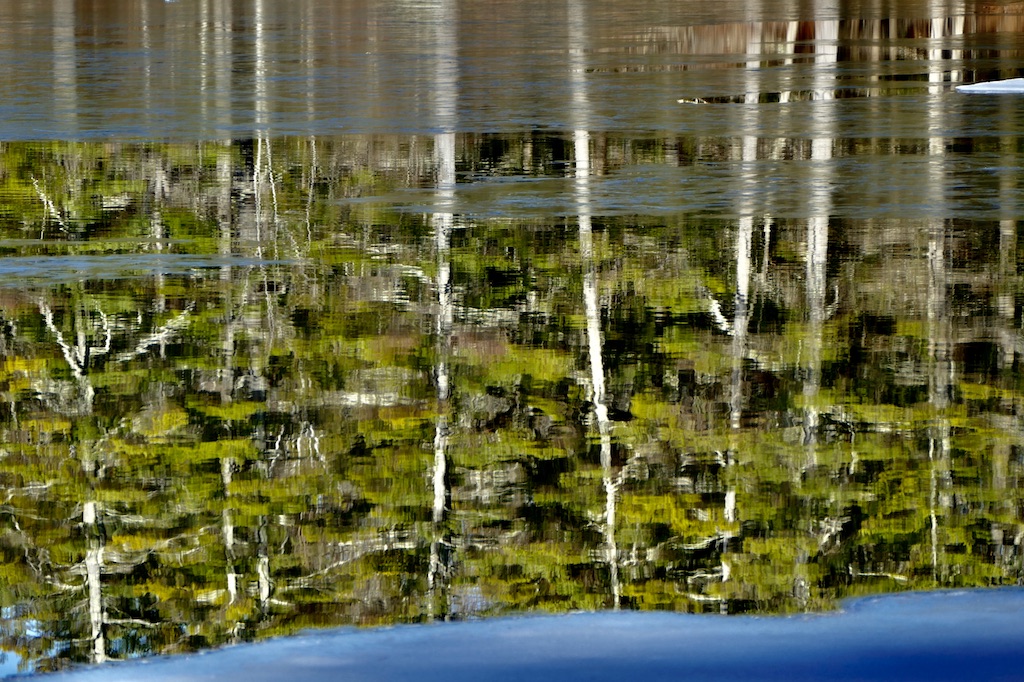
No sooner has the ice of Walden melted than the wind begins to play in dark ripples over the face of the virgin water. It is affecting to see Nature so tender, however, old, and wearing none of the wrinkles of age. Ice dissolved is the next moment as perfect water as if it had been melted a million years. To see that which was lately so hard and immovable now so soft and impressible. What if our moods could dissolve thus completely? It is like a flush of life on a cheek that was dead. It seems as if it must rejoice in its own newly acquired fluidity, as it affects the beholder with joy. Often the March winds have no chance to ripple its face at all.
All enterprises must be self-supporting, must pay for themselves. The great art of life is how to turn the surplus life of the soul into life for the body — that so the life not be a failure. For instance, a poet must sustain his body with his poetry. As is said of the merchants, in ninety-nine cases out of a hundred the life of men is a failure, and bankruptcy may be surely prophesied.
I wish so to live ever as to derive my satisfaction and inspirations from the commonest events, every-day phenomena, so that what my senses hourly perceive in my daily walk, the conversations of my neighbors, may inspire me and I may dream of no heaven but that which lies about me.
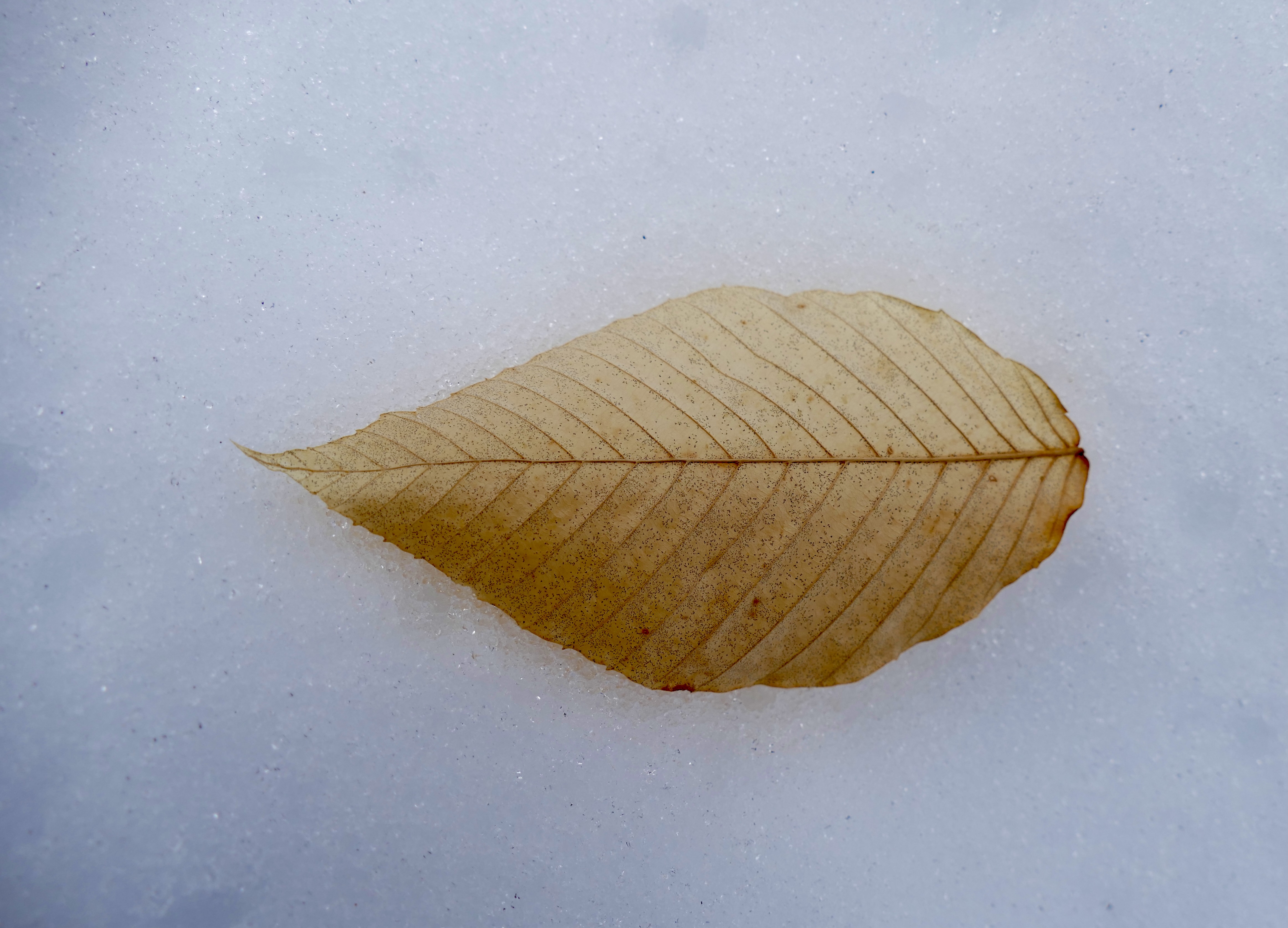
Every blade in the field—Every leaf in the forest—lays down its life in its season as beautifully as it was taken up. — Thoreau, correspondence to Emerson, March 11, 1842
There is a fine effluence surrounding the wood, as if the sap had begun to stir and you could detect it a mile off. Such is the difference between an object seen through a warm, moist, and soft air and a cold, dry, hard one. Such is the genialness of nature that the trees appear to have put out feelers by which our senses apprehend them more tenderly. I do not know that the woods are ever more beautiful, or affect me more.
I feel it to be a greater success as a lecturer to affect uncultivated natures than to affect the most refined, for all cultivation is necessarily superficial, and its roots may not even be directed toward the centre of the being.
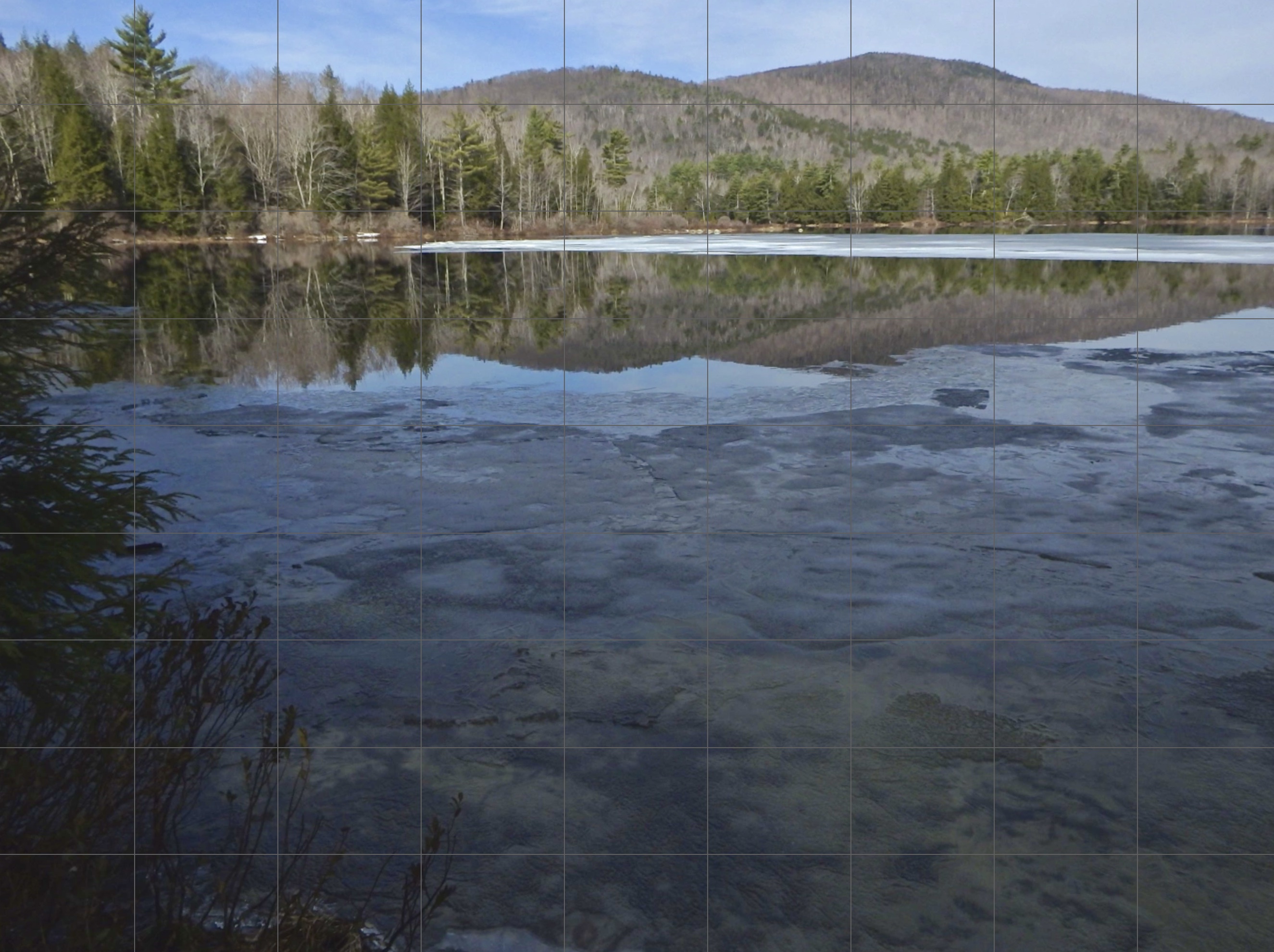
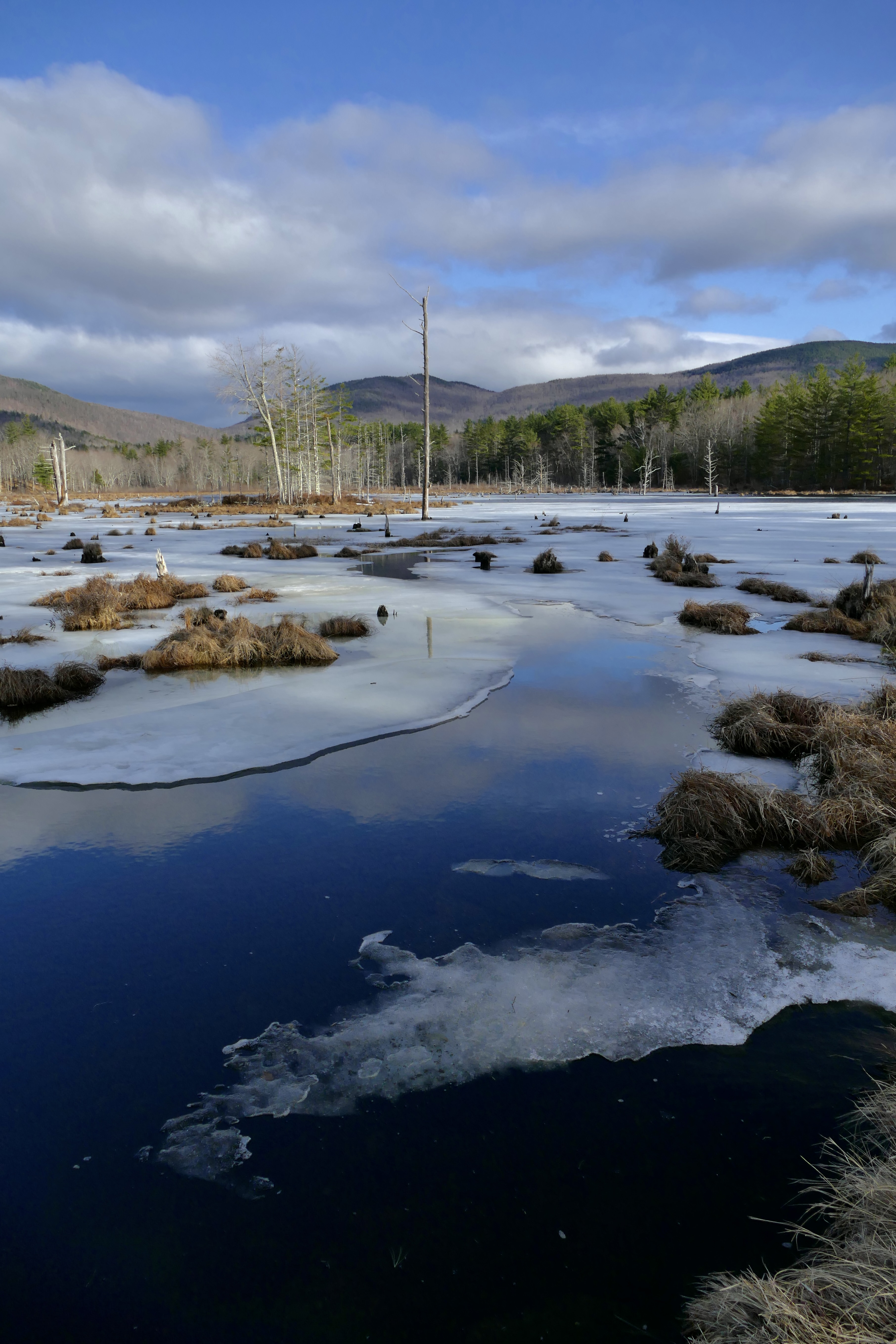
Rivers, too, like the walker, unbutton their icy coats, and we see the dark bosoms of their channels in the midst of the ice. Again, in pools of melted snow, or where the river has risen, I look into clear, placid water, and see the russet grassy bottom in the sun….
As we sit in this wonderful air, many sounds — that of woodchopping, for one — come to our ears agreeably blunted or muffled, even like the drumming of a partridge, not sharp and rending as in winter and recently. If a partridge should drum in winter, probably it would not reverberate so softly through the wood and sound indefinitely far. Our voices, even, sound differently and betray the spring. We speak as in a house, in a warm apartment still, with relaxed muscles and softened voices. The voice, like a woodchuck in his burrow, is met and lapped in and encouraged by all genial and sunny influences. There may be heard now, perhaps, under south hillsides and the south sides of houses, a slight murmur of conversation, as of insects, out of doors.
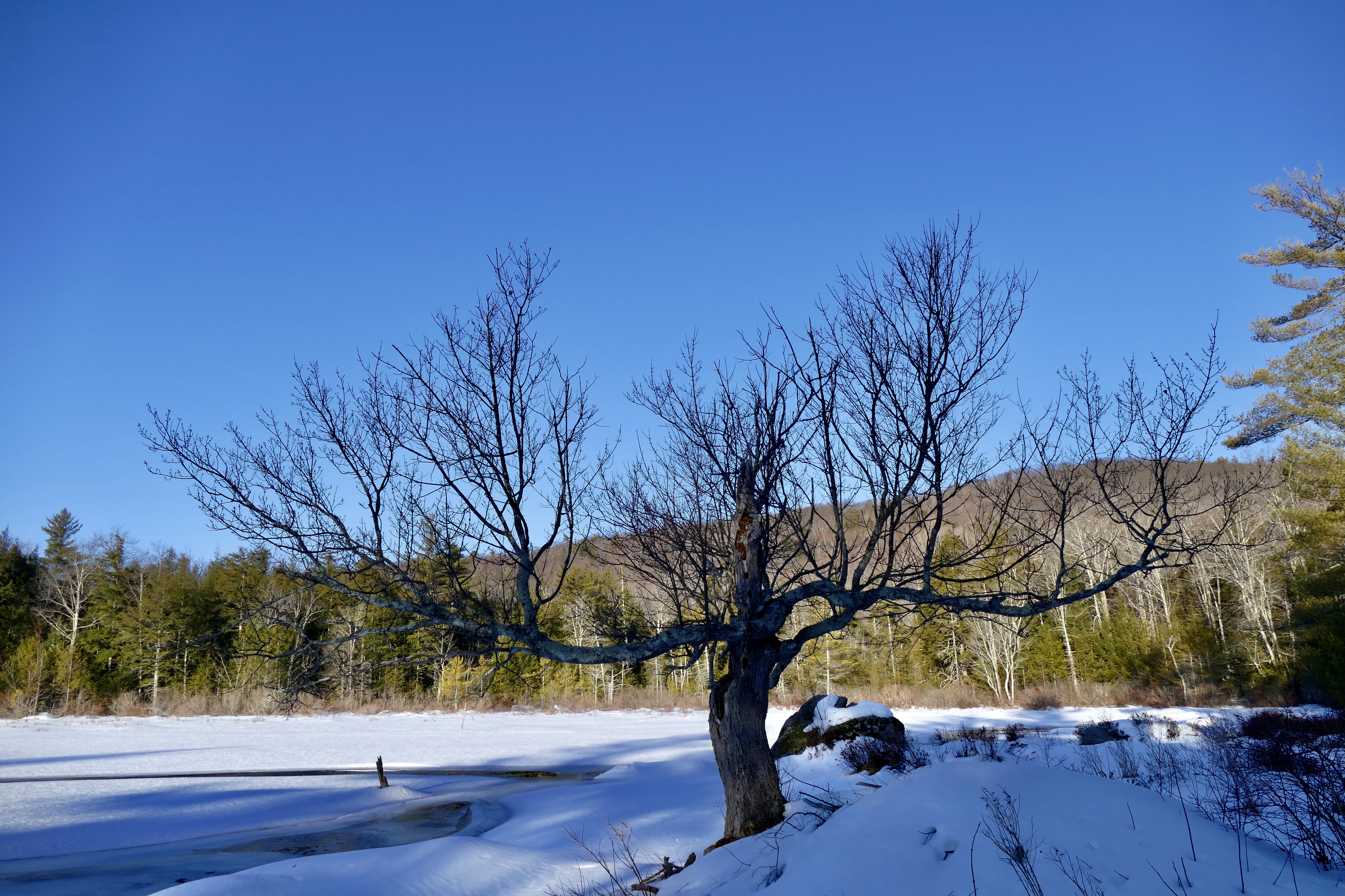
These earliest spring days are peculiarly pleasant. We shall have no more of them for a year. I am apt to forget that we may have raw and blustering days a month hence. The combination of this delicious air, which you do not want to be warmer or softer, with the presence of ice and snow, you sitting on the bare russet portions, the south hillsides, of the earth, this is the charm of these days. It is the summer beginning to show itself like an old friend in the midst of winter. You ramble from one drier russet patch to another. These are your stages. You have the air and sun of summer, over snow and ice, and in some places even the rustling of dry leaves under your feet, as in Indian-summer days.
As I recall it, February began cold, with some dry and fine driving snow, making those shell-shaped drifts behind walls, and some days after were some wild but low drifts on the meadow ice. I walked admiring the winter sky and clouds.
After the first week, methinks, it was much milder, and I noticed that some sounds, like the tinkling of railroad rails, etc., were springlike. Indeed, the rest of the month was earine, river breaking up a part and closing again, and but little snow.
About 8th and 12th, the beauty of the ice on the meadows, partly or slightly rotted, was noticeable, with the curious figures in it, and, in the coolest evenings, the green ice and rosy isles of flat drifts.
About the 9th, noticed the very black water of some open reaches, in a high wind and cold.
About the middle of the month was a moist, lodging snow, and the 18th a fine granular one, making about a foot, ––the last. Then sudden warm weather and rain come and dissolve it all at once, and the ruts, flowing with melted snow, shone in the sun, and the little sleighing was all gone. And from the 25th to 27th the river generally broke up.
March began warm, and I admired the ripples made by the gusts on the dark-blue meadow flood, and the light-tawny color of the earth, and was on the alert for several days to hear the first birds. For a few days past it has been generally colder and rawer, and the ground has been whitened with snow two or three times, but it has all been windy.
You incline to walk now along the south side of hills which will shelter you from the blustering northwest and north winds. The sidewalks are wet in the morning from the frost coming out.
[“earine” is derived from the Greek word for “spring.”]
There is no ripeness which is not, so to speak, something ultimate in itself, and not merely a perfected means to a higher end. In order to be ripe it must serve a transcendent use. The ripness of a leaf, being perfected, leaves the tree at that point and never returns to it. It has nothing to do with any other fruit which the tree may bear, and only genius can pluck it. The fruit of a tree is neither in the seed nor in the full-grown tree, but it is simply the highest use to which it can be put.











 allandibiase.com
You must be logged in to post a comment.