We shall see but little way if we require to understand what we see. How few things can a man measure with the tape of his understanding! How many greater things might he be seeing in the meanwhile!
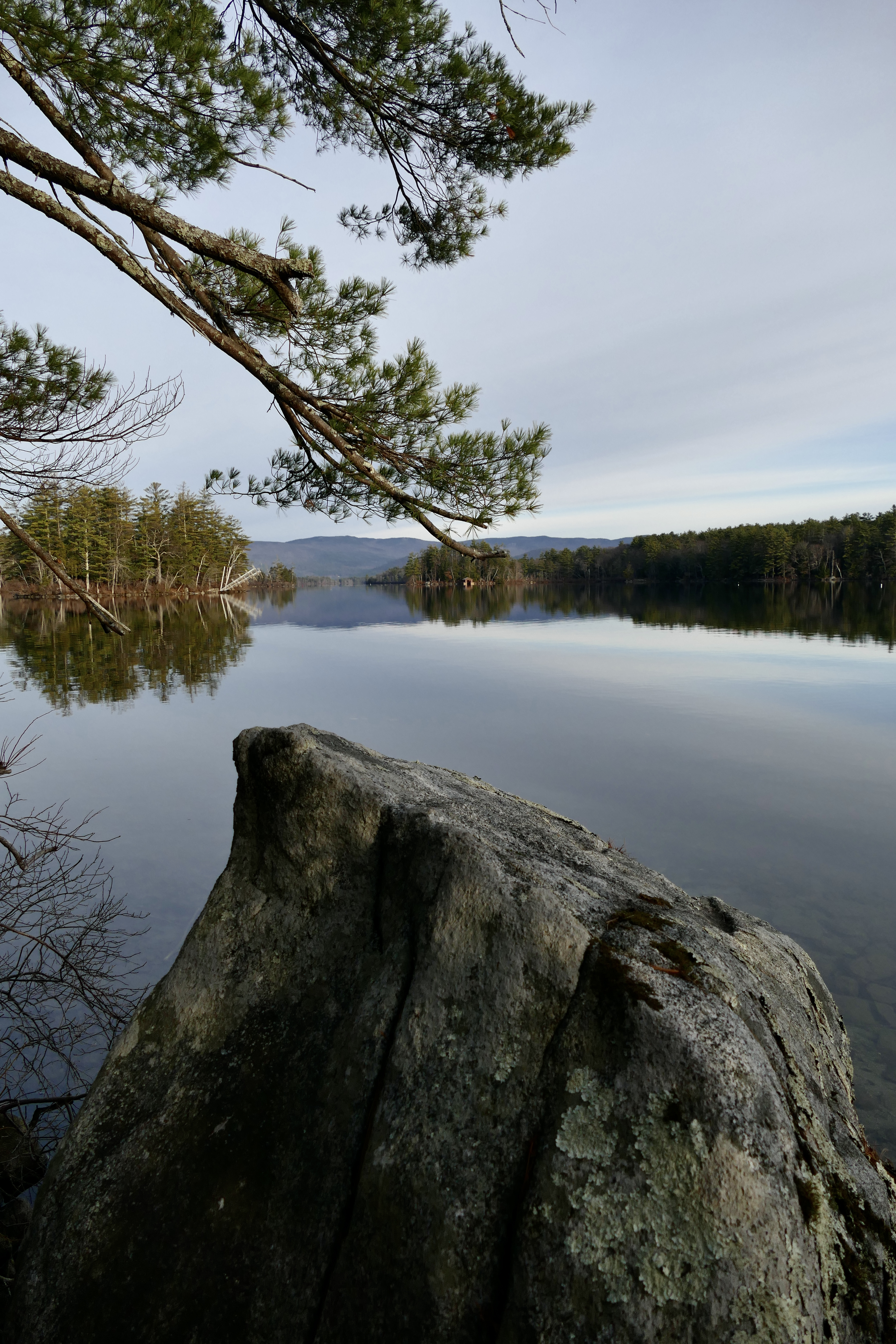
One afternoon in the fall, November 21st, I saw Fair Haven Pond with its island and meadow; between the island and the shore, a strip of perfectly smooth water in the lee of the island; and two hawks sailing over it; and something more I saw which cannot easily be described, which made me say to myself that the landscape could not be improved. I did not see how it could be improved. Yet I do not know what these things can be; I begin to see such objects only when I leave off understanding them, and afterwards remember that I did not appreciate them before. But I get no further than this. How adapted these forms and colors to our eyes, a meadow and its islands! What are these things? Yet the hawks and the ducks keep so aloof, and nature is so reserved! We are made to love the river & the meadow as the wind is made to ripple the water….
We learn by the January thaw that the winter is intermittent and are reminded of other seasons. The back of the winter is broken.
Winter comes to make walking possible where there was no walking in the summer. Not till winter can we take possession of the whole of our territory…The wonderful stillness of a winter day! The sources of sound are, as it were, frozen up…A transient acquaintance with any phenomenon is not sufficient to make it completely the subject of your muse. You must be so conversant with it as to remember it, and be reminded of it long afterward, while it lies remotely fair and elysian in the horizon, approachable only by the imagination.
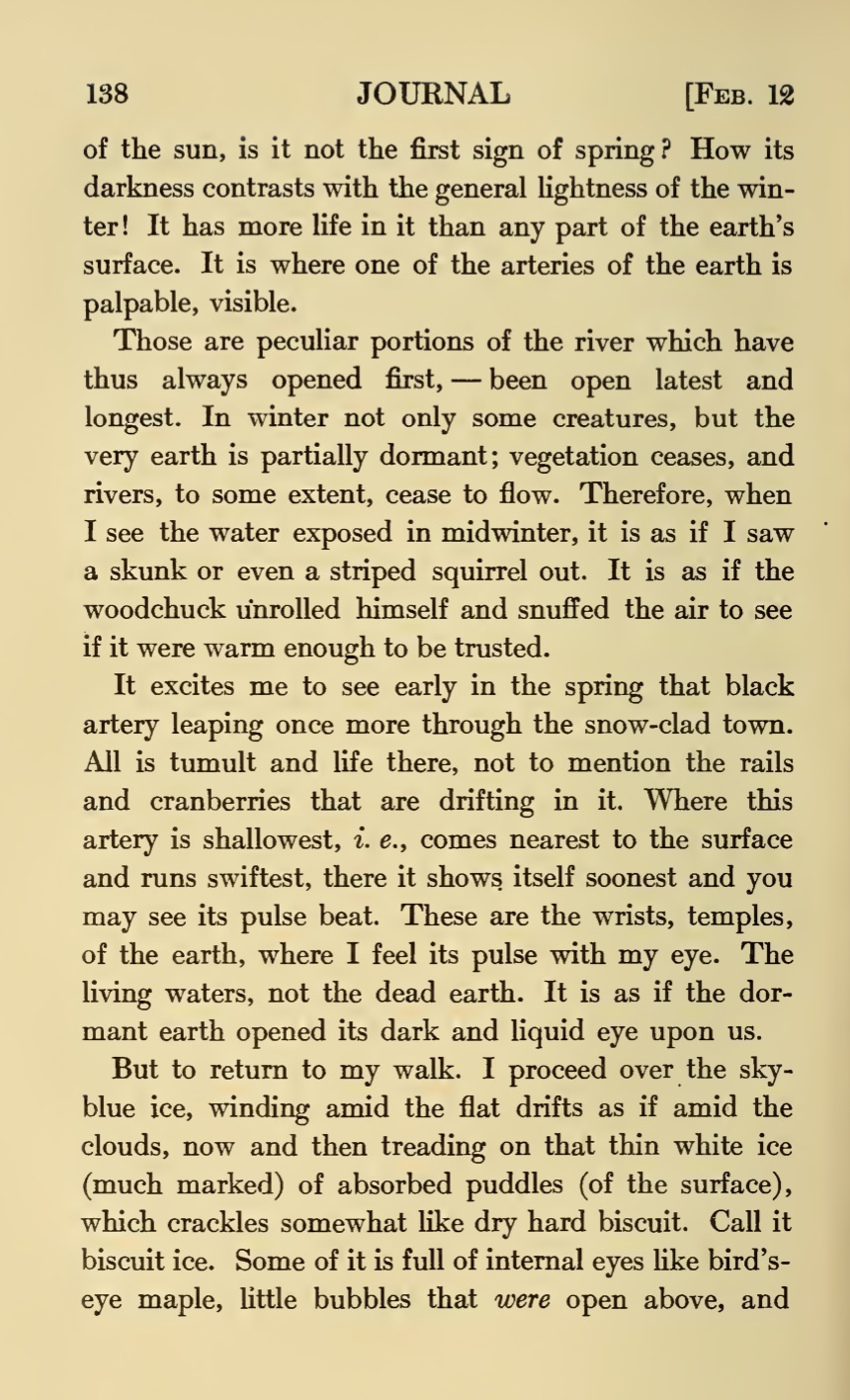
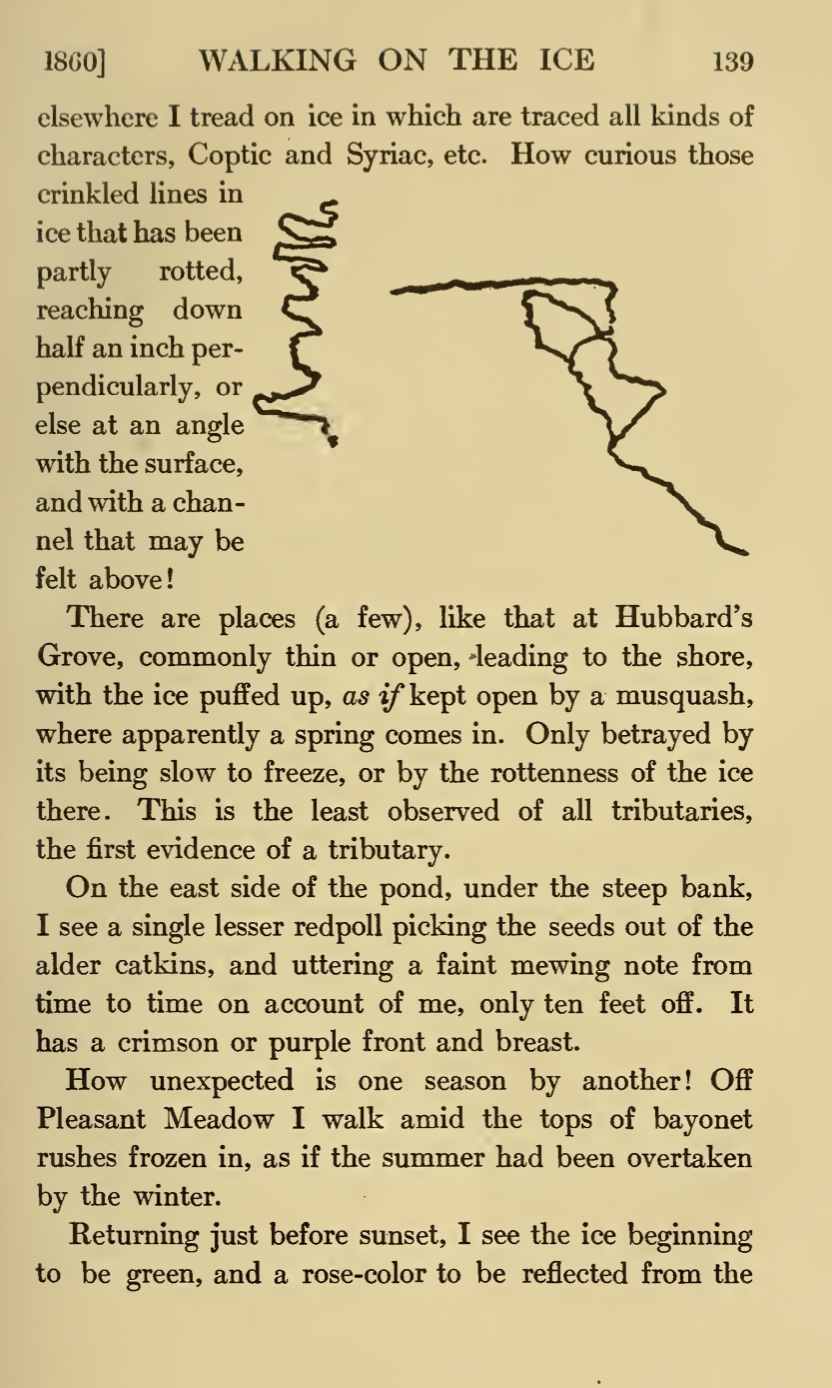
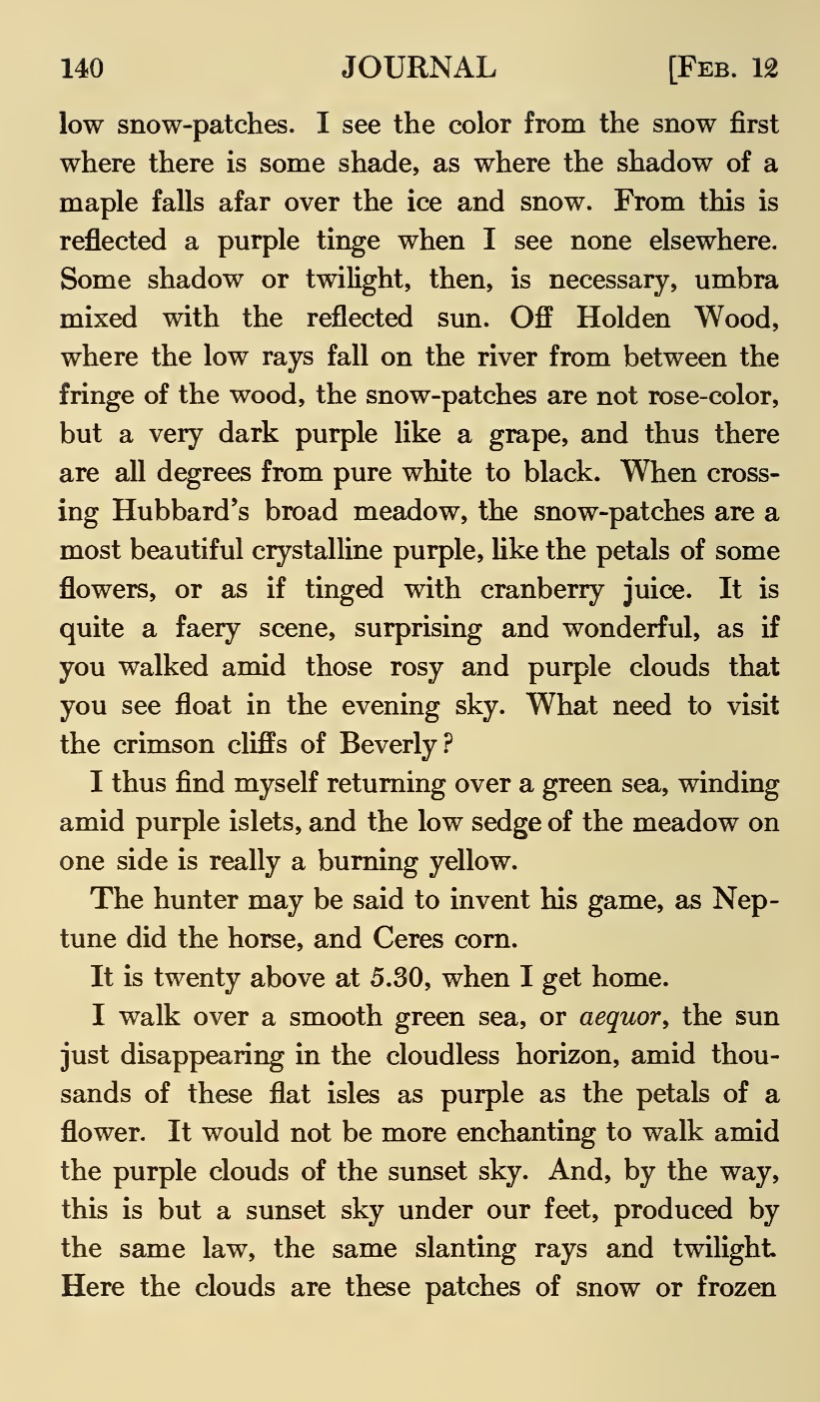
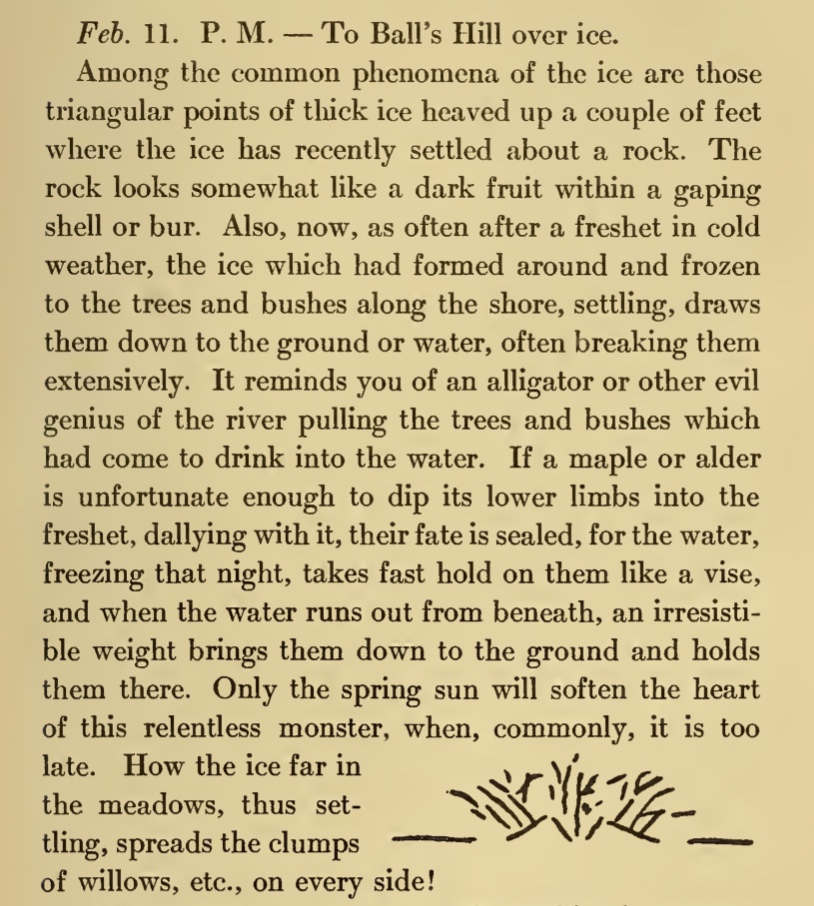
[I was drawn to this passage by the except immediately following. It comes near the end of Thoreau’s entry for February 12, 1860. Then thought to give the full entry (7 printed pages!) so readers could see how Thoreau came to the part I’ve excerpted. The 7 pages also contain some of Thoreau’s drawings.]
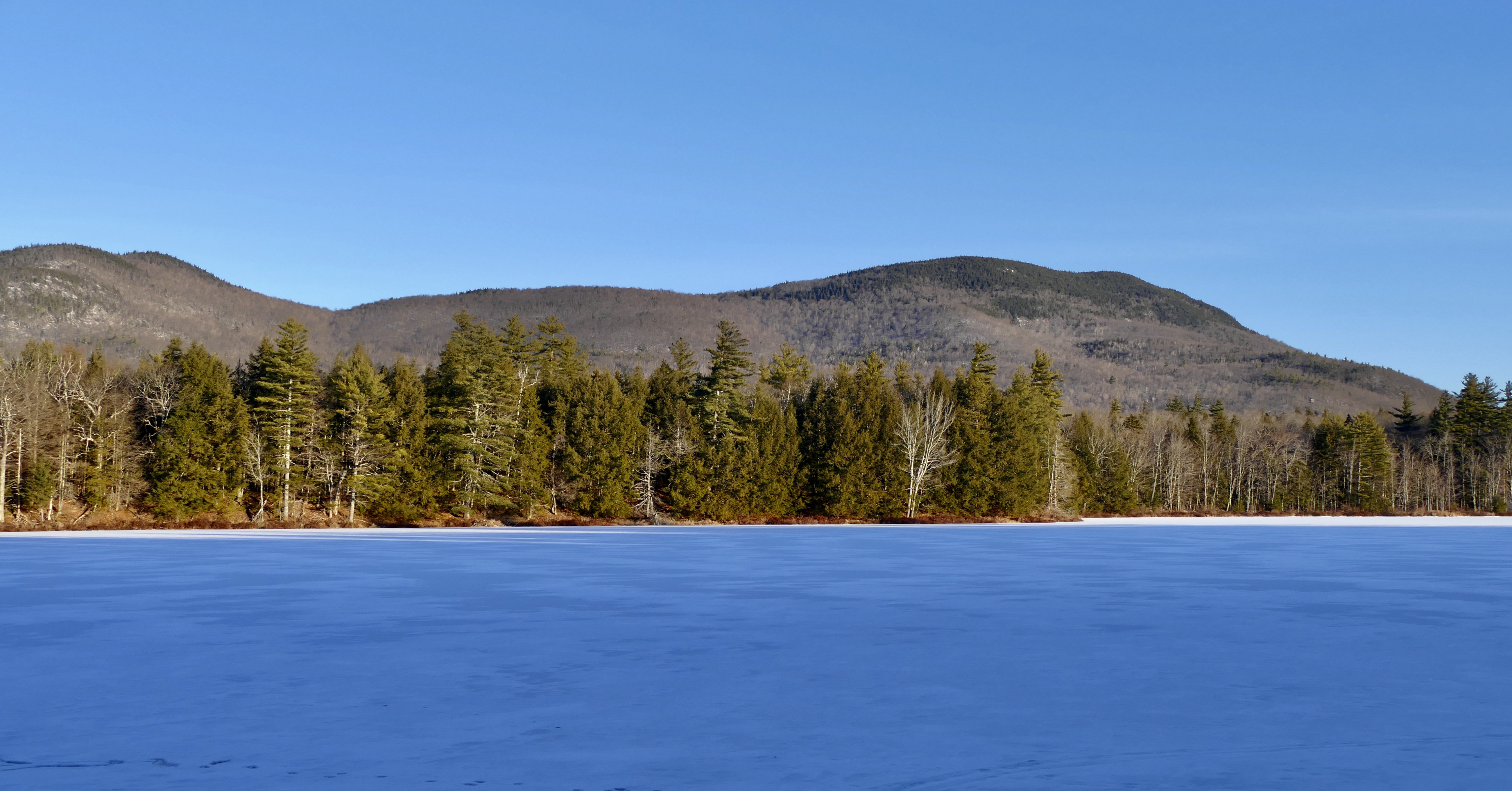
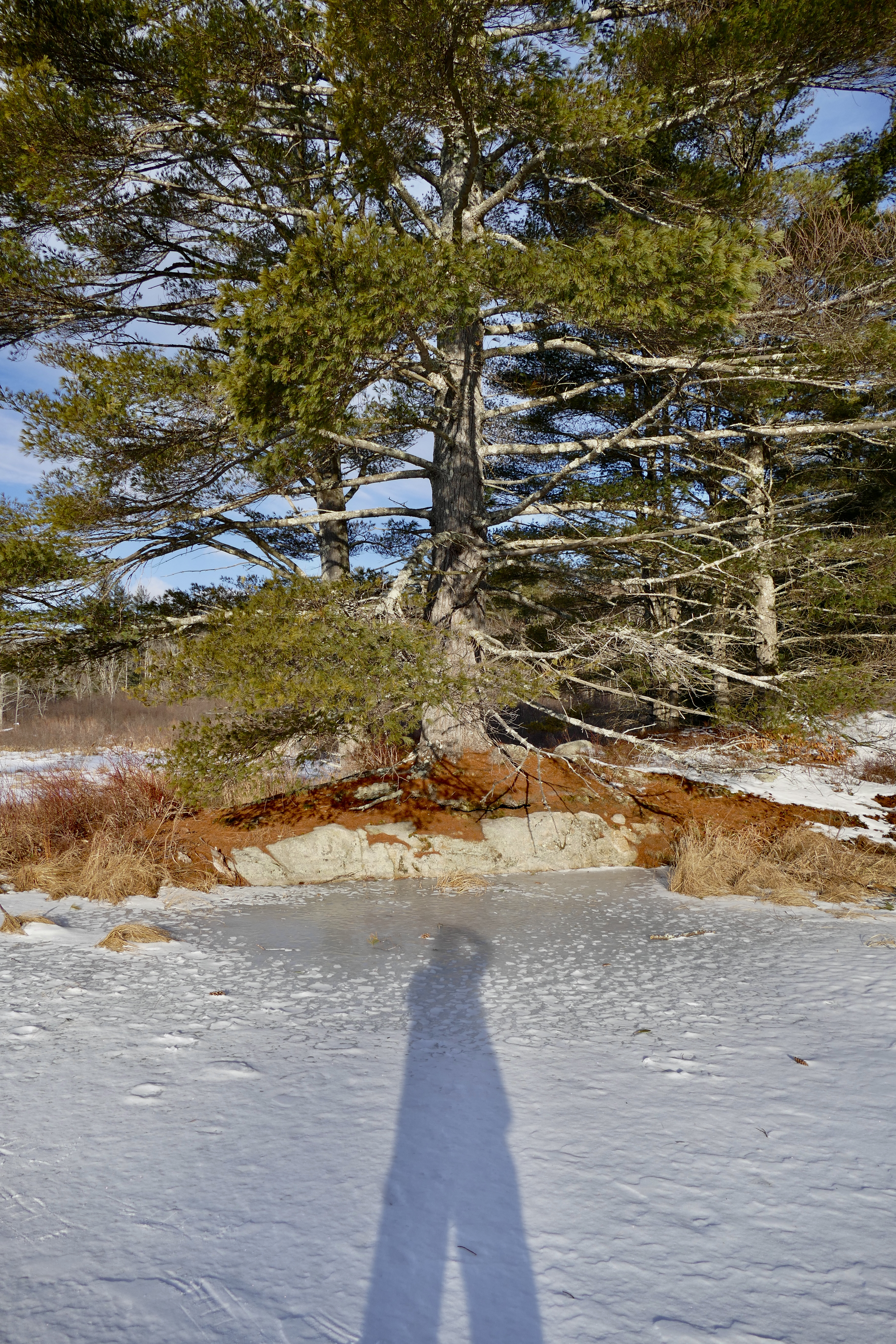
The winter is coming when I shall walk the sky. The ice is a solid sky on which we walk. It is the inverted year. There is an annual light in the darkness of the winter night. The shadows are blue, as the sky is forever blue. In winter we are purified and translated. The earth does not absorb our thoughts. It becomes a Valhalla.
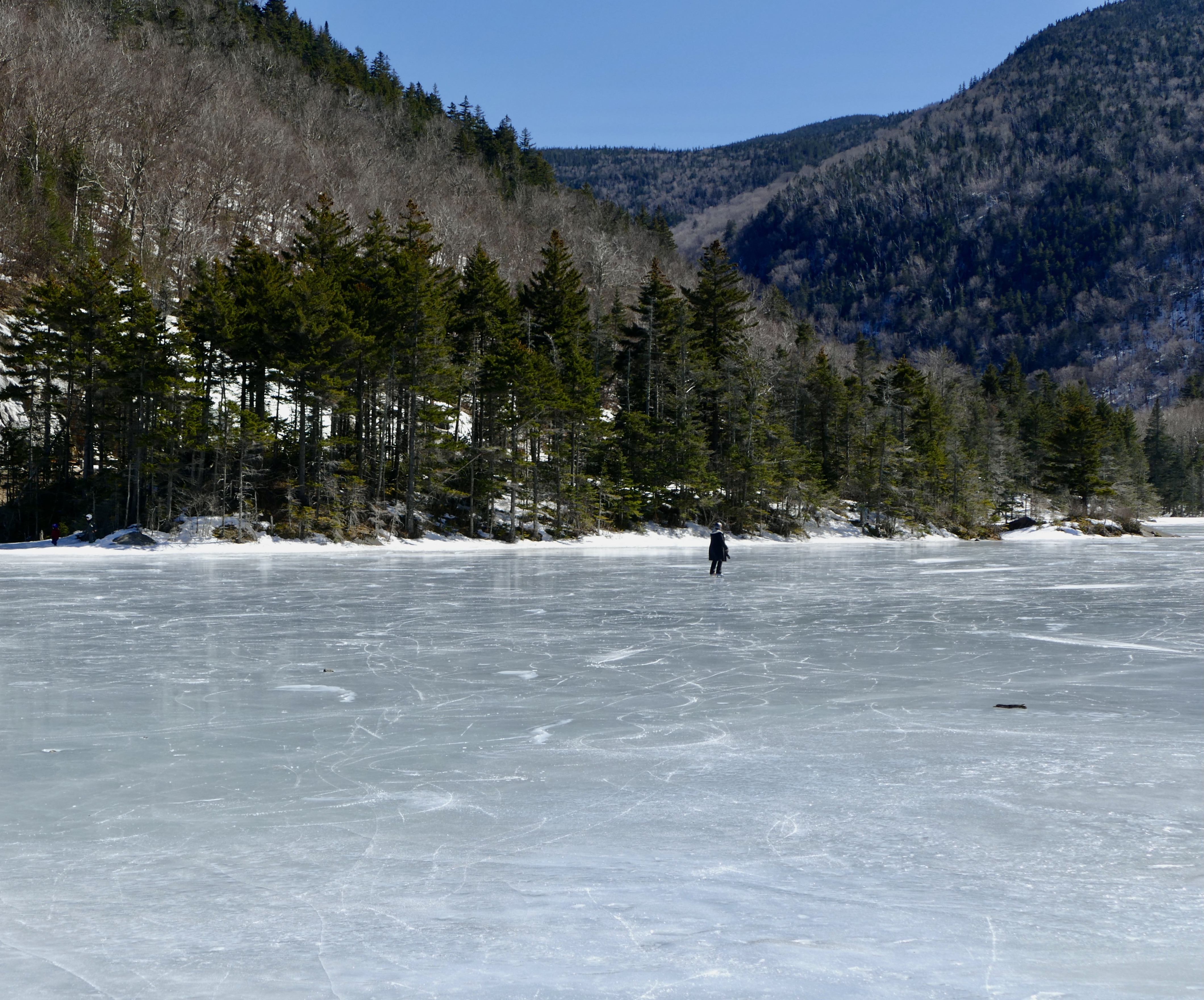
I do not know of any more exhilarating walking than up or down a broad field of smooth ice like this in a cold, glittering, winter day, when your rubbers give you a firm hold on the ice….
In the cold, clear, rough air from the northwest we walk amid what simple surroundings! Surrounded by our thoughts or imaginary objects, living in our ideas, not one in a million even sees the objects which are actually around him.
This afternoon the first crust to walk on. It is pleasant to walk over the fields raised a foot or more above their summer level—and the prospect is altogether new…
In this winter often no apparent difference between rivers, ponds & fields.
The weather has been very changeable for some weeks. First it is warm and thawing, sloshy weather; then the thermometer goes down to 19° below zero, and our shoes squeak on the snow; then, perhaps, it moderates and snows; then is mild and pleasant again and good sleighing; then we wake to find a drifted snow upon the last and a bleak, wintry prospect.
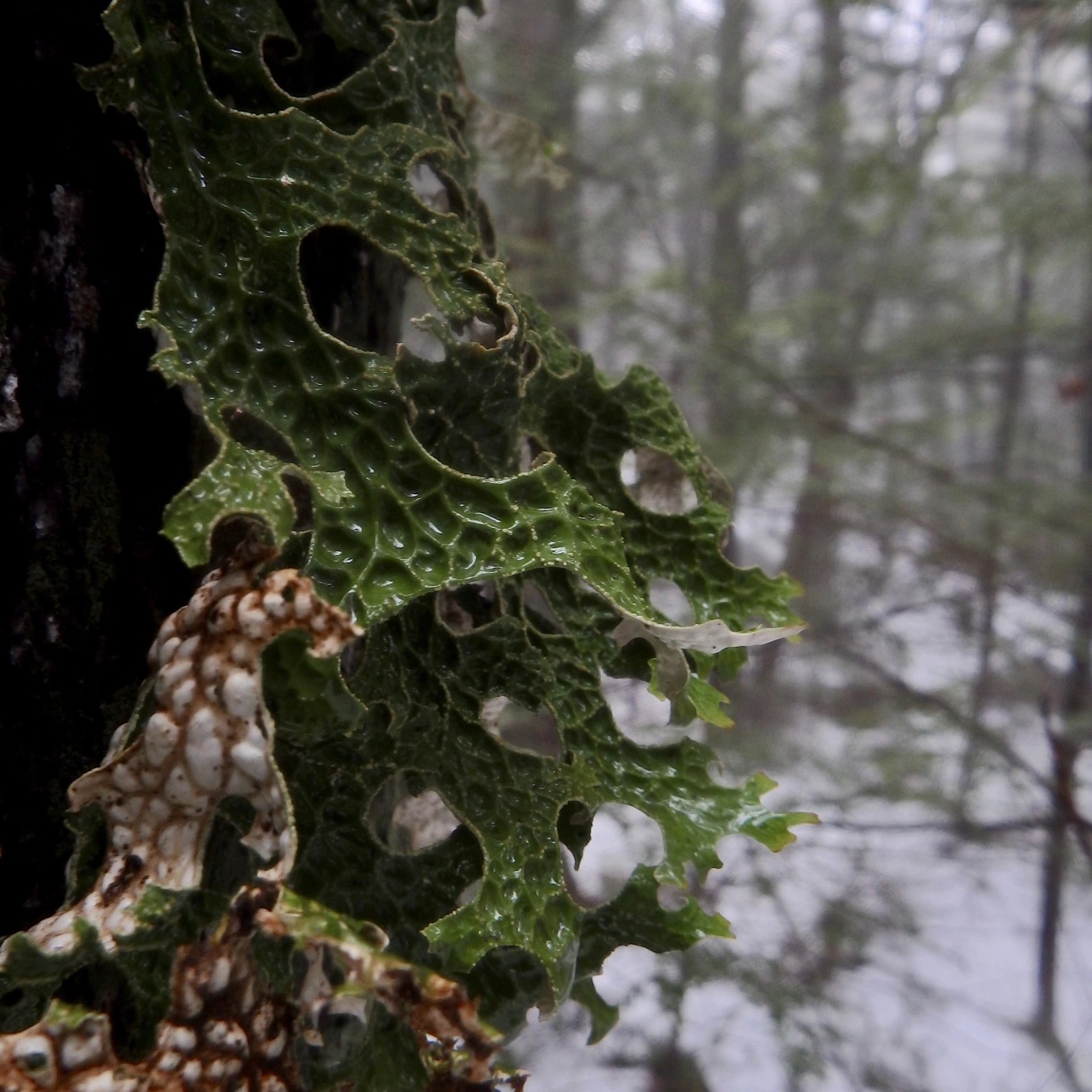
A thick fog. The trees and woods look well through it. You are inclined to walk in the woods for objects. They are draped with mist, and you hear the sound of it dripping from them. It is a lichen day. Not a bit of rotten wood lies on the dead leaves, but it is covered with fresh, green cup lichens, etc., etc. All the world seems a great lichen and to grow like one to-day,—a sudden humid growth.
I remember now that the mist was much thicker over the pond than elsewhere. I could not distinguish a man there more than ten rods off, and the woods, seen dimly across a bay, were mistaken for the opposite side of the pond. I could almost fancy a bay of an acre in extent the whole pond. Elsewhere, methinks, I could see twice as far. I felt the greater coolness of the air over the pond, which it was, I suppose, that condensed the vapor more there.
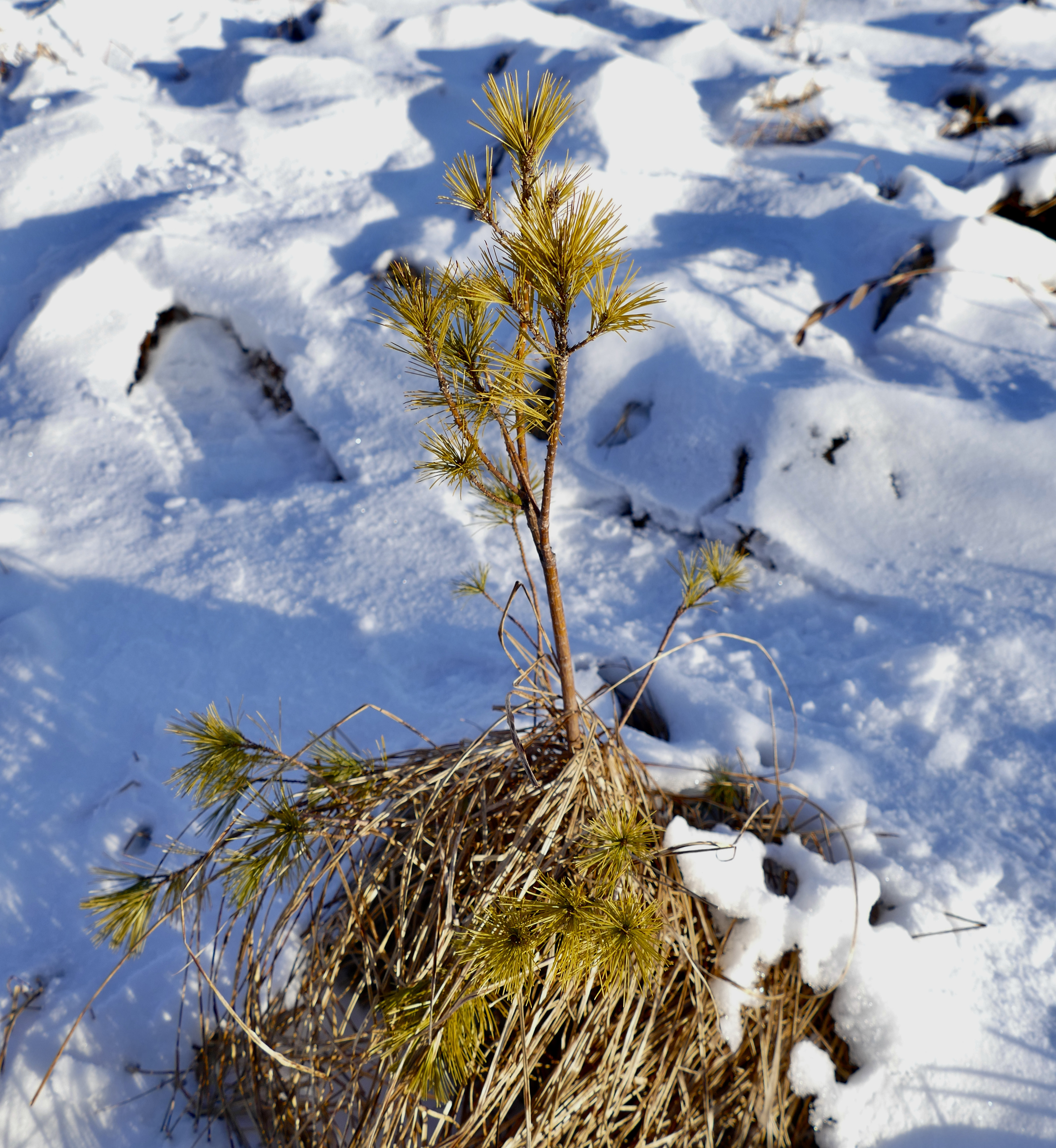
A mild, thawy day. The needles of the pine are the touch-stone for the air—any change in that element is revealed to the practiced eye by their livelier green or increased motion. They are the tell-tales. Now they are (the white pine) a cadaverous, misty blue—anon a lively silvery light plays on them —& they seem to erect themselves unusually—while the pitch pines are a brighter yellowish green than usual—The sun loves to nestle in the boughs of the pine & pass rays through them.
The scent of bruised pine leaves where a sled has passed is a little exciting to me now…
I would meet the morning and evening on very sincere ground. When the sun introduces me to a new day, I silently say to myself, “Let us be faithful all round. We will do justice and receive it.”
Something like this is the secret charm of Nature’s demeanor towards us, strict conscientiousness, and disregard of us when we have ceased to have regard for ourselves. So she can never offend us. How true she is, and never swerves. In her most genial moment her laws are as steadfastly and relentlessly fulfilled….as in her sternest.
Snowed again last night, perhaps an inch, erasing the old tracks and giving us a blank page again, restoring the purity of nature. It may be even a trifle deeper now than hitherto.
A clear, cold, beautiful day. Fine skating. An unprecedented expanse of ice.
At 10 A. M., skated up the river to explore further than I had been….
By noon, though it was a pretty cool day, the water had generally burst through and overflowed the ice along the shore and once more stood at a level there; i. e., water and ice made a level where the ice was uneven before. Before skating up-stream I tried my boat-sail on the meadow in front of the house and found that I could go well enough before the wind, resting the mast on my hip and holding by the middle with one hand, but I could not easily tack.
Far over the fields, between the tops of yonder wood, I see a slight cloud not larger than the vapor from a kettle, drifting by its own inward purpose in a direction contrary to the planet. As it flits across the dells and defiles of the tree-tops, now seen, then lost beyond a pine, I am curious to know wherein its will resides, for to my eye it has no heart, nor lungs, nor brain, nor any interior and private chamber which it may inhabit.
Its motion reminds me of those lines of Milton: —
“As when far off at sea a fleet descried
Hangs in the clouds, by equinoctial winds
Close sailing from Bengala, or the isles
Of Ternate and Tidore, whence merchants bring
Their spicy drugs; they on the trading flood,
Ply stemming nightly toward the pole.”
The snow collects upon the plumes of the pitch pine in the form of a pineapple, which if you divide in the middle will expose three red kernels like the tamarind-stone. So does winter with his mock harvest jeer at the sincerity of summer. The tropical fruits, which will not bear the rawness of our summer, are imitated in a thousand fantastic shapes by the whimsical genius of winter.
In winter the warmth comes directly from the sun, and is not radiated from the earth. In summer I forget to bless the sun for his heat; but when I feel his beams on my back as I thread some snowy dale, I am grateful as for a special kindness which would not be weary of well doing but had pursued me even into that by-place.
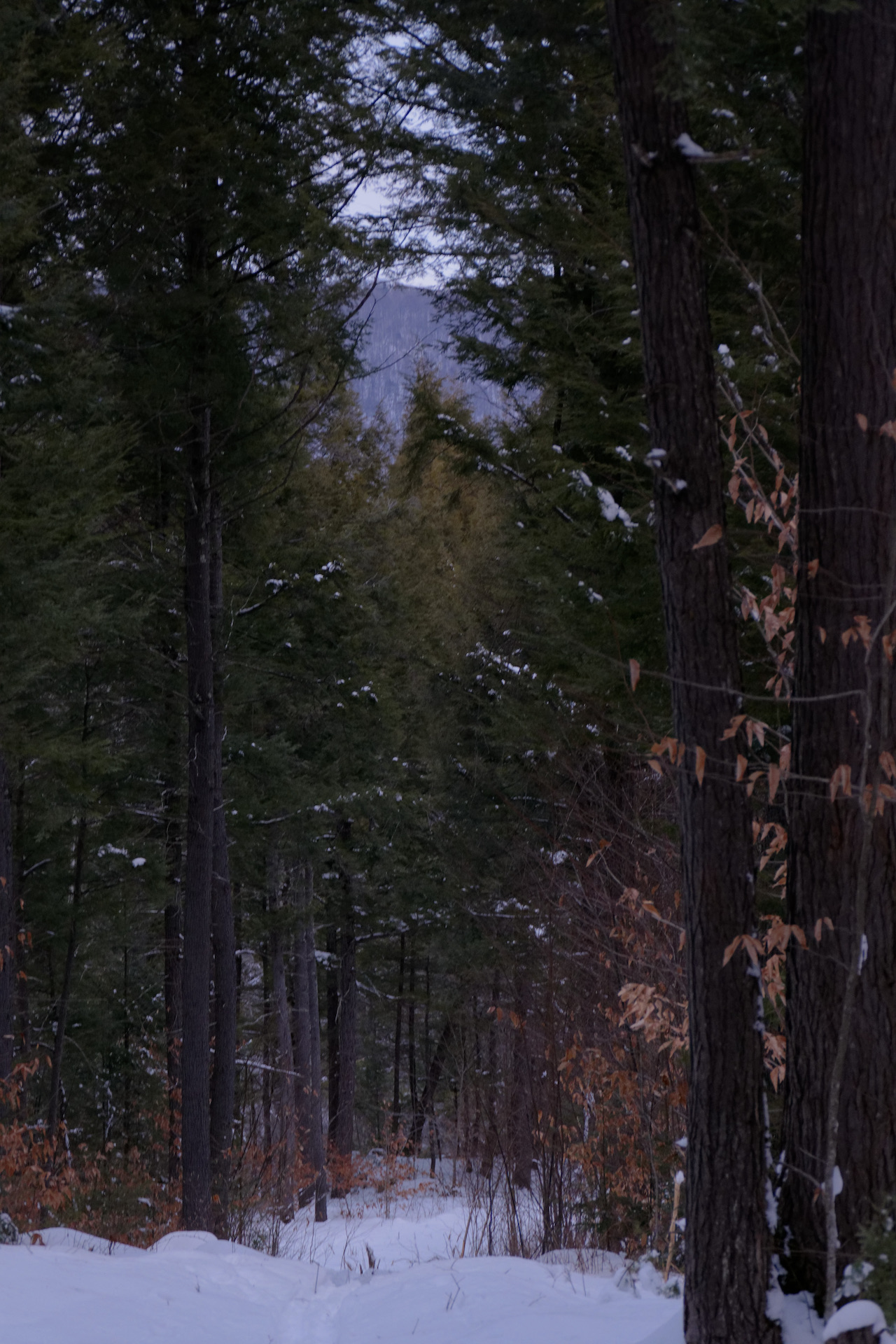
When the wind blows, the fine snow comes filtering down through all the aisles of the wood in a golden cloud.
The trees covered with snow admit a very plain and clean light, but not brilliant, as if through windows of ground glass; a sort of white darkness it is, all of the sun’s splendor that can be retained.
The fashions of the wood are more fluctuating than those of Paris; snow, rime, ice, green and dry leaves incessantly make new patterns. There are all the shapes and hues of the kaleidoscope and the designs and ciphers of books of heraldry in the outlines of the trees. Every time I see a nodding pine-top, it seems as if a new fashion of wearing plumes had come into vogue.
I saw a team come out of a path in the woods, as though it had never gone in, but belonged there, and only came out like Elisha’s bears. It was wholly of the village, and not at all of the wood.
These particles of snow which the early wind shakes down are what is stirring, or the morning news of the wood. Sometimes it is blown up above the trees, like the sand of the desert.
You glance up these paths, closely embowered by bent trees, as through the side aisles of a cathedral, and expect to hear a choir chanting from their depths. You are never so far in them as they are far before you. Their secret is where you are not and where your feet can never carry you.
I tread in the tracks of the fox which has gone before me by some hours, or which perhaps I have started, with such a tiptoe of expectation as if I were on the trail of the Spirit itself which resides in these woods, and expected soon to catch it in its lair.
The snow falls on no two trees alike, but the forms it assumes are as various as those of the twigs and leaves which receive it. They are, as it were, predetermined by the genius of the tree. So one divine spirit descends alike on all, but bears a peculiar fruit in each. The divinity subsides on all men, as the snowflakes settle on the fields and ledges and takes the form of the various clefts and surfaces on which it lodges.
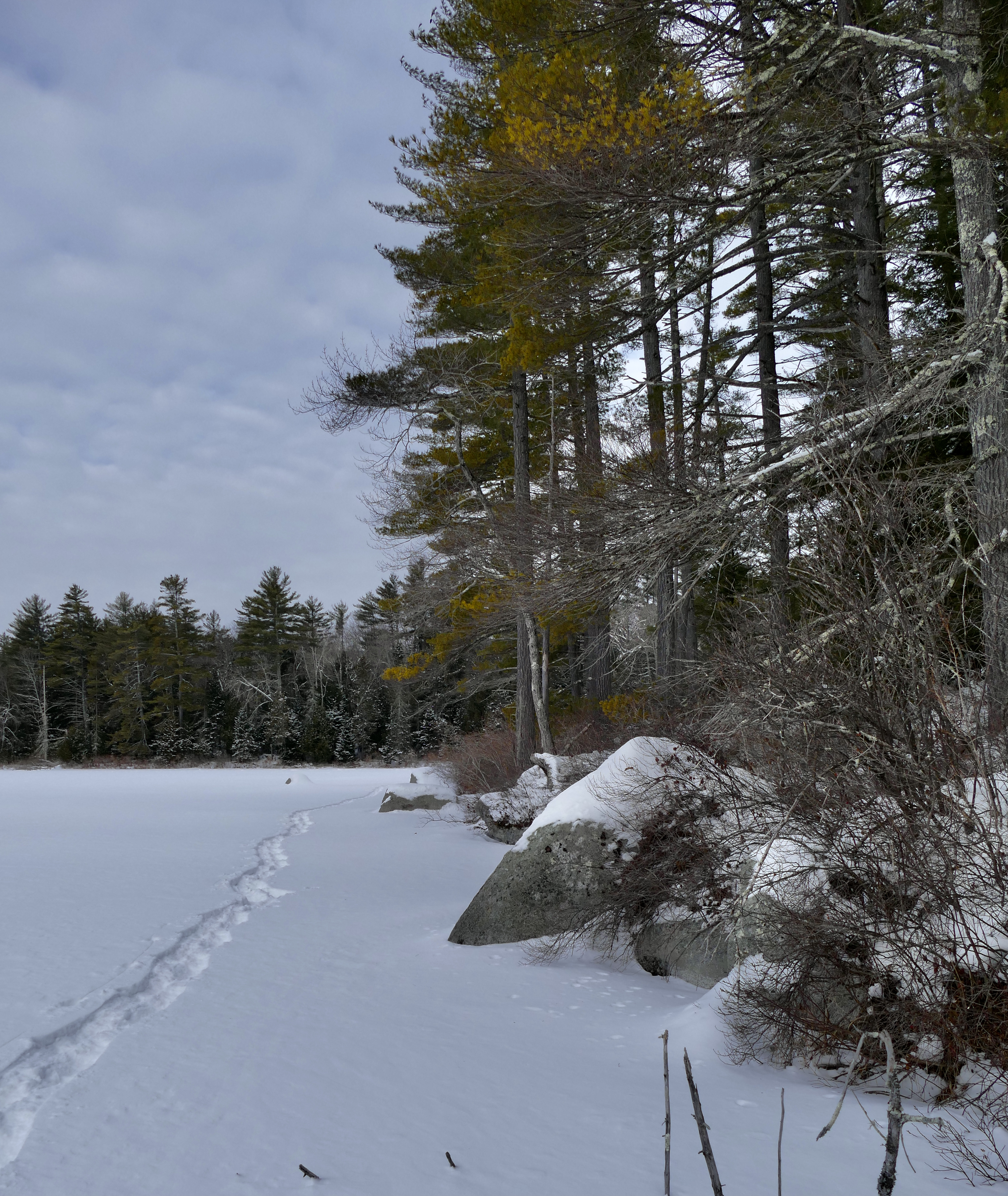
Here is the distinct trail of a fox stretching [a] quarter of a mile across the pond. Now I am curious to know what has determined its graceful curvatures, its greater or less spaces and distinctness, and how surely they were coincident with the fluctuations of some mind, why they now lead me two steps to the right, and then three to the left. If these things are not to be called up and accounted for in the Lamb’s Book of Life, I shall set them down for careless accountants. Here was one expression of the divine mind this morning. The pond was his journal, and last night’s snow made a tabula rasa for him. I know which way a mind wended this morning, what horizon it faced, by the setting of these tracks; whether it moved slowly or rapidly, by the greater or less intervals and distinctness, for the swiftest step leaves yet a lasting trace.
Sometimes I come out suddenly upon a high plain, which seems to be the upper level and true surface of the earth, and by its very baldness aspires and lies up nearer to the stars, —a place where a decalogue might be let down or a saint translated.
I take a horse and oxen, standing among the wood-piles in the forest, for one of them, and when at length the horse pricks his ears, and I give him another name, where’s the difference? I am startled by the possibility of such errors, and the indifference with [which] they are allowed to occur.
Fair Haven Pond is scored with the trails of foxes, and you may see where they have gamboled and gone through a hundred evolutions, which testify to a singular listlessness and leisure in nature.
Suddenly, looking down the river, I saw a fox some sixty rods off, making across to the hills on my left. As the snow lay five inches deep, he made but slow progress, but it was no impediment to me. So, yielding to the instinct of the chase, I tossed my head aloft and bounded away, snuffing the air like a fox-hound, and spurning the world and the Humane Society at each bound. It seemed the woods rang with the hunter’s horn, and Diana and all the satyrs joined in the chase and cheered me on. Olympian and Elean youths were waving palms on the hills. In the meanwhile I gained rapidly on the fox; but he showed a remarkable presence bf mind, for, instead of keeping up the face of the hill, which was steep and unwooded in that part, he kept along the slope in the direction of the forest, though he lost ground by it. Notwithstanding his fright, he took no step which was not beautiful. The course on his part was a series of most graceful curves. It was a sort of leopard canter, I should say, as if he were no-wise impeded by the snow, but were husbanding his strength all the while. When he doubled I wheeled and cut him off, bounding with fresh vigor, and Antseus-like, recovering my strength each time I touched the snow. Having got near enough for a fair view, just as he was slipping into the wood, I gracefully yielded him the palm. He ran as though there were not a bone in his back, occasionally dropping his muzzle to the snow for a rod or two, and then tossing his head aloft when satisfied of his course. When he came to a declivity he put his fore feet together and slid down it like a cat. He trod so softly that you could not have heard it from any nearness, and yet with such expression that it would not have been quite inaudible at any distance. So, hoping this experience would prove a useful lesson to him, I returned to the village by the highway of the river.
There is all the romance of my youthfulest moment in music. Heaven lies about us, as in our infancy. There is nothing so wild and extravagant that it does not make true. It makes a dreamy only real experience, and prompts faith to such elasticity that only the incredible can satisfy it. It tells me again to trust the remotest and finest, as the divinest, instinct. All that I have imagined of heroism, it reminds and reassures me of. It is a life unlived, a life beyond life, where at length my years will pass. I look under the lids.
That point where the sun goes down is the cynosure which attracts all eyes at sundown and half an hour before. What do all other parts of the horizon concern us ?
Our eyes follow the path of that great luminary. We watch for his rising, and we observe his setting. He is a companion and fellow-traveller we all have. We pity him who has his cheerless dwelling elsewhere, even in the northwest or southwest, off the high road of nature.
Our life should be so active and progressive as to be a journey. Our meals should all be of journey-cake and hasty pudding. We should be more alert, see the sun rise, not keep fashionable hours, enter a house, our own house, as a khan, a caravansary. At noon I did not dine; I ate my journey-cake. I quenched my thirst at a spring or a brook.
As I sat at the table, the hospitality was so perfect and the repast so sumptuous that I seemed to be breaking my fast upon a bank in the midst of an arduous journey, that the water seemed to be a living spring, the napkins grass, the conversation free as the winds; and the servants that waited on us were our simple desires.
When you think that your walk is profitless and a failure, and you can hardly persuade yourself not to return, it is on the point of being a success, for then you are in that subdued and knocking mood to which Nature never fails to open.
A tree seen against other trees is a mere dark mass, but against the sky it has parts, has symmetry and expansion…
The thousand fine points & tops of the trees delight me—they are the plumes & standards & bayonets of a host that march to victory over the earth. The trees are handsome towards the heavens—as well as up their boles—they are good for other things than boards & shingles…










 allandibiase.com
You must be logged in to post a comment.