
January 5, 1842

in Thoreau’s Journal:

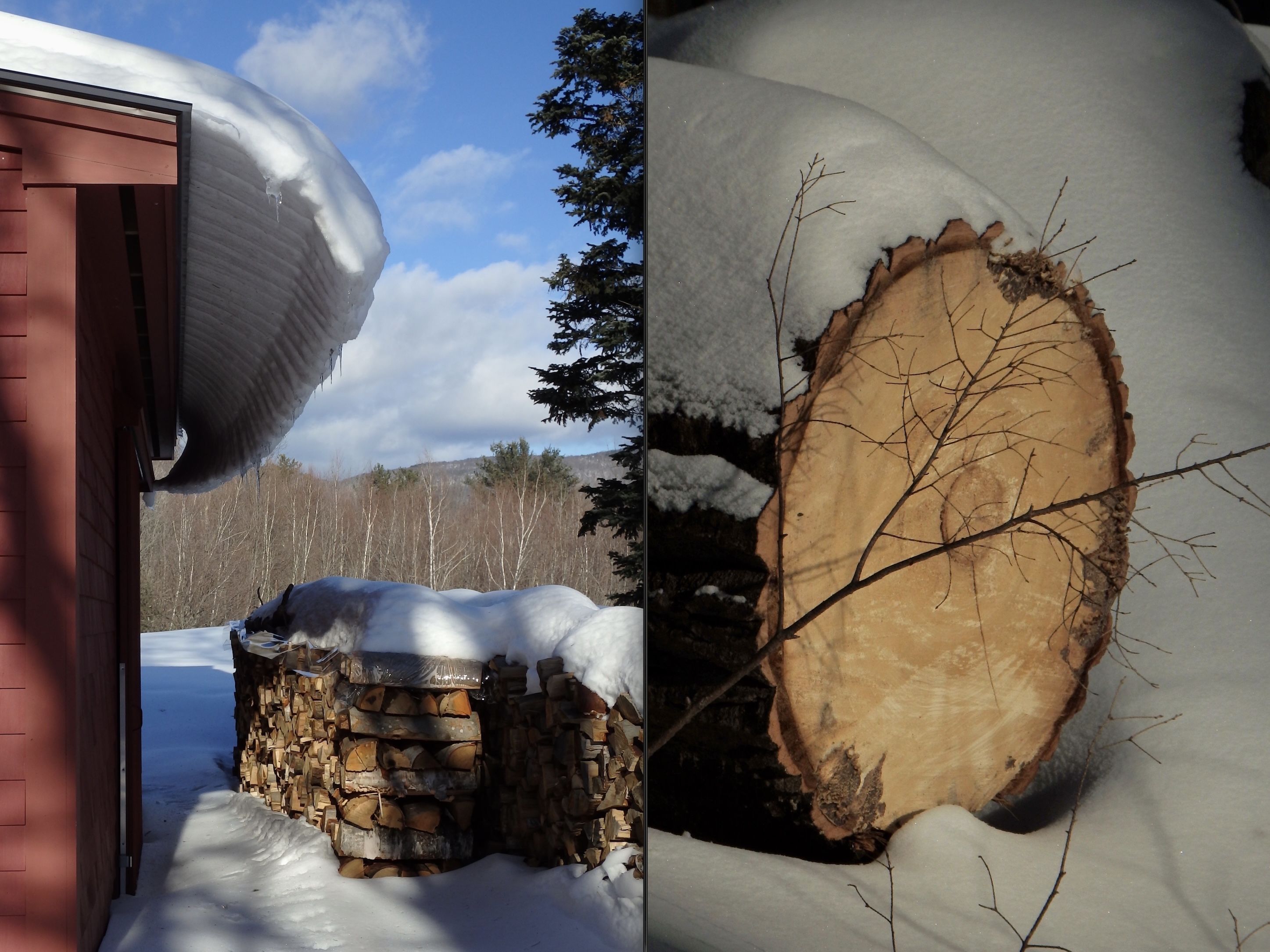
I find that whatever hindrances may occur I write just about the same amount of truth in my Journal; for the record is more concentrated, and usually it is some very real and earnest life, after all, that interrupts. All flourishes are omitted. If I saw wood from morning to night, though I grieve that I could not observe the train of my thoughts during that time, yet, in the evening, the few scrannel lines which describe my day’s occupations will make the creaking of the saw more musical than my freest fancies could have been. I find incessant labor with the hands, which engrosses the attention also, the best method to remove palaver out of one’s style. One will not dance at his work who has wood to cut and cord before the night falls in the short days of winter; but every stroke will be husbanded, and ring soberly through the wood; and so will his lines ring and tell on the ear, when at evening he settles the accounts of the day. I have often been astonished at the force and precision of style to which busy laboring men, unpracticed in writing, easily attain when they are required to make the effort. It seems as if their sincerity and plainness were the main thing to be taught in schools — and yet not in the schools, but in the fields, in actual service, I should say….
I want to see a sentence run clear through to the end, as deep and fertile as a well-drawn furrow which shows that the plow was pressed down to the beam. If our scholars would lead more earnest lives, we should not witness those lame conclusions to their ill-sown discourses, but their sentences would pass over the ground like loaded rollers, and not mere hollow and wooden ones, to press in the seed and make it germinate.

November 1, 1858

in Thoreau’s Journal:

As the afternoons grow shorter, and the early evening drives us home to complete our chores, we are reminded of the shortness of life, and become more pensive, at least in this twilight of the year. We are prompted to make haste and finish our work before the night comes. I leaned over a rail in the twilight on the Walden road, waiting for the evening mail to be distributed, when such thoughts visited me. I seemed to recognize the November evening as a familiar thing come round again, and yet I could hardly tell whether I had ever known it or only divined it. The November twilights just begun! It appeared like a part of a panorama at which I sat spectator, a part of which I was perfectly familiar just coming into view, and I foresaw how it would look and roll along, and prepared to be pleased. Just such a piece of art merely, though infinitely sweet and grand, did it appear to me, and just as little were any active duties required of me.

We are independent on all that we see. The hangman whom I have seen cannot hang me. The earth which I have seen cannot bury me. Such doubleness and distance does sight prove. Only the rich and such as are troubled with ennui are implicated in the maze of phenomena. You cannot see anything until you are clear of it. The long railroad causeway through the meadows west of me, the still twilight in which hardly a cricket was heard, the dark bank of clouds in the horizon long after sunset, the villagers crowding to the post-office, and the hastening home to supper by candle-light, had I not seen all this before! What new sweet was I to extract from it? Truly they mean that we shall learn our lesson well. Nature gets thumbed like an old spelling-book. The almshouse and Frederick were still as last November. I was no nearer, methinks, nor further off from my friends. Yet I sat the bench with perfect contentment, unwilling to exchange the familiar vision that was to be unrolled for any treasure or heaven that could be imagined. Sure to keep just so far apart in our orbits still, in obedience to the laws of attraction and repulsion, affording each other only steady but indispensable starlight. It was as if I was promised the greatest novelty the world has ever seen or shall see, though the utmost possible novelty would be the difference between me and myself a year ago. This alone encouraged me, and was my fuel for the approaching winter. That we may behold the panorama with this slight improvement or change, this is what we sustain life for with so much effort from year to year.