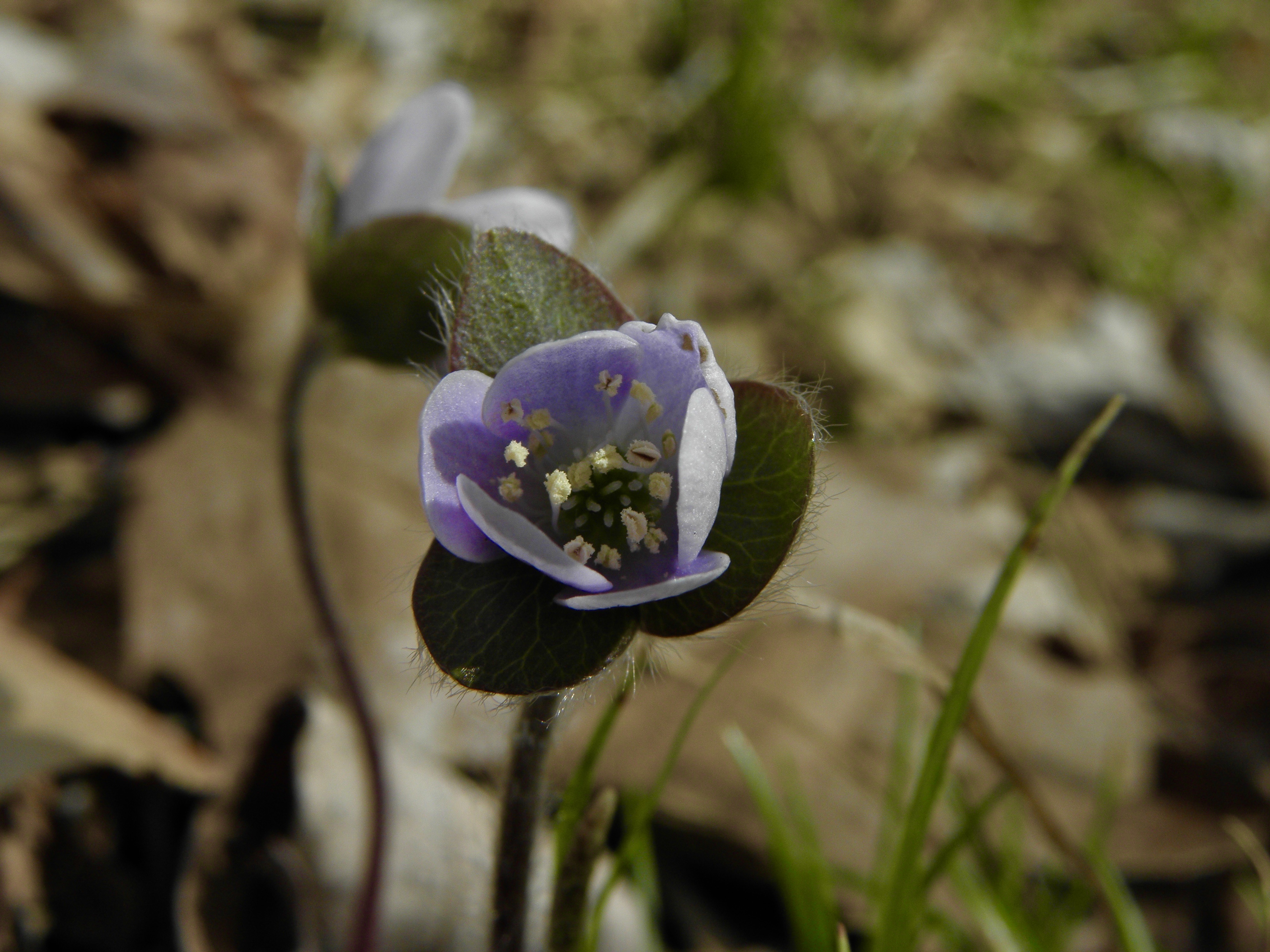
With this flower, so much more flowerlike or noticeable than any yet—begins a new era in the flower season.
Photo: April 1, 2012 at Eagle Cliff, Sandwich, New Hampshire
[My Our Town Transition, first posted April 1, 2024]
I’ve heard from many people that once you’ve lived in Sandwich, NH you may leave it but it never leaves you. But as of April 1st, in the narrow sense, the me that’s part of Our Town will not live here any longer. So, no more “Our Town” from me.
Some of you may know that in addition to a zillion photos of the Sandwich landscape, I have accumulated a similar amount of research on Henry David Thoreau’s amazing, 2,000,000 word, daily Journal which he kept from 1836 until his death in 1862. Thoreau came to New Hampshire fairly often, once camped in Center Harbor, and climbed Red Hill. But to the best of my knowledge, he never made it to Sandwich.
Whether by the vagaries of the gods, or the harbingers of climate change, the climate in Sandwich has become fairly similar to that of Concord, Massachusetts in the mid-1800s. Most of Thoreau’s close observations of weather, flora, and fauna in Concord then, are abundant in Sandwich now. So I’m thinking of making a daily post from Thoreau’s Journal coupled with an archival photo taken here in Our Town that illustrates it. I will give this a certain subject heading and see if I can take us through a few years of Thoreau Comes to Sandwich. Despite the fact that he never did. But his Journal still can.
I can say, in many ways, Thoreau’s Journal has been my guide for living in Sandwich, showing me what to see, how to get off the beaten path, how to set priorities and, how to keep a clear mind.
Last, I want to thank all the folks who’ve given me feedback on my daily Our Town posts. It’s given me great pleasure to share my excursions at Chicks Corner and farther afield. I hope my fascination with both the small and the grand details of where we live has come across. It is something we who live–and have lived here–all share. From my own experience I surmise this can change your life. My hope for you all is that you know this to be true for yourselves.
As I stand under the hill beyond J. Hosmer’s and look over the plains westward toward Acton and see the farmhouses nearly half a mile apart, few and solitary, in these great fields between these stretching woods, out of the world, where the children have to go far to school; the still, stagnant, heart-eating, life-everlasting, and gone-to-seed country, so far from the post-office where the weekly paper comes, wherein the new-married wife cannot live for loneliness, and the young man has to depend upon his horse for society; see young J. Hosmer’s house, whither he returns with his wife in despair after living in the city, — I standing in Tarbell’s road, which he alone cannot break, — the world in winter for most walkers reduced to a sled track winding far through the drifts, all springs sealed up and no digressions;
where the old man thinks he may possibly afford to rust it out, not having long to live, but the young man pines to get nearer the post-office and the Lyceum, is restless and resolves to go to California, because the depot is a mile off (he hears the rattle of the cars at a distance and thinks the world is going by and leaving him); where rabbits and partridges multiply, and muskrats are more numerous than ever, and none of the farmer’s sons are willing to be farmers, and the apple trees are decayed, and the cellar-holes are more numerous than the houses, and the rails are covered with lichens, and the old maids wish to sell out and move into the village, and have waited twenty years in vain for this purpose and never finished but one room in the house, never plastered nor painted, inside or out, lands which the Indian was long since dispossessed [of], and now the farms are run out, and what were forests are grain-fields, what were grain-fields, pastures; dwellings which only those Arnolds of the wilderness, those coureurs de bois, the baker and the butcher visit, to which at least the latter penetrates for the annual calf, — and as he returns the cow lows after, — whither the villager never penetrates, but in huckleberry time, perchance, and if he does not, who does? — where some men’s breaths smell of rum, having smuggled in a jugful to alleviate their misery and solitude; where the owls give a regular serenade; — I say, standing there and seeing these things, I cannot realize that this is that hopeful young America which is famous throughout the world for its activity and enterprise, and this is the most thickly settled and Yankee part of it.
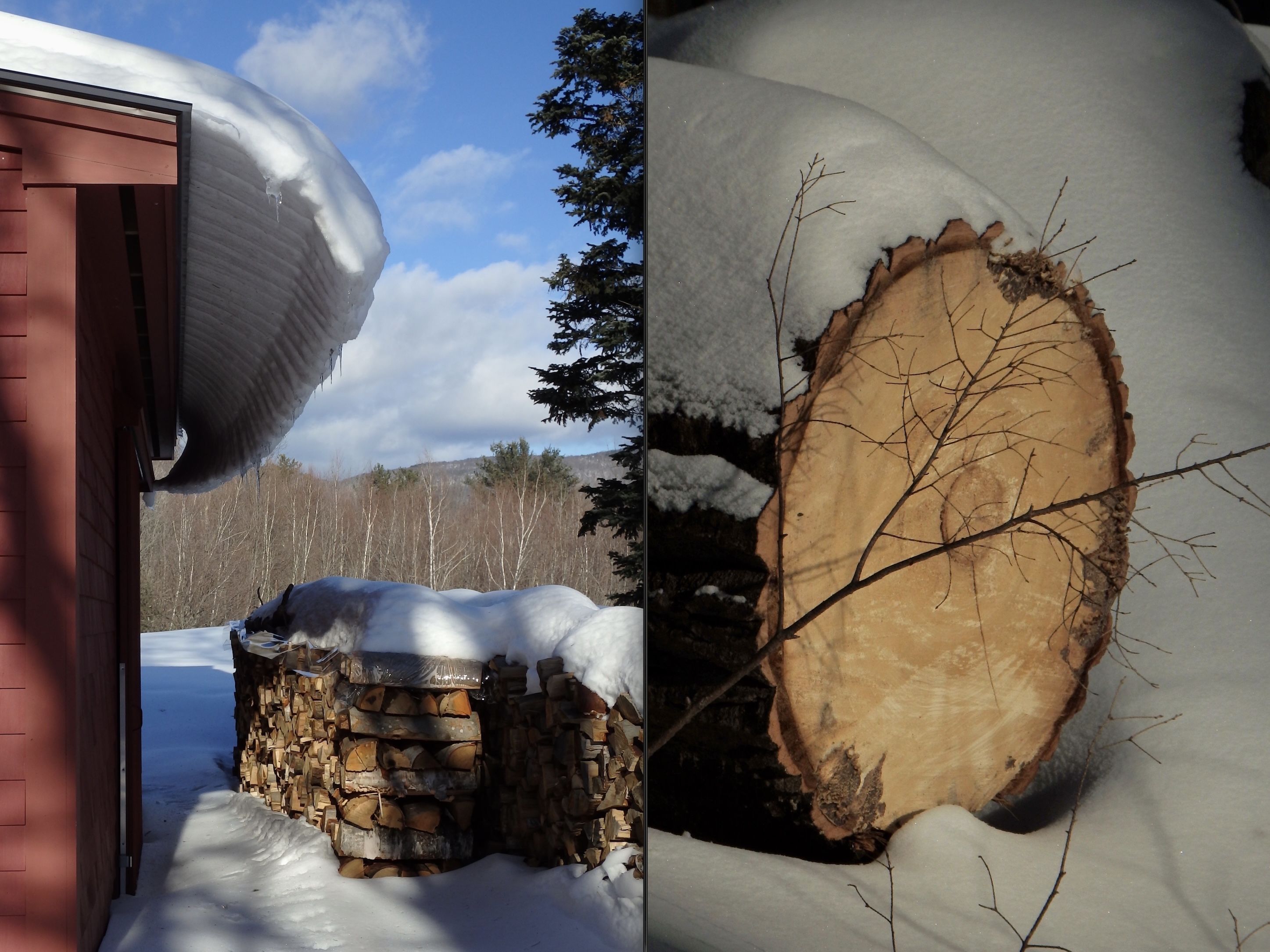
I find that whatever hindrances may occur I write just about the same amount of truth in my Journal; for the record is more concentrated, and usually it is some very real and earnest life, after all, that interrupts. All flourishes are omitted. If I saw wood from morning to night, though I grieve that I could not observe the train of my thoughts during that time, yet, in the evening, the few scrannel lines which describe my day’s occupations will make the creaking of the saw more musical than my freest fancies could have been. I find incessant labor with the hands, which engrosses the attention also, the best method to remove palaver out of one’s style. One will not dance at his work who has wood to cut and cord before the night falls in the short days of winter; but every stroke will be husbanded, and ring soberly through the wood; and so will his lines ring and tell on the ear, when at evening he settles the accounts of the day. I have often been astonished at the force and precision of style to which busy laboring men, unpracticed in writing, easily attain when they are required to make the effort. It seems as if their sincerity and plainness were the main thing to be taught in schools — and yet not in the schools, but in the fields, in actual service, I should say….
I want to see a sentence run clear through to the end, as deep and fertile as a well-drawn furrow which shows that the plow was pressed down to the beam. If our scholars would lead more earnest lives, we should not witness those lame conclusions to their ill-sown discourses, but their sentences would pass over the ground like loaded rollers, and not mere hollow and wooden ones, to press in the seed and make it germinate.
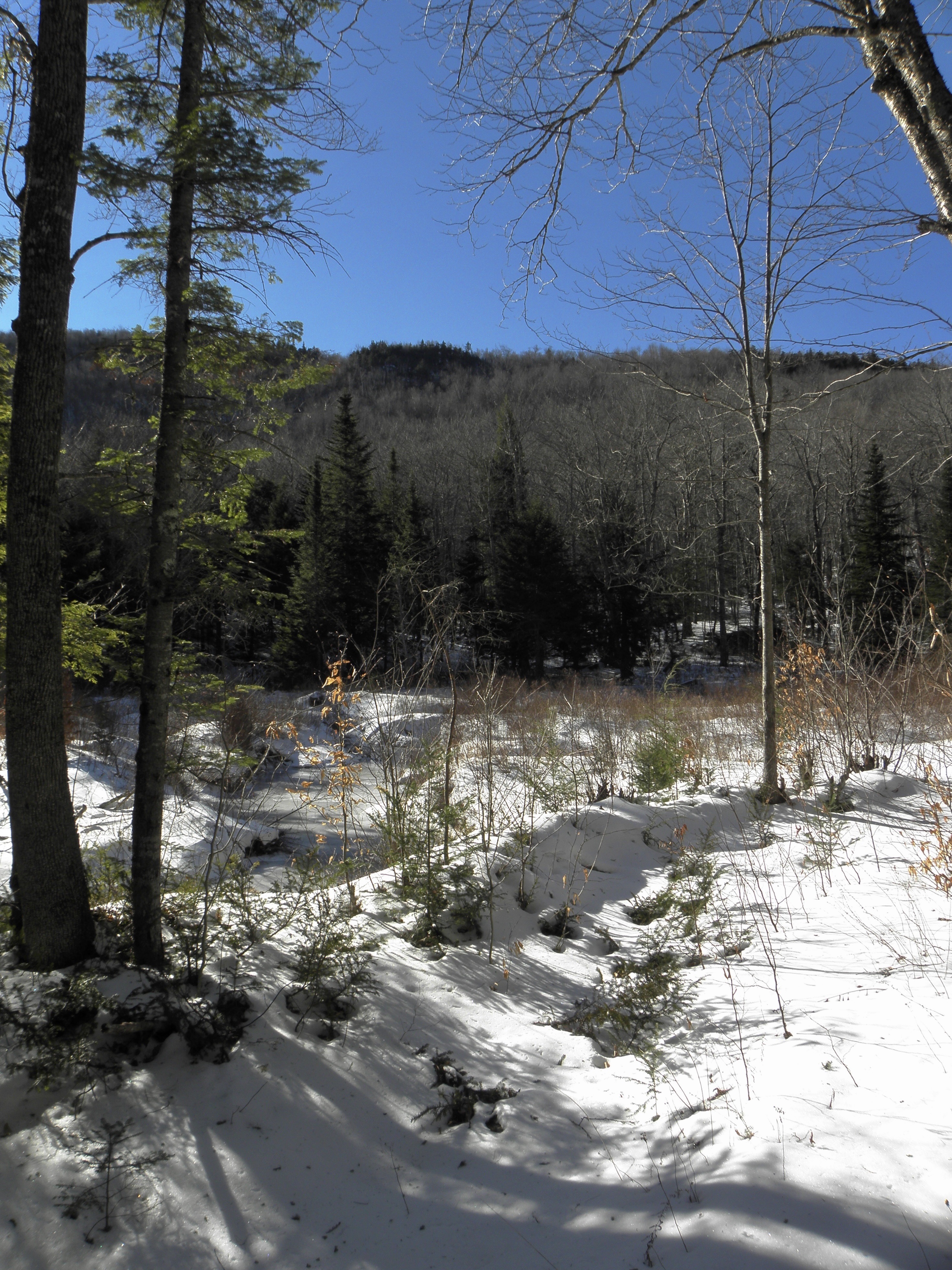
It began to snow again last evening, but soon ceased, and now it has turned out a fine winter morning, with half an inch of snow on the ground, the air full of mist, through which the smokes rise up perfectly straight; and the mist is frozen in minute leafets on the fences and trees and the needles of the pines, silvering them.
I stood by Bigelow the blacksmith’s forge yesterday, and saw him repair an axe. He burned the handle out, then, with a chisel, cut off the red-hot edge even, there being some great gaps in it, and by hammering drew it out and shaped it anew, —all in a few minutes. It was interesting to see performed so simply and easily, by the aid of fire and a few rude tools….
P. M. — To Pink Azalea Woods.
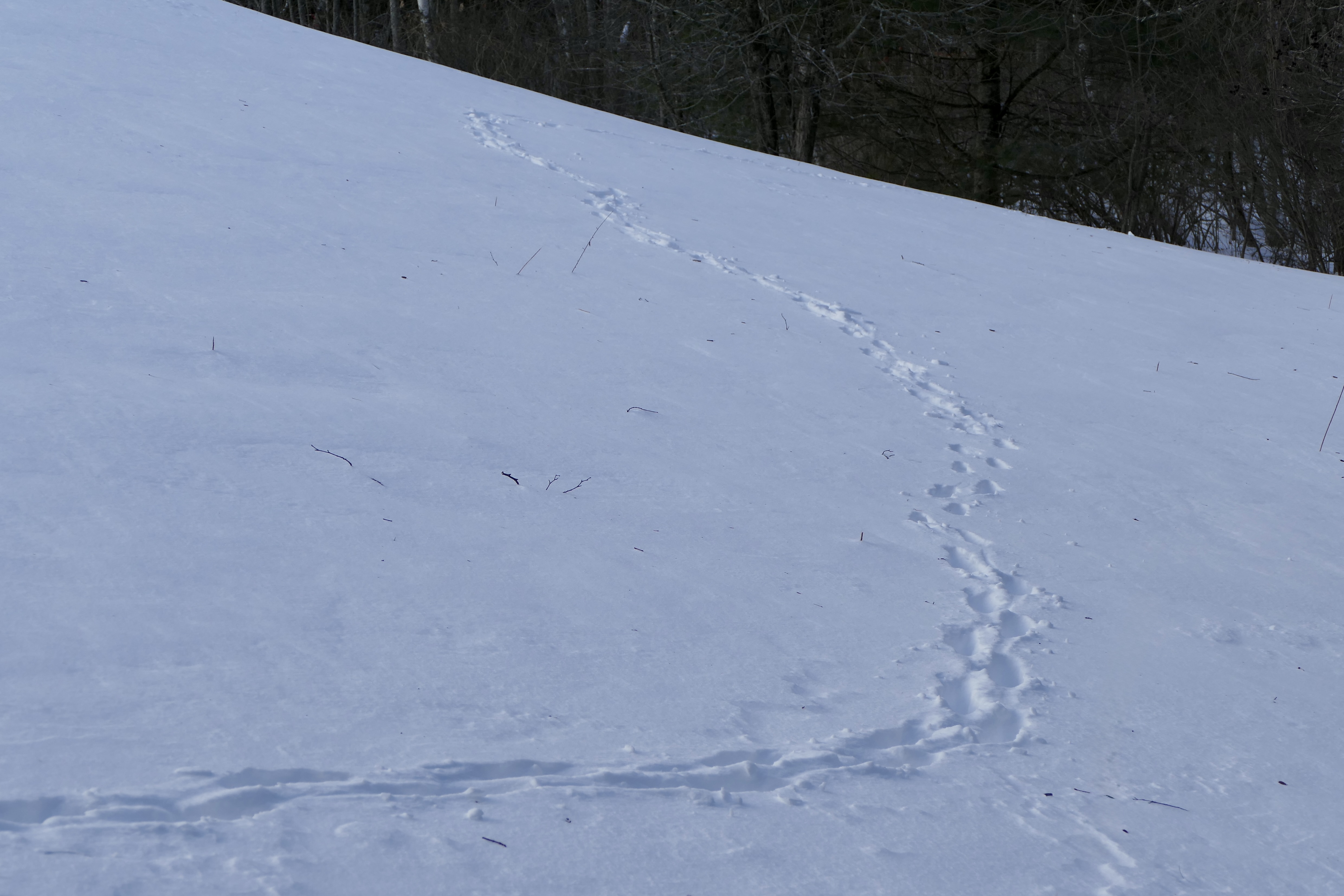
The warm sun has quite melted the thin snow on the south sides of the hills, but I go to see the tracks of animals that have been out on the north sides. First, getting over the wall under the walnut trees on the south brow of the hill, I see the broad tracks of squirrels, probably red, where they have ascended and descended the trees, and the empty shells of walnuts which they have gnawed left on the snow. The snow is so very shallow that the impression of their toes is the more distinctly seen. It imparts life to the landscape to see merely the squirrels’ track in the snow at the base of the walnut tree. You almost realize a squirrel at every tree. The attractions of nature are thus condensed or multiplied. You see not merely bare trees and ground which you might suspect that a squirrel had left, but you have this unquestionable and significant evidence that a squirrel has been there since the snow fell, — as conclusive as if you had seen him.
A little further I heard the sound [of] a downy wood- pecker tapping a pitch pine in a little grove, and saw him inclining to dodge behind the stem. He flitted from pine to pine before me. Frequently, when I pause to listen, I hear this sound in the orchards or streets. This was in one of these dense groves of young pitch pines.
Suddenly I heard the screwing mew and then the whir of a partridge on or beneath an old decaying apple tree which the pines had surrounded. There were several such, and another partridge burst away from one. They shoot off swift and steady, showing their dark-edged tails, almost like a cannon-ball. I saw one’s track under an apple tree and where it had pecked a frozen-thawed apple.
Then I came upon a fox-track made last night, leading toward a farmhouse, —Wheeler’s, where there are many hens, — running over the side of the hill parallel with Wheeler’s new wall. He was dainty in the choice of his ground, for I observed that for a mile he had adhered to a narrow cow-path, in which the snow lay level, for smoothness. Sometimes he had cantered, and struck the snow with his foot between his tracks. Little does the farmer think of the danger which threatens his hens.
In a little hollow I see the sere gray pennyroyal rising above the snow, which, snuffed, reminds me of garrets full of herbs.
Now I hear, half a mile off, the hollow sound of woodchopping, the work of short winter days begun, which is gradually laying bare and impoverishing our landscape. In two or three thicker woods which I have visited this season, I was driven away by this ominous sound.
Further over toward the river, I see the tracks of a deer mouse on a rock, which suddenly come to an end where apparently it had ascended a small pine by a twig which hung over it. Sometimes the mark of its tail was very distinct. Afterwards I saw in the pasture westward where many had run about in the night. In one place many had crossed the cow-path in which I was walking, in one trail, or the same one had come and gone many times. In the large hollows where rocks have been blasted, and on the sides of the river, I see irregular spaces of dark ice bare of snow, which was frozen after the snow ceased to fall. But this ice is rotten and mixed with snow. I am surprised to see the river frozen over for the most part with this thin and rotten snow ice, and the drooping or bent alders are already frozen into this slush, giving to the stream a very wintry aspect. I see some squirrel-tracks about a hole in a stump.
At the azalea meadow or swamp, the red tops of the osiers, which are very dense and of a uniform height, are quite attractive, in the absence of color at this season. Any brighter and warmer color catches our eye at this season. I see an elm there whose bark is worn quite smooth and white and bare of lichens, showing exactly the height at which the ice stood last winter.
Looking more closely at the light snow there near the swamp, I found that it was sprinkled all over (as with pellets of cotton) with regular star-shaped cottony flakes with six points, about an eighth of an inch in diameter and on an average a half an inch apart. It snowed geometry.
How snug and warm a hemlock looks in the winter! [place of drawing] That by the azalea looks thus: There is a tendency in the limbs to arrange themselves ray-wise about a point one third from the base to the top. What singular regularity in the outline of a tree!
I noticed this morning successive banks of frost on the windows, marked by their irregular waving edges, like the successive five, ten, and fifteen fathom lines which mark the depth of the shores on charts.
Thus by the snow I was made aware in this short walk of the recent presence there of squirrels, a fox, and countless mice, whose trail I had crossed, but none of which I saw, or probably should have seen before the snow fell. Also I saw this afternoon the track of one sparrow, probably a tree sparrow, which had run among the weeds in the road.
That grand old poem called Winter is round again without any connivance of mine. As I sit under Lee’s Cliff, where the snow is melted, amid sere pennyroyal and frost-bitten catnep, I look over my shoulder upon an arctic scene. I see with surprise the pond a dumb white surface of ice speckled with snow, just as so many winters before, where so lately were lapsing waves or smooth reflecting water.
I see the holes which the pickerel-fisher has made, and I see him, too, retreating over the hills, drawing his sled behind him. The water is already skimmed over again there. I hear, too, the familiar belching voice of the pond. It seemed as if winter had come without any interval since midsummer, and I was prepared to see it flit away by the time I again looked over my shoulder. It was as if I had dreamed it. But I see that the farmers have had time to gather their harvests as usual, and the seasons have revolved as slowly as in the first autumn of my life. The winters come now as fast as snowflakes. It is wonderful that old men do not lose their reckoning. It was summer, and now again it is winter. Nature loves this rhyme so well that she never tires of repeating it. So sweet and wholesome is the winter, so simple and moderate, so satisfactory and perfect, that her children will never weary of it. What a poem! an epic in blank verse, enriched with a million tinkling rhymes. It is solid beauty. It has been subjected to the vicissitudes of millions of years of the gods, and not a single superfluous ornament remains. The severest and coldest of the immortal critics have shot their arrows at and pruned it till it cannot be amended.
As the afternoons grow shorter, and the early evening drives us home to complete our chores, we are reminded of the shortness of life, and become more pensive, at least in this twilight of the year. We are prompted to make haste and finish our work before the night comes. I leaned over a rail in the twilight on the Walden road, waiting for the evening mail to be distributed, when such thoughts visited me. I seemed to recognize the November evening as a familiar thing come round again, and yet I could hardly tell whether I had ever known it or only divined it. The November twilights just begun! It appeared like a part of a panorama at which I sat spectator, a part of which I was perfectly familiar just coming into view, and I foresaw how it would look and roll along, and prepared to be pleased. Just such a piece of art merely, though infinitely sweet and grand, did it appear to me, and just as little were any active duties required of me.
We are independent on all that we see. The hangman whom I have seen cannot hang me. The earth which I have seen cannot bury me. Such doubleness and distance does sight prove. Only the rich and such as are troubled with ennui are implicated in the maze of phenomena. You cannot see anything until you are clear of it. The long railroad causeway through the meadows west of me, the still twilight in which hardly a cricket was heard, the dark bank of clouds in the horizon long after sunset, the villagers crowding to the post-office, and the hastening home to supper by candle-light, had I not seen all this before! What new sweet was I to extract from it? Truly they mean that we shall learn our lesson well. Nature gets thumbed like an old spelling-book. The almshouse and Frederick were still as last November. I was no nearer, methinks, nor further off from my friends. Yet I sat the bench with perfect contentment, unwilling to exchange the familiar vision that was to be unrolled for any treasure or heaven that could be imagined. Sure to keep just so far apart in our orbits still, in obedience to the laws of attraction and repulsion, affording each other only steady but indispensable starlight. It was as if I was promised the greatest novelty the world has ever seen or shall see, though the utmost possible novelty would be the difference between me and myself a year ago. This alone encouraged me, and was my fuel for the approaching winter. That we may behold the panorama with this slight improvement or change, this is what we sustain life for with so much effort from year to year.
4 A. M. —It adds a charm, a dignity, a glory, to the earth to see the light of the moon reflected from her streams. There are but us three, the moon, the earth which wears this jewel (the moon’s reflection) in her crown, and myself. Now there has come round the Cliff (on which I sit), which faces the west, all unobserved and mingled with the dusky sky of night, a lighter and more ethereal living blue, whispering of the sun still far, far away, behind the horizon.
From the summit of our atmosphere, perchance, he may already be seen by soaring spirits that inhabit those thin upper regions, and they communicate the glorious intelligence to us lower ones. There real divine, the heavenly, blue, the Jove-containing air, it is, I see through this dusky lower stratum. The sun gilding the summits of the air. The broad artery of light flows overall the sky. Yet not without sadness and compassion I reflect that I shall not see the moon again in her glory. (Not far from four, still in the night, I heard a nighthawk squeak and boom, high in the air, as I sat on the Cliff. What is said about this being less of a night bird than the whip-poor-will is perhaps to be questioned. For neither do I remember to have heard the whip-poor-will sing at 12 o’clock, though I met one sitting and flying between two and three this morning. I believe that both may be heard at midnight, though very rarely.) Now at very earliest dawn the nighthawk booms and the whip-poor-will sings. Returning down the hill by the path to where the woods [are] cut off, I see the signs of the day, the morning red. There is the lurid morning star, soon to be blotted out by a cloud.
My attic chamber has compelled me to sit below with the family at evening for a month. I feel the necessity of deepening the stream of my life; I must cultivate privacy. It is very dissipating to be with people too much. As C. says, it takes the edge off a man’s thoughts to have been much in society. I cannot spare my moonlight and my mountains for the best of man I am likely to get in exchange––
I am inclined now for a pensive evening walk
Methinks we think of spring mornings and autumn evenings. I go via Hubbard Path. Chelone say two days X at Conants meadow beyond Wheelers. July has been to me a trivial month. It began hot and continued drying, then rained some toward the middle, bringing anticipations of the fall, and then was hot again about the 20th. It has been a month of haying, heat, low water, and weeds. Birds have grown up and flown more or less in small flocks, though I notice a new sparrow’s nest and eggs and perhaps a catbird’s eggs lately. The woodland quire has steadily diminished in volume.
At the bass I now find that that memorable hum has ceased and the green berries are formed. Now blueberries, huckleberries, and low blackberries are in their prime. The fever-bush berries will not be ripe for two or three weeks.
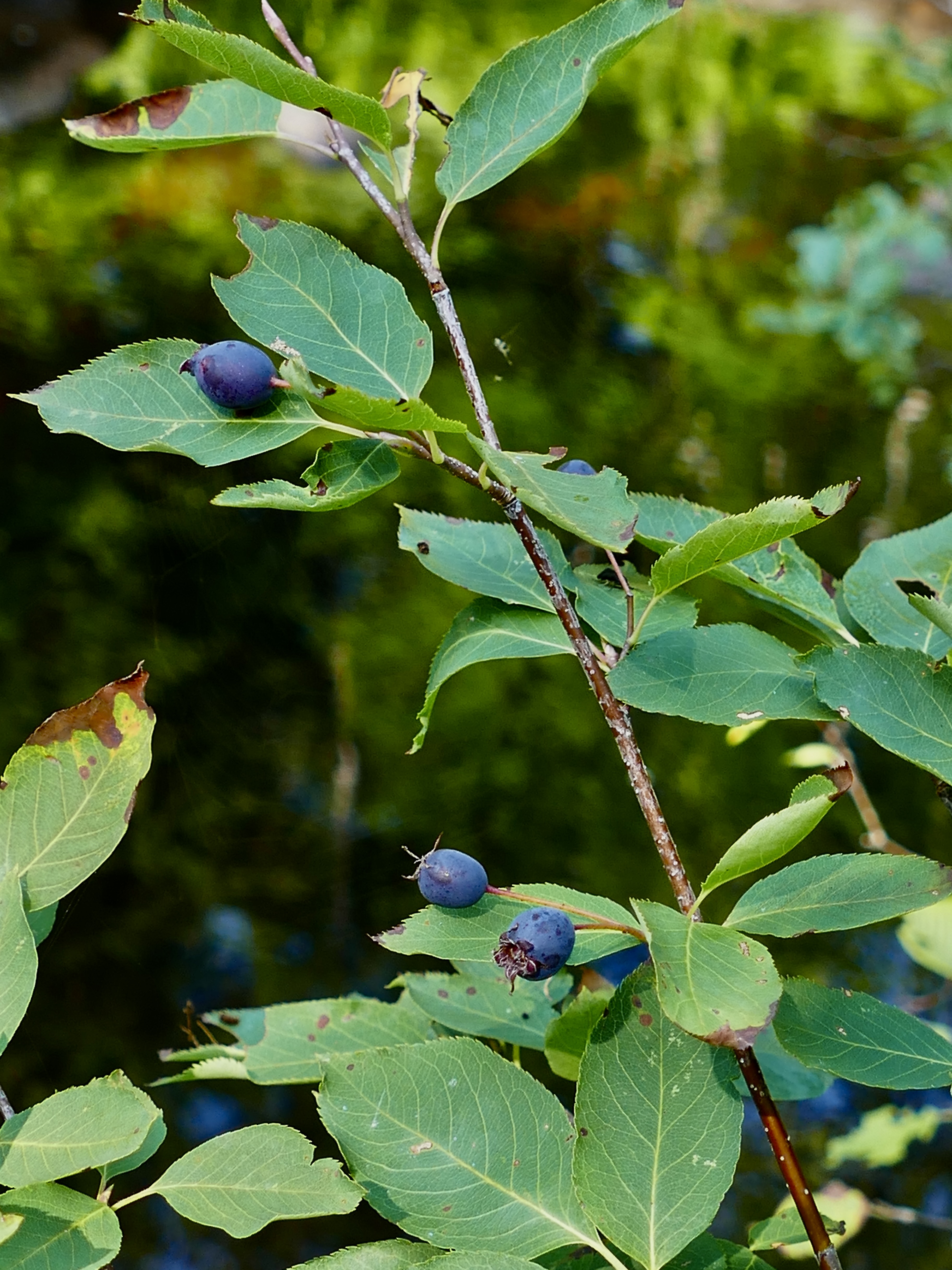
At Bittern Cliff the Gerardia quercifolia (?), apparently four or five days at least. How interesting the small alternate cornel trees, with often a flat top, a peculiar ribbed and green leaf, and pretty red stems supporting its harmless blue berries inclined to drop off ! The sweet viburnum, not yet turning. I see apparently a thistle-down over the river at Bittern Cliff; it is borne toward me, but when it reaches the rock some influence raises it high above the rock out of my reach. What a fall-like look the decayed and yellow leaves of the large Solomon’s-seal have in the thickets now! These, with skunk-cabbage and hellebore, suggest that the early ripeness of leaves, etc., has somewhat normal in it,— there is a fall already begun. Eupatorium sessilifolium, one or two stamens apparently for two days; its smooth leaf distinguishes it by the touch from the sunflower.
I sat on the Bittern Cliff as the still eve drew on. There was a man on Fair Haven furling his sail and bathing from his boat. A boat on a river whose waters are smoothed, and a man disporting in it! How it harmonizes with the stillness and placidity of the evening! Who knows but he is a poet in his yet obscure but golden youth? Few else go alone into retired scenes without gun or fishing-rod. He bathes in the middle of the pond while his boat slowly drifts away. As I go up the hill, surrounded by its shadow, while the sun is setting, I am soothed by the delicious stillness of the evening, save that on the hills the wind blows. I was surprised by the sound of my own voice. It is an atmosphere burdensome with thought. For the first time for a month, at least, I am reminded that thought is possible. The din of trivialness is silenced. I float over or through the deeps of silence. It is the first silence I have heard for a month. My life had been a River Platte, tinkling over its sands but useless for all great navigation, but now it suddenly became a fathomless ocean. It shelved off to unimagined depths.
I sit on rock on the hill top––warm with the heat of the departed sun, in my thin summer clothes. Here are the seeds of some berries in the droppings of some bird on the rock. The sun has been set fifteen minutes, and a long cloudy finger, stretched along the northern horizon, is held over the point where it disappeared. I see dark shadows formed on the south side of the woods east of the river. The creaking of the crickets becomes clear and loud and shrill, —a sharp tinkling, like rills bubbling up from the ground. After a little while the western sky is suddenly suffused with a pure white light, against which the hickories further east on the hill show black with beautiful distinctness. Day does not furnish so interesting a ground. A few sparrows sing as in the morning and the spring; also a peawai and a chewink. Meanwhile the moon in her first quarter is burnishing her disk. Now suddenly the cloudy finger and the few scattered clouds glow with the parting salute of the sun; the rays of the sun, which has so long sunk below the convex earth, are reflected from each cloudy promontory with more incomparable brilliancy than ever.
The hardhack leaves stand up so around the stem that now, at first starlight, I see only their light undersides a rod off. Do they as much by day? The surface of the forest on the east of the river presents a singularly cool and wild appearance, —cool as a pot of green paint, ––stretches of green light and shade, reminding me of some lonely mt side. The nighthawk flies low-skimming over the ground now. How handsome lie the oats which have been cradled in long rows in the field, a quarter of a mile uninterruptedly!
The thick stub ends, so evenly laid, are almost as rich a sight to me as the graceful tops. A few fireflies in the meadows. I am uncertain whether that so large and bright and high was a fire-fly or a shooting star. Shooting stars are but fireflies of the firmament. The crickets on the causeway make a steady creak, on the dry pasture-tops an interrupted one. I was compelled to stand to write where a soft, faint light from the western sky came in between two willows.
Fields today sends me a specimen copy of my “Walden” It is to be published on the 12 inst.


 allandibiase.com
You must be logged in to post a comment.