
in Thoreau’s Journal:
This is June, the month of grass and leaves…Already the aspens are trembling again, and a new summer is offered me. I feel a little fluttered in my thoughts, as if I might be too late. Each season is but an infinitesimal point. It no sooner comes than it is gone. It has no duration. It simply gives a tone and hue to my thought. Each annual phenomenon is a reminiscence and prompting.
Our thoughts and sentiments answer to the revolutions of the seasons as two cog-wheels fit into each other. We are conversant with only one point of contact at a time, from which we receive a prompting and impulse, and instantly pass to a new season or point of contact. A year is made up of a certain series and number of sensations and thoughts, which have their language in nature. Now I am ice, now I am sorrel. Each experience reduces itself to a mood of the mind.
For my purposes, the June 6, 1857 citation from the Journal is a key passage in understanding Thoreau’s reconfiguration of “the seasons” and likewise, how each season has its own language in nature. It also explicates another Thoreau touchstone: “the revolution of the seasons”. The image of the cog-wheel as developed in the passage above does this perfectly. In a larger perspective, this passage also reveals Thoreau’s meta-location (the joined position) with nature: “Now I am ice, now I am sorrel”. This is evident as the various seasons affect “the tone and hue” of his thoughts.
If this is an accurate description of this passage, then it’s possible for me to understand it as a rather compact epistemology: A way of knowing the self in situ at any time and place.
Here’s a passage from Sharon Cameron’s Writing Nature, p. 88 where she cites Thoreau on this topic:
Consciousness does not just mediate or mirror natural phenomena; as we see in the following passage, the fiction of the Journal is that consciousness is displaced by them. Of a near expulsion of the self by atmospheric pressure, Thoreau writes:
out of doors my thought is commonly drowned as it were & shrunken pressed down by stupendous piles of light etherial influences–for the pressure of the atmosphere is still 15 lbs to a square inch–I can do little more than preserve the equilibrium & resist the pressure of the atmosphere– I can only nod like the rye-heads in the breeze. — I expand more surely in my chamber–as far as [expression] goes, as if that pressure were taken off. –but here outdoors is the place to store up influences (July, 23, 1851).
Another image shows us how nature is at once internalized and recorded: “Properly speaking there can be no history but natural history, for there is no past in the soul but in nature” (March 8, 1842). Not just consciousness, then, but memory itself harks back to a store of natural influences–call them seasonal repetitions–for nature is the only history to which our lives keep returning.
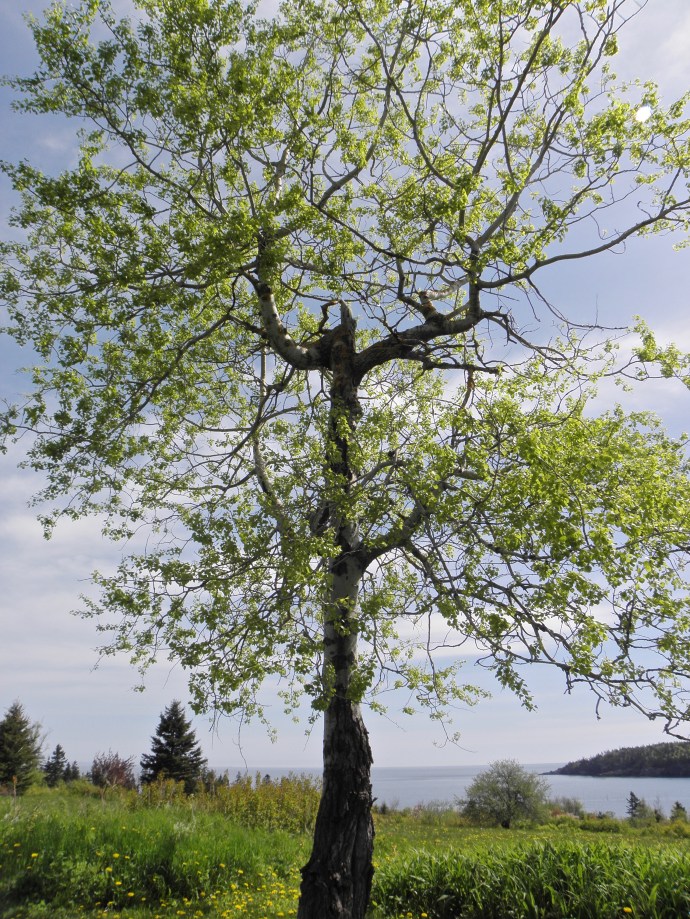
Just to reinforce the subtle and specific nature of this passage: Thoreau wrote: “Already the aspens are trembling again, and a new summer is offered me. I feel a little fluttered in my thoughts, as if I might be too late.” Here we have the natural phenomenon (aspens trembling) connected to “a little fluttered in my thoughts” which is a kind emotional turbulence that might cross our minds when and if we felt things were going by too quickly and we were missing something important. At another place in the Journal Thoreau wrote:
July 19, 1851: Methinks my seasons revolve more slowly than those of nature; I am differently timed. I am contented. This rapid revolution of nature, even of nature in me, why should it hurry me?
This gives us a bit of the “tone and hue” of Thoreau’s insight about being late.

