in Thoreau’s Journal
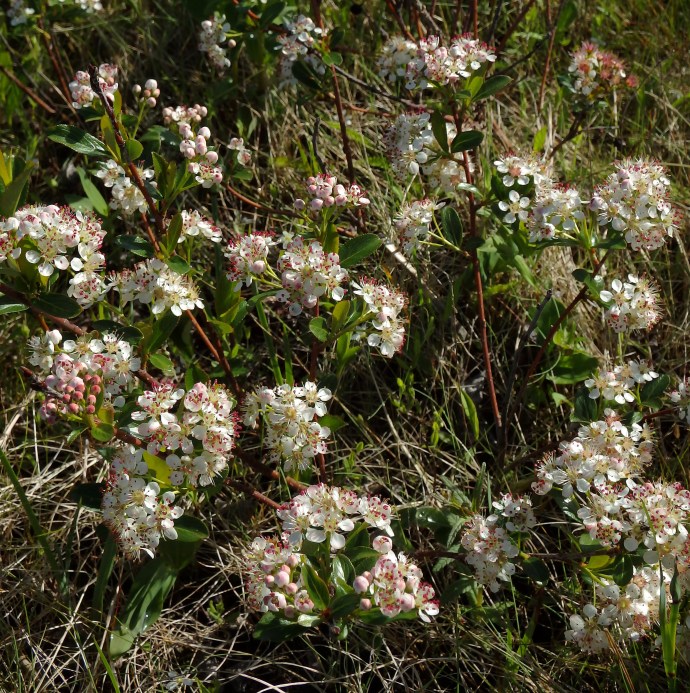
High blackberries are conspicuously in bloom, whitening the sides of lanes.
in Thoreau’s Journal
High blackberries are conspicuously in bloom, whitening the sides of lanes.
in Thoreau’s Journal

Gathered the Linnaea borealis.
1860 in Thoreau’s Journal:
It is truly June when you begin to see brakes (dark green) fully expanded in the wood paths. In early June, methinks as now, we have clearer days, less haze, more or less breeze, especially after rain, and more sparkling water, than before. I look from Fair Haven Hill….The leaves generally are almost fully expanded….

1850 in Thoreau’s Journal:
Not till June can the grass be said to be waving in the fields. When the frogs dream and the grass waves, and the buttercups toss their heads, and the heat imposes one to bathe in the ponds and streams, then is summer begun.
in Thoreau’s Journal:
To-day it is yet warmer, 87°at 3 P.M., compelling me to put on a thin coat, and I see that a new season has arrived June shadows are moving over waving grass-fields, the crickets chirp uninterruptedly, and I perceive the agreeable acid scent of high blueberry bushes in bloom.
in Thoreau’s Journal:
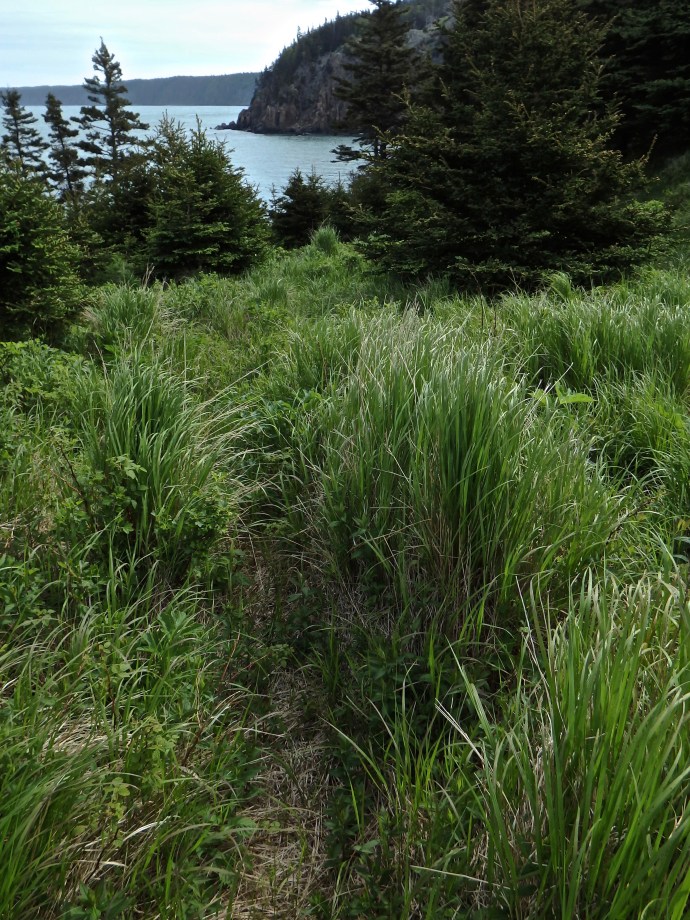
This is June, the month of grass and leaves…Already the aspens are trembling again, and a new summer is offered me. I feel a little fluttered in my thoughts, as if I might be too late. Each season is but an infinitesimal point. It no sooner comes than it is gone. It has no duration. It simply gives a tone and hue to my thought. Each annual phenomenon is a reminiscence and prompting.
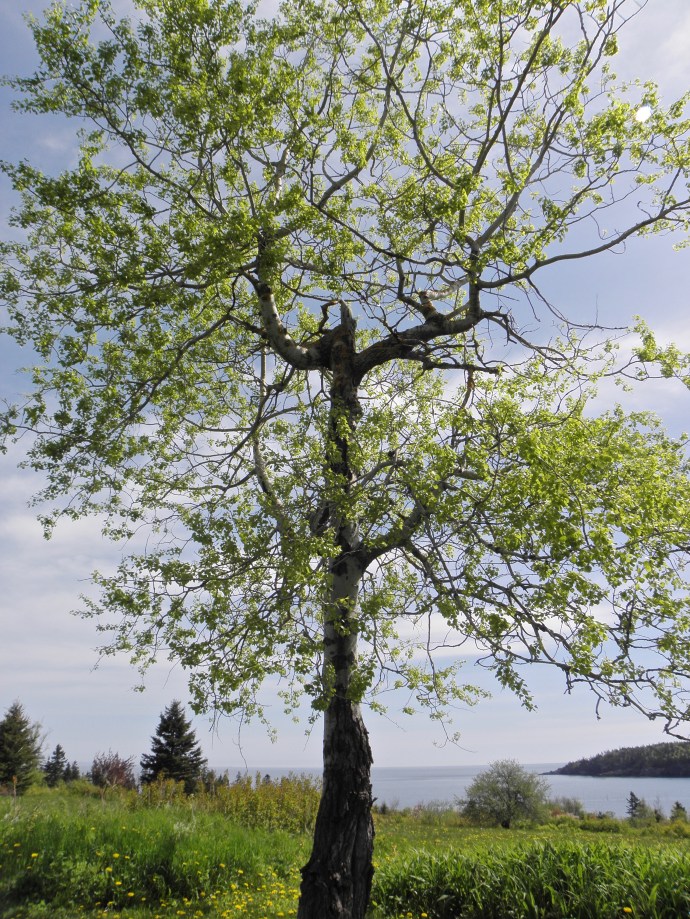
Our thoughts and sentiments answer to the revolutions of the seasons as two cog-wheels fit into each other. We are conversant with only one point of contact at a time, from which we receive a prompting and impulse, and instantly pass to a new season or point of contact. A year is made up of a certain series and number of sensations and thoughts, which have their language in nature. Now I am ice, now I am sorrel. Each experience reduces itself to a mood of the mind.
For my purposes, the June 6, 1857 citation from the Journal is a key passage in understanding Thoreau’s reconfiguration of “the seasons” and likewise, how each season has its own language in nature. It also explicates another Thoreau touchstone: “the revolution of the seasons”. The image of the cog-wheel as developed in the passage above does this perfectly. In a larger perspective, this passage also reveals Thoreau’s meta-location (the joined position) with nature: “Now I am ice, now I am sorrel”. This is evident as the various seasons affect “the tone and hue” of his thoughts.
If this is an accurate description of this passage, then it’s possible for me to understand it as a rather compact epistemology: A way of knowing the self in situ at any time and place.
Here’s a passage from Sharon Cameron’s Writing Nature, p. 88 where she cites Thoreau on this topic:
Consciousness does not just mediate or mirror natural phenomena; as we see in the following passage, the fiction of the Journal is that consciousness is displaced by them. Of a near expulsion of the self by atmospheric pressure, Thoreau writes:
out of doors my thought is commonly drowned as it were & shrunken pressed down by stupendous piles of light etherial influences–for the pressure of the atmosphere is still 15 lbs to a square inch–I can do little more than preserve the equilibrium & resist the pressure of the atmosphere– I can only nod like the rye-heads in the breeze. — I expand more surely in my chamber–as far as [expression] goes, as if that pressure were taken off. –but here outdoors is the place to store up influences (July, 23, 1851).
Another image shows us how nature is at once internalized and recorded: “Properly speaking there can be no history but natural history, for there is no past in the soul but in nature” (March 8, 1842). Not just consciousness, then, but memory itself harks back to a store of natural influences–call them seasonal repetitions–for nature is the only history to which our lives keep returning.
Just to reinforce the subtle and specific nature of this passage: Thoreau wrote: “Already the aspens are trembling again, and a new summer is offered me. I feel a little fluttered in my thoughts, as if I might be too late.” Here we have the natural phenomenon (aspens trembling) connected to “a little fluttered in my thoughts” which is a kind emotional turbulence that might cross our minds when and if we felt things were going by too quickly and we were missing something important. At another place in the Journal Thoreau wrote:
July 19, 1851: Methinks my seasons revolve more slowly than those of nature; I am differently timed. I am contented. This rapid revolution of nature, even of nature in me, why should it hurry me?
This gives us a bit of the “tone and hue” of Thoreau’s insight about being late.
in Thoreau’s Journal
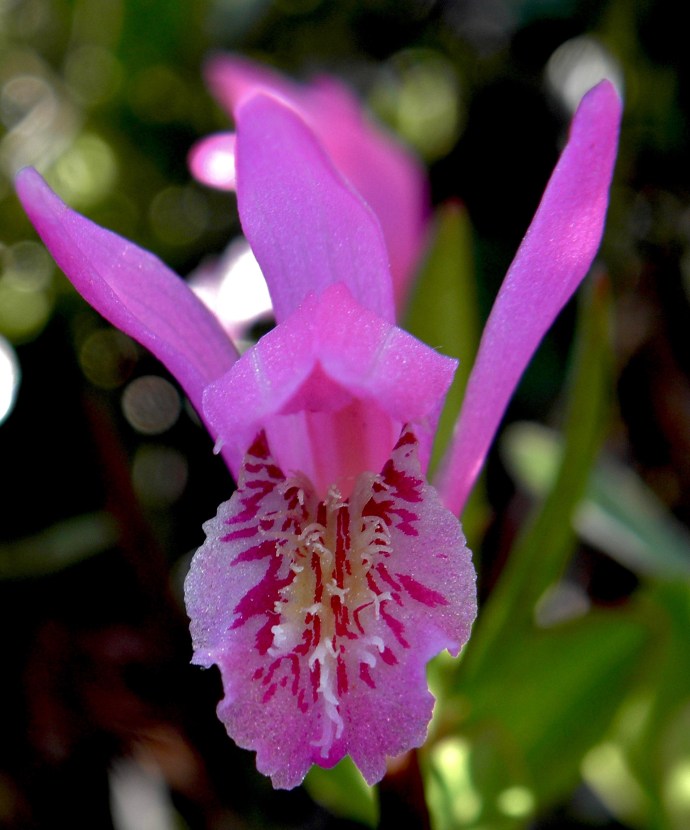
Some poet must sing in praise of the bulbous Arethusa.
I have observed that one mood is the natural critic of another. When possessed with a strong feeling on any subject foreign to the one I may be writing on, I know very well what of good and what of bad I have written on the latter. It looks to me now as it will ten years hence. My life is then earnest and will tolerate no makeshifts nor nonsense. What is tinsel or euphuism or irrelevant is revealed to such a touchstone. In the light of a strong feeling, all things take their places, and truth of every kind is seen for such.
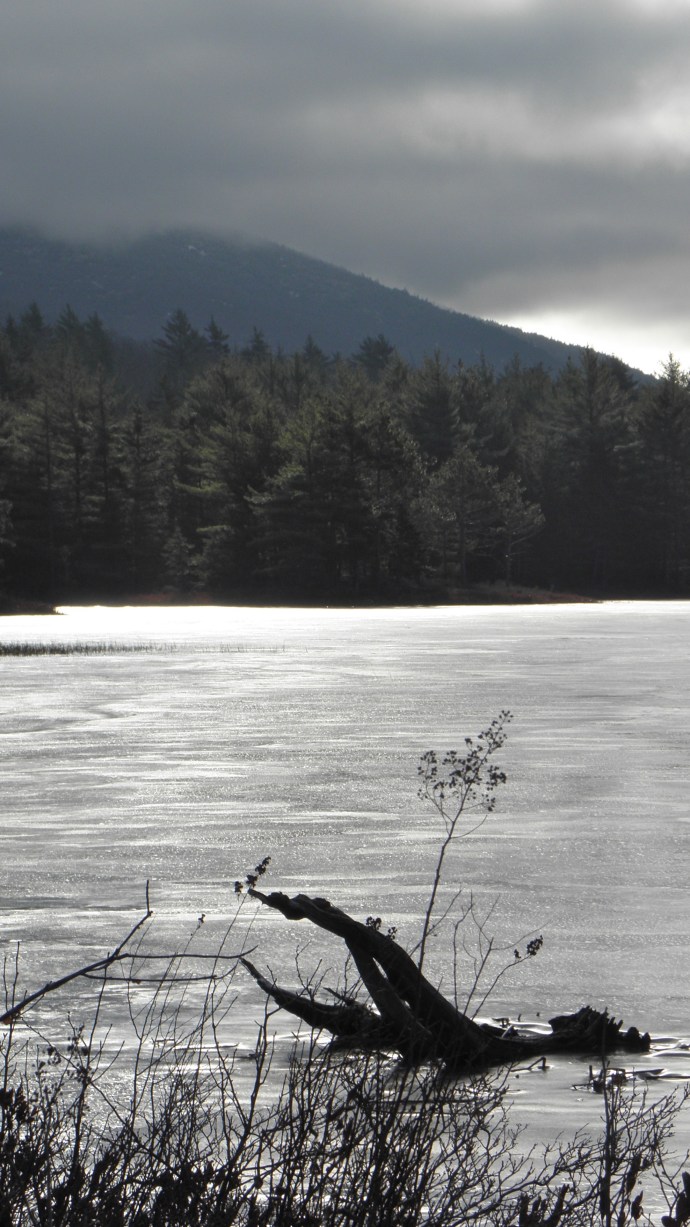
Now let me read my verses, and I will tell you if the god has had a hand in them. I wish to survey my composition for a moment from the least favorable point of view. I wish to be translated to the future, and look at my work as it were at a structure on the plain, to observe what portions have crumbled under the influence of the elements.
The year has many seasons more than are recognized in the almanac. (Spring 1850)
It is no small thing to say as little as is necessary.
I am thinking by what long discipline and at what cost a man learns to speak simply at last. (December 12, 1851)
in Thoreau’s Journal:
The clear brightness of June was well represented yesterday by the buttercups (Ranunculus bulbosus) along the roadside. Their yellow cups are glossy and varnished within, but not without.
Photo: June 3, 2016

in Thoreau’s Journal:
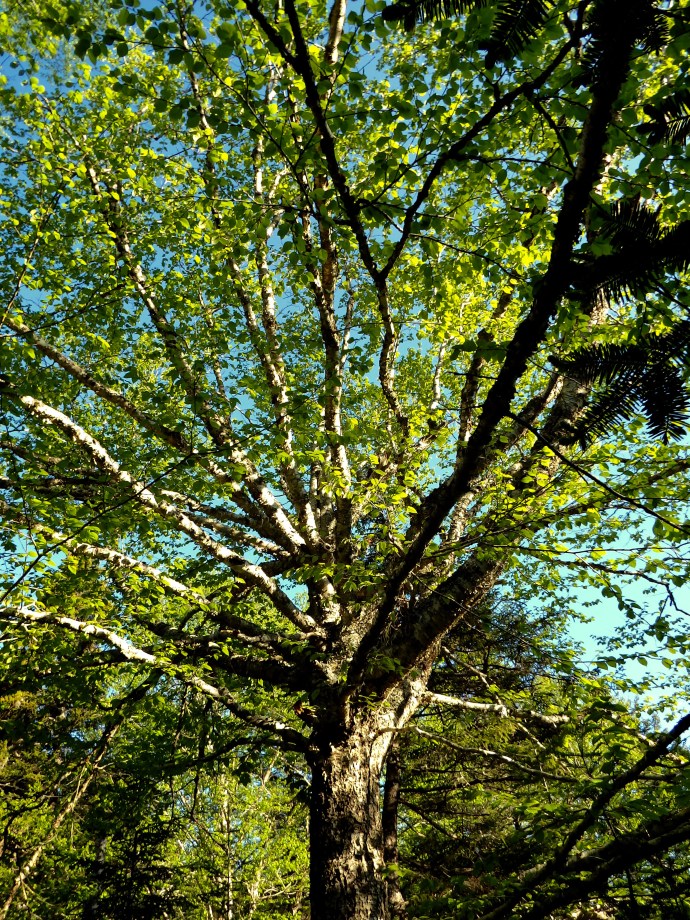
These are the clear breezy days of early June, when the leaves are young and few, and the sorrel not yet in its prime. Perceive the meadow fragrance…. The roads are strewn with red maple seed. The pine shoots have grown generally from three to six inches, and begin to make a distant impression, even at some distance, of white and brown above their dark green. The foliage of deciduous trees is still rather yellow-green than green.
in Thoreau’s Journal:
Clintonia borealis in a day or two. Its beauty at present consists chiefly in its commonly three very handsome, rich, clear, dark-green leaves….They are perfect in form and color, broadly oblanceolate, with a deep channel down the middle, uninjured by insects, arching over from a centre at the ground; and from their midst rises the scape, a foot high with one or more umbels of green, bell-shaped flowers, –– yellowish-green, nodding or bent downward, but without fragrance.
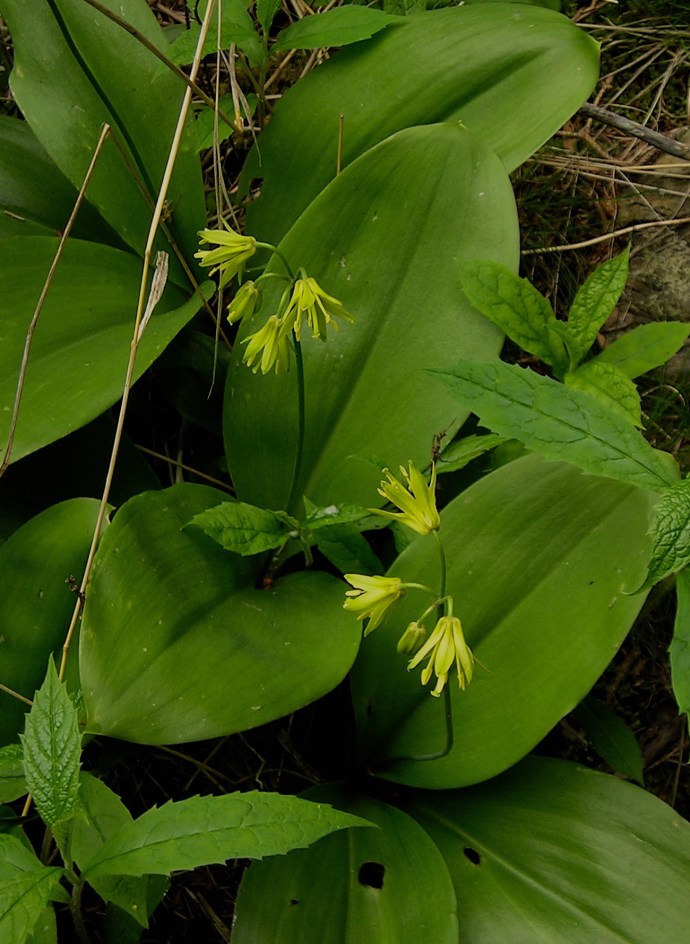
In fact, the plant is all green, both leaves and corolla. The leaves alone—and many have no scape—would detain the walker. Its berries are its flower.
in Thoreau’s Journal:
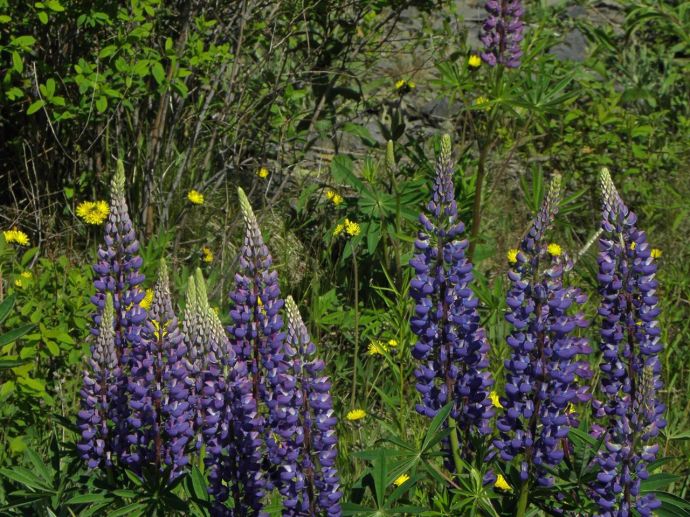
Summer begins now about a week past—with the expanded leaves—the shade & warm weather….what a variety of colors we are entertained––yet most colors are rare or in small doses presented us as a condiment or spice ––– Much of green-blue-black & white but of yellow & the different shades of red far less. The eyes feast on the different shades of flowers as on tit-bits—-they are its spices. How much lupine is now in full bloom….
 allandibiase.com
You must be logged in to post a comment.