April 17, 1856

in Thoreau’s Journal:

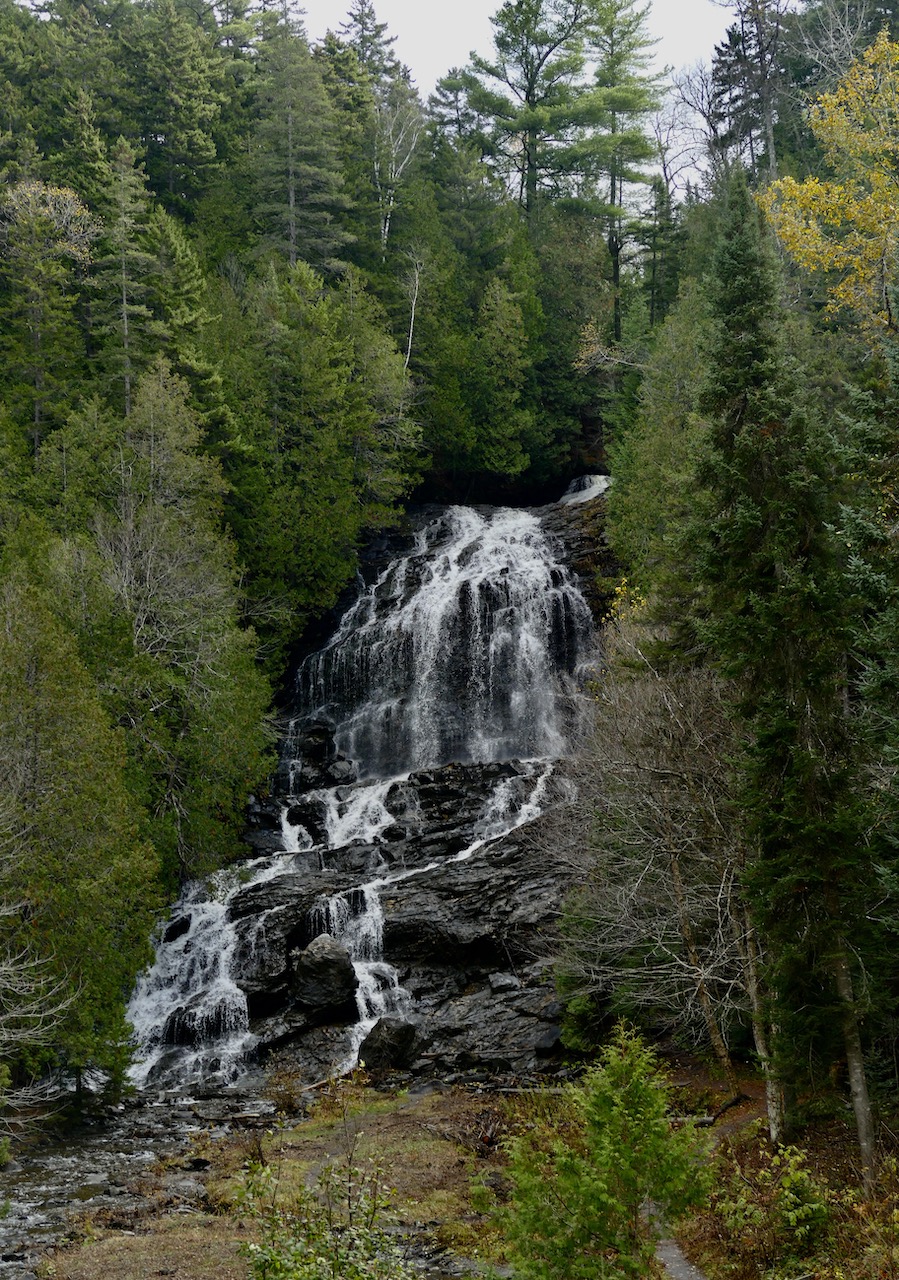
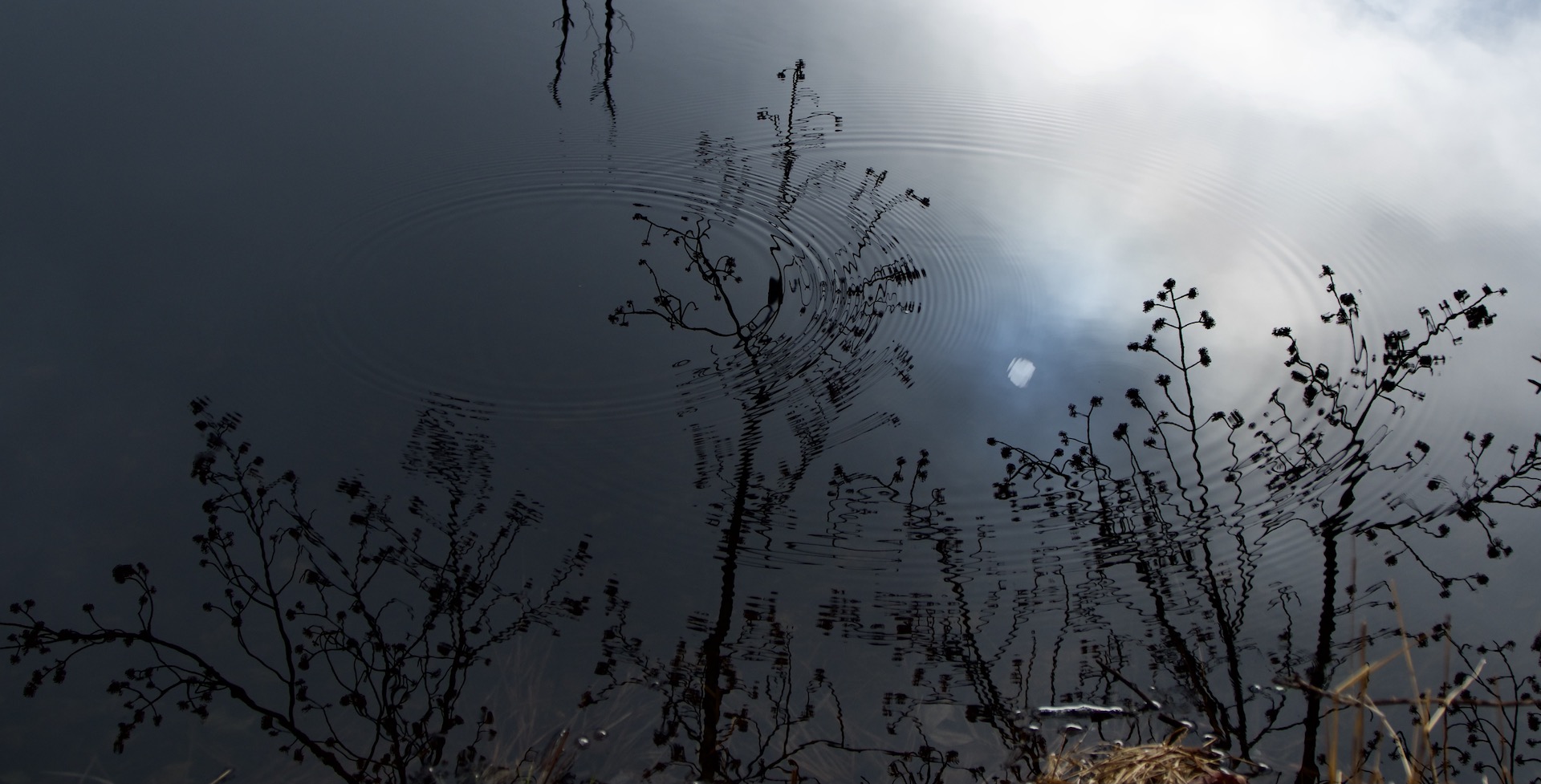
Now comes the rain with a rush. In haste I put my boat about, raise my sail, and, cowering under my umbrella in the stern, with the steering oar in my hand, begin to move homeward. The rain soon fulls up my sail, and it catches all the little wind. From under the umbrella I look out on the scene. The big drops pepper the watery plain, the aequor, on every side. It is not a hard, dry pattering, as on a roof, but a softer, liquid pattering, which makes the impression of a double wateriness. You do not observe the drops descending but where they strike, for there they batter and indent the surface deeply like buckshot, and they, or else other drops which they create, rebound or hop up an inch or two, and these last you see, and also when they fall back broken into small shot and roll on the surface. Around each shot-mark are countless circling dimples, running into and breaking one another, and very often a bubble is formed by the force of the shot, which floats entire for half a minute. These big shot are battering the surface every three inches or thicker. I make haste to take down my sail at the bridges, but at the stone arches forgot my umbrella, which was unavoidably crushed in part. Even in the midst of this rain I am struck by the variegated surface of the water, different portions reflecting the light differently, giving what is called a watered appearance. Broad streams of light water stretch away between streams of dark, as if they were different kinds of water unwilling to mingle, though all are equally dimpled by the rain, and you detect no difference in their condition. As if Nature loved variety for its own sake. It is a true April shower, or rain, –– I think the first. It rains so easy, — has a genius for it for it and infinite capacity for [it]. Many showers will not exhaust the moisture of April.
April 16, 1852

in Thoreau’s Journal:

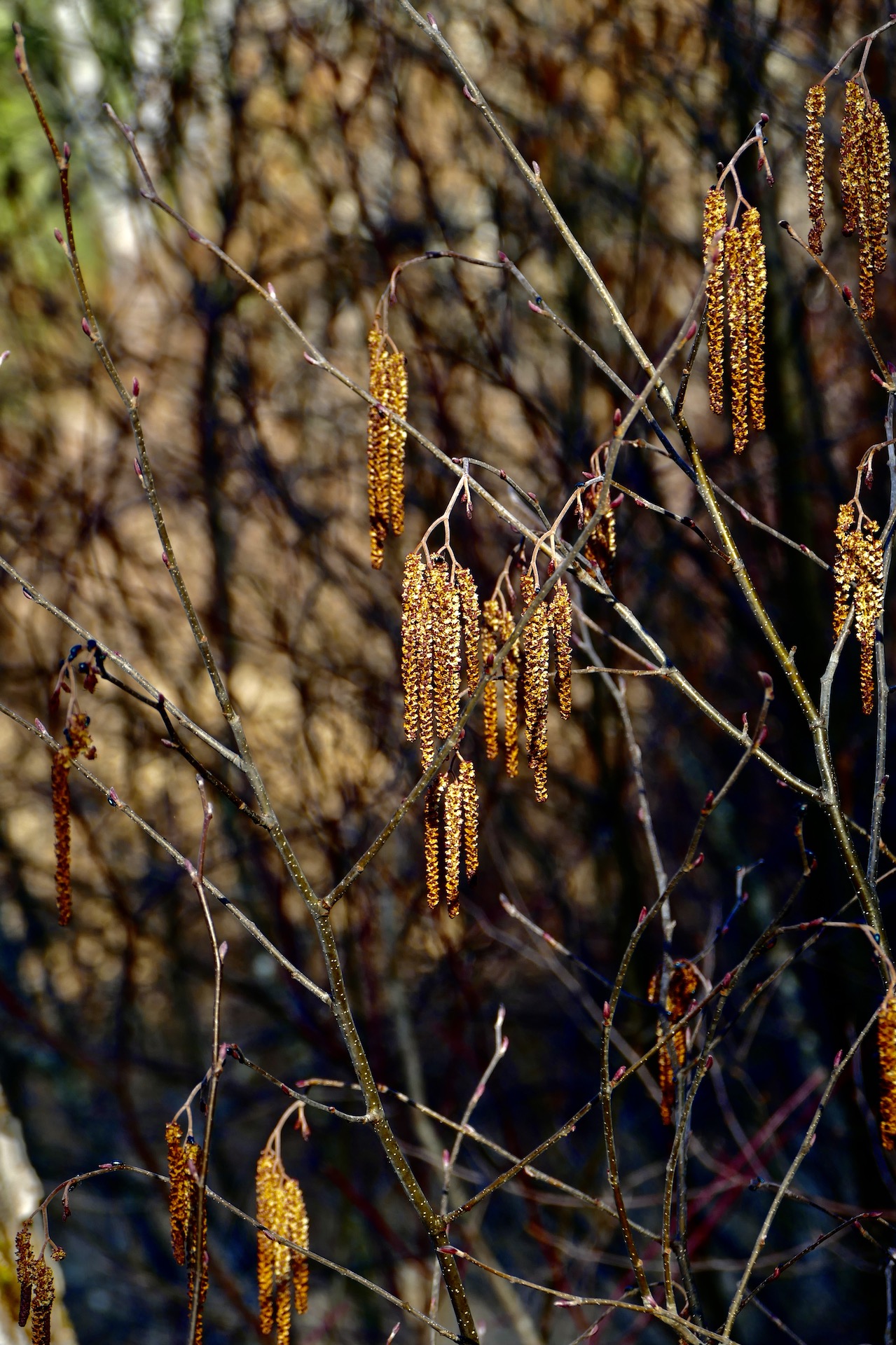
That large early swamp (?) willow catkin (the sterile blossom) opens on one side like a tinge of golden sunlight, the yellow anthers bursting through the down that invests the scales.

April 15, 1856

in Thoreau’s Journal:

6.30 a. m. —To Hill. It is warmer and quite still; somewhat cloudy in the east. The water quite smooth, –April smooth waters.

I hear very distinctly Barrett’s sawmill at my landing. The purple finch is singing on the elms about the house, together with the robins, whose strain its resembles, ending with a loud, shrill, ringing chilt chilt ehilt chilt. I push across the meadow and ascend the hill. The white-bellied swallows are circling about and twittering above the apple trees and walnuts on the hillside. Not till I gain the hilltop do I hear the note of the Fringilia juncorum (huckleberry-bird) from the plains beyond. Returned again toward my boat, I hear the rich watery note of the martin, making haste over the edge of the flood. A warm morning, over smooth water, before the wind rises, is the time to hear it. Near the water are many recent skunk probings, as if a drove of pigs had passed along last night, death to many beetles and grubs. From amid the willows and alders along the wall there, I hear a bird sing, a-chitter chitter chitter chitter chitter chitter, che che che che, with increasing intensity and rapidity, and the yellow redpoll hops in sight. A grackle goes over (with two females), and I hear from him a sound like a watchman’s rattle, ––but little more musical

April 13, 1852

in Thoreau’s Journal:

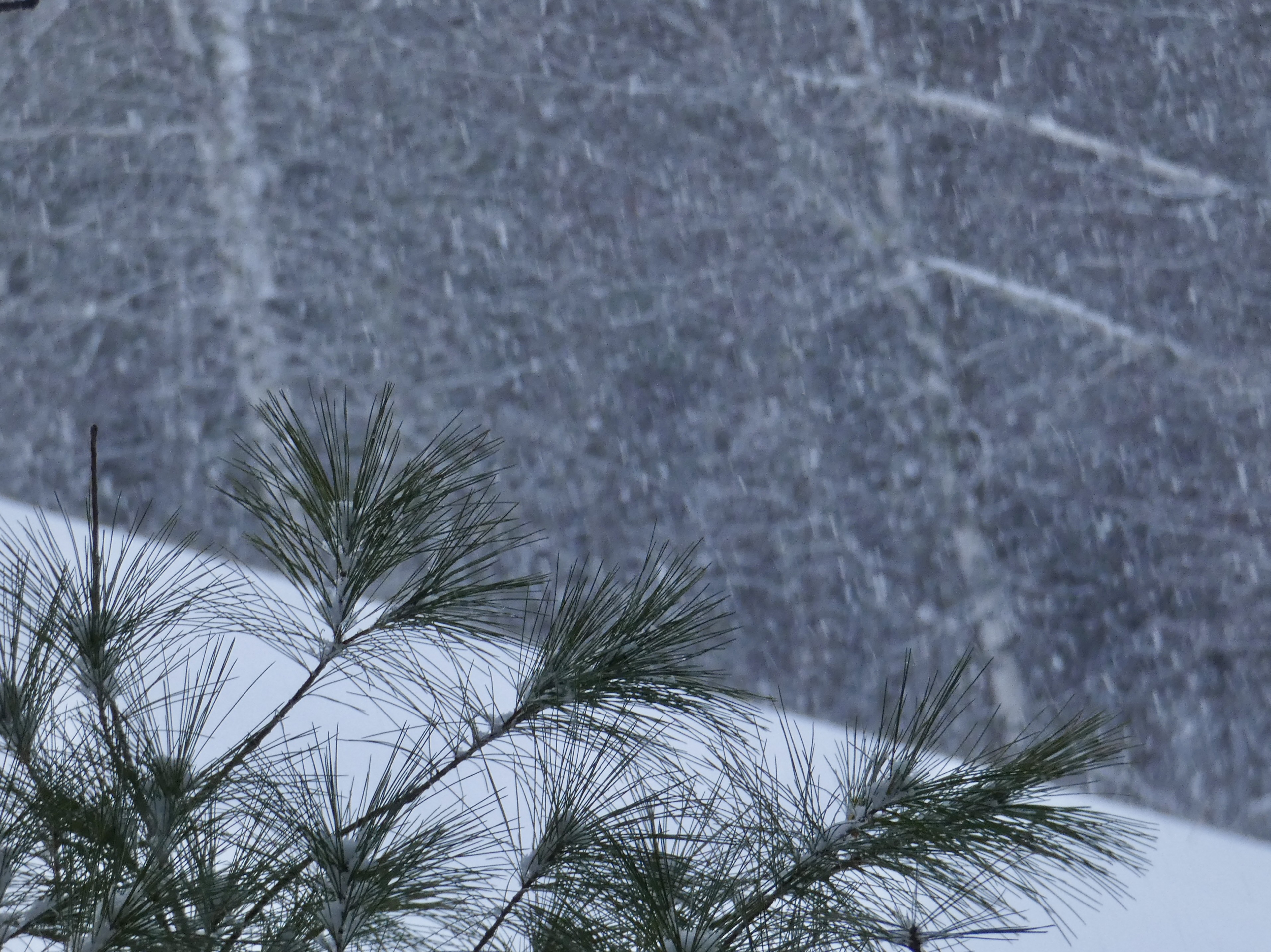
A driving snow storm in the night & still raging––5 or 6 inches deep on a level at 7 Am. All birds are turned into snow birds. Trees and houses have put on the aspect of winter.  The travelers carriage wheels, the farmer’s wagon are converted into white disks of snow through which the spokes hardly appear.

But it is good now to stay in the house & read & write. We do not now go wandering all abroad & dissipated––but the imprisoning storm condenses our thoughts–– My life is enriched–  I love to hear the wind howl. I have a fancy for sitting with my book or paper––in some mean & apparently unfavorable place––in the kitchen for instance where the work is going on––rather a little cold than comfortable–– –– My thoughts are of more worth in such places than they would be in a well-furnished & warmed studio.

April 12, 1854

in Thoreau’s Journal:

Waited at Lincoln depot an hour and a half. Heard the telegraph harp. I perceived distinctly that man melts at the sound of music, just like a rock exposed to a furnace heat. They need not have fabled that Orpheus moved the rocks and trees, for there is nothing more insensible than man; he sets the fashion to the rocks, and it is as surprising to see him melted, as when children see the lead begin to flow in a crucible.  I observe that it is when I have been intently, and it may be laboriously, at work, and am somewhat listless or abandoned after it, reposing, that the muse visits me, and I see or hear beauty. It is from out the shadow of my toil that I look into the light.

The music of the spheres is but another name for the Vulcanic force. May not such a record as this be kept on one page of the Book of Life: “A man was melted to-day.”

April 10, 1853

in Thoreau’s Journal:

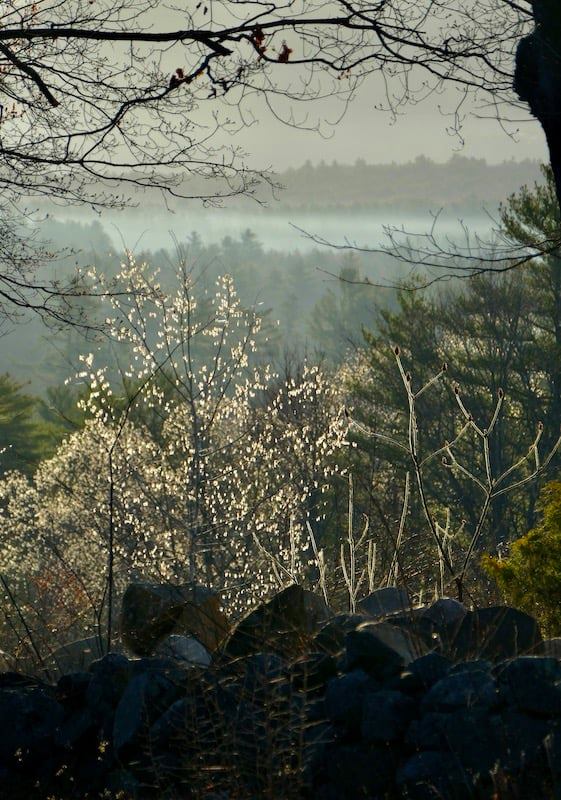
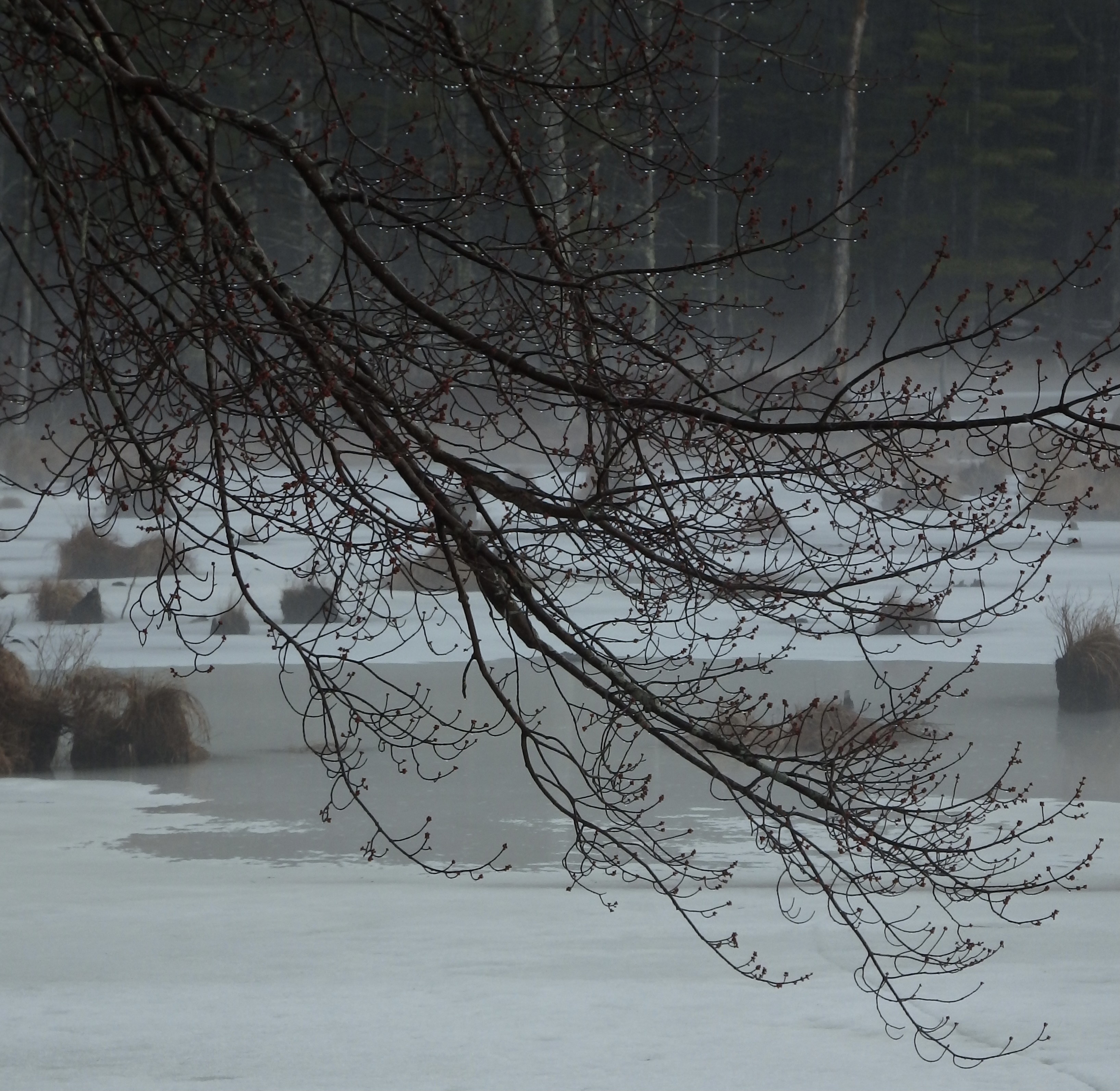
….maples and birches in front–with pines in the rear—making a low wild shore…The young trees & bushes now making apparent islands on the meadows are there nearly in this proportion I should think i.e. in deep water— Young maples—willows—button bushes—red osier…

April 9, 1859

in Thoreau’s Journal:

Watching the ripples fall and dart across the surface of low-lying and small woodland lakes is one of the amusements of these windy March and April days.

April 8, 1859

in Thoreau’s Journal:

The epigaea is not quite out.  The earliest peculiarly woodland herbaceous flowers are epigaea, thalictrum, and (by the first of May) Viola pedata.  These grow quite in the woods amid dry leaves, nor do they depend so much on water as the very earliest flowers. I am perhaps more surprised by the growth of the Viola pedata leaves by the side of paths amid the shrub oaks, and half covered with oak leaves, than by any other growth, the situation is so dry and the surrounding bushes so apparently lifeless.

April 7, 1853

in Thoreau’s Journal:

If you make the least correct observation of nature this year, you will have occasion to repeat it with illustrations the next, and the season and life itself is prolonged.

April 6, 1853

in Thoreau’s Journal:

The flower buds of the red maple have very red inner scales now being more & more exposed—which color the tree tops a great distance off.

April 5, 1860

in Thoreau’s Journal:

When I stand more out of the wind, under the shelter of the hill beyond Clamshell, where there is not wind enough to make a noise on my person, I hear, or think that I hear, a very faint distant ring of toads, which, though I walk and walk all the afternoon, I never come nearer to. It is hard to tell if it is not a ringing in my ears; yet I think it is a solitary and distant toad called to life by some warm and sheltered pool or hill, its note having, as it were, a chemical affinity with the air of the spring. It merely gives a slightly more ringing or sonorous sound to the general rustling of inanimate nature. A sound more ringing and articulate my ear detects, under and below the noise of the rippling wind. Thus gradually and moderately the year begins. It creeps into the ears so gradually that most do not observe it, and so our ears are gradually accustomed to the sound, and perchance we do not perceive it when at length it has become very much louder and more general.

April 3, 1852

in Thoreau’s Journal:

When the sun shines unobstructedly, the landscape is full of light, for it is reflected from the withered fawn coloured grass—as it cannot be from the green grass of summer.

The bluebird carries the sky on his back.

April 2, 1852

in Thoreau’s Journal:

To the river-side and Merrick’s pasture. The sun is up. The water in the meadows is perfectly smooth and placid, reflecting the hills and clouds and trees. The air is full of the notes of birds, song-sparrows, redwings, robins (singing a strain) bluebirds, and I hear also a lark, as if all the earth had burst forth into song. The influence of this April light has reached them, for they live out-of-doors all the night, and there is no danger they will oversleep themselves such a morning.  A few weeks ago, before the birds had come, there came to my mind in the night the twittering sound of birds in the early dawn of a spring morning––a semi-prophecy of it––and last night I attended mentally, as if I heard the spray-like dreaming sound of the mid-summer frog, and realized how glorious and full of revelations it was. The clouds are white, watery, not such as we had in the winter. I see in this fresh morning the shells left by the muskrats along the shore, and their galleries leading into the meadow, and the bright red cranberries washed up along the the shore in the old water-mark. Suddenly there is a blur on the placid surface of the waters, a rippling mistiness produced, as it were, by a slight morning breeze, and I should be sorry to show it to a stranger now. So is it with our minds.

April 1, 1853

in Thoreau’s Journal:

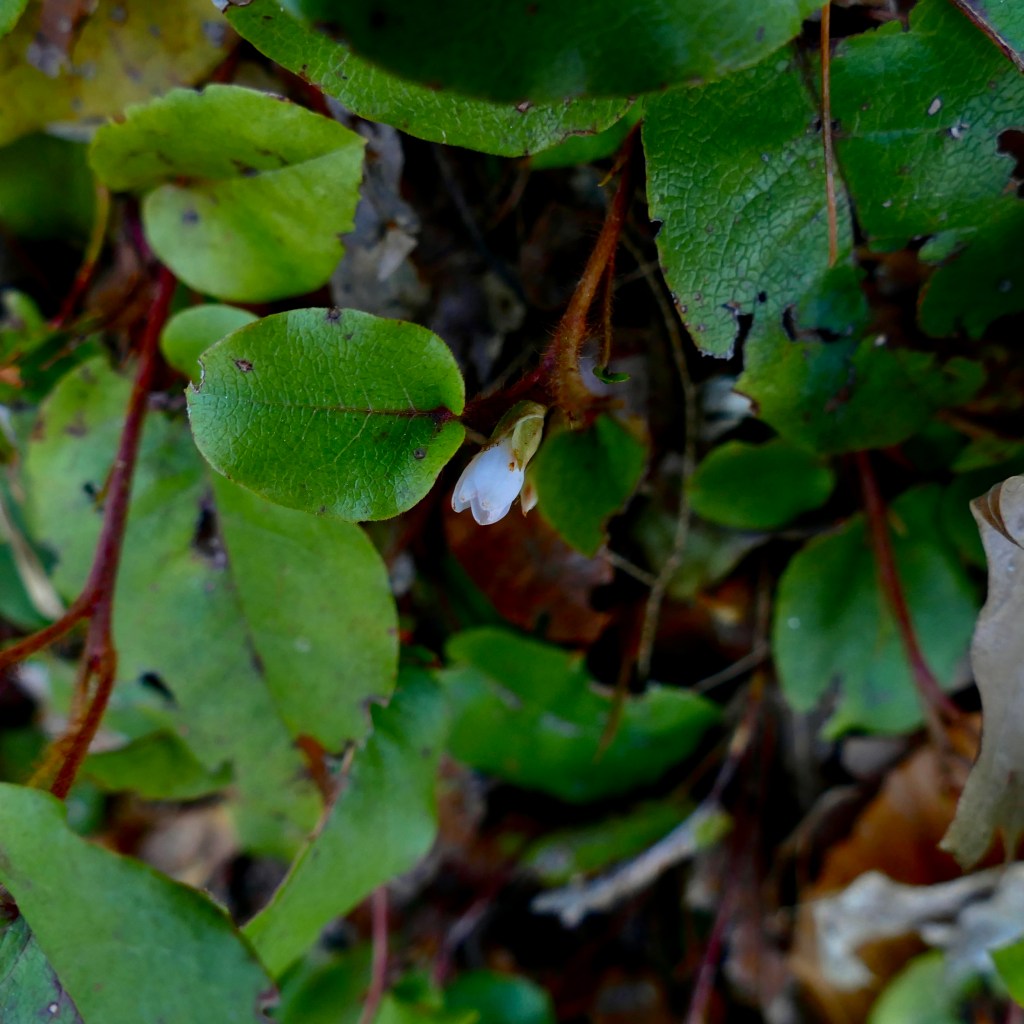
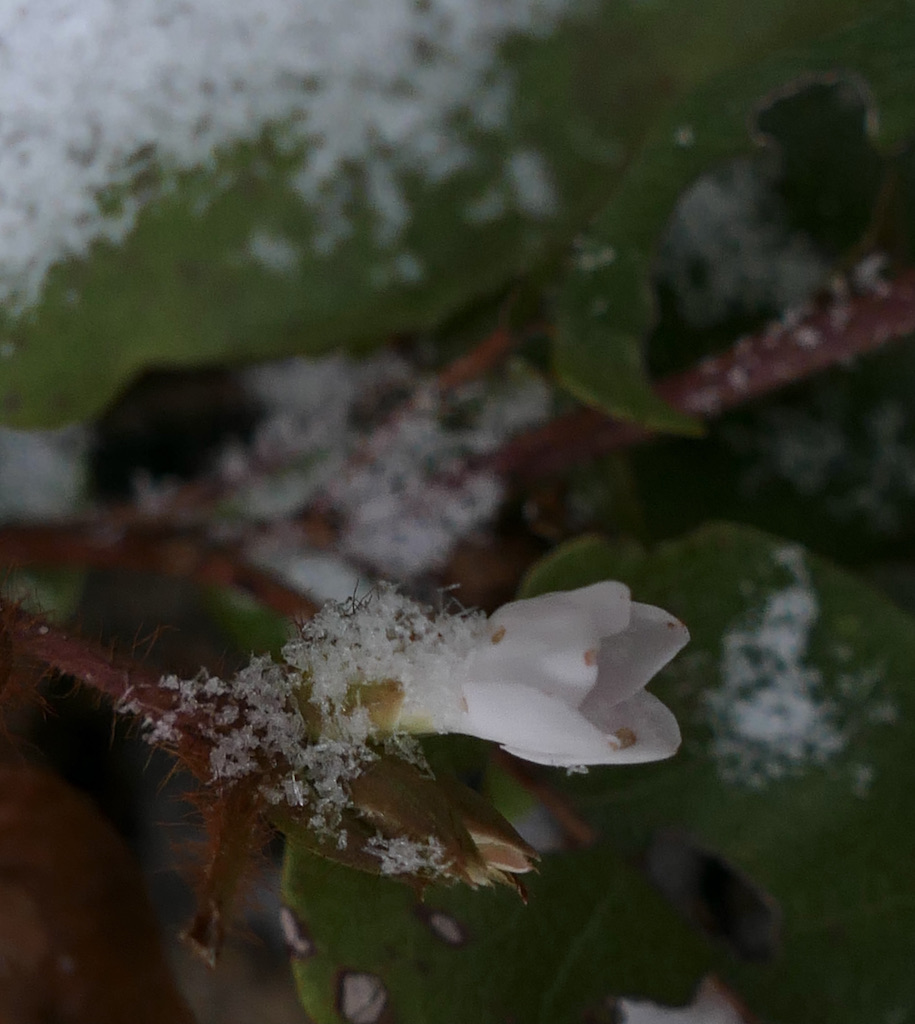
With this flower, so much more flowerlike or noticeable than any yet—

begins a new era in the flower season.

[Photo: March 31, 2021]

March 31, 1852

in Thoreau’s Journal:

It would be worth the while to tell why a swamp pleases us, what kinds please us, also what weather, etc., etc., – analyze our impressions. Why the moaning of the storm gives me pleasure. Methinks it is because it puts to rout the trivialness of our fair-weather life and gives it at least a tragic interest. The sound has the effect of a pleasing challenge, to call forth our energy to resist the invaders of our life’s territory. It is musical and thrilling, as the sound of an enemy’s bugle. Our spirits revive like lichens in the storm.

There is something worth living for when we are resisted, threatened. As at the last day we might be thrilled with the prospect of the grandeur of our destiny, so in these first days our destiny appears grander. What would the days, what would our life, be worth, if some nights were not dark as pitch, – of darkness tangible or that you can cut with a knife? How else could the light in the mind shine? How should we be conscious of the light of reason? If it were not for physical cold, how should we have discovered the warmth of the affections? I sometimes feel that I need to sit in a far-away cave through a three weeks’ storm, cold and wet, to give a tone to my system. The spring has its windy March to usher it in, with many soaking rains reaching into April. Methinks I would share every creature’s suffering for the sake of its experience and joy. 

March 30, 1840

in Thoreau’s Journal:

Pray, what things interest me at present? A long, soaking rain, the drops trickling down the stubble, while I lay drenched on a last year’s bed of wild oats, by the side of some bare hill, ruminating. These things are of moment. To watch this crystal globe just sent from heaven to associate with me. While these clouds and this sombre drizzling weather shut all in, we two draw nearer and know one another. The gathering in of the clouds with the last rush and dying breath of the wind, and then the regular dripping of twigs and leaves the country o’er, the impression of inward comfort and sociableness, the drenched stubble and trees that drop beads on you as you pass, their dim outline seen through the rain on all sides drooping in sympathy with yourself.

These are my undisputed territory. This is Nature’s English comfort. The birds draw closer and are more familiar under the thick foliage, composing new strains on their roosts against the sunshine.