in Thoreau’s Journal:
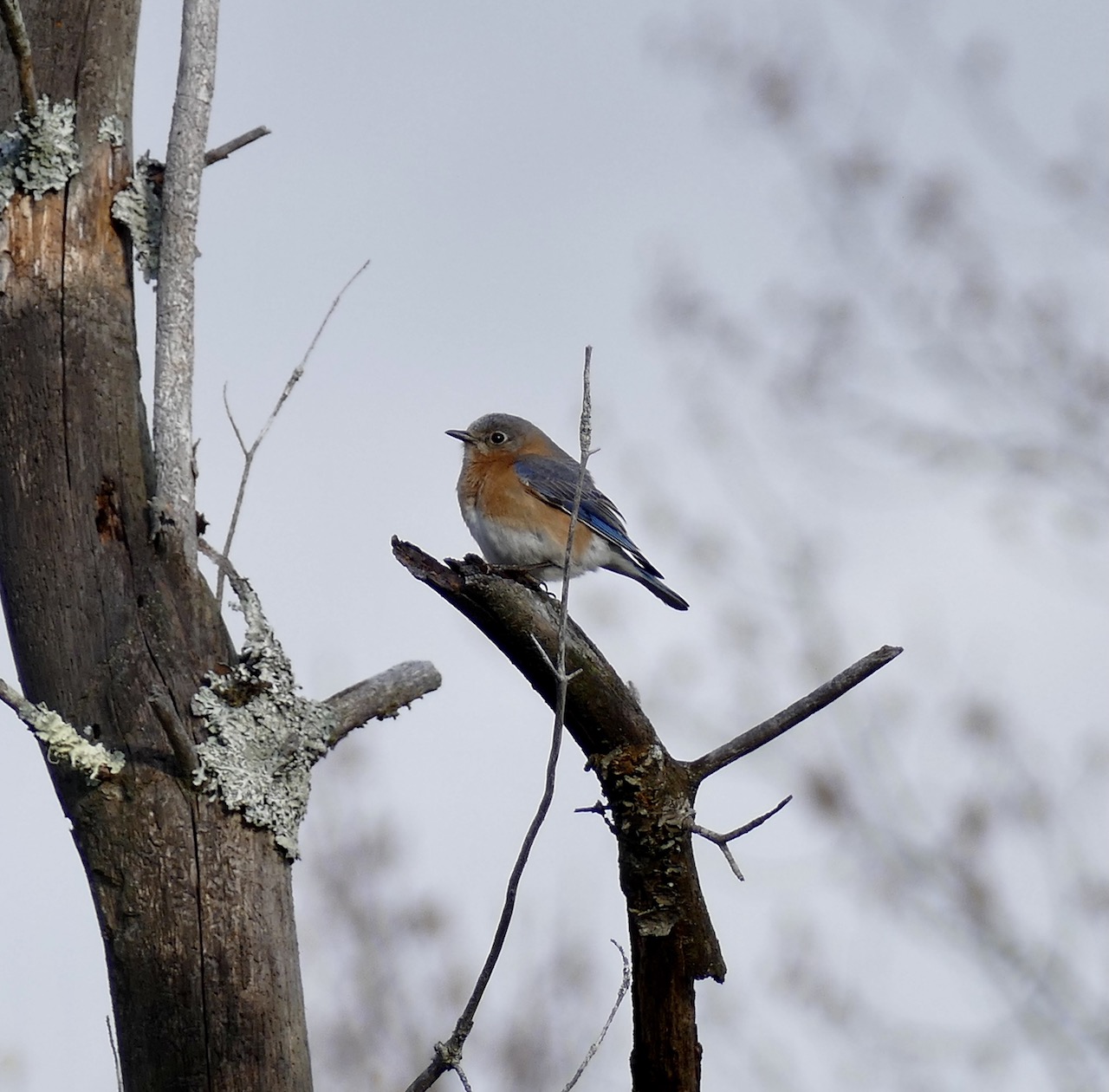
When I hear a bird singing I cannot think of any words that will imitate it—
What word can stand in place of a bird’s note!
in Thoreau’s Journal:
When I hear a bird singing I cannot think of any words that will imitate it—
What word can stand in place of a bird’s note!
in Thoreau’s Journal:
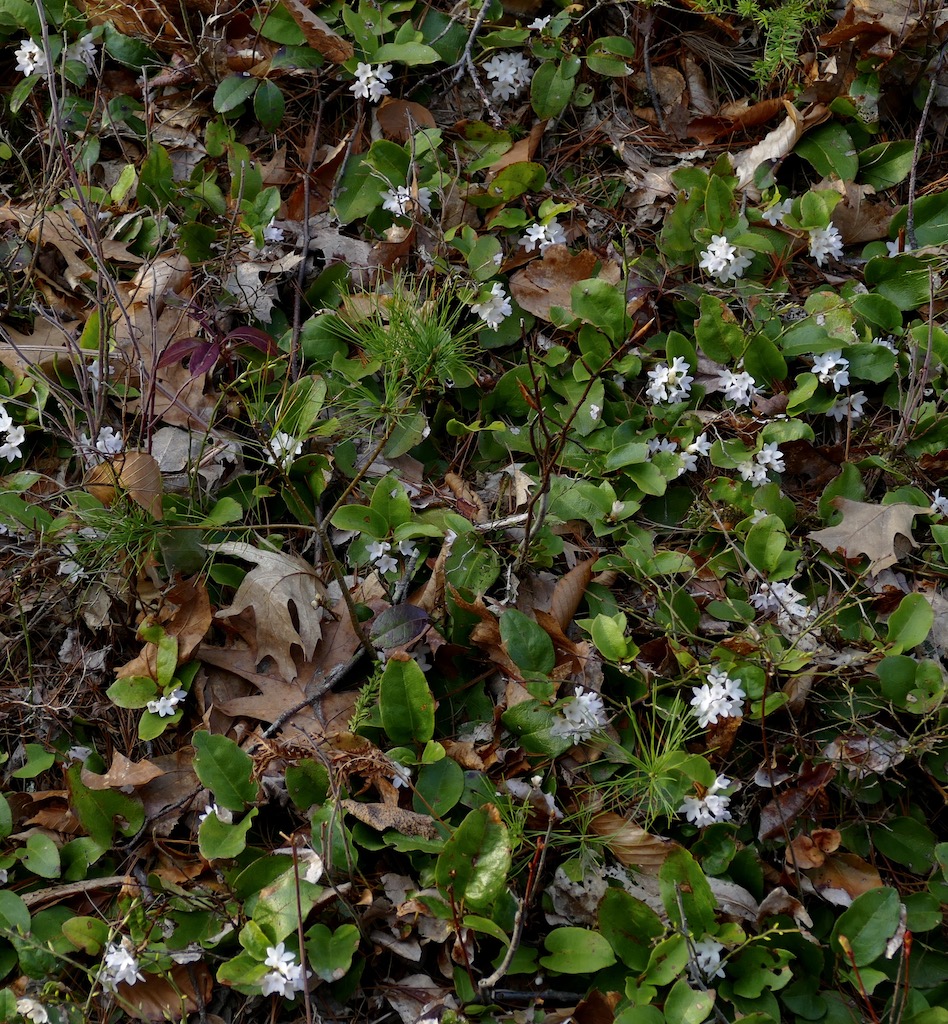
—To epigaea via Clamshell Hill. There is no such thing as pure objective observation. Your observation, to be interesting, i. e. to be significant, must be subjective. The sum of what the writer of whatever class has to report is simply some human experience, whether he be poet or philosopher or man of science. The man of most science is the man most alive, whose life is the greatest event. Senses that take cognizance of outward things merely are of no avail. It matters not where or how far you travel, —the farther commonly the worse, —but how much alive you are. If it is possible to conceive of an event outside to humanity, it is not of the slightest significance, though it were the explosion of a planet. Every important worker will report what life there is in him. It makes no odds into what seeming deserts the poet is born. Though all his neighbors pronounce it a Sahara, it will be a paradise to him; for the desert which we see is the result of the barrenness of our experience. No mere willful activity whatever, whether in writing verses or collecting statistics, will produce true poetry or science. If you are really a sick man, it is indeed to be regretted, for you cannot accomplish so much as if you were well. All that a man has to say or do that can possibly concern mankind, is in some shape or other to tell the story of his love, ––to sing; and if he is fortunate and keeps alive, he will be forever in love. This alone is to be alive to the extremities. It is a pity that this divine creature should ever suffer from cold feet; a still greater pity that the coldness so often reaches to his heart. I look over the report of the doings of a scientific association and am surprised that there is so little life to be reported; I am put off with a parcel of dry technical terms. Anything living is easily and naturally expressed in popular language. I cannot help suspecting that the life of these learned professors has been almost as inhuman and wooden as a rain-gauge or self-registering magnetic machine. They communicate no fact which rises to the temperature of blood-heat. It doesn’t all amount to one rhyme.
in Thoreau’s Journal:
[From a list noted in the Journal on May 24, 1854]
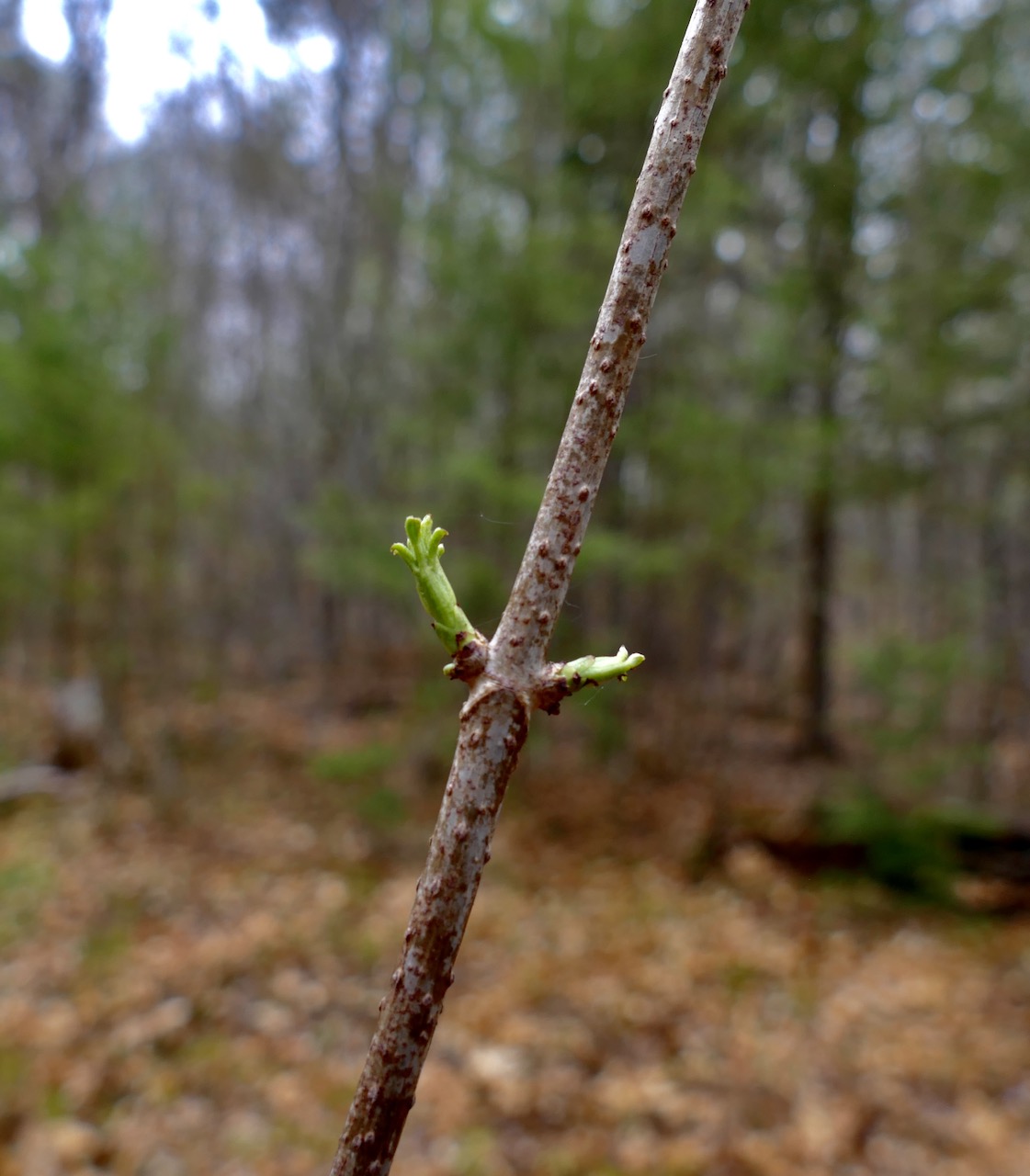
Elder, longest shoots of any, in some places (May 5).
[Photo: May 4, 2021]
in Thoreau’s Journal:
Crossing that first Conantum field, I perceive a peculiar fragrance in the air (not the meadow fragrance), like that of vernal flowers or of expanding buds. The ground is covered with the mouse-ear in full bloom, and it may be that in part. It is a temperate southwest breeze, and this is a scent as of willows (flowers and leafets), bluets, violets, shad-bush, mouse-ear, etc., combined; or perhaps the last chiefly; at any rate it is very perceptible. The air is more genial, laden with the fragrance of spring flowers.
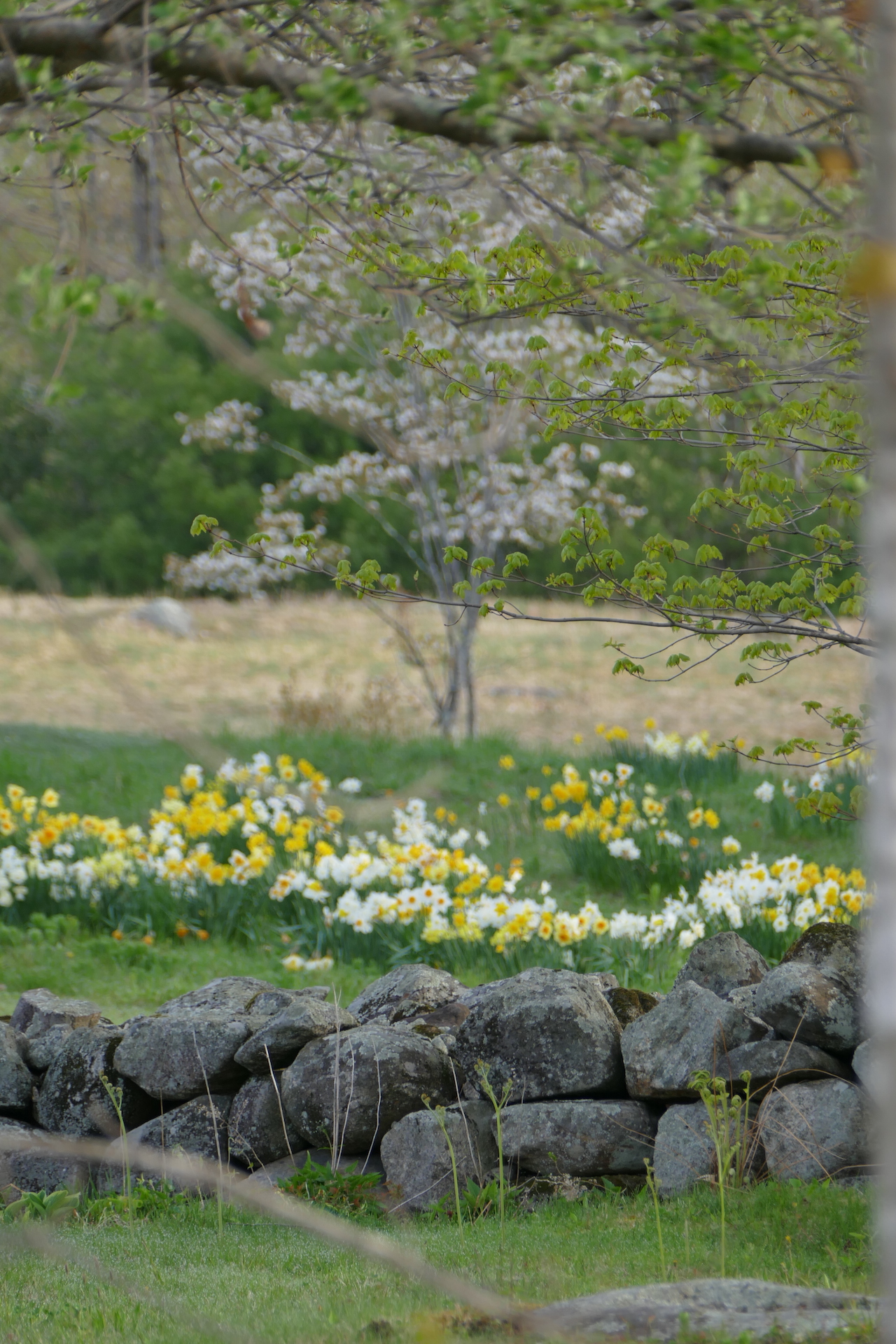
I, sailing in the spring ocean, getting in from my winter voyage, begin to smell the land. Such a scent perceived by a mariner would be very exciting. I not only smell the land breeze, but I perceive in it the fragrance of spring flowers. I draw near to the land; I begin to lie down and stretch myself on it. After my winter voyage I begin to smell the land.
in Thoreau’s Journal:
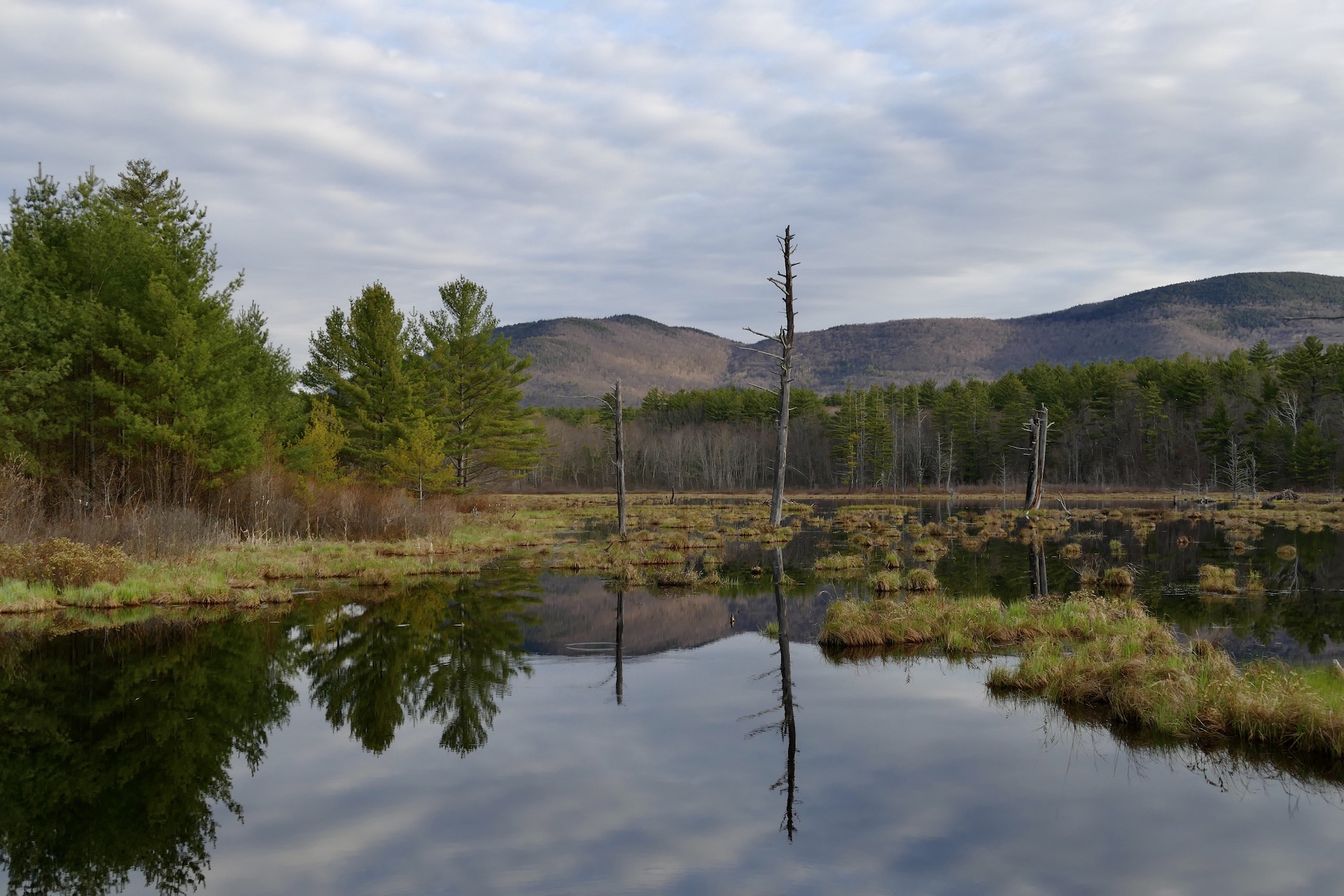
Looking from the Cliff, now, about 6 a. m., the landscape is as if seen in a mirage, the Cliff being in shadow, and that in the fresh and dewy sunshine (not much dew yet). Cool sunlight. The landscape lies in a fresh morning light; the earth and water smell fresh and new; the water is marked by a few smooth streaks. The atmosphere suits the grayish-brown landscape, — the still ashy maple swamps and now nearly bare shrub oaks. The white pine, left here and there over the sprout-land, is never more beautiful than with the morning light ––the early sunlight and the dew ––on it. (Dew comes with grass? and for it?) Before the water is rippled and morning song of the birds is quenched.
in Thoreau’s Journal:

The Yellow lily is budded.
in Thoreau’s Journal:
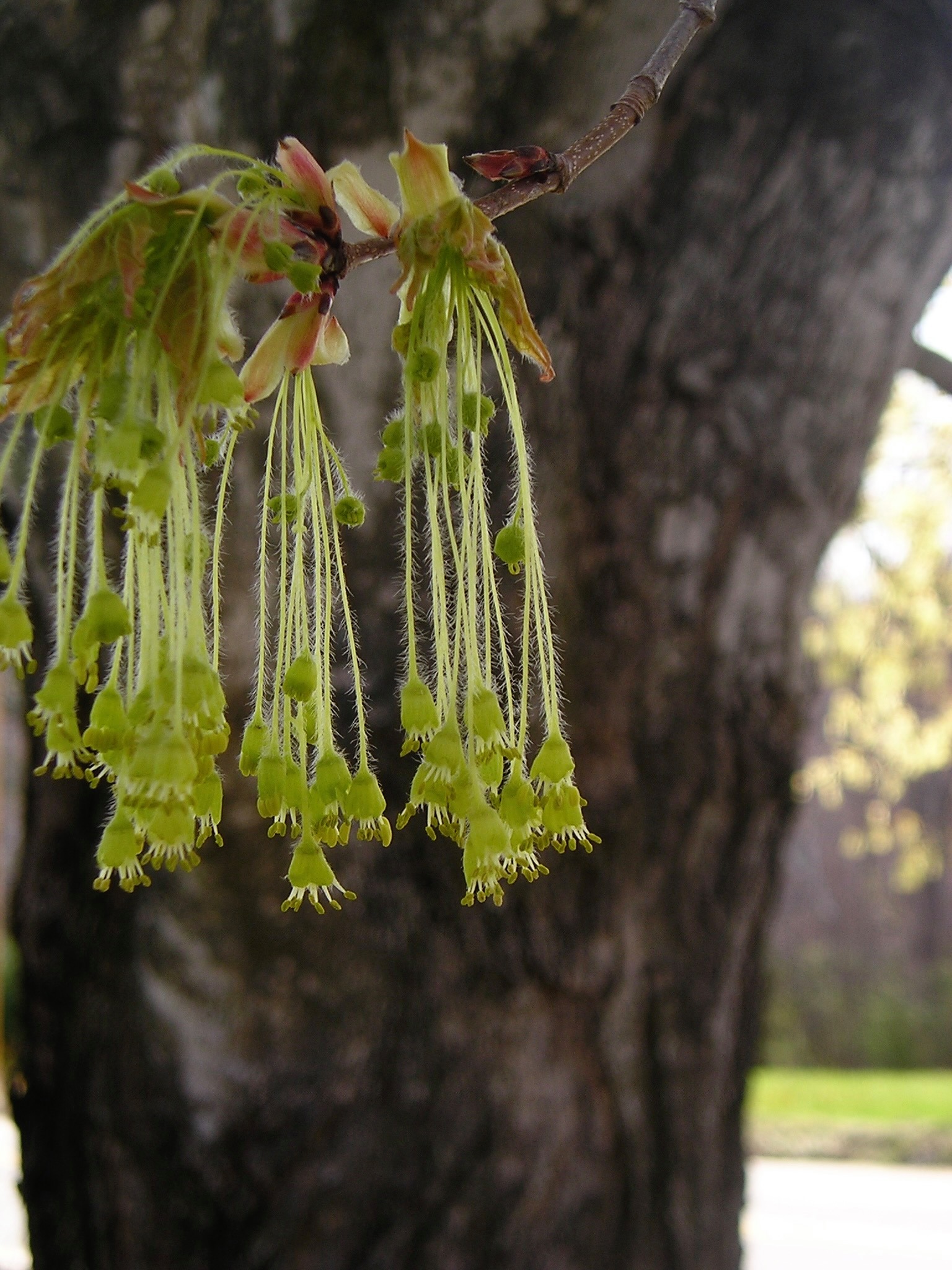
The sugar maple keys (or buds?) hang down one inch, quite.
in Thoreau’s Journal:
Columbine just out; one anther sheds.

in Thoreau’s Journal:

in Thoreau’s Journal:
Again I am advertised of the approach of a new season, as yesterday. The air is not only warmer and stiller, but has more of meaning or smothered voice to it, now that the hum of insects begins to be heard. You seem to have a great companion with you, are reassured by the scarcely audible hum, as if it were the noise of your own thinking. It is a voiceful and significant stillness, such as precedes a thunder-storm or a hurricane. The boisterous spring winds cease to blow, the waves to dash, the migrating ducks to vex the air so much. You are sensible of a certain repose in nature.
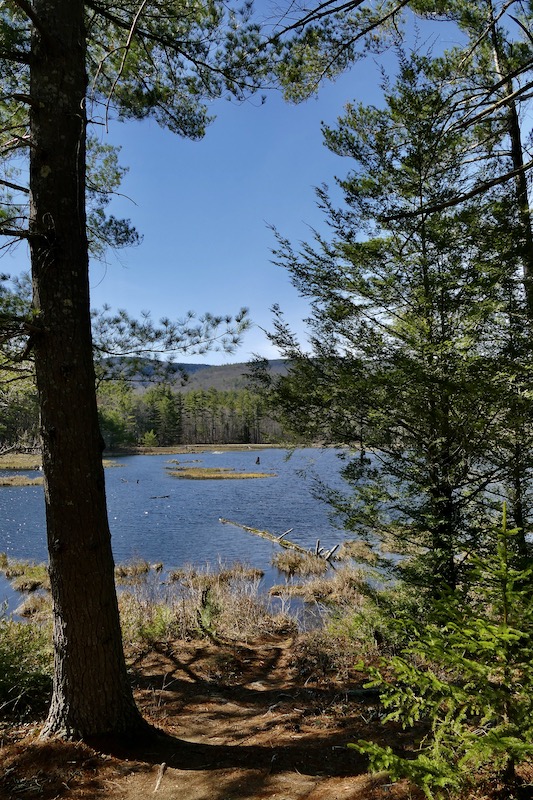
in Thoreau’s Journal:
I stand under Lee’s Cliff. There is a certain summeriness in the air now, especially under a warm cliff like this, where you smell the very dry leaves, and hear the pine warbler and the hum of a few insects, —small gnats, etc.,—and see considerable growth and greenness.
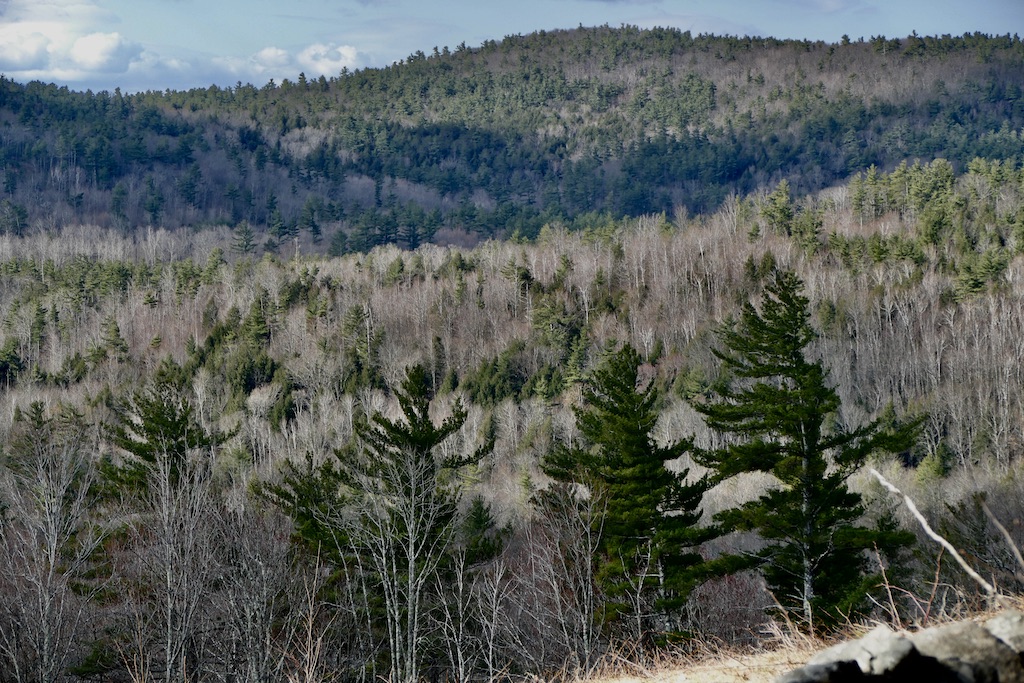
Though it is still windy, there is, nevertheless, a certain serenity and long-lifeness in the air, as if it were a habitable place and not merely to be hurried through. The noon of the year is approaching. Nature seems meditating a siesta. The hurry of the duck migration is, methinks, over. But the woods generally, and at a distance, show no growth yet.
in Thoreau’s Journal:

It is a great art to saunter
in Thoreau’s Journal:
The may flower is well budded & ready to blossom but not yet out

—nor the Andromeda—nor saxifrage—nor violet that I can find. I am surprised to find the cowslip in full bloom at 2nd Div meadow. numerous flowers. Growing in the water is not comparatively so backward this year perhaps. Its heart or kidney shaped crenate green leaves which had not freshly grown when I was here before have suddenly pushed up. The snows soon melted on this meadow. The horse tail too is ready to flower. And what is the low regular red-leaved & red rooted plant in the meadow with the cowslip? Yet we walk over snow & ice a long distance in the road here.
in Thoreau’s Journal:
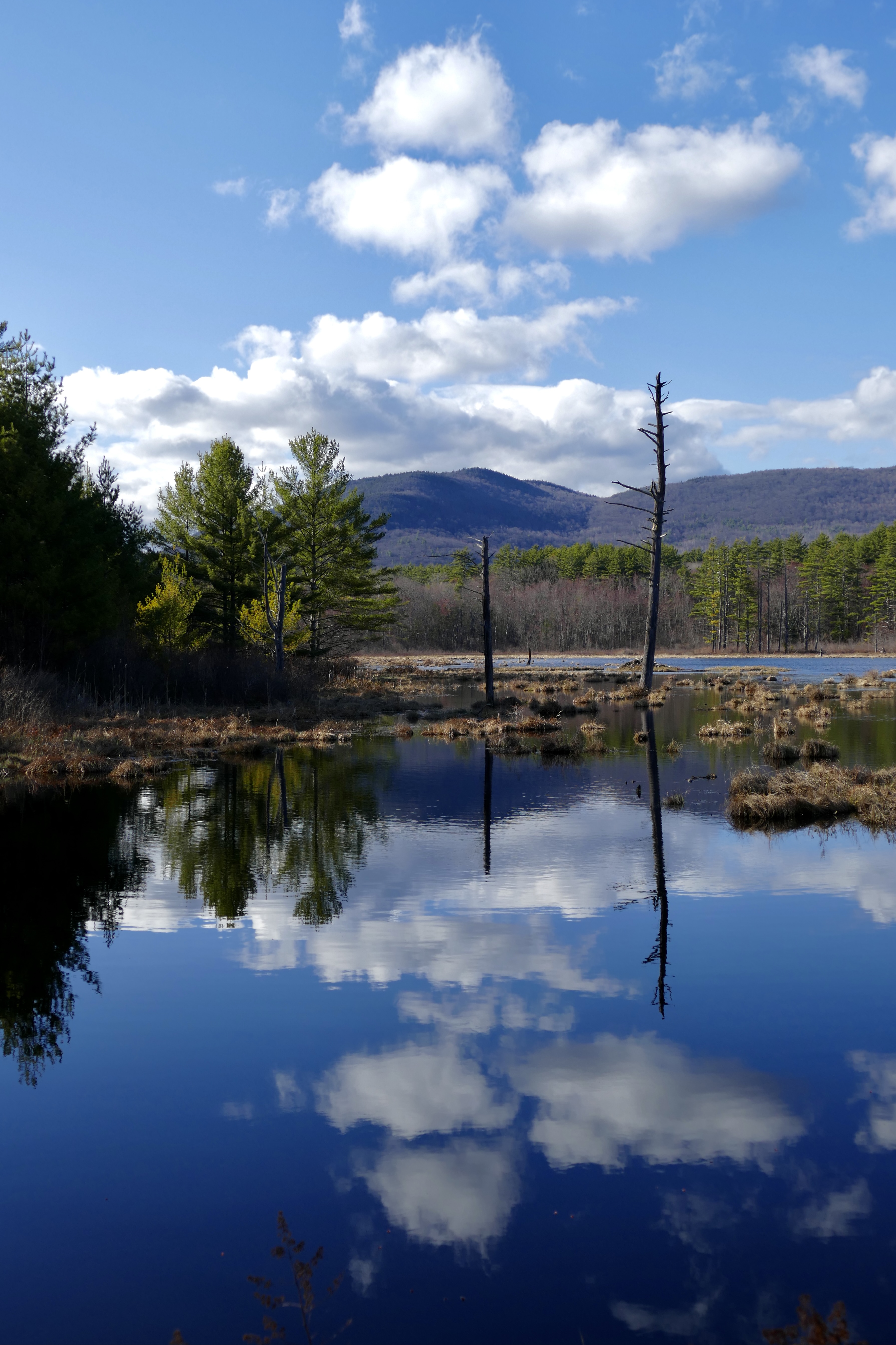
Sitting by the road beyond N. Barrett’s, the colors of the world are: overhead a very light blue sky, darkest in the zenith, lightest in the horizon, with scattered white clouds seeming thickest in the horizon; all around the undulating earth a very light tawny color, from the dead grass, with the reddish and gray of forests mingled with evergreen; and, in the lap of earth, very dark blue rippled water, answering to the light blue above; the shadows of clouds flitting over all below; the spires of woods fringing the horizon on every side, and, nearer, single trees here and there seen with dark branches against the sky.
in Thoreau’s Journal:
The first April showers are even fuller of promise and a certain moist serenity than the sunny days. How thickly the green blades are starting up amid the russet!
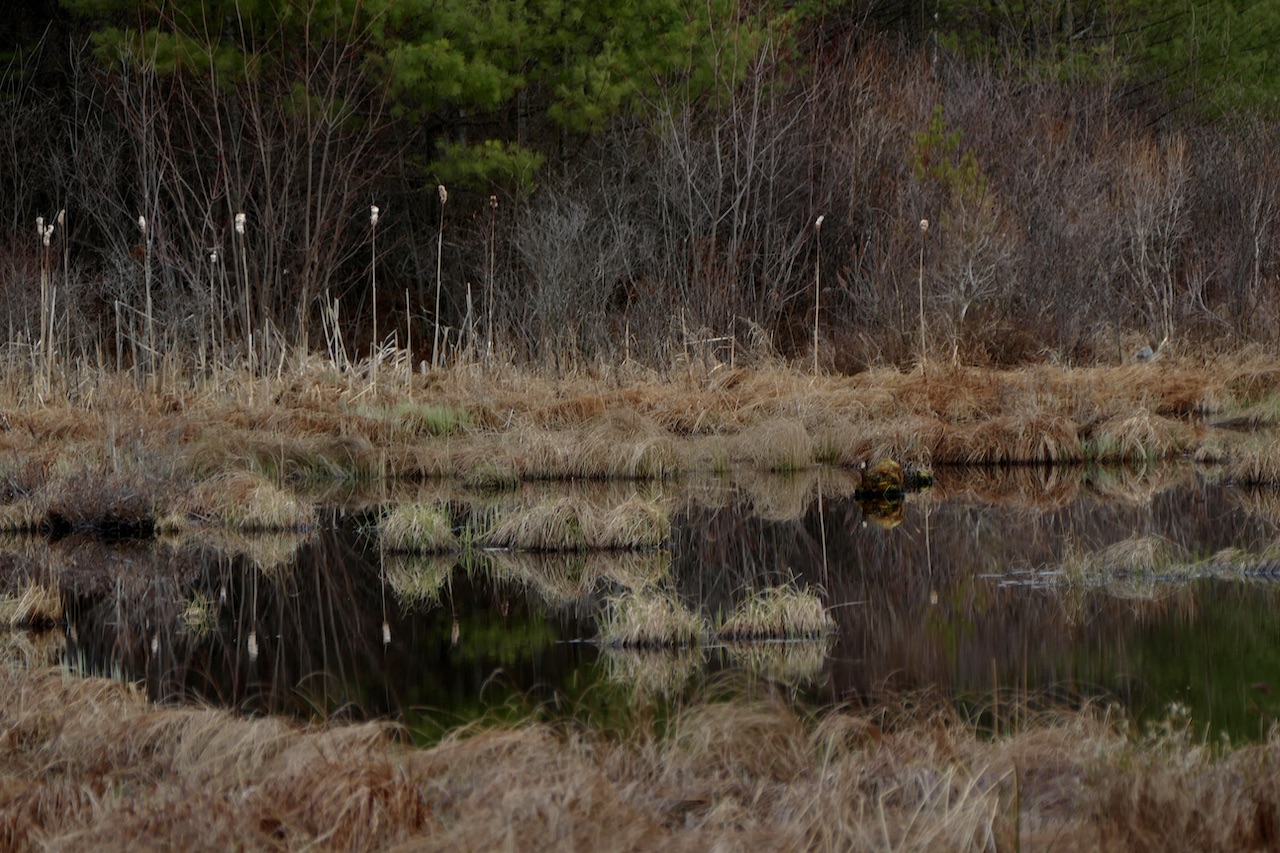
The tinge of green is gradually increasing in the face of the russet earth.
in Thoreau’s Journal:
These rain-storms –– this is the third day of one –– characterize the season, and belong rather to winter than to summer.

Flowers delay their blossoming, birds tarry in their migrations, etc., etc. It is surprising how so many tender organizations of flowers and insects survive them uninjured.
in Thoreau’s Journal:
As we stand by the Mt on the Battleground––I see a white pine dimly in the horizon just north of Lee’s Hill––at 5 1/2 Pm, its upright stem & straight horizontal feathered branches––while at the same time I hear a robin sing. Each enhances the other. That tree seems the emblem of my life––it stands for the west––the wild.
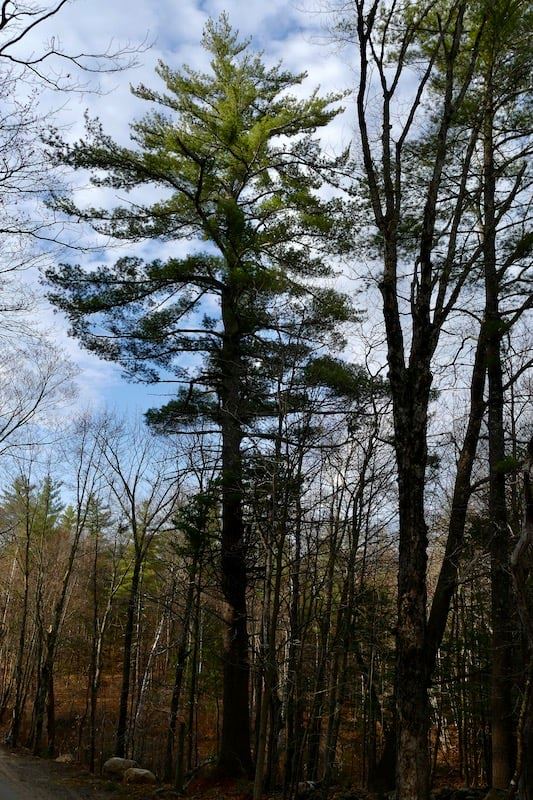
The sight of it is grateful to me as to a bird whose perch it is to be at the end of a weary flight. I am not sure whether the music I hear is most in the robins’ song or in its boughs. The pine tree that stands on the verge of the clearing––whose boughs point westward. Which the villager does not permit to grow on the common or by the road side.–– In whose boughs the crow and the hawk have their nests.
in Thoreau’s Journal:
An early morning walk is a blessing for the whole day.
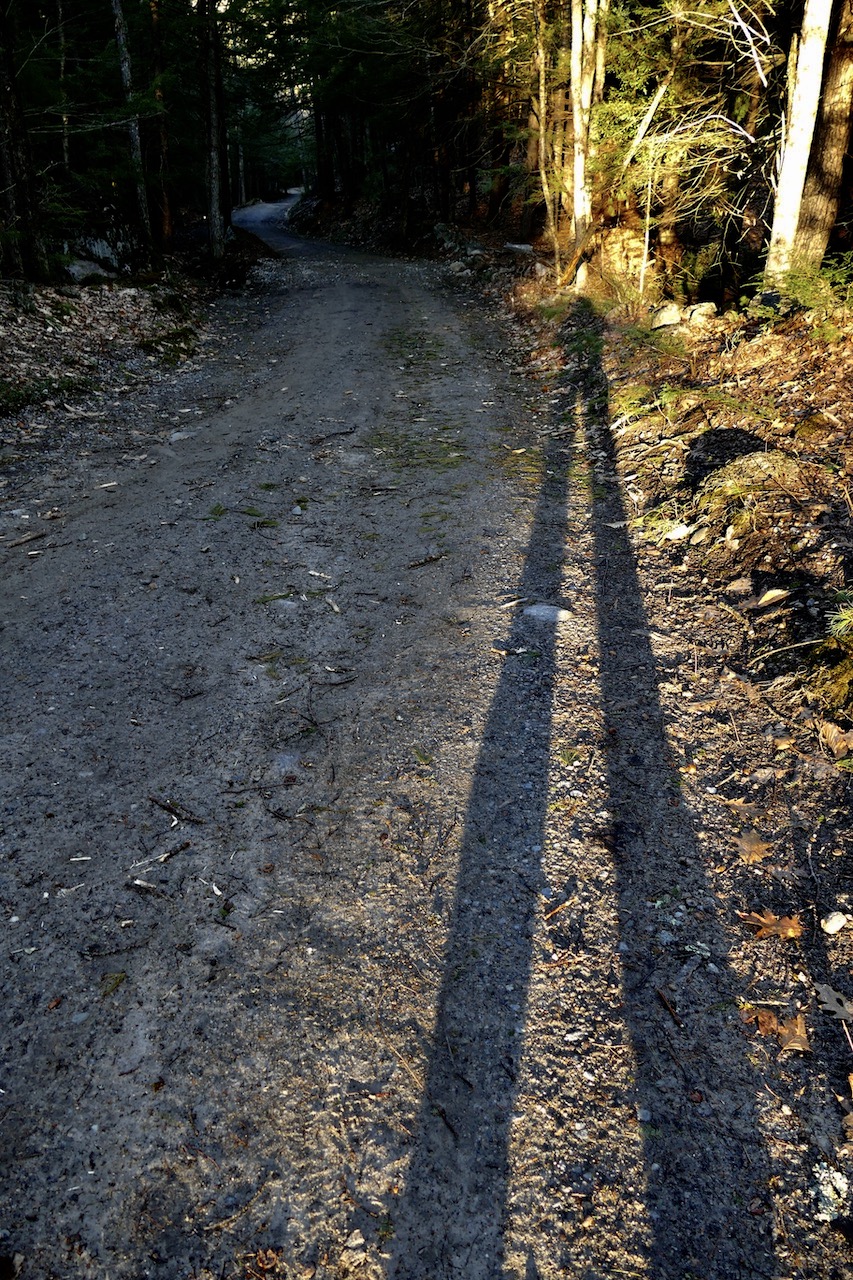
To my neighbors who have risen in mist and rain I tell of a clear sunrise and the singing of birds as some traditionary mythus. I look back to those fresh but now remote hours as to the old dawn of time, when a solid and blooming health reigned and every deed was simple and heroic.
in Thoreau’s Journal:
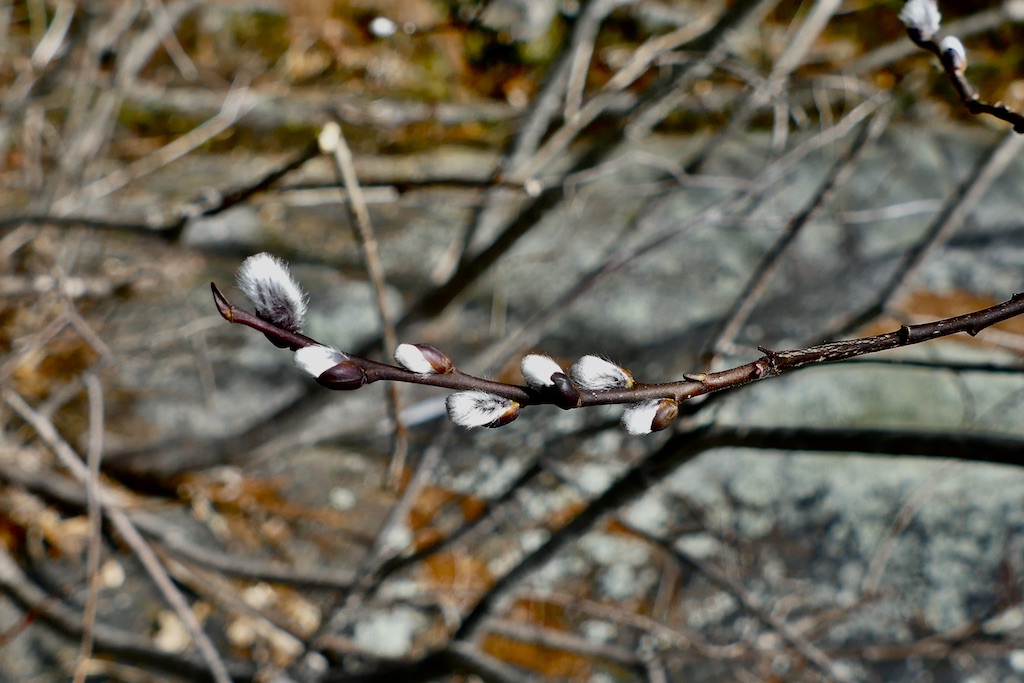
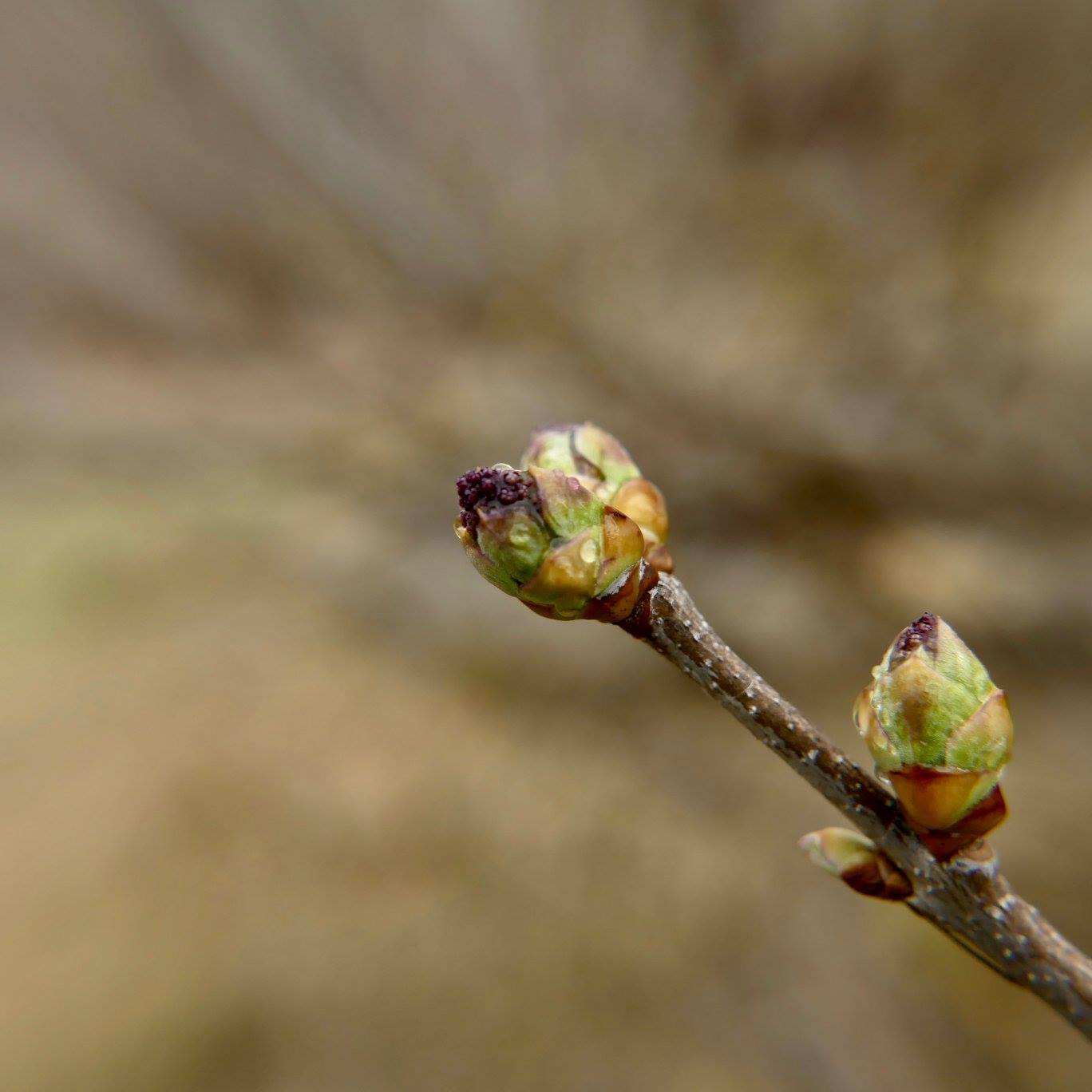
The willow catkin might be the emblem of Spring. The buds of the lilack look ready to take advantage of the first warm day.
in Thoreau’s Journal:
For the first time I perceive this spring that the year is a circle— I see distinctly the spring arc thus far. It is drawn with a firm line…
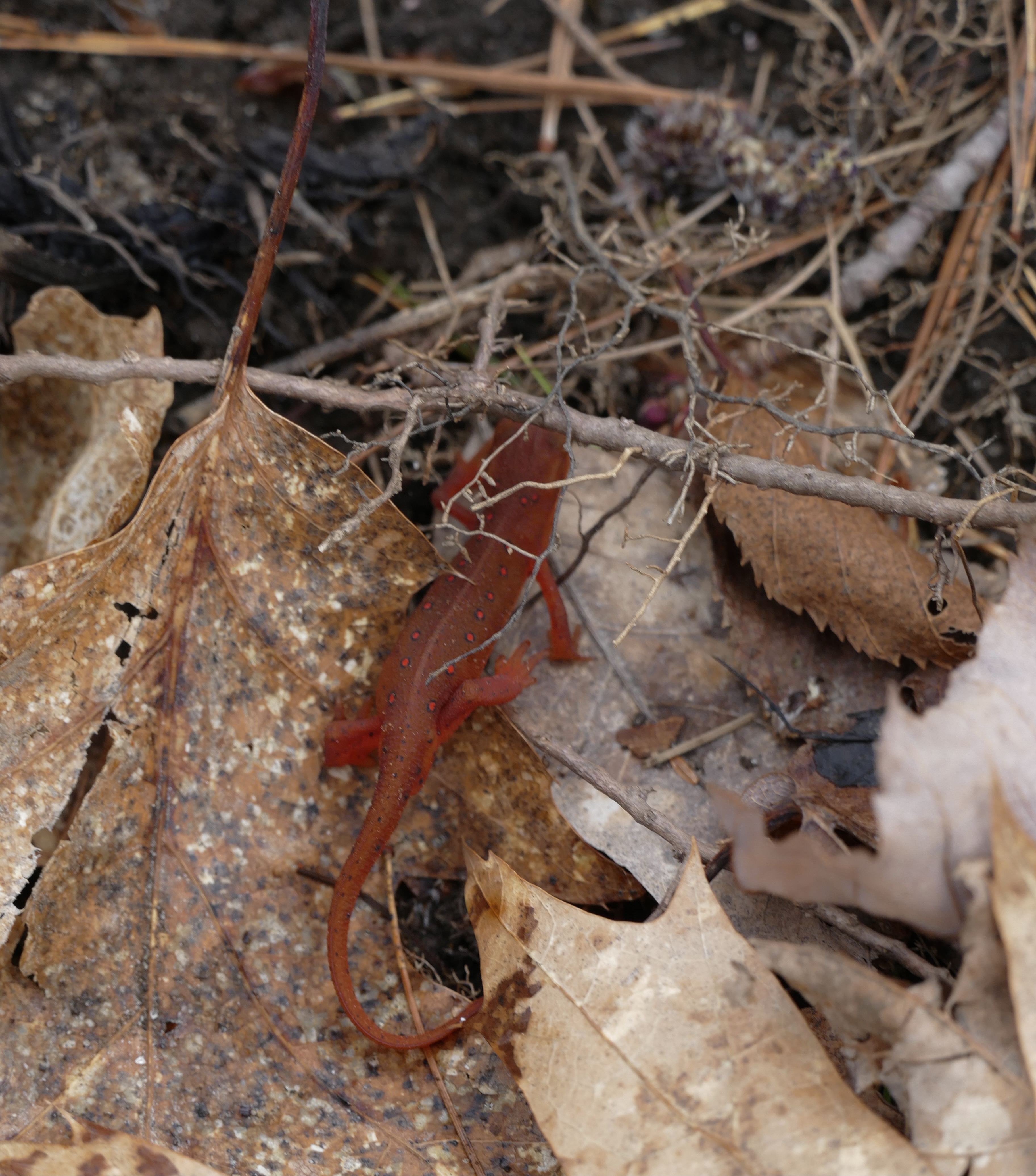
Why should just these sights & sounds accompany our life? Why should I hear the chattering of blackbirds—why smell the skunk each year? I would fain explore the mysterious relation between myself & these things. I would at least know what these things unavoidably are- —make a chart of our life & when—know why just this circle of creatures completes the world. Can I not by expectation affect the revolutions of nature—make a day to bring forth something new?


You must be logged in to post a comment.