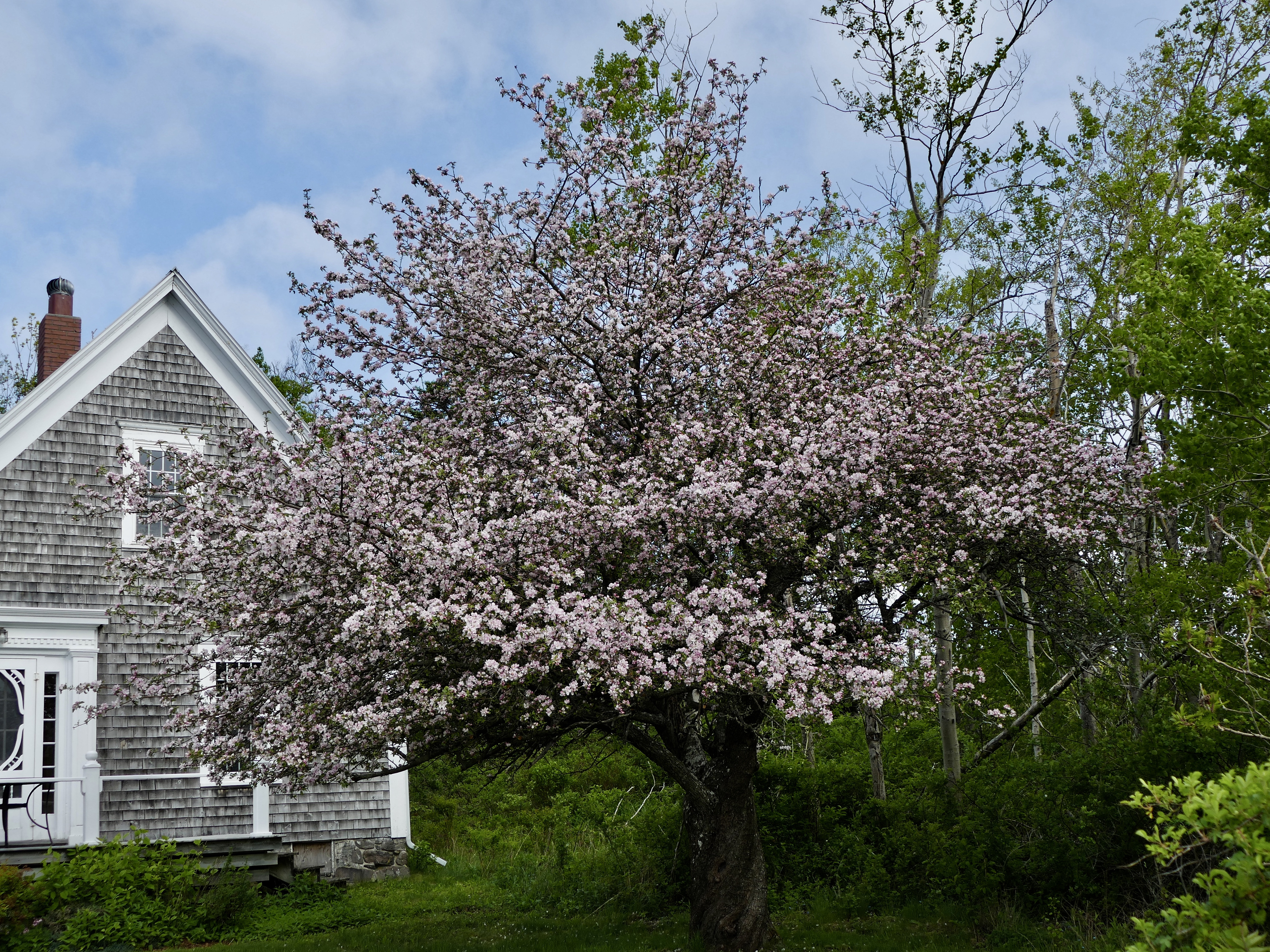
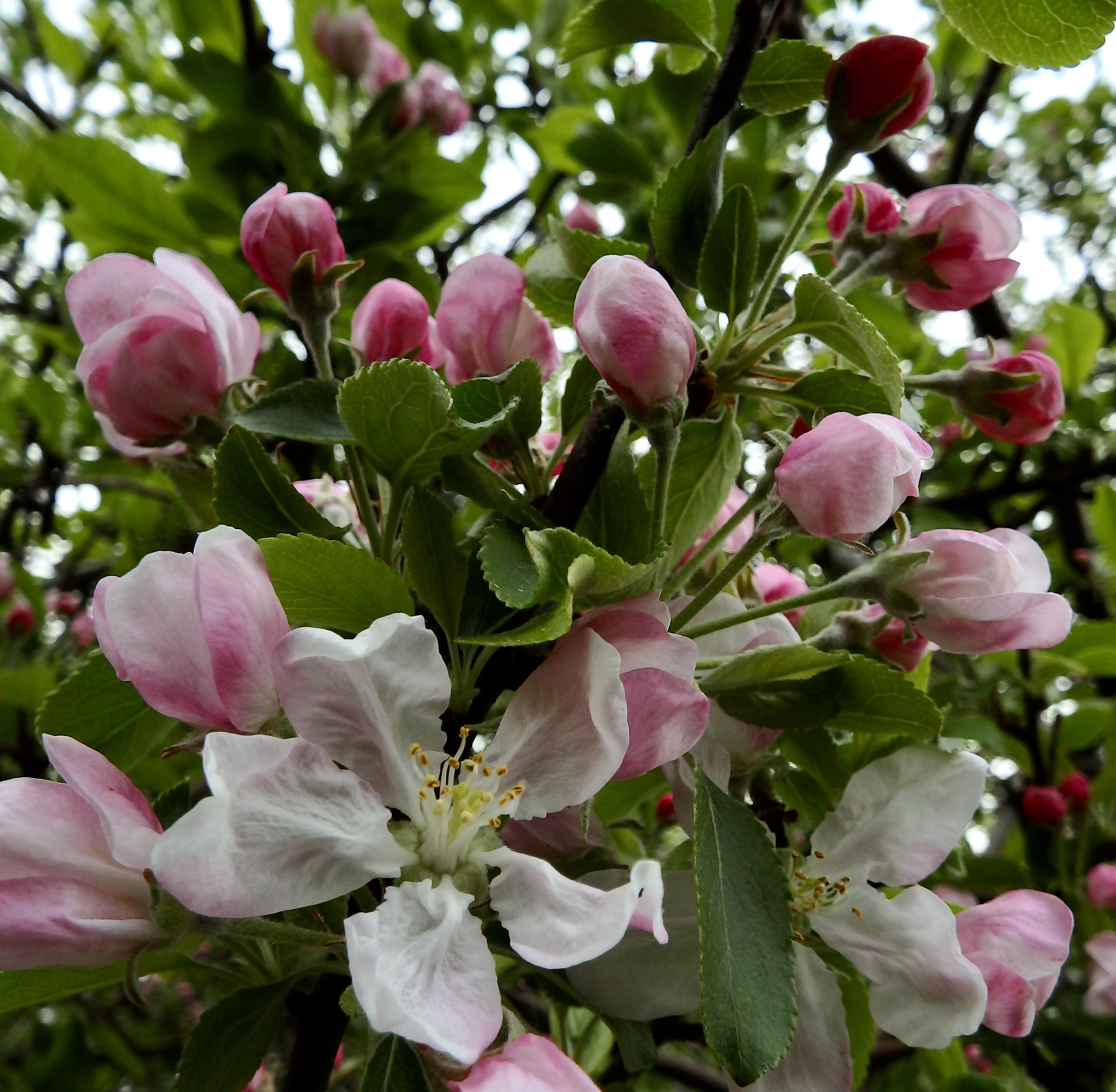
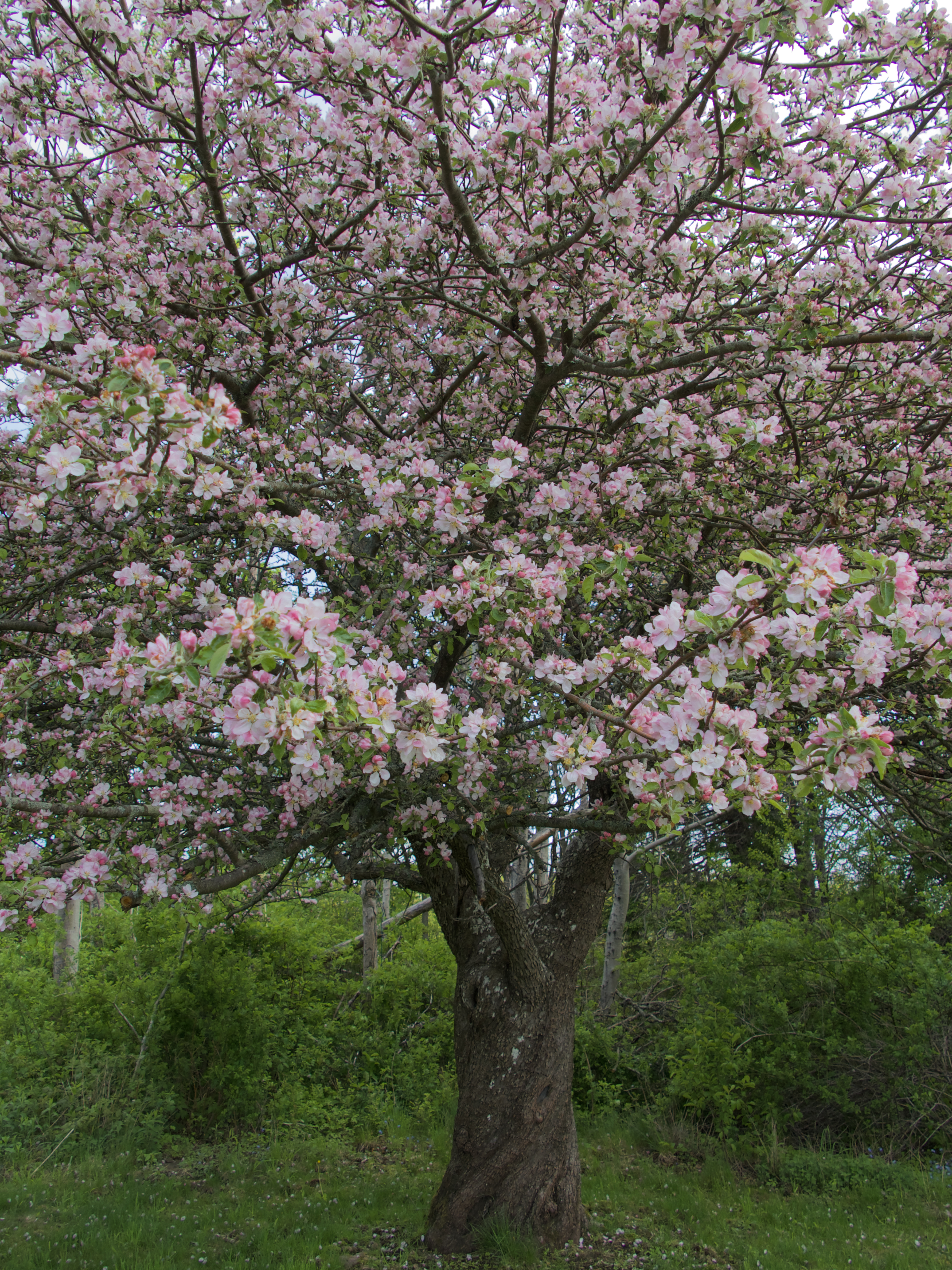
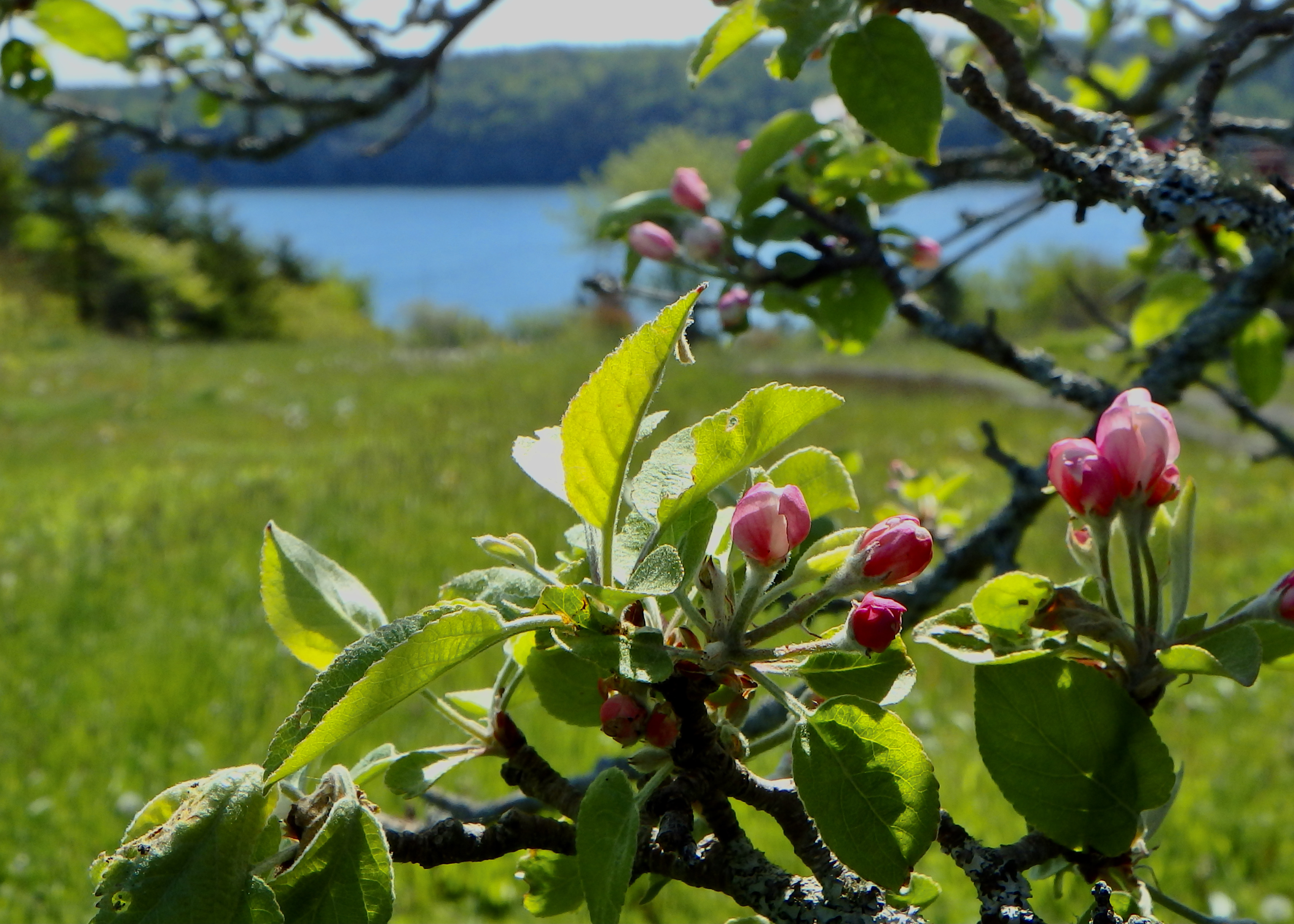
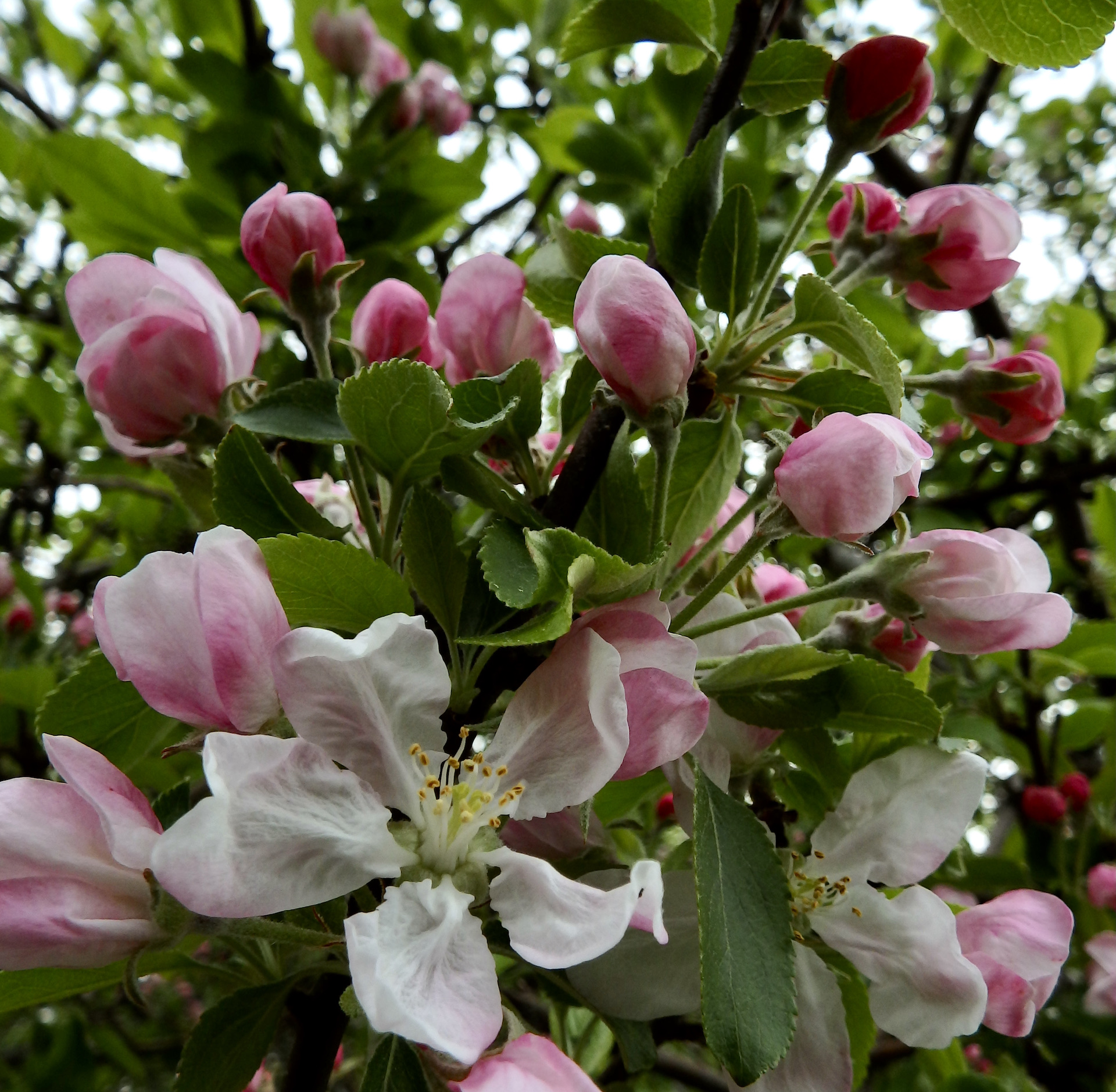
The air is full of the odor of apple blossoms–– Yet the air is fresh as from the salt water. The meadow smells sweet as you go along low places in the road at sundown. To night I hear many crickets. They have commenced their song. They bring in the summer.
A fine, freshening air, a little hazy, that bathes and washes everything, saving the day from extreme heat. Walked to the hills south of Wayland by the road by Deacon Farrar’s. First vista just beyond Merron’s (?), looking west down a valley, with a verdant-columned elm at the extremity of the vale and the blue hills and horizon beyond. These are the resting-places in a walk. We love to see any part of the earth tinged with blue, cerulean, the color of the sky, the celestial color.
I wonder that houses are not oftener located mainly that they may command particular rare prospects, every convenience yielding to this. The farmer would never suspect what it was you were buying, and such sites would be the cheapest of any. A site where you might avail yourself of the art of Nature for three thousand years, which could never be materially changed or taken from you, a noble inheritance for your children. The true sites for human dwellings are unimproved. They command no price in the market. Men will pay something to look into a travelling showman’s box, but not to look upon the fairest prospects on the earth. A vista where you have the near green horizon contrasted with the distant blue one, terrestrial with celestial earth. The prospect of a vast horizon must be accessible in our neighborhood. Where men of enlarged views may be educated. An unchangeable kind of wealth, a real estate.
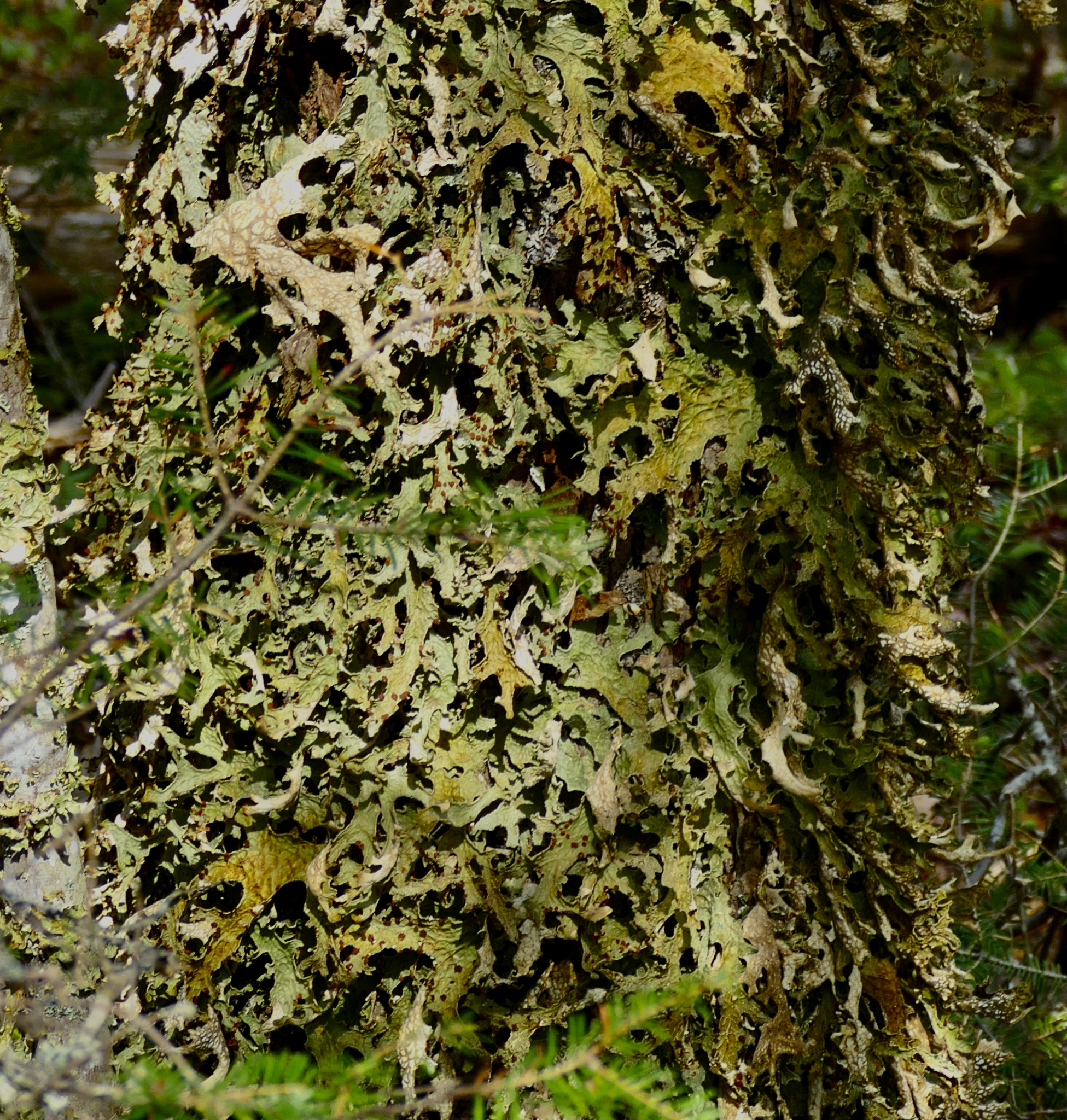
A very warm morning. Now the birds sing more than ever, methinks, now, when the leaves are fairly expanding, the first really warm summer days. The water on the meadows is perfectly smooth nearly all the day. At 3 p. m. the thermometer is at 88° . It soon gets to be quite hazy. Apple out. Heard one speak to-day of his sense of awe at the thought of God, and suggested to him that awe was the cause of the potato-rot. The same speaker dwelt on the sufferings of life, but my advice was to go about one’s business, suggesting that no ecstasy was ever interrupted, nor its fruit blasted. As for completeness and roundness, to be sure, we are each like one of the laciniae of a lichen, a torn fragment, but not the less cheerfully we expand in a moist day and assume unexpected colors.
We want no completeness but intensity of life. Hear the first cricket as I go through a warm hollow, bringing round the summer with his everlasting strain.
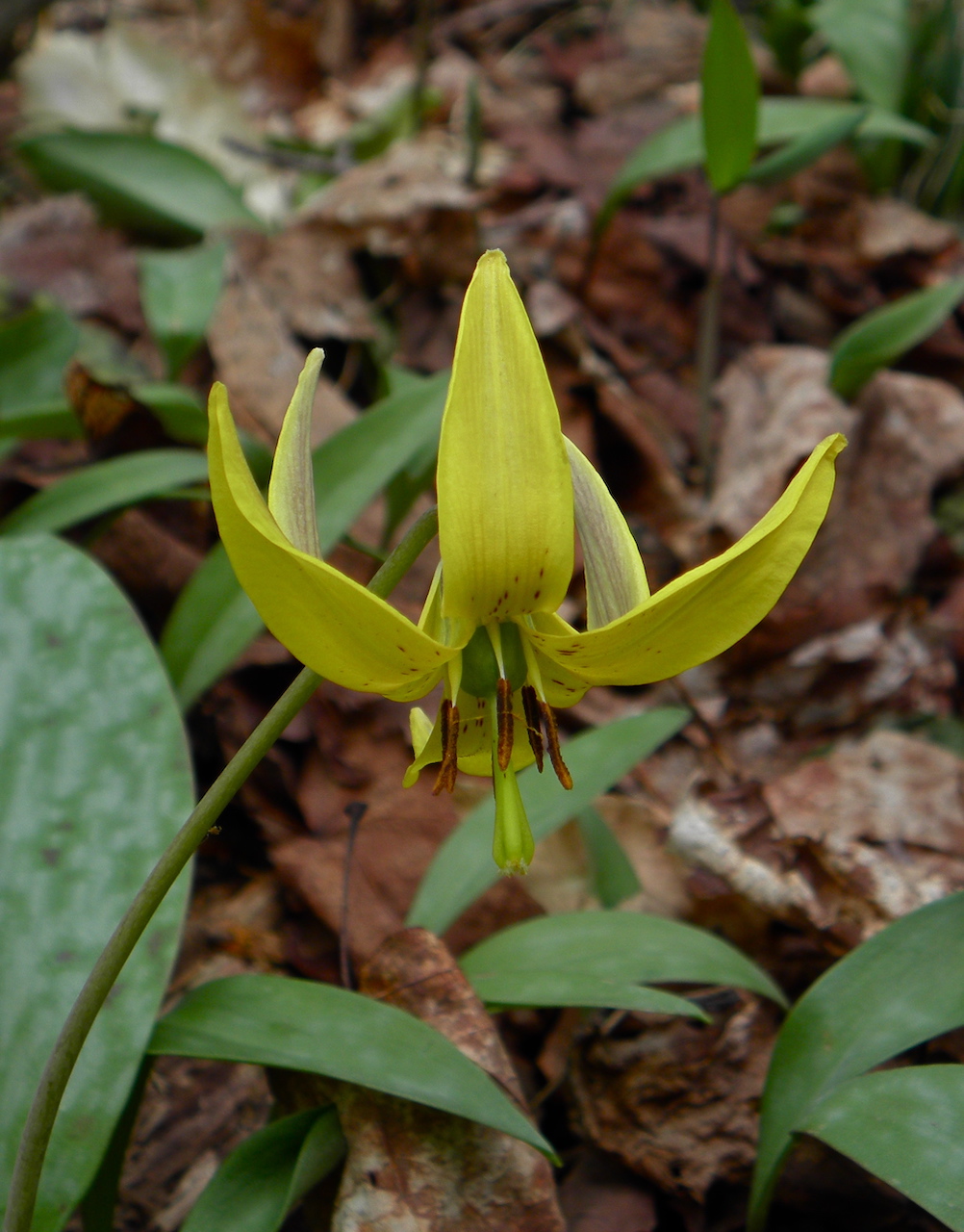
Every new flower that opens, no doubt, expresses a new mood of the human mind. Have I any dark or ripe orange-yellow thoughts to correspond? The flavor of my thoughts begins to correspond.
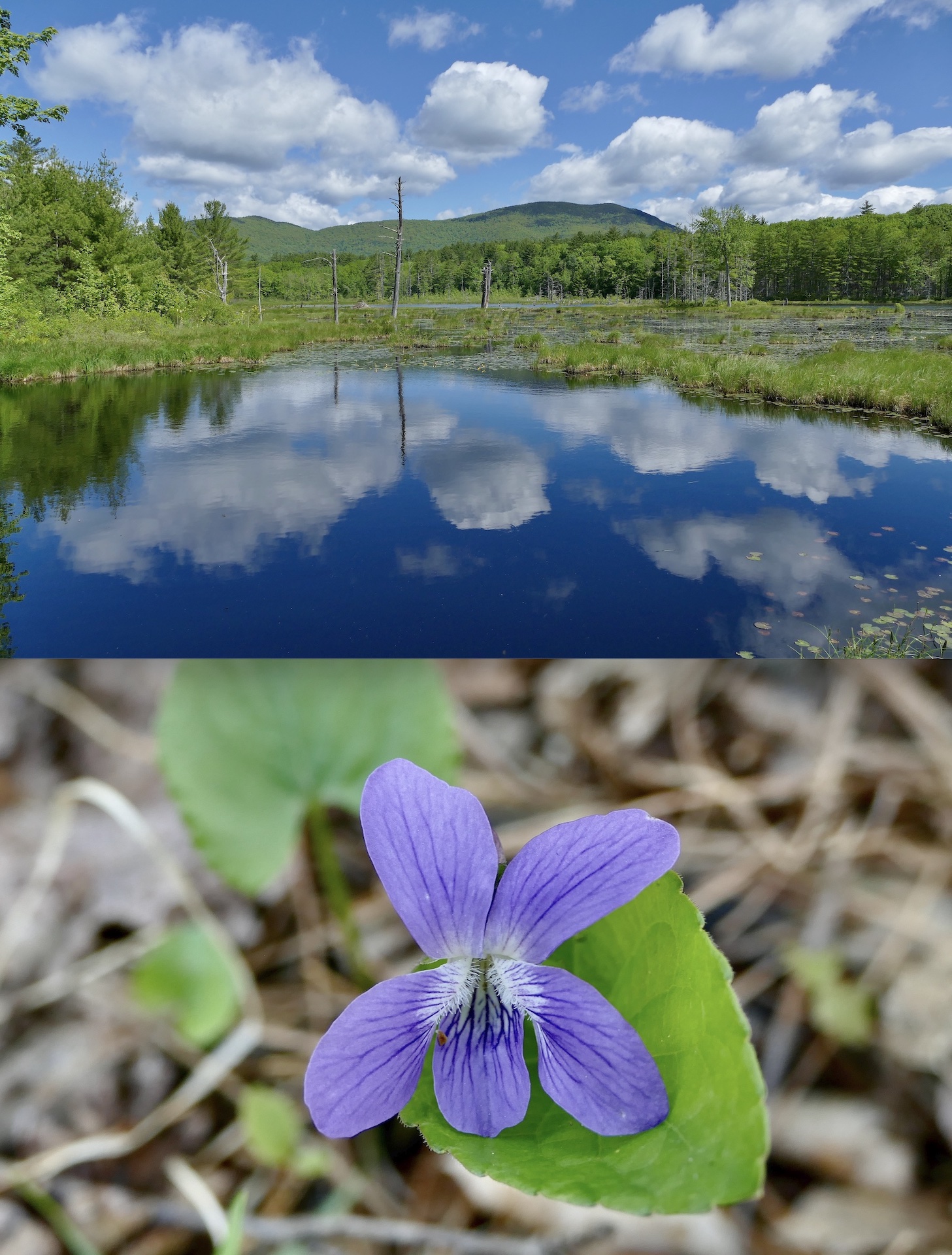
I rest in the orchard, doubtful whether to sit in shade or sun. Now the springing foliage is like a sunlight on the woods. I was first attracted and surprised when I looked round and off to Conantum, at the smooth, lawn-like green fields and pasturing cows, bucolical, reminding me of new butter. The air so clear––as not in summer––makes all things shine, asif all surfaces had been washed by the rains of spring and were not yet soiled or begrimed or dulled. You see even to the mountains clearly. The grass so short and fresh, the tender yellowish-green and silvery foliage of the deciduous trees lighting up the landscape, the birds now most musical, the sorrel beginning to redden the fields with ruddy health, — all these things make earth now a paradise. How many times I have been surprised thus, on turning about on this very spot, at the fairness of the earth.
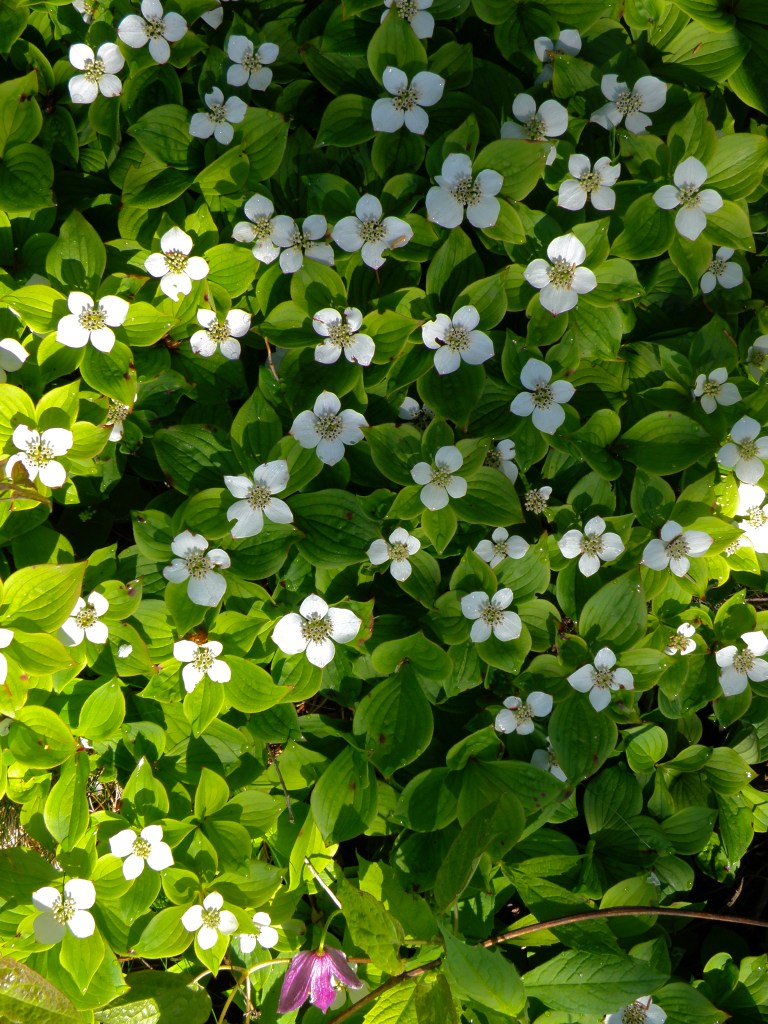
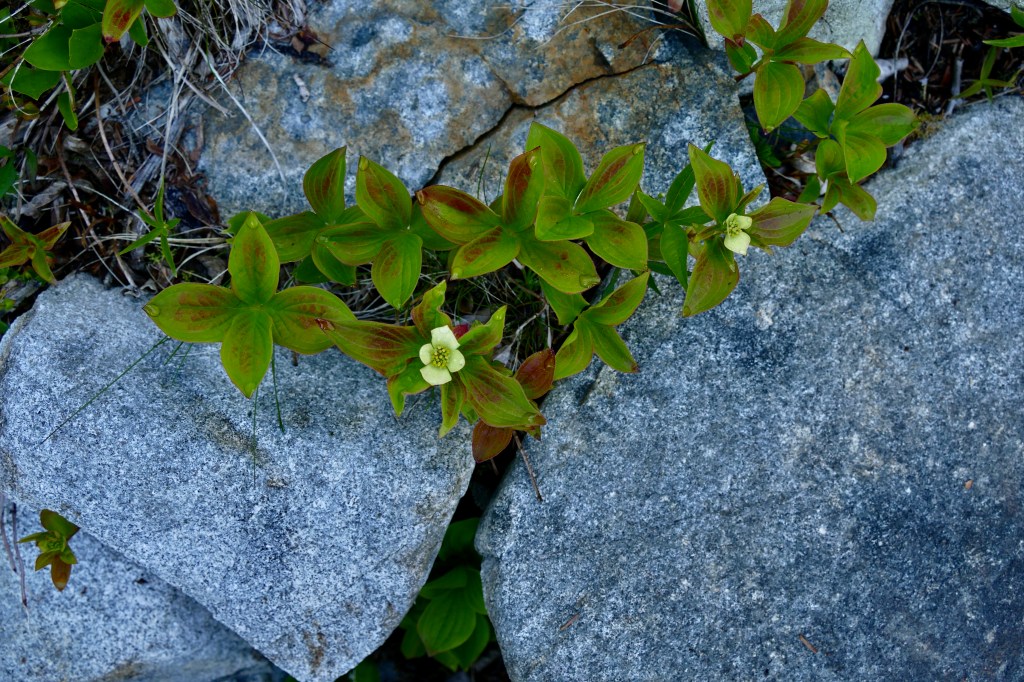
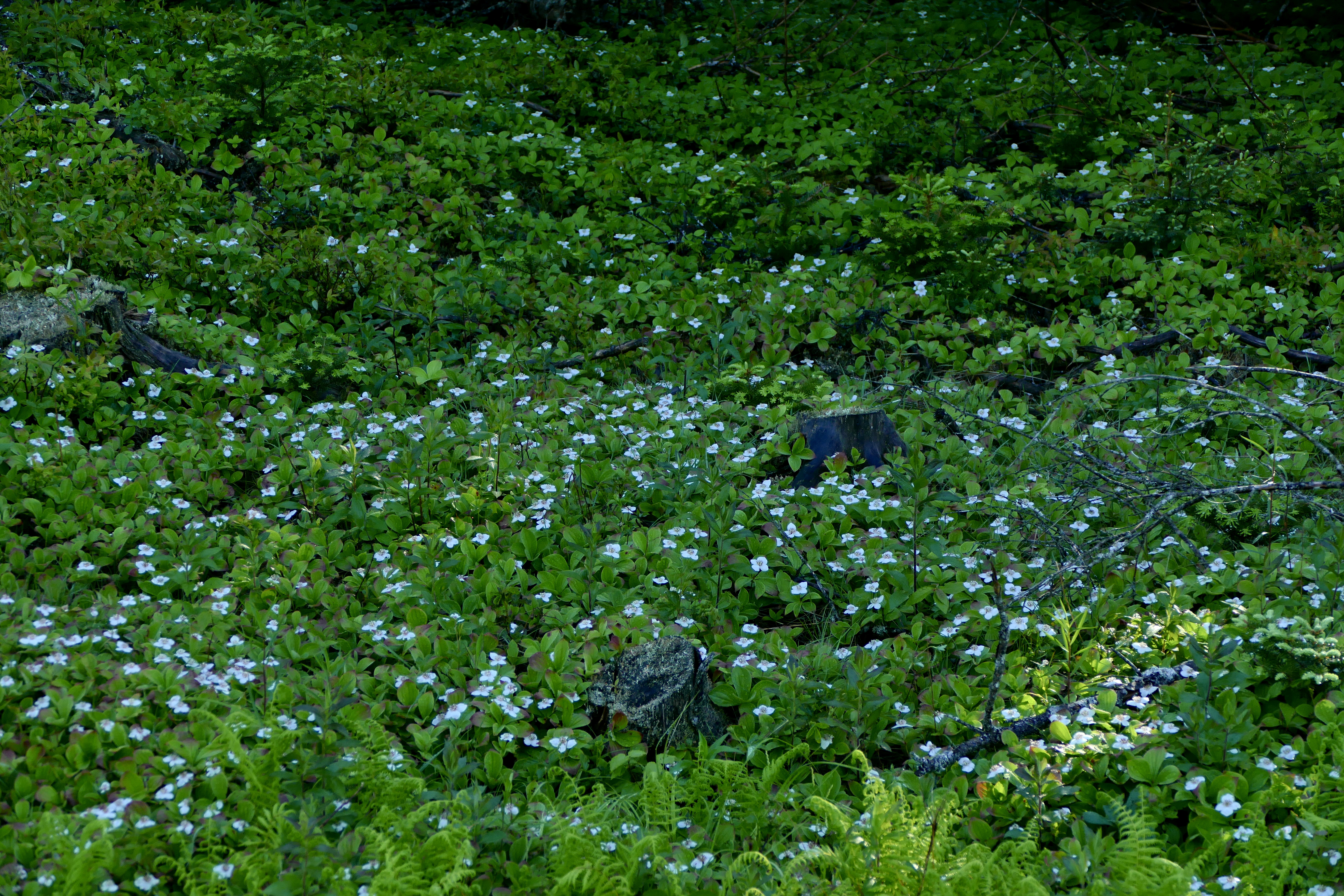
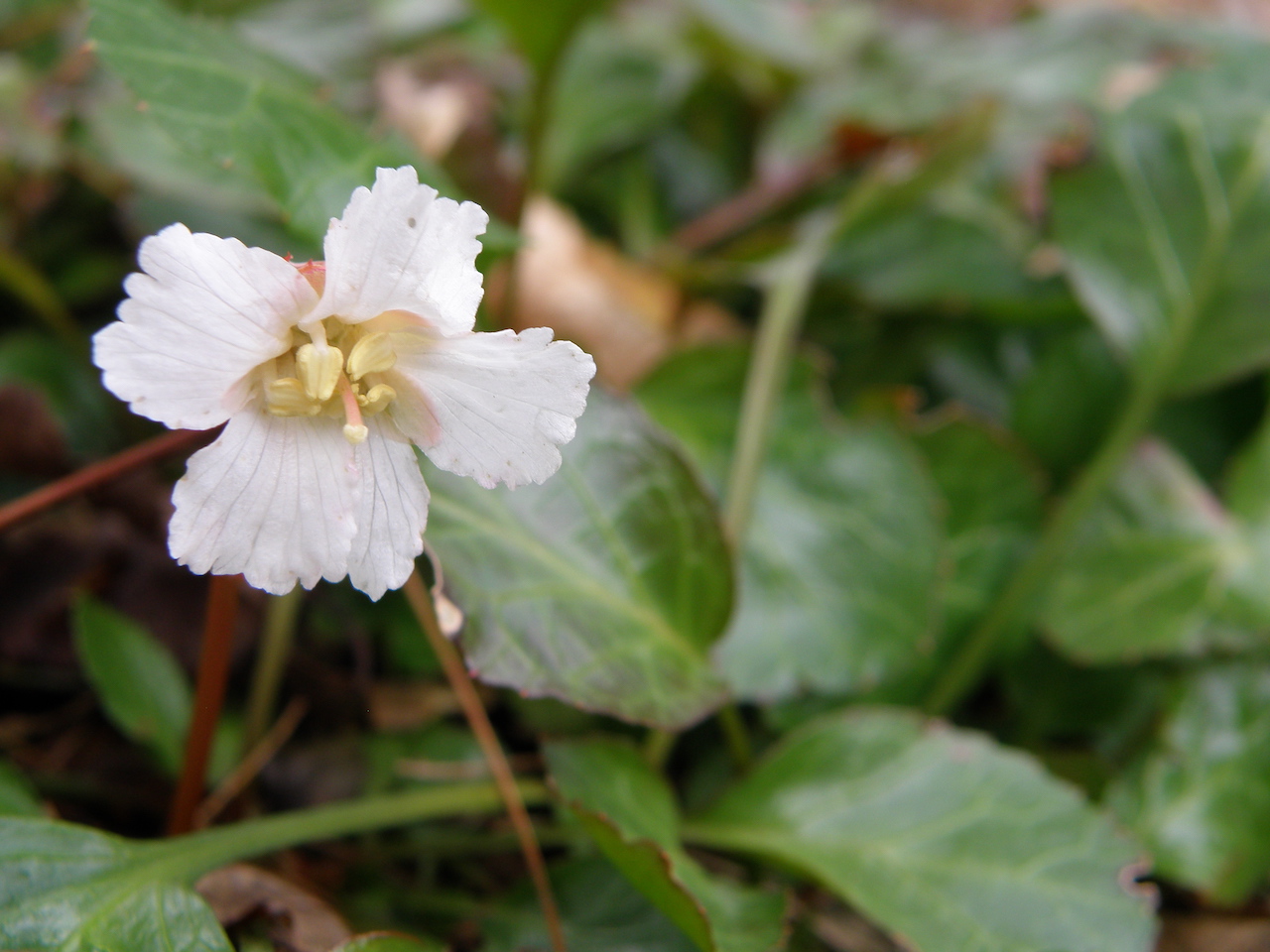
Cornus Canadensis just out. Probably the C.florida should be set down to-day, since it just begins to shed pollen and its involucre is more open. It is a fair but cool and windy day, a strong northwest wind, and the grass, to which the rain has given such a start, conspicuously waves, showing its lighter under side, and the buttercups toss in the wind. The pitch and white pines have grown from one to five inches.
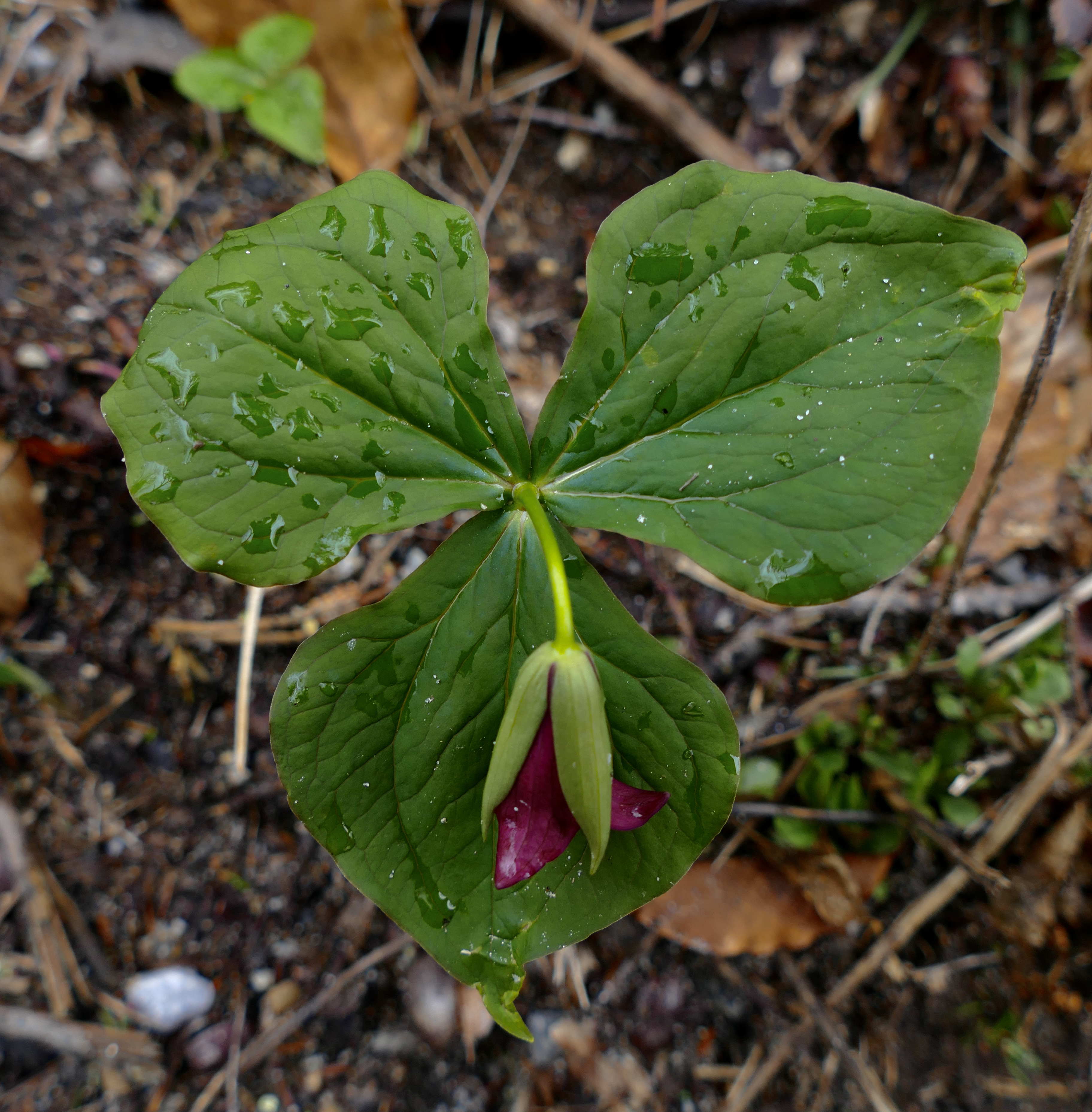
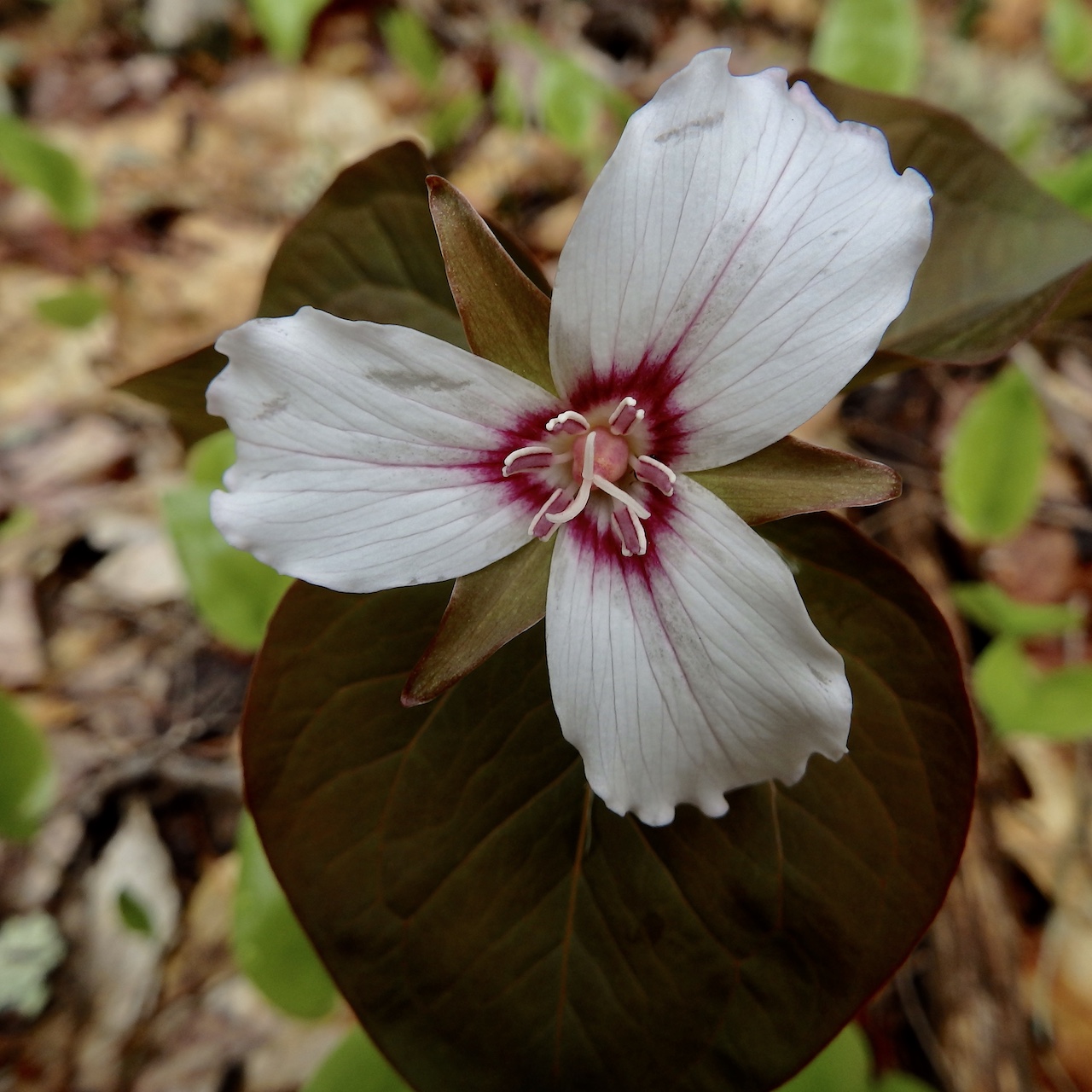
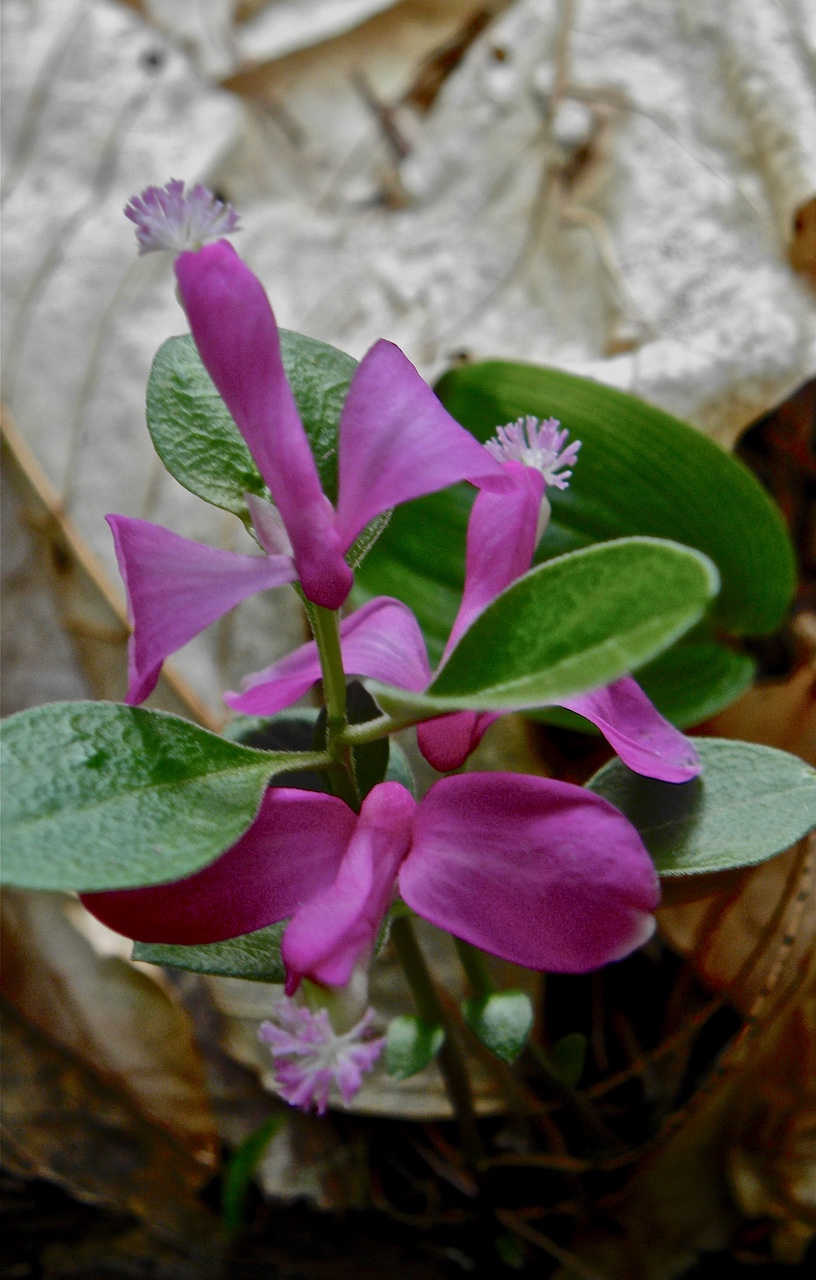
Found the arum triphyllum & the nodding trillium or wake Robin in Conant’s swamp. An ash also in bloom there—& the sassafras quite striking— Also the Fringed Polygala by Conantum wood.
The Rhodora in blossom—a delicate colored flower….
The landscape is most beautiful looking towards the sun (in the orchard on Fair Haven) at four. First, there is this green slope on which I sit, looking down between the rows of apple trees just being clothed with tender green, —sometimes underneath them to the sparkling water, or over through them, or seeing them against the sky. Secondly, the outline of this bank or hill is drawn against the water far below ; the river still high, a beautifully bright sheen on the water there, though it is elsewhere a dull slaty-blue color, a sober rippled surface. A fine sparkling shimmer in front, owing to the remarkable clearness of the atmosphere (clarified by the May storm?). Thirdly, on either side of the wood beyond the river are patches of bright, tender, yellowish, velvety green grass in meadows and on hillsides. It is like a short furred mantle now and bright as if it had the sun on it. Those great fields of green affect me as did those early green blades by the Corner Spring, —like a fire flaming up from the earth. The earth proves itself well alive even in the skin. No scurf on it, only a browner color on the barren tops of hills. Fourthly, the forest, the dark-green pines, wonderfully distinct, near and erect, with their distinct dark stems, spiring tops, regularly disposed branches, and silvery light on their needles. They seem to wear an aspect as much fresher and livelier as the other trees, ––though their growth can hardly be perceptible yet, —as if they had been washed by the rains and the air. They are now being invested with the light, sunny, yellowish-green of the deciduous trees. This tender foliage, putting so much light and life into the landscape, is the remarkable feature at this date. The week when the deciduous trees are generally and conspicuously expanding their leaves. The various tints of gray oaks and yellowish-green birches and aspens and hickories, and the red or scarlet tops where maple keys are formed (the blossoms are now over), —these last the high color (rosaceous?) in the bouquet. And fifthly, I detect a great stretch of high-backed, mostly bare, grassy pasture country between this and the Nashua, spotted with pines and forests, which I had formerly taken for forest uninterrupted. And finally, sixthly, Wachusett rising in the background, slightly veiled in bluish mist. — toward which all these seem to slope gradually upward, — and those grassy hillsides in the foreground, seen but as patches of bare grassy ground on a spur of that distant mountain.
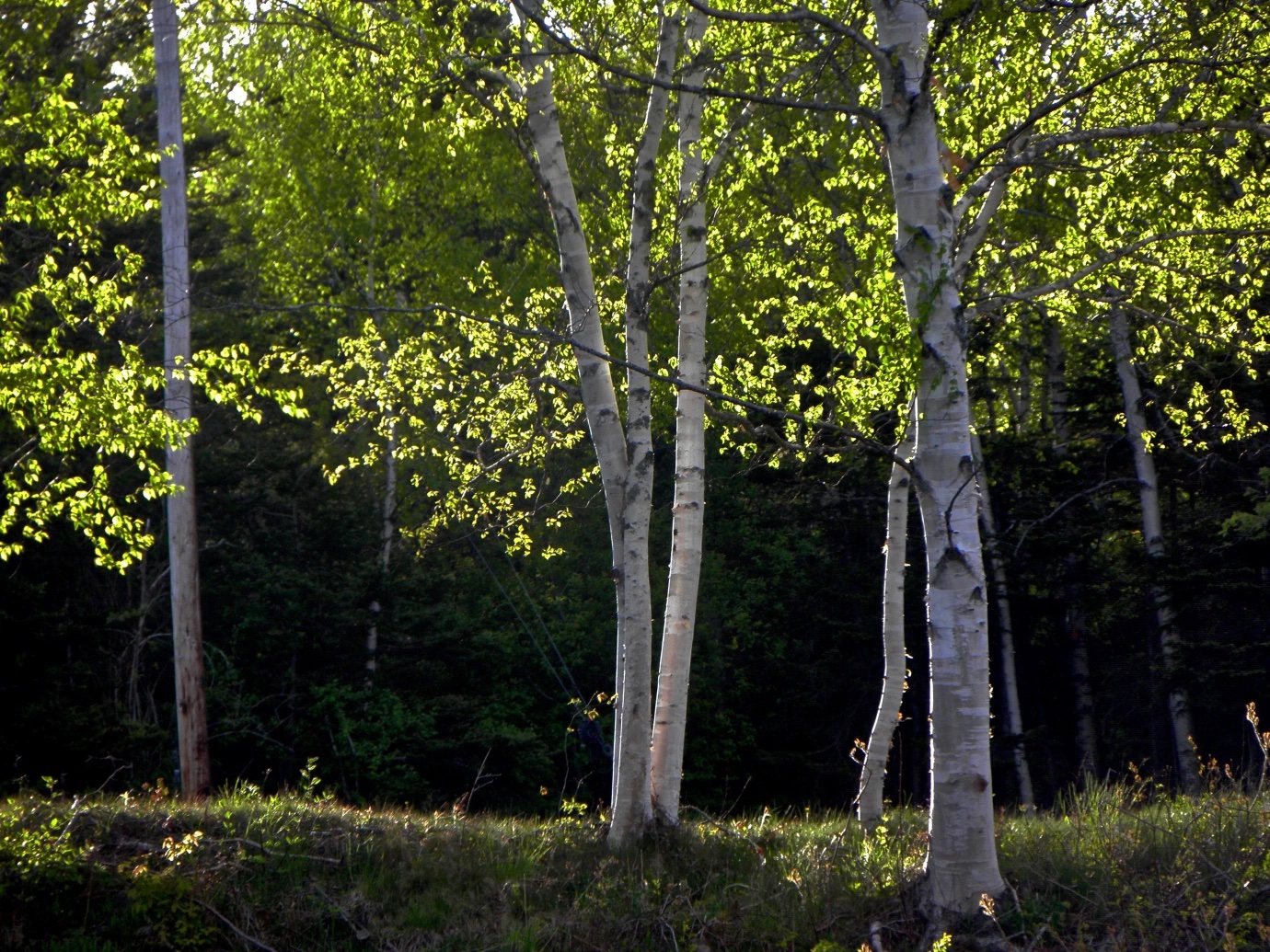
The sun on the young foliage of birches, alders, etc., on the opposite side of the pond has an enchanting effect. The sunshine has a double effect. The new leaves abet it, so fresh and tender, not apprehending their insect foes. Now the sun has come out after the May storm, how bright, how full of freshness and tender promise and fragrance is the new world! The woods putting forth w leaves; it is a memorable season. So hopeful! These young leaves have the beauty of flowers….here is life in these fresh and varied colors, life in the motion of the wind and the waves; all make it a flowing, washing day. It is a good day to saunter….Do I smell the young birch leaves at a distance? Most trees are beautiful when leafing out, but especially the birch. After a storm at this season, the sun comes out and lights up the tender expanding leaves, and all nature is full of light and fragrance, and the birds sing without ceasing, and the earth is a fairyland. The birch leaves are so small that you see the landscape through the tree, and they are like silvery and green spangles in the sun, fluttering about the tree.
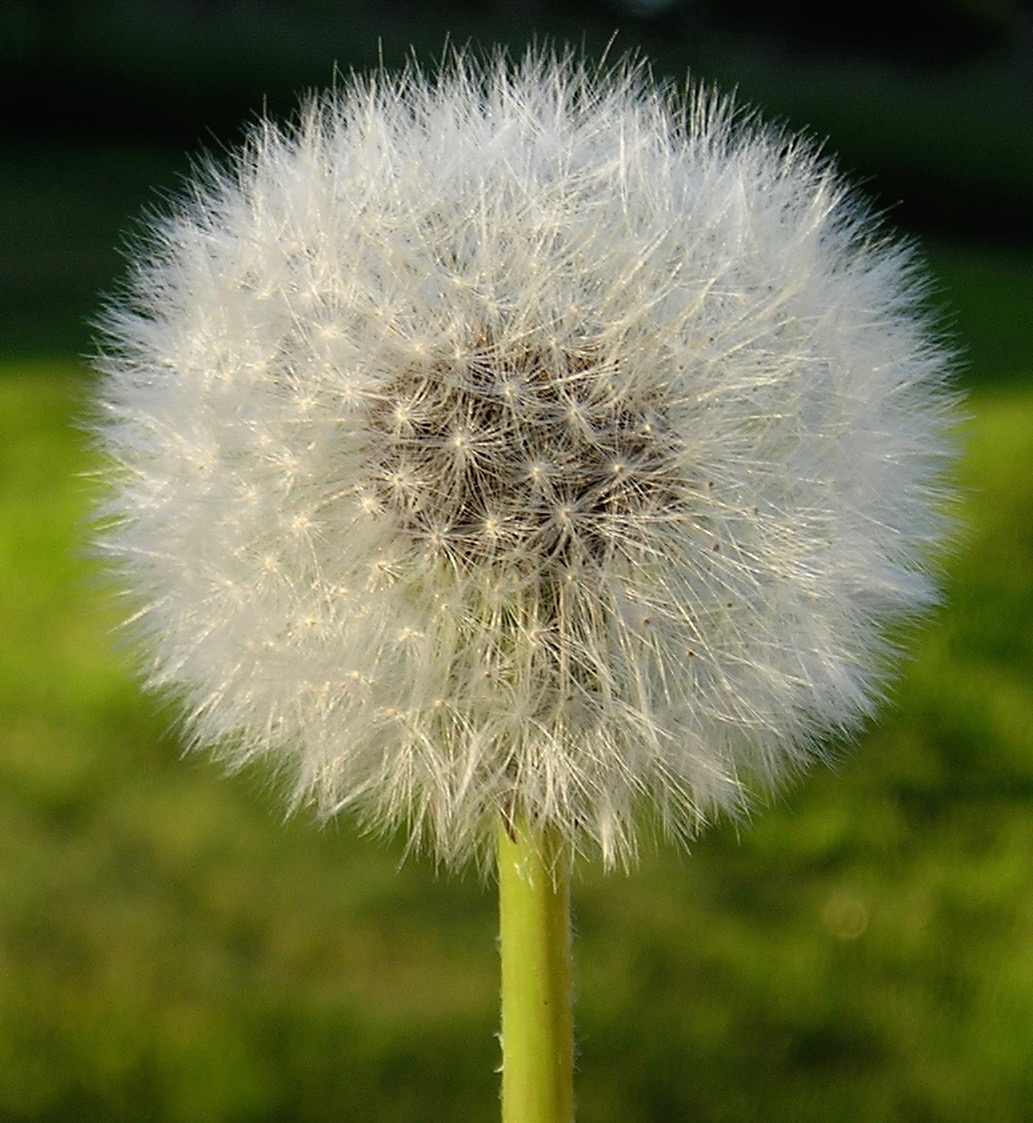
I was ready to say that I had seen no more beautiful flower than the dandelion. That has the vernal scent. How many flowers have no peculiar, but only this simple vernal, fragrance ?
I looked again on the forest from this hill, which view may contrast with that of last Sunday. The mist produced by the leafing of the deciduous trees has greatly thickened now and lost much of its reddishness in the lighter green of expanding leaves, has become a brownish or yellowish green, except where it has attained distinctness in the light-green foliage of the birch, the earliest distinct foliage visible in extensive great masses at a great distance, the aspen not being common. The pines and other evergreens are now fast being merged in a sea of foliage.
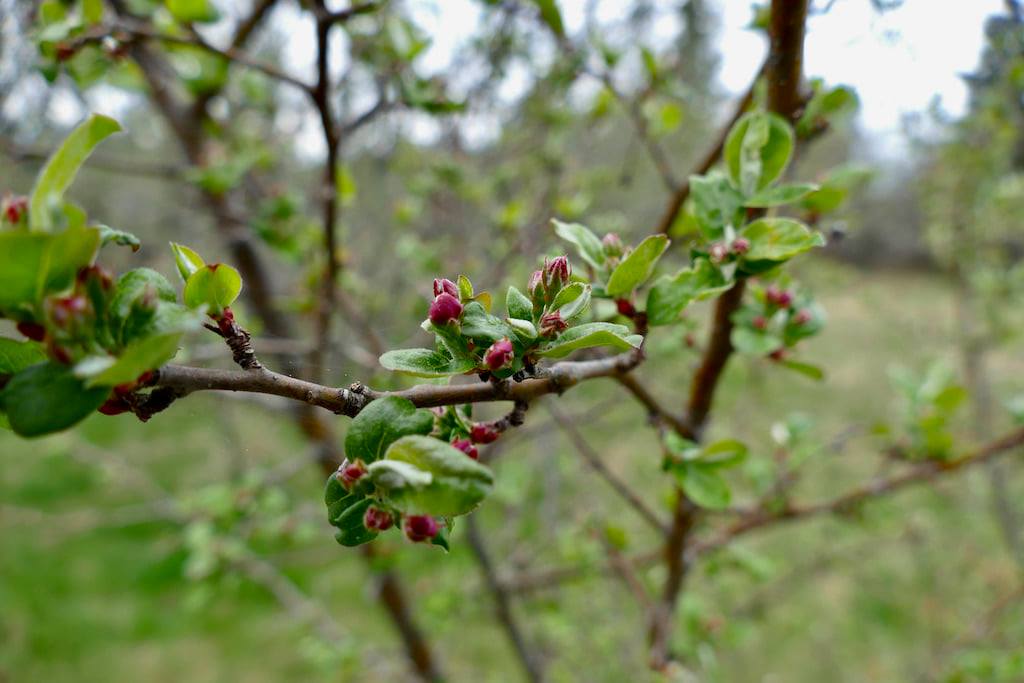
Some grass is seen to wave in the distance on the side of N. Barrett’s warm hill, showing the lighter under sides. That is a soft, soothing, June-like impression when the most forward grass is seen to wave and the sorrel looks reddish. The year has the down of youth on its cheek. This, too, is the era of the bobolink, now, when apple trees are ready to burst into bloom.
Now it is too late to retreat from the summer adventure. You have passed the Rubicon, and will spend your summer here.
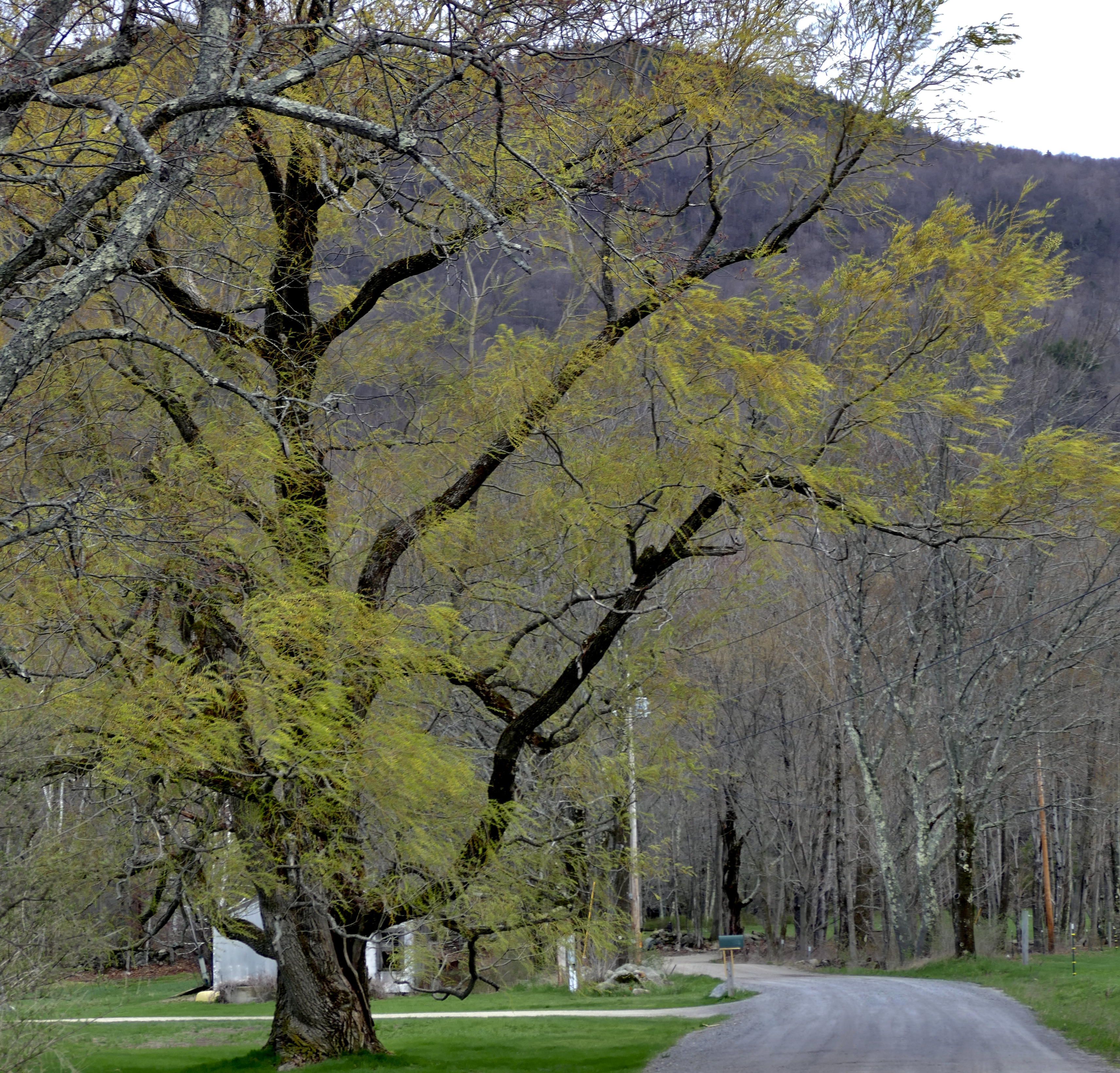
He is the richest who has most use for nature as raw material of tropes and symbols with which to describe his life. If these gates of golden willows affect me, they correspond to the beauty and promise of some experience on which I am entering.
If I am overflowing with life, am rich in experience for which I lack expression, then nature will be my language full of poetry — all nature will fable, and every natural phenomenon be a myth. The man of science, who is not seeking for expression but for a fact to be expressed merely, studies nature as a dead language. I pray for such inward experience as will make nature significant.
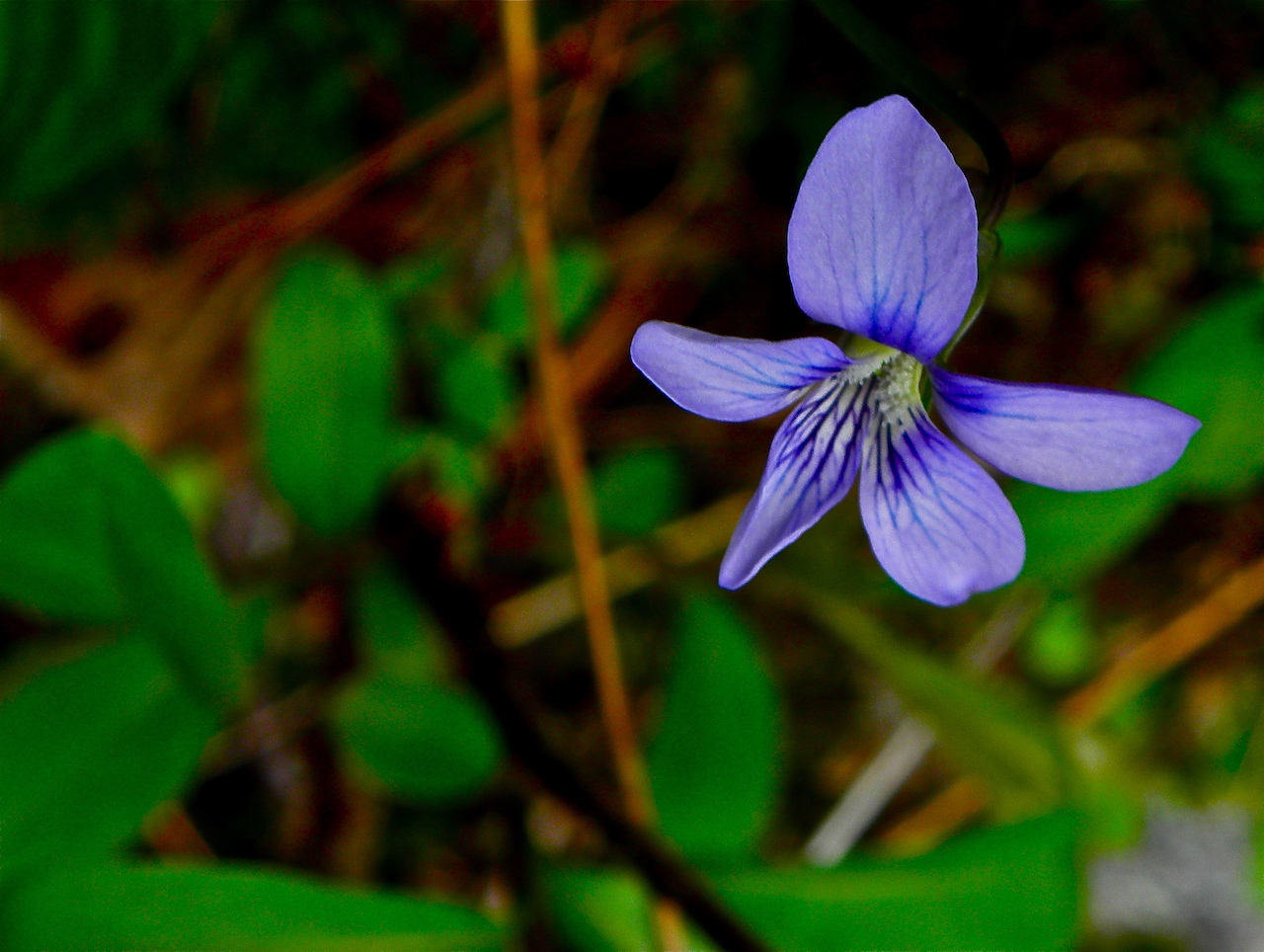
It is wonderful what a variety of flowers may grow within the range of a walk & how long some very conspicuous ones may escape the most diligent walker—If you do not chance to visit their localities the right week or fortnight––when their signs are out.













You must be logged in to post a comment.