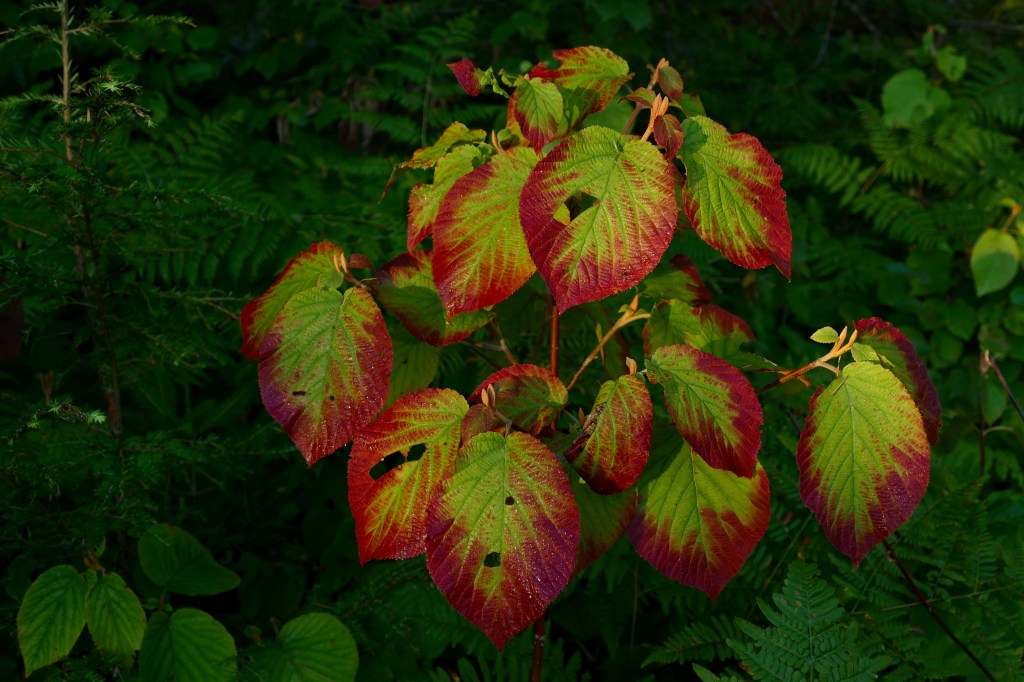
The coloring and reddening of the leaves toward fall is interesting; as if the sun had so prevailed that even the leaves, better late than never, were turning to flowers — so filled with mature juices, the whole plant turns at length to one flower, and all its leaves are petals around its fruit or dry seed. A second flowering to celebrate the maturity of the fruit. The first to celebrate the age of puberty, the marriageable age; the second, the maturity of the parent, the age of wisdom, the fullness of years.
It is still cool weather with a NW wind— There is more shadow in the landscape than a week ago—methinks—& the creak of the cricket sounds cool & steady. The grass & foliage—and landscape generally are of a more thought inspiring color— —suggest what some perchance would call a pleasing melancholy—
In some meadows, as I look southwesterly the aftermath looks a bright yellowish-green—in patches— Both willows & poplars have leaves of a light-color at least beneath—contrasting with most other trees—This weather is a preface to autumn.
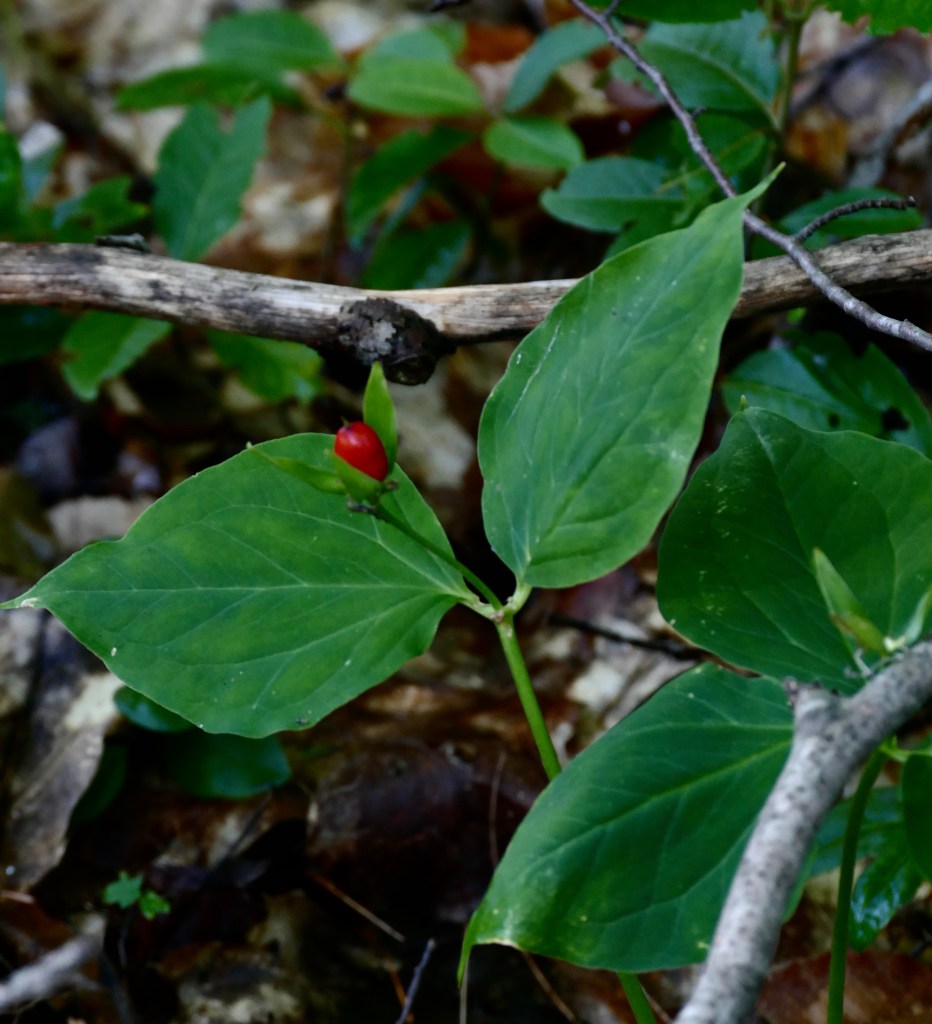
The skunk cabbages—& the trilliums both leaves & fruit are many flat prostrate—the former decaying and all looking as if early frosts had prevailed….The red-stemmed (?) cornel berries…
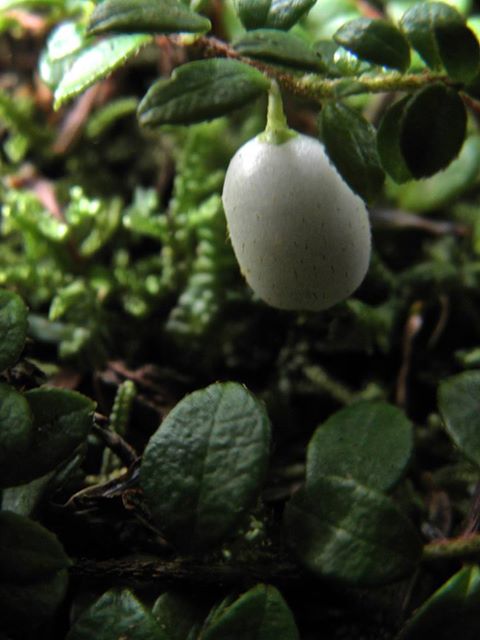
Elizabeth Hoar shows me the following plants which she brought from the Wht Mts the 16th ult. Chiogenes hispidula creeping snow-berry also called Gaultheria & also vaccinium hispidula–in fruit. –– with a partridge berry scent & taste.
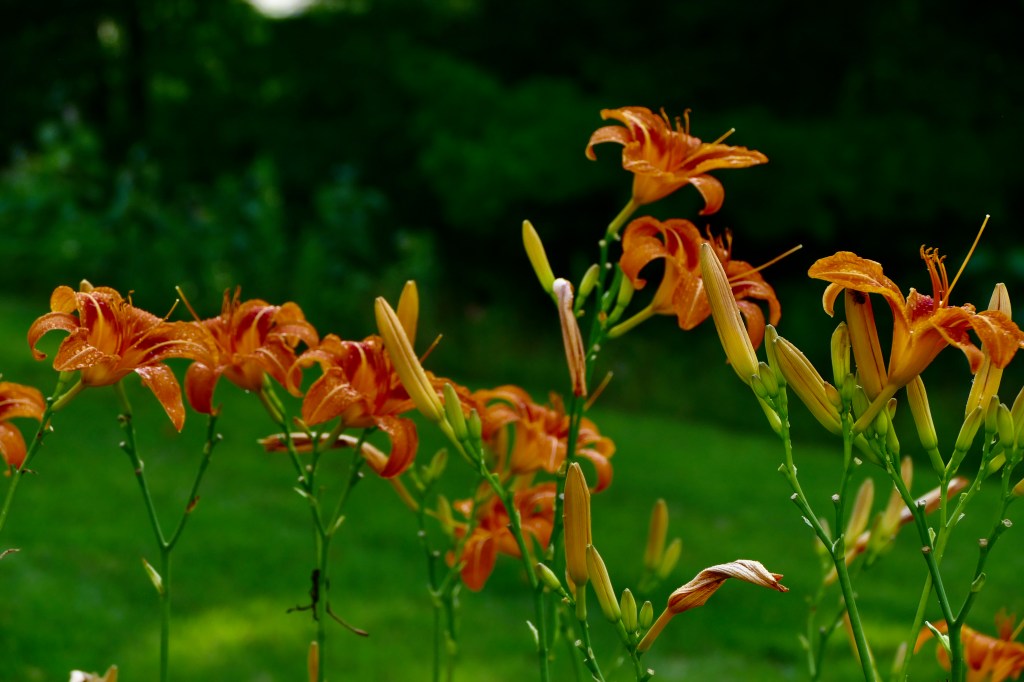
What a variety of old garden herbs – mints, etc. – are naturalized along an old settled road, like this to Boston which the British travelled! And then there is the site, apparently, of an old garden by the tanyard, where the spearmint grows so rankly. I am intoxicated with the fragrance. Though I find only one new plant (the cassia), yet old acquaintances grow so rankly, and the spearmint intoxicates me so, that I am bewildered, as it were by a variety of new things. An infinite novelty. All the roadside is the site of an old garden where fragrant herbs have become naturalized, – hounds-tongue, bergamot, spearmint, elecampane, etc. I see even the tiger lily, with its bulbs, growing by the roadside far from houses (near Leighton’s graveyard). I think I have found many new plants, and am surprised when I can reckon but one. A little distance from my ordinary walk and a little variety in the growth or luxuriance will produce this illusion. By the discovery of one new plant all bounds seem to be infinitely removed.
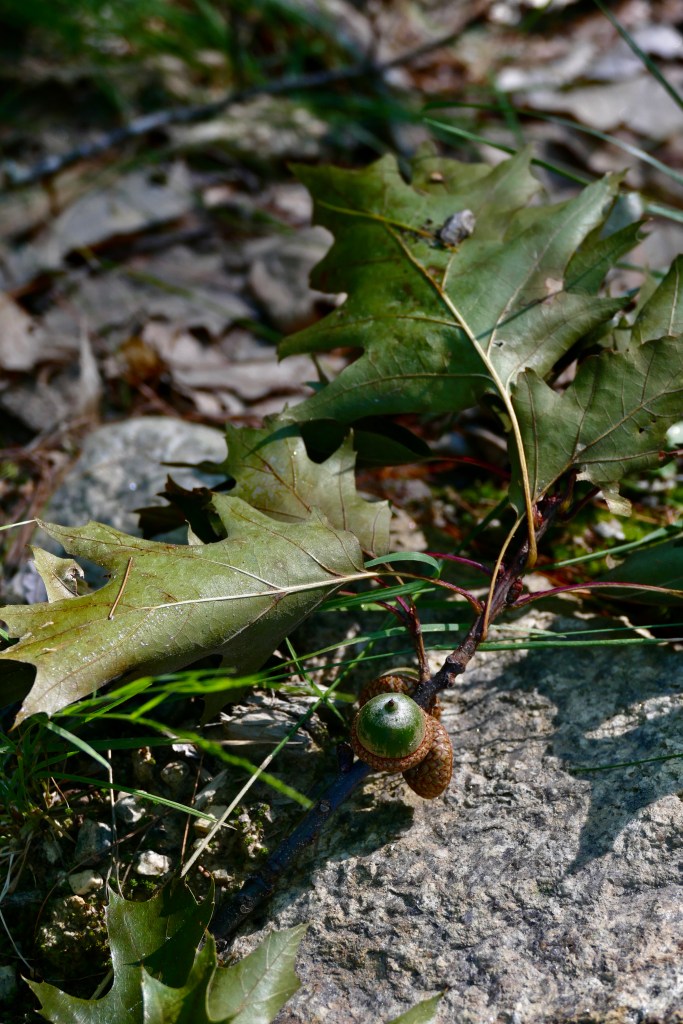
All nature is classic and akin to art. The sumach and pine and hickory which surround my house remind me of the most graceful sculpture. Sometimes their tops, or a single limb or leaf, seems to have grown to a distinct expression as if it were a symbol for me to interpret. Poetry, painting, and sculpture claim at once and associate with themselves those perfect specimens of the art of nature, – leaves, vines, acorns, pine cones, etc. The critic must at last stand as mute though contented before a true poem as before an acorn or a vine leaf.
The perfect work of art is received again into the bosom of nature whence its material proceeded, and that criticism which can only detect its unnaturalness has no longer any office to fulfill. The choicest maxims that have come down to us are more beautiful or integrally wise than they are wise to our understandings. This wisdom which we are inclined to pluck from their stalk is the point only of a single association. Every natural form – palm leaves and acorns, oak leaves and sumach and dodder – are untranslatable aphorisms.
A man must find his own occasion in himself. The natural day is very calm, and will hardly reprove our indolence. If there is no elevation in our spirits, the pond will not seem elevated like a mountain tarn, but a low pool, a silent muddy water, a place for fishermen.
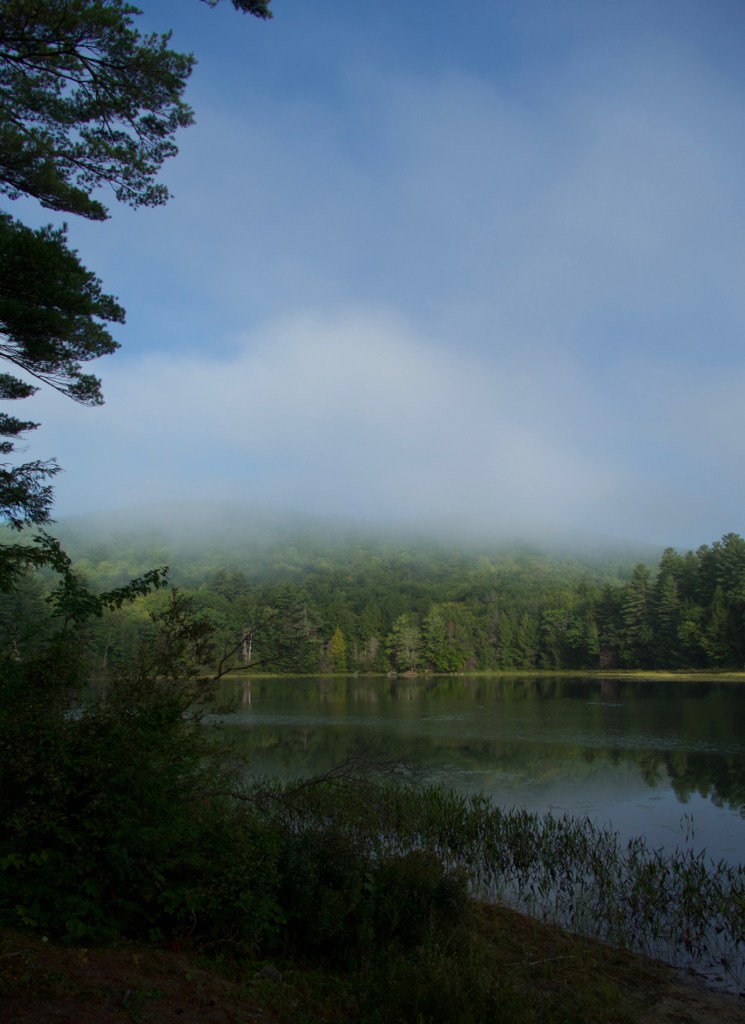
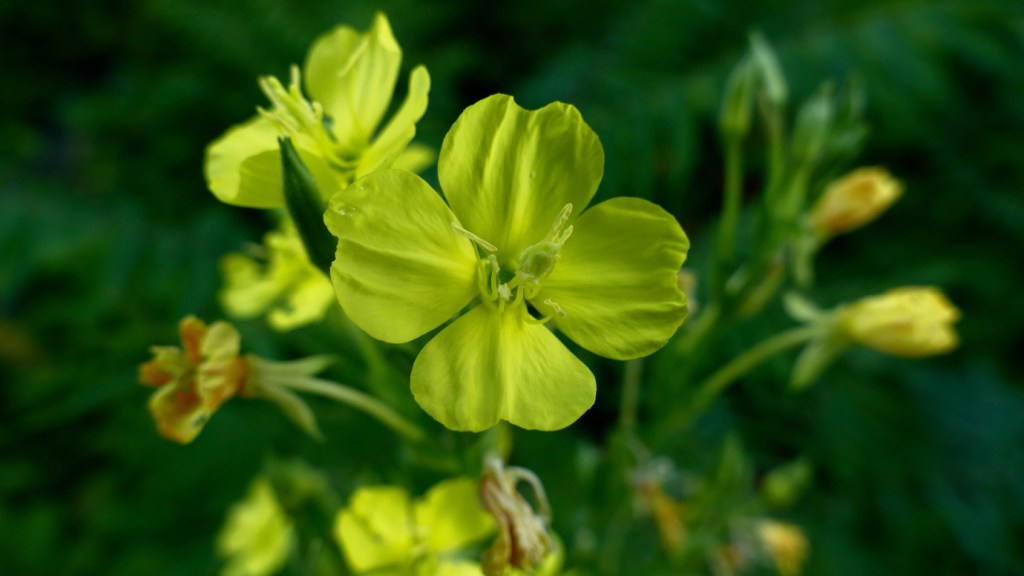
4 1/2 Am to Cliffs— A high fog— As I go along the RR—I observe the darker green of early mown fields— A cool wind at this hour over the wet foliage—as from over mt tops & uninhabited earth. The large primrose conspicuously in bloom. does it shut by day?
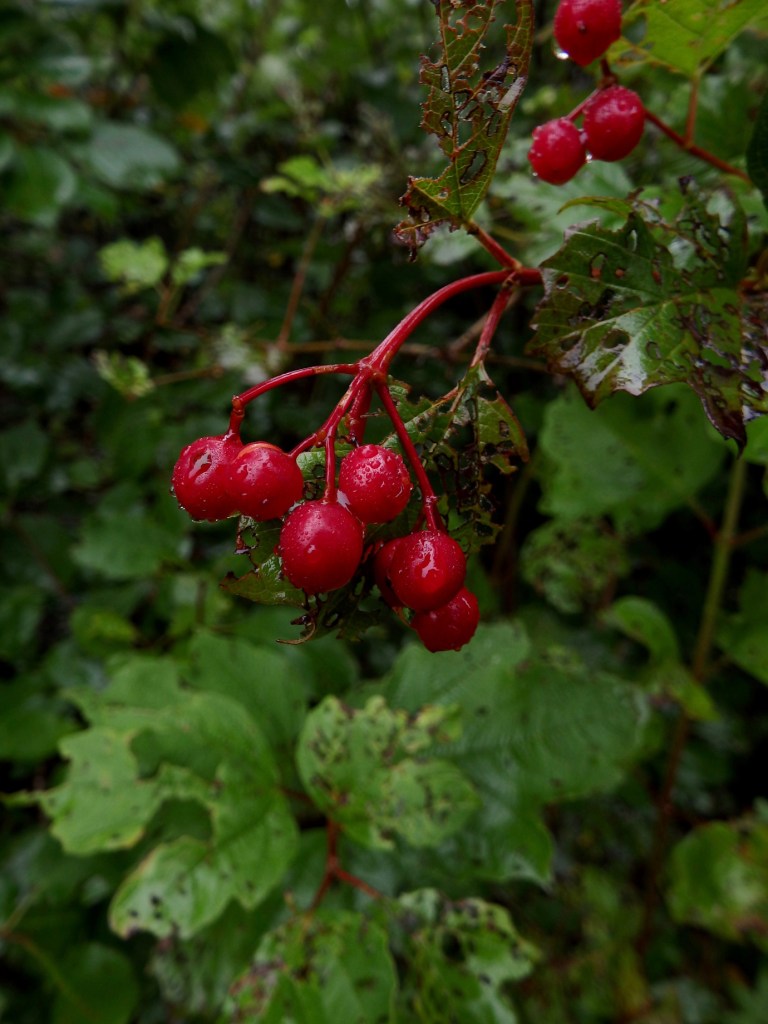
This is the season of small fruits. I trust, too, that I am maturing some small fruit as palatable in these months, which will communicate my flavor to my kind.
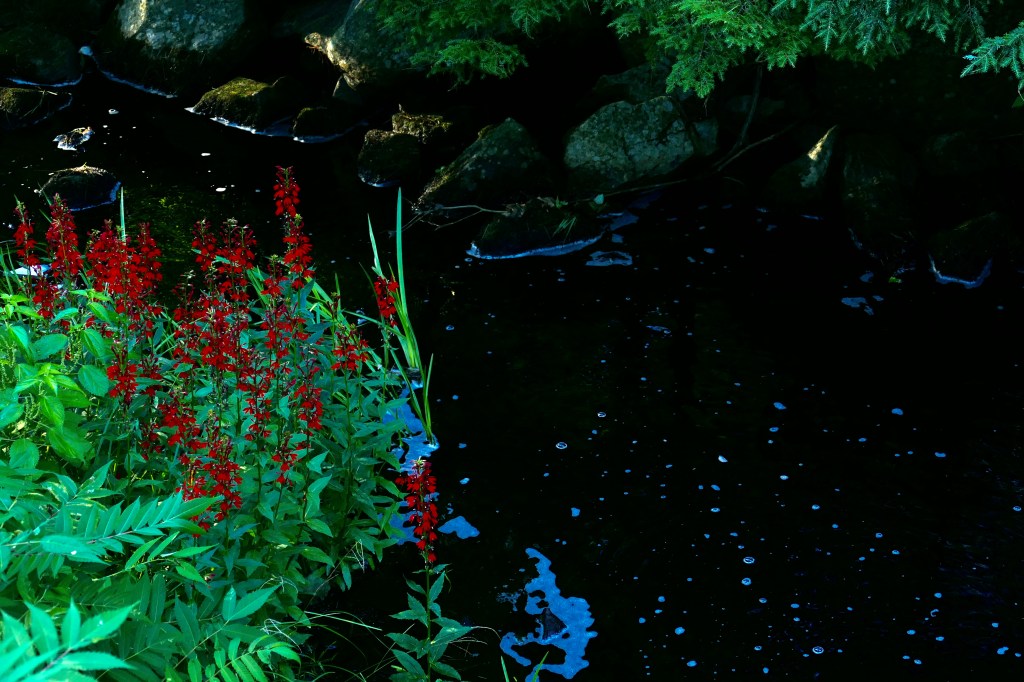
This is a day of sunny water. As I walk along the bank of the river I look down a rod & see distinctly the fishes and the bottom. The cardinals are in perfection—standing in dark recesses of the green shore, or in the open meadow. They are fluviatile & stand along some river or brook—like myself.
Do you not feel the fruit of your spring and summer begin to ripen, to harden its seed within you? Do not your thoughts begin to acquire consistency as well as flavor and ripeness? How can we expect a harvest of thought who have not had a seed-time of character? Already some of my small thoughts — fruit of my spring life — are ripe, like the berries which feed the first broods of birds; and other some are prematurely ripe and bright, like the lower leaves of the herbs which have felt the summer’s drought—
Seasons when our mind is like the strings of a harp which is swept—& we stand and listen. A man may hear strains in his thought far surpassing any oratorio—
….Still autumnal–breezy with a cool vein in the wind––so that passing from the cool & breezy into the sunny & warm places you begin to love the heat of Summer–– It is the contrast of the cool wind with the warm sun. I walk over the pin-weed field. It is just cool enough––in my thin clothes–– There is a light on the earth & leaves as if they were burnished–– It is the glistening autumnal side of Summer–– I feel a cool vein in the breeze––which braces my thought––& I pass with pleasure over sheltered & sunny portions of the sand where the summers heat is undiminished––& I realize what a friend I am losing….This off side of summer glistens like a burnished shield. The waters now are some degrees cooler––winds show the undersides of the leaves–– The cool nocturnal creak of the crickets is heard in the midafternoon–– Tansy is ap. now in its prime & the early golden-rods have acquired a brighter yellow––
From this off side of the year––this imbricated slope with alternating burnished surfaces & shady ledges––much more light & heat is reflected (less absorbed) methinks than from the springward side. In the midsummer we are of the earth––confounded with it & covered with its dust. Now we begin to erect ourselves somewhat & walk upon its surface. I am not so much reminded of former years, as of existence prior to years–– From Peters I look over the great meadows. There are 60 or more men in sight on them––in squads of half-a dozen far & near––revealed by their white shirts–– They are alternately lost & reappear from behind a distant clump of trees. A great part of the farmers of Concord are now in the meadows. & toward night great loads of hay are seen rolling slowly along the rivers bank––on the firmer ground there––& perhaps fording the stream itself––toward the distant barn––followed by a troop of tired haymakers….
A man must generally get away some hundreds or thousands of miles from home before he can be said to begin his travels. Why not begin his travels at home?
…. It takes a man of genius to travel in his own country, in his native village; to make any progress between his door and his gate.
One sentence of perennial poetry would make me forget, would atone for, volumes of mere science. The astronomer is as blind to the significant phenomena, or the significance of phenomena, as the wood-sawyer who wears glasses to defend his eyes from sawdust. The question is not what you look at, but what you see.
1854
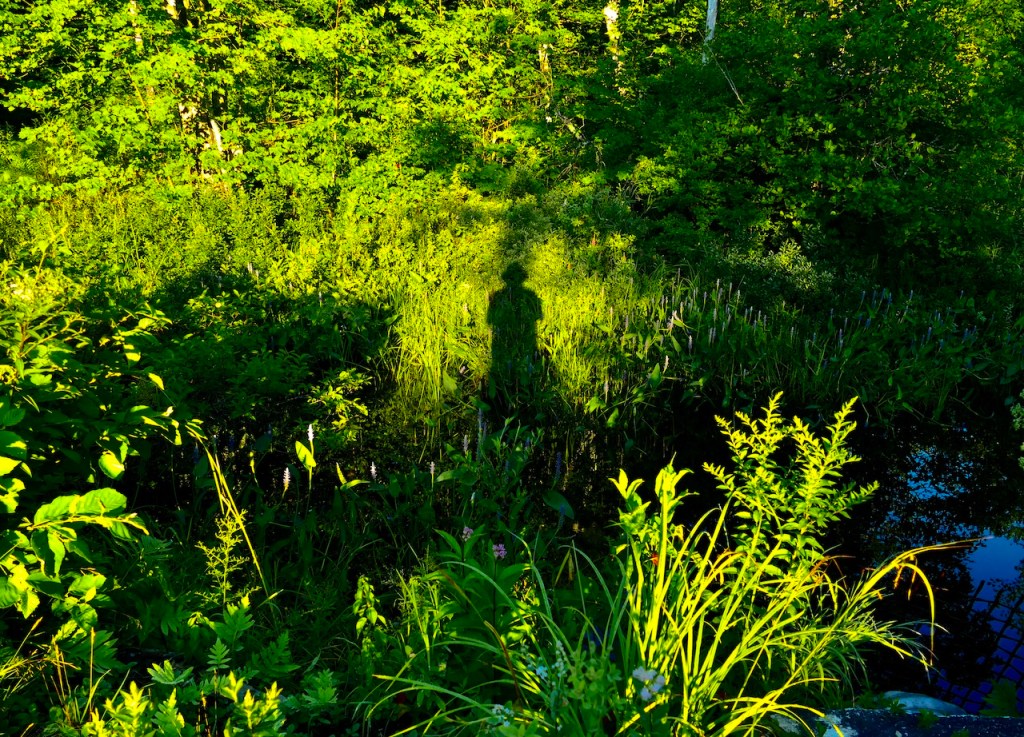
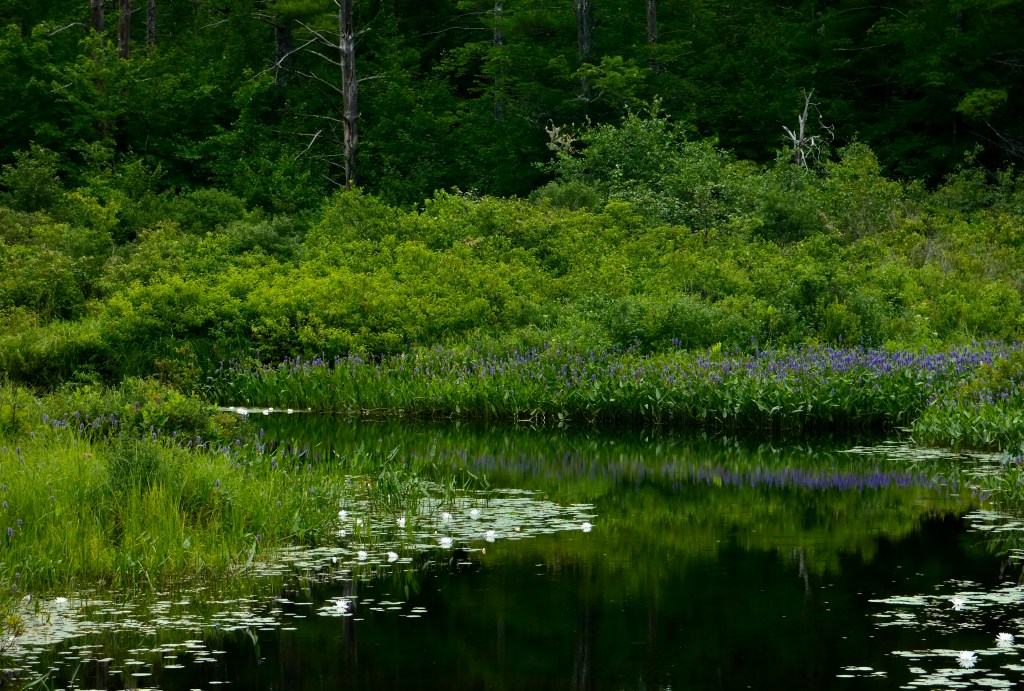
Now then the river’s brim is in perfection after the mikania is in bloom & before the Pontederia & pads & the willows are too much imbrowned….
The rush sparrow sings still unintelligible, as from beyond a depth in me which I have not fathomed, where my future lies folded up. I hear several faint notes, quite outside me, which populate the waste.
This is such fresh and flowing weather, as if the waves of the morning had subsided over the day.
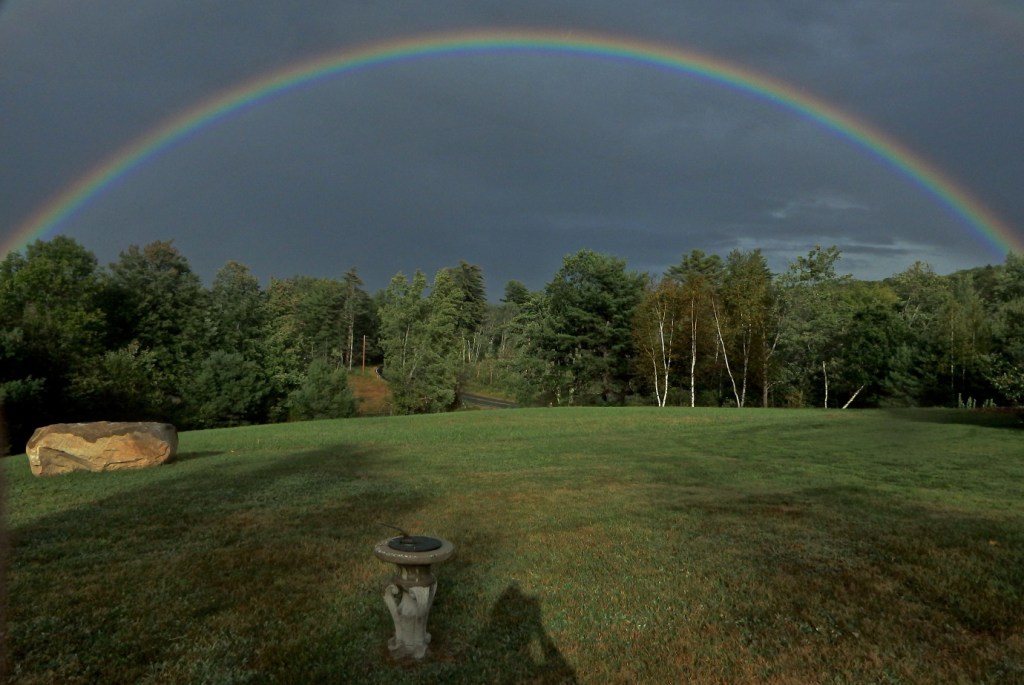
A splendid entire rainbow after a slight shower….outermost broad red—passing through yellow to green then narrow red—then blue or indigo (not plain what) then faint red again.
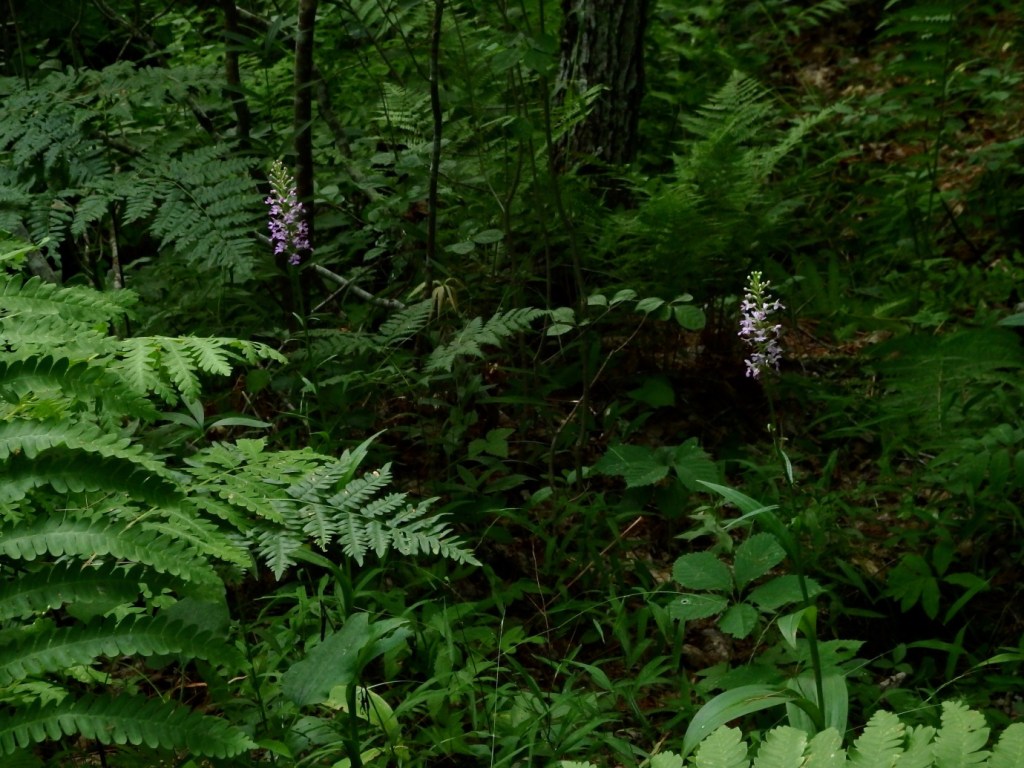
It is a new era with the flowers when the small purple fringed orchis as now is found in shady swamps standing along the brooks. (It appears to be alone of its class— Not to be overlooked it has so much flower though not so high colored as the Arethusa).





You must be logged in to post a comment.