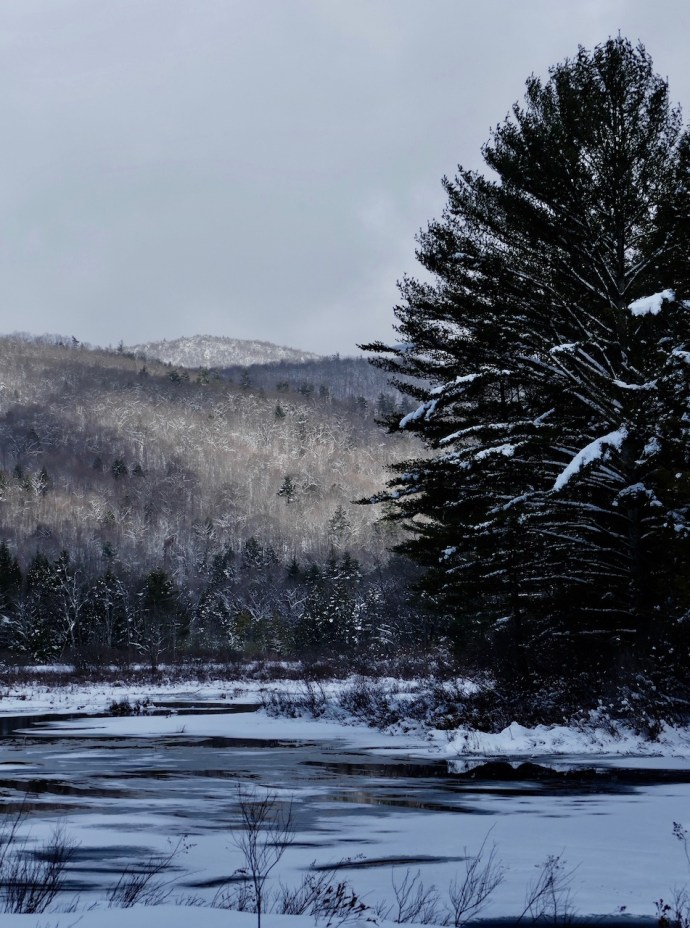
in Thoreau’s Journal:
The water here and there on the meadow begins to appear smooth….
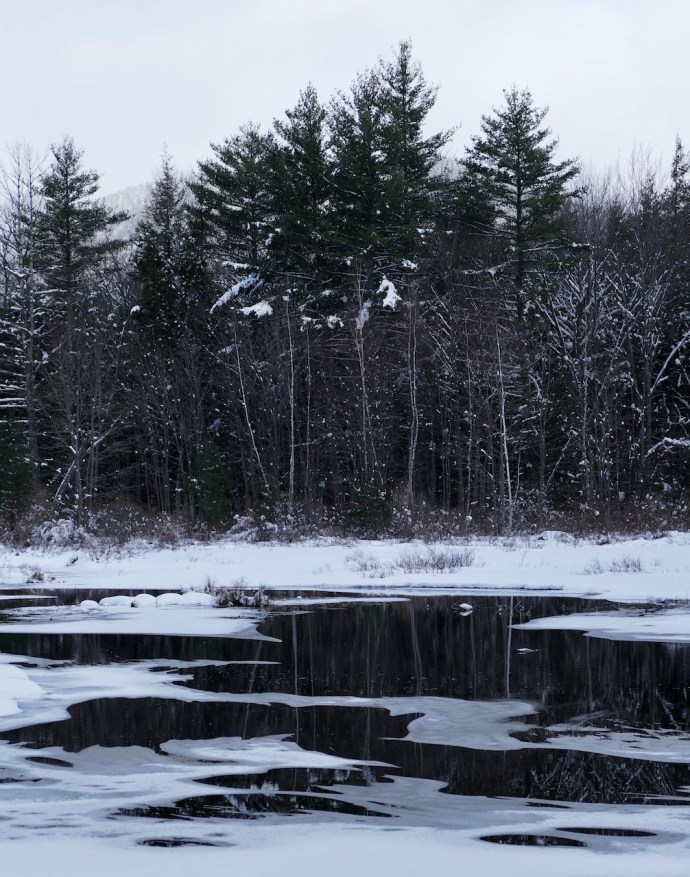
in Thoreau’s Journal:
The water here and there on the meadow begins to appear smooth….
in Thoreau’s Journal:
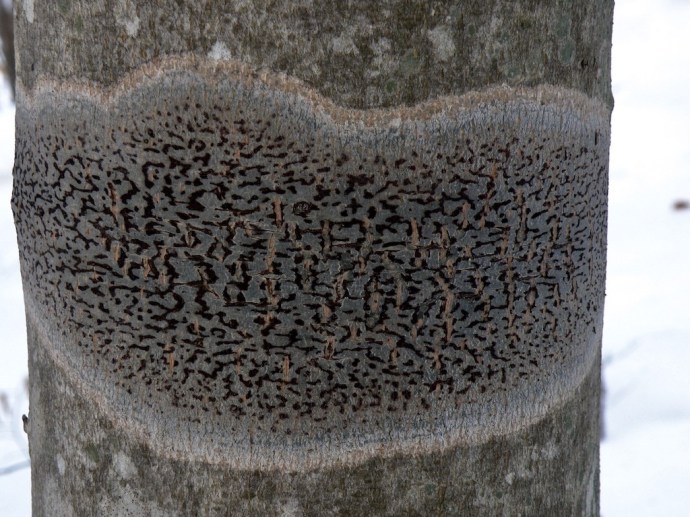
To the Beeches. A misty afternoon, but warm, threatening rain. Standing on Walden, whose eastern shore is laid waste, men walking on the hillside a quarter of a mile off are singularly interesting objects, seen through the mist, which has the effect of a mirage. The persons of the walkers are black on the snowy ground, and the limited horizon makes them the more important in the scene. This kind of weather is very favorable to our landscape.
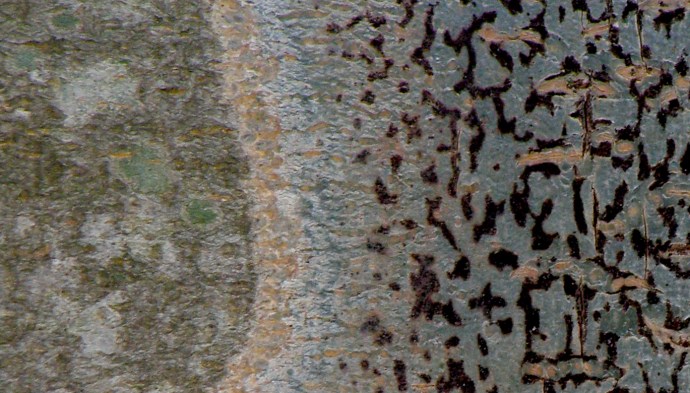
I must not forget the lichen-painted boles of the beeches.
in Thoreau’s Journal:
It is discouraging to talk with men who will recognize no principles….
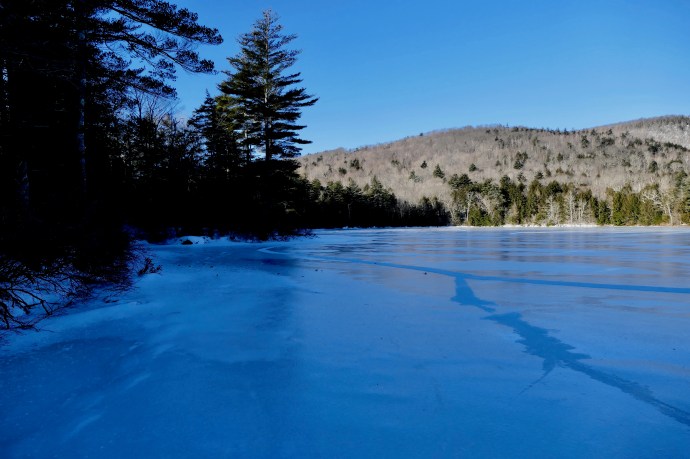
Up river on ice to Fairhaven Pond…The air is fresher & the sky clearer in the morning –– We have this morning the clear cold continent sky of January. The river is frozen solidly & I do not have to look out for openings. Now I can take that walk along the river highway & the meadow––which leads me under––the boughs of the maples & the swamp white oaks &c which in summer overhang the water––there I can now stand at my ease & study their phenomena––amid the sweet gale & button bushes projecting above the snow & ice. I see the shore from the water side–– A liberal walk––so level & wide & smooth without under brush.
in Thoreau’s Journal:
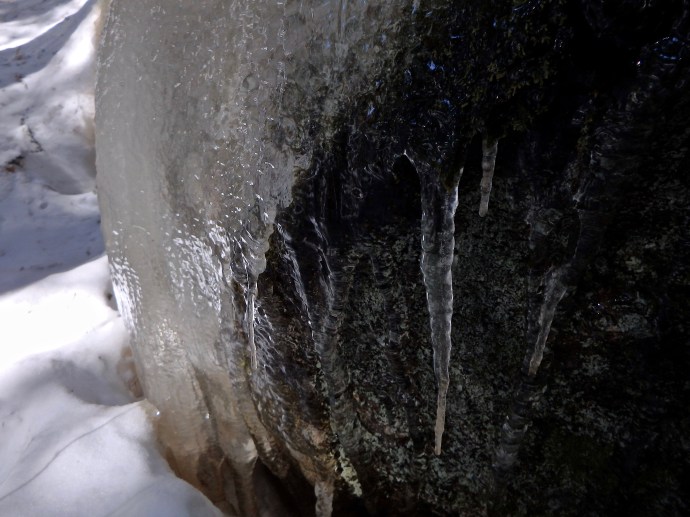
The slight robin snow of yesterday is already mostly dissipated, but where a heap still lingers the sun on the warm face of this cliff leads down a puny, tickling rill, moistening the gutters on the steep face of the rocks…You can trace the course of this trickling stream over the rock through such a patch of lichens by the olive green of the lichens alone. Here and there the same moisture refreshes and brightens up the scarlet crown of some little cockscomb lichen,

and when the rill reaches the perpendicular face of the cliff, its constant drip at night builds great organ pipes, of a ringed structure, which run together buttressing the rock.
Skating yesterday and to-day.
in Thoreau’s Journal:
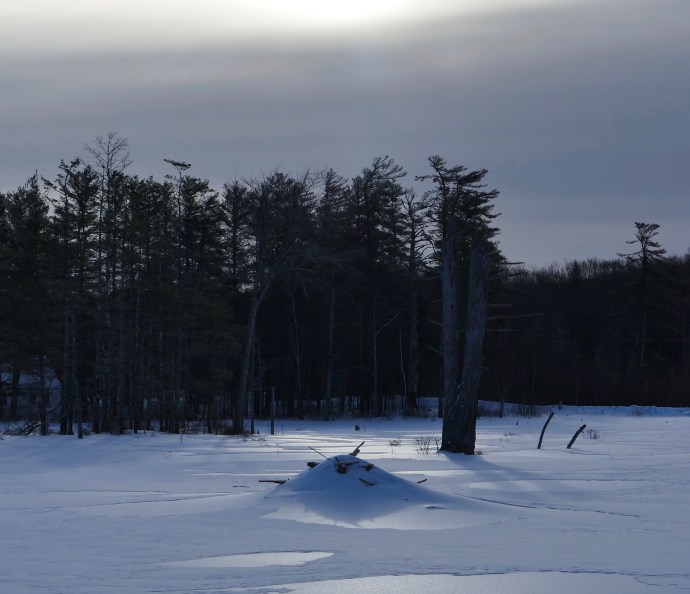
We talk about spring as at hand before the end of February, and yet it will be two good months, one sixth part of the whole year, before we can go a-Maying. There may be a whole month of solid and uninterrupted winter yet, plenty of ice and good sleighing. We may not even see the bare ground, and hardly any water; and yet we sit down and warm our spirits annual with the distant prospect of spring.
in Thoreau’s Journal:
No man writes on lichens using the terms of the science intelligibly—without having something to say—

but everyone thinks himself competent to write on the relation of the soul to the body as if that were a phaenogamous subject.
in Thoreau’s Journal:
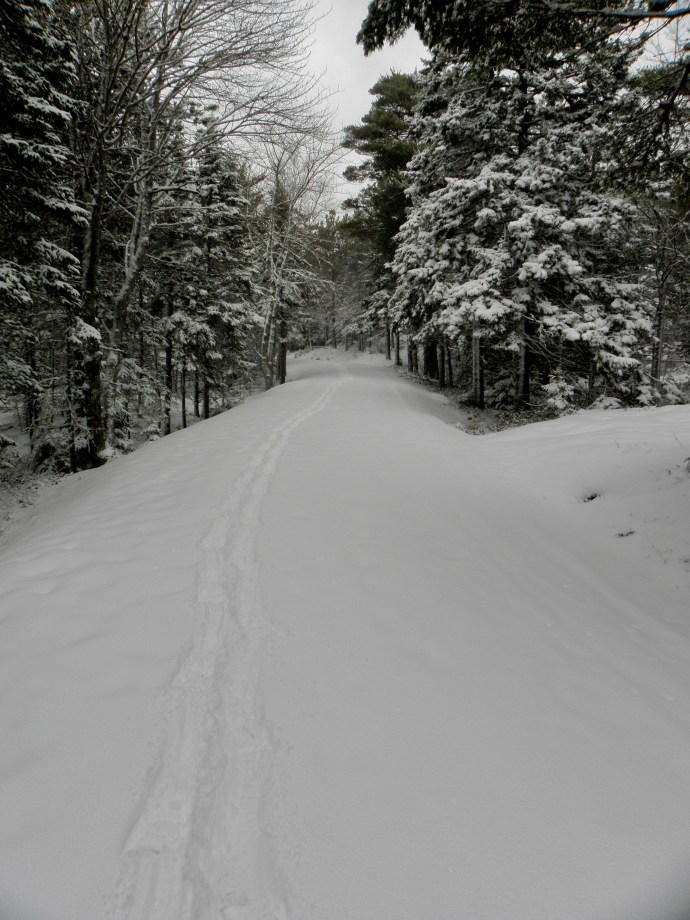
To-day it snows again, covering the ground. To get the value of the storm, we must be out a long time and travel far in it, so that it may fairly penetrate our skin, and we be, as it were, turned inside out to it, and there be no part in us but is wet or weather-beaten, so that we become storm men instead of fair-weather men.

in Thoreau’s Journal:
Walking in the woods, it may be some afternoon, the shadow of the wings of a thought flits across the landscape of my mind, and I am reminded how little eventful are our lives. What have been all these wars and rumors of wars, and modern discoveries and improvements, so called? A mere irritation in the skin.

But this shadow which is so soon past, and whose substance is not detected, suggests that there are events of importance whose interval is to us a true historic period.
in Thoreau’s Journal:
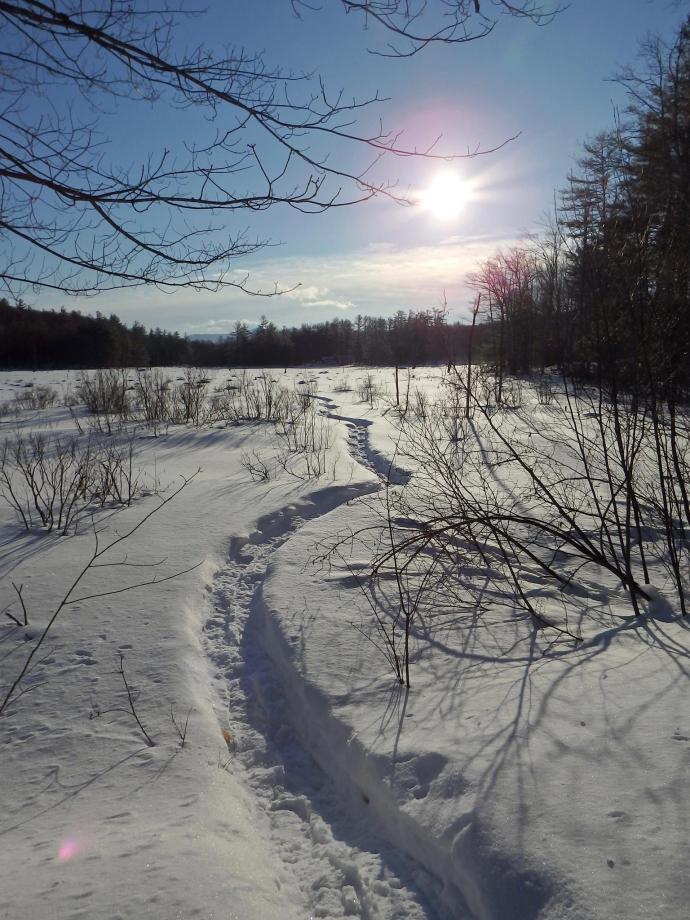
It is surprising how much room there is in nature, —if man will follow his proper path…
in Thoreau’s Journal:
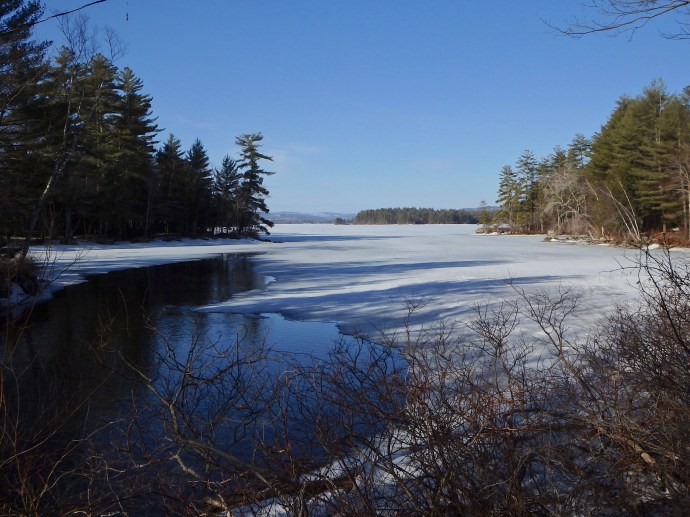
The fields of open water amid the thin ice of the meadows are the spectacle today.
in Thoreau’s Journal:
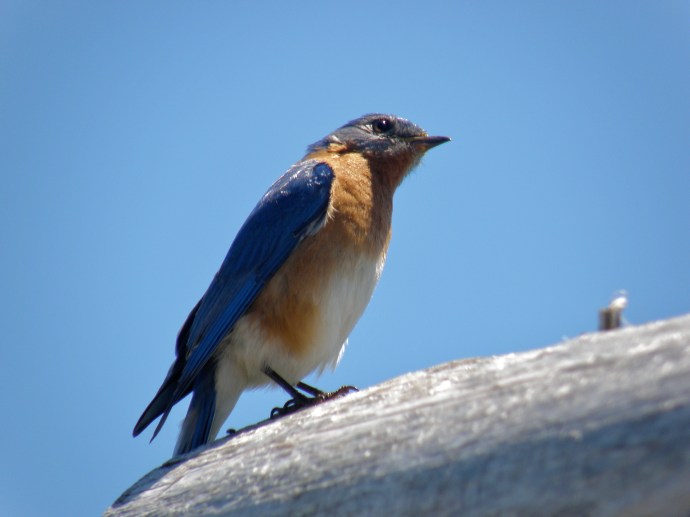
A fine spring morning. The ground is almost completely bare again. There has been a frost in the night. Now at half past eight it is melted and wets my feet like a dew. The water on the meadow this still bright morning is smooth as in April. I am surprised to hear the strain of a song-sparrow from the river side, and as I cross from the causeway to the hill, thinking of the bluebird, I that instant hear one’s note from deep in the softened air…Their short rich warble curls through the air…It seems to be one of those early springs of which we have heard, but which we have never experienced.
in Thoreau’s Journal:
A fact must be the vehicle of some humanity in order to interest us. Otherwise it is like giving a man a stone when he asks for bread. Ultimately the moral is all in all, and we do not mind it if inferior truth is sacrificed to superior, as when the annalist fables, and makes animals speak and act like men. It must be warm, moist, incarnated, have been breathed on at least. A man has not seen a thing who has not felt it.

in Thoreau’s Journal:
A mild misty day….the ringlets & ends of usnea are so expanded & puffed out with light & life….they take the place of leaves in the winter.— The clusters dripping with moisture…

in Thoreau’s Journal:
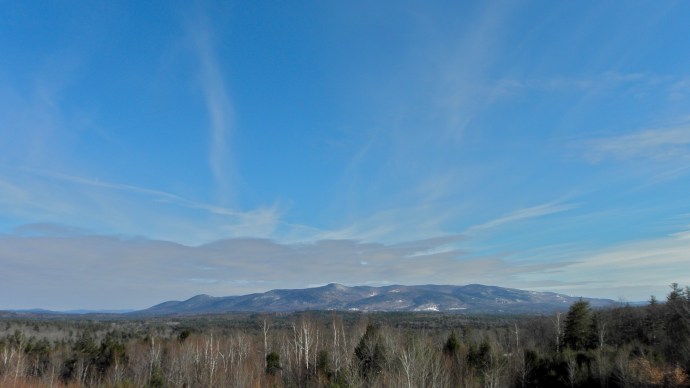
We now notice the snow on the mountains….I think there can be no more arctic scene than these mountains, on the edge of the horizon, completely crusted over with snow, the sun shining on them….the snow has a singular smooth and crusty appearance, and by contrast you see even single evergreens rising here and there above it….
in Thoreau’s Journal:
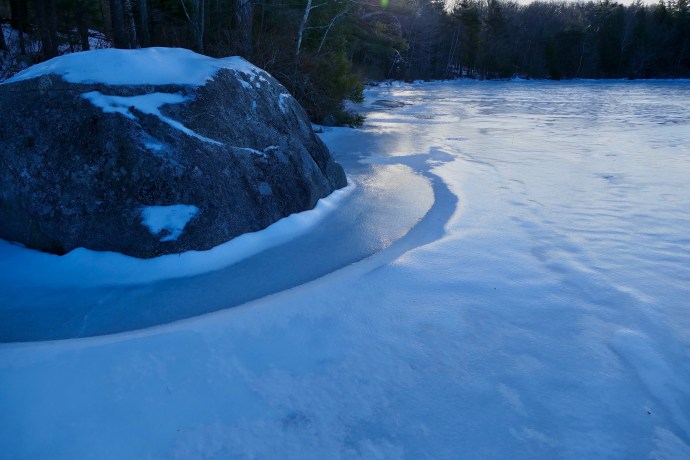
What is the relation between a bird and the ear that appreciates its melody, to whom, perchance, it is more charming and significant than to any one else? Certainly they are intimately related, and the one was made for the other. It is a natural fact. If I were to discover that a certain kind of stone by the pond shore was affected, say partially disintegrated by a particular natural sound, as of a bird or insect, I see that one could not be completely described without describing the other.
I am that stone by the pond side.

in Thoreau’s Journal:
Everywhere snow—gathered into sloping drifts about the walls & fences—& beneath the snow the frozen ground—and men are compelled to deposit the summer’s provision in burrows in the earth like the ground-squirrel. Many creatures daunted by the prospect migrated in the fall, but man remains and walks over the frozen snow crust—and over the stiffened rivers & ponds. & draws now upon his summer stores. Life is reduced to its lowest terms. There is no home for you now—in this freezing wind but in that shelter which you prepared in the summer— You steer straight across the fields to that in season. I can with difficulty tell when I am over the river. There is a similar crust over my heart. Where I rambled in the summer—& gathered flowers and rested on the grass by the brookside in the shade—now no grass nor flowers—nor brook nor shade—but cold unvaried snow stretching mile after mile and no place to sit.

in Thoreau’s Journal:
One discovery in Meteorology, one significant observation is a good deal. I am grateful to the man who introduces order among the clouds. Yet I look up into the heavens so fancy free, I am almost glad not to know any law for the winds.

in Thoreau’s Journal:
Perhaps the peculiarity of those western vistas was partly owing to the shortness of the days when we naturally look to the heavens & make the most of the little light.— When we live an arctic life. When the woodchopper’s axe reminds us of twilight at 3 o’clock p.m. When the morning & the evening literally make the whole day.
When I travelled as it were between the portals of the night—& the path was narrow as well as blocked with snow.

in Thoreau’s Journal:
From the entrance of the mill road, I look back through the sunlight, this soft afternoon, to some white pine tops near Jenny Dugan’s. Their flattish boughs rest stratum above stratum like a cloud, a green mackerel sky, hardly reminding me of the concealed earth so far beneath. They are like a flaky crust of the earth, a more ethereal, terebinthine, evergreen earth….My eyes nibble the piny sierra which makes the horizon’s edge as a hungry man nibbles a cracker.

in Thoreau’s Journal:
All day a steady, warm, imprisoning rain, carrying off the snow, not unmusical on my roof. It is a rare time for the student and reader who cannot go aboard in the P.M., provided he can keep awake, for we are wont to be as drowsy as cats in such weather. Without, it is not walking, but wading. It is so long since I have heard it, that the steady rushing, soaking sound of the rain on the shingles is musical. The fire needs no replenishing, and we save our fuel. It seems like a distant forerunner of spring. It is because I am allied to the elements that the sound of the rain is thus soothing to me. This sound sinks into my spirit, as the water into the earth, reminding me of the season when snow and ice will be no more, when the earth will be thawed, and drink up the rain as fast as it falls.


You must be logged in to post a comment.