October 4, 1859

in Thoreau’s Journal:

Now the year itself begins to be ripe…

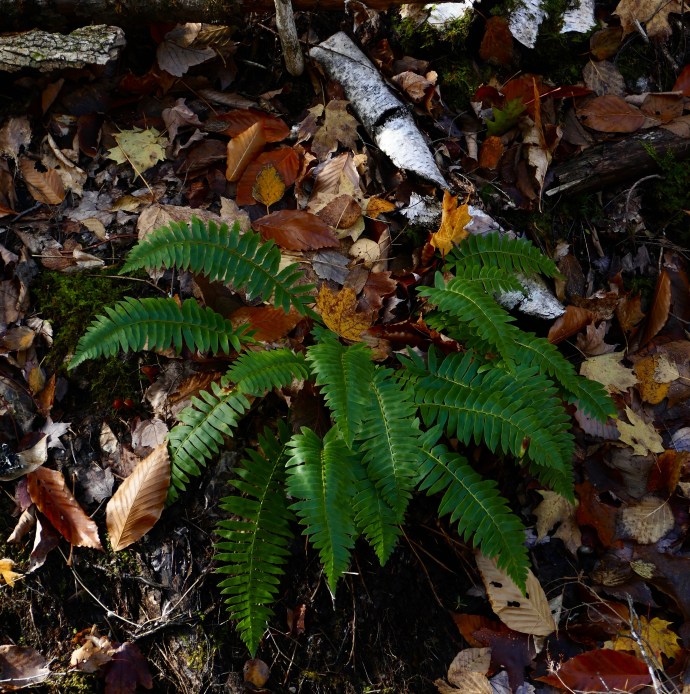
It is only when we forget all our learning that we begin to know. I do not get nearer by a hair’s breadth to any natural object so long as I presume that I have an introduction to it from some learned man. To conceive of it with a total apprehension I must for the thousandth time approach it as something totally strange. If you would make acquaintance with the ferns you must forget your botany. You must get rid of what is commonly called knowledge of them. Not a single scientific term or distinction is the least to the purpose, for you would fain perceive something, and you must approach the object totally unprejudiced. You must be aware that no thing is what you have taken it to be. In what book is this world and its beauty described?

PA060045.jpeg

Who has plotted the steps toward the discovery of beauty? You have got to be in a different state from common. Your greatest success will be simply to perceive that such things are, and you will have no communication to make to the Royal Society. If it were required to know the position of the fruit-dots or the character of the indusium, nothing could be easier than to ascertain it; but if it is required that you be affected by ferns, that they amount to anything, signify anything, to you, that they be another sacred scripture and revelation to you, helping to redeem your life, this end is not so surely accomplished. In the one case, you take a sentence and analyze it, you decide if it is printed in large [sic] primer or small pica; if it is long or short, simple or compound, and how many clauses it is composed of; if the i’s are all dotted, or some for variety without dots; what color and composition of the ink and the paper; and it is considered a fair or mediocre sentence accordingly, and you assign its place among the sentences you have seen and kept specimens of. But as for the meaning of the sentence, that is as completely overlooked as if it had none. This the Chinese, the Aristotelean, method. But if you should ever perceive the meaning you would disregard all the rest. So far science goes, and it punctually leaves off there, – tells you finally where it is to be found and its synonyms, and rests from its labors.


Here are two citations from Thoreau’s Journal both of which concern “the perception of beauty”.  The second (also, cited above) from October 4, 1859 perhaps illuminates the first from June 21, 1852. 

June 21, 1852 in Thoreau’s Journal:  

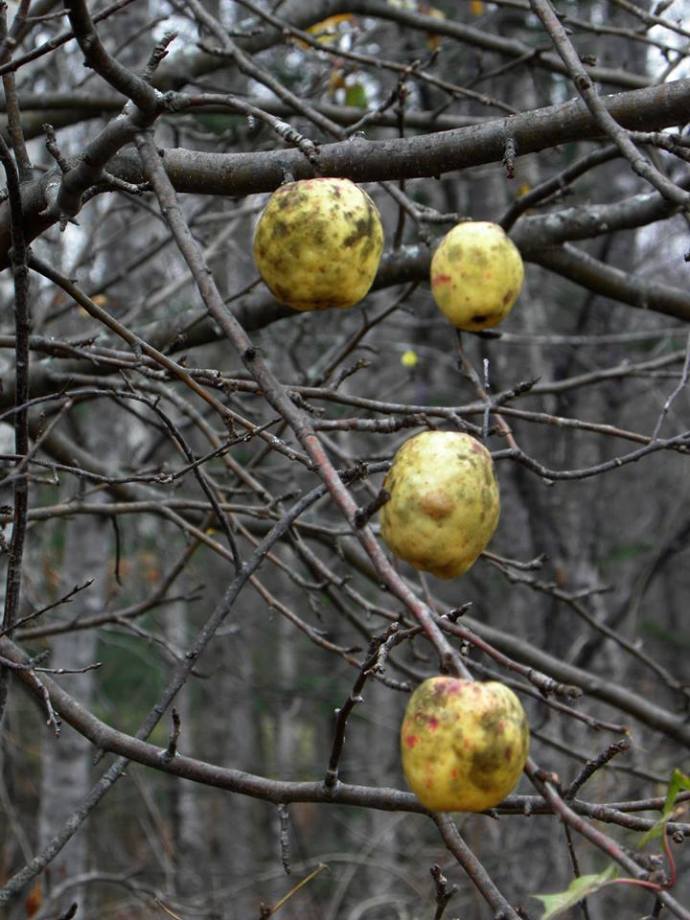
Nature has looked uncommonly bare & dry to me for a day or two. With our senses applied to the surrounding world we are reading our own physical & corresponding moral revolutions. Nature was so shallow all at once I did not know what had attracted me all my life. I was therefore encouraged when going through a field this evening, I was unexpectedly struck with the beauty of an apple tree –– the perception of beauty is a moral test….

October 4, 1859 in Thoreau’s Journal:

It is only when we forget all our learning that we begin to know. I do not get nearer by a hair’s breadth to any natural object so long as I presume that I have an introduction to it from some learned man. To conceive of it with a total apprehension I must for the thousandth time approach it as something totally strange. If you would make acquaintance with the ferns you must forget your botany. You must get rid of what is commonly called knowledge of them. Not a single scientific term or distinction is the least to the purpose, for you would fain perceive something, and you must approach the object totally unprejudiced. You must be aware that no thing is what you have taken it to be. In what book is this world and its beauty described? Who has plotted the steps toward the discovery of beauty? You have got to be in a different state from common. Your greatest success will be simply to perceive that such things are, and you will have no communication to make to the Royal Society. If it were required to know the position of the fruit-dots or the character of the indusium, nothing could be easier than to ascertain it; but if it is required that you be affected by ferns, that they amount to anything, signify anything, to you, that they be another sacred scripture and revelation to you, helping to redeem your life, this end is not so surely accomplished. In the one case, you take a sentence and analyze it, you decide if it is printed in large [sic] primer or small pica; if it is long or short, simple or compound, and how many clauses it is composed of; if the i’s are all dotted, or some for variety without dots; what color and composition of the ink and the paper; and it is considered a fair or mediocre sentence accordingly, and you assign its place among the sentences you have seen and kept specimens of. But as for the meaning of the sentence, that is as completely overlooked as if it had none. This the Chinese, the Aristotelean, method. But if you should ever perceive the meaning you would disregard all the rest. So far science goes, and it punctually leaves off there, – tells you finally where it is to be found and its synonyms, and rests from its labors.

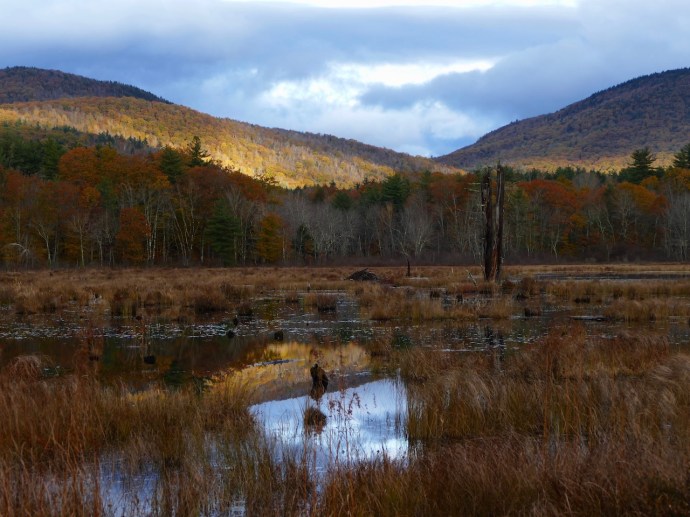
Photo:  October 4, 2018

43131642_10218104531066183_1488797374607261696_o.jpg


October 3, 1852

 in Thoreau’s Journal:

PA130044.jpeg

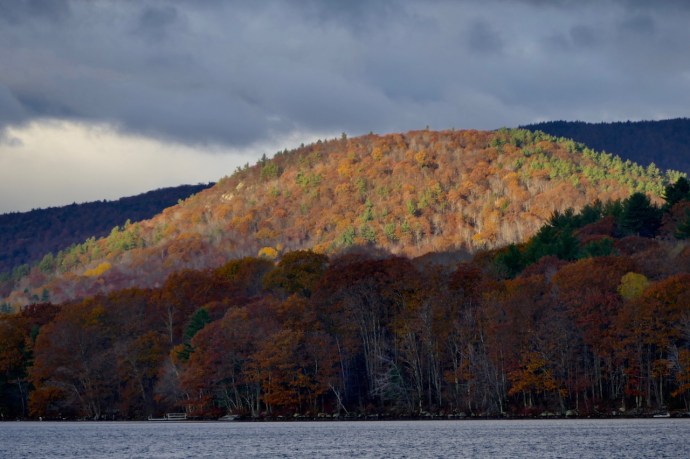
From Heywood’s Peak at Walden the shore is now more beautifully painted.  The most prominent are the red maples & the del- yellowish aspens.  

October 2, 1852

 in Thoreau’s Journal:

PA130049.jpeg

How much more beautiful the lakes now like Fair Haven surrounded by the autumn tinted woods & hills.— as in an ornamented frame. Some maples in sprout lands are of a delicate pure clear unspotted red inclining to crimson—surpassing most flowers— I would fain grasp at the whole tree & carry it home for a nose-gay.

October 1, 1852

 in Thoreau’s Journal:

P1110784.jpg

Surveying in Lincoln.  A severer frost last night.

P1020141.jpeg

The young & tender trees begin to assume the autumnal tints more generally—plainly in consequence of the frost the last 2 mornings. The sides of the bushy hills present a rich variety of colors like rug work—but the forest generally is not yet changed.

September 29, 1851

 in Thoreau’s Journal:

The intense brilliancy of the red-ripe maples scattered here and there in the midst of the green oaks & hickories on its hilly shore is quite charming. They are unexpectedly & incredibly brilliant –especially on the western shore & close to the waters edge, where alternating with yellow birches & poplars & green oaks—they remind me of a line of soldiers red coats & riflemen in green mixed together. 

PA170060.jpeg

September 28, 1852

 in Thoreau’s Journal:

P9195791.jpeg

Ah if I could put into words that music that I hear—that music which can bring tears to the eyes of marble statues! To which the very muscles of men are obedient—

September 26, 1852

in Thoreau’s Journal:

Dreamed of purity last night. The thoughts seemed not to originate with me, but I was invested, my thought was tinged, by another’s thought. It was not I that originated, but that I entertained the thought. The river is getting to be too cold for bathing. There are comparatively few weeds left in it.

It is not in vain perhaps that every winter the forest is brought to our doors shaggy with lichens— Even in so humble a shape as a wood-pile it contains sermons for us.

Pm to Ministerial Swamp

The small cottony leaves of the fragrant everlasting in the fields for some time. Protected as it were by a little web of cotton against frost & snow— A little dense web of cotton spun over it-(entangled in it) as if to restrain it from rising higher.

The increasing scarlet & yellow tints around the meadows & river remind me of the opening of a vast flower bud—they are the petals of its corolla—which is of the width of the valleys— It is the flower of autumn whose expanding bud just begins to blush.  As yet however in the forest there are very few changes of foliage. The Polygonum articulatum giving a rosy tinge to Jenny’s desert & elsewhere is very interesting now with its slender dense racemes of rose tinted flowers—apparently without leaves—rising cleanly out of the sand.— It looks warm & brave—a foot or more high & mingled with deciduous blue curls. It is much divided into many spreading slender racemed branches—with inconspicuous linear leaves—reminding me both by its form & its color of a peach orchard in blossom—especially when the sun light falls on it. Minute rose tinted flowers that brave the frosts—& advance the summer into fall—warming with their color sandy hill sides & deserts—like the glow of evening reflected on the sand.

  Apparently, all flower & no leaf. A warm blush on the sand—after frosty night have come. Perhaps it may be called the “evening red.” Rising apparently with clean bare stems from the sand it spreads out into this graceful head of slender rosy racemes—wisp-like. This little desert of less than an acre blushes with it.

P1100066.jpg

I see now ripe large (3 inch) very dark chocolate (?) colored puff-balls— Are they my 5 fingers puff-balls?  The tree fern is in fruit now with its delicate-tendril-like fruit climbing 3 or 4 feet over the asters, golden rods, &c on the edge of the swamp— The large ferns are yellow or brown now. Larks like robins fly in flocks. Dogsbane leaves a clear yellow. Succory in bloom at the Tommy Wheeler house—it bears the frost well—though we have not had much. Set out for use. The G. Plantaginifolium leaves—green above downy beneath.

September 24, 1858

 in Thoreau’s Journal:

A man must attend to nature closely for many years to know when, as well as where, to look for his objects, since he must always anticipate her a little….

P9260027.jpg

I would know when in the year to expect certain thoughts and moods….


September 24, 1855 in Thoreau’s Journal: 

The button bushes pretty well browned with frost (though the maples are but just beginning to blush), their pale yellowish season past.

P1100067.jpg

September 21, 1852

in Thoreau’s Journal:

The small scull cap & cress & the mullein still in bloom. I see pigeon woodpeckers oftener now with their light rears. Birches & elms begin to turn yellow—& ferns are quite yellow or brown in many places. I see many tall clustered bluish asters by the brooks like the A undulatus. The blue stemmed golden rod is abundant bright & in its prime. The maples begin to be ripe. How beautiful when a whole maple on the edge of a swamp is like one great scarlet fruit—full of ripe juices— A sign of the ripening—every leaf from lowest limb to topmost spire— is a-glow. The woodbine is red too & its berries are blueing. The flattened black berries of the cucumber root—with the triangular bases of its leaves tinged red beneath as a sort of cup for them.

P9293834 (1).jpg

My red ball fungus blossoms in the path in the midst of its jelly. As I was walking through the maple swamp by the Corner spring I was surprised to see apples on the ground—and at first supposed that some body had dropped them, but looking up I detected a wild apple tree, as tall and slender as the young maples and not more than 5 inches in diameter at the ground. This had blossomed & borne fruit this year— The apples were quite mellow & of a very agreeable flavor—they they had a rusty scraperish look—and I filled my pockets with them. The squirrels had found them out before me. It is an agreeable surprise to find in the midst of a swamp so large and edible a fruit as an apple. Of late we have much cloudy weather without rain. Are not liable to showers as in summer—but may have a storm. The lentago berries appear to drop off before or as soon as they turn. There are few left on the bushes. Many that I bring home will turn in a single night. The sassafras leaves are red. The huckleberry bushes begin to redden. The white actaea berries still hang on—or their red pedicels remain. 

My friend is he who can make a good guess at me.  — hit me on the wing.

September 19

P1190778.jpg

September 19, 1850 in Thoreau’s Journal:
The goldenrods and asters impress me not like individuals but great families covering a thousand hills and having a season to themselves.


P1090253.jpg

September 19, 1852 in Thoreau’s Journal:

The soapwort gentian cheers & surprises with solid bulbs of blue from the shore—the stale grown purplish. It abounds along the river—after so much has been mown.