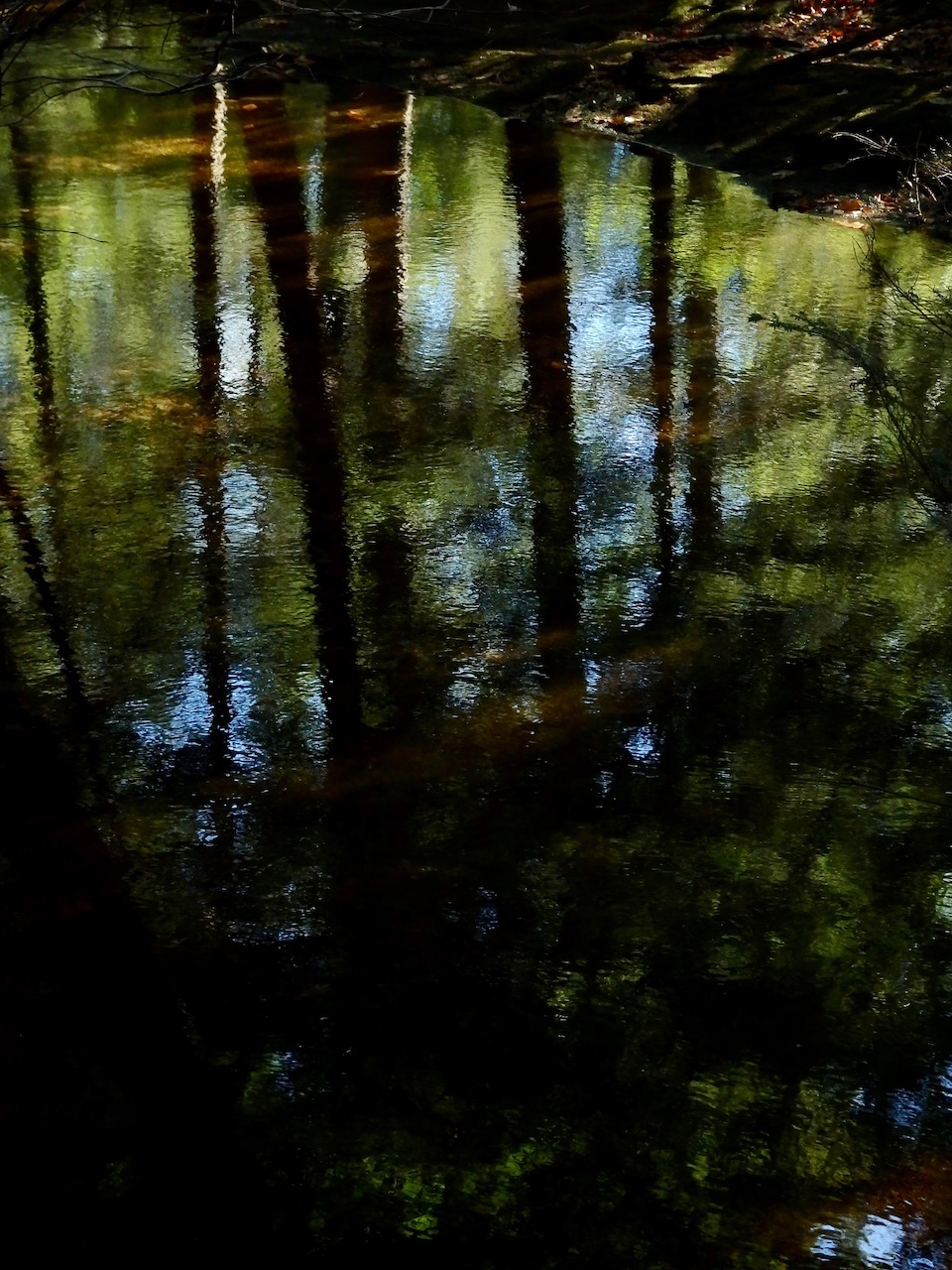
I think Ruskin is wrong about reflections in his “Elements of Drawing,” page 181. He says the reflection is merely the substance “reversed” or “topsy-turvey,” and adds, “Whatever you can see from the place in which you stand of the solid objects so reversed under the water, you will see in the reflection, always in the true perspective of the solid objects so reversed.”
To the Colburn farm woodlot. The chickadee is the bird of the wood, the most unfailing.
When in a windy or in any day you have penetrated some thick wood like this, you are pretty sure to hear its cheery note. At this season, it is almost its sole inhabitant.
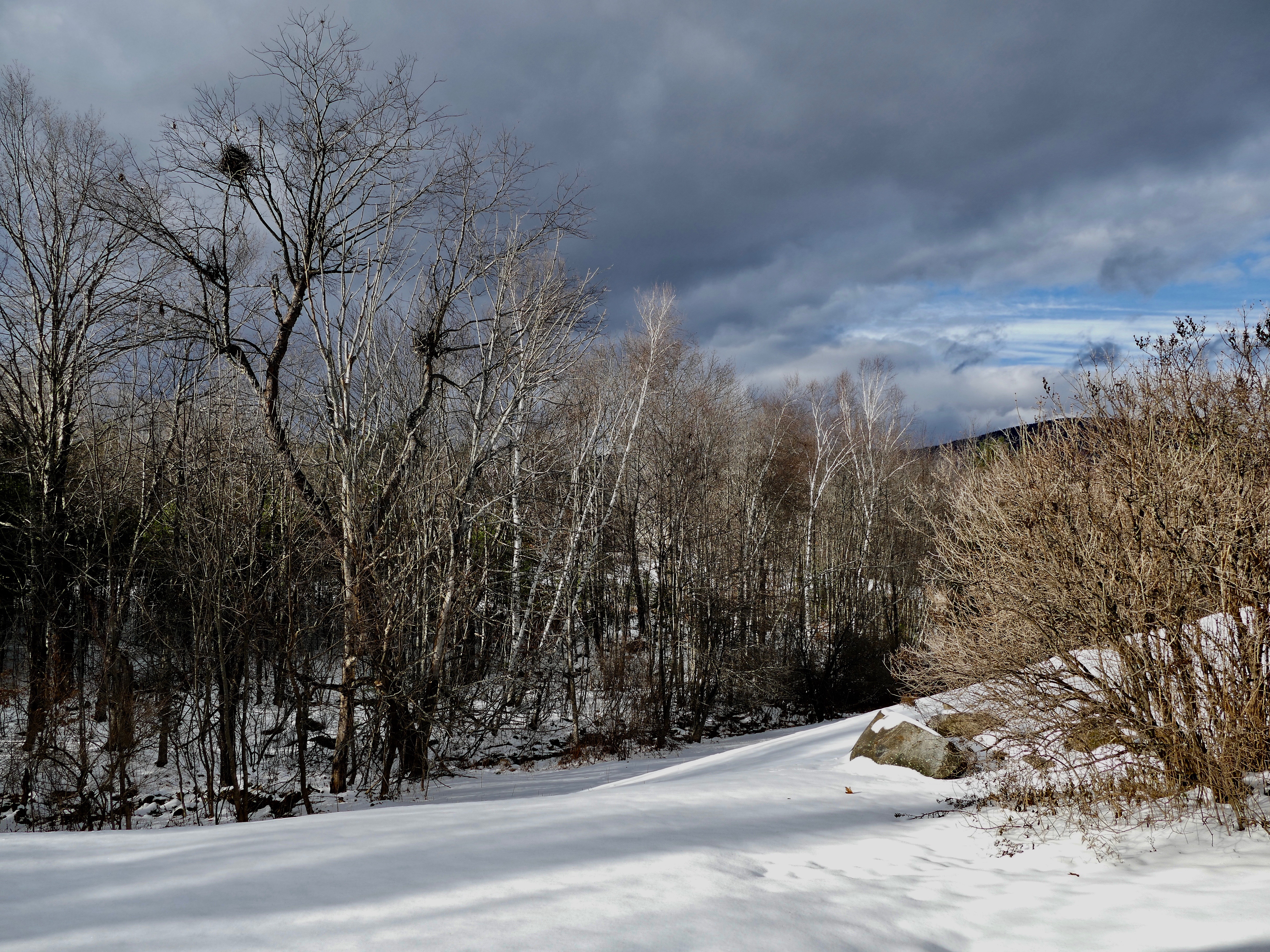
This month taxes a walker’s resources more than any other. For my part, I should sooner think of going into quarters in November than in winter. If you do feel any fire at this season out of doors, you may depend upon it, it is your own. It is but a short time these afternoons before the night cometh in which no man can walk. If you delay to start till three o-clock, there will be hardly time left for a long and rich adventure, to get fairly out of town. November Eat-heart, is that the name of it? Not only the fingers cease to do their office, but there is often a benumbing of the faculties generally. You can hardly screw up your courage to take a walk when all is thus tightly locked or frozen up, and so little is to be seen in field or wood. I am inclined to take to the swamps or woods as the warmest place, and the former are still the openest. Nature has herself become like the few fruits she still affords, a very thick-shelled nut with a shrunken meat within. If I find anything to excite a warming thought abroad, it is an agreeable disappointment, for I am obliged to go willfully and against my inclination at first, the prospect looks so barren, so many springs are frozen up, not a flower, perchance, and few birds left, not a companion abroad in all these fields for me. I seem to anticipate a fruitless walk. I think to myself hesitatingly, shall I go there, or there, or there? And cannot make up my mind to any route, all seem so unpromising, mere surface-walking and fronting the cold wind, so that I have to force myself to it often, and at random.
But then I am often unexpectedly compensated, and the thinnest yellow light of November is more warming and exhilarating than any wine they tell of. The mite which November contributes becomes equal in value to the bounty of July. I may meet with something that interests me, and immediately it is as warm as in July, as if it were the south instead of the northwest wind that blew.
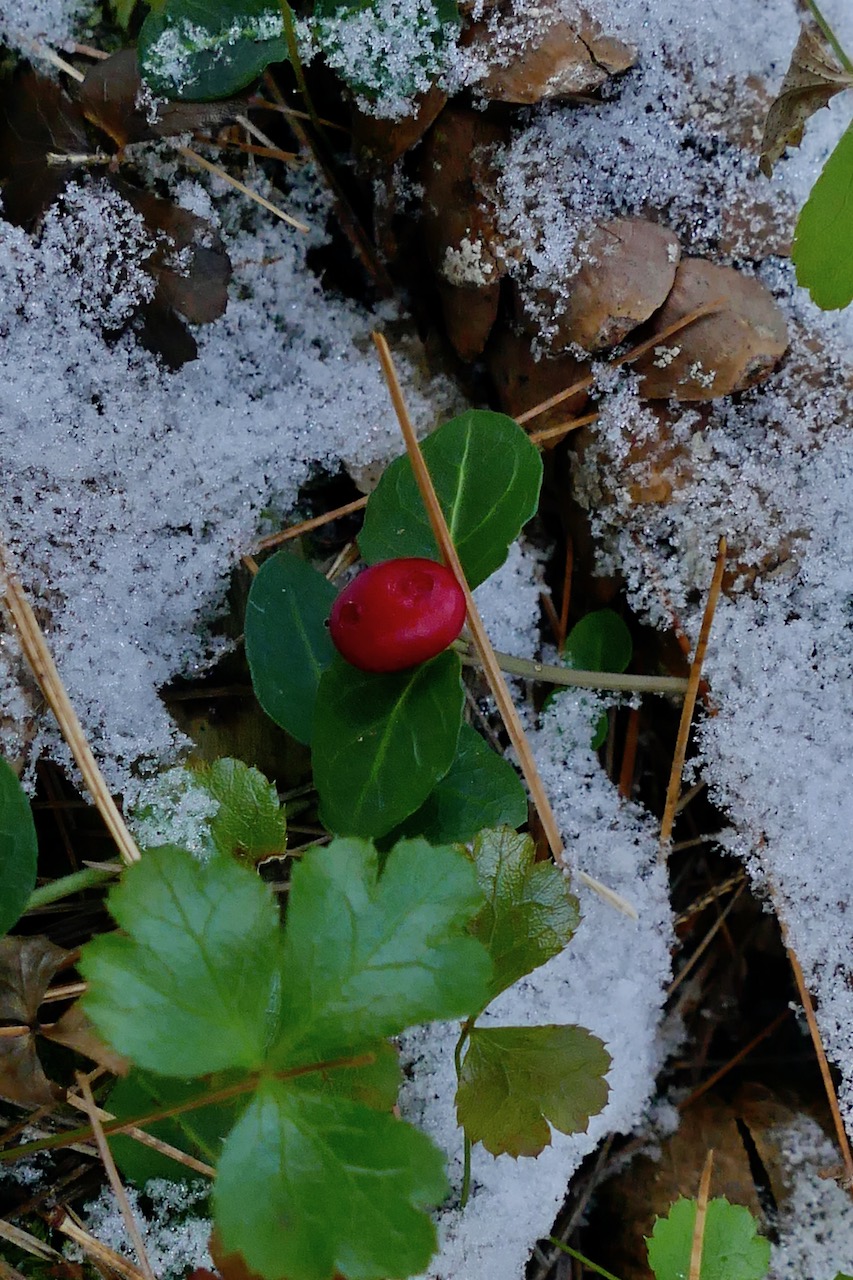
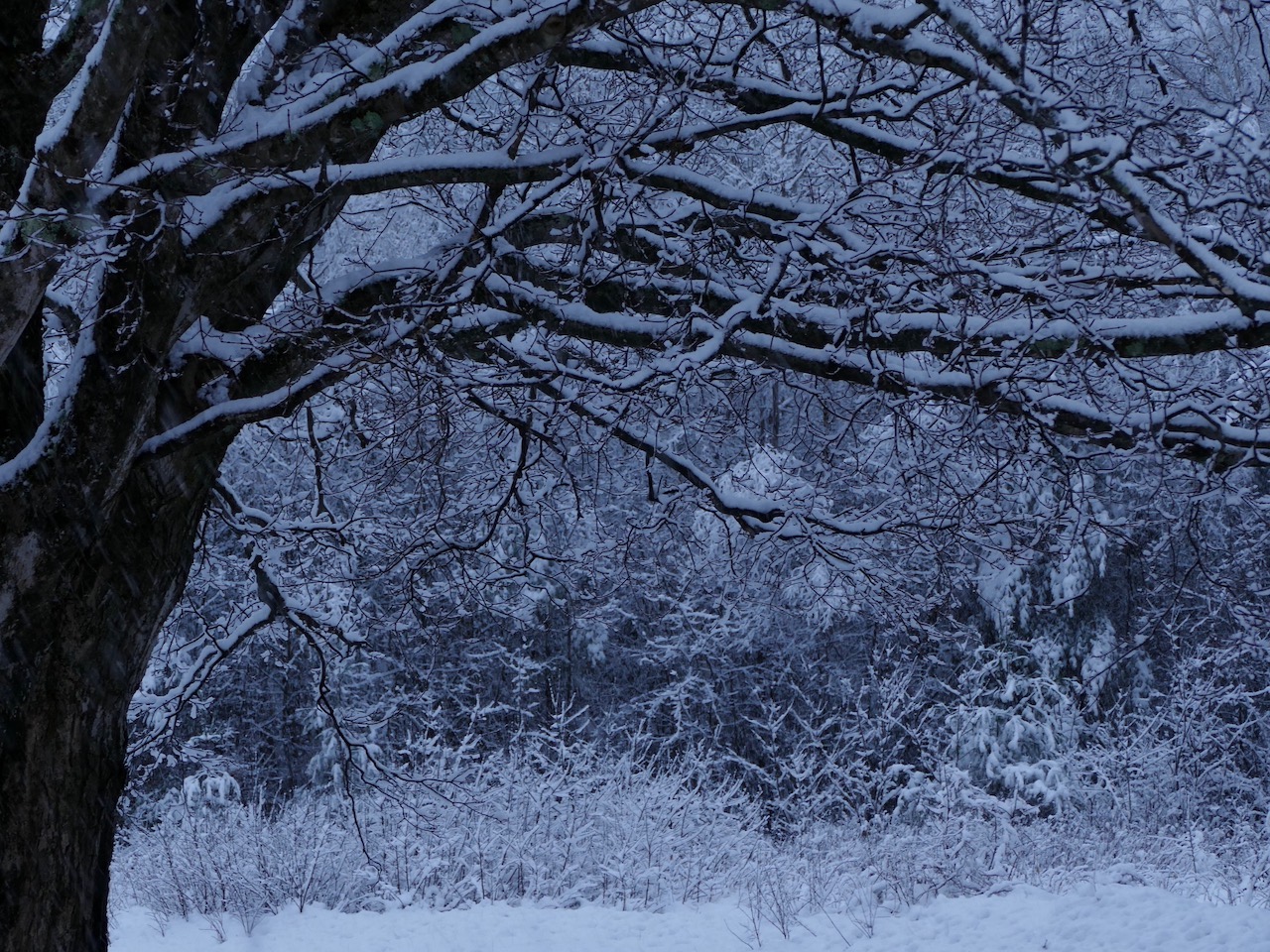
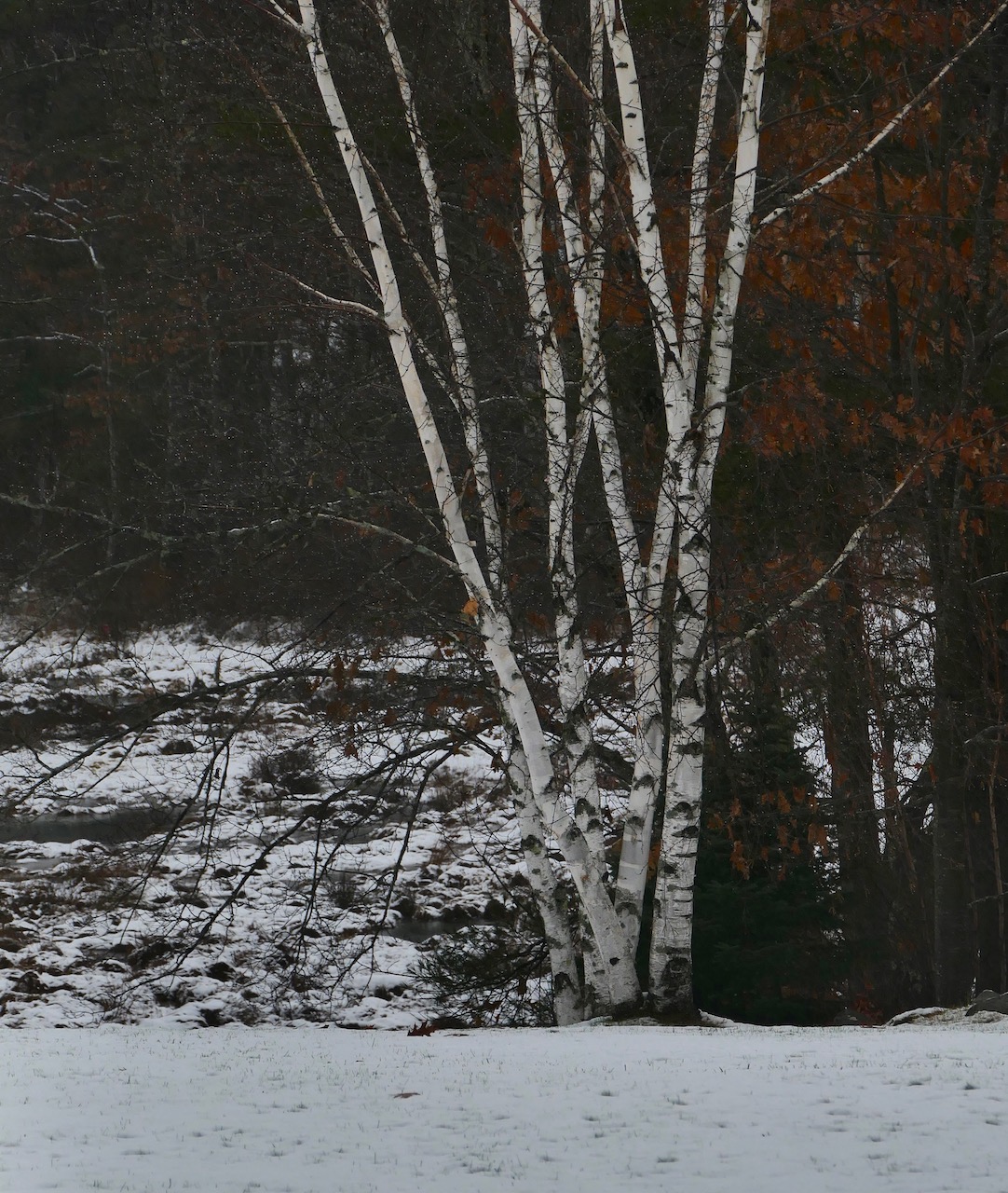
It is a lichen day, with a little moist snow falling.
The great green lungwort lichen shows now on the oaks…and the fresh bright chestnut fruit of other kinds, glistening with moisture, brings life and immortality to light.
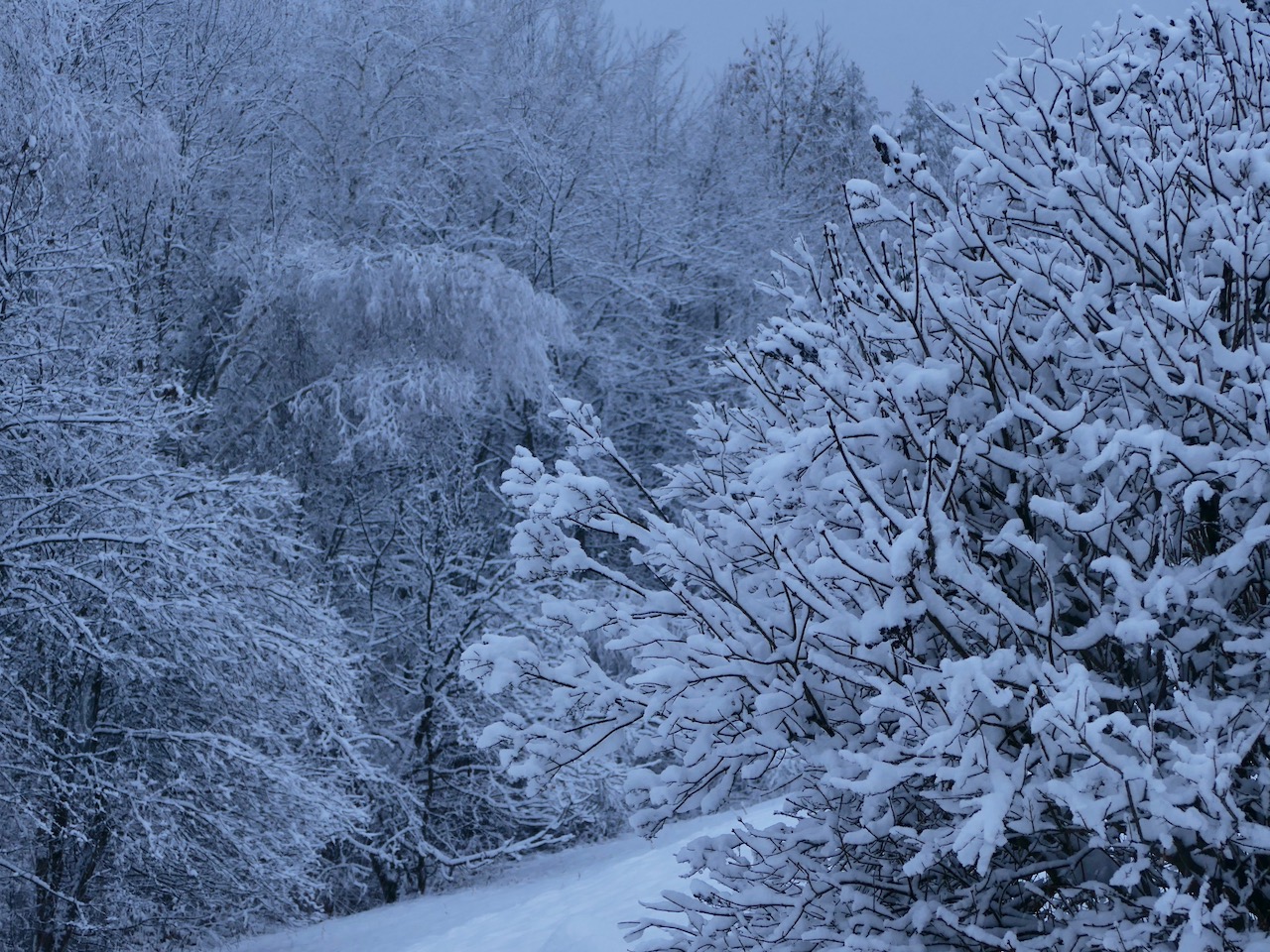
This morning the ground is white with snow—and it still snows. This is the first time it has been fairly white this season, though once before many weeks ago it was slightly whitened for 10 or 15 minutes….There is something genial even in the first snow–& nature seems to relent a little of her November harshness. Men too are disposed to give thanks for the counties of the year all over the land–& the sound of the mortar is heard in all houses–& the odor of summer savory reaches even to poets’ garrets.
As I returned through Hosmers field—the sun was setting just beneath a black cloud by which it had been obscured—and as it had been a raw & windy afternoon, its light which fell suddenly on some white pines between me & it lighting them up like a shimmering fire—and also on the oak leaves & chestnut stems was quite a circumstance.
It was from the contrast between the dark and comfortless afternoon and this bright & cheerful light almost fire….After a cold grey day this cheering light almost warms us by its resemblance to fire.
I saw the sun falling on a distant white-pine wood whose gray and moss-covered stems were visible amid the green, in an angle where this forest abutted on a hill covered with shrub oaks. It was like looking into a dreamland.
It is one of the avenues to my future. Certain coincidences like this are accompanied by a certain flash as of hazy lightning flooding all the world suddenly with a tremulous, serene light which it is difficult to see long at a time.
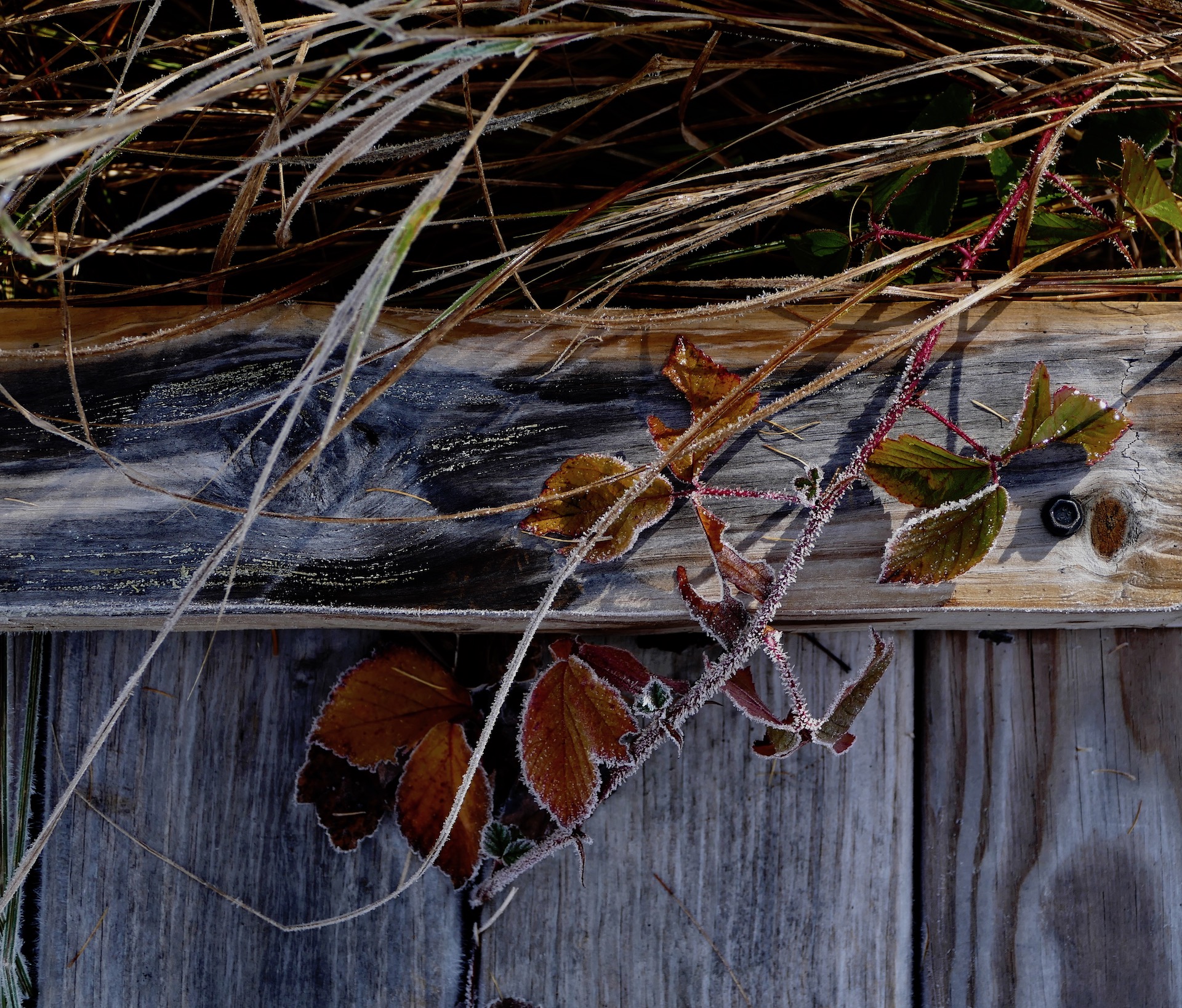
Going along close under the Cliffs, I see a dozen or more low blackberry vines dangling down a perpendicular rock at least eight feet high, and blown back and forth, with leaves every six inches, and one or two have reached the ground and taken firm root there. There are also many of the common cinquefoil with its leaves five inches asunder, dangling down five or six feet over the same rock.
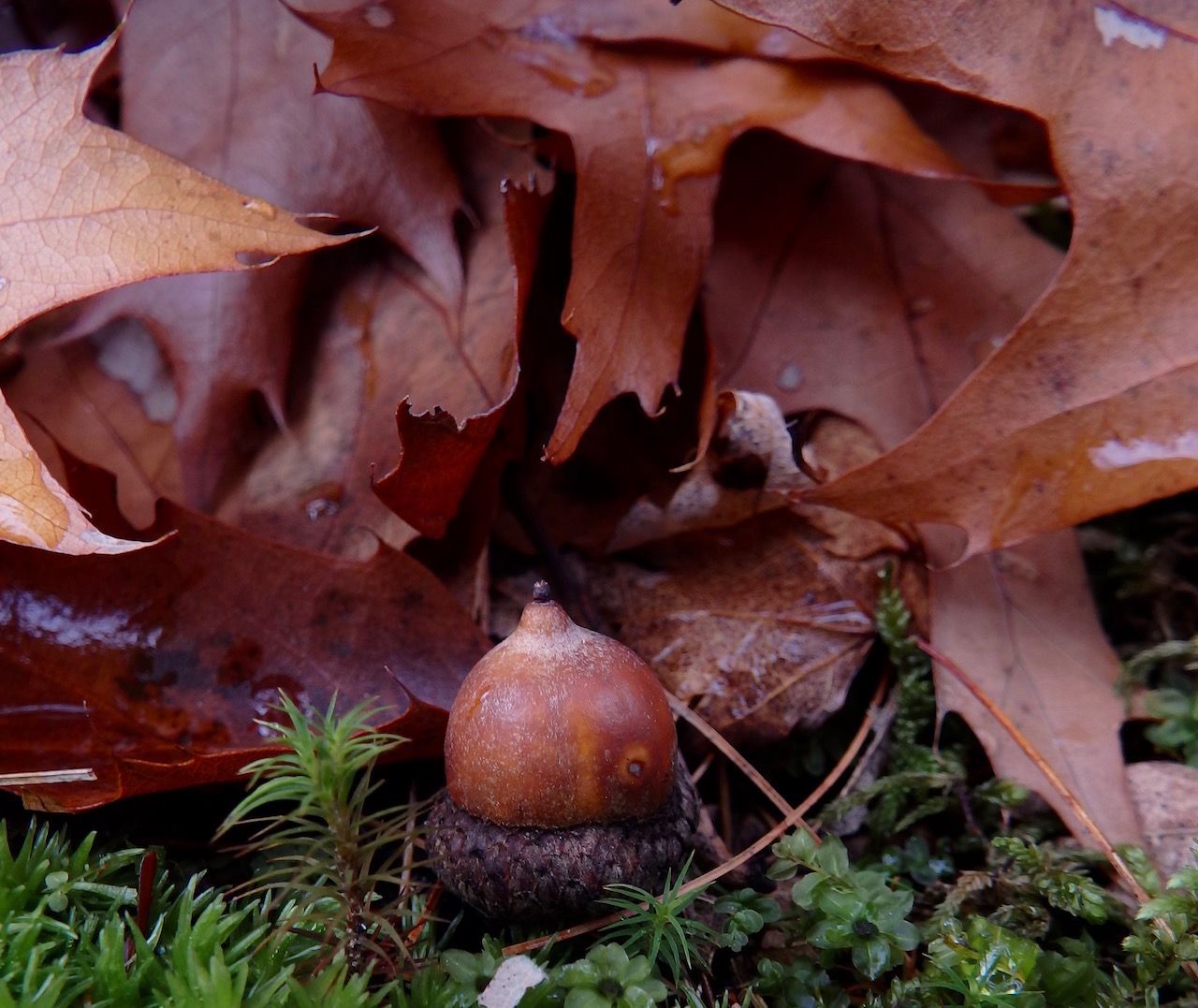
I see many acorns and other nut shells which in past years have been tucked into clefts in the rocks.
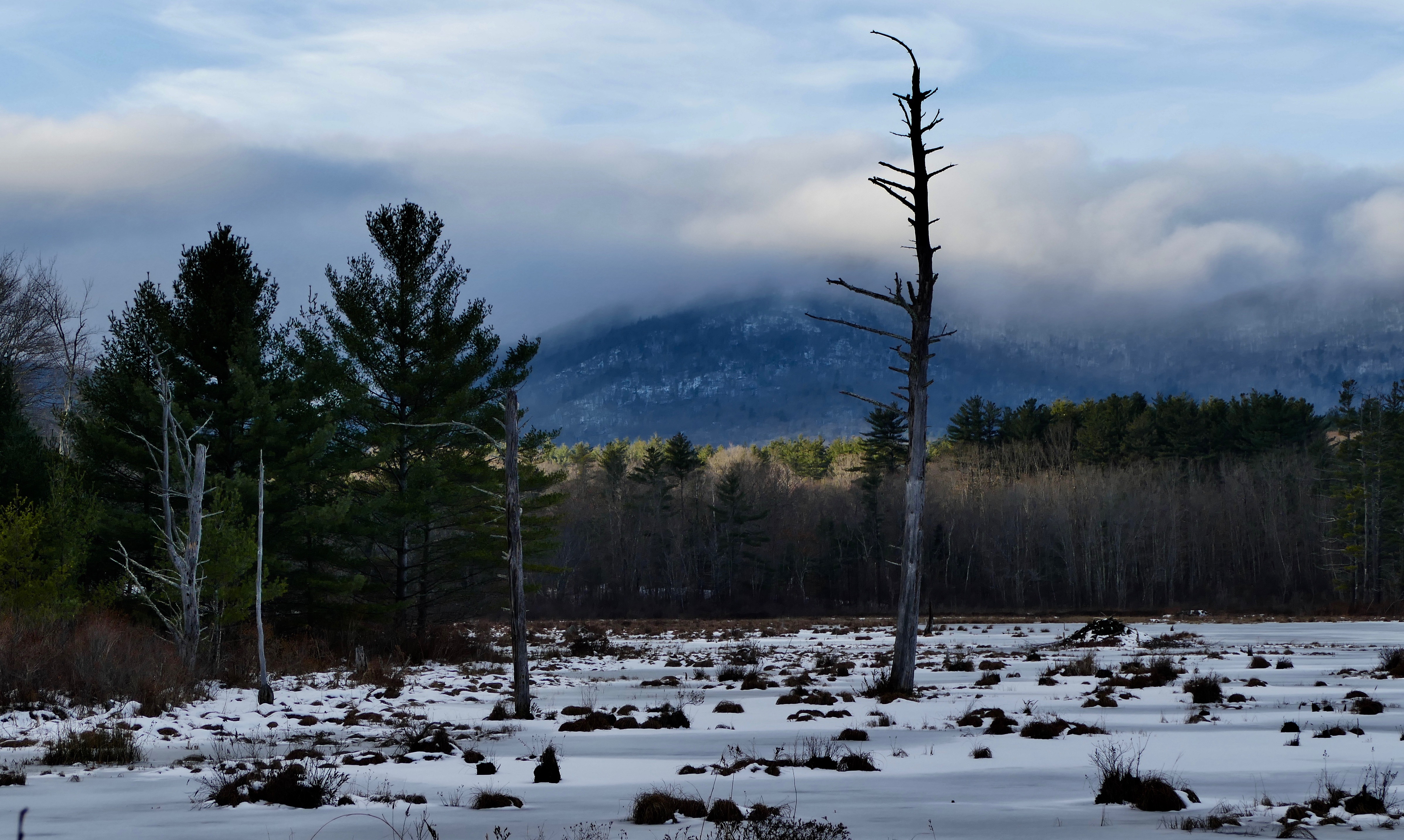
Much cold slate-colored cloud, bare twigs seen gleaming toward the light like gossamer, pure green of pines where old leaves have fallen, reddish or yellowish-brown oak leaves rustling on the hillsides, very pale brown, bleaching almost hoary fine grass or hay in the fields, akin to the frost which has killed it, and flakes of clear yellow sunlight falling on it here and there, —such is November. The fine grass killed by the frost, and bleached till it is almost silvery, has clothed the fields for a long time.
Now, as in the spring, we rejoice in sheltered and sunny places….
The very sunlight on the pale-brown-bleached fields is an interesting object these cold days. I naturally look toward it as a wood fire. Not only different objects are presented to our attention at different seasons of the year, but we are in a frame of body and mind to appreciate different objects at different seasons.I see one thing when it is cold and another when it is warm.
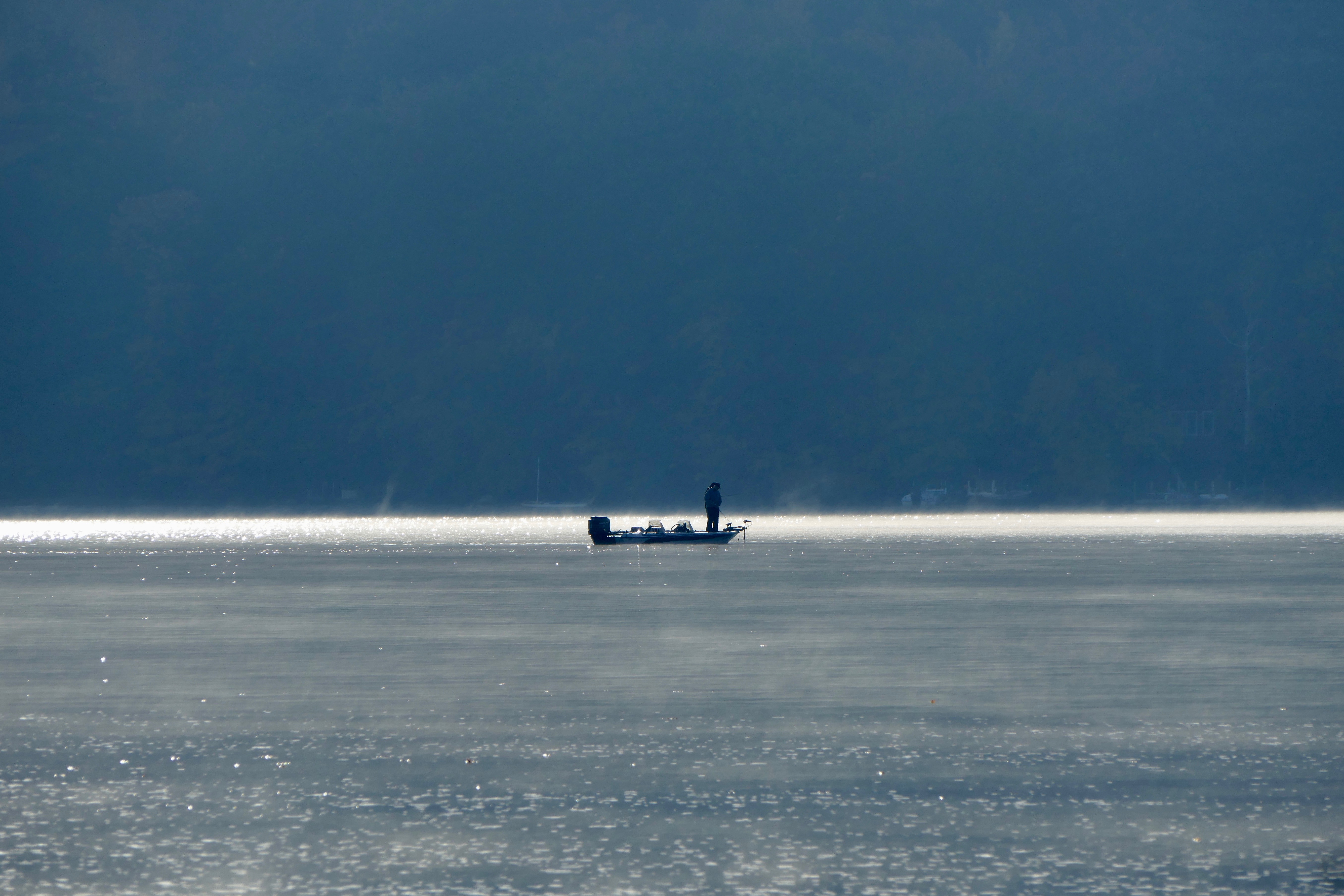
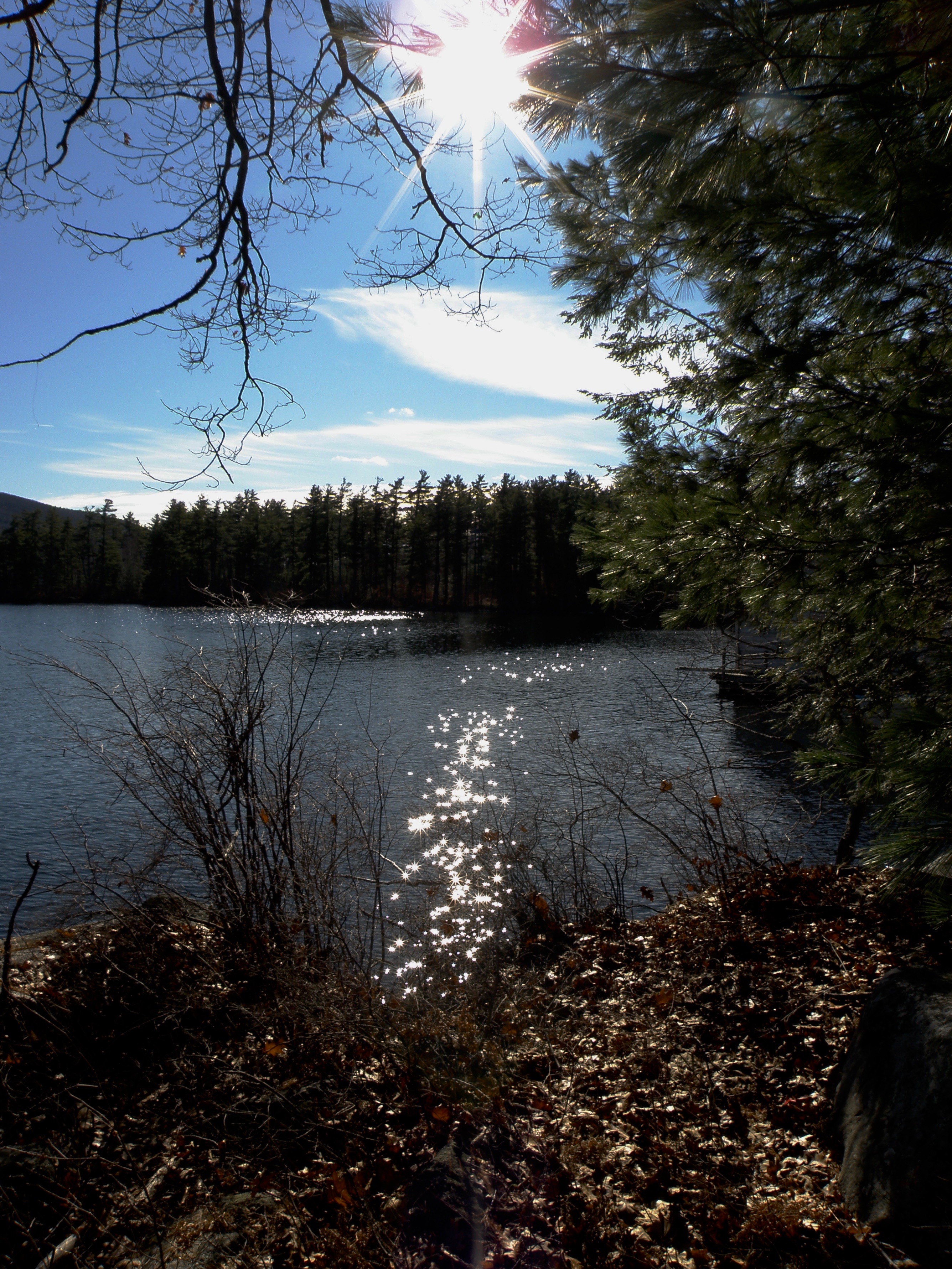
We are interested at this season by the manifold ways in which light is reflected to us.
Ascending a little knoll covered with sweet fern, the sun appearing but a little above the sweet fern, its light was reflected from a dense mass of the bare, downy twigs of this plant in a surprising manner which would not be believed, if described. It was quite like the sunlight reflected from grass and weeds covered with hoar frost. Yet in an ordinary light, these are but dark or dusky-looking with scarcely a noticeable downiness. But as I saw them, there was a perfect halo of light resting on the knoll. I moved to right or left. A myriad of surfaces are now prepared to reflect the light. This is one of the hundred silvery lights of November. The setting sun too, is reflected from windows more brightly than at any other season. “November Lights” would be a theme for me.
Nature is moderate, and loves degrees. Winter is not all white and sere. Some trees are evergreen to cheer us, and on the forest floor our eyes do not fall on sere brown leaves alone, but some evergreen shrubs are placed there to relieve the eye. Mountain laurel, lamb kill, checkerberry, interfere, etc., keep up the semblance of summer still.
Pm to Fair Haven Hill & by boat to Witch Hazel bush
Were they not the white in tailbirds I saw this afternoon?cricket still.After yesterdays clear, windy weather we have today less wind and much haze— It is Indian summer-like.The river has risen yet higher than last night—so that I cut across Hubbard’s meadow with ease— Took up a witch hazel with still some fresh blossoms.
I climb Anursnack—under this strong wind—more dry oak leaves are rattling down—all winter is their fall— A distinction is to be made between those trees whose leaves fall as soon as the bright autumnal tints are gone and they are withered—& those whose leaves are rustling & falling all winter even into spring. October is the month of painted leaves—of ripe leaves—when all the earth—not merely flowers—but fruits & leaves are ripe— With respect to its colors & its season it is the sunset month of the year—when the earth is painted like the sunset sky— This rich glow flashes round the world— This light fades into the clear white leafless twilight of November—and whatever more glowing sunset—or Indian summer we have then is the after-glow of the year— In October the man is ripe even to his stalk & leaves—he is pervaded by his genius—When all the forest is a universal harvest —Whether he possess the enduring color of the pines which it takes 2 years to ripen & wither—or the brilliant color of the deciduous trees which fade the first fall.
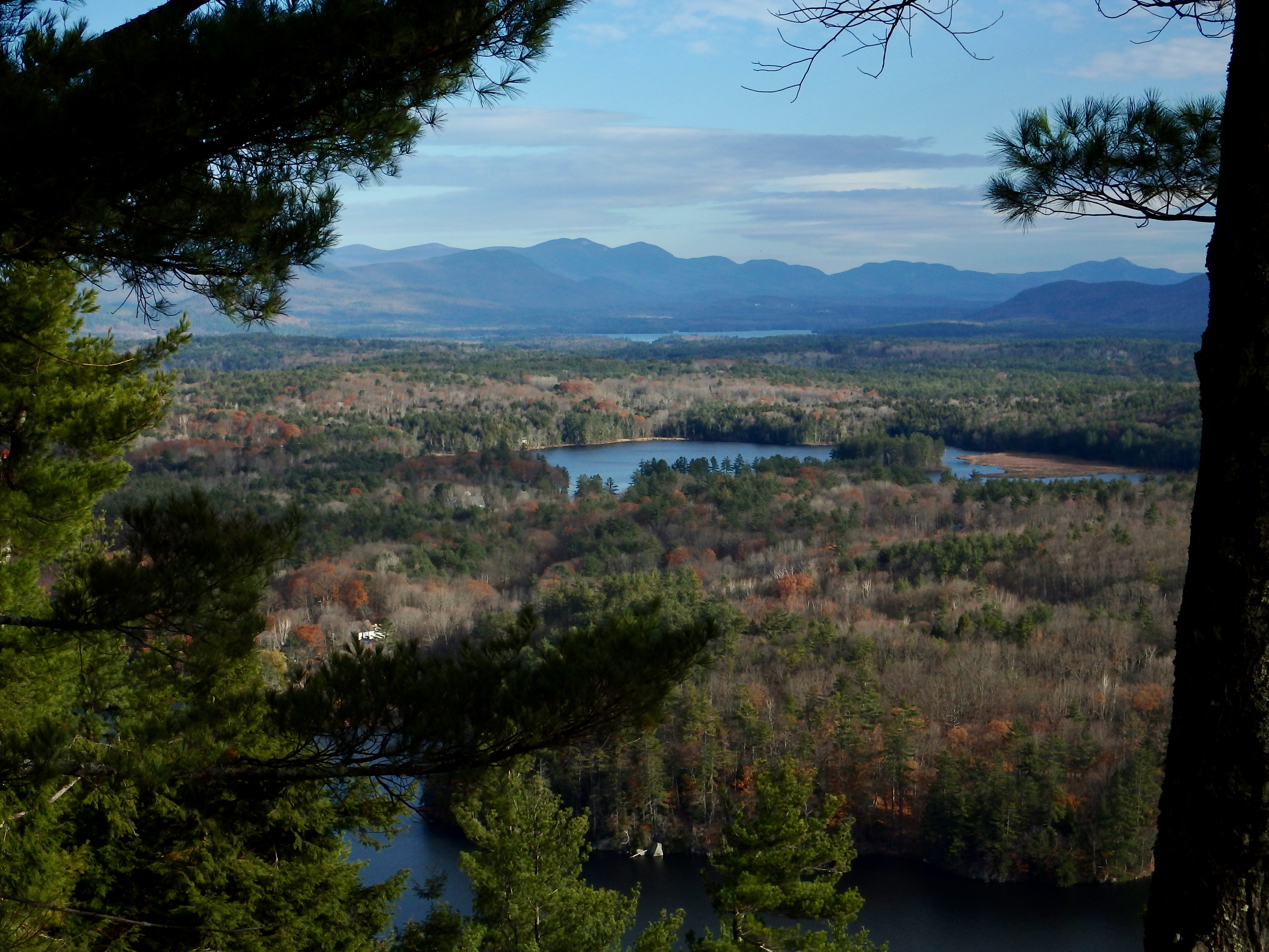
From this hill I am struck with the smoothness & washed appearance of the landscape—all these russet fields & swells look as if the withered grass had been combed by the flowing water- -not merely the sandy roads but the fields are swept— All waters, the river—& ponds—& swolen brooks—and many new ones are now seen through the leafless trees—are blue as indigo—reservoirs of dark indigo amid the general russet—& reddish brown & grey— October answers to the period in the life of man—when he is no longer dependent on his transient moods—when all his experience ripens into wisdom—but every root branch leaf of him glows with maturity— What he has been & done in his spring & summer appears— He bears his fruit—
Now for the bare branches of the oak woods—where hawks have nested & owls perched—the sinews of the trees—& the brattling (?) of the wind in their midst —For now their leaves are off they’ve bared their arms thrown off their coats & in the attitude of fencers await the onset of the wind—to box or wrestle with it— Such high winds would have done much harm 6 weeks ago.
Truly a hard day—hard Times these.Not a mosquito left. Not an insect to hum. Crickets gone into winter quarters— Friends long since gone there—& you left to walk on frozen ground—with your hands in your pockets.Ah but is not this a glorious time for your deep inward fires?— & will not your green hickory & white oak burn clean—in this frosty air?
….All fields lie fallow —Shall not your mind?True the freezing ground is being prepared for immeasurable snows.— but there are brave thoughts within you that shall remain to rustle the winter through like white oak leaves upon your boughs—or like scrub oaks that remind the traveller of a fire upon the hill sides—or evergreen thoughts cold even in mid summer by their nature shall contrast more fairly with the snow.
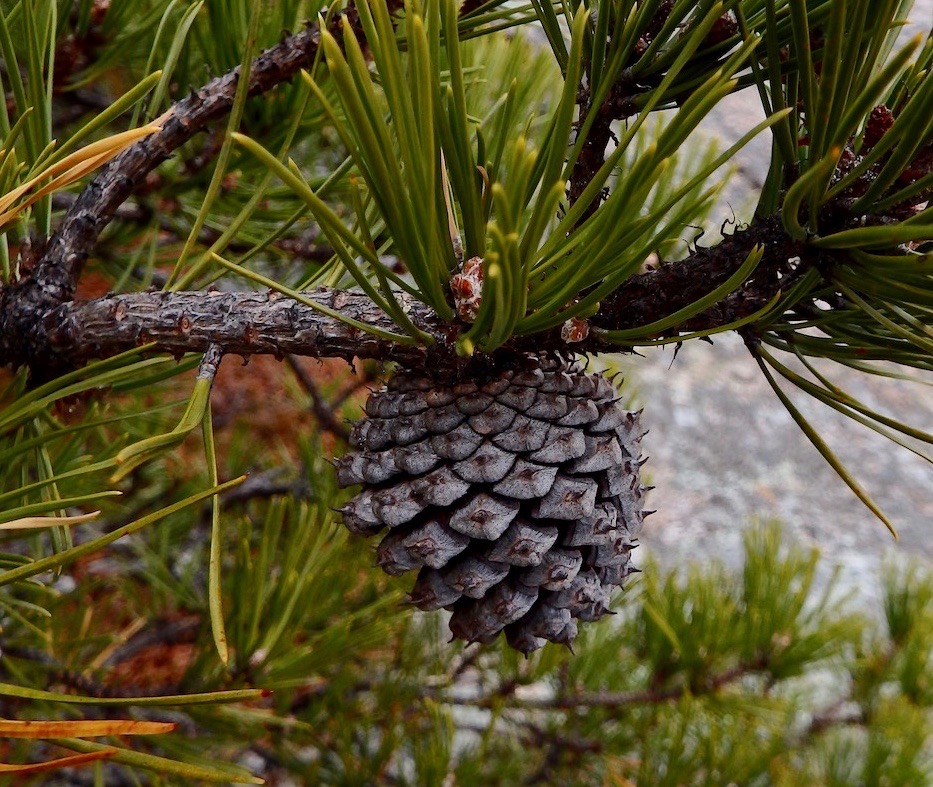
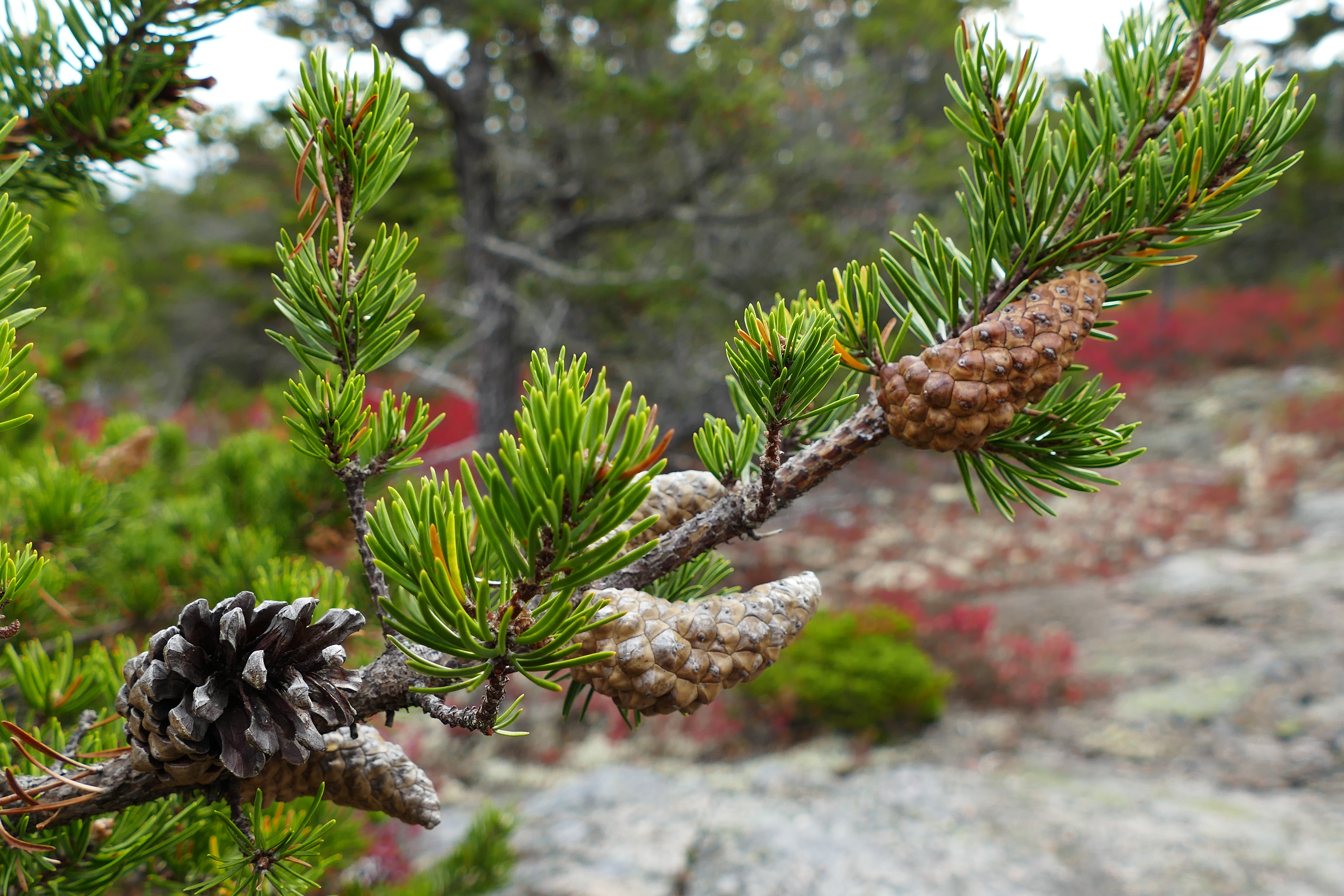
Pitch pine cones very beautiful—not only the fresh leather colored ones but especially the dead grey ones—covered with lichens— The scales so regular & close—like an impenetrable coat of mail. These are very handsome to my eye— Also those which have long since opened regularly & shed their seeds
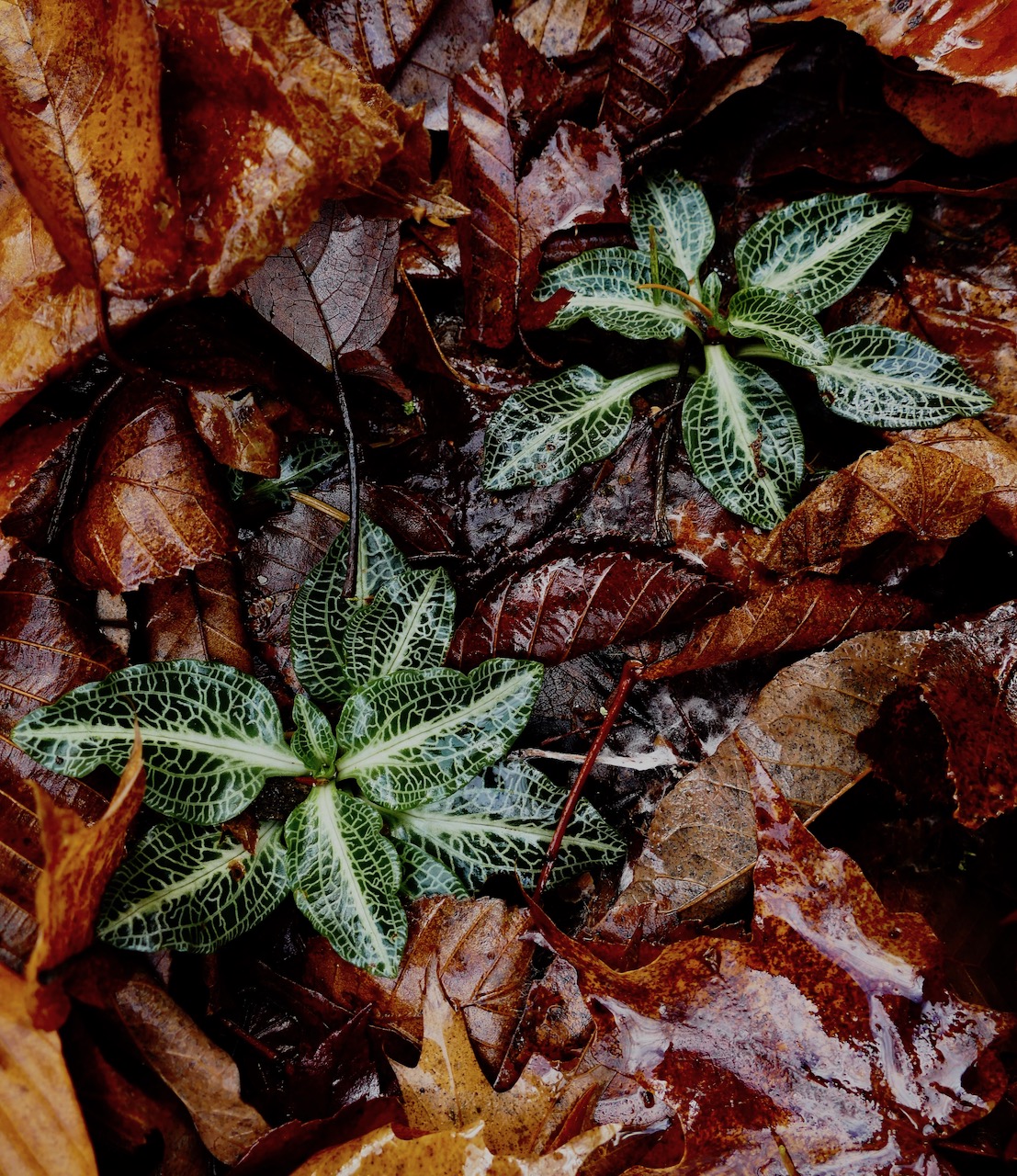
An abundance of the rattlesnake Plantain in the woods by Brown’s Pond….
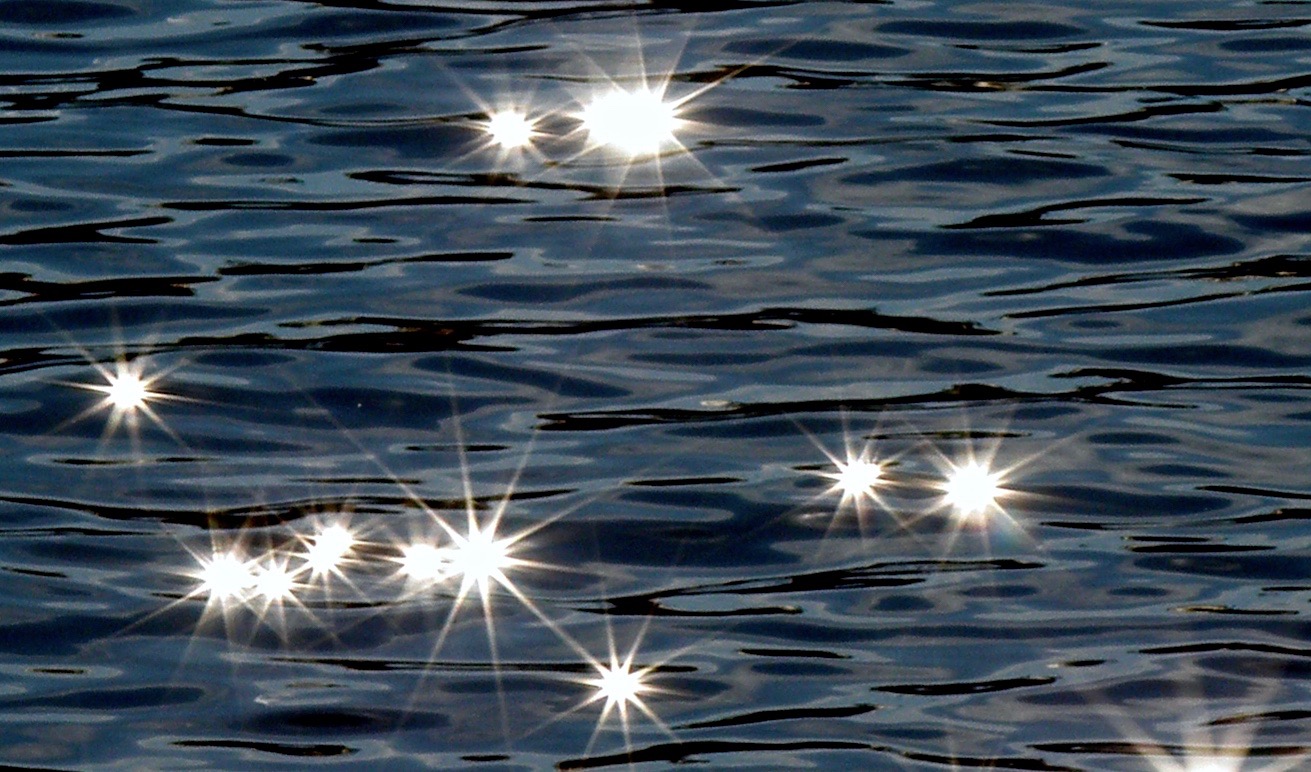
In this november air what a heaven to live in!Intensely brilliant as no artificial light I have seen—like a dance of diamonds. Course mazes of a diamond dance seen through the trees.All objects shine today—even the sportsmen seen at a distance—
as if a cavern were unroofed and its crystals gave entertainment to the sun.This great see-saw of brilliants.—














You must be logged in to post a comment.