June 6, 1857

 in Thoreau’s Journal: 

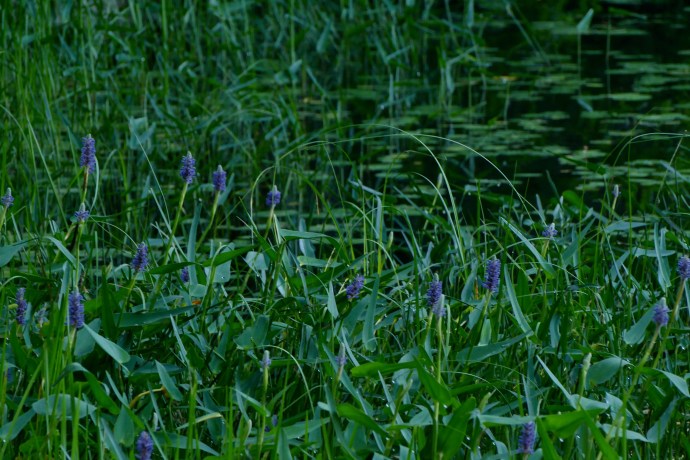
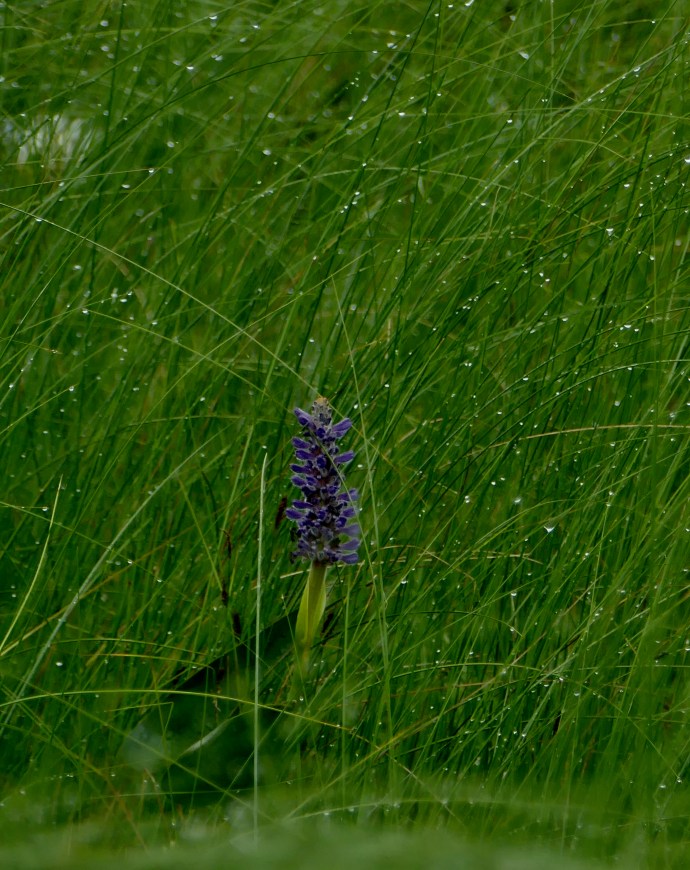
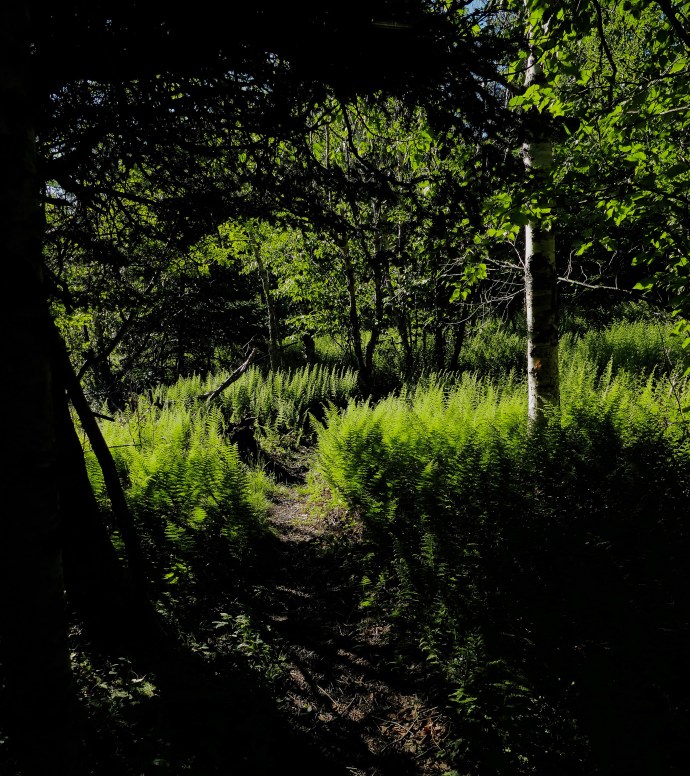
This is June, the month of grass and leaves. Already the aspens are trembling again, and a new summer is offered me. I feel a little fluttered in my thoughts, as if I might be too late.

P6020003.jpg

Each season is but an infinitesimal point. It no sooner comes than it is gone. It has no duration. It simply gives a tone and hue to my thought. Each annual phenomenon is a reminiscence and prompting. Our thoughts and sentiments answer to the revolutions of the seasonsas two cog-wheels fit into each other. We are conversant with only one point of contact at a time, from which we receive a prompting and impulse, and instantly pass to a new season or point of contact, A year is made up of a certain series and number of sensations and thoughts, which have their language in nature. Now I am ice, now I am sorrel. Each experience reduces itself to a mood of the mind.

June 5

1852 in Thoreau’s Journal:

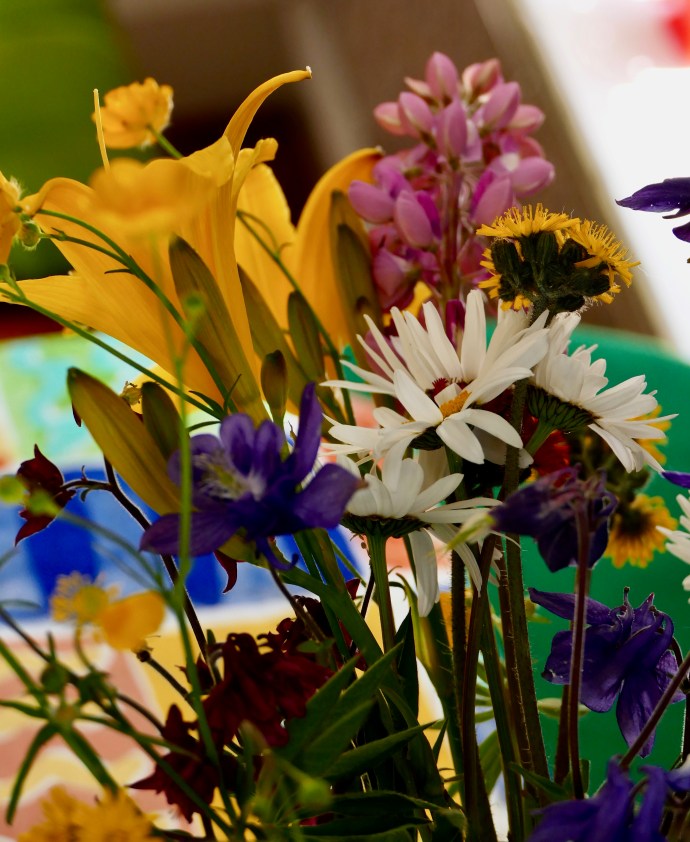
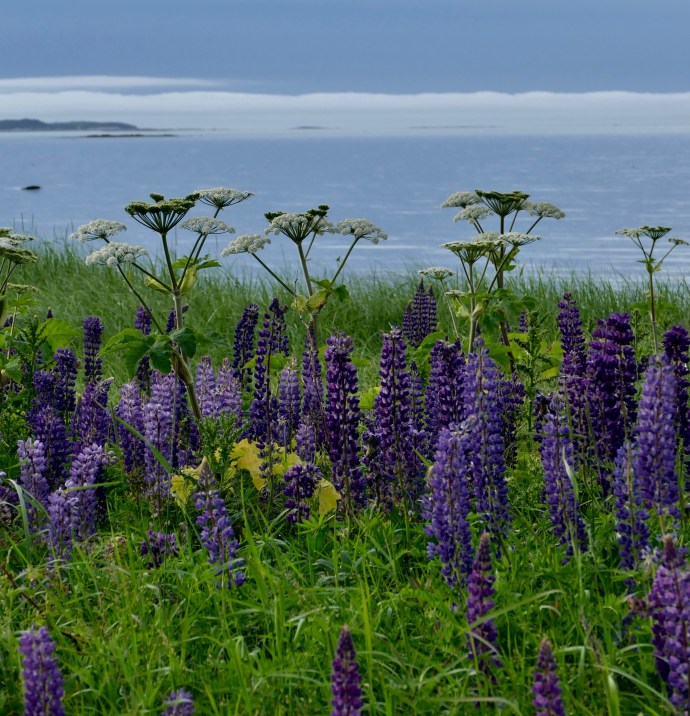
The lupine is now in its glory.

18920460_10213718698343106_4283215190755077119_n.jpg

1860 in Thoreau’s Journal:  

The first of June, when the lady’s slipper and the wild pink have come out in sunny places on the hill-sides, then the summer is begun according to the clock of the seasons.

P5130310 (1).jpg


I stand with Thoreau in relation to western and eastern philosophy—in the way that he wrote on June 4, 1857: “It is time now to bring our philosophy out of doors.” This is  philosophy “unroofed” which is (in my opinion) much closer to the “original position” of human thought. Any thought or observation that aspires to this inspires in me a kind of kinship with that deeper history. By nature then it’s a bit indescribable, but more known by things like when the grass waves. That is something I know.


June 4, 1857

in Thoreau’s Journal:

One thing that chiefly distinguishes this season from three weeks ago is that fine serene undertone or earth-song as we go by sunny banks and hillsides, the creak of crickets, which affects our thoughts so favorably, imparting its own serenity. It is time now to bring our philosophy out of doors.

P1160521.jpg

Our thoughts pillow themselves unconsciously in the trough of this serene rippling sea of sound. Now first we begin to be peripatetics. No longer our ears can be content with the bald echoing earth, but everywhere recline on the spring-cushion of a cricket’s chirp. These rills that ripple from every hillside become at length a universal sea of sound, nourishing our ears when we are most unconscious.

June 3, 1860

in Thoreau’s Journal:

These are the clear breezy days of early June, when the leaves are young and few, and the sorrel not yet in its prime.  Perceive the meadow fragrance.

P6030003.jpg

Am surprised to [see] some twenty or more crows in a flock still, cawing about us.

The roads are strewn with red maple seed. The pine shoots have grown generally from three to six inches, and begin to make a distinct impression, even at some distance of white and brown above their dark green. The foliage of deciduous trees is still rather yellow-green than green.

There are in the Boulder Field several of the creeping juniper which grow quite flat on the ground, somewhat like the empetrum, most elevated in the middle….

Tree-toads heard…. There are various sweet scents in the air now. Especially, as I go along an arbor-vitae hedge, I perceive a very distinct fragrance like strawberries from it.

June 2, 1853

in Thoreau’s Journal:

Now I have reached the hill-top above the fog at a quarter to five, about sunrise, and all around me is a sea of fog, level and white, reaching nearly to the top of this hill, only the tops of a few high hills appearing as distant islands in the main.

You can get the impression which the ocean makes, without ever going to the shore… It is tossed up toward the sun and by it into the the most boisterous of seas, which no craft, no ocean steamer, is vast enough to sail on.

P7050056.jpg

And now long, dark ridges of wood appear through it, and now the sun reflected from the river makes a bright glow in the fog….


June 1, 1854

in Thoreau’s Journal:

Within little more than a fortnight the woods, from bare twigs, have become a sea of verdure, and young shoots have contended with one another in the race. The leaves have unfurled all over the country like a parasol.

P1160177.jpg

Shade is produced, and the birds are concealed and their economies go forward uninterruptedly, thousands of worms and insects are preying on the leaves while they are young and tender. Myriads of little parasols are suddenly spread all the country over, to shield the earth and roots of the trees from parching heat, and they begin to flutter and rustle in the breeze.

May 31, 1853

in Thoreau’s Journal:

Some incidents in my life have seemed far more allegorical than actual; they were so significant that they plainly served no other use.  That is, I have been more impressed by their allegorical significance and fitness; they have been like myths or passages in a myth, rather than mere incidents or history which have to wait to become significant.  Quite in harmony with my subjective philosophy. This, for instance: that, when I thought I knew the flowers so well, the beautiful purple azalea or pinxter-flower should be shown me by the hunter who found it. Such facts are lifted quite above the level of the actual. They are all just such events as my imagination prepares me for, no matter how incredible. Perfectly in keeping with my life and characteristic.

P1050684.jpg

Even and anon something will occur which my philosophy has not dreamed of. The limits of the actual are set some thoughts further off. That which has seemed a rigid wall of vast thickness unexpectedly proves a thin and undulating drapery. The boundaries of the actual are no more fixed and rigid than the elasticity of our imaginations.  The fact that a rare and beautiful flower which we never saw, perhaps never heard [of], for which therefore there was no place in our thoughts, may sat length be found in our immediate neighborhood, is very suggestive.

May 29, 1853

 in Thoreau’s Journal:

P5220459 copy.jpg

That exceedingly neat and interesting little flower blue-eyed grass now claims our attention.


________________________


34095989_10217063254434918_9146984321213530112_o.jpg

May 27, 1852

in Thoreau’s Journal:

At Corner Spring. A wet day. The veery sings nevertheless.

P1150933.jpg

The road is white with the apple blossoms fallen off as with snowflakes. The dog wood is coming out. Ladies slippers out 

May 24, 1852

 in Thoreau’s Journal:

The fringed polygala P. Pauciflora (flowering winter green.) 

P5110271.jpg

What bird was that whose wild note I heard at Goose pond tonight?—a loon or a bittern?  1st Night hawks squeak & boom. Grasshoppers appear.

May 23

In Thoreau’s Journal:

May 23, 1852:  The buttercup season has arrived here.

P1060320.jpg

May 23, 1853:  At first we had the lighter, paler spring yellows of willows (cowslips even, for do they not grow a little darker afterward?), dandelion, cinquefoil, then the darker (methinks it is a little darker than the cowslip) and deeper yellow of the buttercup; and then this broad distinction between the buttercup and the krigia and senecio, as the seasons revolve toward July.  Every new flower that opens, no doubt, expresses a new mood of the human mind.

May 1850

in Thoreau’s Journal:

The fresh foliage of the woods in May, when the leaves are about as big as a mouse’s ear, putting out like taller grasses and herbs. 

In all my rambles I have seen no landscape which can make me forget Fair Haven. I still sit on its Cliff in a new spring day, and look over the awakening woods and the river, and hear the new birds sing, with the same delight as ever.  It is as sweet a mystery to me as ever, what this world is.  Fair Haven Lake in the south, with its pine-covered island and its meadows, the hickories putting out fresh young yellowish leaves, and the oaks light-grayish ones, while the oven-bird thrums his sawyer-like strain, and the chewink rustles through the dry leaves or repeats his jingle on the tree-top, and the wood thrush, the genius of the wood, whistles for the first time his clear and thrilling strain, ––it sounds as it did the first I heard it. The sight of these budding woods intoxicates me….

P5050635.jpg

The strong-colored pine, the grass of trees, in the midst of which other trees are but as weeds or flowers,  —a little exotic.

May 20, 1852

 in Thoreau’s Journal: 

Now is the season of the leafing of the trees and of planting. The fields are white with houstonias, as they will soon be yellow with buttercups.  Perchance the beginning of summer may be dated from the fully formed leaves, when dense shade begins…Some apple trees in blossom—

P5130018.jpg

Most are just ready to burst forth—the leaves being half-formed.

May 19, 1860

in Thoreau’s Journal:  

P1150399.jpg

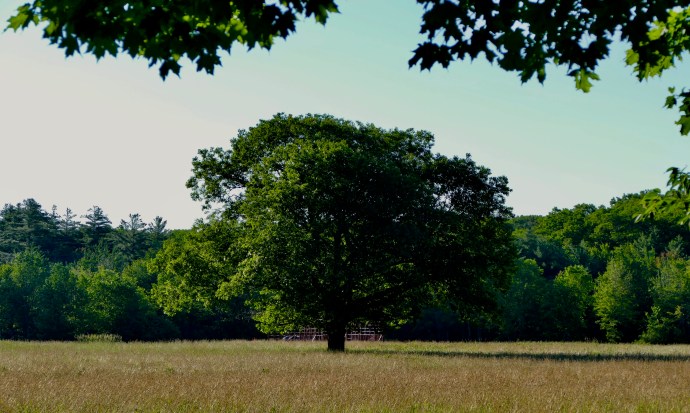
This is the season when the meadow grass is seen waving in the wind at the same time that the shadows of clouds are passing over it.