in Thoreau’s Journal:
River, on account of rain, some two feet above normal.
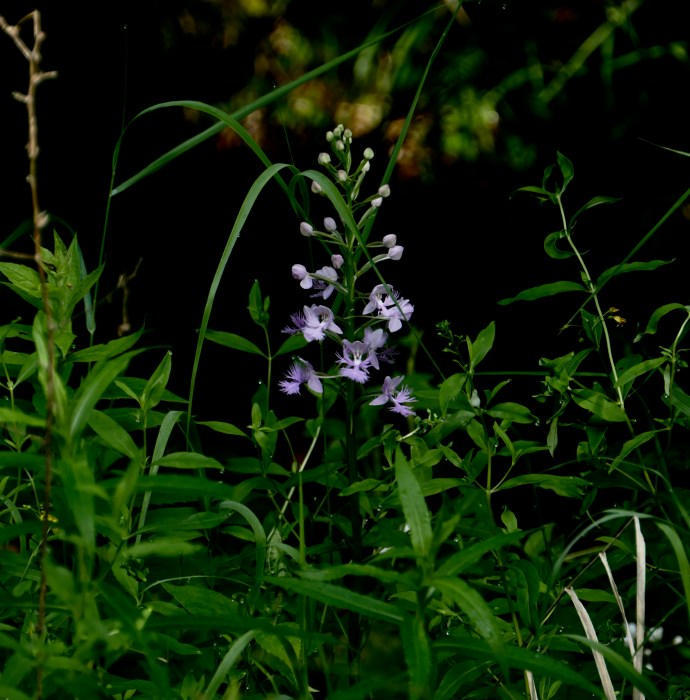
Great purple fringed orchid.
What that colored-flower locust in Deacon Farrar’s yard and house this side Lincoln.
in Thoreau’s Journal:
River, on account of rain, some two feet above normal.
Great purple fringed orchid.
What that colored-flower locust in Deacon Farrar’s yard and house this side Lincoln.
in Thoreau’s Journal:
8 1/2 Am To Flag Hill on which Stowe—Acton & Boxboro Corner—with C. With bread & butter & cheese in pocket.
A comfortable breezy June Morning. no dust today— To explore a segment of country between the Stow hills & the RR in Acton W to Boxboro. A fine clear day—a journey day. A very small blue Veronica in the bank by the roadside at Mrs. Hosmers—apparently the same with that I saw on the cliffs with toothed leaves— Interesting from being blue. The traveller now has the creak of the cricket to encourage him on all country routs—out of the fresh sod—still fresh as in the dawn—not interrupting his thoughts. Very cheering—& refreshing to hear so late in the day this morning sound. The white weed colors some meadows as completely as the frosting does a cake. The waving June grass shows watered colors like grain. No mowers scythe is heard. The farmers are hoeing their corn & potatoes. Some low blackberry leaves are covered with a sort of orange-colored mildew or fungus— The clover is now in its glory—whole fields are rosed with it—mixed with sorrel —& looking deeper than it is. It makes fields look luxuriant which are really thinly clad. The air if full of its sweet fragrance. I cannot find the Linnaea in Lorings— Perhaps I am too late. The robins sing more than usual— May be because of the coolness. Butter cups & geraniums cover the meadows— The latter appearing to float on the grass—or various tints— It has lasted long this rather tender flower — Methinks there are most tall butter-cups now. These & the senecio now getting stale—prevail in the meadows.
Green early blue-berries on hill sides passim remind you of the time when berries will be ripe. This is the ante-huckleberry season—when fruits are green. The green fruit of the thorn is conspicuous & of the wild cherry & the Amelanchiers—? The thimble berry. These are the clover days. The small white-starred flowers of the stitch wort. Stellaria Longifolia amid grass & bushes by the meadow sides. Some grass may perchance be well name bent—if from its bended blade. The light of June is not golden but silvery—not a torrid but somewhat temperate heat. See it reflected from the bent grass and the under sides of leaves. Also I perceive faint silvery gleaming ripples where there is a rapid in the river (from RR bridge at Darby’s.) without sun on it. At the pond on Lords land saw the Villarsia Lacunosa Big. Common Villarsia—with its small rounded heart shaped leaves—like a small pond lily leaf & its transparent-frosty white flowers spotting the whole surface like the white petals of some flower which had fallen on it. It belongs to a stagnant pond like this. What is that smooth elliptical leaf 3 or 4 inches long of the texture of the white lily leaf—peltate & almost, if not quite vermillion the under side— I do not see its flower.
The mullein out—with a disagreeable scent & the Dogsbane—with a quite handsome bell shaped flower—beautifully striped with red (rose red?) within.
Facts collected by a poet are set down at last as winged seeds of truth—samarae—tinged with his expectation. O may my words be verdurous & sempiternal as the hills. Facts fall from the poetic observer as ripe seeds. At Willis’ spring under the RR. a cocoa nut shell from the other side of the globe to drink at a N.E. spring. Water kept cool in the bowels of the earth—the cellar of the earth. The meadow thalictrum there. Aralia Hispida. The river has a June look—dark smooth reflecting surfaces—in shade—& the water is refreshing as suggesting coolness. The shadow in & under elms and other trees have not been so rich hitherto. It is grateful to look forward half a mile into some dark umbrageous elm or ash. Is that the common puffball now white convex—nubby? The panicled cornel (under which Gray puts Big’s white C.) with pure white flowers— This & the V. Dentate now out—show handsome corymbs ( and the V nudum) in copses both in sun & shade against the amid the green leaves of other shrubs or trees. Grape in bloom—agreeable perfume to many—to me not so. This is not the meadow fragrance then which I have perceived. I hear the wiry Phoebe note of the chickadee. May be the huckleberry bird best expresses the season or the red-eye. The leaved loose strife covers large sandy tracks by the side of the RR. The new shoots of the oaks are long enough to drop gracefully. What subtile differences between one season and another— The warmest weather has perchance arrived—& the longest days—but not the driest— When I remember gathering ripe blackberries on sandy fields or stones by the roadside—the very berries warmed by the sun—I am convinced of this. The seasons admit of infinite degrees in their revolutions. Found one the of the purple orchises in an open meadow. Left the RR near Ford Brook Fall—& went over a hill on the left at S. Acton. The veiny leaved hawkweed out. A large swelling pasture-hill-with hickories left for shade-and cattle now occupying them— The bark is rubbed smooth & red with their hides. Pleasant to go over the hills for there there is most air stirring—but you must look out for bulls in the pastures. Saw one here reclining in the shade amid the cows—his short sanguinary horns betrayed him & we gave him a wide berth for they are not to be reasoned with— On our right is Acton on the left is Stow & forward Boxboro. Thus King Richard sailed the Aegean & passed kingdoms on his right & left.— Now we are on one of the breezy hills that make the w horizon from Concord—from which we see our familiar C. Hills much changed and reduced in height & breadth. We are in a country very dif. From Concord—of swelling hills & long vales on the bounds of these 3 towns—more countryish. Some clover are of a beautiful rich transparent (?) red color with the conical heads. A wild rose with large pale pinkish blossom. There rose a higher wooded hill on the N side of S. acton— From this hill on the S side we selected one further West—(it proved to be Flag Hill on the edge of Boxborough) which we decided to reach by sticking more southerly & then following the ridge along NW—so we thought. It requires considerable skill in crossing country to avoid the houses & too cultivated parts—somewhat of the engineers or gunners skill—so to pass a house (if you must go near it through high grass) (pass the enemy’s lines where houses are thick)— as to make a hill or wood screen you—to shut every window with an apple tree. For that rout which most avoids the houses—is not only the one in which you will be least molested but—it is by far the most agreeable. Saw a handsome the handsomest large maple N of this hill that I ever saw. We crawled through the scud of a swamp on our bellies. The bushes wet so thick to screen us from a house 40 rods off whose windows completely commanded the open ground—leaping some broad ditches—and when we emerged into the grass ground some apple trees near the house beautifully screened us— It is rare that you cannot avoid a grain field or piece of English mowing—by skipping a cornfield or nursery near by—but if you must go through the high grass then step lightly & each others tracks. We soon fell into a swamp where one smelt the V. Nudum rather strong & unpleasant—a dry swamp filled with high bushes and trees & beneath tall farms one large pinnate leaf 5 or 6 feel high & 1 foot broad making a dense undergrowth in tufts at bottom spreading every way—these we opened with our hands making a path through—completely in cool shade— I steered by the sun. Through it was so high now at noon that I observed which way my short shadow fell before I entered the swamp—for in it we could see nothing of the country around—and then by keeping my shadow on a particular side of me I steered surely—standing still sometimes will the sun came our of cloud to be sure of our course.
Came out at length on the side hill very near the S. Acton line on Stow.— Another large pasture hill smelling of strawberries— Where I saw a large sugar maple—& some large ash-trees. You could see no more of the surrounding country from the swamp—than you could see of a village street if you were in the cellars of the houses. On this 2nd hill we sat under another walnut—where the ants on and about the tree ran over us as we were eating our dinner— No water had we seen fit to drink since we started. The farmers of Stow & acton we fancied were now taking a nooning. Now our further hill—which had appeared to be but a continuation of a ridge from this proved to lie WNW across a broad valley some 1 1/2 or 2 miles—& so we dashed down the W side of this toward Heather Meadow brook. where we found the swamp pink in blossom—a most cool refreshing fragrance to travellers in hot weather. I should place this with—if not before the Mayflower— Its flowers just opened have caught but few insects. This brook we could not drink it was too tepid & stagnant— In these meadows I forgot to say we saw the beautiful wild rose of a deep red color in blossom—a rich sight—islands of rose bushes with a profusion of flowers & buds — How suddenly they have expanded—

They are first seen in abundance in meadows. Is not this the carnival of the year—when the swamp rose & wild pink are in blossom—the large stage before the blueberries come. We were obliged to choose a shallow place & wade Heather Meadow brook—but we could not drink it—a cooler rill that emptied smelled & tasted too strongly of muskrats. Then we threaded more swamp very tangled where we had to stoop continually & full of brakes which we could more easily part—but not so wide as the last. & at length we reached the last hill-side but it proved a long way to its top— Still we could find no water fit to drink—& were thinking of cool springs gushing from the hill sides under the shade of some maples— The cow wheat. The huckleberry bird still. You see on distant hills cows every where standing in the shade—sometimes a woodchuck by the side of a clover field stand up—up his hindquarter like a short post. The strawberries are small & dried up. Now half way up this hill we struck into a thicker swamp—some times with trees sometimes high bushes only which completely shaded us—blueberries &c—and I saw the Prinos laevigata (&) smooth winter berry—through the flowers in clusters appeared fertile—& the the pedicels were rather long 1/2 inch all of them, beneath and around brakes—under foot sphagnum. & goldthread & decaying logs. This was the most intricate swamp of all high on the side of a hill & wide. I climbed a yellow birch covered with lichens—looking as if dead & rotten whence I saw a larch red with cones—but could not see out—but steering by the sun at length come out right—on Flag hill in the S E. Corner of Boxboro where the 3 towns corner—& looked west to Harvard & Bolton hills. The country wore a N.H. aspect. Returned by road & rail road to S. Acton—crossed the side of the S. Acton Hill & cut across to Ford Brook at the Boxboro road. The juncus militaris in bloom The prunella already with a few flowers— The adder’s tongue arethusa with the bulbous—thus we returned as we went skirting meadows—threading woods & swamps & climbing hills—& occasionally skipping or crossing dusty cultivated fields between the rows of corn or potatoes. In the meadows the Senecio bruised yields the prevailing smell. Saw some Canoe? birches probably which looked like white washed trees so large. Can that hairy Potentilla (but not dichotomous be the Norway-P-already?
The orchis keeps well. One put in my hat this morning & carried all day will last fresh a day or two at home— These are peculiar days when you find the purple orchis & the arethusa too in the meadows. The fields a walker loves best to strike into are bare extended rolling bordered by copses—with brooks & meadows in sight—sandy beneath the thin sod where now blackberries & pinks grow erst rye or oats—perchance these & stoney pastures—where is no high grass. Nor grain nor cultivated ground nor houses near. Bathed in the North River by the Old Stone Bridge just before sundown.
Flag Hill is about 8 miles by the road from Concord—we now went much further going & returning both. But by how much nobler road— Suppose you were to ride to Boxboro What then?— You pass a few teams with their dust—drive through many farmers’ barnyards—between two walls—see where Squire Tuttle lives & barrels his apples. bait your horse at Whites tavern & return with your hands smelling of greasy leather & horse-hair— the squeak of a chaise body in your ears—with no new flower nor agreeable experience— But going as we did before you got to Boxboro line—you often went much rather—many times ascended N.H. hills— Taking the noble road from hill to hill across swamps & vallies—not regarding political courses & boundaries—many times far west in your thought— It is a journey of a day & a picture of human life.
It was a very good day on the whole for it was cool in the morning—& there were just clouds enough to shade the earth in the hottest part of the day—& at evening it was comfortably cool again.
The Prinos like shrub in the SW of Acton swamp on side of Flag Hill—has from 6 to 9 petals & the same number of stamens are the monopetalous flower—which all comes off together & leaves a distinct calyx of 6 or 7 lanceolate segments & within the germ with apparently 3 sessile stigmas or short divisions at its apex. All on slender peduncles about 5/8 of an inch long proceeding from nearly a common center (with leaves).
in Thoreau’s Journal:
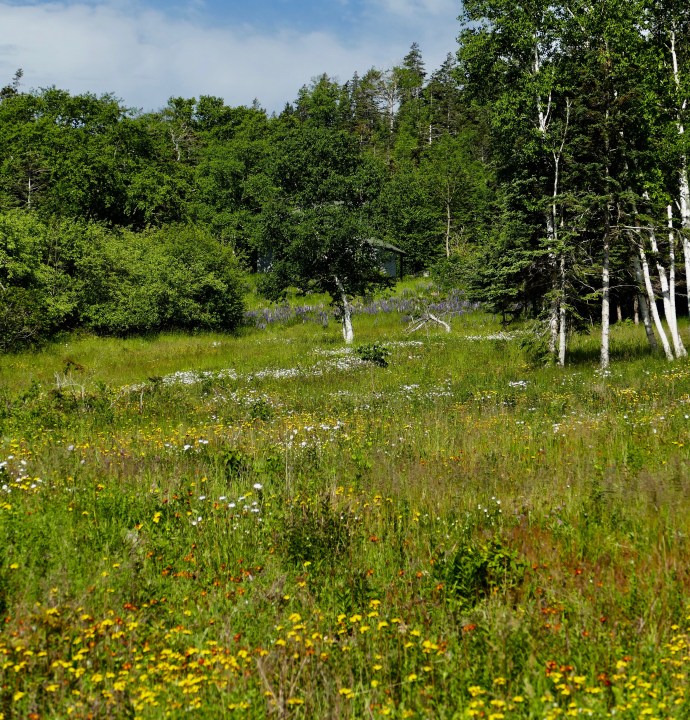
How far from our minds now the early blossoms of the spring, the willow catkins, for example.
June 17, 1853 in Thoreau’s Journal:
There are some fine large clusters of lambkill close to the shore of Walden, under the Peak, fronting the south. They are early, too, and large, apparently, both on account of the warmth and the vicinity of the water. These flowers are in perfect cylinders, sometimes six inches long by two wide, and three such raying out or upward from one centre, that is, three branches clustered together. Examined close by, I think this handsomer than the mountain laurel. The color is richer, but it does not show so well at a little distance, and corymbs are somewhat concealed by the green shoot and leaves rising above them, and also by the dry remains of last year’s flowers.


June 17, 1854 in Thoreau’s Journal:

We walk to lakes to see our serenity reflected in them. When we are not serene, we do not go to them. Who can be serene in a country when both rulers and ruled are without principle? The remembrance of the baseness of politicians spoils my walks. My thoughts are murder to the state…I trust that all just men will conspire.
in Thoreau’s Journal:
A low fog on the meadows. The scattered cloud wisps in the sky, like a squadron thrown into disorder, at the approach of the sun.
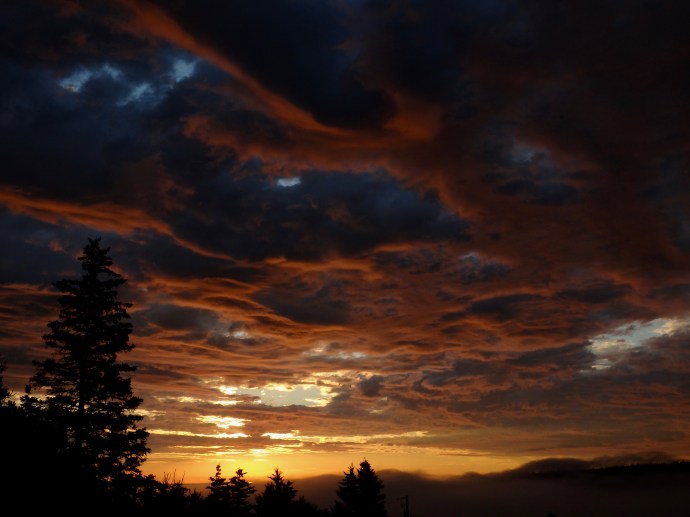
The sun now gilds an eastern cloud, giving it a broad, bright, coppery-golden edge, fiery bright, notwithstanding which the protuberances of the cloud cast dark shadows ray-like up into the sky….
There is music in every sound in the morning atmosphere.
in Thoreau’s Journal:
Here are many wild roses northeast of Trillium Woods. We are liable to underrate this flower, on account of its commonness. Is it not the queen of our flowers? How ample and high colored its petals, glancing half concealed from its own green bowers. There is a certain noble and delicate civility about it, not wildness. It is properly the type of the rosaeae, or flowers, among others, of most wholesome fruits. It is at home in the garden as readily cultivated as apples. It is the pride of June.

In summing up its attractions I should mention its rich color, size, and form, the rare beautify of its bud, its fine fragrance and the beauty of the entire shrub, not to mention the almost innumerable varieties it runs into. I bring home the buds ready to expand, put them into a pitcher of water, and the next morning they open, and fill my chamber with fragrance. This found in the wilderness must have reminded the Pilgrim of home.
in Thoreau’s Journal:
This seems to be the true hour to be abroad, sauntering far from home. Your thoughts being already turned toward home, your walk in one sense ended, you are in that favorable frame of mind described by De Quincey, open to great impressions, and you see those rare sights with the unconscious side of the eye, which you could not see by a direct gaze before.
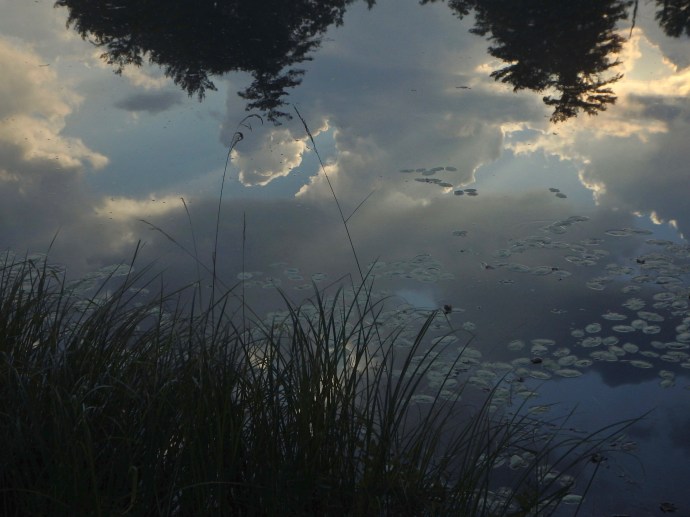
Then the dews begin to descend in your mind, and its atmosphere is strained of all impurities. Home is farther away than ever; here is home. The beauty of the world impresses you. There is a coolness in your mind as in a well. Life is too grand for ripples.
in Thoreau’s Journal:

How beautiful the solid cylinders of the lamb kill now just before sunset, small ten-sided rosy-crimson basins, about two inches above the recurved, dropping, dry capsules of last year, and sometimes those of the year before, two inches lower.
in Thoreau’s Journal:
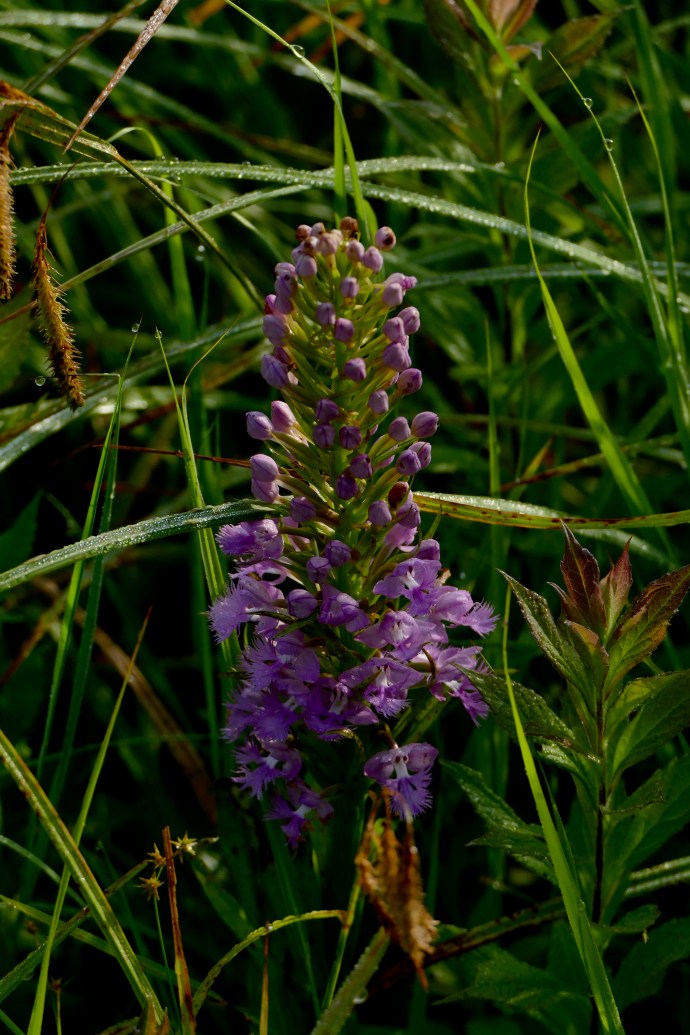
Visited the great orchis which I am waiting to have open completely. It is emphatically a flower (within gunshot of the hawk’s nest); its great spike six inches by two, of delicate pale purple flowers which begin to expand at bottom, rises above and contrasts with the green leaves of the hellebore, skunk-cabbage, and ferns (by which its own leaves are concealed, in the cool shade of an alder swamp.

It is the more interesting for its variety and the secluded situations in which it grows, owing to which it is seldom seen, not thrusting itself upon the observation of men. It is a pale purple, as if from growing in the shade. It is not remarkable in its stalk and leaves, which, indeed, are commonly concealed by other plants.

in Thoreau’s Journal:
No one to my knowledge, has observed the minute differences in the seasons. Hardly two nights are alike. The rocks do not feel warm to-night, for the air is warmest; nor does the sand particularly.
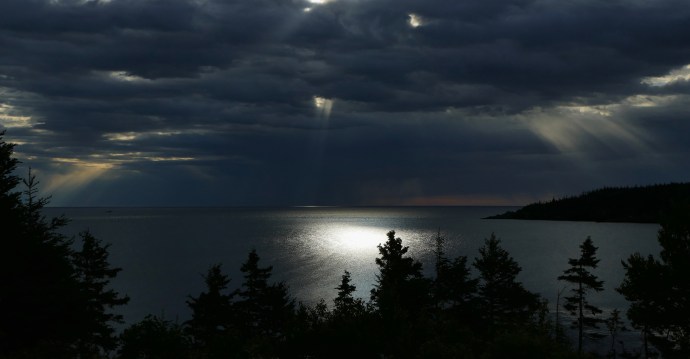
A book of the seasons, each page of which should be written out-of-doors, or in its own locality wherever it may be.
in Thoreau’s Journal:

Ripe strawberries, even in a meadow on sand thrown out of a ditch, hard at first to detect amid the red radical leaves.
For a week past we have had washing days– The grass waving and trees having leafed out their boughs wave and feel the effect of the breeze. Thus new life & motion is imparted to the trees– Theseason of waving boughs–and the lighter under sides of the new leaves are exposed. This is the first half of June. Already the grass is not so fresh & liquid velvety as green–having much of its blossom & some even gone to seed–& it is mixed with reddish ferns & other plants–but the general leafiness–shadiness & waving of grass & boughs in the breeze characterise the season.

The wind is not quite agreeable–because it prevents your hearing the birds sing. Meanwhile the crickets are strengthening their quire. The weather is very clear & the sky bright. The river shines like silver. Methinks this is a traveller’s month. The locust in bloom– The waving undulating rye. The deciduous trees have filled up the intervals between the (pines.) evergreens. & the woods are bosky now.
in Thoreau’s Journal:

This is truly June when you begin to see brakes (dark green) fully expanded in the wood paths.
in Thoreau’s Journal:
To Walden.
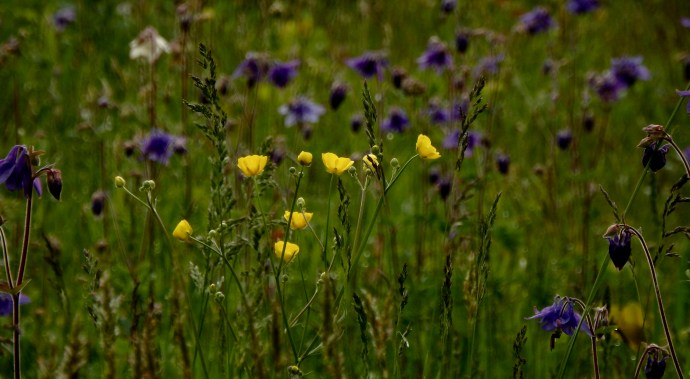
Clover begins to redden the fields generally. The quail is heard at a distance. Buttercups of various kinds mingled, yellow the meadows, the tall, the bulbous, the repens.

The cinquefoil, in its ascending state, keeping pace with the grass, is now abundant in the fields. Saw it one or two weeks ago. This is a feature of June. Still both high and low blueberry and huckleberry blossoms abound. The hemlock woods, their fanlike sprays edged or spotted with short, yellowish-green shoots, tier above tier, shelf above shelf, look like a cool bazaar of rich embroidered goods. How dense their shade, dark and cool, beneath them, as in a cellar. No plants glow there, but the ground is covered with fine red leaves. It is oftenest on a side hill they grow.
in Thoreau’s Journal:
This is June, the month of grass and leaves. Already the aspens are trembling again, and a new summer is offered me. I feel a little fluttered in my thoughts, as if I might be too late.
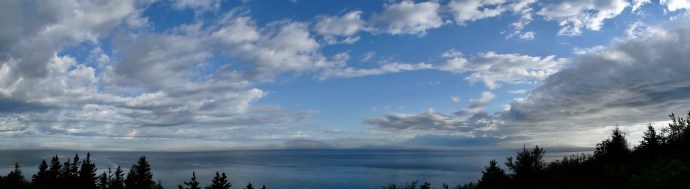
Each season is but an infinitesimal point. It no sooner comes than it is gone. It has no duration. It simply gives a tone and hue to my thought. Each annual phenomenon is a reminiscence and prompting. Our thoughts and sentiments answer to the revolutions of the seasonsas two cog-wheels fit into each other. We are conversant with only one point of contact at a time, from which we receive a prompting and impulse, and instantly pass to a new season or point of contact, A year is made up of a certain series and number of sensations and thoughts, which have their language in nature. Now I am ice, now I am sorrel. Each experience reduces itself to a mood of the mind.
1852 in Thoreau’s Journal:
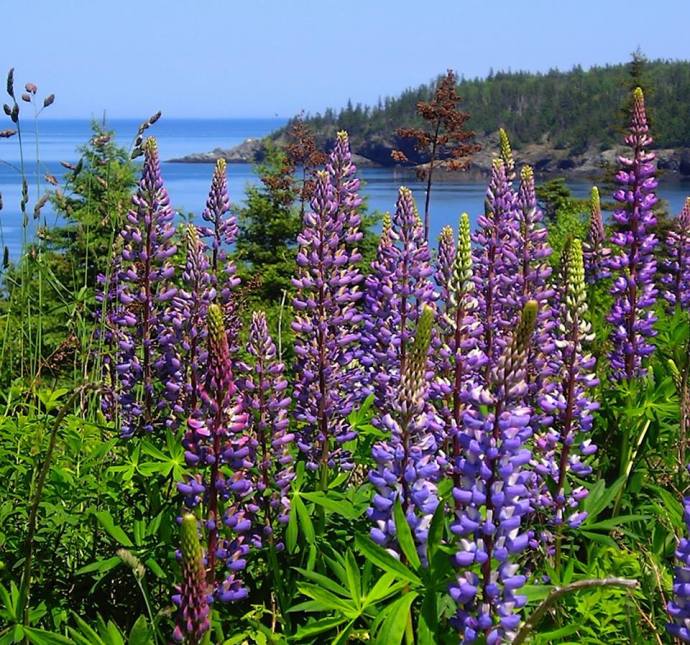
The lupine is now in its glory.
1860 in Thoreau’s Journal:
The first of June, when the lady’s slipper and the wild pink have come out in sunny places on the hill-sides, then the summer is begun according to the clock of the seasons.

I stand with Thoreau in relation to western and eastern philosophy—in the way that he wrote on June 4, 1857: “It is time now to bring our philosophy out of doors.” This is philosophy “unroofed” which is (in my opinion) much closer to the “original position” of human thought. Any thought or observation that aspires to this inspires in me a kind of kinship with that deeper history. By nature then it’s a bit indescribable, but more known by things like when the grass waves. That is something I know.
in Thoreau’s Journal:
One thing that chiefly distinguishes this season from three weeks ago is that fine serene undertone or earth-song as we go by sunny banks and hillsides, the creak of crickets, which affects our thoughts so favorably, imparting its own serenity. It is time now to bring our philosophy out of doors.
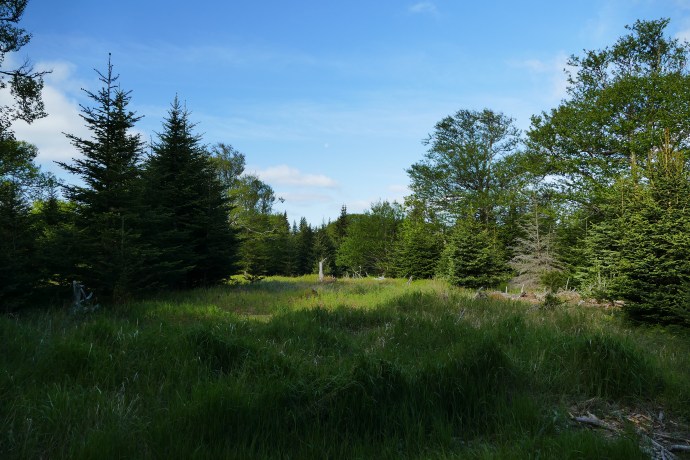
Our thoughts pillow themselves unconsciously in the trough of this serene rippling sea of sound. Now first we begin to be peripatetics. No longer our ears can be content with the bald echoing earth, but everywhere recline on the spring-cushion of a cricket’s chirp. These rills that ripple from every hillside become at length a universal sea of sound, nourishing our ears when we are most unconscious.
in Thoreau’s Journal:
These are the clear breezy days of early June, when the leaves are young and few, and the sorrel not yet in its prime. Perceive the meadow fragrance.
Am surprised to [see] some twenty or more crows in a flock still, cawing about us.
The roads are strewn with red maple seed. The pine shoots have grown generally from three to six inches, and begin to make a distinct impression, even at some distance of white and brown above their dark green. The foliage of deciduous trees is still rather yellow-green than green.
There are in the Boulder Field several of the creeping juniper which grow quite flat on the ground, somewhat like the empetrum, most elevated in the middle….
Tree-toads heard…. There are various sweet scents in the air now. Especially, as I go along an arbor-vitae hedge, I perceive a very distinct fragrance like strawberries from it.
in Thoreau’s Journal:
Now I have reached the hill-top above the fog at a quarter to five, about sunrise, and all around me is a sea of fog, level and white, reaching nearly to the top of this hill, only the tops of a few high hills appearing as distant islands in the main.
You can get the impression which the ocean makes, without ever going to the shore… It is tossed up toward the sun and by it into the the most boisterous of seas, which no craft, no ocean steamer, is vast enough to sail on.

And now long, dark ridges of wood appear through it, and now the sun reflected from the river makes a bright glow in the fog….
in Thoreau’s Journal:
Within little more than a fortnight the woods, from bare twigs, have become a sea of verdure, and young shoots have contended with one another in the race. The leaves have unfurled all over the country like a parasol.
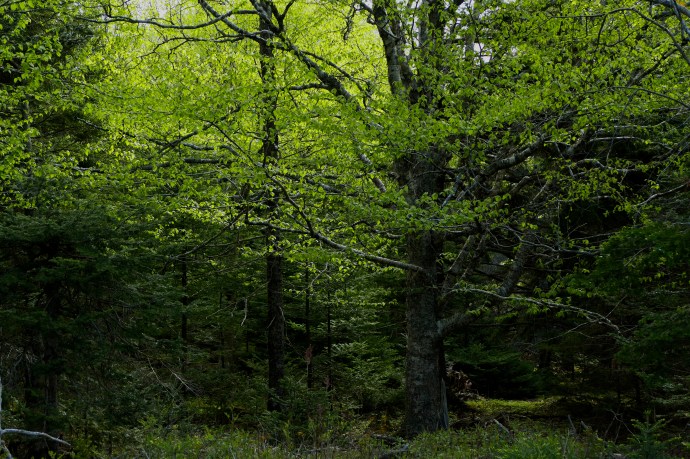
Shade is produced, and the birds are concealed and their economies go forward uninterruptedly, thousands of worms and insects are preying on the leaves while they are young and tender. Myriads of little parasols are suddenly spread all the country over, to shield the earth and roots of the trees from parching heat, and they begin to flutter and rustle in the breeze.


You must be logged in to post a comment.