April 17, 1852

in Thoreau’s Journal:

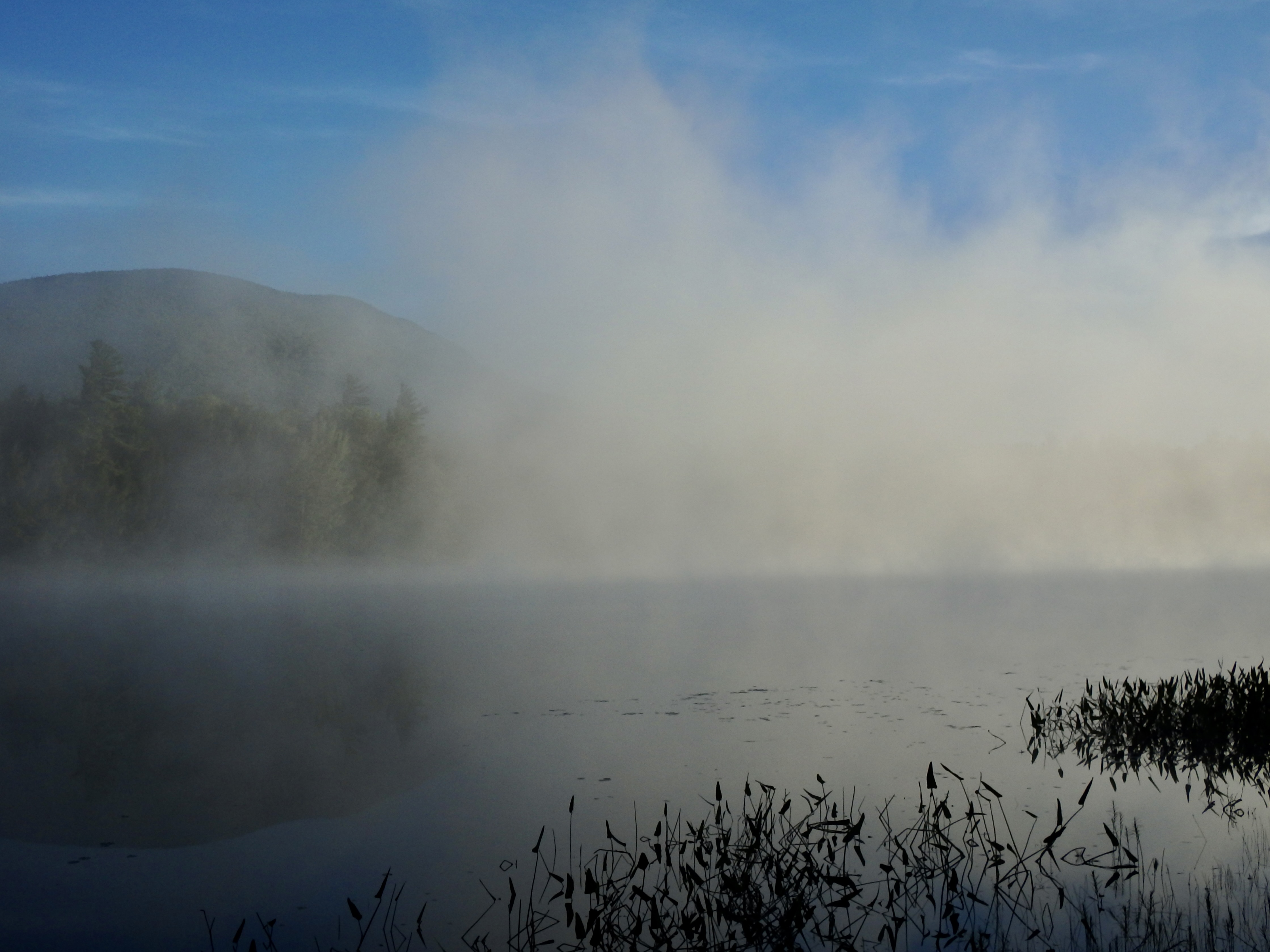
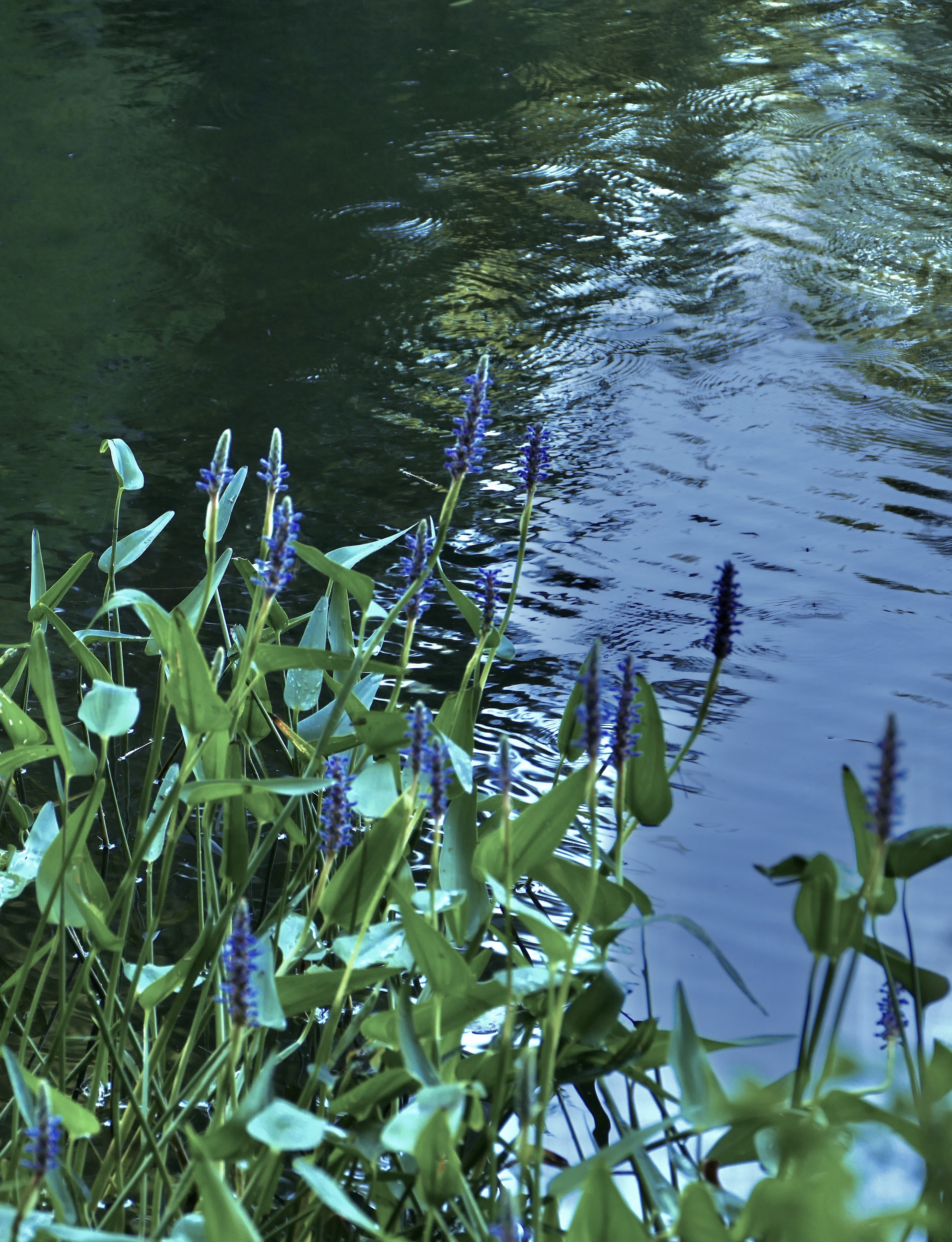
Stood by the riverside early this morning. The water has been rising during the night. The sun has been shining on it half an hour. It is quite placid. The village smokes are seen against the long hill. And now I see the river also is awakening, a slight ripple beginning to appear on its surface. It wakens like the village.

It proves a beautiful day, and I see that glimmering or motion in the air just above the fields, which we associate with heat.

April 13, 1852

in Thoreau’s Journal:

A driving snow storm in the night & still raging––5 or 6 inches deep on a level at 7 Am. All birds are turned into snow birds. Trees and houses have put on the aspect of winter.  The travelers carriage wheels, the farmer’s wagon are converted into white disks of snow through which the spokes hardly appear. But it is good now to stay in the house & read & write. We do not now go wandering all abroad & dissipated––but the imprisoning storm condenses our thoughts–– My life is enriched–  I love to hear the wind howl. I have a fancy for sitting with my book or paper––in some mean & apparently unfavorable place––in the kitchen for instance where the work is going on––rather a little cold than comfortable–– –– My thoughts are of more worth in such places than they would be in a well-furnished & warmed studio.

April 12, 1852

in Thoreau’s Journal:

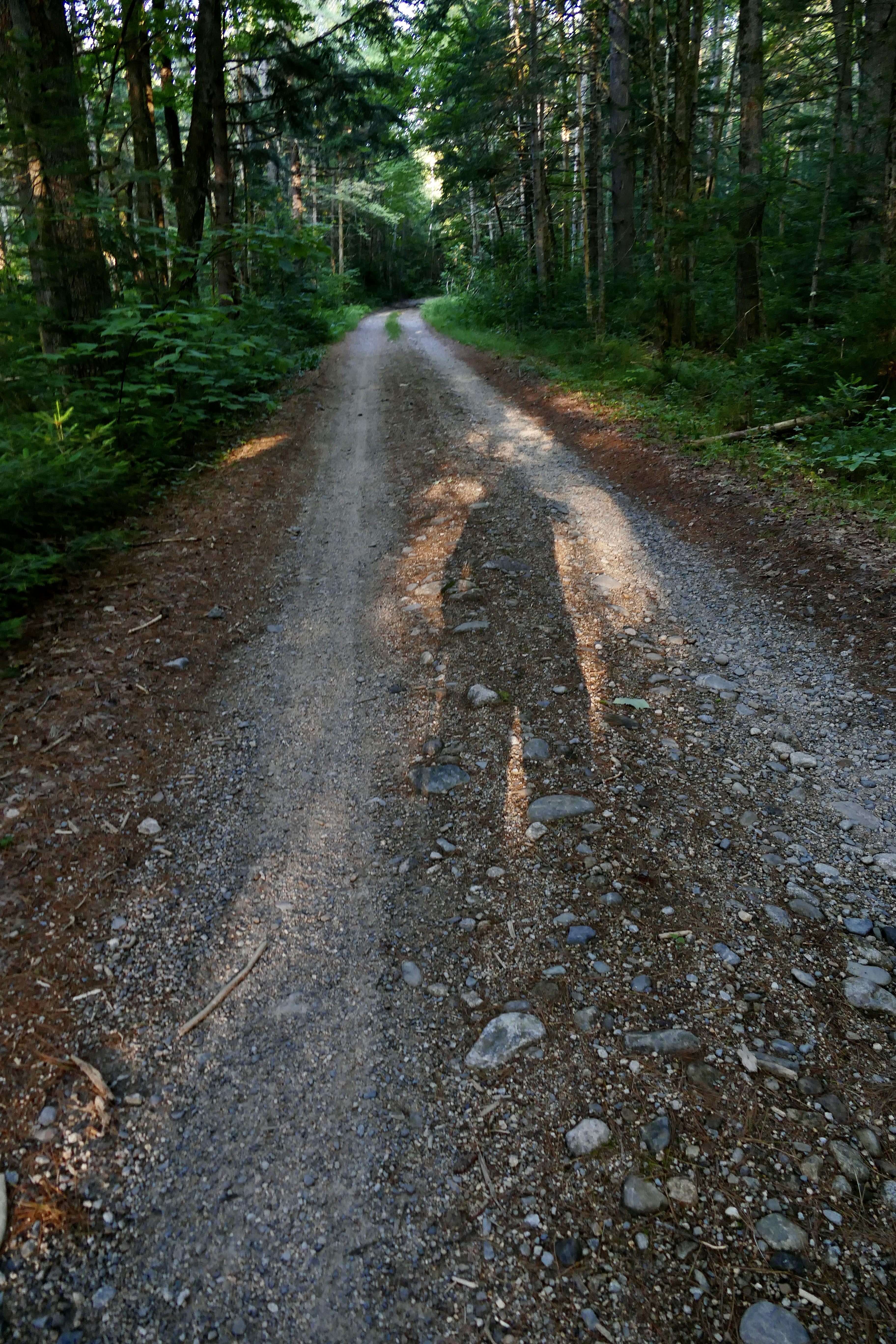
The road through the pitch pine woods beyond J. Hosmer’s is very pleasant to me, curving under the pines close abutting on it, yellow in the sun and low-pines, without a fence,—the sandy road, with the branched, with younger pines filling up all to the ground.

I love to see a sandy road like this curving through a pitch pine wood where the trees closely border it without fences, a great cart-path merely. That is a pleasant part of the North River, under the black birches. 

April 11, 1841

in Thoreau’s Journal:

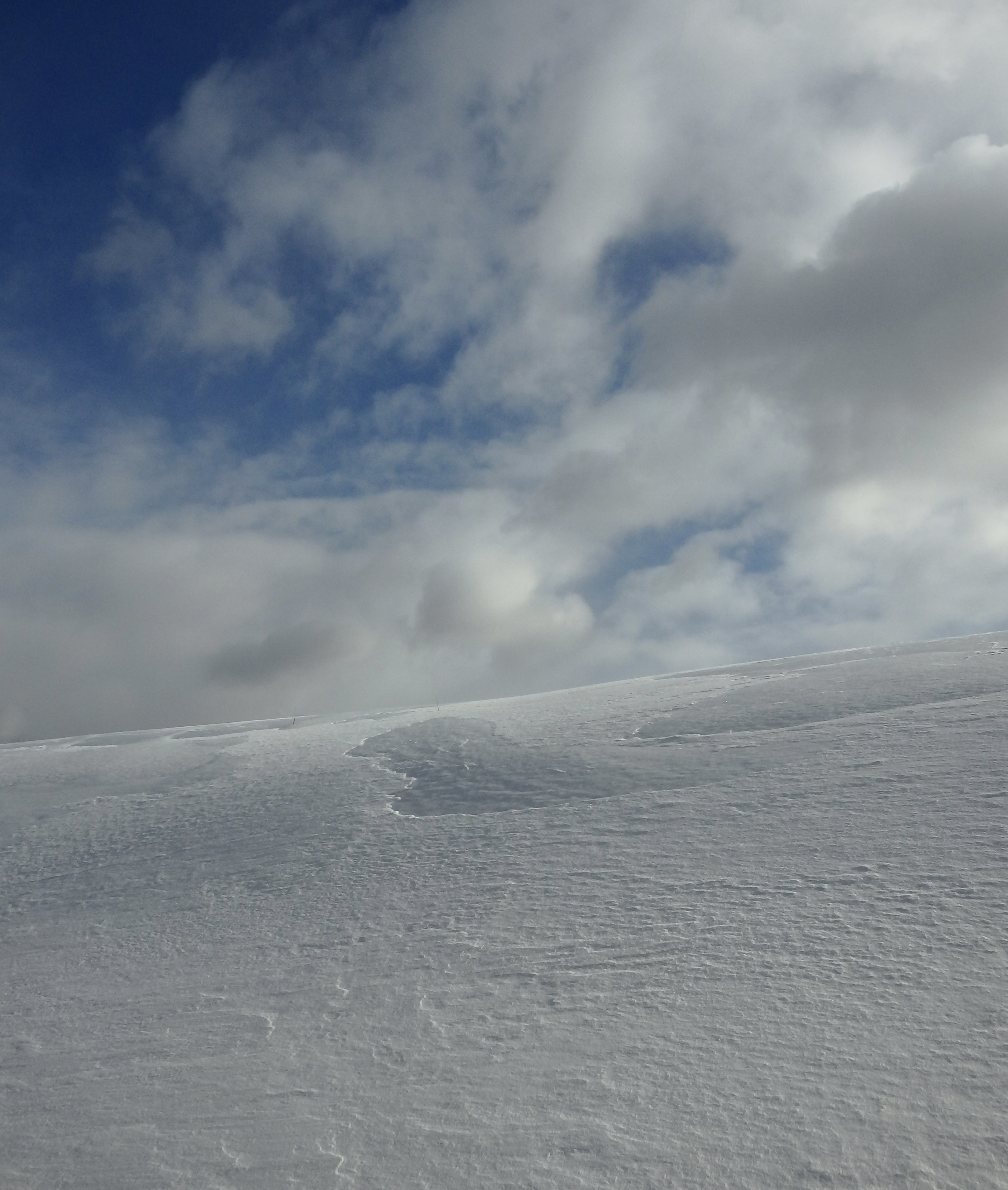
A greater baldness my life seeks, as the crest of some bare hill, which towns and cities do not afford— I want a directer relation with the sun.

April 10, 1855

in Thoreau’s Journal:

A strong south wind and overcast There is the slightest perceptible green on the hill now. No doubt in a rain it would be pretty obvious.

April 9, 1853

in Thoreau’s Journal:

The male red maple buds now show 8 or 10 (counting everything) scales alternately crosswise—& the pairs successively brighter red or scarlet, which will account for the gradual reddening of their tops. They are about ready to open.

April 7, 1853

in Thoreau’s Journal:

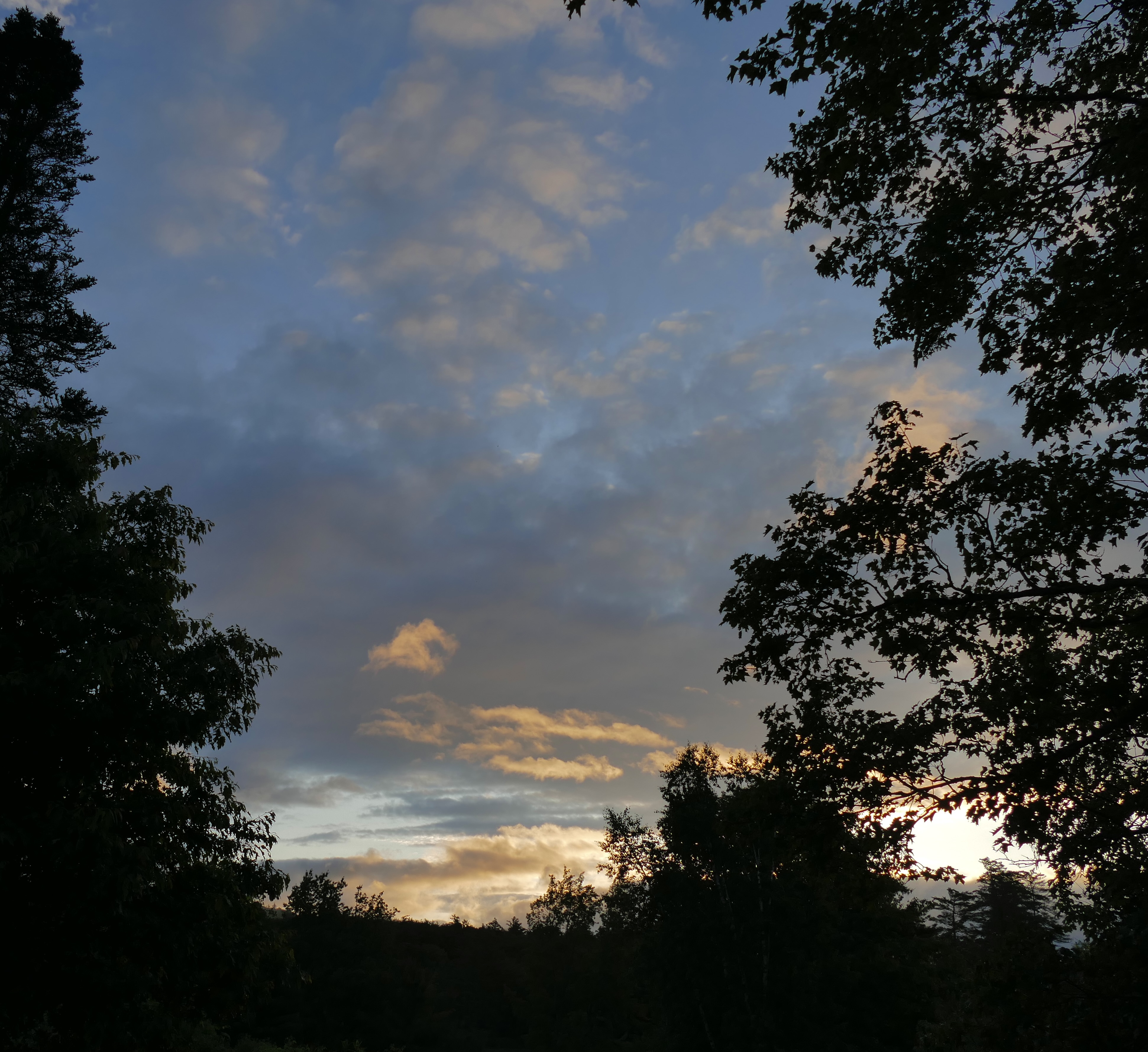
Now the sun is low in the west the northeasterly water is of a peculiarly etherial light blue, more beautiful than the sky—and this broad water with innumerable bays & inlets running up into the land on either side—& often divided by bridge causeways—as if it were the very essence & richness of the heavens distilled and poured upon the earth, contrasting with the clean russet land—& the paler sky from which it has been subtracted—nothing can be more elysian. Is not the blue more etherial when the sun is at this angle— The river is but a long chain of flooded meadows—

April 6, 1853

in Thoreau’s Journal:

One thing I may depend on, there has been no idling with the flowers.

Nature loses not a moment, takes no vacation. They advance as steadily as a clock.

After April 1, 1850

in Thoreau’s Journal:

It seemed that nature sympathised with his [Humboldt] experiments when it had got to be April I heard it last.

It was simply the regulated & increased tinkling of a brook—as the history of simpler ages—as the memory of early days comes over a man—so this sound of the night—  It sounded like a sentence of Herodotus— It was an incident worthy to be recorded by the father of History—away in nut meadow—by Jenny Dugan’s—beyond the Jimmy Miles place—as if it were an alto singer among the bitterns.  Some ardea.  It was news [of] a wind from Scythia. It was the dream or reminiscence of a primitive age coming over the modern life—as night veils the day—as the dews of evening succeed the sutltry sun.

April 4, 1855

in Thoreau’s Journal:

A fine morning—still & bright with smooth water—and singing of song & tree sparrows & some black-birds….All the earth is bright. The very pines glisten–& the water is a bright blue….

Not only are the evergreens brighter–but the pools–as that upland one behind Lees–the ice as well as snow–about their edges being now completely melted–have a peculiarly warm & bright April look–as if ready to be inhabited by frogs.

April 2, 1852

in Thoreau’s Journal:

I do not value any view of the universe into which man and the institutions of man enter very largely and absorb much of the attention.

April 1, 1852

in Thoreau’s Journal:

Sat awhile before sunset on the rocks in Saw Mill Brook. A brook need not be large to afford us pleasure by its sands and meanderings and falls and their various accompaniments. It is not so much size that we want as picturesque beauty and harmony. If the sound of its fall fills my ear it is enough. I require that the rocks over which it falls be agreeably disposed, and prefer that they be covered with lichens. The height and volume of the fall is of very little importance compared with the appearance and disposition of the rocks over which it falls, the agreeable diversity of still water, rapids, and falls, and of the surrounding scenery. I require that the banks and neighboring hillsides be not cut off, but excite a sense of at least graceful wildness. One or two small evergreens, especially hemlocks, standing gracefully on the brink of the rill, contrasting by their green with the surrounding deciduous trees when they have lost their leaves, and thus enlivening the scene and betraying their attachment to the water. It would be no more pleasing to me if the stream were a mile wide and the hemlocks five feet in diameter. I believe that there is a harmony between the hemlock and the water which it overhangs not explainable. In the first place, its green is especially grateful to the eye the greater part of the year in any locality, and in the winter, by its verdure overhanging and shading the water, it concentrates in itself the beauty of all fluviatile trees. It loves to stand with its foot close to the water, its roots running over the rocks of the shore, and two or more on opposite sides of a brook make the most beautiful frame to a waterscape, especially in deciduous woods, where the light is sombre and not too glaring. It makes the more complete frame because its branches, particularly in young specimens such as I am thinking of, spring from so near the ground, and it makes so dense a mass of verdure. There are many larger hemlocks covering the steep sidehill forming the bank of the Assabet, where they are successively undermined by the water, and they lean at every angle over the water. Some are almost horizontally directed, and almost every year one falls in and is washed away. The place is known as the ” Leaning Hemlocks.”

March 31, 1852

in Thoreau’s Journal:  

Intended to get up early this morning and commence a series of spring walks, but clouds and drowsiness prevented…How can one help being an early riser and walker in that season when the birds begin to twitter and sing in the morning?

March 30, 1840

in Thoreau’s Journal:

Pray, what things interest me at present? A long, soaking rain, the drops trickling down the stubble, while I lay drenched on a last year’s bed of wild oats, by the side of some bare hill, ruminating. These things are of moment. To watch this crystal globe just sent from heaven to associate with me. While these clouds and this sombre drizzling weather shut all in, we two draw nearer and know one another. The gathering in of the clouds with the last rush and dying breath of the wind, and then the regular dripping of twigs and leaves the country o’er, the impression of inward comfort and sociableness, the drenched stubble and trees that drop beads on you as you pass, their dim outline seen through the rain on all sides drooping in sympathy with yourself. These are my undisputed territory. This is Nature’s English comfort. The birds draw closer and are more familiar under the thick foliage, composing new strains on their roosts against the sunshine.