in Thoreau’s Journal:

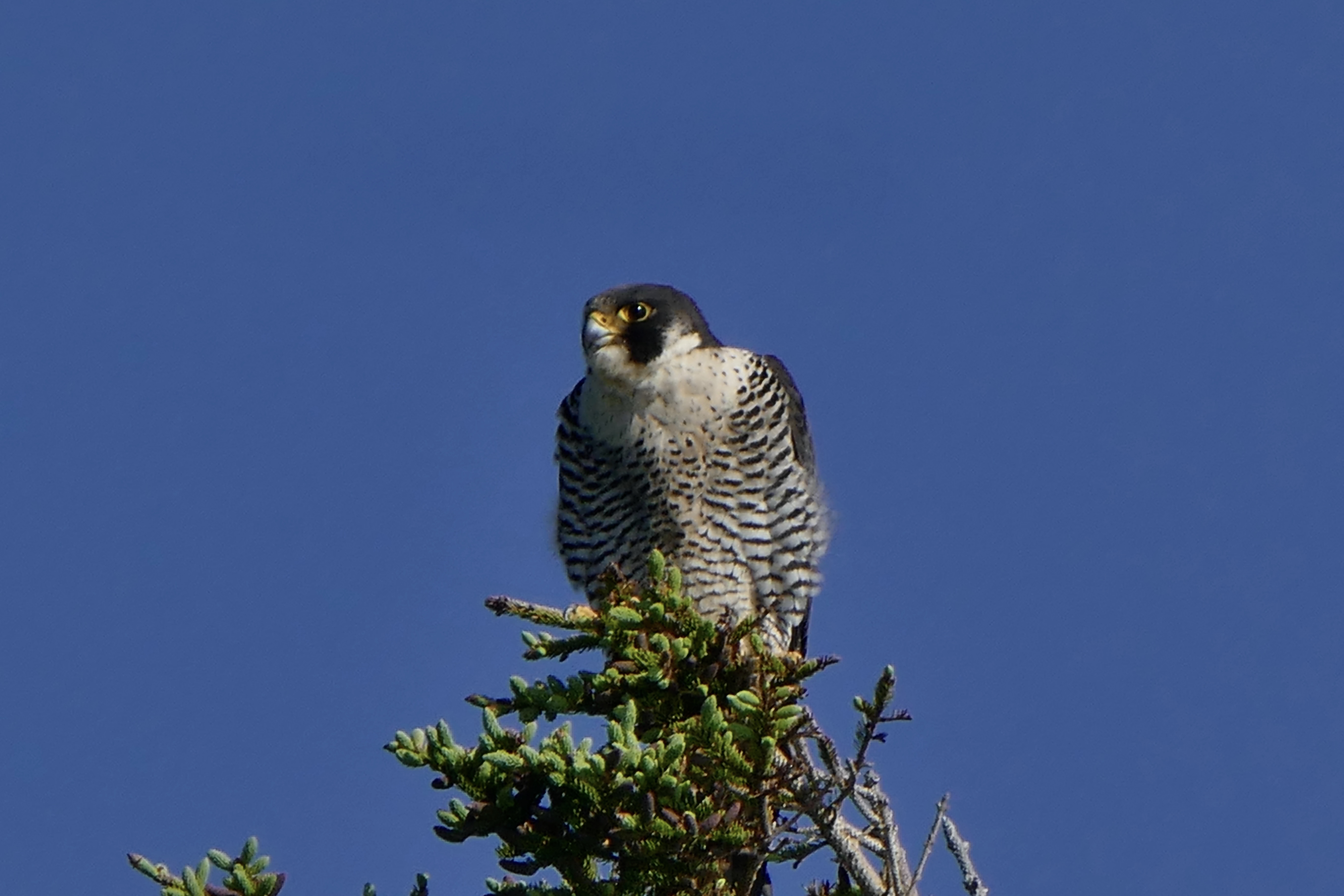
We did not come to a fence or wall for about 4 miles….heard some large hawks whistling much like a boy high over the meadow.
in Thoreau’s Journal:
We did not come to a fence or wall for about 4 miles….heard some large hawks whistling much like a boy high over the meadow.
in Thoreau’s Journal:
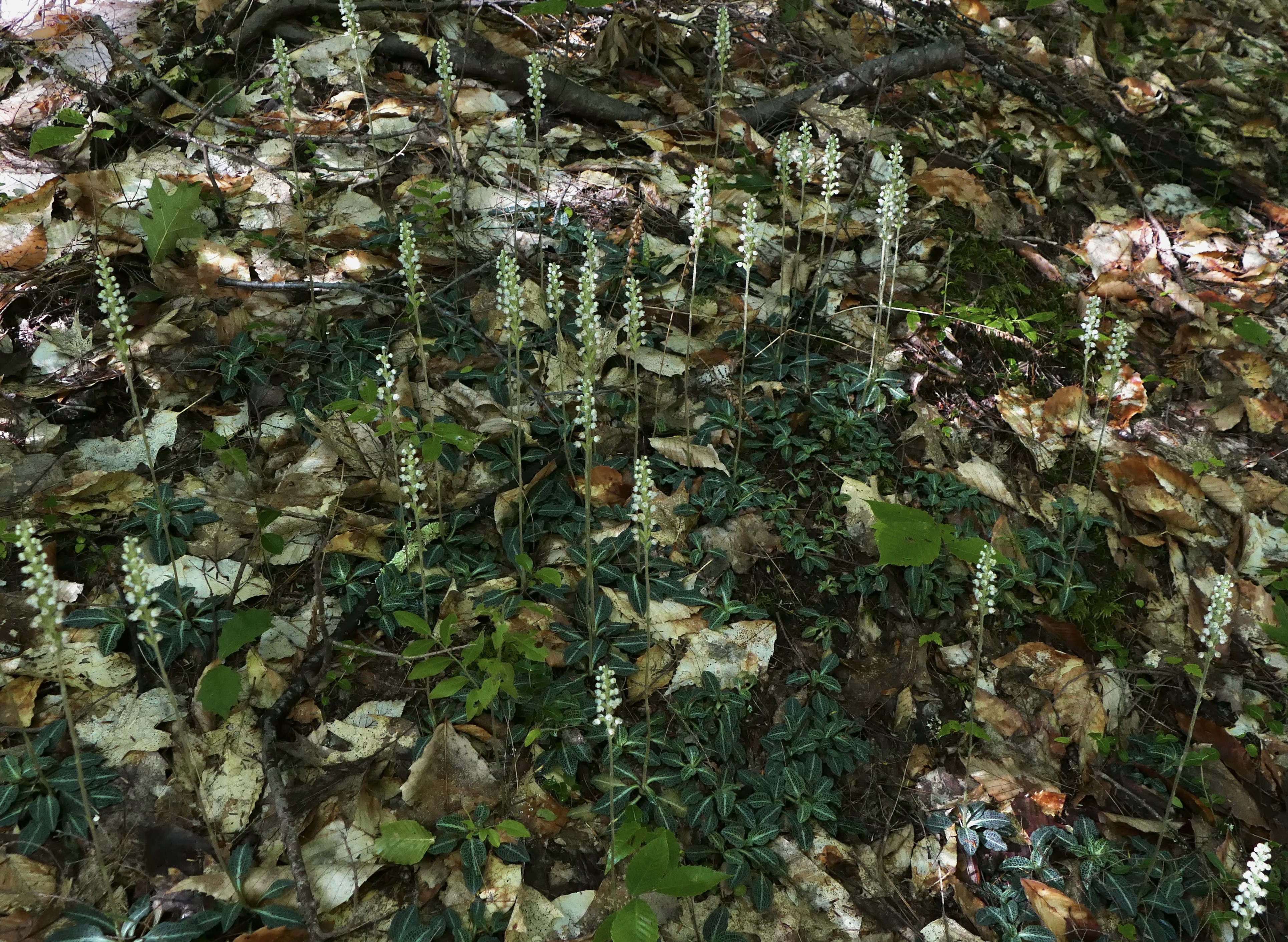
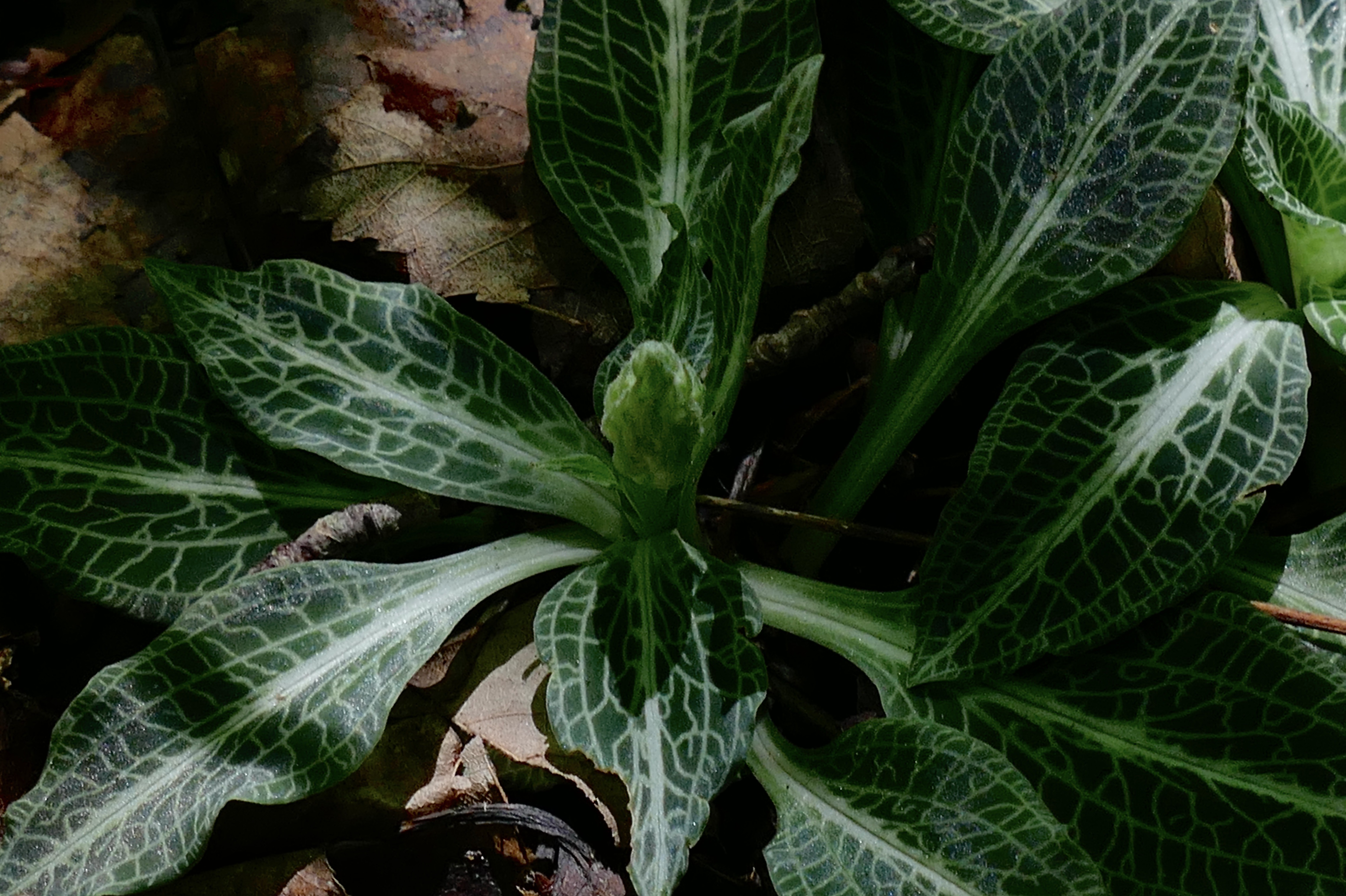
Goodyera Pubescens–Rattle-snake Plantain is ap. a little past its prime– It is very abundant on Clintonia swamp hill-side quite erect with its white spike 8 to 10 inches high on the sloping hillside the lower half or more turning brown–but the beautifully reticulated leaves which pave the moist shady hill-side about its base are the chief attraction. These oval leaves perfectly smooth like velvet to the touch about 1 1/2 inches long–have a broad longitudinal white white mid-rib & 4 to 6 white parallel veins very prettily & thickly connected by other conspicuous white veins transversely—& irregularly—all on a dark rich green ground.

Is it not the prettiest leaf that paves the forest floor? As a cultivated exotic it would attract great attention for its leaf– Many of the leaves are eaten. Is it by Partridges? It is a leaf of firm texture partially not apt to be eaten by insects or decayed– & does not soon wilt. So unsoiled and undecayed– It might be imitated on carpets & rugs–some old withered stems of last year still stand.
in Thoreau’s Journal:
That first frost on the 17th was the first stroke of winter aiming at the scalp of summer. Like a stealthy and insidious aboriginal enemy, it made its assault just before daylight in some deep and far-away hollow and then silently withdrew. Few have seen the drooping plants, but the news of this stroke circulates rapidly through the village. Men communicate it with a tone of warning. The foe is gone by sunrise, but some fearful neighbors who have visited their potato and cranberry patches report this stroke. The implacable and irresistible foe to all this tender greenness is not far off, nor can we be sure, any month in the year, that some scout from his low camp may not strike down the tenderest of the children of summer.

This foe will go on steadily increasing in strength and boldness, till his white camps will be pitched over all the fields, and we shall be compelled to take refuge in our strongholds, with some of summer’s withered spoils stored up in barns, maintaining ourselves and our herds on the seeds and roots and withered grass which we have embarned. Men in anticipation of this time have been busily collecting and curing the green blades all the country over, while they have still some nutriment in them. Cattle and horses have been dragging homeward their winter’s food.
in Thoreau’s Journal:
Yesterday was a hot day, but oh, this dull, cloudy, breezy, thoughtful weather in which the creak of the cricket sounds louder, preparatory to a cheerful storm! How grateful to our feelings is the approach of autumn! We have had no serious storm since spring.

What a salad to my spirits is this cooler, darker day!
in Thoreau’s Journal:
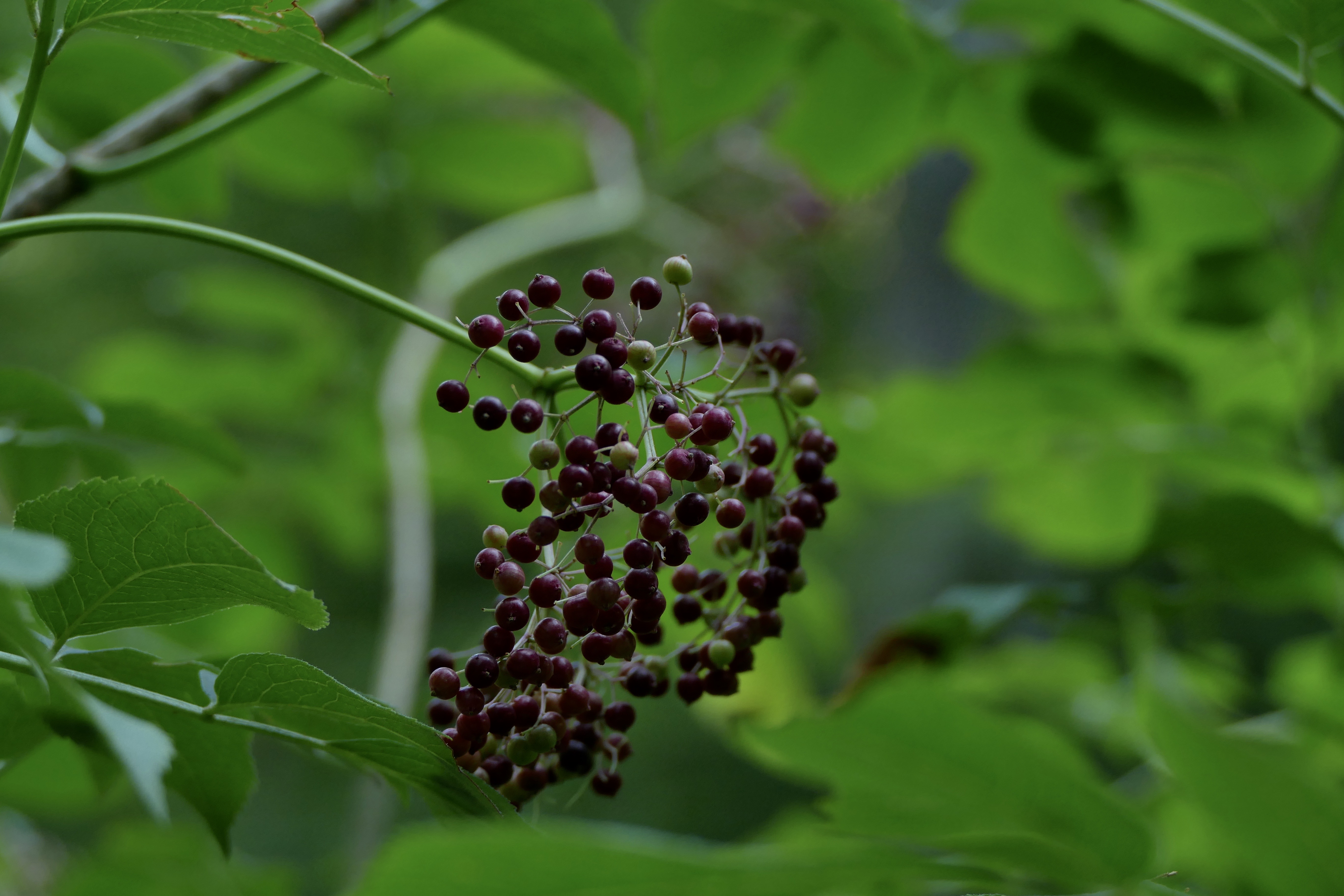
Elder berries are ripe.
in Thoreau’s Journal:
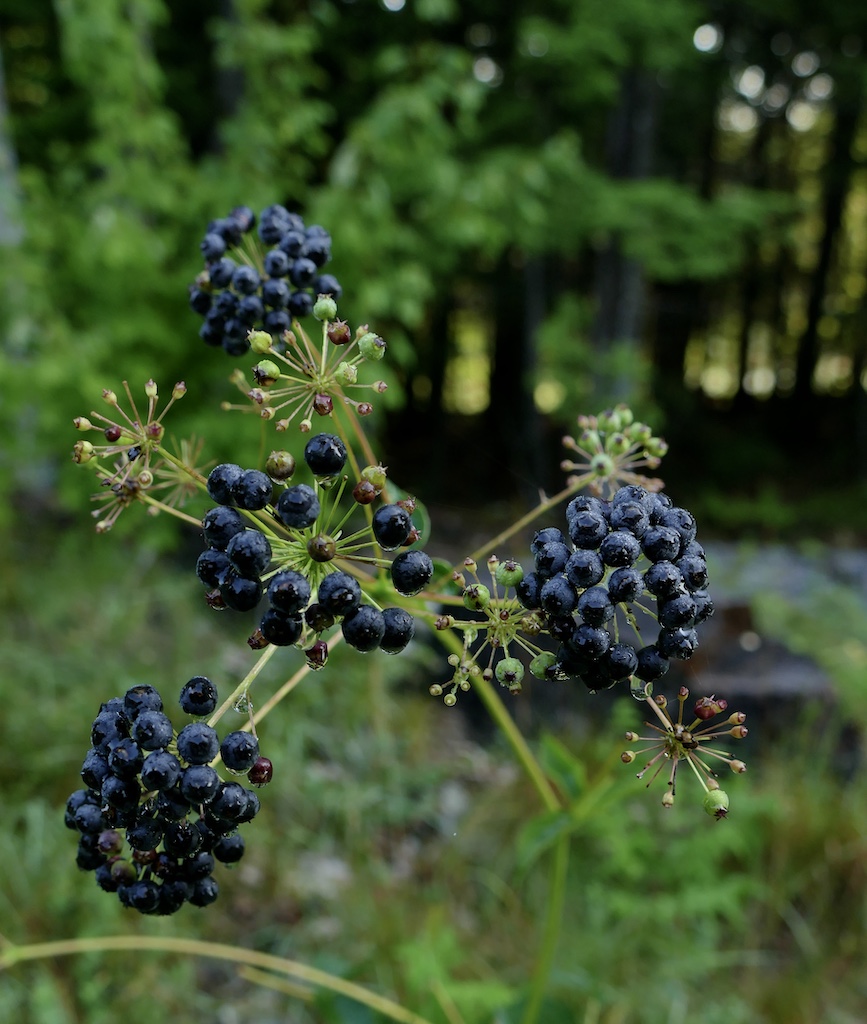
Carrion berries just beginning to be ripe.
in Thoreau’s Journal:
Walking may be a science, so far as the direction of a walk is concerned. I go again to the Great Meadows, to improve this remarkably dry season and walk where in ordinary times I cannot go.
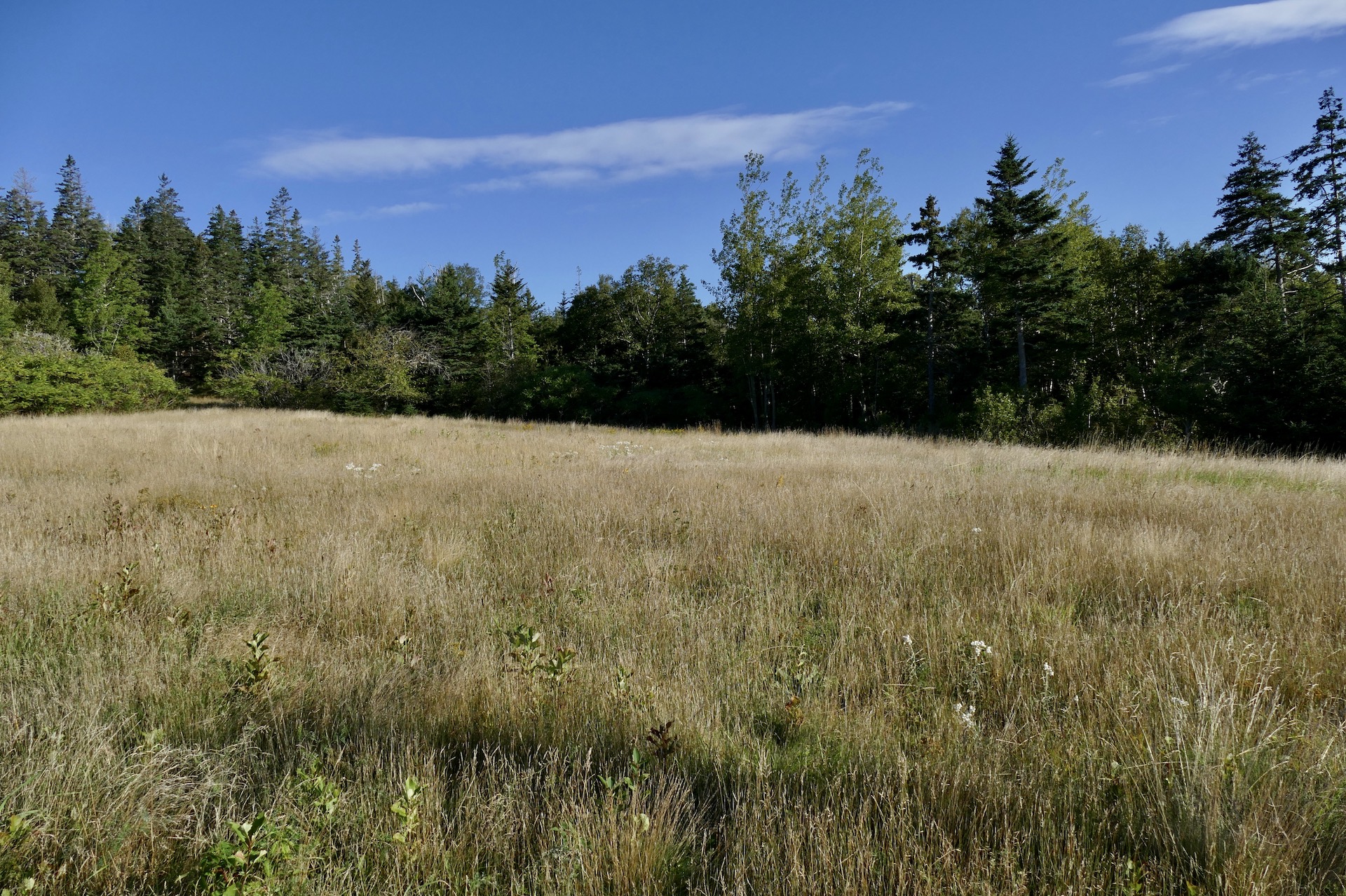
There is, no doubt, a particular season of the year when each place may be visited with most profit and pleasure, and it may be worth the while to consider what that season is in each case.
in Thoreau’s Journal:
….It is very pleasant to measure the progress of the seasons by this [the blossoming of vervain] & similar clocks— So you get not the absolute time but the true time of the season.

But I can measure the progress of the seasons only by observing a particular plant, for I notice that they are by no means equally advanced.
in Thoreau’s Journal:
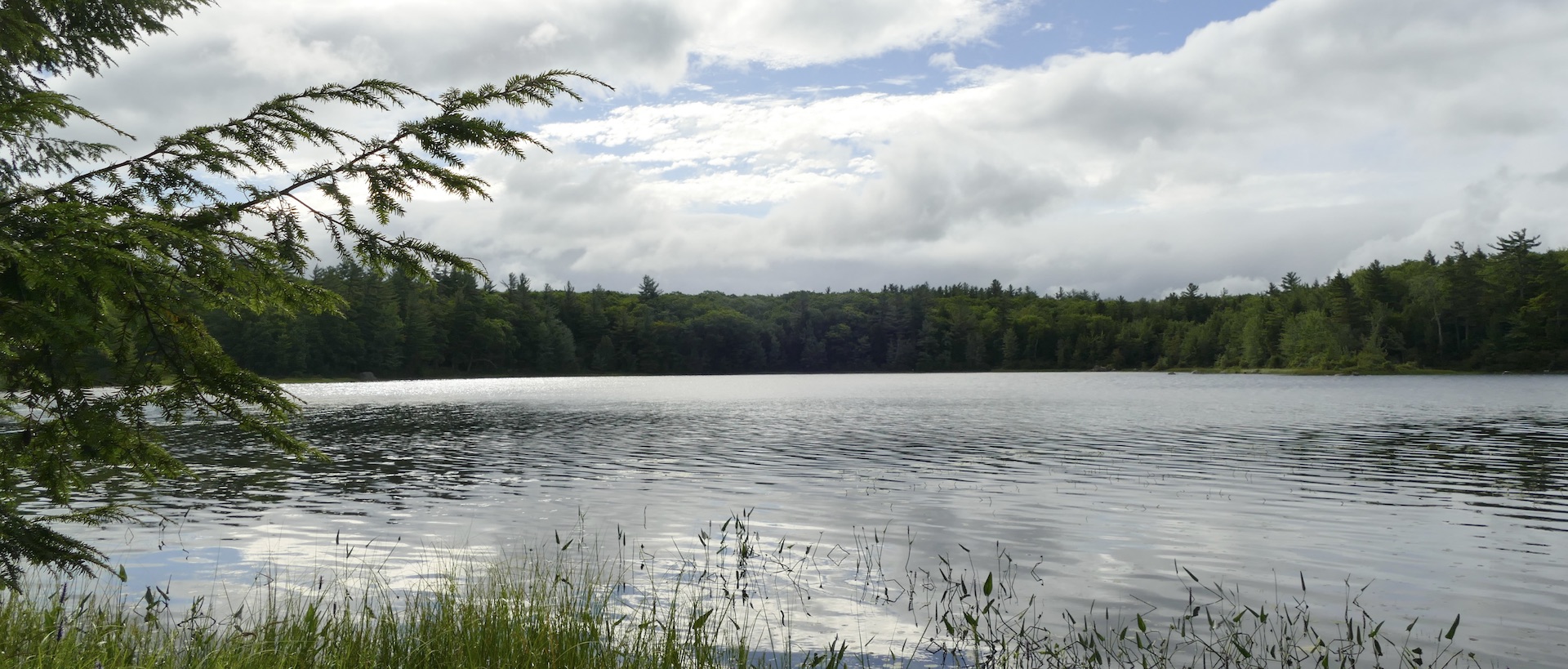
This day, too, has that autumnal character. I am struck by the clearness and stillness of the air, the brightness of the landscape, or, as it were, the reflection of light from the washed earth, the darkness and heaviness of the shade, as I look now up the river at the white maples and bushes, and the smoothness of the stream. If they are between you and the sun, the trees are more black than green. It must be owing to the clearness of the air since the rains, together with the multiplication of the leaves, whose effect has not been perceived during the mists of the dog-days. But I cannot account for this peculiar smoothness of the dimpled stream – unless the air is stiller than before – nor for the peculiar brightness of the sun’s reflection from its surface. I stand on the south bank, opposite the black willows, looking up the full stream, which, with a smooth, almost oily and sheeny surface, comes welling and dimpling onward, peculiarly smooth and bright now at 4 P. M., while the numerous trees seen up the stream – white maples, oaks, etc. – and the bushes look absolutely black in the clear, bright light.
in Thoreau’s Journal:
It is a glorious and ever-memorable day. We observe attentively the first beautiful days in the spring, but not so much in the autumn. We might expect that the first fair days after so much rain would be remarkable. It is a day affecting the spirits of men, but there is nobody to enjoy it but ourselves. What does the laborer ox and the laborer man care for the beautiful days? Will the haymaker when he comes home tonight know that this has been such a beautiful day? This day itself has been the great phenomenon, but will it be reported in any journal, as the storm is, and the heat? It is like a great and beautiful flower unnamed. I see a man trimming willows on the Sudbury causeway and others raking hay out of the water in the midst of all this clarity and brightness, but are they aware of the splendor of this day? The mass of mankind, who live in houses or shops or are bent upon their labor out of doors, know nothing of the beautiful days which are passing above and around them. Is not such a day worthy of a hymn?
It is such a day as mankind might spend in praising and glorifying nature. It might be spent as a natural sabbath, if only all men would accept the hint, devoted to unworldly thoughts. The first bright day of the fall, the earth reflector. The dog-day mists are gone; the washed earth shines; the cooler air braces man. No summer day is so beautiful as the fairest spring and fall days.
in Thoreau’s Journal:
Elizabeth Hoar shows me the following plants which she brought from the Wht Mts the 16th ult. Chiogenes hispidula creeping snow-berry

also called Gaultheria & also vaccinium hispidula–in fruit. –– with a partridge berry scent & taste.
in Thoreau’s Journal:
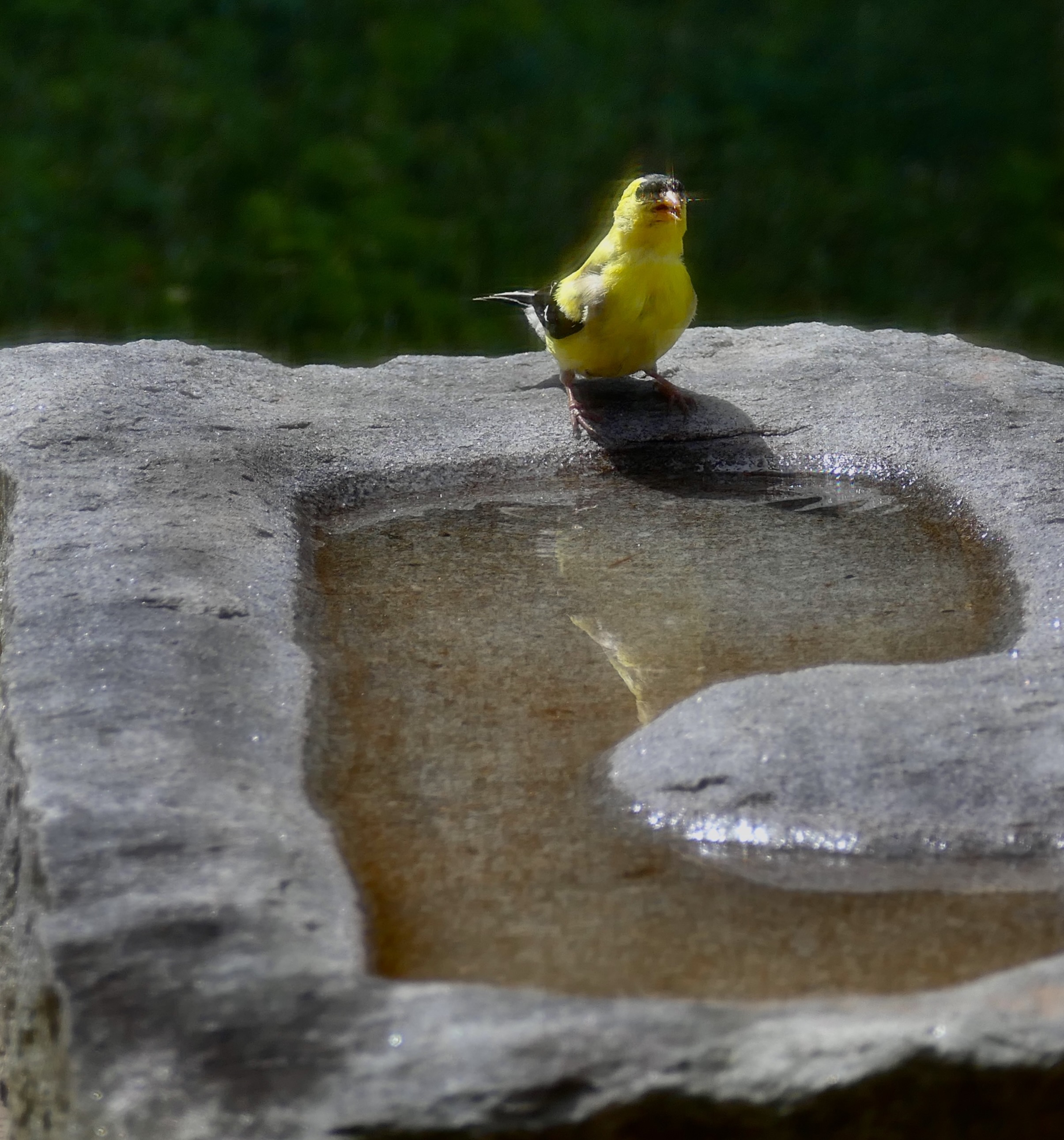
I see a goldfinch go twittering through the still, louring day, and am reminded of the peeping flocks which will soon herald the thoughtful season.
Ah! If I could so live that there should be no desultory moment in all my life! That in each season when some part of nature especially flourishes, then a corresponding part of me may not fail to flourish….I am less somnolent for the cool season. I wake to a perennial day.
in Thoreau’s Journal:
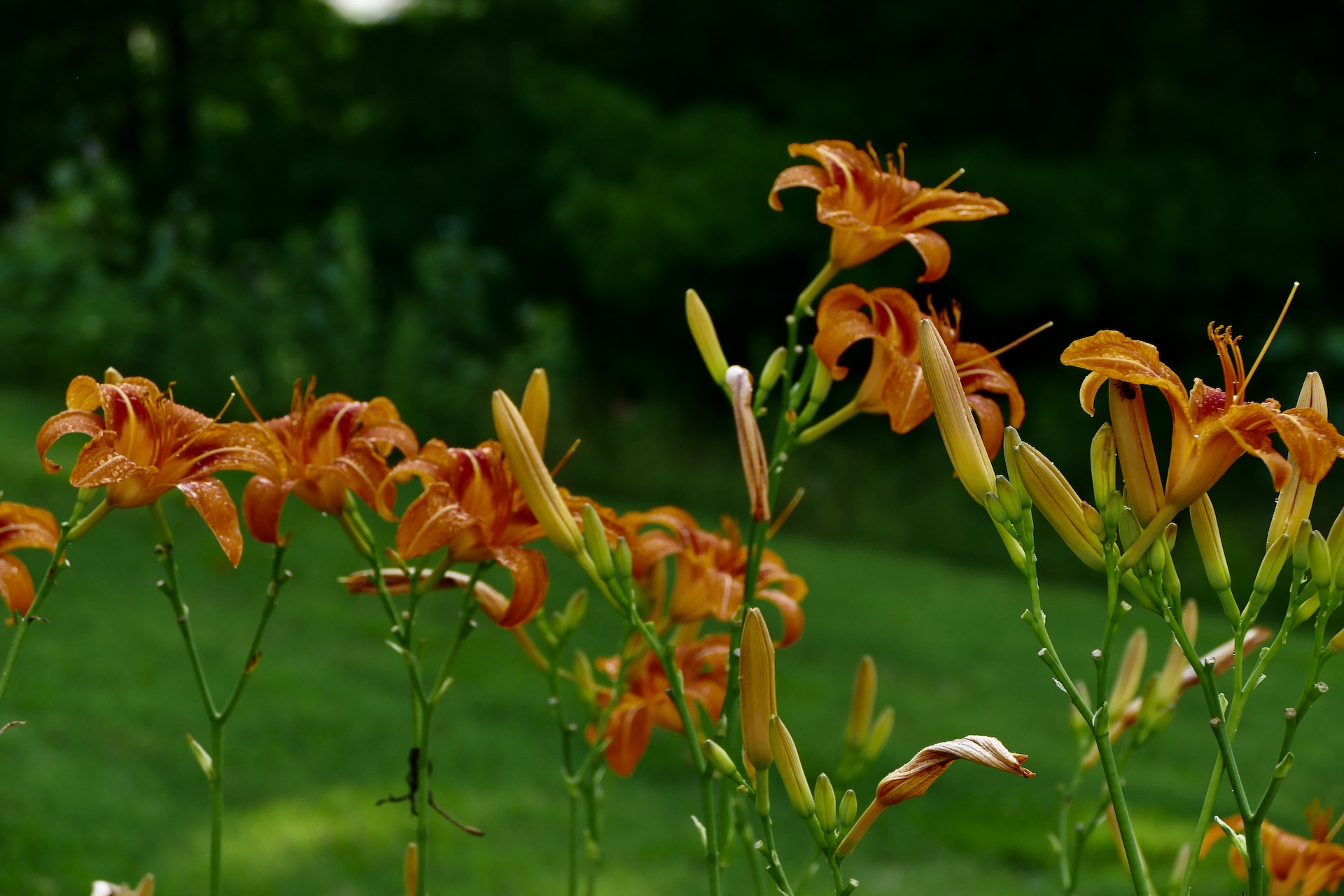
What a variety of old garden herbs – mints, etc. – are naturalized along an old settled road, like this to Boston which the British travelled! And then there is the site, apparently, of an old garden by the tanyard, where the spearmint grows so rankly. I am intoxicated with the fragrance. Though I find only one new plant (the cassia), yet old acquaintances grow so rankly, and the spearmint intoxicates me so, that I am bewildered, as it were by a variety of new things. An infinite novelty. All the roadside is the site of an old garden where fragrant herbs have become naturalized, – hounds-tongue, bergamot, spearmint, elecampane, etc. I see even the tiger lily, with its bulbs, growing by the roadside far from houses (near Leighton’s graveyard).
I think I have found many new plants, and am surprised when I can reckon but one. A little distance from my ordinary walk and a little variety in the growth or luxuriance will produce this illusion. By the discovery of one new plant all bounds seem to be infinitely removed.
in Thoreau’s Journal:
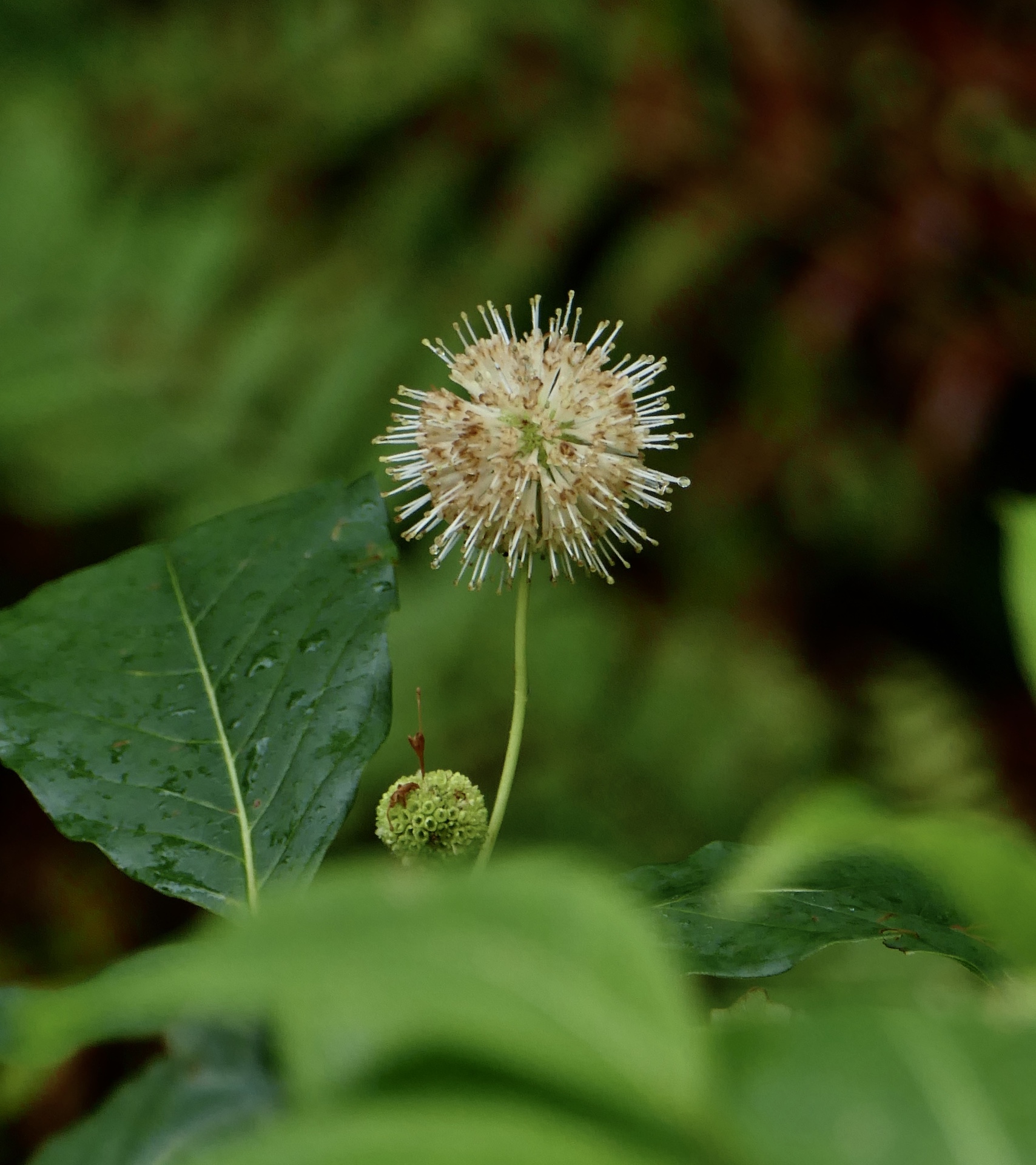
The button bush is now nearly altogether out of bloom––so that it is too late to see the rivers brink in its perfection–– It must be seen between the blooming of the mikania & the going out of bloom of the button bush––Before you feel this sense of lateness in the year––before the meadows are shorn––and the grass of hills & pastures is thus withered & russet––
in Thoreau’s Journal:
How long we may have gazed on a particular scenery and think that we have seen and known it, when, at length, some bird or quadruped comes and takes possession of it before our eyes, and imparts to it a wholly new character.

The heron uses these shallows as I cannot. I give them up to him.
in Thoreau’s Journal:

The change decay & fall of the brakes in woods &c is perhaps more autumnal that any sight–– They make more show than the aralia. Some are quite brown & shriveled––others––yellow––others yellow & brown––others yellow, brown, & green––making a very rich & particolored or checkered work as of plaited straw-bead or straw work––or ivory–– Others are still green with brown spots. In respect to these and many other plants of this size & habitat it is already fall. They stand yellow & yellowing all through the woods–– None perhaps so conspicuous as the brake–– At thrush alley was surprised to behold how many birch leaves had turned yellow––every other one––while clear fresh leather colored ones strewed the ground with a pretty thick bed under each tree–– So far as the birches go it is a perfect autumnal scene there––
in Thoreau’s Journal:

The smallest of nature’s works fits the farthest and widest view, as if it had been referred in its bearings to every point in space. It harmonizes with the horizon line and the orbits of the planets.
in Thoreau’s Journal:
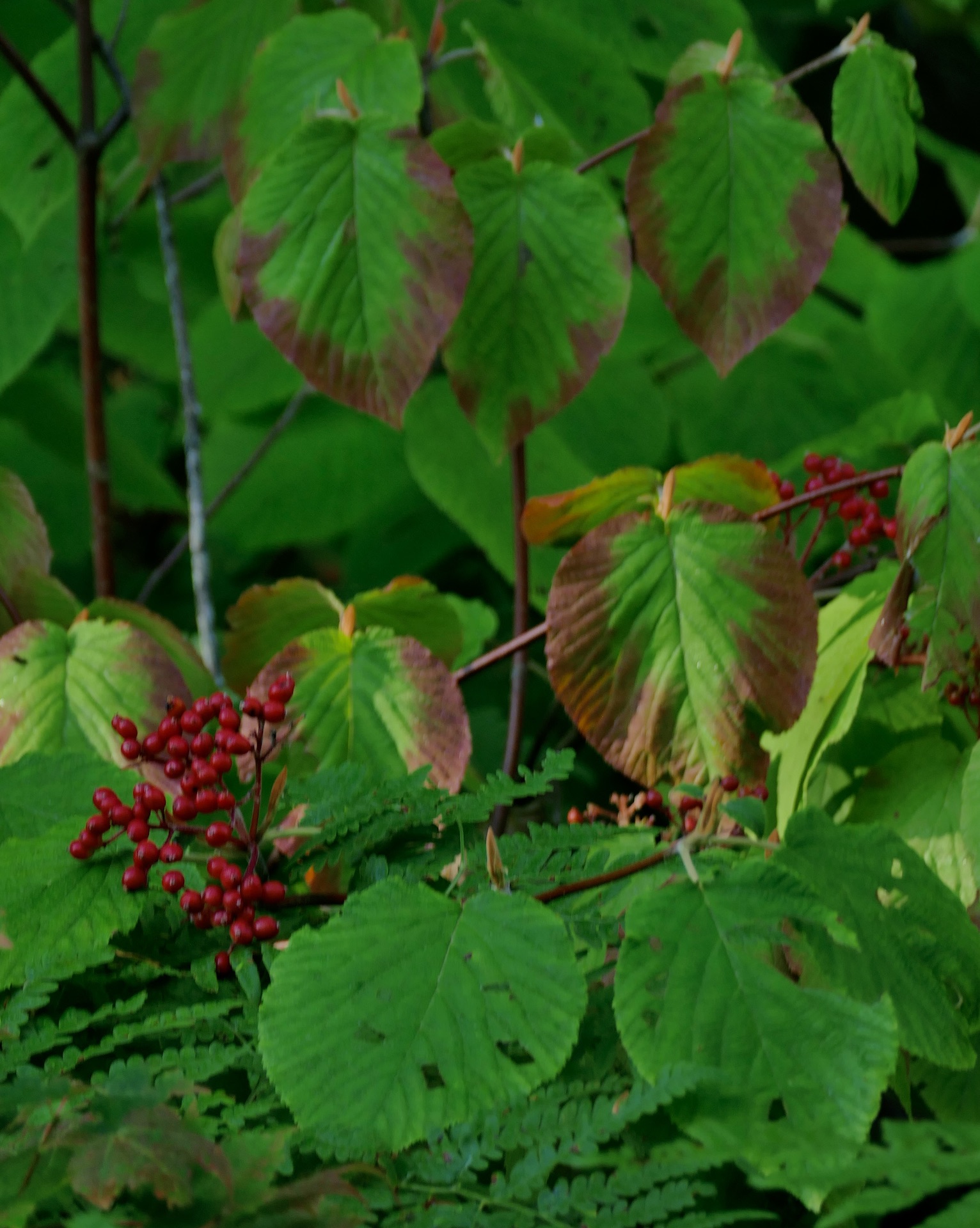
I see some naked viburnum berries red and some purple now. There are berries which men do not use, like choke-berries, which here in Hubbard’s Swamp grow in great profusion and blacken the bushes. How much richer we feel for this unused abundance and superfluity! Nature would not appear so rich, the profusion so rich, if we knew a use for everything.
in Thoreau’s Journal:
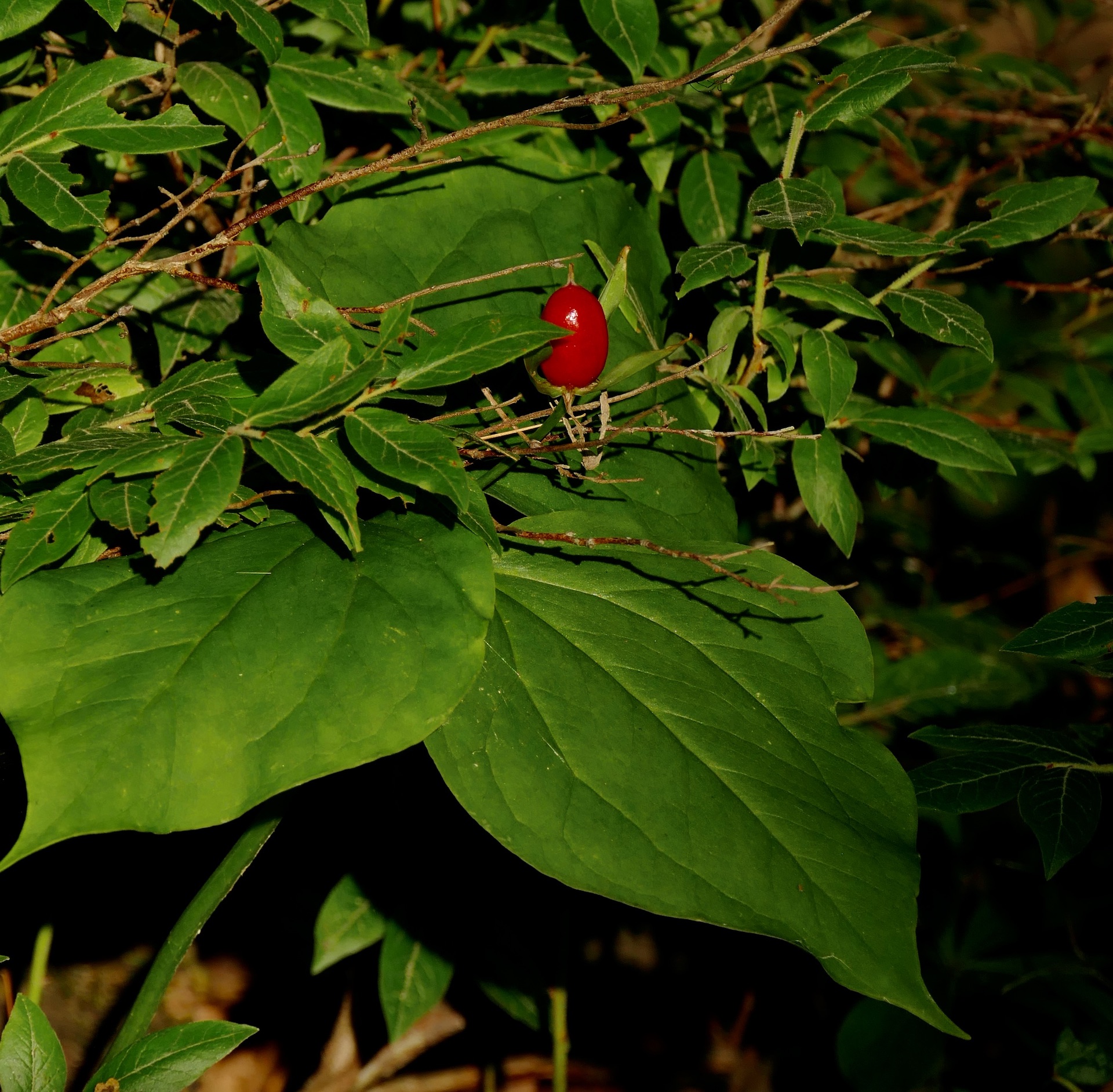
The trillium fruit––(varnished & stained cherry wood) now ripe.
in Thoreau’s Journal:
It is vain to try to write unless you feel strong in the knees.
Any book of great authority and genius seems to our imagination to permeate and pervade all space. Its spirit, like a more subtle ether, sweeps along with the prevailing winds of the country. Its influence conveys a new gloss to the meadows and the depths of the wood, and bathes the huckleberries on the hills, as sometimes a new influence in the sky washes in waves over the fields and seems to break on some invisible beach in the air. All things confirm it. It spends the mornings and the evenings.


You must be logged in to post a comment.