This is a day of sunny water. As I walk along the bank of the river I look down a rod & see distinctly the fishes and the bottom. The cardinals are in perfection—standing in dark recesses of the green shore, or in the open meadow. They are fluviatile & stand along some river or brook—like myself.
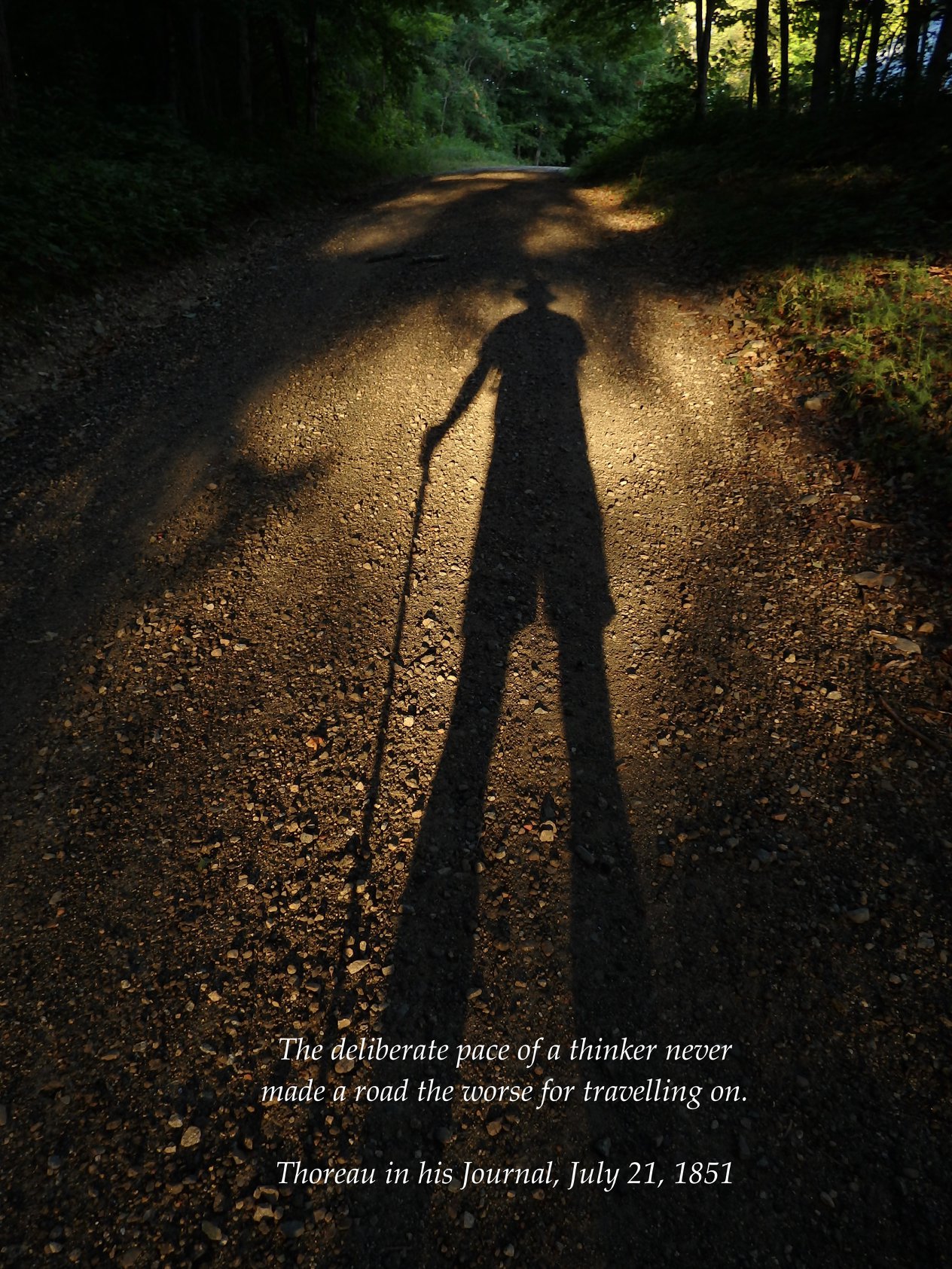
A man must generally get away some hundreds or thousands of miles from home before he can be said to begin his travels. Why not begin his travels at home? …. It takes a man of genius to travel in his own country, in his native village; to make any progress between his door and his gate.
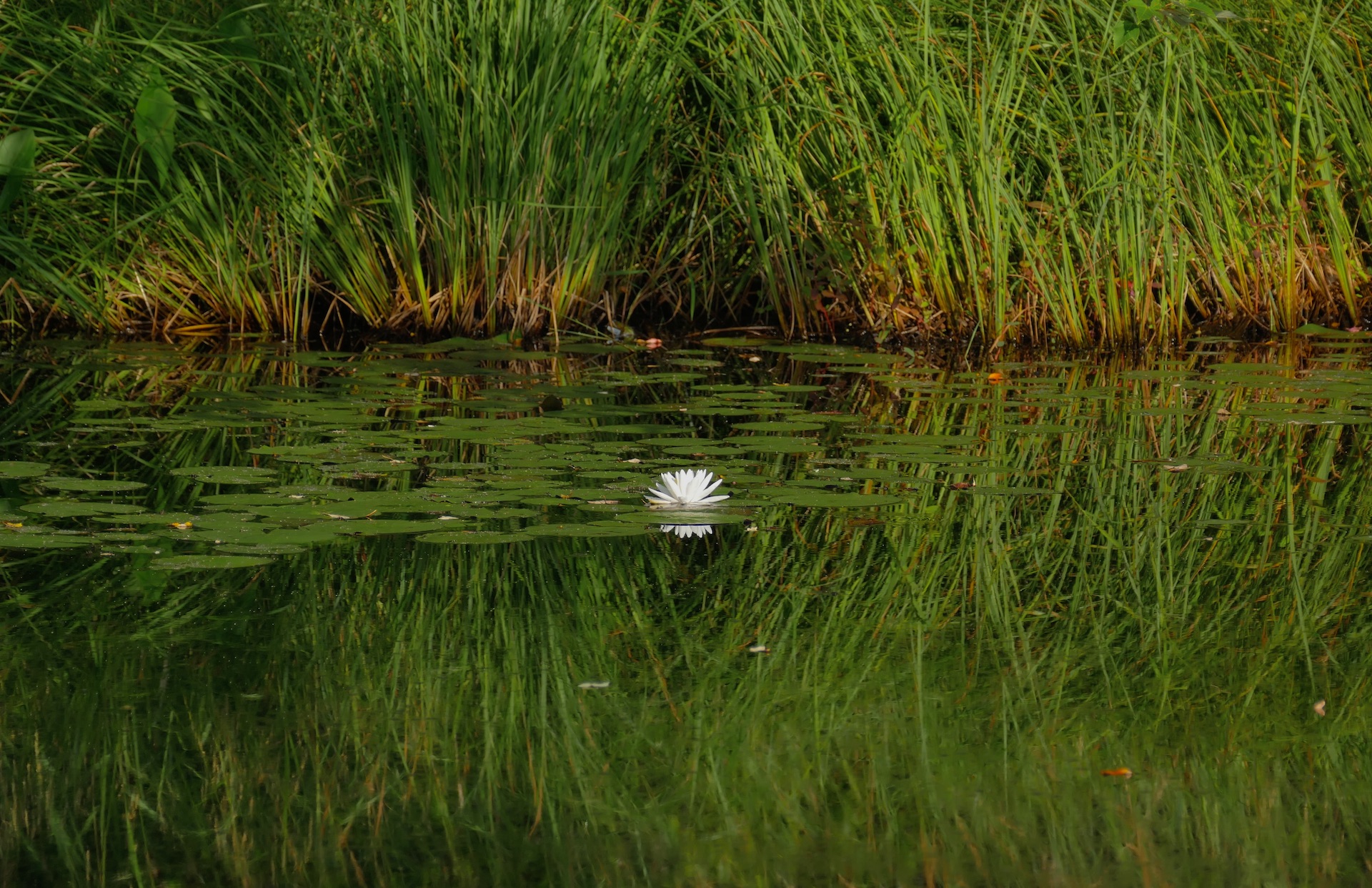
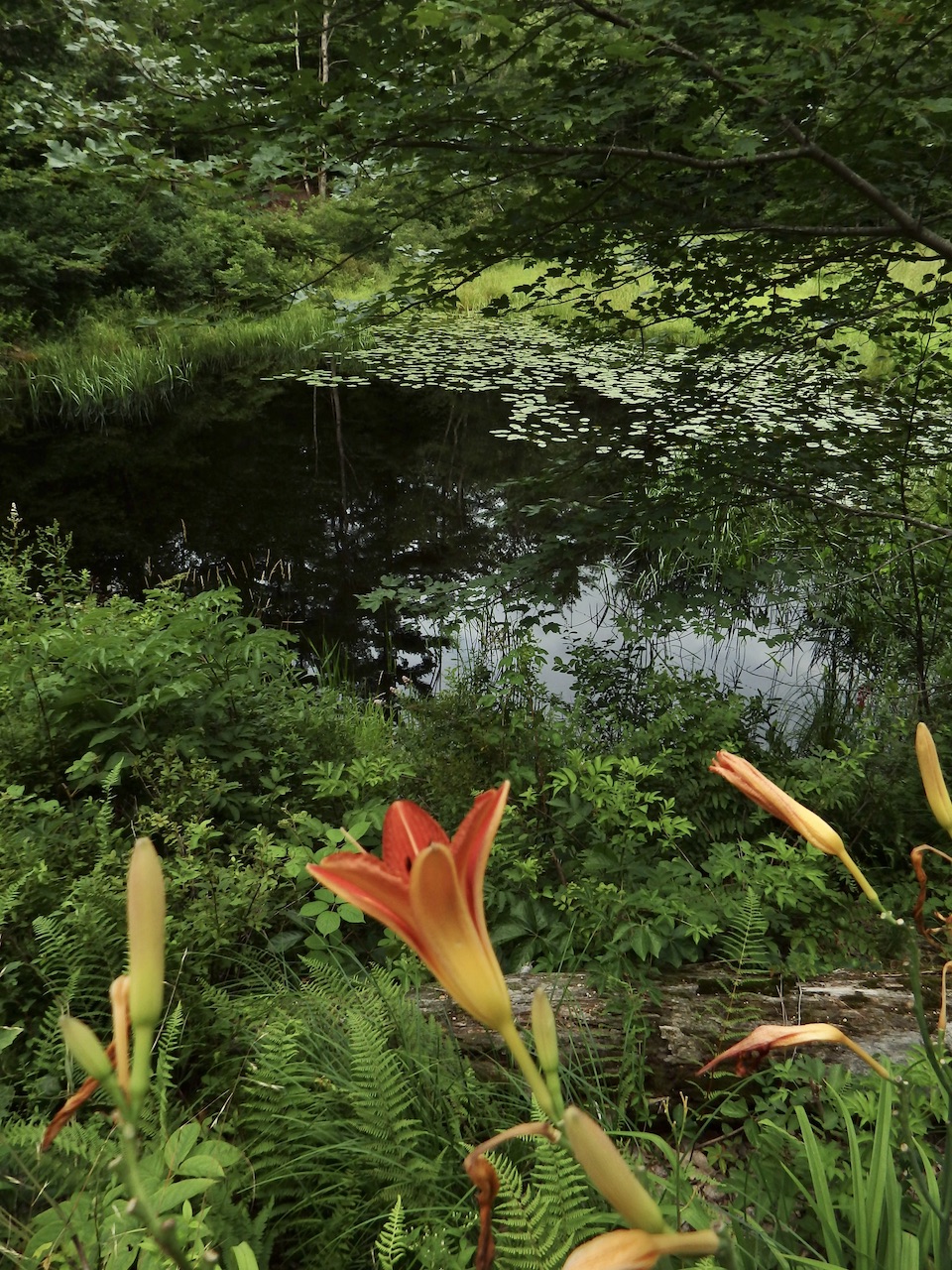
The best show of lilies is on the west side of the bay, in Cyrus Hosmer’s meadow, above the willow- row. Many of them are not open at 10 o’clock a. m. I noticed one with the sepals perfectly spread flat on the water, but the petals still held together in a sharp cone, being held by the concave, slightly hooked points. Touching this with an oar, it opens quickly with a spring. The same with many others, whose sepals were less spread. Under the influence of the light and warmth, the petals elevate or expand themselves in the middle, becoming more and more convex, till at last, being released at their overlapping points, they spring open and quickly spread themselves equally, revealing their yellow stamens.
How satisfactory is the fragrance of this flower! It is the emblem of purity. It reminds me of a young country maiden. It is just so simple and unproved. Wholesome as the odor of the cow. It is not a highly refined odor, but merely a fresh youthful morning sweetness. It is merely the unalloyed sweetness of the earth and the water; a fair opportunity and field for life; like its petals, uncolored by any experience; a simple maiden on her way to school, her face surrounded by a white ruff. But how quickly it becomes the prey of insects
Here, in sight of Wachusett and these rivers and woods, my mind goes singing to itself of other themes than taxation. The rush sparrow sings still unintelligible, as from beyond a depth in me which I have not fathomed, where my future lies folded up. I hear several faint notes, quite outside me, which populate the waste.
This is such fresh and flowing weather, as if the waves of the morning had subsided over the day.
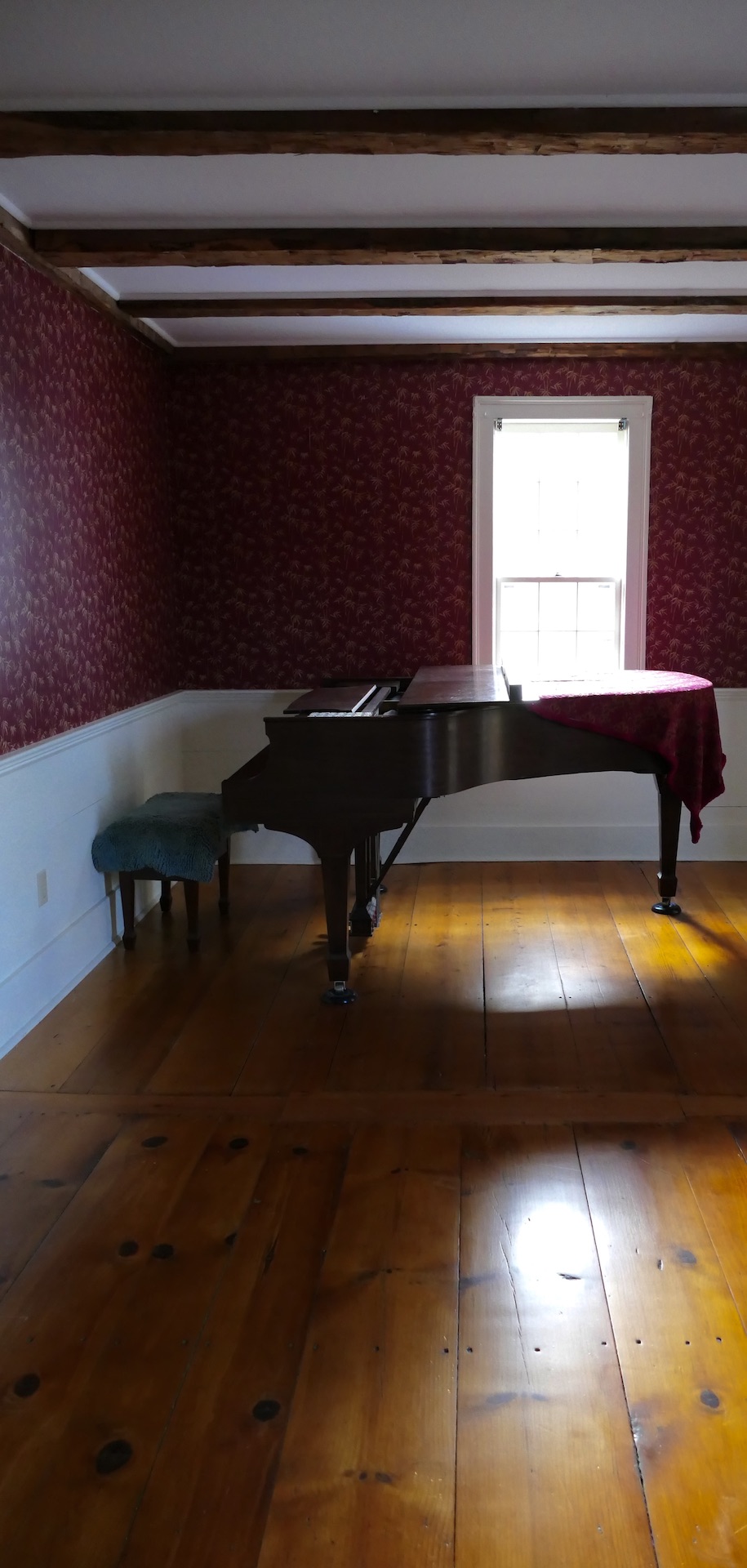
I hear a cricket creak in the shade; also the sound of a distant piano. The music reminds me of imagined heroic ages; it suggests such ideas of human life and the field which it affords as the few noblest passages of poetry. Those few interrupted strains which reach me through the trees suggest the same thoughts and aspirations that all melody, by whatever sense appreciated, has ever done. I am affected. What coloring variously fair and intense our life admits of! How a thought will mould and paint it. Impressed by some vague vision, as it were, elevated into a more glorious sphere of life, we no longer know this, and we can deny its existence. We say we are enchanted, perhaps. But what I am impressed by is the fact that this enchantment is no delusion. So far as truth is concerned, it is a fact such as what we call our actual existence, but it is a far higher and more glorious fact. It is evidence of such a sphere, of such possibilities. It is its truth and reality that affect me.
A thrumming of piano-strings beyond the gardens and through the elms. At length the melody steals into my being. I know not when it began to occupy me. By some fortunate coincidence of thought or circumstance I am attuned to the universe, I am fitted to hear, my being moves in a sphere of melody, my fancy and imagination are excited to an inconceivable degree. This is no longer the dull earth on which I stood. It is possible to live a grander life here; already the steed is stamping, the knights are prancing; already our thoughts bid a proud farewell to the so-called actual life and its humble glories. Now this is the verdict of a soul in health. But the soul diseased says that its own vision and life alone is true and sane. What a different aspect will courage put upon the face of things! This suggests what a perpetual flow of spirit would produce.
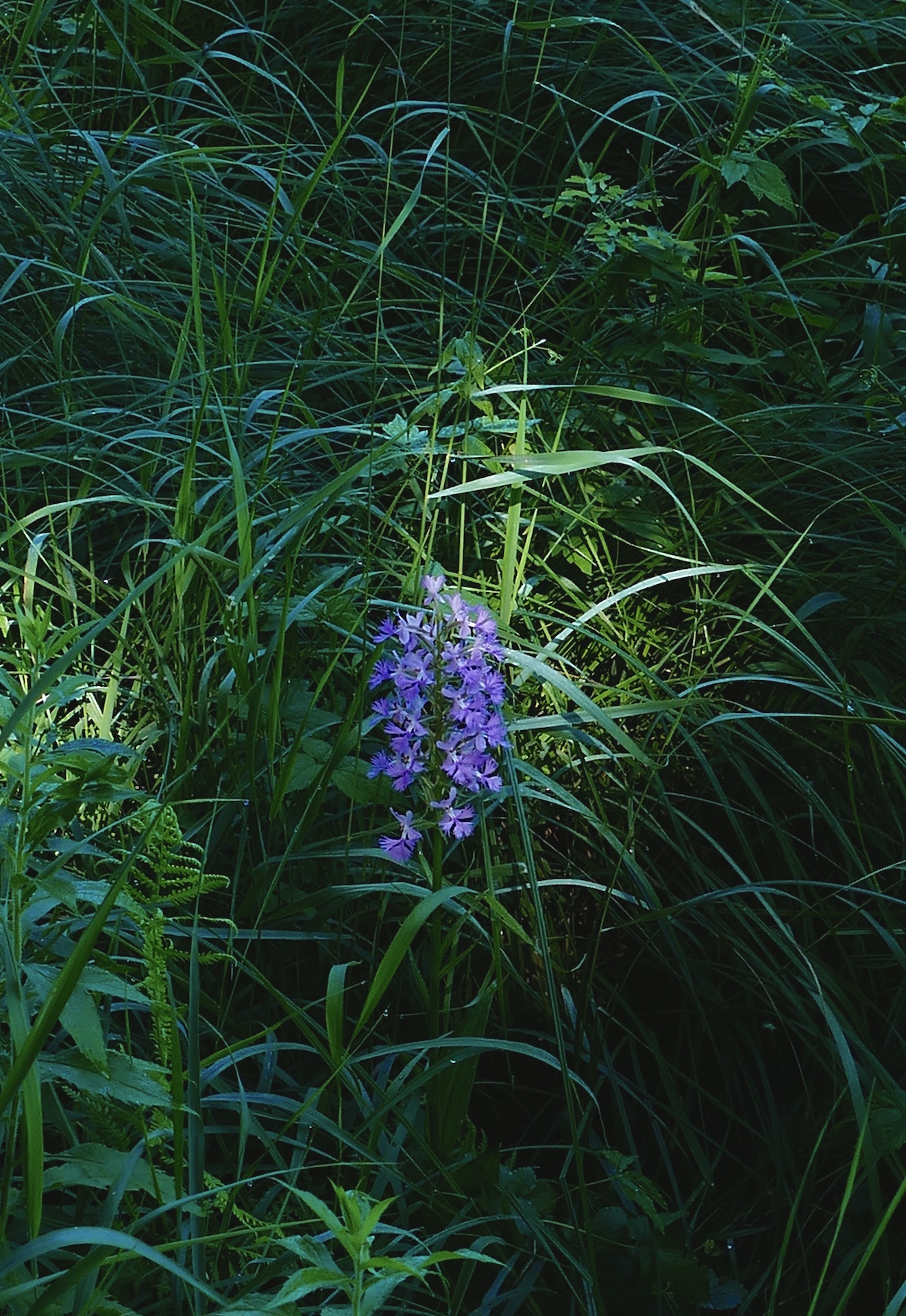
It is a new era with the flowers when the small purple fringed orchis as now is found in shady swamps standing along the brooks. (It appears to be alone of its class— Not to be overlooked it has so much flower though not so high colored as the Arethusa).
Occasionally we rise above the necessity of virtue into an unchangeable morning light, in which we have not to choose in a dilemma between right and wrong, but simply to live right on and breathe the circumambient air.
There is no name for this life unless it be the very vitality of vita.
How long is it since I heard a veery? Do they go or become silent when the goldfinch heralds the autumn? Do not all flowers that blossom after mid-July remind us of the fall?
After midsummer we have a belated feeling as if we had all been idlers––& are forward to see in each sight––& hear in each sound some presage of fall.–– just as in mid-age man anticipates the end of life.
I am interested in an indistinct prospect, a distant view, a mere suggestion often, revealing an almost wholly new world to me. I rejoice to get, and am apt to present, a new view.
Methinks the season culminated about the middle of this month––That the year was of indefinite promise before–– ––but that after the 1st intense heats we postponed the fulfillment of many of our hopes for this year––& having as it were attained the ridge of the summer––commenced to descend the long slope toward winter––the afternoon & down hill of the year–– Last evening it was much cooler––& I heard a decided fall sound of crickets––
The grandeur of these stupendous masses of clouds, tossed into such irregular greatness across the sky, seems thrown away on the meanness of my employment. The drapery seems altogether too rich for such poor acting.
By my intimacy with nature I find myself withdrawn from man. My interest in the sun and the moon, in the morning and the evening, compels me to solitude.
The haymakers getting in the hay from Hubbard’s meadow tell me the cock says we are going to have a long spell of dry weather or else very wet. ” Well, there ‘s some difference between them,” I answer; “how do you know it?” “I just heard a cock crow at noon, and that ‘s a sure sign it will either be very dry or very wet.”
For a week or more I have perceived that the evenings were considerably longer and of some account to sit down & write in. Ate an Early-Harvest apple of my own raising yesterday––not quite ripe. The scent of some very early ones which I have passed in my walks, imparting some ripeness to the year, has excited me some what. It affects me like a performance a poem a thing done––and all the year is not a mere promise of Nature’s. How far behind the spring seems now––farther off perhaps than ever––for this heat & dryness is most opposed to spring. Where I sought for flowers in April & May I do not think to go now––it is either drought & barrenness or fall there now.
The reign of moisture is long since over –– For a long time the year feels the influence of the snows of winter & the long rains of spring–– But now how changed! It is like another & a fabulous age to look back on. When earth’s veins were full of moisture & violets burst out on every hill-side. Spring is the reign of water–– Summer of heat & dryness. Winter of cold. Whole families of plants that lately flourished have disappeared. Now the phenomena are tropical. Let our summer last long enough & our land would wear the aspect of the tropics.–– The luxuriant foliage & growth of all kinds shades the earth & is converting every copse into a jungle. Vegetation is rampant –– There is not such rapid growth it is true, but it slumbers like a serpent that has swallowed its prey. Summer is one long drought. Rain is the exception –– All the signs of it fail for it is dry weather–– Though it may seem so the current year is not peculiar in this respect. It is a slight labor to keep account of all the showers the rainy days of of a summer–– You may keep it on your thumbnail.
The mind is subject to moods, as the shadows of the clouds that pass over the earth. Pay not too much heed to them. Let not the traveller stop for them. They consist with the fairest weather. By the mood of my mind, I suddenly felt dissuaded from continuing my walk, but I observed at the same instant that the shadow of a cloud was passing over [the] spot on which I stood, though it was of small extent, which, if it had no connection with my mood, at any rate suggested how transient and little to be regarded that mood was. I kept on, and in a moment the sun shone on my walk within and without.
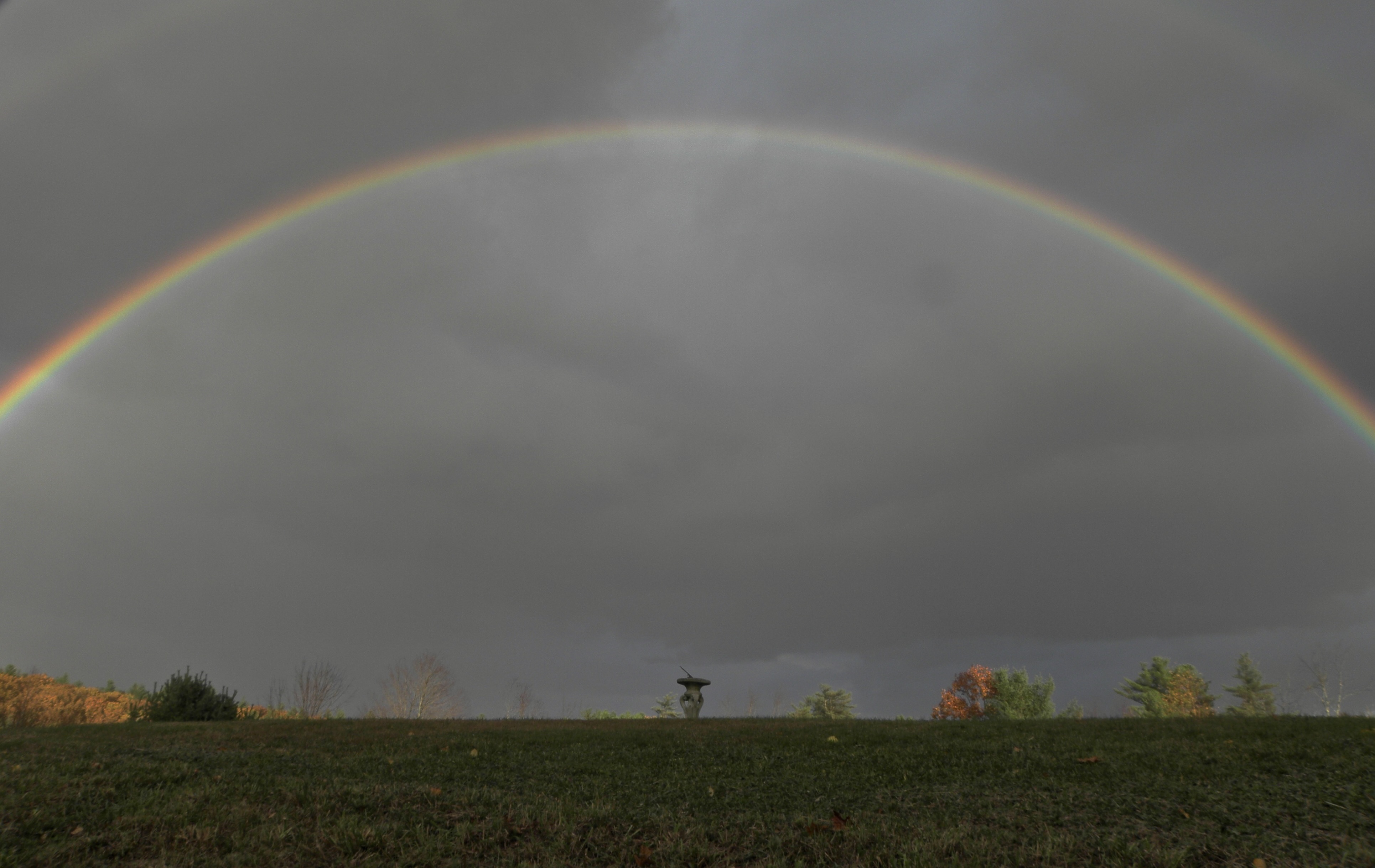
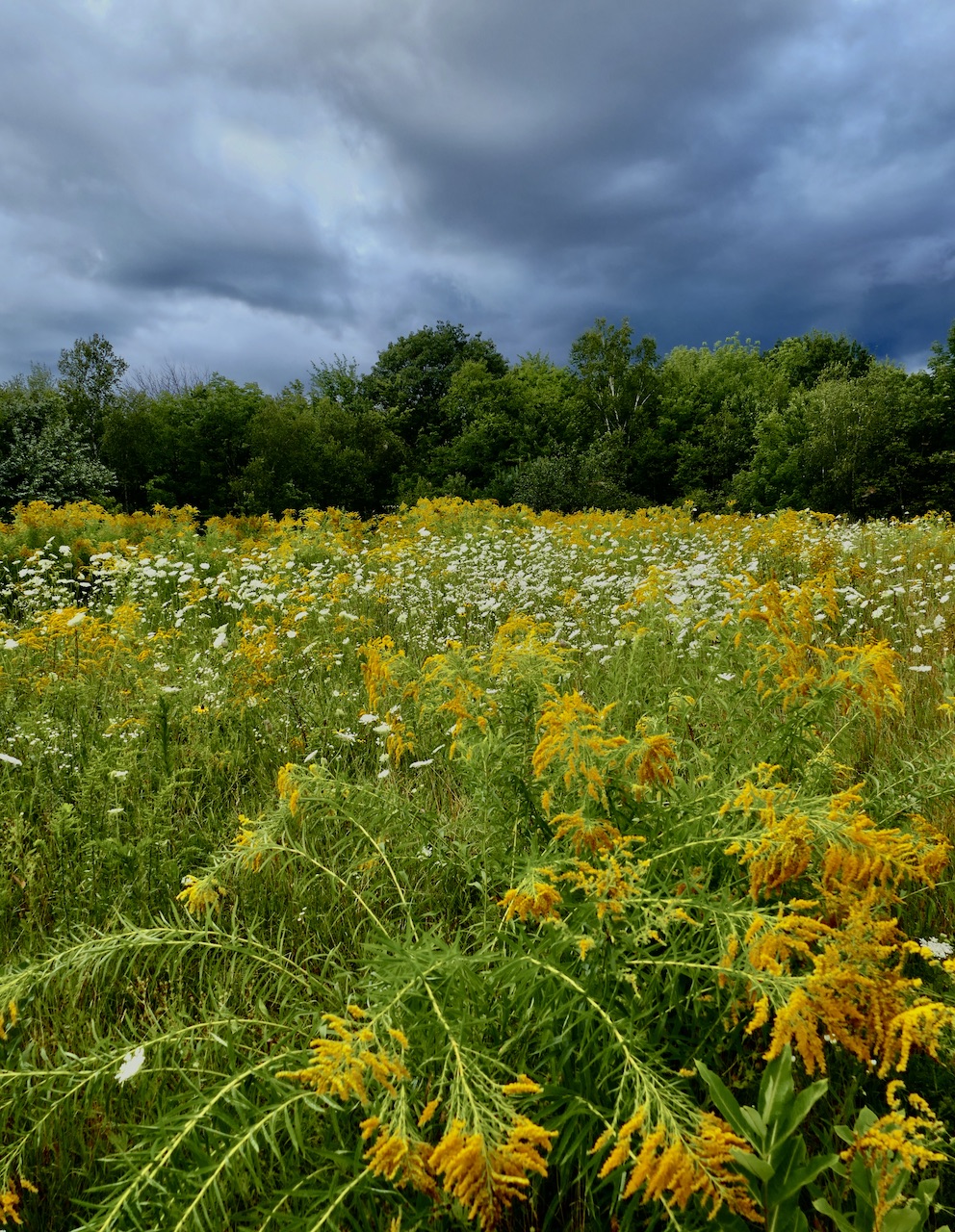
A muttering thunder-cloud in northwest gradually rising and with its advanced guard hiding in the sun and now and then darting forked lightning. The wind rising ominously also drives me home again.
At length down it comes upon the thirsty herbage, beating down the leaves with grateful, tender violence and slightly cooling the air; but all the thunder and lightning was in its van. How soon it swept over and we saw the flash in the southeast! Corn in blossom these days.











You must be logged in to post a comment.