
in Thoreau’s Journal:
Watching the ripples fall and dart across the surface of low-lying and small woodland lakes is one of the amusements of these windy March and April days.
in Thoreau’s Journal:
Watching the ripples fall and dart across the surface of low-lying and small woodland lakes is one of the amusements of these windy March and April days.

in Thoreau’s Journal:
The epigaea is not quite out. The earliest peculiarly woodland herbaceous flowers are epigaea, thalictrum, and (by the first of May) Viola pedata. These grow quite in the woods amid dry leaves, nor do they depend so much on water as the very earliest flowers. I am perhaps more surprised by the growth of the Viola pedata leaves by the side of paths amid the shrub oaks, and half covered with oak leaves, than by any other growth, the situation is so dry and the surrounding bushes so apparently lifeless.

in Thoreau’s Journal:
As to which are the earliest flowers, it depends on the character of the season, and ground bare or not, meadows wet or dry, etc., etc., also on the variety of soils and localities within your reach.

in Thoreau’s Journal:
One thing I may depend on, there has been no idling with the flowers. Nature loses not a moment, takes no vacation. They advance as steadily as a clock.

in Thoreaus Journal:
These days when a soft W or SW wind blows & it is truly warm & an outside coat is oppressive––these bring out the butterflies & the frogs––& the marsh hawks which prey on the last. Just so simple is every year. Whatever year it may be….Begin to look off hills & see the landscape again through a slight haze with warm wind on the cheek.

in Thoreau’s Journal:
Rain Rain
To Clematis Brook via Lee’s Bridge. Again I notice that early reddish or purplish grass that lies flat on the pools––like a warm blush suffusing the youthful face of the year. A warm dripping rain heard on ones umbrella as on a snug roof––and on the leaves without suggests comfort–– We go abroad with a slow but sure contentment like turtles under their shells–– We never feel so comfortable as when we are abroad in a storm with satisfaction–– Our comfort is positive then. We are all compact & our thoughts collected. We walk under the clouds & mists as under a roof…. A rainy day is to the walker in solitude and retirement like the night––few travelers are about––& they half hidden under umbrellas and confined to the highways. One’s thoughts run in a different channel than usual–– It is somewhat like the dark day––it is a light night.

in Thoreau’s Journal:
The last two Tribunes I have not looked at- I have no time to read newspapers- If you chance to live & move and have your being in that thin stratum-in which the events which make the news transpire––thinner than the paper on which it is printed––then these things will fill the world for you–but if you soar above or dive below that plain—you cannot remember nor be reminded of them.

in Thoreau’s Journal:
It is evident that it depends on the character of the season whether this flower or that is the most forward; whether there is more or less snow or cold or rain, etc.

in Thoreau’s Journal:
April has begun like itself–– It is warm & showery—while I sail away with a light SW wind toward the Rock–– Sometimes the sun seems just ready to burst out-yet I know it will not–– The meadow is becoming bare It resounds with the sprayey notes of blackbirds — The birds sing this warm and showery day after a fortnight’s cold (yesterday was wet too) with a universal burst & flood of melody.

in Thoreau’s Journal:
It is incredible what a revolution in our feelings and in the aspect of nature this warmer air alone has produced. Yesterday the earth was simple to barrenness, and dead, bound out. Out of doors there was nothing but the wind and the withered grass, and the cold though sparkling blue water, and you were driven in upon yourself. Now, you would think there was a sudden awakening in the very crust of the earth, as if flowers were expanding and leaves putting forth; but not so. I listen in vain to hear a frog or a new bird as yet. Only the frozen ground is melting a little deeper, and the water is trickling from the hills in some places. No, the change is mainly in us. We feel as if we had obtained a new lease of life.

in Thoreau’s Journal:
How can one help being an early riser and walker in that season when the birds begin to twitter and sing in the morning?
in Thoreau’s Journal:
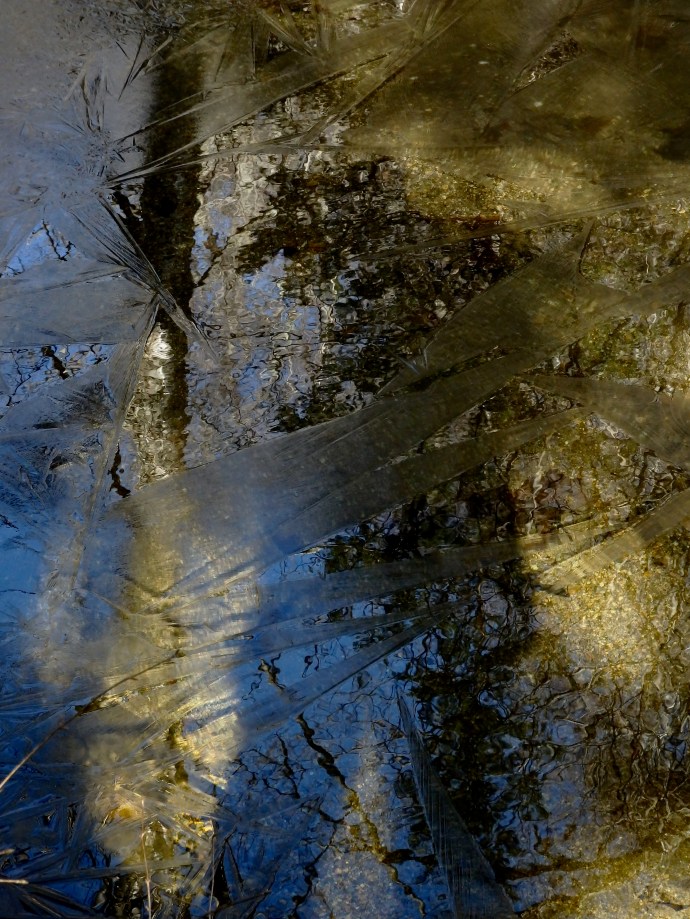
Though the frost is nearly out of the ground, the winter has not broken up in me. It is a backward season with me. Perhaps we grow older and older till we no longer sympathize with the revolution of the seasons, and our winters never break up.

in Thoreau’s Journal:
I run about these cold, blustering days, on the whole, perhaps, the worst to bear in the year (partly because they disappoint expectation) looking almost in vain for some animal or vegetable life stirring. The warmest springs hardly allow me the glimpse of a frog’s heel as he settles himself in the mud, and I think I am lucky if I see one winter-defying hawk or a hardy duck or two at a distance on the water. As for the singing of birds, the few that have come to us it is too cold for them to sing and for me to hear. The bluebird’s warble comes feeble and frozen to my ear….

in Thoreau’s Journal:
How fitly and exactly any season of the year may be described by indicating the condition of some flower!
in Thoreau’s Journal:
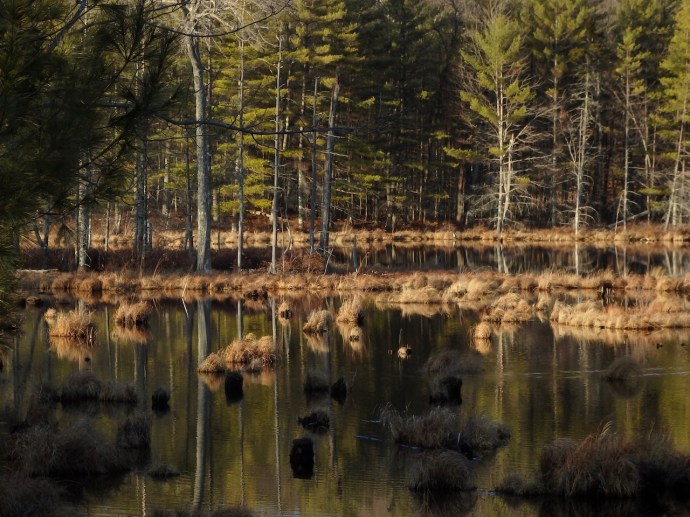
The brown season extends from about the 6th of March ordinarily into April….Tried by various tests, this season fluctuates more or less.


in Thoreau’s Journal:
A score of my townsmen have been shooting and trapping musquash and mink of late. They are gone all day—early and late they scan the rising tide—stealthily they set their traps in remote swamps, avoiding one another. Am not I a trapper too? Early and late scanning the rising flood, ranging by distant woodsides, setting my traps in solitude and baiting them as well as I know how, that I may catch life and light…. As to the color of spring, I should say that hitherto in dry weather it was fawn-colored; in wet, more yellowish or tawny. When wet, the green of the fawn is supplied by the lichens and the mosses.

in Thoreau’s Journal:
How little that occurs to us are we prepared at once to appreciate.
in Thoreau’s Journal:
When I think what were the various sounds and notes, the migrations and works, and changes of fur and plumage which ushered in the spring and marked the other seasons of the year, I am reminded that this my life in nature, this particular round of natural phenomena which I call a year, is lamentably incomplete. I listen to [a] concert in which so many parts are wanting. The whole civilized country is to some extent turned into a city, and I am that citizen whom I pity. Many of those animal migrations and other phenomena by which the Indians marked the season are no longer to be observed. I seek acquaintance with Nature, ––to know her moods and manners….

I am reassured and reminded that I am the heir of eternal inheritances which are inalienable, when I feel the warmth reflected from the sunny bank, and see the yellow sand and the reddish soil, and hear some dried leaves rustle and the trickling of melted snow in some sluiceway. The eternity which I detect in Nature I predicate of myself also. How many springs I have had this same experience! I am encouraged for I recognize this stead persistency and recovery of Nature as a quality of myself.
in Thoreau’s Journal:
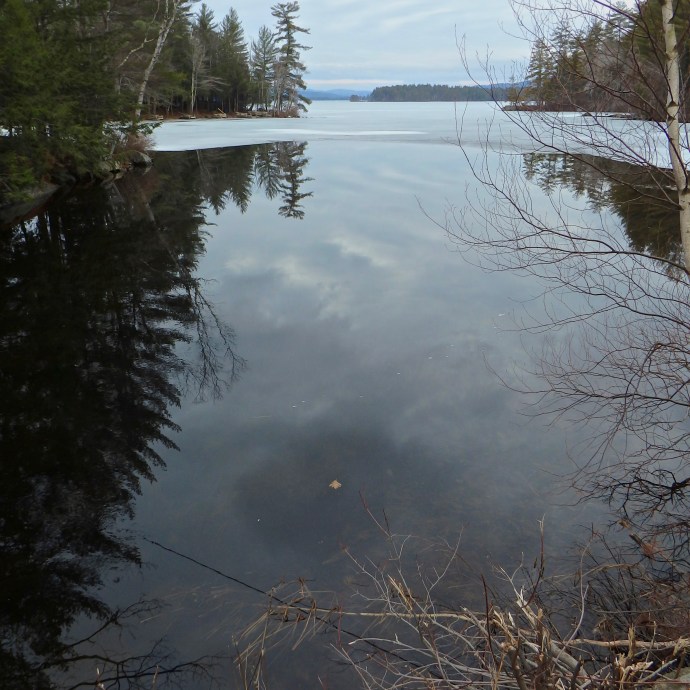
Some of the phenomena of an average March are increasing warmth, melting the snow and ice, and gradually the frost in the ground; cold and blustering weather, with high, commonly northwest winds for many days together; misty and other rains taking out frost, whitenings of snow, and winter often back again, both its cold and snow; bare ground and open waters, and more or less of a freshet; some calm and pleasant days reminding us of summer, with a blue haze or a thicker mist over the woods at last, in which perchance, we take off our coats a while, and sit without a fire; the ways getting settled, and some greenness appearing on south banks; April-like rains after the frost is chiefly out; ploughing and planting of peas, etc., just beginning, and the old leaves getting dry in the woods.
in Thoreau’s Journal:
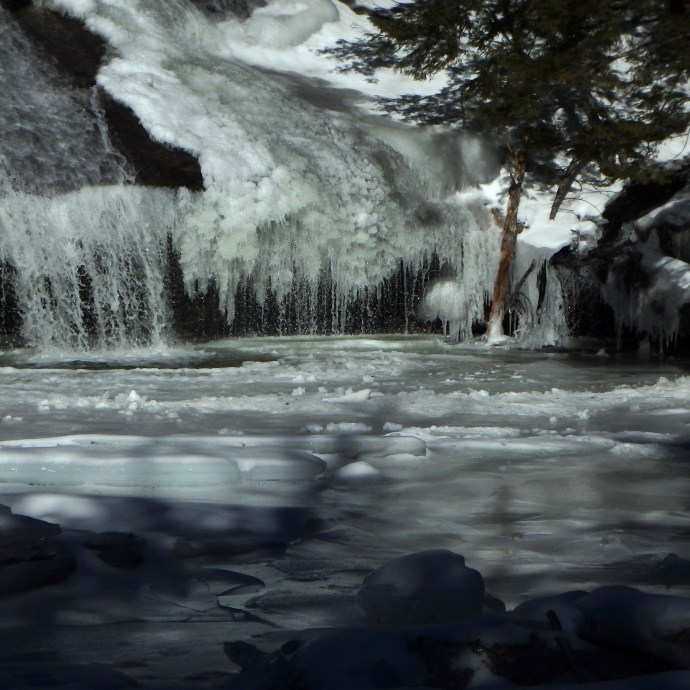
It is a genial and reassuring day; the mere warmth of the west wind amounts almost to balminess. The softness of the air mollifies our own dry and congealed substance. I sit down by a wall to see if I can muse again. We become, as it were, pliant and ductile again to strange but memorable influences; we are led a little way by our genius. We are affected like the earth, and yield to the elemental tenderness. Winter breaks up within us. The frost is coming out of me, and I am heaved like the road. Accumulated masses of ice and snow dissolve, and thoughts like a freshet, pour down unwonted channels.
 allandibiase.com
You must be logged in to post a comment.