in Thoreau’s Journal:
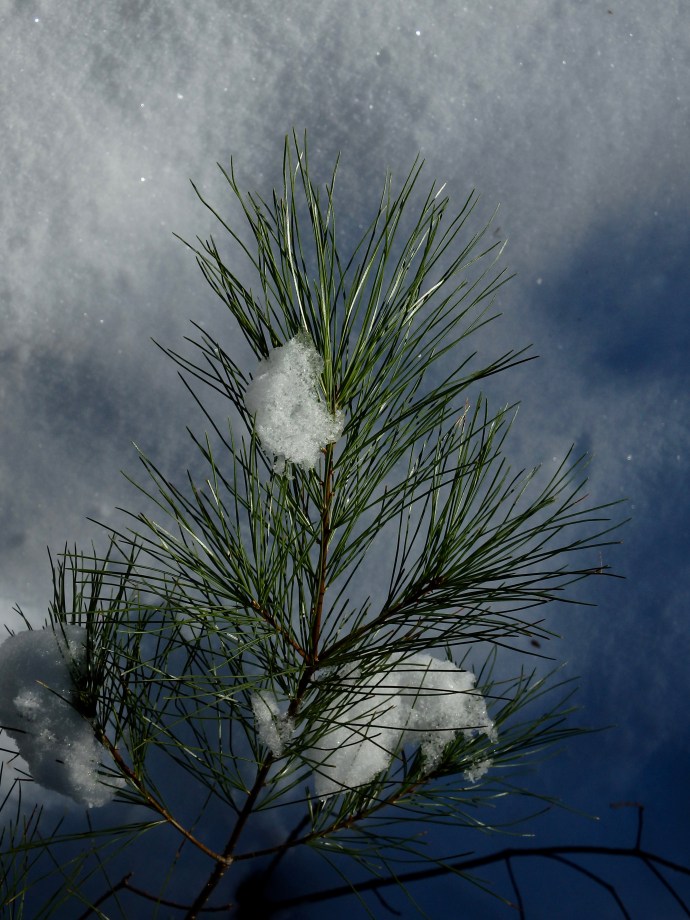
The sun loves to nestle in the boughs of the pine
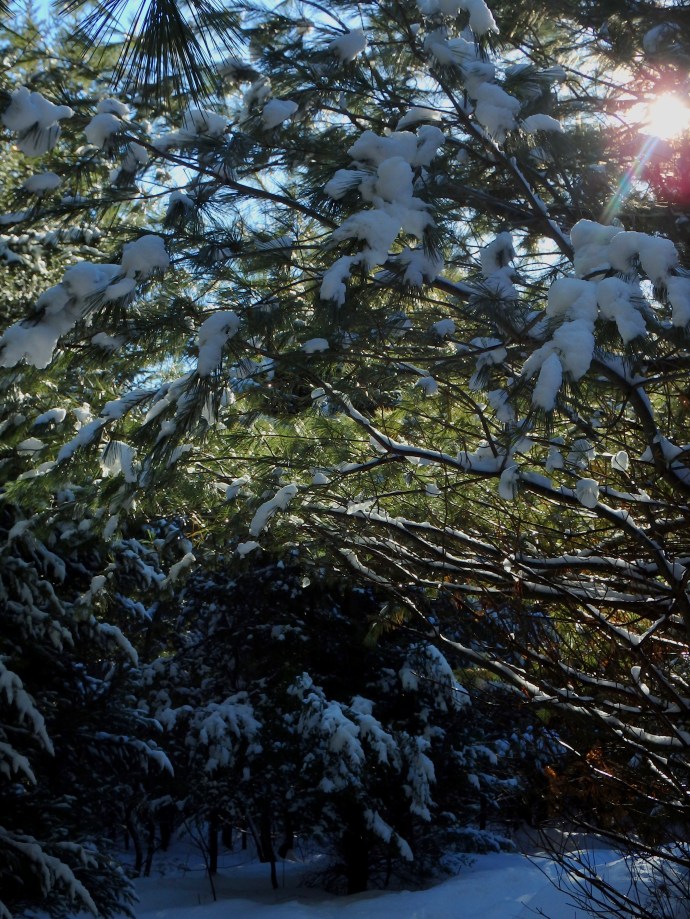
& pass rays through them.
in Thoreau’s Journal:
The sun loves to nestle in the boughs of the pine
& pass rays through them.
in Thoreau’s Journal:

Access to nature for original observation is secured by one ticket—by one kind of expense—but access to the works of your predecessors by a very different kind of expense— All things tend to cherish the originality of the original. Nature at least takes no pains to introduce you to the works of his predecessors—but only presents him with her own Opera Omnia.
in Thoreau’s Journal:
It is remarkable that the straw-colored sedge of the meadows, which in the fall is one of the least noticeable colors, should now, that the landscape is mostly covered with snow, be perhaps the most noticeable of all objects in it for its color, and an agreeable contrast to the snow…

in Thoreau’s Journal:
And again in winter to cross this pond on the ice—is our Davis’ straits or Baffin’s Bay—as a pleasant adventure.— to see the Lincoln hills rise up around it as a center—Mt. Tabor—& Bare Hill & the rest— It is a somewhat novel scenery, and not often seen in summer….
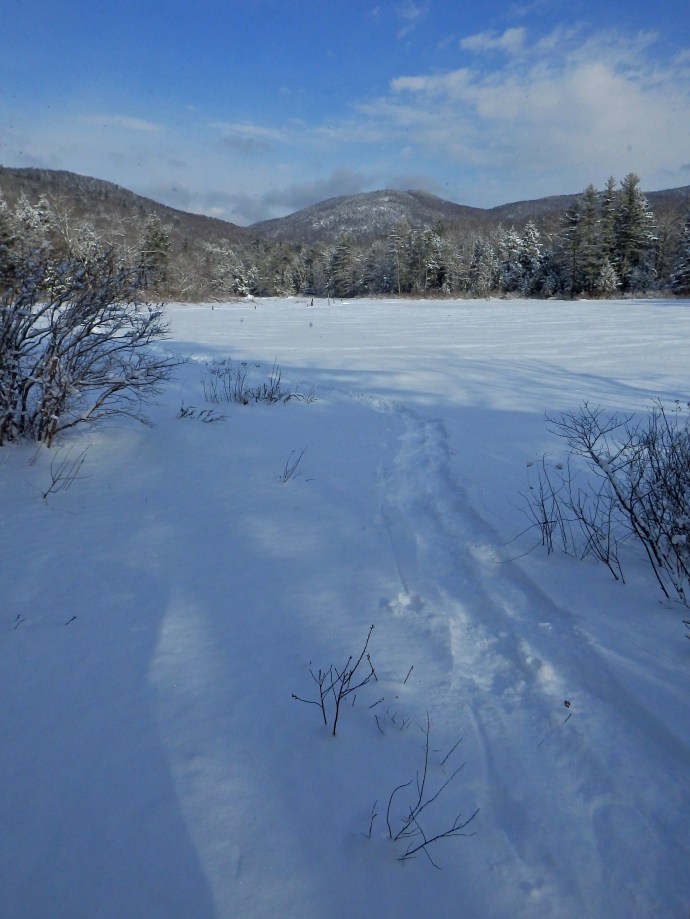
This is our Lake country.
in Thoreau’s Journal:
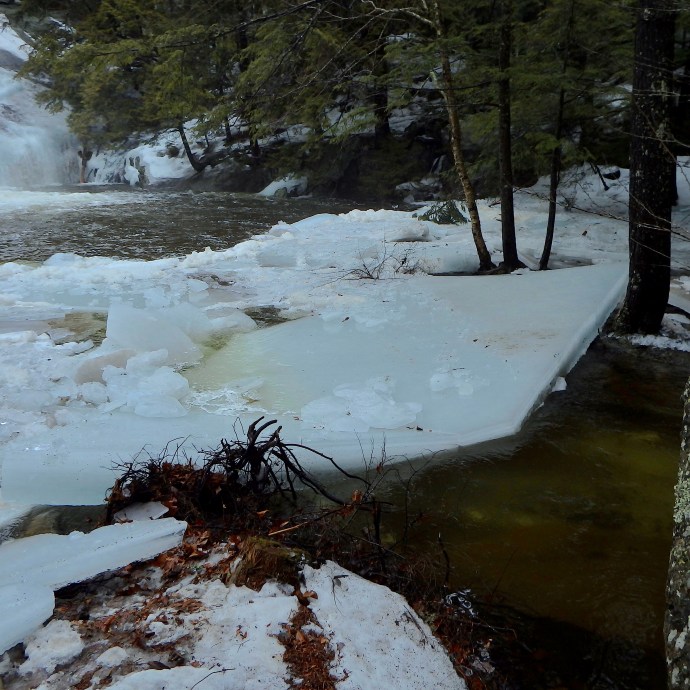
We too have our thaws— They come to our January moods—when our ice cracks—& our sluices break loose — Thought that was frozen up under stern experience gushes forth in feelings & expression—

This is a freshet which carries away dams of accumulated ice….
in Thoreau’s Journal:
…..the first book & not the last should contain the poetry of flowers….The most poetical of books— It should have the beauty & fragrance of flowers.— some of their color…. In which is uttered breathed man’s love of flowers.

Do nothing merely out of good resolutions. Discipline yourself only to yield to love— Suffer yourself to be attracted. It is in vain to write on chosen themes. We must wait till they have kindled a flame in our minds. There must be the copulating & generating force of love behind every effort destined to be successful. The cold resolve gives birth to —begats nothing. The theme seeks me, not I it. The poet’s relation to this theme is the relation of lovers. It is no more to be courted. Obey—report.
in Thoreau’s Journal:
Men lie behind the barrier of a relation as effectually concealed as the landscape by a mist; and when at length some unforeseen accident throws me into a new attitude toward them,
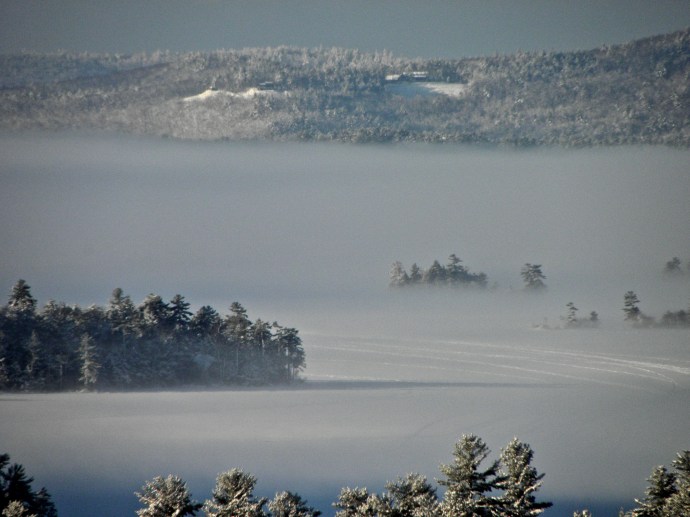
I am astounded as if for the first time I saw the sun on the hillside.
in Thoreau’s Journal:
Perhaps I can never find so good a setting for my thoughts
as I shall thus have taken them out of.
in Thoreau’s Journal:
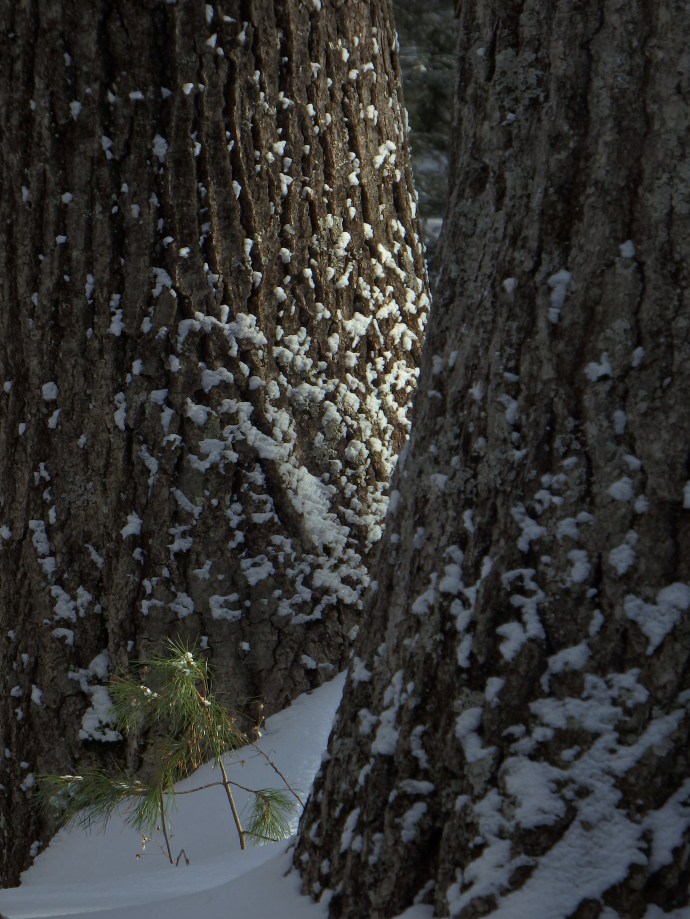
I do not know but thoughts written down thus in a journal might be printed in the same form with greater advantage—than if the related ones were brought together into separate essays. They are now allied to life—& are seen by the reader not to be far fetched— It is more simple—less artful— I feel that in the other cases I should have no proper frame for my sketches. Mere facts & names & dates communicate more than we suspect—
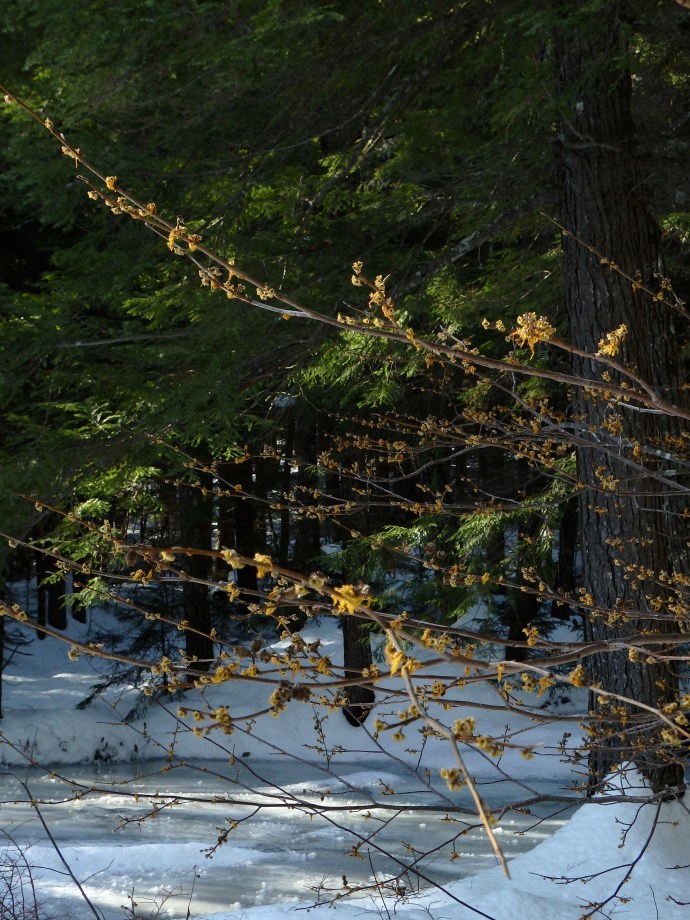
Whether the flower looks better in the nosegay—than in the meadow where it grew—& we had to wet our feet to get it! Is the scholastic air any advantage?
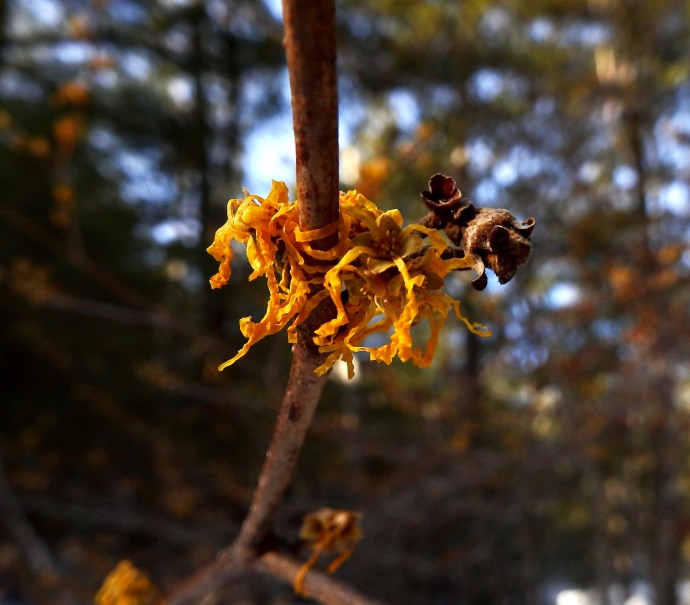
in Thoreau’s Journal: [selections from a very long entry]
A tree seen against other trees is a mere dark mass, but against the sky it has parts, has symmetry and expansion…
The thousand fine points & tops of the trees delight me—they are the plumes & standards & bayonets of a host that march to victory over the earth. The trees are handsome towards the heavens—as well as up their boles—they are good for other things than boards & shingles…

Obey the spur of the moment. These accumulated it is that makes the impulse & impetus of the life of genius….
My life essentially belongs to the present…
In winter we will think brave & hardy—& most native thoughts. Then the tender summer birds are flown.
In few countries do they enjoy so fine a contrast of summer & winter—we really have four seasons. each incredible to the other. Winter cannot be mistaken for summer here…
The lichens look rather bright today near the town line…I could study a single piece of bark for hours. How they flourish! I sympathize with their growth…
in Thoreau’s Journal:
A closed pitch pine cone, gathered January 22nd, opened last night in my chamber. If you would be convinced how differently armed the squirrel is naturally for dealing with pitch pine cones, just try to get one open with your teeth. He who extracts the seeds from a single closed cone, with the aid of a knife, will be constrained to confess that the squirrel earns his dinner. He has the key to this conical and spiny chest of many apartments. He sits on a post vibrating his tail, and twirls it as a plaything.

So is a man commonly a locked-up chest to us, to open whom, unless we have the key of sympathy, will make our hearts bleed.
in Thoreau’s Journal:
A journal is a record of experiences and growth, not a preserve of things well done or said. I am occasionally reminded of a statement which I have made in conversation and immediately forgotten, which would read much better than what I put in my journal. It is a ripe, dry fruit of long past experience which falls from me easily without giving pain or pleasure. The charm of the journal must consist in a certain greenness, through freshness, and not in maturity. Here I cannot afford to be remembering what I said or did, my scurf cast off, but what I am and aspire to be.
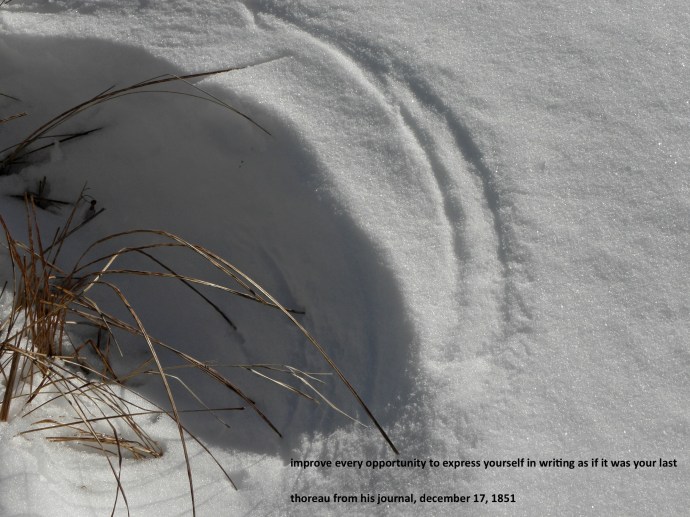
in Thoreau’s Journal:
I do not see that I can live tolerably without affection for Nature. If I feel no softening toward the rocks, what do they signify? I do not think much of that chemistry that can extract corn and potatoes out of a barren [soil], but rather of that chemistry that can extract thoughts and sentiments out of the life of a man on any soil.

It is in vain to write on the seasons unless you have the seasons in you.
in Thoreau’s Journal:
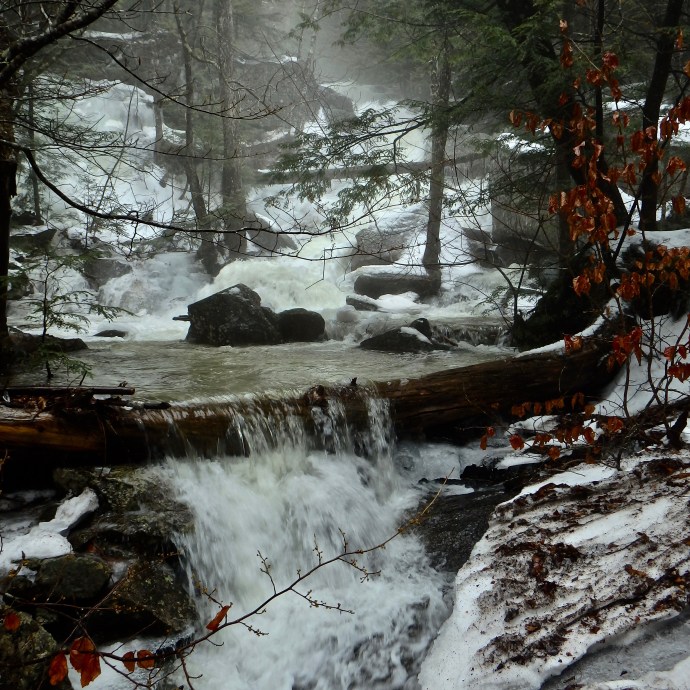
Heavy rain in the night and half of to-day, with very high wind from the southward washing off the snow…It is very exciting to see where was so lately only ice and snow, dark wavy lakes dashing in furious torrents through the commonly dry channels…
in Thoreau’s Journal:
As I walk the RR causeway, I am, as the last two months, disturbed by the sound of my steps on the frozen ground. I wish to hear the silence of the night, for the silence is something positive to be heard. I cannot walk with my ears covered. I must stand still and listen with open ears…

Silence alone is worthy to be heard. Silence is of various depth & fertility like soil….
A night in which the silence was audible—I hear the unspeakable.
in Thoreau’s Journal:
In certain places, standing on their snowiest side, the woods were incredibly fair, white as alabaster.

Indeed, the young pines reminded you of the purest statuary, and the stately, full-grown ones, towering around, affected you as if you stood in a Titanic sculptor’s studio, so purely and delicately white, transmitting the light, their dark trunks all concealed; and in many places where the snow lay on withered oak leaves between you and the light, various delicate, fawn-colored tints blending with the white enhanced the beauty.
in Thoreau’s Journal:
…..I saw the melon-rind arrangement of the clouds on a larger scale and more distinct than ever before….
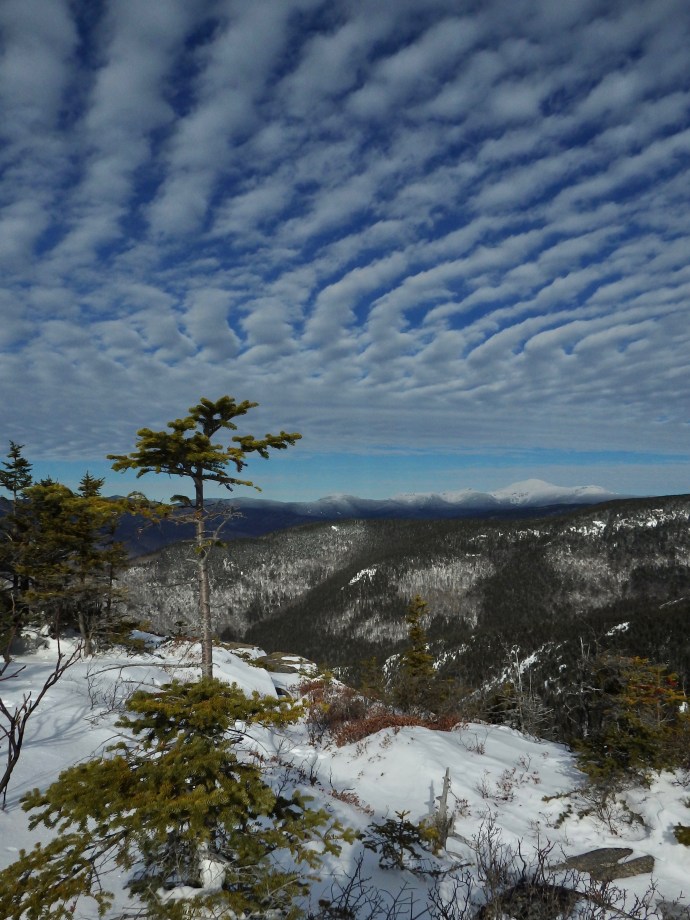
There were eight or ten courses of clouds, so broad that with equal intervals of blue sky they occupied the whole width of the heavens, broad white cirro-stratus, in perfectly regular curves from W. to E across the whole sky.
in Thoreau’s Journal:

The pines—some of them—seen through this fine driving snow have a bluish hue.
in Thoreau’s Journal:
….a dead lapse, where Time’s stream seems settling into a pool, a stillness not as if Nature’s breath were held, but expired.

Let me know that such hours as this are wealthiest in Time’s gift. It is the insufficiency of the hour which, if we but feel and understand, we shall reassert our independence then.
in Thoreau’s Journal:
….and every twig and trunk and blade of withered sedge is thus covered or cased with ice, and accordingly….
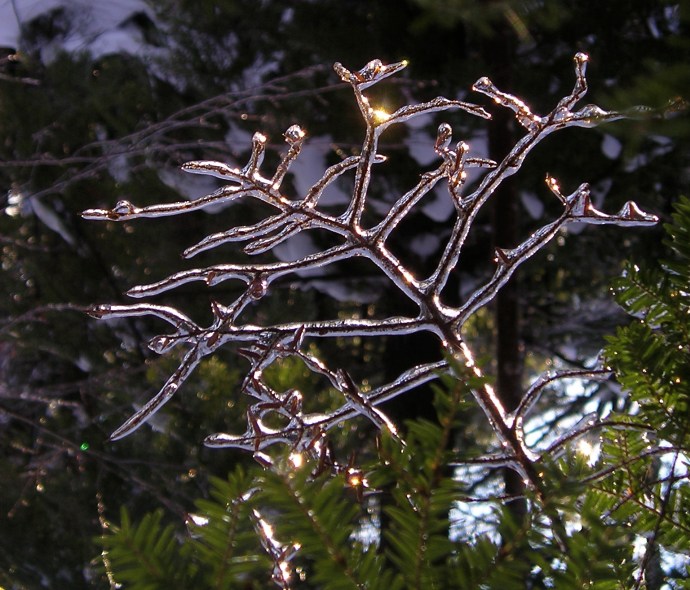
when you go facing the sun, the hollows look like a glittering shield set round with brilliants….


You must be logged in to post a comment.