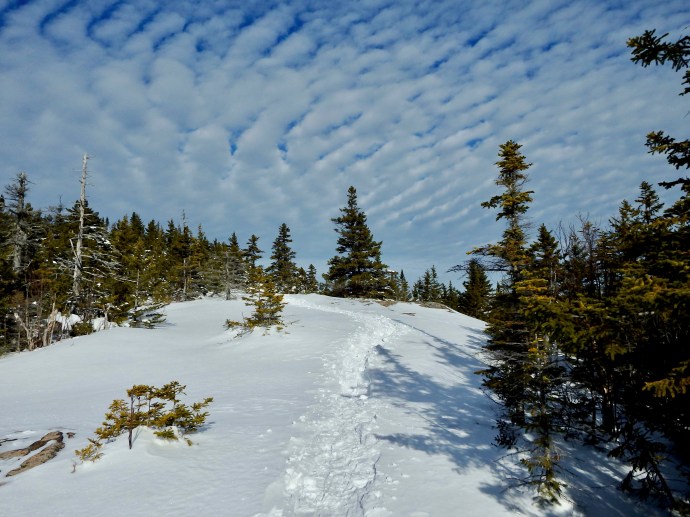
in Thoreau’s Journal:
Fair thoughts & a serene mind make fair days…As the skies appear to a man, so is his mind…. The World runs to see the panorama, while there is panorama in the sky which few go out to see.
in Thoreau’s Journal:
Fair thoughts & a serene mind make fair days…As the skies appear to a man, so is his mind…. The World runs to see the panorama, while there is panorama in the sky which few go out to see.
in Thoreau’s Journal:
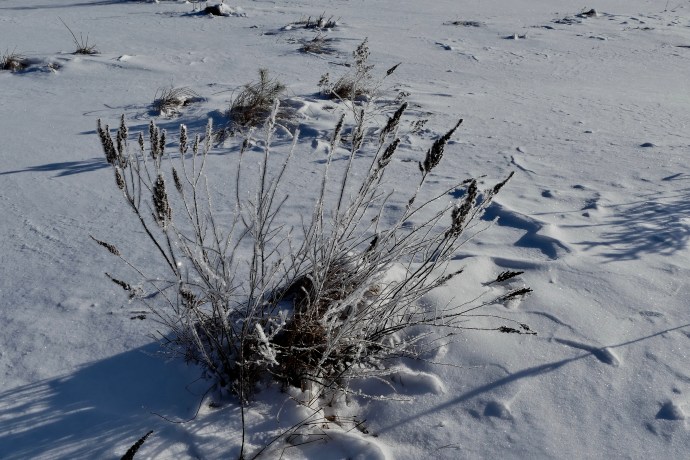
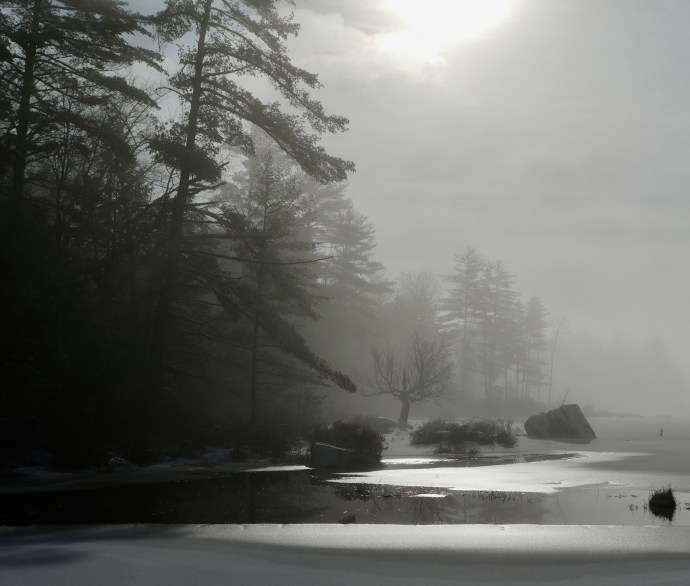
…every twig and trunk and blade of withered sedge is thus covered or cased with ice, and accordingly…when you go facing the sun, the hollows look like a glittering shield set round with brilliants…
———
The snow which 3 quarters conceals the cassandra—in these ponds—& every twig & trunk & blade of withered sedge is thus covered or cased with ice— and accordingly, as I have said, when you go facing the sun, the hollows look like a glittering shield set round with brilliants. That bent sedge in the midst of the shield—each particular blade of it being married to an icy wire 20 times its size at least shines like polished silver rings or semicircles— It must have been far more splendid here yesterday before any of the ice fell off—
in Thoreau’s Journal:
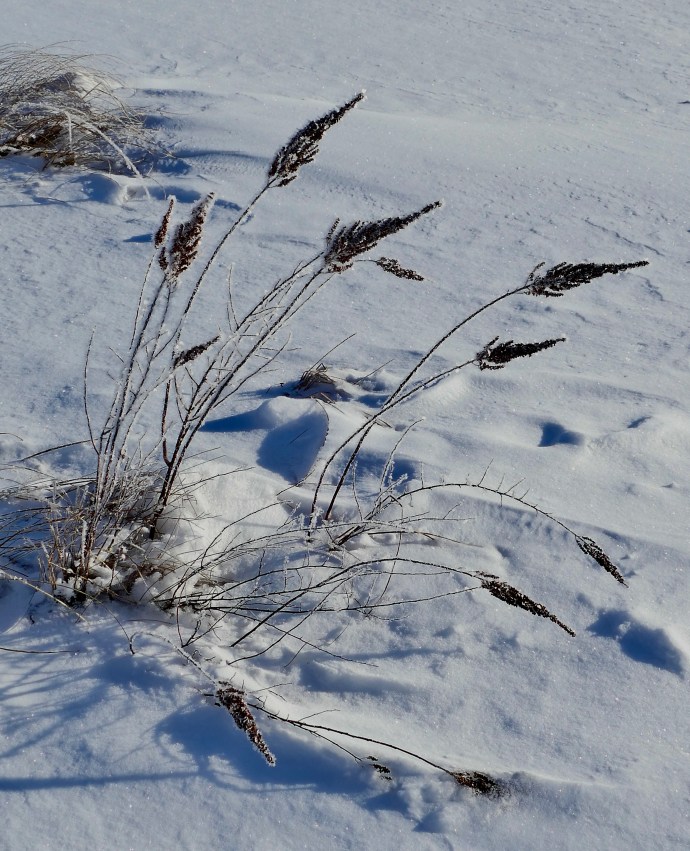
There is a still life in America that is little observed or dreamed of….

Cold as the weather is and has been, almost all the brook is open in the meadow there, an artery of black water in the midst of the snow, and there are many sink-holes, where the water is exposed at the bottom of dimple in the snow. Indeed, in some places these little black spots are distributed very thickly, the snow in swells covering the intervening tussocks.
in Thoreau’s Journal:
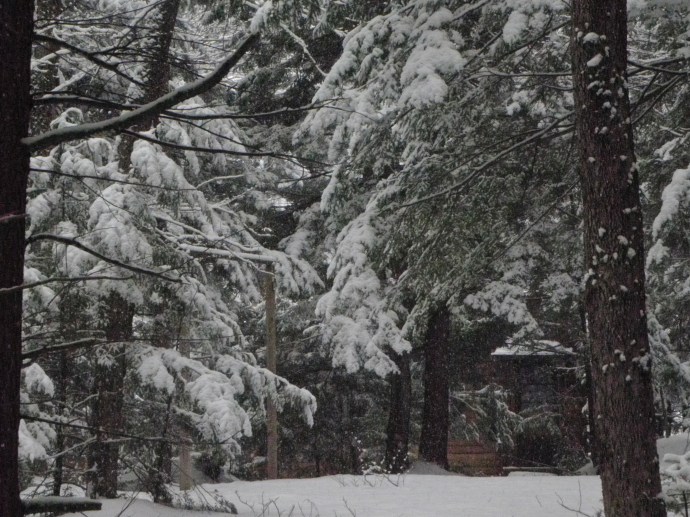
White walls of snow rest on the boughs of trees, in height two or three times their thickness. These white irregular arms give the forest a wintry and picturesque look at a distance. The evergreens, especially the pitch pine, often bear large irregular white burdens, agreeably diversified and loopholed by the interstices of the plumes. But it is only when fresh that this snow on the trees is beautiful. Already, before the storm is over, the surface of the snow in the high woods is full of indentations and hollows where some of this burden has fallen.
in Thoreau’s Journal:
Here I am on the Cliffs at half-past three or four o’clock.

The snow more than a foot deep over all the land. Few if any, leave the beaten paths. A few clouds are floating overhead, downy and dark. Clear sky and bright sun….
in Thoreau’s Journal:
It is a very beautiful and spotless snow now, it having just ceased falling.
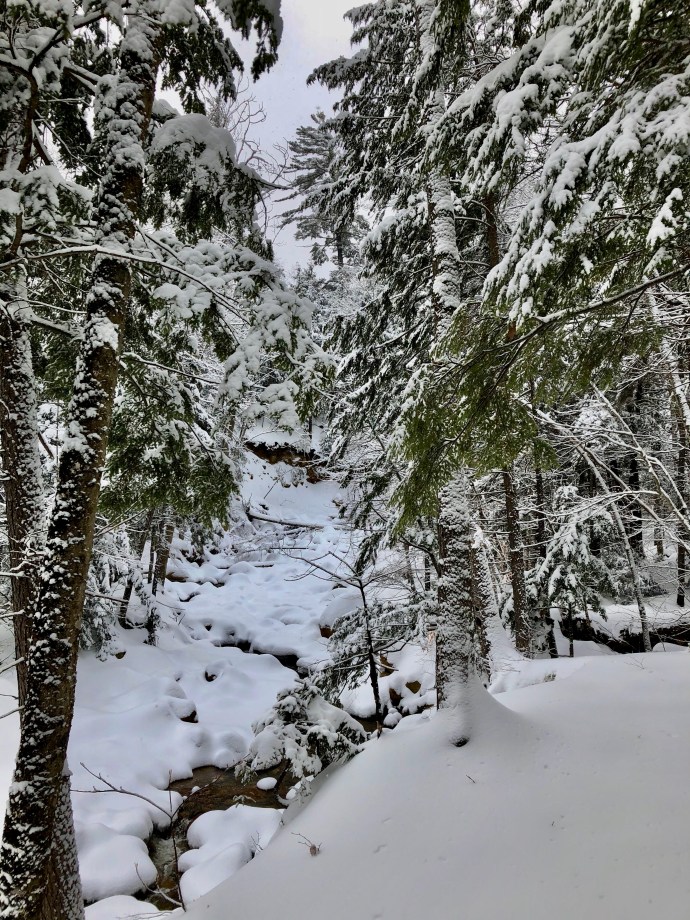
You are struck by its peculiar tractlessness, as if it were a thick white blanket just spread. As it were, each snow-flake lies as it first fell, or there is a regular gradation from the denser bottom up to the surface which is perfectly light, and as it were fringed with the last flakes that fell.
January 11, 1858 in Thoreau’s Journal:
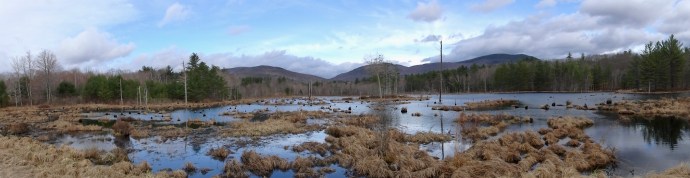
Rain—Rain. Washes off almost every vestige of snow.
in Thoreau’s Journal:
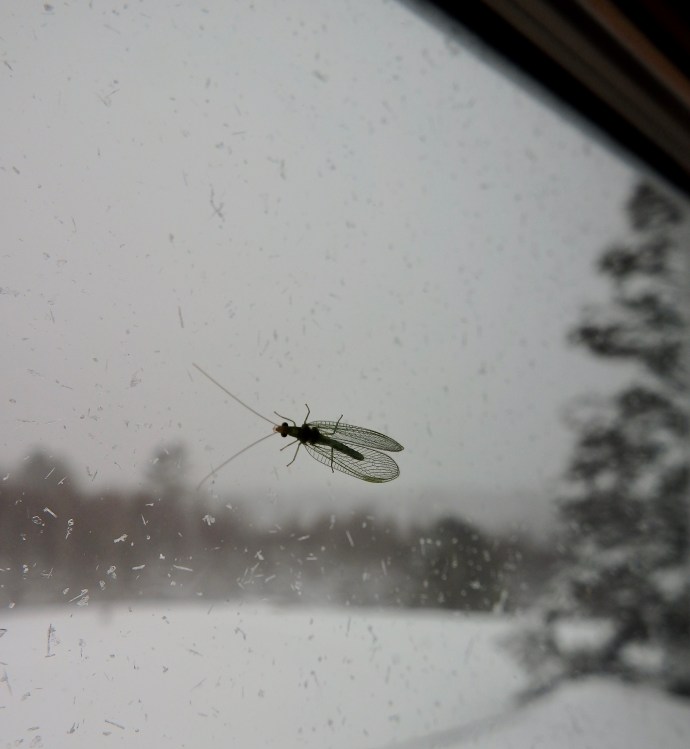
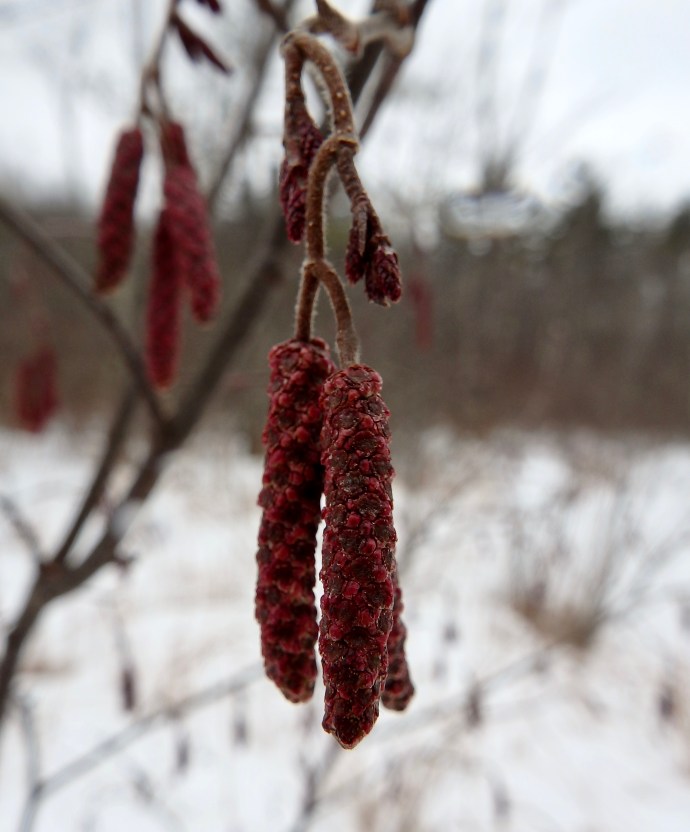
The N. side of Walden is a warm walk in sunny weather. If you are sick and despairing, go forth in winter and see the red alder catkins dangling at the extremity of the twigs all in the wintry air, like long, hard mulberries, promising a new spring and the fulfilment of all our hopes. We prize any tenderness, any softening in the winter, catkins, birds’ nests, insect life, etc. The most I get, perchance, is the sight of a mulberry-like red catkin, which I know has a dormant life in it seemingly greater than my own.
in Thoreau’s Journal:
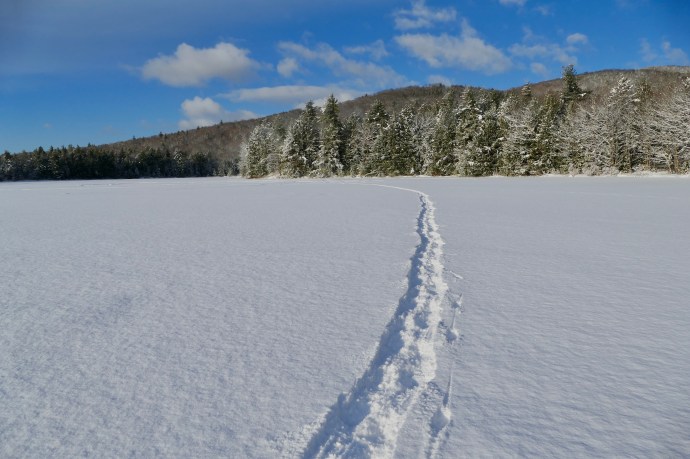
Standing in the middle of Walden I see with perfect distinctness the form & outlines of the low hills which surround it though they are wooded because they are quite white, being covered with snow– While the woods are for the most part bare or very thin leaved. I see thus the outline of the hills 8 or 10 rods back through the trees–This I can never do in the summer when the leaves are thick & the ground is nearly the same color with them. These white hills are now seen as through a veil of stems….The perfect winter days are cold but clear & bright.
in Thoreau’s Journal:
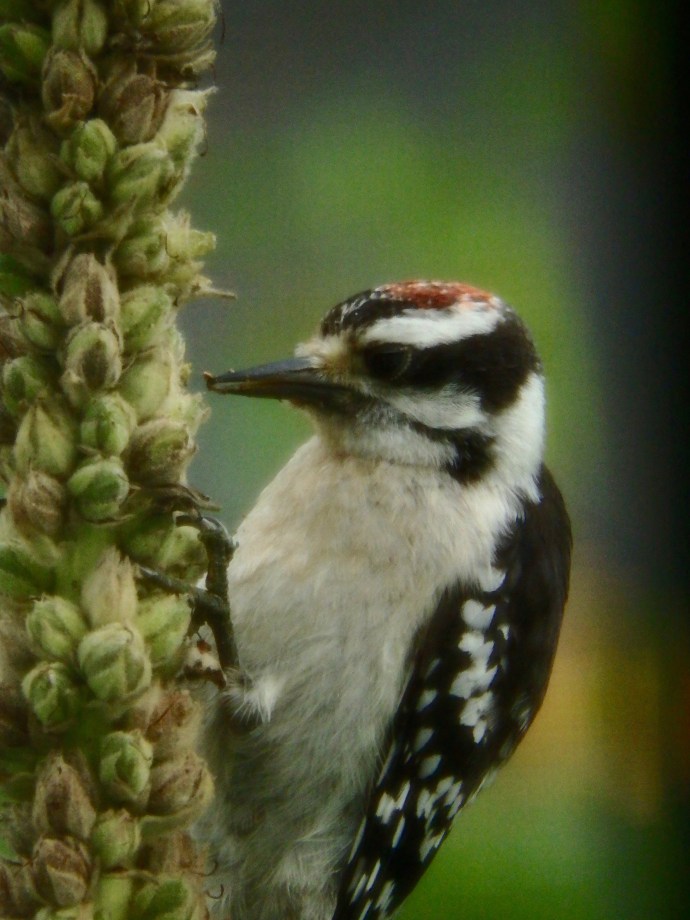
Stood within a rod of a downy woodpecker on an apple-tree. How curious and exciting the blood-red spot on its hind head! I ask why it is there but no answer is rendered by these snow-clad fields. It is so close to the bark I do not see its feet. It looks behind as it had a black cassock open behind and showing a white under-garment between the shoulders and down the back. It is briskly and incessantly tapping all round the dead limbs, but hardly twice in a place, as if to sound the tree, and so see if it has any worm in it, or perchance to start them. How much he deals with the bark of trees, all his life long tapping and inspecting it. He it is that scatters those fragments of bark and lichens about on the snow at the base of trees. What a lichenest he must be! or perhaps it is fungi make his favorite study, for he deals most with dead limbs. How briskly he glides up or drops himself down a limb, creeping round and round, and hopping from limb to limb, and now flitting with a rippling sound of his wings to another tree.
in Thoreau’s Journal:
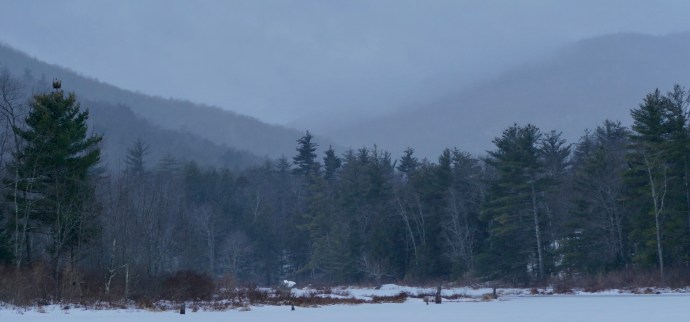
P.M. To Walden…It is bitter cold, with a cutting N.W. wind….I go through the woods toward the cliffs along the side of the Well Meadow field. There is nothing so sanitive, so poetic, as a walk in the woods and fields even now, when I meet none abroad for pleasure. Nothing so inspires me, and excites such serene and profitable thought….No amount of gold or respectability could in the least redeem it, dining with the governor or member of Congress!! But alone in the distant woods or fields, in unpretending sprout lands or pastures tracked by rabbits, even in a bleak and, to most, cheerless day like this, when a villager would be thinking of his inn, I come to myself, I once more feel myself grandly related. This cold and solitude are friends of mine….I enter some glade in the woods, perchance, where a few weeds and dry leaves alone lift themselves above the surface of the snow, and it is as if I had come to an open window. I see out and around myself. Our sky-lights are thus far away from the ordinary resorts of men. I am not satisfied with ordinary windows. I must have a true sky-light, and that is outside the village….I am aware that most of my neighbours would think it a hardship to be compelled to linger here one hour, especially this bleak day, and yet I receive this sweet and ineffable compensation for it. It is the most agreeable thing I do. I love and celebrate nature even in detail because I love the scenery of these interviews and translations.
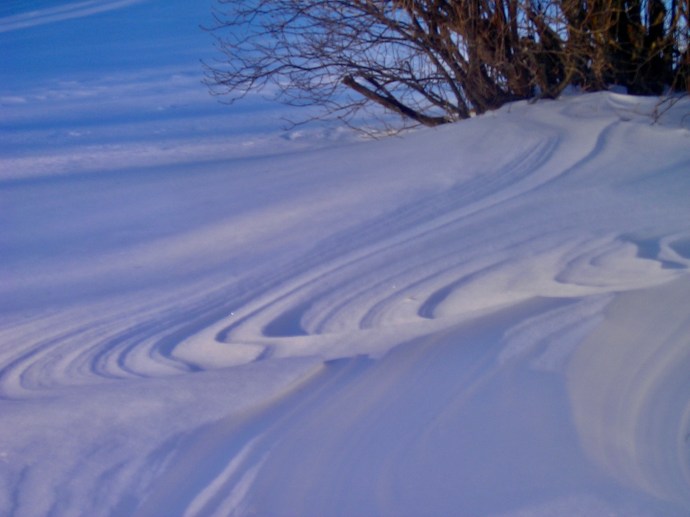
in Thoreau’s Journal:
The exquisite purity of the snow & the gracefulness of its curves are remarkable. Around some houses there is not a single track– Neither man woman nor child–dog nor cat nor fowl has stirred out today.– There has been no meeting. Yet this afternoon since the storm it has not been very bad travelling.
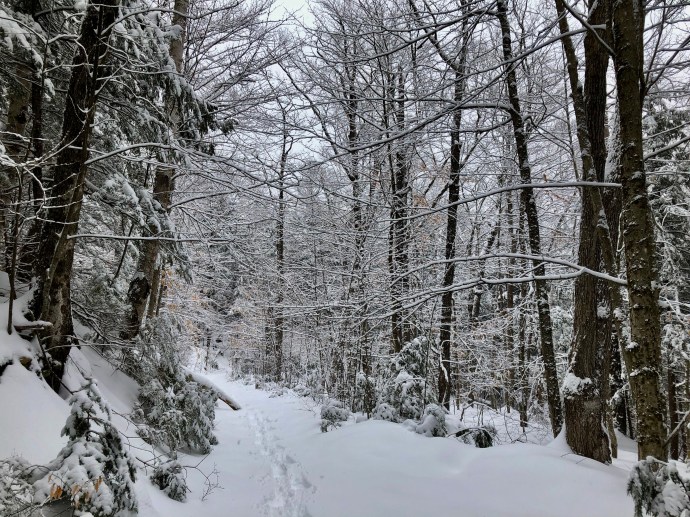
in Thoreau’s Journal:
To-day the trees are white with snow—I mean their stems & branches and have the true wintry look—on the storm-side—not till this has the winter come to the forest. They look like the small frost work in the path & on the windows now—. Especially the oak woods at a distance, & you see better the form which their branches take. That is a picture of winter & now you may put a cottage under them and roof it with snowdrifts.— & let the smoke curl up amid the boughs in the morning.
in Thoreau’s Journal:
[This citation is taken from the Princeton Transcripts of the to be published 1858 Journal. I’m supposing that Thoreau took down the first three paragraphs as “field notes” and then set about polishing the singular event of the light on the stubble. Perhaps this passage shows us something of one of Thoreau’s working methods?]
The pm weather still remarkably warm— The ice too soft for skiing— I go through by the Andromeda Ponds & down river from Fair Haven— I am encouraged by the sight of men fishing on the F.H. Pond—for it reminds me that they have animal spirits for such adventures— I am glad to be reminded that any go a-fishing. When I get down near to Cardinal shore the sun near setting, its light is wonderfully reflected from a narrow edging of yellowish stubble—at the edge of the meadow ice & part of the hill—an edging only 2 or 3 feet wide—& the stubble but a few inches high—
I am looking East— It is remarkable—because the ice is but a dull lead color (It is so soft & sodden) reflecting no light—& the hill beyond is a dark russet here & there patched with snow—but this warm intermediate line of stubble is all aglow— I get its true color & brightness best when I do not look directly at it, but a little above it toward the hills seeing it with the lower part of eye more truly and abstractly. It is as if all the rays slid over the ice & lodged against & were reflected by the stubble. It is surprising how much sun light a little straw that survives the winter will reflect—
The channel of the river is open part of the way— The corpus sericea & some young willow shoots are the red-barked twigs so conspicuous now along the river sides—

That bright & warm reflection of sunlight from the insignificant edging of stubble was remarkable— I was coming down stream over the meadow, on the ice within 4 or 5 rods of the eastern shore— The sun on my left was about a quarter of an hour above the horizon— The ice was soft & sodden—of a dull lead color—quite dark & reflecting no light as I looked eastward—but my eyes caught by accident a singular sunny brightness—reflected from the narrow border of stubble only 3 or 4 inches high (and as many feet wide perhaps) which rose along the edge of the ice at the foot of the hill. It was not a mere brightening of the bleached stubble—but the warm & yellow light of the sun, which, it appeared, it was peculiarly fitted to reflect— It was that amber light from the west which we sometimes witness after a storm—concentrated on this stubble—for the hill beyond was merely a dark russet spotted with snow— All the yellow rays seems to be reflected by this insignificant stubble alone—& when I looked more generally a little above it—seeing it with the under part of my eye—it appeared yet more truly & more bright— The reflected light made its due impression on the eye separated from the proper color of the stubble— —& it glowed almost like a low—steady & serene fire. It was precisely as if the sun light had mechanically slid over the thin ice & lodged against the stubble— — It will be enough to say of something warmly & sunnily bright that it glowed like lit stubble. It was remarkable that, looking eastward this was the only evidence of the light in the west.
in Thoreau’s Journal:
I love Nature partly because she is not man, but a retreat from him. None of his institutions control or pervade her. Here a different kind of right prevails. In her midst I can be glad with an entire gladness. If this world were all man, I could not stretch myself. I should lose all hope. He is constraint; she is freedom to me. He makes me wish for another world; she makes me content with this. None of the joys she supplies is subject to his rules and definitions. What he touches he taints. In thought he moralises. One would think that no free, joyful labor was possible to him. How infinite and pure the least pleasure of which nature is basis compared with the congratulation of mankind!
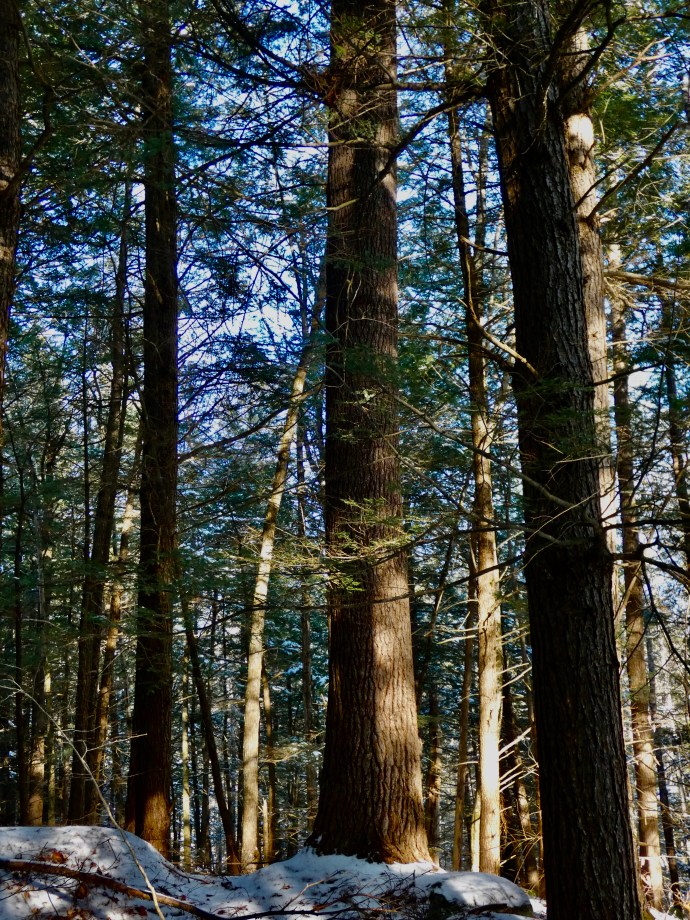
The joy which nature yields is like that afforded by the frank words of one we love….There is no law so strong which a little gladness may not transgress. I have a room all to myself. It is nature. It is a place beyond the jurisdiction of human government.
in Thoreau’s Journal:
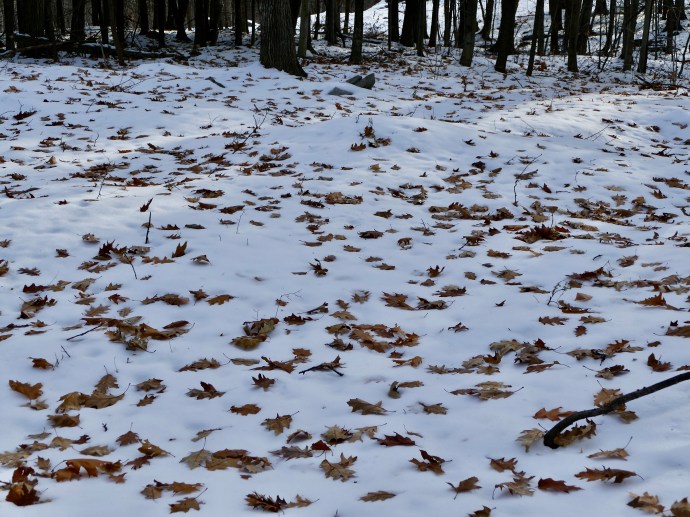
Going up the hill thro’ Stow’s young oak wood-land—I listen to the sharp dry rustle of the withered oak leaves— This is the voice of the wood now. It would be comparatively still & more dreary here in other respects if if were not for these leaves that hold on— It sounds like the roar of the seas—& is enlivening & inspiriting like that—suggesting how all the land is sea coast to the aerial ocean— It is the sound of the surf—the surf of an unseen Ocean billow of air breaking in the forest—like water on itself or on sand & rocks— It rises & falls—sweeps & dies away—with agreeable alternation as the sea-surf does. Perhaps the the landsman can foretell a storm by it. It is remarkable how universal these grand murmurs are—these backgrounds of sound—the surf—the wind in the forest—water falls—&c which yet to the ear & in their origins are essentially one voice—the Earth voice—
 in Thoreau’s Journal:
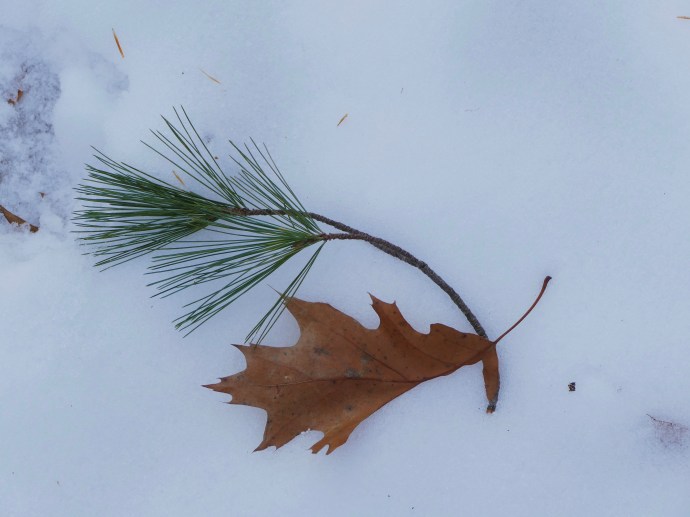
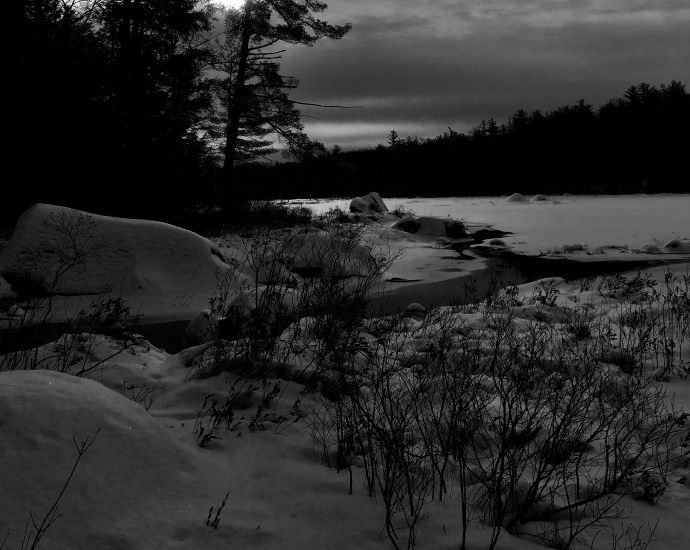
9 1/2 PM to Fair Haven. Moon little more than 1/2 full — Not a cloud in the sky—a remarkably warm night for the season, the sound almost entirely bare. The stars dazzlingly bright. The fault may be in my own barrenness, but methinks there is a certain poverty about the winter nights sky. The stars of higher magnitude are more bright & dazzling and therefore appear more near & numerable, while those that appear indistinct and infinitely remote in the Summer—imparting the impression of unfathomability to the sky—are scarcely seen at all. The front halls of heaven are so dazzlingly lighted that they quite eclipse the more remote. The sky has fallen many degrees.
The river has risen and flooded the meadows again. The white pines now seen against the moon, with their single foliage look thin.
These are some of the differences between this and the autumn or summer nights.
The stiffened-glebe under my feet—the dazzle and seeming nearness of the stars—the duller gleam from ice on rivers & ponds— the white spots in the fields & streaks by the wall sides where are the remains of drifts, yet unmelted. Perhaps the only things that spoke to me in this walk, was the bare lichen covered grey rock at the cliff, in the moonlight—naked and almost warm as in summer.
in Thoreau’s Journal:
Books of natural history make the most cheerful winter reading. I read in Audubon with a thrill of delight when the snow covers the ground of the magnolia and the Florida keys and their warm seas breezes—of the fence rail and the cotton tree and the migrations of the rice bird—or of the breaking up of winter in Labrador. I seem to hear the melting of the snow on the forks of the Missouri as I read. I imbibe some portion of health from these reminiscences of luxuriant nature.
The is a singular health for me in those words of Labrador and East Main—which no desponding creed recognizes.
How much more than federal are these States—! If there no other vicissitude but the seasons—with their attendant and consequent changes our interest would never flag. Much more is adoing than Congress wots of in the winter season. What journal do the Persimon and Buckeye keep—or the sharp shinned hawk? What is transpiring from summer to winter in the Carolinas—the great Pine forest, and the valley of the Mohawk? The merely political aspect of the land is never very cheering— Men are degraded when considered as the members of a political organization.
As a nation the people never utter one great and healthy word— From side all nations present only the symptoms of disease…In society you will not find health but in nature— You must converse much with the field and woods if you would imbibe such health into your mind and spirit as you covet for your body….
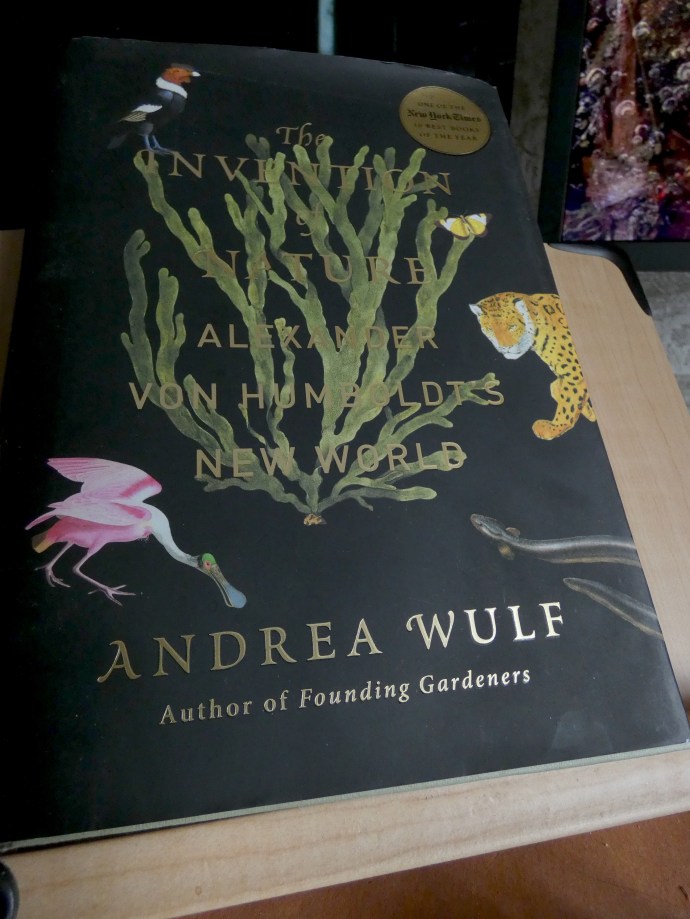
I should like to keep some books of natural history always by me as a sort of elixir—the reading of which would restore the tone of my system—and secure me true and cheerful views of life….To the soul that contemplates some trait of natural beauty no harm nor disappointment can come. The doctrines of despair—of spiritual or political servitude—no priestcraft nor tyranny—was ever taught by such as drank in the harmony of nature.
in Thoreau’s Journal:
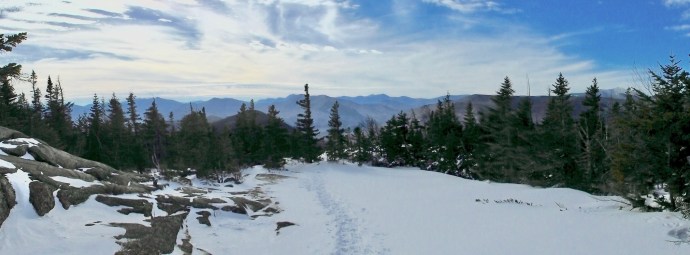
The woods are an admirable fence to the landscape—every where skirting the horizon.
in Thoreau’s Journal:
Whole weeks or months of my summer life slide away in thin volumes like mist or smoke—till at length some warm morning perchance I see a sheet of mist blow down the brook to the swamp—its shadow flitting across the fields which have caught a new significance from that accident. And as that vapor is raised above the earth so shall the next weeks be elevated above the plane of the actual— Or when the setting sun slants across the pastures—and the cows low to my inward ear—and only enhance the stillness—and the eve is as the dawn—a beginning hour and not a final one—as if it would never have done— With its clear western amber inciting men to lives of as limpid purity— Then do other parts of my days work shine than I had thought at noon—for I discover the real purport of my toil—As when the husbandman has reached the end of the furrow and looks back—he can best tell where the pressed earth shines most.
All true greatness runs as level as course and is as unaspiring as the plough in the furrow— ….There is no wisdom which can take place of humanity….I can recall to my mind the stillest summer hour—in which the grasshopper sings over the mulleins—and there is a valor in that time the memory of which is armor that can laugh at any blow of fortunes. And man should go out nature with the chirp of the cricket, or the trill of the veery ringing in his ear. These earthly sounds should only die away for a season.


You must be logged in to post a comment.