January 23, 1858

in Thoreau’s Journal:

To insure health a man’s relation to nature—must come very near to a personal one—he must be conscious of a friendliness in her—when human friends part or die she must stand in the gap to him.

P1300635.jpeg

I cannot conceive of any life which deserves the name, unless there is a certain tender relation to nature—  This it is which makes winter warm—& supplies society in the desert & wilderness— Unless nature sympathizes with & speaks to us, as it were, the most fertile & blossoming regions are barren & dreary.

January 22, 1852

in Thoreau’s Journal:

To set down such choice experiences that my own writings may inspire me.— and at last I may make wholes of parts. 

Certainly it is a distinct profession to rescue from oblivion & to fix the sentiments & thoughts which visit all men more or less generally. That the contemplation of the unfinished picture may suggest its harmonious completion. Associate reverently, and as much as you can with your loftiest thoughts. Each thought that is welcomed and recorded is a nest egg—by the side of which more will be laid. Thoughts accidentally thrown together become a frame—in which more may be developed—& exhibited. Perhaps this is the main value of a habit of writing—of keeping a journal. That so we remember our best hours—& stimulate ourselves. My thoughts are my company  —  They have a certain individuality & separate existence—aye personality. Having by chance recorded a few disconnected thoughts and then brought them into juxtaposition—they suggest a whole new field in which it was possible to labor & to think. Thought begat thought….

012252.jpeg

January 21, 1855

in Thoreau’s Journal:

012155a.jpeg

The sky has gradually become overcast & now it is just beginning to snow—looking against a dark roof—I detect a single flake from time to time—but when I look at the dark side of the woods 2 miles off in the horizon there already is seen a slight thickness or mistiness in the air—In this way, perhaps, may it first be detected…..Pines & oaks seen at a distance—say 2 miles off—are considerably blended & make one harmonious impression—the former if you attend—are seen to be of a blue or misty black—and the latter form commonly a reddish brown ground, out of which the former rise—These colours are no longer in strong contrast with each other—

012155b.jpeg

January 20, 1855

in Thoreau’s Journal:

In many instances the snow had lodged on trees yesterday in just such forms as a white napkin or counterpane dropped on them would take—protuberant in the middle with many fold & dimples— An ordinary leafless bush supported so much snow on its twigs—a perfect maze like a whirligig—though not in one solid mass—that you could not see through it— We heard only a few chic-a-dees. Some times the snow on the bent P. Pines made me think of rams’ or elephants’ heads ready to butt you.

In particular places standing on their snowiest side the woods were incredibly fair—white as alabaster—indeed the young pines reminded you of the purest statuary.  & the stately full grown ones towering around affected you as if you stood in a Titanic sculptor’s studio. So purely & delicately white—transmitting the light—their dark trunks all concealed. And in many places where the snow lay on withered oak leaves between you & the light—various delicate fawn coloured & cinnamon tints blending with the white still enhanced the beauty.

012055.jpeg

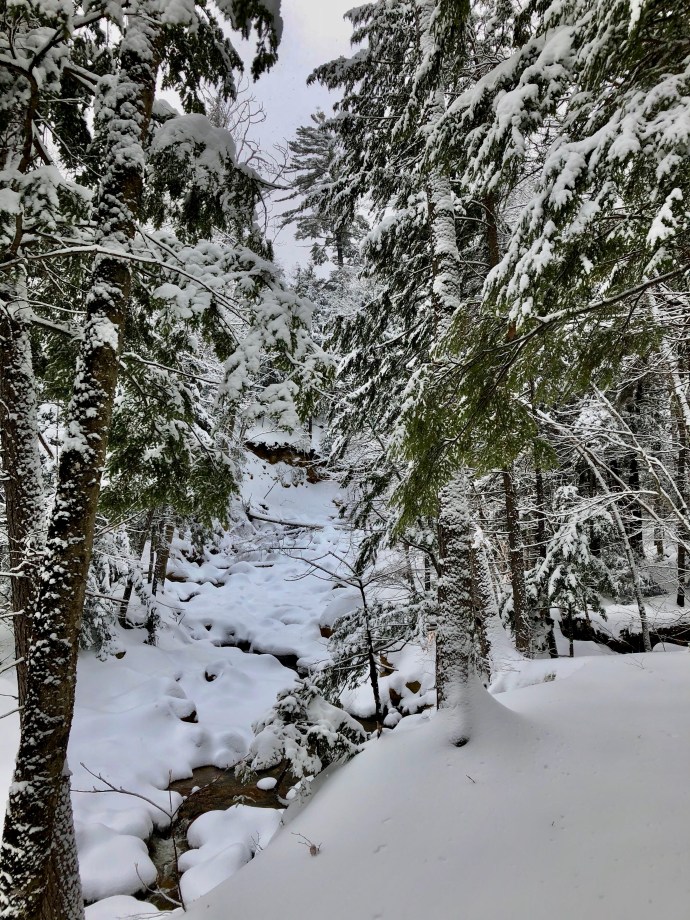
How new all things seem!  Here is a broad, shallow pool in the fields which yesterday was slush, now converted into a soft, white fleecy snow ice…It is like the beginning of the world. There is nothing hackneyed where a new snow can come and cover all the landscape…The world is not only new to the eye, but is still as at creation. Every blade and leaf is hushed, not a bird or insect is heard, only, perchance, a faint tinkling sleigh-bell in the distance…The snow still adheres conspicuously to the N.W. sides of the stems of the trees, quite up to their summits, with a remarkably sharp edge in that direction…It would be about as good as a compass to steer by in a cloudy day or by night…I doubt if I can convey an idea of the appearance of the woods yesterday. As you stood in their midst, and looked round on their boughs and twigs laden with snow, it seemed as if there could be none left to reach the ground. These countless zigzag white arms crossing each other at every possible angle completely closed up the view like a light drift within three or four rods on every side, the wintriest prospect imaginable. That snow which sifted down into the wood paths was much drier and lighter than elsewhere.

January 18, 1856

P1130552.jpeg

in Thoreau’s Journal:

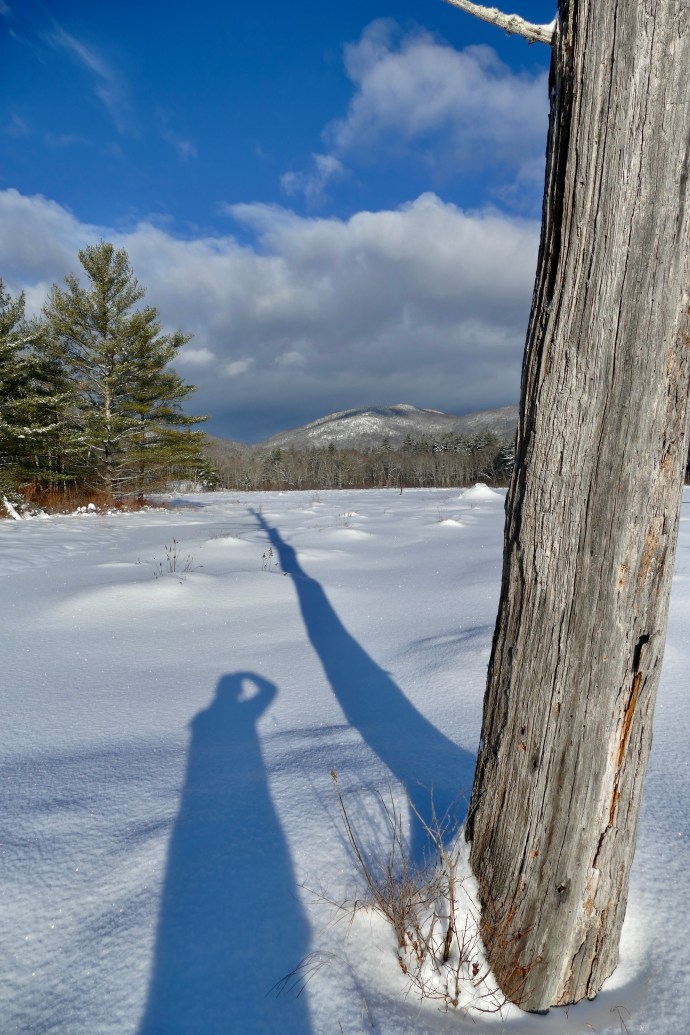
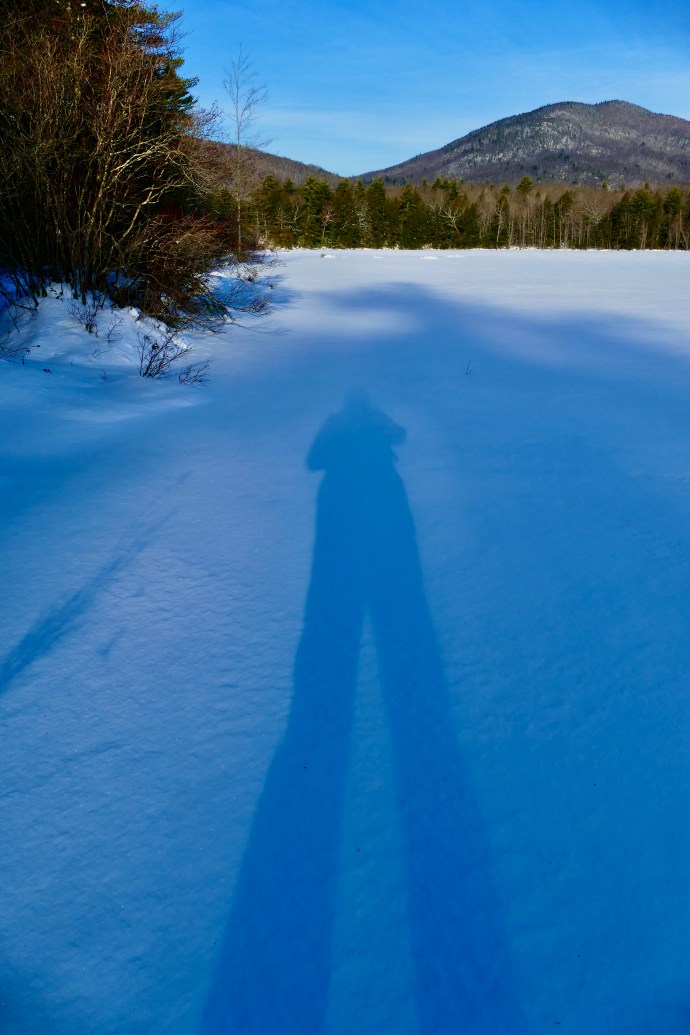
To Walden, to learn the temperature of the water….This is a very mild, melting winter day, but clear and bright. Yet I see the blue shadows on the snow at Walden. The snow lies very level there, about ten inches deep, and, for the most part, bears me as I go across with my hatchet.  I think I never saw a more elysian blue than my shadow.  I am turned into a tall blue Persian from my cap to my boots, such as no mortal dye can produce, with an amethystine hatchet in my hand. I am in raptures with my own shadow. Our very shadows are no longer black but a celestial blue.

January 17, 1852

17-01-02 - 1 of 112 (104).jpeg

in Thoreau’s Journal:

Fair thoughts & a serene mind make fair days…As the skies appear to a man, so is his mind…. The World runs to see the panorama, while there is panorama in the sky which few go out to see.

January 16, 1859

in Thoreau’s Journal:  

P1140376.jpeg

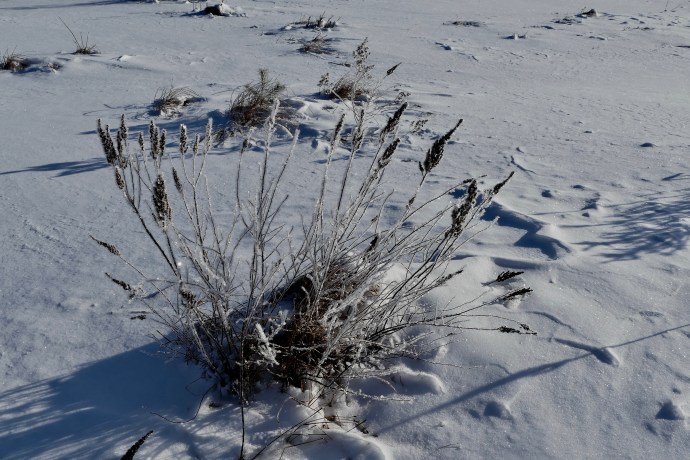
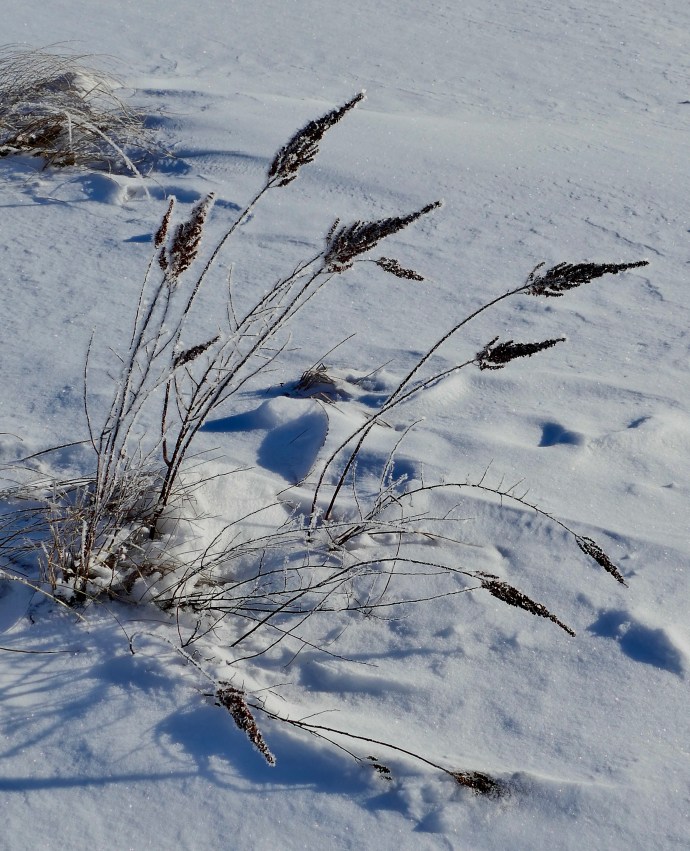
…every twig and trunk and blade of withered sedge is thus covered or cased with ice, and accordingly…when you go facing the sun, the hollows look like a glittering shield set round with brilliants…

———

The snow which 3 quarters conceals the cassandra—in these ponds—& every twig & trunk & blade of withered sedge is thus covered or cased with ice— and accordingly, as I have said, when you go facing the sun, the hollows look like a glittering shield set round with brilliants. That bent sedge in the midst of the shield—each particular blade of it being married to an icy wire 20 times its size at least shines like polished silver rings or semicircles— It must have been far more splendid here yesterday before any of the ice fell off—

P1140374.jpeg

January 15, 1857

in Thoreau’s Journal:  

There is a still life in America that is little observed or dreamed of….

P1240052.jpeg

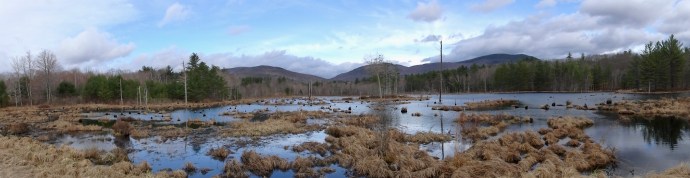
Cold as the weather is and has been, almost all the brook is open in the meadow there, an artery of black water in the midst of the snow, and there are many sink-holes, where the water is exposed at the bottom of dimple in the snow. Indeed, in some places these little black spots are distributed very thickly, the snow in swells covering the intervening tussocks.

January 14, 1853

011453.jpeg

in Thoreau’s Journal:

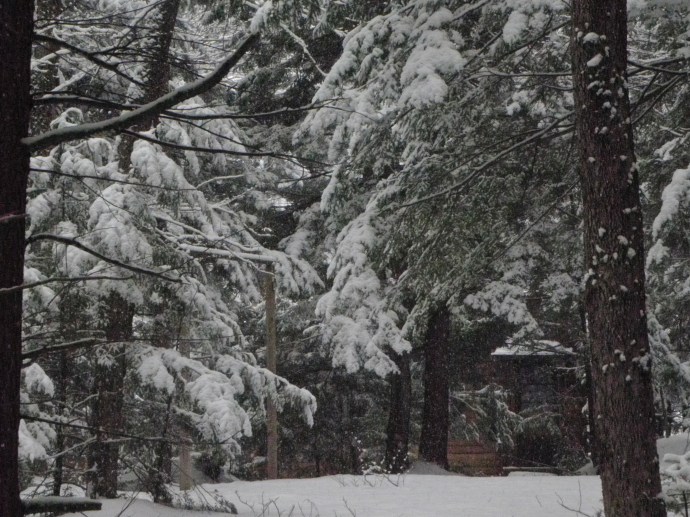
White walls of snow rest on the boughs of trees, in height two or three times their thickness. These white irregular arms give the forest a wintry and picturesque look at a distance. The evergreens, especially the pitch pine, often bear large irregular white burdens, agreeably diversified and loopholed by the interstices of the plumes. But it is only when fresh that this snow on the trees is beautiful. Already, before the storm is over, the surface of the snow in the high woods is full of indentations and hollows where some of this burden has fallen.

January 13, 1852

in Thoreau’s Journal:

Here I am on the Cliffs at half-past three or four o’clock.

P1144995.jpeg

The snow more than a foot deep over all the land. Few if any, leave the beaten paths. A few clouds are floating overhead, downy and dark. Clear sky and bright sun….

January 12, 1860

in Thoreau’s Journal:

It is a very beautiful and spotless snow now, it having just ceased falling. 

IMG_1642.jpeg

You are struck by its peculiar tractlessness, as if it were a thick white blanket just spread. As it were, each snow-flake lies as it first fell, or there is a regular gradation from the denser bottom up to the surface which is perfectly light, and as it were fringed with the last flakes that fell.

January 10, 1858

P4010007.jpeg

in Thoreau’s Journal:

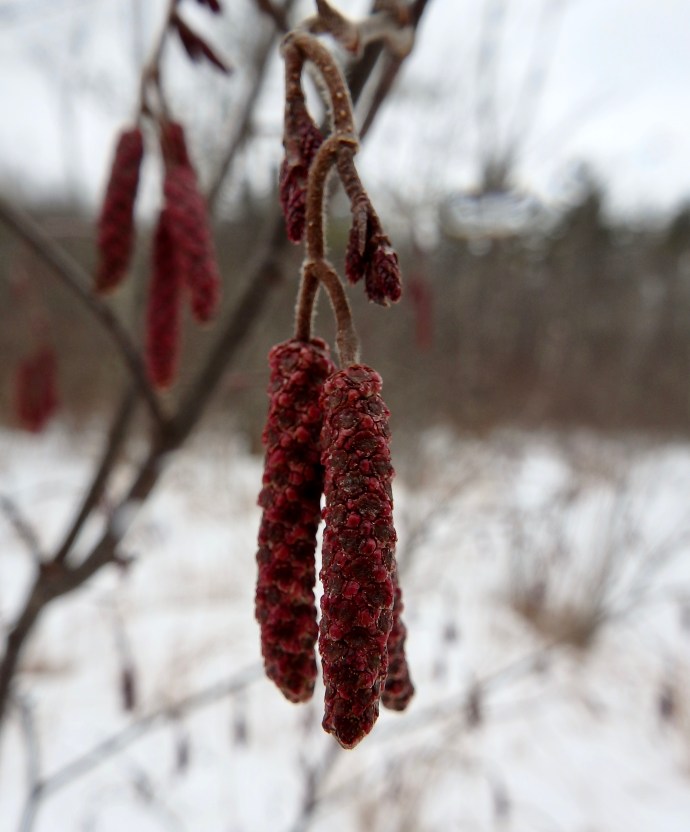
The N. side of Walden is a warm walk in sunny weather. If you are sick and despairing, go forth in winter and see the red alder catkins dangling at the extremity of the twigs all in the wintry air, like long, hard mulberries, promising a new spring and the fulfilment of all our hopes. We prize any tenderness, any softening in the winter, catkins, birds’ nests, insect life, etc. The most I get, perchance, is the sight of a mulberry-like red catkin, which I know has a dormant life in it seemingly greater than my own.

P3070057.jpeg

January 9, 1859

in Thoreau’s Journal:

010959.jpeg

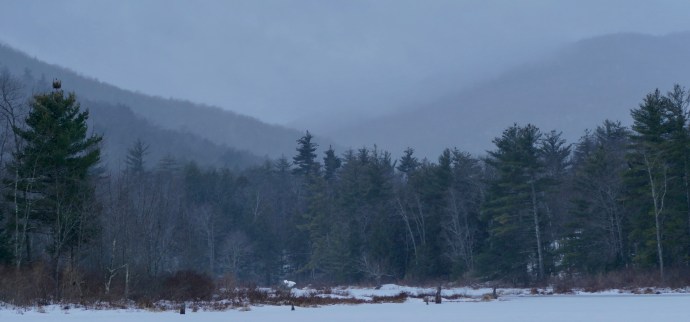
Standing in the middle of Walden I see with perfect distinctness the form & outlines of the low hills which surround it though they are wooded because they are quite white, being covered with snow– While the woods are for the most part bare or very thin leaved. I see thus the outline of the hills 8 or 10 rods back through the trees–This I can never do in the summer when the leaves are thick & the ground is nearly the same color with them. These white hills are now seen as through a veil of stems….The perfect winter days are cold but clear & bright.

January 8, 1852

010852.jpg

in Thoreau’s Journal:

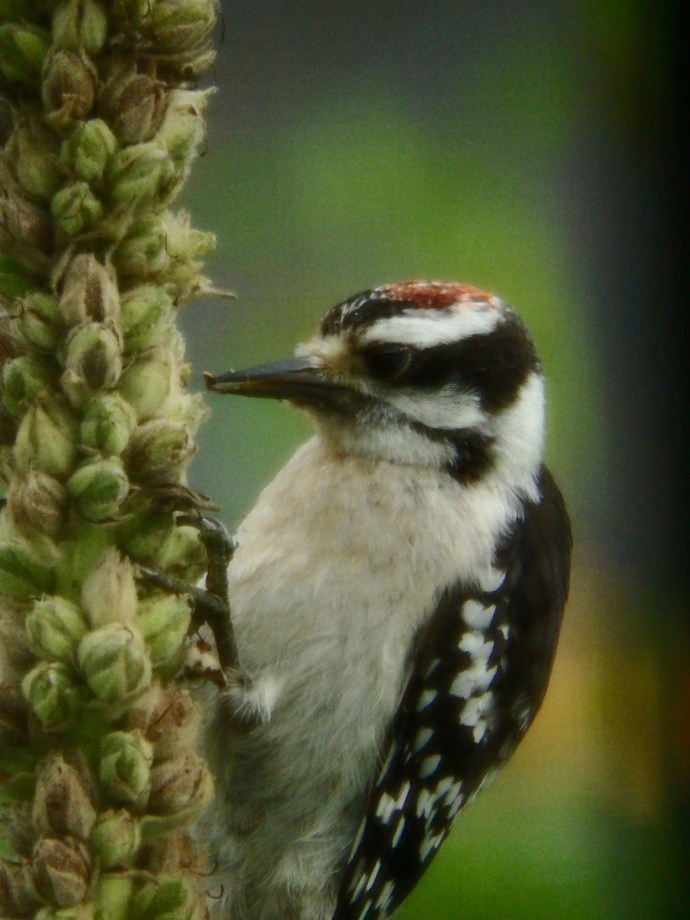
Stood within a rod of a downy woodpecker on an apple-tree. How curious and exciting the blood-red spot on its hind head! I ask why it is there but no answer is rendered by these snow-clad fields. It is so close to the bark I do not see its feet. It looks behind as it had a black cassock open behind and showing a white under-garment between the shoulders and down the back. It is briskly and incessantly tapping all round the dead limbs, but hardly twice in a place, as if to sound the tree, and so see if it has any worm in it, or perchance to start them. How much he deals with the bark of trees, all his life long tapping and inspecting it. He it is that scatters those fragments of bark and lichens about on the snow at the base of trees. What a lichenest he must be! or perhaps it is fungi make his favorite study, for he deals most with dead limbs. How briskly he glides up or drops himself down a limb, creeping round and round, and hopping from limb to limb, and now flitting with a rippling sound of his wings to another tree.

January 7, 1857

in Thoreau’s Journal:

P1130568.jpeg

P.M. To Walden…It is bitter cold, with a cutting N.W. wind….I go through the woods toward the cliffs along the side of the Well Meadow field. There is nothing so sanitive, so poetic, as a walk in the woods and fields even now, when I meet none abroad for pleasure. Nothing so inspires me, and excites such serene and profitable thought….No amount of gold or respectability could in the least redeem it, dining with the governor or member of Congress!! But alone in the distant woods or fields, in unpretending sprout lands or pastures tracked by rabbits, even in a bleak and, to most, cheerless day like this, when a villager would be thinking of his inn, I come to myself, I once more feel myself grandly related. This cold and solitude are friends of mine….I enter some glade in the woods, perchance, where a few weeds and dry leaves alone lift themselves above the surface of the snow, and it is as if I had come to an open window. I see out and around myself. Our sky-lights are thus far away from the ordinary resorts of men. I am not satisfied with ordinary windows. I must have a true sky-light, and that is outside the village….I am aware that most of my neighbours would think it a hardship to be compelled to linger here one hour, especially this bleak day, and yet I receive this sweet and ineffable compensation for it. It is the most agreeable thing I do. I love and celebrate nature even in detail because I love the scenery of these interviews and translations.

January 6, 1856

P2170083 (1).jpeg

in Thoreau’s Journal:

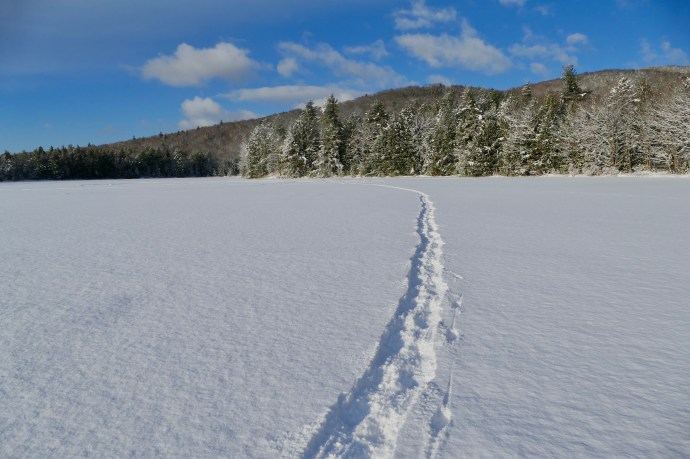
The exquisite purity of the snow & the gracefulness of its curves are remarkable. Around some houses there is not a single track– Neither man woman nor child–dog nor cat nor fowl has stirred out today.– There has been no meeting. Yet this afternoon since the storm it has not been very bad travelling.

January 5, 1852

IMG_1176 2.jpeg

in Thoreau’s Journal:

To-day the trees are white with snow—I mean their stems & branches and have the true wintry look—on the storm-side—not till this has the winter come to the forest. They look like the small frost work in the path & on the windows now—.  Especially the oak woods at a distance, & you see better the form which their branches take. That is a picture of winter & now you may put a cottage under them and roof it with snowdrifts.— & let the smoke curl up amid the boughs in the morning.

January 4, 1858

in Thoreau’s Journal:

[This citation is taken from the Princeton Transcripts of the to be published 1858 Journal.  I’m supposing that Thoreau took down the first three paragraphs as “field notes” and then set about polishing the singular event of the light on the stubble.  Perhaps this passage shows us something of one of Thoreau’s working methods?]

The pm weather still remarkably warm— The ice too soft for skiing— I go through by the Andromeda Ponds & down river from Fair Haven— I am encouraged by the sight of men fishing on the F.H. Pond—for it reminds me that they have animal spirits for such adventures— I am glad to be reminded that any go a-fishing. When I get down near to Cardinal shore the sun near setting, its light is wonderfully reflected from a narrow edging of yellowish stubble—at the edge of the meadow ice & part of the hill—an edging only 2 or 3 feet wide—& the stubble but a few inches high—

I am looking East— It is remarkable—because the ice is but a dull lead color (It is so soft & sodden) reflecting no light—& the hill beyond is a dark russet here & there patched with snow—but this warm intermediate line of stubble is all aglow— I get its true color & brightness best when I do not look directly at it, but a little above it toward the hills seeing it with the lower part of eye more truly and abstractly. It is as if all the rays slid over the ice & lodged against & were reflected by the stubble. It is surprising how much sun light a little straw that survives the winter will reflect—

The channel of the river is open part of the way— The corpus sericea & some young willow shoots are the red-barked twigs so conspicuous now along the river sides—

PB222035.jpeg

That bright & warm reflection of sunlight from the insignificant edging of stubble was remarkable— I was coming down stream over the meadow, on the ice within 4 or 5 rods of the eastern shore— The sun on my left was about a quarter of an hour above the horizon— The ice was soft & sodden—of a dull lead color—quite dark & reflecting no light as I looked eastward—but my eyes caught by accident a singular sunny brightness—reflected from the narrow border of stubble only 3 or 4 inches high (and as many feet wide perhaps) which rose along the edge of the ice at the foot of the hill. It was not a mere brightening of the bleached stubble—but the warm & yellow light of the sun, which, it appeared, it was peculiarly fitted to reflect— It was that amber light from the west which we sometimes witness after a storm—concentrated on this stubble—for the hill beyond was merely a dark russet spotted with snow— All the yellow rays seems to be reflected by this insignificant stubble alone—& when I looked more generally a little above it—seeing it with the under part of my eye—it appeared yet more truly & more bright— The reflected light made its due impression on the eye separated from the proper color of the stubble— —& it glowed almost like a low—steady & serene fire. It was precisely as if the sun light had mechanically slid over the thin ice & lodged against the stubble— — It will be enough to say of something warmly & sunnily bright that it glowed like lit stubble. It was remarkable that, looking eastward this was the only evidence of the light in the west.