in Thoreau’s Journal:
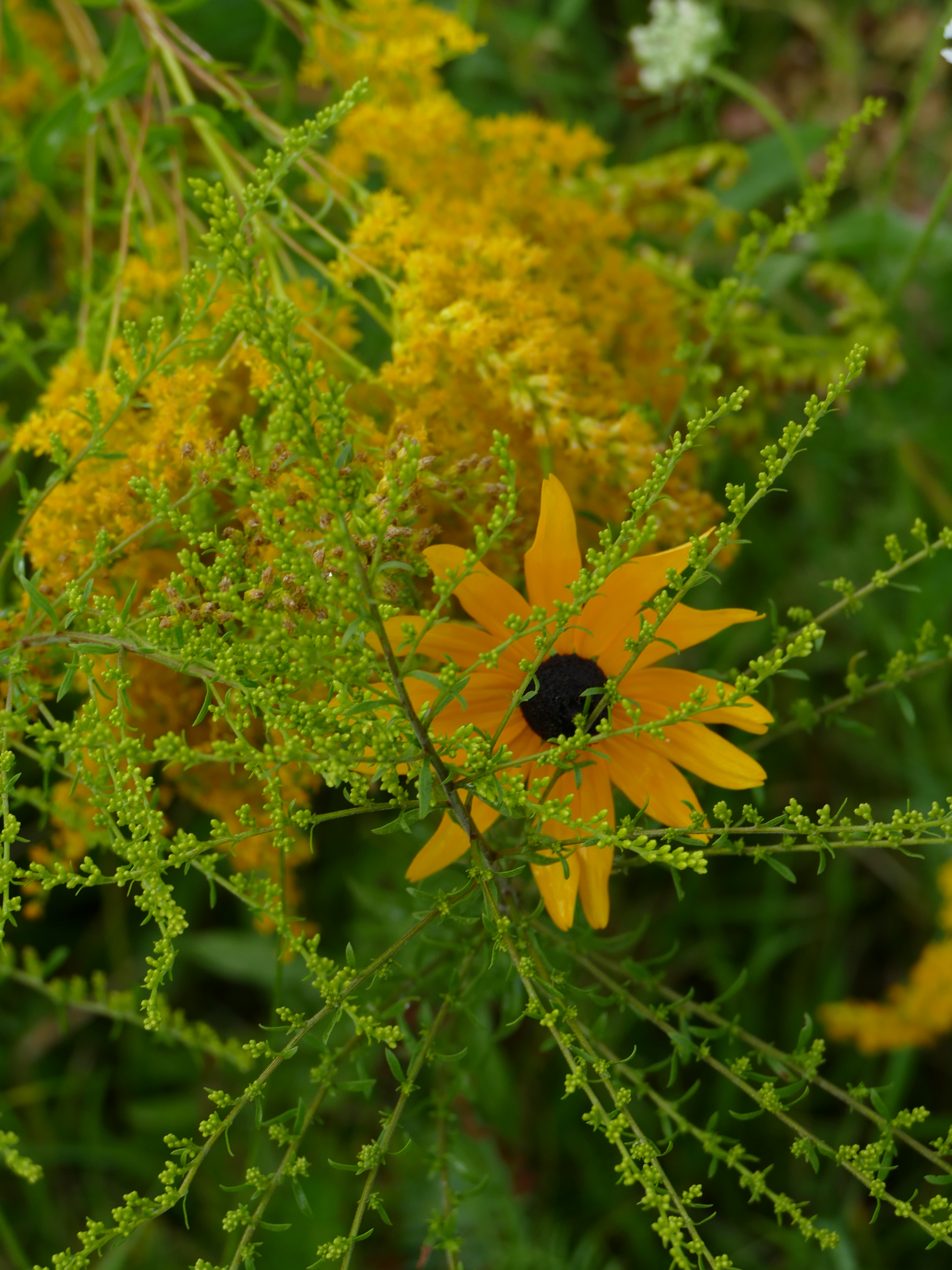
The now quite common golden rods fully out…
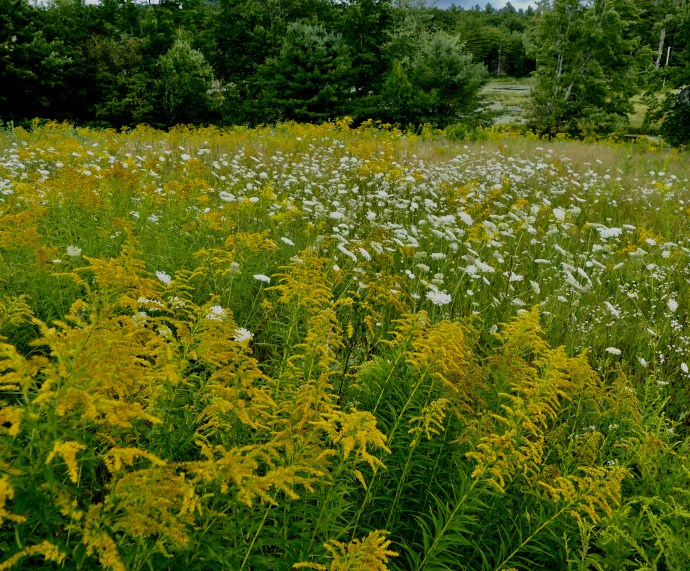
in Thoreau’s Journal:
The now quite common golden rods fully out…
in Thoreau’s Journal:
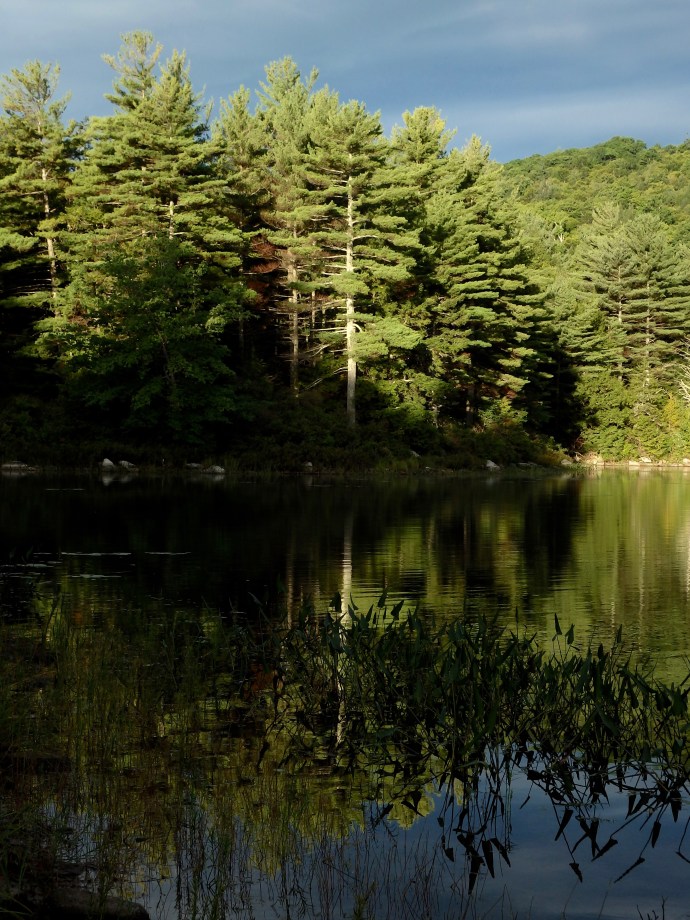
What shall we name this season–– This very late afternoon––or very early evening? This severe & placid season of the day most favorable for reflection––after the insufferable heats and the bustle of the day are over––& before the dampness & twilight of the evening! The serene hour––the Muses’ hour––the season of reflection.–– It is commonly desecrated by being made tea-time. It begins perhaps with the very earliest condensation of moisture in the air––when the shadows of hills are first observed.–– & the breezes begin to go down––& birds begin again to sing. The pensive season. It is earlier than the “chaste Eve” of the poet. Bats have not come forth–– It is not twilight–– There is no dew yet on the grass––& still less any early star in the heavens. It is the turning point between afternoon & evening. The few sounds now heard far or near––are delicious. It is not more dusky & obscure, but clearer than before–– The clearing of the air by condensation of mists more than balances the increase of shadows. Chaste Eve is merely preparing with “dewy fingers” to draw o’re all “the gradual dusky veil.” Not yet “The ploughman homeward plods his weary way” nor owls nor beetles are abroad. It is a season somewhat earlier than is celebrated by the poets–– There is not such a sense of lateness & approaching night as they describe. I mean when the first emissaries of Evening come to smooth the lakes and streams. The poet arouses himself and collects his thoughts. He postpones tea indefinitely. Thought has taken his siesta.
Each sound has a broad & deep relief of silence.
in Thoreau’s Journal:

The trillium fruit––(varnished & stained cherry wood) now ripe.


August 9, 1853 in Thoreau’s Journal:
How fatally the season is advanced toward the fall! I am not surprised now to see the small rough sunflower –– There is much yellow beside now in the fields. How beautiful now the early golden rods–– S. stricta rising above the wiry grass of the Great Fields in front of Peters where I sit (which is not worth cutting) not solid yellow like the sunflower––but little pyramidal or sheaf like golden clouds or mists supported by almost invisible leafy columns––which wave in the wind––like this elms which run up very tall & slender without a branch & fall over like a sheaf on every side. They give a very indefinite but rich mellow & golden aspect to the fields–– They are the agreeable for the indistinctness of their outline these pillars of fire, clouds which glow only on one side.


in Thoreau’s Journal:
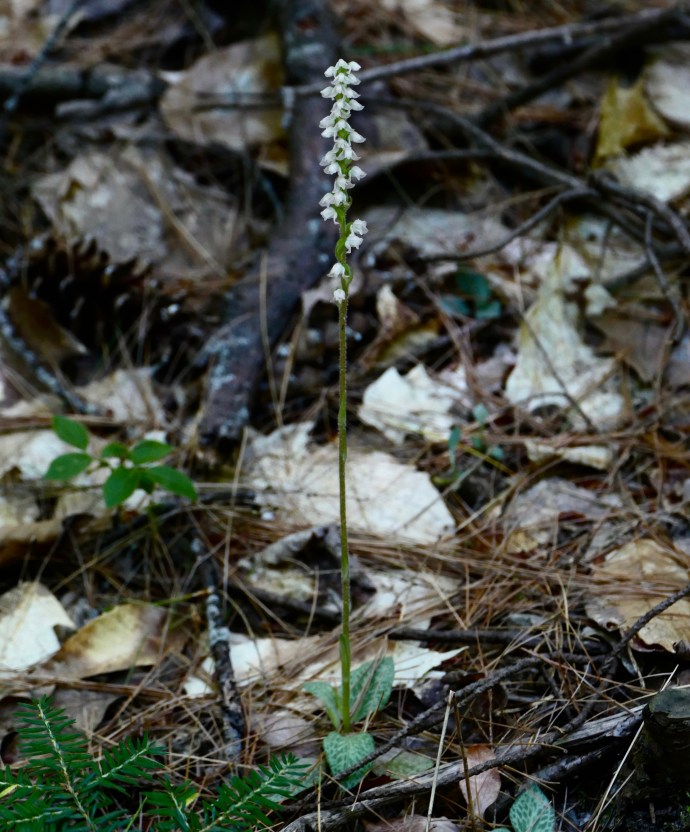
Rattlesnake plantain is budded…..No man ever makes a discovery––ever an observation of the least importance––but he is advertised of the fact by a joy that surprises him. The powers thus celebrate all discovery.
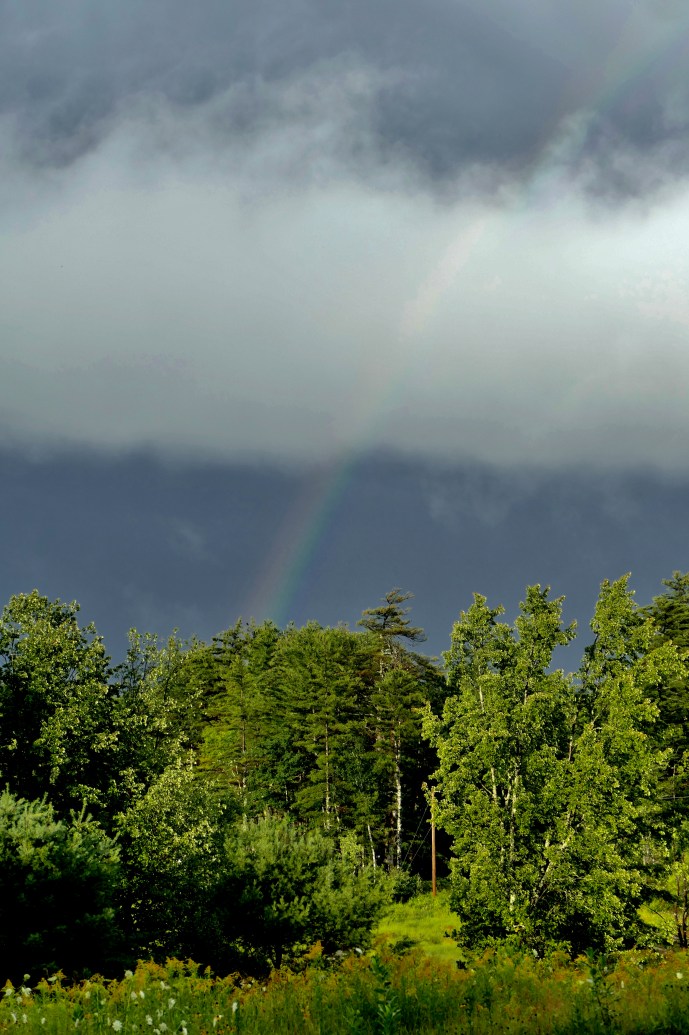
Photo: August 7, 2016
in Thoreau’s Journal:
We see the rain bow apparently when we are on the edge of the rain just as the sun is setting. If we are too deep in the rain then it will appear dim. Sometimes it is so near that I see a portion of its arch this side the woods in the horizon tinging them. Sometimes we are completely within it––enveloped by it––and experience the realization of the childs wish. The obvious colors are red & green. Why green? It is astonishing how brilliant the red may be. What is the difference between that red & the ordinary red of the evening sky. Who does not feel that here is a phenomenon which Natural philosophy alone is inadequate to explain?
The use of the rain-bow, who has described it.
in Thoreau’s Journal:
Still autumnal––breezy with a cool vein in the wind––so that passing from the cool & breezy into the sunny & warm places you begin to love the heat of Summer–– It is the contrast of the cool wind with the warm sun. I walk over the pin-weed field. It is just cool enough––in my thin clothes–– There is a light on the earth & leaves as if they were burnished–– It is the glistening autumnal side of Summer–– I feel a cool vein in the breeze––which braces my thought––& I pass with pleasure over sheltered & sunny portions of the sand where the summers heat is undiminished––& I realize what a friend I am losing….This off side of summer glistens like a burnished shield. The waters now are some degrees cooler––winds show the undersides of the leaves–– The cool nocturnal creak of the crickets is heard in the midafternoon–– Tansy is ap. now in its prime & the early golden-rods have acquired a brighter yellow––
From this off side of the year––this imbricated slope with alternating burnished surfaces & shady ledges––much more light & heat is reflected (less absorbed) methinks than from the springward side. In the midsummer we are of the earth––confounded with it & covered with its dust. Now we begin to erect ourselves somewhat & walk upon its surface. I am not so much reminded of former years, as of existence prior to years––
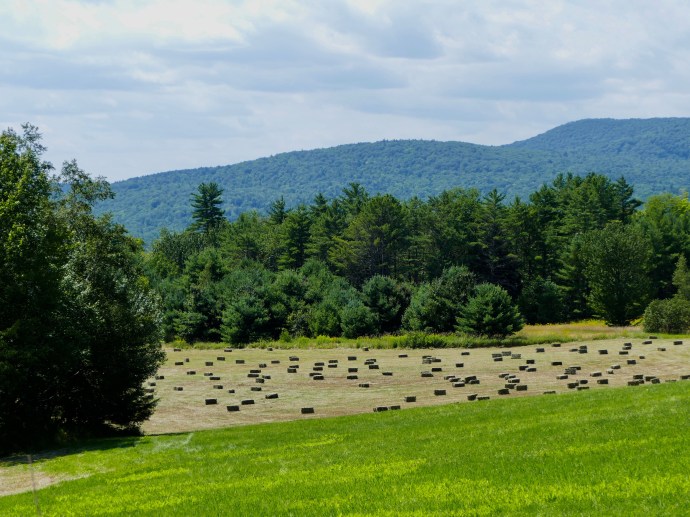
From Peters I look over the great meadows. There are 60 or more men in sight on them––in squads of half-a dozen far & near––revealed by their white shirts–– They are alternately lost & reappear from behind a distant clump of trees. A great part of the farmers of Concord are now in the meadows. & toward night great loads of hay are seen rolling slowly along the rivers bank––on the firmer ground there––& perhaps fording the stream itself––toward the distant barn––followed by a troop of tired haymakers.
in Thoreau’s Journal:
Methinks there are few new flowers of late. An abundance of small fruits takes their place. Summer gets to be an old story–– Birds leave off singing as flowers blossoming––i.e. perhaps in the same proportion….I see some delicate ferns, in the low damp woods by the brook, which have turned whitish at the extremity.
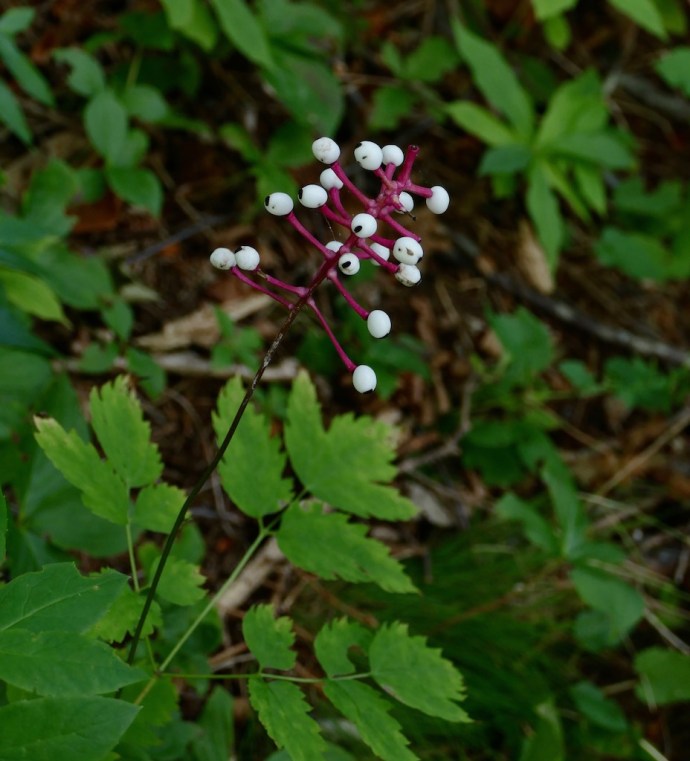
Cohosh berries have just begun to be white––as if they contained a pearly venom––wax white with a back spot (or very dark brown) imp eyed. The leaves of one of the cornels (alternate leaved––to else round-leaved) are some of them turned lake color.
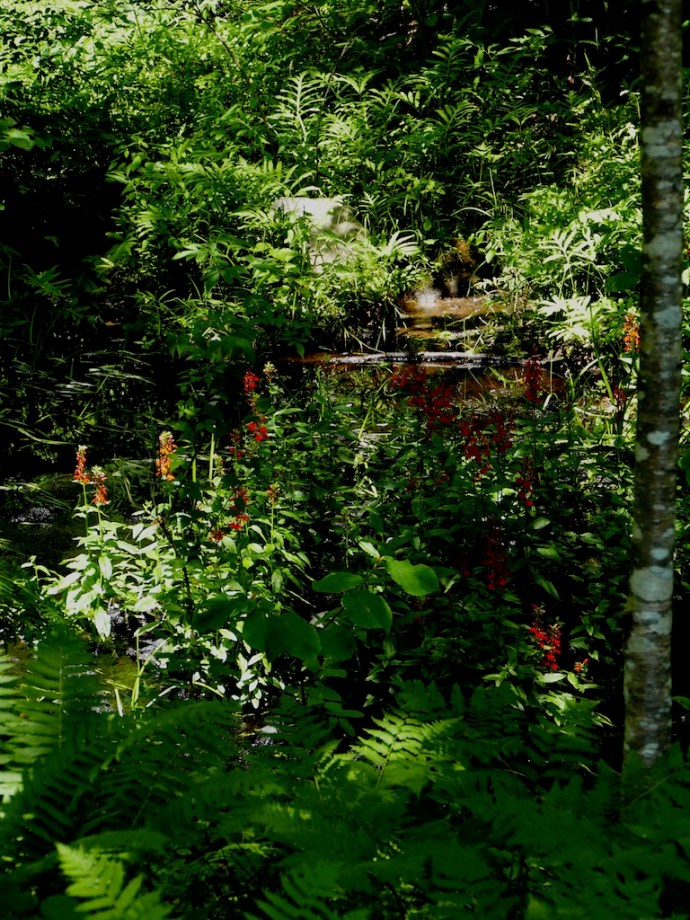
The weeds and now very high & rank in moist wood paths & along such streams as this. I love to follow up the course of the brook & see the cardinal flowers which stand in its midst above the rocks––their brilliant scarlet the more interesting in this open but dark cellar like wood––
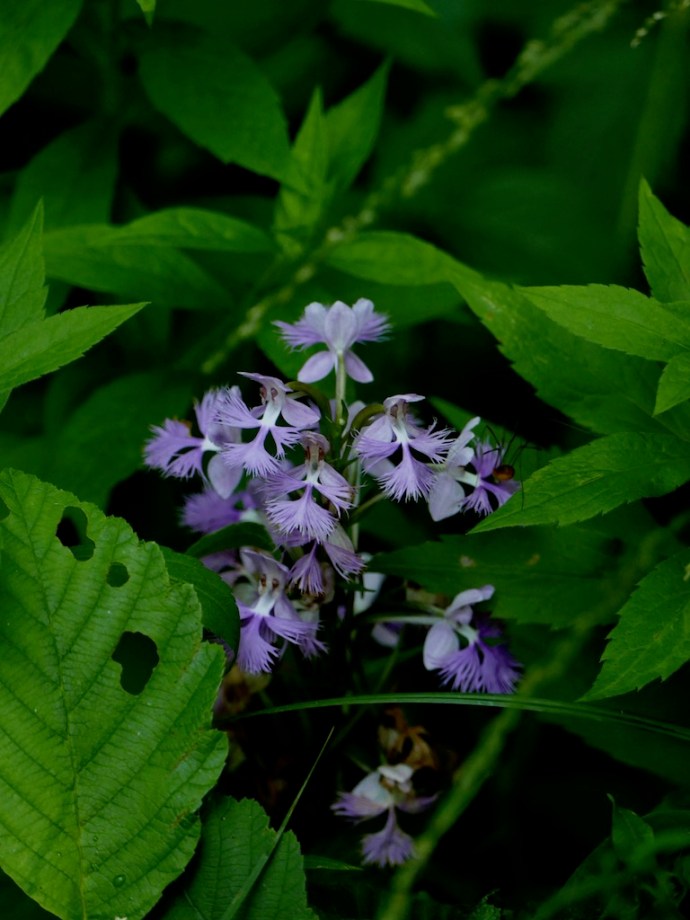
the small purple fringed orchises with the long dense spikes––all flower––for that is often all that is seen above the leaves of other plants–– Is not this the last flower of this peculiar flower kind; (i.e. all flower & color––the leaves subordinated)? & the mimulus ringens abundant & handsome in these low & rather shady places. Many flowers of course, like the last are prominent, if you visit such scenes as this––though one who confines himself to the roads may never see them.
in Thoreau’s Journal:
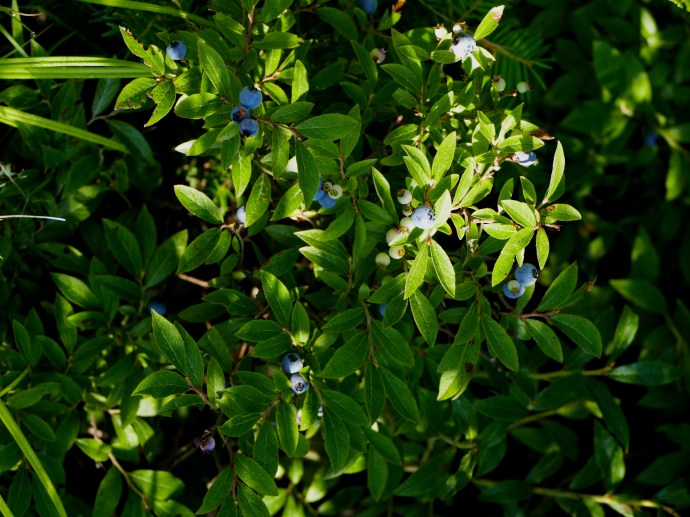
[at C. Miles’ Blueberry swamp]
The men, women & children who perchance come hither blueberrying in their season––get more than the value of the berries in the influence of the scene–– How wildly rich & beautiful hang on high there the blueberries which might so easily be poisonous––the cool blue clusters high in air–– Choke berries––fair to the eye but scarcely palateable hang far above your head weighing down the bushes. The wild holly berry––perhaps the most beautiful of berries––hanging by slender threads––from its more light & open bushes––& more delicate leaves. The bushes 8 feet high are black with choke berries––and there are no wild animals to eat them. I cannot sufficiently admire the Rhexia one of the highest colored purple flowers––but difficult to bring home in its perfection––with its fugacious petals. The Hieracium scabrum is just opening. Large sheathed polygonum by the river with white flowers on a slender spike. Lechea racemulosa? Of Big[elow]––not in Gray––a fine almost leafless bushy––sometimes reddish low plant in dry fields.
in Thoreau’s Journal:
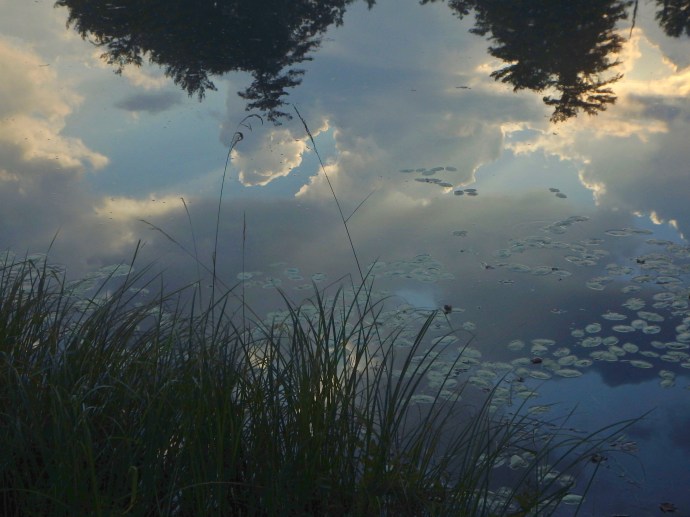
Most huckleberries–& blue berries & low blackberries are in their prime now. A pleasant time to behold a small lake in the woods is in the interval of a gentle rainstorm at this season––when the air & water are perfectly still but the sky still overcast. 1st because the lake is very smooth at such a time––2nd as the atmosphere is so shallow & contracted––being low roofed with clouds––the lake as a lower heaven is much larger in proportion to it–– With its glassy reflecting surface it is somewhat more heavenly & full of light––than the regions of the air above it.
in Thoreau’s Journal:
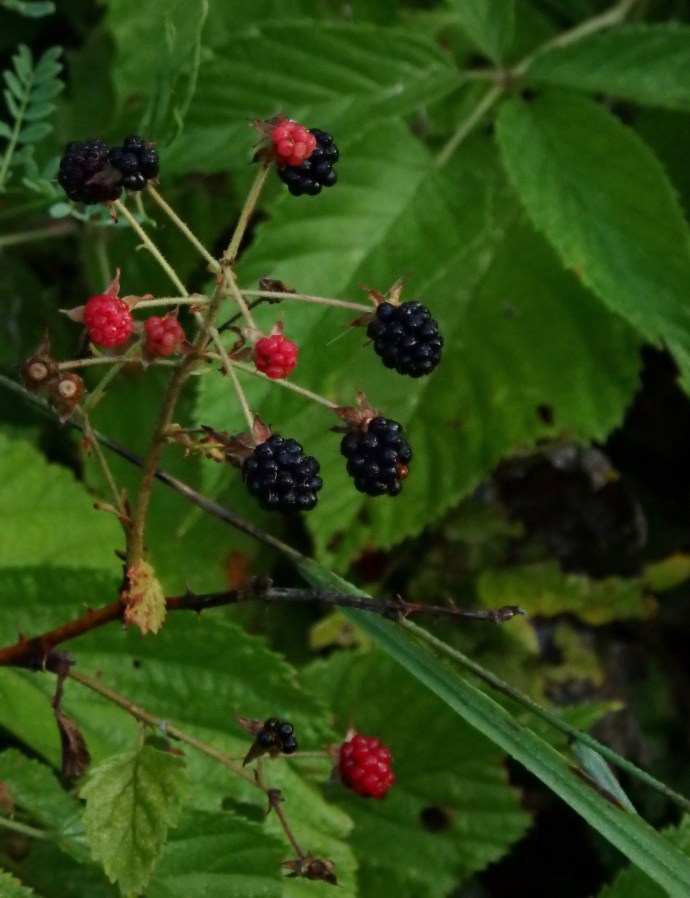
High blackberries begin to be ripe.
in Thoreau’s Journal:
As I go up the hill surrounded by its shadow while the sun is setting I am soothed by the delicious stillness of the evening. Save that on the hills the wind blows.

I was surprised by the sound of my own voice–– It is an atmosphere burdensome with thought–– For the first time for a month at least I am reminded that thought is possible. The din of trivialness is silenced. I float over or through the deeps of silence. It is the first silence I have heard for a month–– My life had been a River Platte tinkling over its sands but useless for all great navigations––but now it suddenly became a fathomless ocean. It shelved off to unimagined depths.

in Thoreau’s Journal
How much of beauty–of color as well as form–on which our eyes daily rest goes unperceived by us! No one but a botanist is likely to perceive nicely the different shades of green which the open surface of the earth is clothed–not even a landscape painter if he does not know the species of sedges and grasses which paint it.

in Thoreau’s Journal:
Saw but one Lysimachia stricta left in the meadows—the mead, sweet meadows.
in Thoreau’s Journal:
The fore part of this month was the warmest weather we have had; the last part sloping toward autumn has reflected some of its coolness, for we are very forward to anticipate the fall. Perhaps I may say the spring culminated with the commencement of haying––& the summer side of the year in mid July.
How long is it since I heard a veery? Do they go or become silent when the goldfinch heralds the autumn? Do not all flowers that blossom after mid-July remind us of the fall? After midsummer we have a belated feeling as if we had all been idlers––& are forward to see in each sight––& hear in each sound some presage of fall.–– just as in mid-age man anticipates the end of life. Tansy is a prevalent flower now––dog’s bane still common–– Night hawks squeak & fly low over Thrush alley at 4 Pm.

A small purple orchis Plantanthera psycodes––quite small––so that I perceive what I called by this name before must have been the fimbriata.
in Thoreau’s Journal:
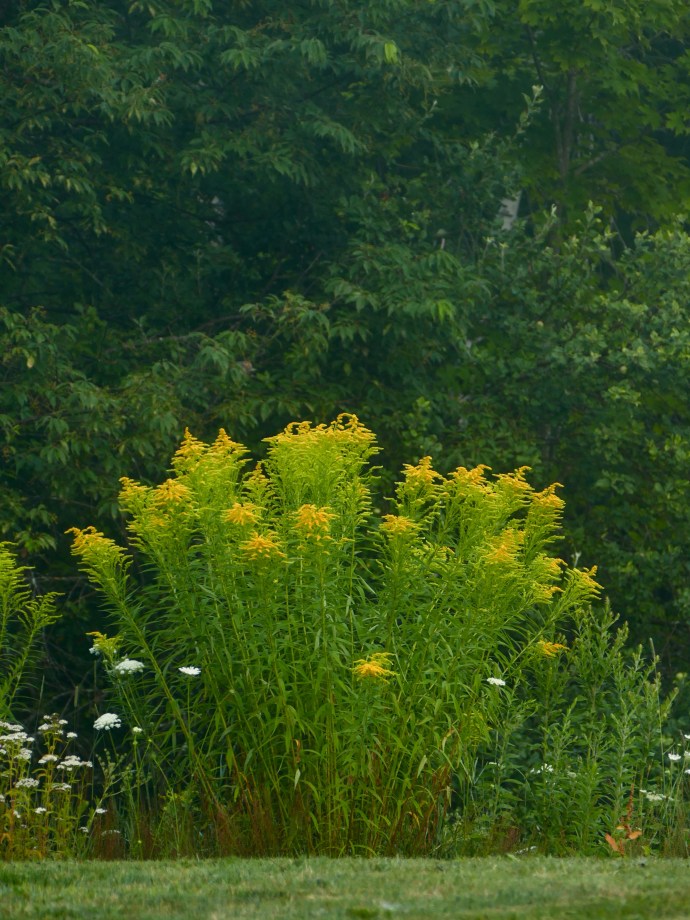
….I hear a dry ripe autumnal chirp of a cricket–– It is the next step to the first golden rod–– It grows where it escapes the mower––but no doubt in our localities of plants we do not know where they would prefer to grow if unmolested by man––but rather where they best escape his vandalism–– How large a proportion of flowers for instance are reperessed to & found by hedges walls & fences.

in Thoreau’s Journal:
Methinks the season culminated about the middle of this month––That the year was of indefinite promise before–– ––but that after the 1st intense heats we postponed the fulfillment of many of our hopes for this year––& having as it were attained the ridge of the summer––commenced to descend the long slope toward winter––the afternoon & down hill of the year–– Last evening it was much cooler––& I heard a decided fall sound of crickets––

in Thoreau’s Journal:
It is pleasing to behold at this season contrasted shade and sunshine on the side of neighboring hills. They are not so attractive to the eye when all in the shadow of a cloud or wholly open to the sunshine. Each must enhance the other….

Above all there is the Cardinal flower just opened––close to the water’s edge––remarkable for its intense scarlet color––contrasting with the surrounding green….It has been a clear cool breezy day for the season.
in Thoreau’s Journal:

….also the Goldfinch twitters over oftener…. I mark again the sound of crickets or locusts about alders &c about this time when the first asters open––which makes you fruitfully meditative–– Helps condense your thoughts––like the meldews in the afternoon–– This the afternoon of the year. How apt we are to be reminded of lateness—even before the year is half spent. Such little objects check the diffuse tide of our thoughts & bring it to a head––which thrills us–– They are such fruits as music, poetry, love which humanity bears.
in Thoreau’s Journal:
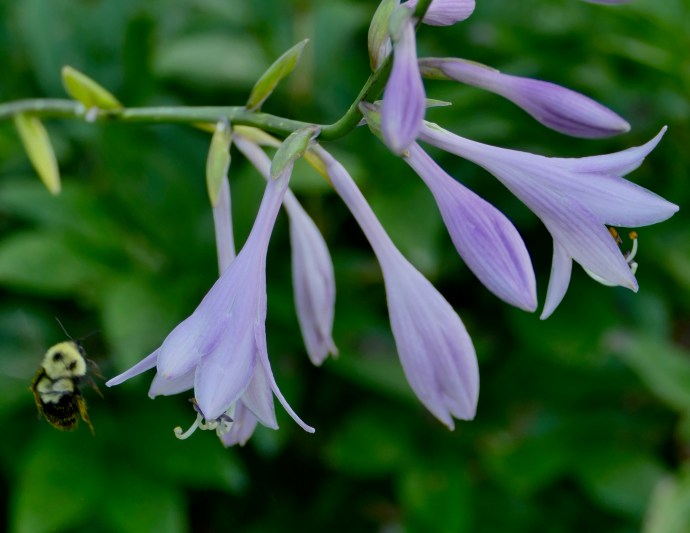
It is a rare music the earliest bee’s hum amid the flowers––revisiting the flower bells just after sunrise.


You must be logged in to post a comment.