February 23, 1860

P1144993.jpeg

in Thoreau’s Journal:

A fact must be the vehicle of some humanity in order to interest us. Otherwise it is like giving a man a stone when he asks for bread. Ultimately the moral is all in all, and we do not mind it if inferior truth is sacrificed to superior, as when the annalist fables, and makes animals speak and act like men. It must be warm, moist, incarnated, have been breathed on at least. A man has not seen a thing who has not felt it.

February 22, 1852

P1220972.jpeg

in Thoreau’s Journal:

A mild misty day….the ringlets & ends of usnea are so expanded & puffed out with light & life….they take the place of leaves in the winter.— The clusters dripping with moisture…

February 21, 1855

P1140302.jpeg

in Thoreau’s Journal:

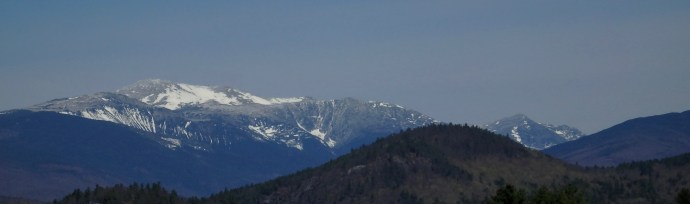
We now notice the snow on the mountains….I think there can be no more arctic scene than these mountains, on the edge of the horizon, completely crusted over with snow, the sun shining on them….the snow has a singular smooth and crusty appearance, and by contrast you see even single evergreens rising here and there above it….

February 20, 1857

P1130701.jpeg

in Thoreau’s Journal:

What is the relation between a bird and the ear that appreciates its melody, to whom, perchance, it is more charming and significant than to any one else? Certainly they are intimately related, and the one was made for the other. It is a natural fact. If I were to discover that a certain kind of stone by the pond shore was affected, say partially disintegrated by a particular natural sound, as of a bird or insect, I see that one could not be completely described without describing the other.

I am that stone by the pond side.

February 19, 1852

P1130364.jpeg

in Thoreau’s Journal:

Everywhere snow—gathered into sloping drifts about the walls & fences—& beneath the snow the frozen ground—and men are compelled to deposit the summer’s provision in burrows in the earth like the ground-squirrel. Many creatures daunted by the prospect migrated in the fall, but man remains and walks over the frozen snow crust—and over the stiffened rivers & ponds.  & draws now upon his summer stores. Life is reduced to its lowest terms. There is no home for you now—in this freezing wind but in that shelter which you prepared in the summer— You steer straight across the fields to that in season.  I can with difficulty tell when I am over the river. There is a similar crust over my heart. Where I rambled in the summer—& gathered flowers and rested on the grass by the brookside in the shade—now no grass nor flowers—nor brook nor shade—but cold unvaried snow stretching mile after mile and no place to sit.

February 18, 1852

P1210960.jpeg

in Thoreau’s Journal:

One discovery in Meteorology, one significant observation is a good deal. I am grateful to the man who introduces order among the clouds. Yet I look up into the heavens so fancy free, I am almost glad not to know any law for the winds.

February 17, 1852

PC210002.jpeg

in Thoreau’s Journal:

Perhaps the peculiarity of those western vistas was partly owing to the shortness of the days when we naturally look to the heavens & make the most of the little light.— When we live an arctic life. When the woodchopper’s axe reminds us of twilight at 3 o’clock p.m. When the morning & the evening literally make the whole day.

When I travelled as it were between the portals of the night—& the path was narrow as well as blocked with snow.

February 16, 1859

P3260006.jpeg

in Thoreau’s Journal:

From the entrance of the mill road, I look back through the sunlight, this soft afternoon, to some white pine tops near Jenny Dugan’s. Their flattish boughs rest stratum above stratum like a cloud, a green mackerel sky, hardly reminding me of the concealed earth so far beneath. They are like a flaky crust of the earth, a more ethereal, terebinthine, evergreen earth….My eyes nibble the piny sierra which makes the horizon’s edge as a hungry man nibbles a cracker.

February 15, 1855

P2250115.jpeg

in Thoreau’s Journal:

All day a steady, warm, imprisoning rain, carrying off the snow, not unmusical on my roof. It is a rare time for the student and reader who cannot go aboard in the P.M., provided he can keep awake, for we are wont to be as drowsy as cats in such weather. Without, it is not walking, but wading. It is so long since I have heard it, that the steady rushing, soaking sound of the rain on the shingles is musical. The fire needs no replenishing, and we save our fuel. It seems like a distant forerunner of spring. It is because I am allied to the elements that the sound of the rain is thus soothing to me. This sound sinks into my spirit, as the water into the earth, reminding me of the season when snow and ice will be no more, when the earth will be thawed, and drink up the rain as fast as it falls.

February 13, 1859

in Thoreau’s Journal:

Winter comes to make walking possible where there was no walking in the summer. 

Screen Shot 2019-02-12 at 2.33.38 PM.jpeg

Not till winter can we take possession of the whole of our territory…

The wonderful stillness of a winter day! The sources of sound are, as it were, frozen up…A transient acquaintance with any phenomenon is not sufficient to make it completely the subject of your muse.

P1220961.jpeg

You must be so conversant with it as to remember it, and be reminded of it long afterward, while it lies remotely fair and elysian in the horizon, approachable only by the imagination.

February 12, 2019, photos

February 12, 1851

52053756_10219182438813203_6837572915731365888_o.jpg

in Thoreau’s Journal:

I find that it is an excellent walk for variety and novelty and wildness to keep round the edge of the meadow. The ice not being strong enough to bear and transparent as water, on the bare ground or snow just between the highest water mark and the present water line is a narrow, meandering walk rich in unexpected views and objects….If you cannot go on the ice, you are then gently compelled to take this course, which is, on the whole, more beautiful, to follow the sinuosities of the meadow.

February 11, 1854


P1220837.jpeg

in Thoreau’s Journal:

In the winter we so value the semblance of fruit that even dry, black female catkins of the alder are an interesting sight, not to mention, on shoots rising a foot or two above these, the red or mulberry male catkins in little parcels dangling at a less than right angle with the stems, and the short female ones at their bases.

February 10, 1860

P1130749.jpeg

in Thoreau’s Journal:

I do not know of any more exhilarating walking than up or down a broad field of smooth ice like this in a cold, glittering, winter day, when your rubbers give you a firm hold on the ice. 

February 9, 1852

P1130483.jpeg

in Thoreau’s Journal:

At 9 A M up river to fair Haven Pond. This is our month of the crusted snow. Was this the Indians? I get over the half buried fences at a stride—and the drifts slope up to the tops of the walls on each side. The crust is melted on the S slopes and lets me in—or where the sun has been reflected (yesterday) from a woodside—& rotted it, but the least inclination to the north is evidence of a hard surface—  On the meadows and in level open fields away from the reflection of pines & oak leaves it will generally bear. 

February 8, 1852

in Thoreau’s Journal:

This afternoon the first crust to walk on. It is pleasant to walk over the fields raised a foot or more above their summer level—and the prospect is altogether new…

P1220760.jpeg

In this winter often no apparent difference between rivers, ponds & fields.

February 7, 1858

 in Thoreau’s Journal:

If possible, come upon the top of a hill unexpectedly, perhaps through woods,

and then look off from it to the distant earth which lies behind a bluer veil,

17-01-02 - 1 of 112 (94).jpeg

before you can see direct down it, i.e.,

bringing its own near top against the distant landscape.

February 5, 1852

in Thoreau’s Journal:

P1140468.jpeg

The trunks & branches of the trees are of different colors at dif. times & in dif. lights & weathers. In sun, rain, & in the night. The oaks bare of leaves on Hubbards hill side are now a light grey in the sun and their boughs seen against the pines behind are a very agreeable maze. The stems of the white pines also are quite grey at this distance with their lichens. I am detained to contemplate the boughs—feathery boughs of the white pines, tier above tier, reflecting a silvery light—with intervals (between them) though which you look, if you so intend your eye, into the darkness of the grove. That is you can see both the silvery lighted & greenish bough—& the shadowy intervals as belonging to one tree—or more truly refer the latter to the shade behind.

February 4, 1852

in Thoreau’s Journal:

P1220822.jpeg

A mild, thawy day. The needles of the pine are the touch-stone for the air—any change in that element is revealed to the practiced eye by their livelier green or increased motion. They are the tell-tales. Now they are (the white pine) a cadaverous, misty blue—anon a lively silvery light plays on them —& they seem to erect themselves unusually—while the pitch pines are a brighter yellowish green than usual—The sun loves to nestle in the boughs of the pine & pass rays through them.

P1220834.jpeg

The scent of bruised pine leaves where a sled has passed is a little exciting to me now…