in Thoreau’s Journal:

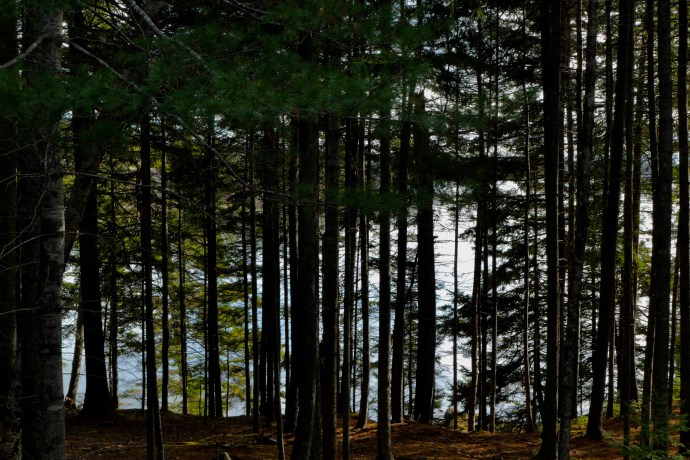
The pretty little Mitchella repens, with its twin flowers spots the ground under the pines, its downy-petaled, cross-shaped flowers, and its purplish buds.
in Thoreau’s Journal:

The pretty little Mitchella repens, with its twin flowers spots the ground under the pines, its downy-petaled, cross-shaped flowers, and its purplish buds.
in Thoreau’s Journal:

The birch is the surveyor’s tree– It makes the best stakes to look at through the sights of a compass except when there is snow on the ground. Their white bark was not made in vain. In surveying woodlots I have frequent occasion to say this is what they were made for….
in Thoreau’s Journal:
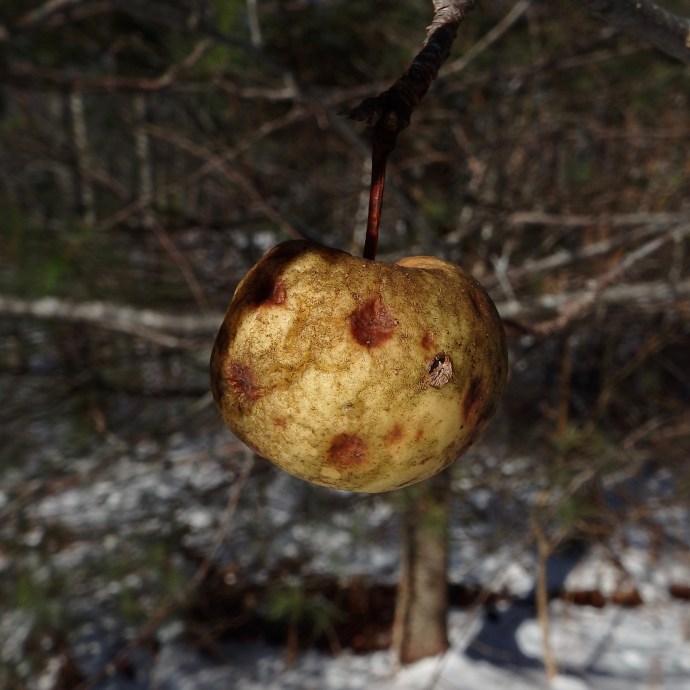
Nature has looked uncommonly bare & dry to me for a day or two. With our senses applied to the surrounding world we are reading our own physical & corresponding moral revolutions. Nature was so shallow all at once I did not know what had attracted me all my life. I was therefore encouraged when going through a field this evening, I was unexpectedly struck with the beauty of an apple tree –– the perception of beauty is a moral test….

I see the tephrosia out through the dusk––a handsome flower. What rich crops this dry hill side has yielded. First I saw the v. pedata here––& then the Lupines & the Snap-Dragon covered it––& now the Lupines are done & their pods are left––the tephrosia has taken their place. This small dry hill side is thus a natural garden–– I omit the flowers which grow here & name only those which to some extent cover it or possess it. No eighth of an acre in a cultivated garden could be better clothed or with a more pleasing variety from month to month––& while one flower is in bloom you little suspect that which is to succeed & perchance eclipse it. It is a warmly placed dry hill side beneath a wall––very thinly clad with grass. Such spots there are in nature-natural flower gardens. –– Of this succession I hardly know which to admire the most. It would be pleasant to write the history of one hill side for one year. First and last you have the colors of the rain-bow & more––& the various fragrances which it has not. Blackberries––roses––& dogs bane also are now in bloom here–– I hear neither toads not bull frogs at present––they want a warmer night. I hear the sound of distant thunder though no cloud is obvious. muttering like the roar of artillery. This is a phenomena of this season––

in Thoreau’s Journal:

Upland haying begun. or beginning–
in Thoreau’s Journal:

A comfortable breezy June Morning.….Me thinks there are most tall butter-cups now.
in Thoreau’s Journal:
Moon not quite full– Going across Depot Field – The western sky is now a crescent of saffron inclining to salmon–a little dunnish perhaps. The grass is wet with dew–the evening star has come out but no other– There is no wind– I see a night hawk in the twilight flitting near the ground– I hear the hum of a beetle going by– The greenish fires of lightning bugs are already seen on the meadow– I pass through Hubbardston along the side of a field of oats–which wet one leg. I perceive the smell of a burning far off by the river, which I saw smoking 2 days ago. The moon is laboring in a mackerel cloud and my hopes are with her. Why do I hear no bull frogs yet– Do they ever trump as early and as universally as on that their first evening? I hear the whipper wills on different sides – White flowers alone show much at night–white clover–& white-weed It is commonly still at night as now– The day has gone by with its wind like the wind of a cannon ball–and now far in the west it blows–by that dun colored sky you may track it– There is no motion nor sound in the woods (Hubbards Grove) along which I am walking. The trees stand like great screens against the sky.

The distant village sounds, are the barking of dogs, that animal with which man has allied himself, and the rattling of wagons– For the farmers have gone into town shopping this Saturday night– The dog is the tamed wolf–as the villager is the tamed savage But here the crickets are heard in the grass chirping from everlasting to everlasting, a mosquito sings near my ear–and the humming of a dawbug drowns all the noise of the village. So roomy is the universe the moon comes out of the mackerel cloud and the traveller rejoices. How can a man write the same thoughts by the light of the moon–resting his book on a rail by the side of a remote potato field–that he does by the light of the sun, on his study table. The light is but a luminousness– My pencil seems to move through a creamy mystic medium – The moonlight is rich & somewhat opaque like cream but The day light is thin & blue like skimmed milk– I am less conscious than in the presence of the sun–my instincts have more influence…

in Thoreau’s Journal:
There are some fine large clusters of lambkill close to the shore of Walden under the Peak, fronting the south. They are early, too, and large apparently, both on account of the warmth and the vicinity of the water.

These flowers are in perfect cylinders, sometimes six inches long by two wide, and three such raying out or upward from one centre, that is, three branches clustered together. Examined close by, I think this handsomer than the mountain laurel. the color is richer, but it does not show so well at a little distance, and the corymbs are somewhat concealed by the green shoot and leaves rising above them, and also by the dry remains of last year’s flowers.

in Thoreau’s Journal:

The Rosa lucida, with its broader and duller leaves, but larger and perhaps deeper-colored and more purple petals, perhaps yet higher scented, and its great yellow centre of stamens.
in Thoreau’s Journal:
By half past fives robins more than before–crows of course & jays. Dogsbane is just ready to open. Swallows. It is pleasant walking through the June grass (in Pleasant meadow) so thin & offering but little obstruction. The night hawk squeaks & booms. The veratrum viride top is now a handsome green cluster 2 feet by 10/12. Here also at well meadow head I see the fringed purple orchis–unexpectedly beautiful–though a pale lilac purple–a large spike of purple flowers.

I find two–one answers to the O. fimbriata of Big & Psycodes of Gray–the other the grandiflora of Big– & fimbriata of Gray. Big. thinks it the most beautiful of all the orchises.

I am not prepared to say it is the most beautiful wild flower I have found this year– Why does it grow there only–far in a swamp remote from public view? It is somewhat fragrant reminding me of the ladies slipper. Is it not significant that some rare & delicate beautiful flowers should be found only in unfrequented wild swamps.–

There is the mould in which the orchis grows. Yet I am not sure but this is a fault in the flower–

It is not quite perfect in all its parts– a beautiful flower must be simple–not spiked.– It must have a fair stem & leaves– This stem is rather naked & the leaves are for shade & moisture. It is fairest seen rising from amid brakes & hellebore, its lower part or rather naked stem concealed.
Where the most beautiful wild flowers grow–there Man’s spirit is fed–& poets grow– It cannot be high-colored growing in the shade. Nature has taken no pains to exhibit–and few that bloom are ever seen by mortal eyes.

The most striking & handsome large wild flower of the year thus far the I have seen.
in Thoreau’s Journal:
Full moon last night….
An evening for poets to describe….All nature is in an expectant attitude..
Where my path crosses the brook in the meadow there is a singularly sweet scent in the heavy air where the brakes grow, the fragrance of the earth, as if the dew were a distillation of the fragrant essences of Nature.
As I ascended the hill, I found myself in a cool, fragrant, dewy, up-country, mountain, morning air. The moon was now seen rising over Fair Haven, and at the same time reflected in the river, pale and white, like a silvery cloud barred with a cloud…

How moderate, deliberate is Nature, how gradually the shades of night gather and deepen, giving man ample leisure to bid farewell to day, conclude his day’s affairs, and prepare for slumber…
Not much before ten o’clock does the moon-light night begin, when man is asleep and day fairly forgotten. Then is the beauty of moonlight seen upon lonely pastures where cattle are silently feeding. Then let me walk in a diversified country of hill and dale, with heavy woods on one side, and copses and scattered trees enough to give me shadows.
in Thoreau’s Journal:

I see the yellow water ranunculus in dense fields now in some places on the side of the stream, two or three inches above water, and many gone to seed…
in Thoreau’s Journal:

Visited the great orchis which I am waiting to have open completely. It is emphatically a flower; its great spike six inches by two, of delicate, pale purple flowers which begin to expand at bottom, rises above and contrasts with the green leaves of hellebore, skunk-cabbage, and ferns (by which its own leaves are concealed), in the cool shade of an alder swamp. It is the more interesting for its variety and secluded situations in which it grows, owing to which it is seldom seen, not thrusting itself upon the observation of men. It is a pale purple, as if from growing in the shade. It is not remarkable in its stalk and leaves, which, indeed, are commonly concealed by other plants.
in Thoreau’s Journal:
No one to my knowledge, has observed the minute differences in the seasons. Hardly two nights are alike. The rocks do not feel warm to-night, for the air is warmest; nor does the sand particularly. A book of the seasons, each page of which should be written out-of-doors, or in its own locality wherever it may be.
[Later the same June, Thoreau used his book A Week on the Concord and Merrimack Rivers to explain what he meant by a book written “out-of-doors:”]
June 29, 1851
I thought that one peculiarity of my “Week” was its hypaethral character, to use an epithet applied to those Egyptian temples which are open to the heavens above, under the ether. I thought that it had little of the atmosphere of the house about it, but might have been written wholly, as in fact it was to a great extent out of doors. I was only at a late period in writing it, as it happened that I used any phrases implying that I lived in a house or led a domestic life. I trust it does not smell so much of the study and library, even of the poet’s attic, as of the fields and woods, that it is a hypaethral or unroofed book, lying open under the ether, and permeated by it, open to all weathers, not easy to be kept on a shelf.

in Thoreau’s Journal:
Lupines their pods & seeds–1st the profusion of color. spikes of flowers rising above & prevailing over the leaves.– then the variety in dif clumps rose? purple-blue & white-then the handsome palmate leaf made to hold dew. Gray says from lupus wolf because they “were thought to devour the fertility of the soil.” This is scurrilous. Under Fair Haven. First grew the V. pedata here–then Lupines mixed with the delicate snapdragon. This soil must abound with the blue principle. Is that the tephrosia so forward. The fruit of the cerasus pumila is puffed up, is puffed up like Haw’s plums. The aralia nudicaulis already shows small green berries. The lupine has no pleasant fragrance. The cistus a slight enlargement of the Cinquefoil. The June? cinquefoil

––what the summer can do.
in Thoreau’s Journal:
1852
The buck-bean in Hubbards meadow just going out of blossom. The yellow water ranunculus is an important flower in the river now rising above the white lily pads whose flower does not yet appear. I perceive that their petals washed ashore line the sand conspicuously. The green briar in flower. For a week past we have had washing days– The grass waving and trees having leafed out their boughs wave and feel the effect of the breeze. Thus new life & motion is imparted to the trees– The season of waving boughs–and the lighter under sides of the new leaves are exposed. This is the first half of June. Already the grass is not so fresh & liquid velvety as green–having much of its blossom & some even gone to seed–& it is mixed with reddish ferns & other plants–but the general leafiness–shadiness & waving of grass & boughs in the breeze characterise the season. The wind is not quite agreeable–because it prevents your hearing the birds sing. Meanwhile the crickets are strengthening their quire. The weather is very clear & the sky bright. The river shines like silver. Methinks this is a traveller’s month. The locust in bloom– The waving undulating rye. The deciduous trees have filled up the intervals between the (pines.) evergreens. & the woods are bosky now. Is that the Thalictrum Cornuti that shows green stems? at the Corner spring? Gathered strawberries on Fair Haven. rather acid yet.

1853
4:15 Am To Nawshawtuct by boat
A prevalent fog through not quite so thick as the last described–it is a little more local–for it is so thin SW of this hill that I can see the earth through it–but as thick as before NE–yet here & there deep valleys are excavated in it–as painters imagine the red sea for the passage of Pharaoh’s host–wherein trees and houses appear as it were at the bottom of the sea. What is peculiar about it is that it is the tops of the trees which you see first & most distinctly before you see their trunks–or where they stand on earth. Far in the NE there is as before apparently a tremendous surf breaking on a distant shoal. It is either a real shoal i.e. a hill over which the fog breaks or the effect of the sun’s rays on it.

in Thoreau’s Journal:
Within a day or two has begun that season of summer when you see afternoon showers, maybe with thunder, or the threat of them, dark in the horizon,

and are uncertain whether to venture far away or without an umbrella.
in Thoreau’s Journal:
Clover begins to redden the fields generally. The quail is heard at a distance. Buttercups of various kinds mingled, yellow the meadows, the tall, the bulbous, the repens.

The cinquefoil, in its ascending state, keeping pace with the grass, is now abundant in the fields. Saw it one or two weeks ago. This is a feature of June. Still both high and low blueberry and huckleberry blossoms abound. The hemlock woods, their fanlike sprays edged or spotted with short, yellowish green shoots, tier above tier, shelf above shelf, look like a cool bazaar of rich embroidered goods.

in Thoreau’s Journal:
This is June, the month of grass and leaves…Already the aspens are trembling again, and a new summer is offered me. I feel a little fluttered in my thoughts, as if I might be too late. Each season is but an infinitesimal point. It no sooner comes than it is gone. It has no duration. It simply gives a tone and hue to my thought.

Each annual phenomenon is a reminiscence and prompting. Our thoughts and sentiments answer to the revolutions of the seasons as two cog-wheels fit into each other. We are conversant with only one point of contact at a time, from which we receive a prompting and impulse, and instantly pass to a new season or point of contact, A year is made up of a certain series and number of sensations and thoughts, which have their language in nature. Now I am ice, now I am sorrel. Each experience reduces itself to a mood of the mind.

June 6, 2017 Photos
in Thoreau’s Journal:
The lupine is now in its glory.

It is the more important because it occurs in such extensive patches even an acre or more together––and of such a pleasing variety of colors, purple-pink or lilac–and white–especially with the sun on it, when the transparency of the flower makes its color changeable.

It paints a whole hill side with its blue–making such a field––(if not meadow) as Proserpine might have wandered in. Its leaf was made to be covered with dew drops– Such a profession of the heavenly–the elysian color–as if these were the elysian fields. They say the seeds look like babies’ faces and hence the flower is so named. No other flowers exhibit so much blue. That is the value of the lupine. The earth is blued with them. Yet a third of a mile distant I do not detect their color on the hill side– Perchance because it is the color of the air. It is not distinct enough.

You passed along here perchance a fortnight ago & the hill-side was comparatively barren––but now you come & these glorious redeemers appear to have flashed out here all at once. Who planted the seeds of lupines in the barren soil? Who watereth the lupines in the fields?


You must be logged in to post a comment.