in Thoreau’s Journal:

At the brook the partridge berries checker the ground with their leaves, now interspersed with red berries.
in Thoreau’s Journal:
At the brook the partridge berries checker the ground with their leaves, now interspersed with red berries.
in Thoreau’s Journal:
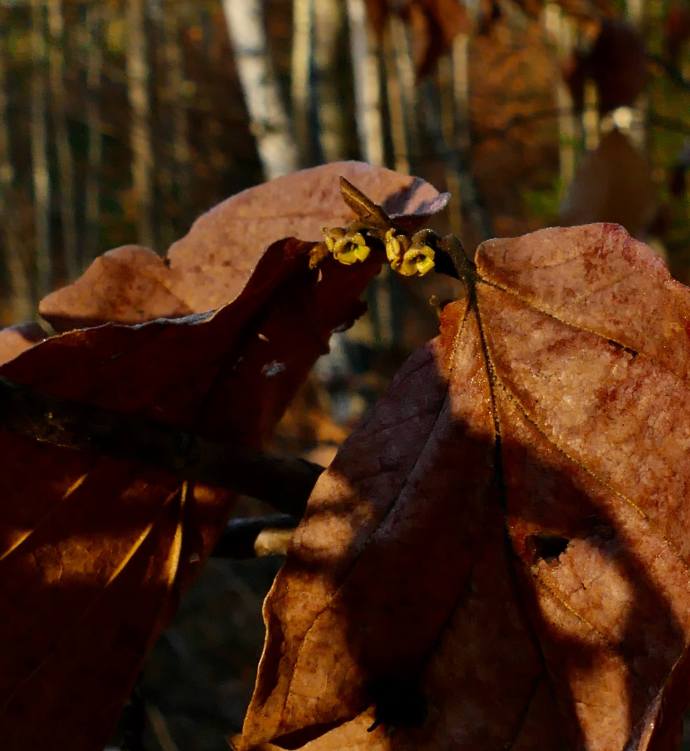
The witch hazel blossom on Conantum has, for the most part, lost its ribbons now.
in Thoreau’s Journal:

Decidedly finger-cold to-night.
in Thoreau’s Journal:
There was also the columbine, its leaves still alive and green; and I was pleased to smell the pennyroyal which I had bruised, though this dried up long ago.

Each season is thus drawn out and lingers in certain localities, as the birds and insects know very well. If you penetrate to some warm recess under a cliff in the woods, you will be astonished at the amount of summer life that still flourishes there.
in Thoreau’s Journal:
Much cold slate-colored cloud, bare twigs seen gleaming toward the light like gossamer, pure green off pines where old leaves have fallen, reddish or yellowish brown oak leaves rustling on the hillsides, very pale brown, bleaching almost hoary fine grass or hay in the fields, akin to the frost which has killed it, and flakes of clear yellow sunlight falling on it here and there, —such is November. The fine grass killed by the frost, and bleached till it is almost silvery, has clothed the fields for a long time.
Now, as in the spring, we rejoice in sheltered and sunny places. Some corn is left out still.

The sunlight is a peculiarly thin and clear yellow, falling on the pale-brown bleaching herbage of the fields at this season.
In one light, these are old and worn-out fields that I ramble over, and men have gone to law about them long before I was born, but I trust that I ramble over them in a new fashion and redeem them.
in Thoreau’s Journal:
I notice that many plants about this season of the year or earlier, after they have died down at top, put forth fresh and conspicuous radical leaves against another spring; so some human beings in the November of their days, exhibit some fresh radical greenness, which, through the frosts may soon nip it, indicates and confirms their essential greenness. When their summer leaves have faded and fallen, they put forth fresh radical leaves which sustain the life in their root still, against a new spring. The dry fields have, for a long time, been spotted with the small radical leaves of the fragrant life-everlasting, not to mention the large primrose, John’s-wort, etc.

Almost every plant, although it may show no greenness above the ground, if you dig about it, will be found to have fresh shoots already pointing upward, and ready to burst forth in the spring.
in Thoreau’s Journal:
There seems to be in the fall a sort of attempt at spring, a rejuvenescence, as if the winter were not expected by a part of nature. Violets, dandelions, and some other flowers blossom again, and mulleins and innumerable other plants begin again to spring, and are only checked by the increasing cold. There is a slight uncertainty whether there will be any winter this year.

Some of our richest days are those in which no sun shines outwardly, but so much the more a sun shines inwardly. I love nature. I love the landscape, because it is so sincere. It never cheats me, it never jests, it is cheerfully, musically earnest. I lie and rely on the earth….
My journal should be record of my love.
in Thoreau’s Journal:

A very fine snow falling, just enough to whiten the bare spots a little.
in Thoreau’s Journal:
It is very cold and windy; thermometer 26….It is all at once perfect winter. I walk on frozen ground two thirds covered with a sugaring of dry snow, and this strong and cutting northwest wind makes the oak leaves rustle dryly enough to set your heart on edge. A great many have fallen, even since the snow last evening…
Now all that moves migrates, or has migrated. Ducks are gone by. The citizen has sought the town. Probably the witch-hazel and many other flowers lingered till the 11th, when it was colder. The last leaves and flowers (?) may be said to fall about the middle of November.

Snow and cold drive the doves to your door, and so your thoughts make new alliances.
November 14, 2017
in Thoreau’s Journal:
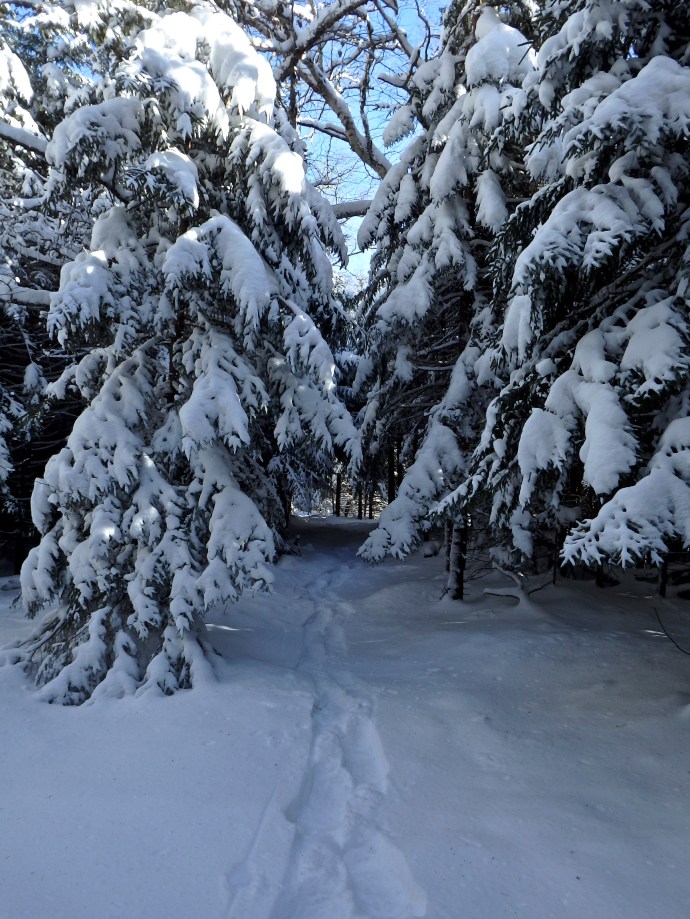
True, the freezing ground is being prepared for immeasurable snows, but there are brave thoughts within you that shall remain to rustle the winter through like white oak leaves upon your boughs, or like scrub oaks that remind the traveller of a fire upon the hillsides; or evergreen thoughts, cold even in mid-summer, by their nature shall contrast the more fairly with the snow.
in Thoreau’s Journal:
It is wonderful what gradation and harmony there is in nature. The light reflected from bare twigs at this season, that is, since they began to be bare, in the latter part of October, is not unlike that from gossamer, and like that which will erelong be reflected from the ice that will incrust them. So the bleached herbage of the fields is like frost, and the frost like snow, and one prepares for the other.

in Thoreau’s Journal:
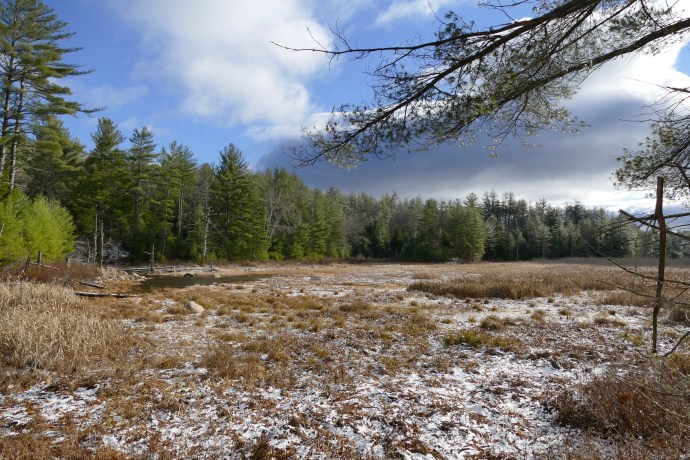
It is much the coldest day yet, and the ground is a little frozen and resounds under my tread. All people move the brisker for the cold, yet are braced and a little elated by it.
in Thoreau’s Journal:
That delicate, waving, feathery dry grass which I saw yesterday is to be remembered with the autumn.
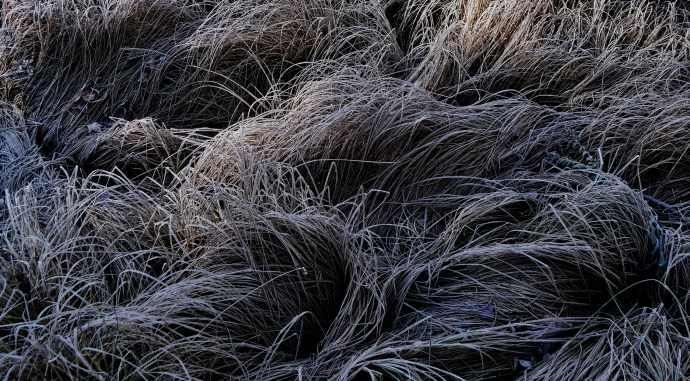
The dry grasses are not dead for me. A beautiful form has as much life at one season as at another.
in Thoreau’s Journal:
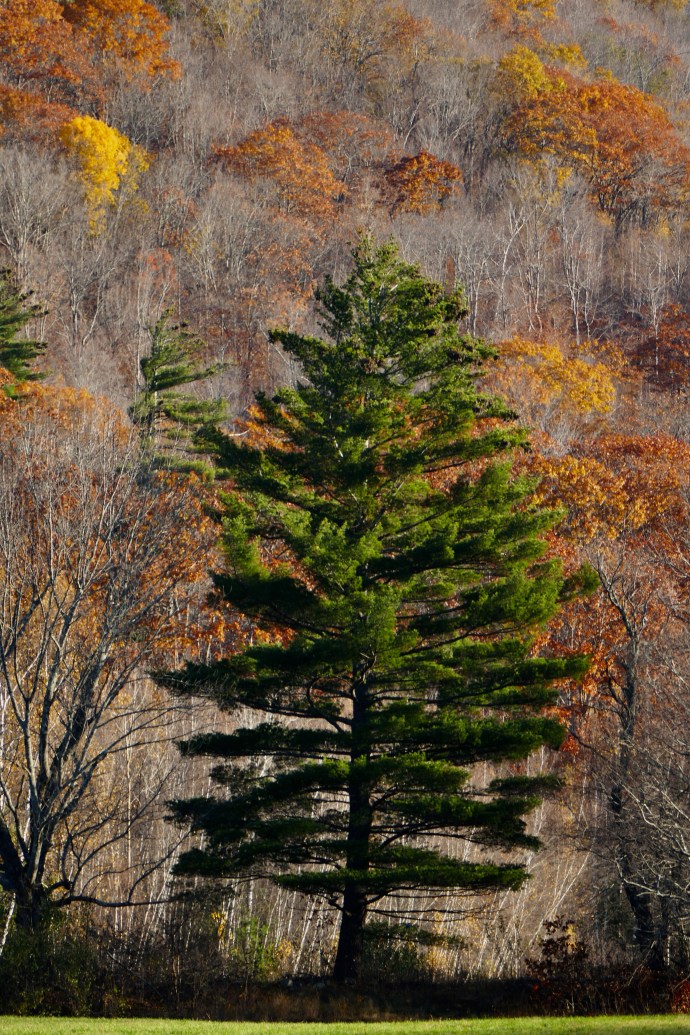
All the light of November may be called an afterglow.
in Thoreau’s Journal:

I see catnep turned at top to a crimson purple.
in Thoreau’s Journal:
To the swamp in front of the C. Miles house….There is quite a ravine by which the water of this swamp flows out eastward, and at the bottom of it many prinos berries are conspicuous, now apparently in their prime. They are appointed to be an ornament of this bare season between leaves and snow….
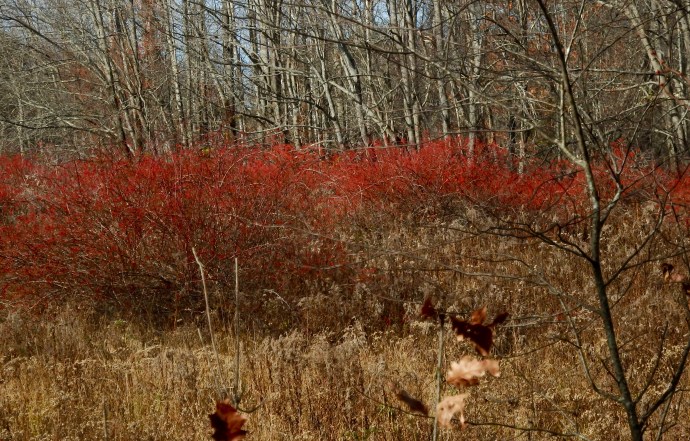
This is a peculiar season, peculiar for its stillness. The crickets have ceased their song. The few birds are well-nigh silent. The tinted and gay leaves are now sere and dead, and the woods wear a sombre aspect.
in Thoreau’s Journal:
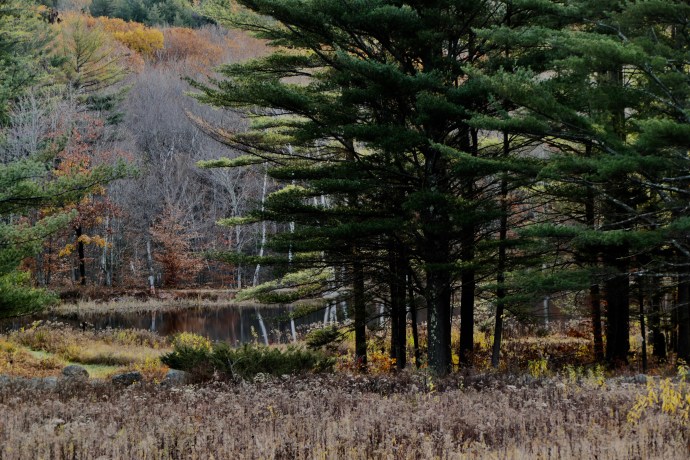
Climbed the wooded hill by Holden’s spruce swamp, and got a novel view of the river and Fair Haven Bay through the almost leafless woods. How much handsomer a river or lake such as ours seen thus through a foreground of scattered or else partially leafless trees, through at a considerable distance this side of it, especially if the water is open, without a wooded shore or isles. It is the most perfect and beautiful of frames, which yet the sketcher is commonly carefully to brush aside. I mean a pretty thick foreground, a view of the distant water through the near forest, through a thousand little vistas, as we are rushing towards the former, that intimate mingling of wood and water which excites an expectation the the near and open view rarely realizes. We prefer that some part be concealed which our imagination may navigate.
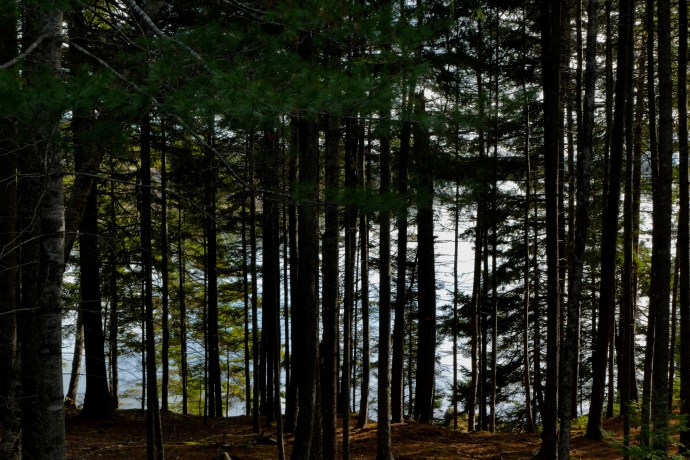
Sometimes I would rather get a transient glimpse or side view of a thing than stand fronting it, as with these polypodies. The object I caught a glimpse of as I went by, haunts my thought a long time, is infinitely suggestive, and I do not care to front it and scrutinize it, for I know that the thing that really concerns me is not there, but in my relation to that. That is a mere reflecting surface. It is not the polypody in my pitcher or herbarium, or which I may possibly persuade to grow on a bank in my yard, or which is described in the botanies, that interests me, but the one I pass by in my walks a little distance off, when in the right mood.

Photo, November 4, 2017
Its influence is sporadic, wafted through the air to me. Do you imagine its fruit to stick to the back of the leaf all winter? At this season polypody is in the air. It is worth the while to walk in swamps now, to bathe your eyes in greenness.
in Thoreau’s Journal:
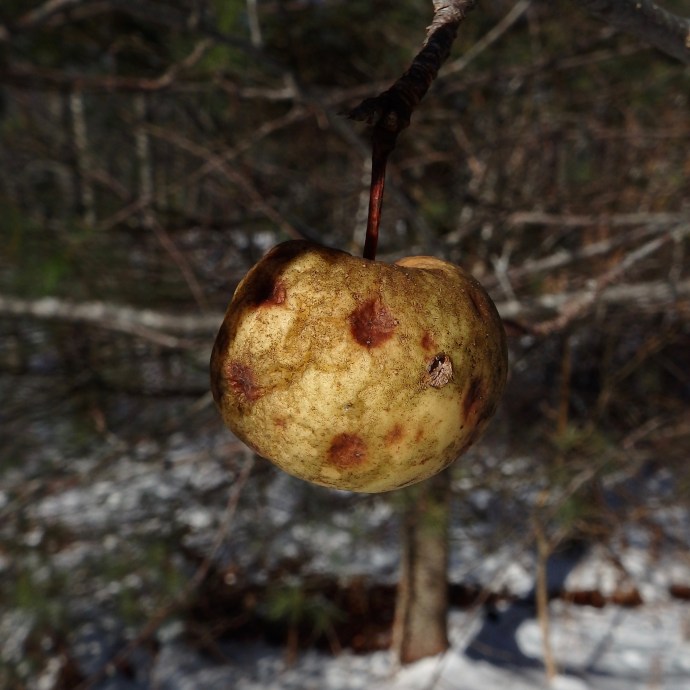
It takes a savage or wild taste to appreciate a wild apple.


You must be logged in to post a comment.