in Thoreau’s Journal:
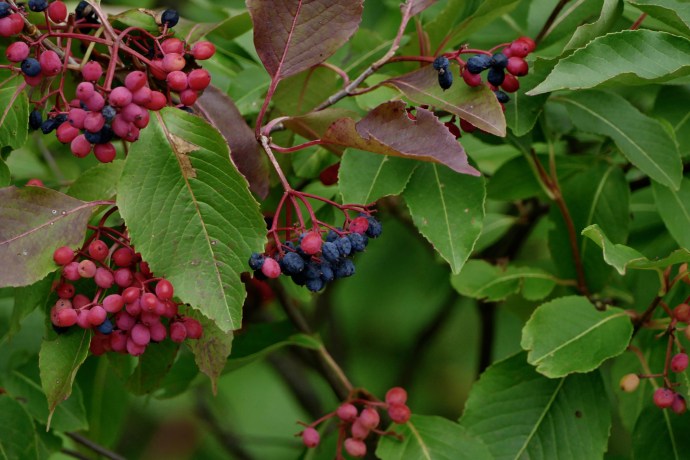
The strong contrast of the bright pink (hard) and blue (soft & ripe) berries of the viburnum nudum)…. The evening of the year is colored like the sunset.
August 30, 2017
in Thoreau’s Journal:
The strong contrast of the bright pink (hard) and blue (soft & ripe) berries of the viburnum nudum)…. The evening of the year is colored like the sunset.
August 30, 2017
in Thoreau’s Journal:
Another great fog this morning—which lasts till 8 1/2 —
After so much dry and warm weather cool weather has suddenly come—& this has produced these 2 larger fogs than for a long time—Is it not always so?

in Thoreau’s Journal:

A cool morning with much fog. more than yesterday — Have not had much during the warmer part of the drought methinks.

in Thoreau’s Journal:

We did not come to a fence or wall for about 4 miles….heard some large hawks whistling much like a boy high over the meadow.
in Thoreau’s Journal:
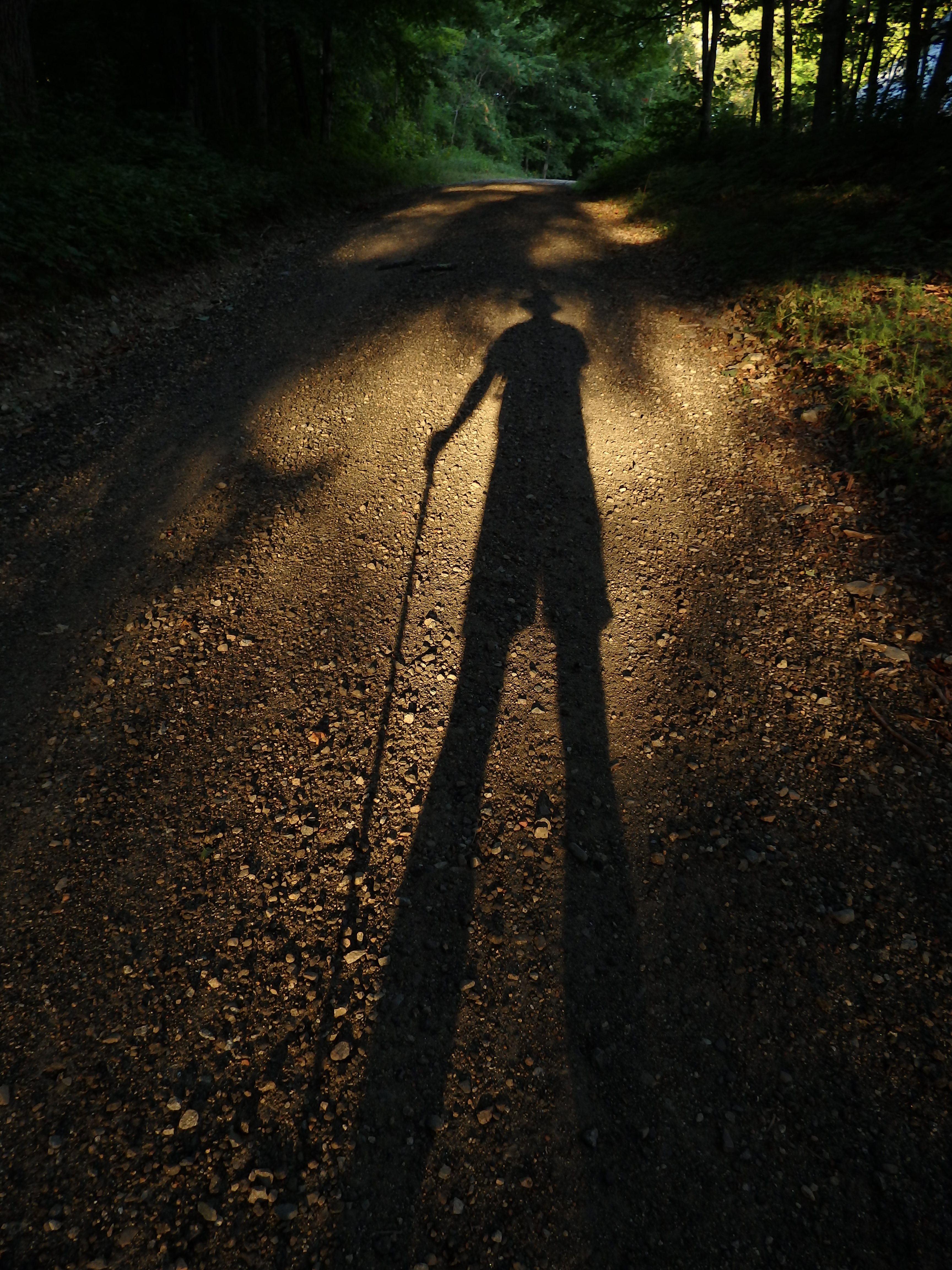
Would it not be well to describe some of those rough-all day walks across lots….
in Thoreau’s Journal:

We begin to apprehend frosts before the melons are ripe!
in Thoreau’s Journal:

Checquer berry in bloom
in Thoreau’s Journal:
The alternate cornel berries which are particularly apt to drop off early are a dark dull blue not china like—

in Thoreau’s Journal:
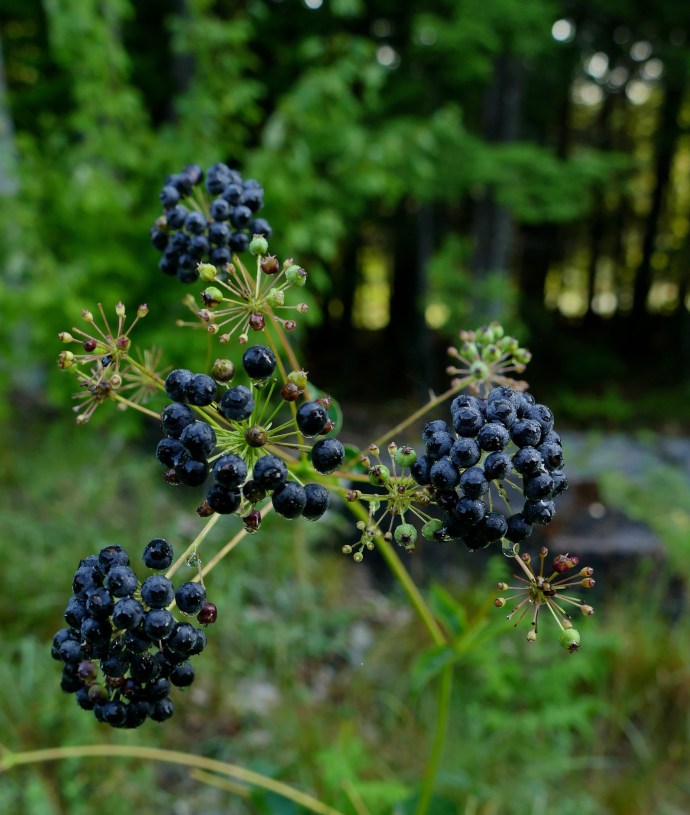
Carrion berries just beginning to be ripe.
in Thoreau’s Journal:

The button bush is out of bloom & its balls browning.

in Thoreau’s Journal:
The choke cherries which are now & have been for some time as ripe as they will be, actually furr the mouth—& the juice of these taken into the mouth mixed with the saliva is feathered like tea into which sour cream has been poured. They are a rich fatty looking fruit.

in Thoreau’s Journal:
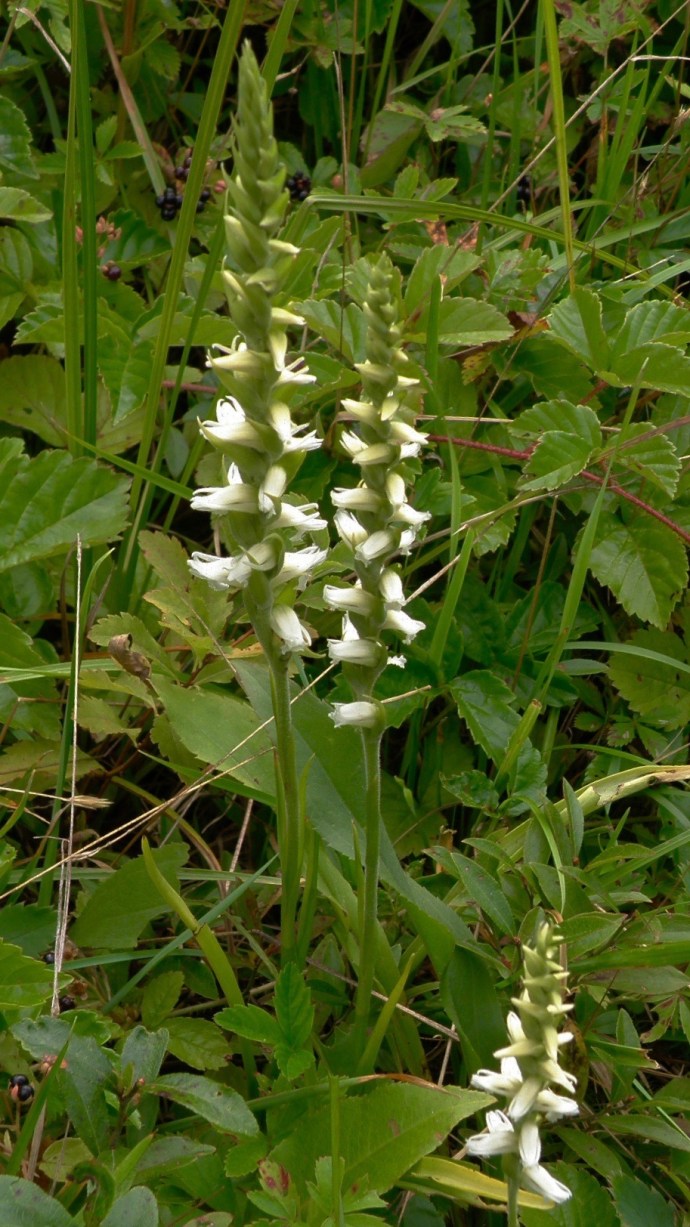
Was that neottia or spiranthes gracilis 15 inches high there without ap. leaf— They have got nearly all the grass from the meadow—

…..This day too has that autumnal character. I am struck by the clearness & stillness of the air—the brightness of the landscape or as it were the reflection of light from the washed earth the darkness & heaviness of the shade…

in Thoreau’s Journal:
We observe attentively the first beautiful days in the spring—but not so much in the autumn— We might expect that the first fair days after so much rain would be remarkable. It is a day affecting the spirits of men—but there is nobody to enjoy it—but ourselves—

What does the laborer ox & the laborer man care for the beautiful days. Will the hay maker when he comes home tonight know that this has been such a beautiful day? The day has been the great phenomenon—but will it be reported in any journal? —as the storm is & the heat? It is like a great & beautiful flower unnamed—
….No summer day is so beautiful as the fairest spring & fall days.
in Thoreau’s Journal:
What means this sense of lateness that so comes over one now, ––as if the rest of the year were down-hill, and we had not performed anything before, we should not now— The season of flowers or of promise may be said to be over, and now is the season of fruits; but where is our fruit? The night of the year is approaching, what have we done with our talent? All nature prompts & reproves us— How early in the year it begins to be late. The sound of the crickets even in the spring makes our hearts beat with its aweful reproof—while it encourages with its seasonable warning. It matters not by how little we have fallen behind-it seems irretrievably late. The year is full of warnings of its shortness—as is life— The sound of so many insects & the sight of so many flowers affect us so— The creak of the cricket & the sight of the Prunella & Autumnal dandelion.

They say—for the night cometh in which no man may work.
in Thoreau’s Journal:

The High black-berries are now in their prime—the richest berry we have. The wild black currant by Union Turnpike ripe—(in Gardens some time). The knapweed now conspicuous like a small thistle. Did I set it down too early? Rain Rain rain again! Good for grass & apples…
in Thoreau’s Journal:
I am surprised to find that whereof late years there have been so many cardinal-flowers, there are now very few. So much does a plant fluctuate from season to season.

in Thoreau’s Journal:
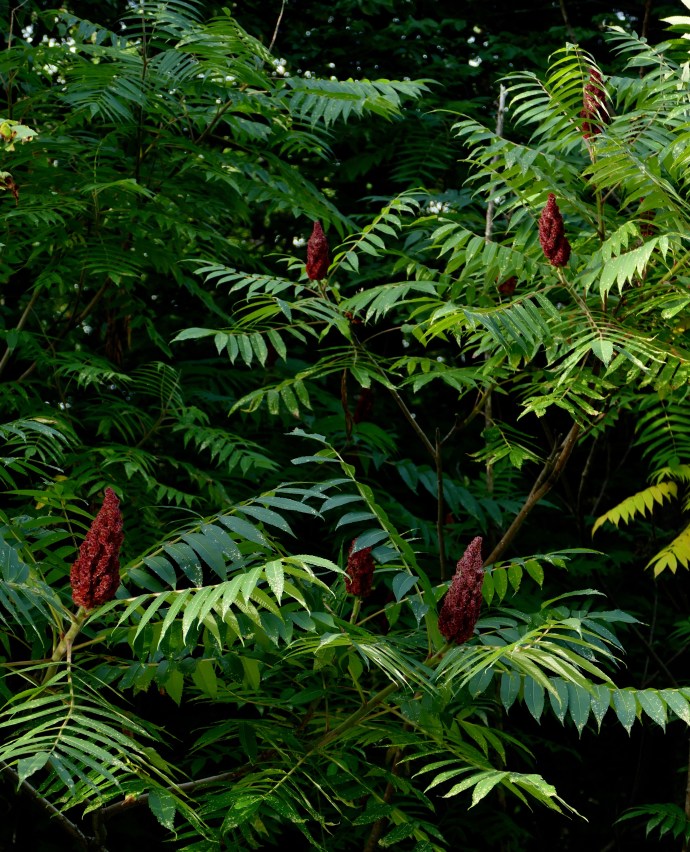
There was much mt sumach close by turning scarlet —& sweet ferns also browning & yellowing.

August 14, 2017 Photos
in Thoreau’s Journal:

I perceive the scent of the earliest ripe apples in my walk— How it surpasses all their flavors….
in Thoreau’s Journal:
The clethra must be one of the most conspicuous flowers not yellow at present.
I sit 3/4 up the hill. The crickets creak strong & loud now after sun-set. No word will spell it. It is a short strong regular singing sound as of a thousand exactly together—though further off some alternate—repeated regularly & in rapid time perhaps 2ce in a second. Methinks their quire is much fuller & louder than a fortnight ago — Ah! I need solitude. I have come forth to this hill at sunset to see the forms of the mts in the horizon—to behold & commune with something grander than man— Their mere distance & unprofanedness is an infinite encouragement— It is with an infinite yearning & aspiration that I seek solitude—more & more resolved & strong—but with a certain genial weakness that I see society ever. I hear the night hawk squeak—& a whippor-will sing. I hear the tremulous squealing scream of a screech owl in the Holden woods—sounding somewhat like the neighing of a horse—not like the snipe. Now at 7 3/4 perhaps 1/2 hour after sunset—the river is quite distinct and full of light in the dark landscape a silver strip of sky—of the same color & brightness with the sky— As I go home by Haden’s I smell the burning meadow— I love this scent It is my pipe. I smoke the earth.
in Thoreau’s Journal:
The change decay & fall of the brakes in the woods &c is perhaps more autumnal than any sight….
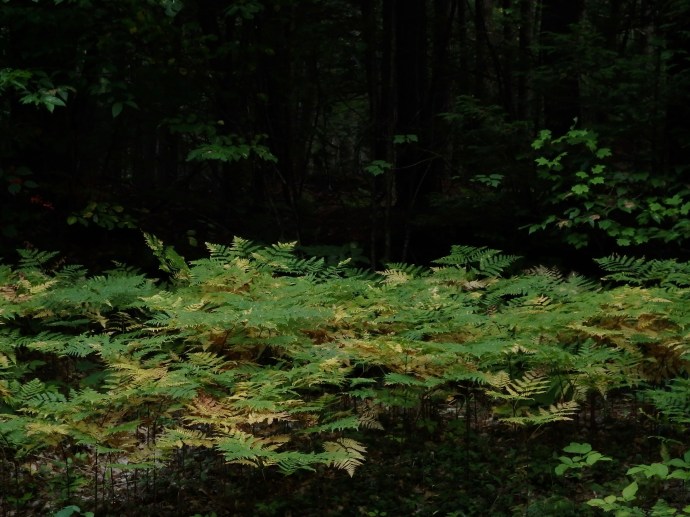
Some are quite brown & shriveled—others—yellow—others yellow & brown —other yellow, brown, & green—making a very rich & particolored or checkered work as of plaited straw-bead or straw work—or ivory— Others are still green with brown spots. In respect to these and many other plants of this size & habit it is already fall. They stand yellow & yellowing all through the woods—


You must be logged in to post a comment.