in Thoreau’s Journal:
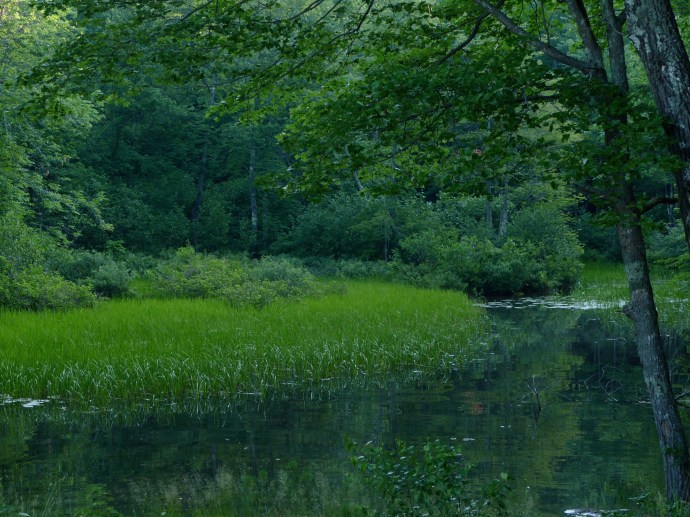
All things –– grass, etc. –– are peculiarly fresh this season on account of the copious rains.
in Thoreau’s Journal:
All things –– grass, etc. –– are peculiarly fresh this season on account of the copious rains.
in Thoreau’s Journal:
Nature is beautiful only as a place where a life is to be lived. It is not beautiful to him who has not resolved on a beautiful life.
July 20, 2017
in Thoreau’s Journal:
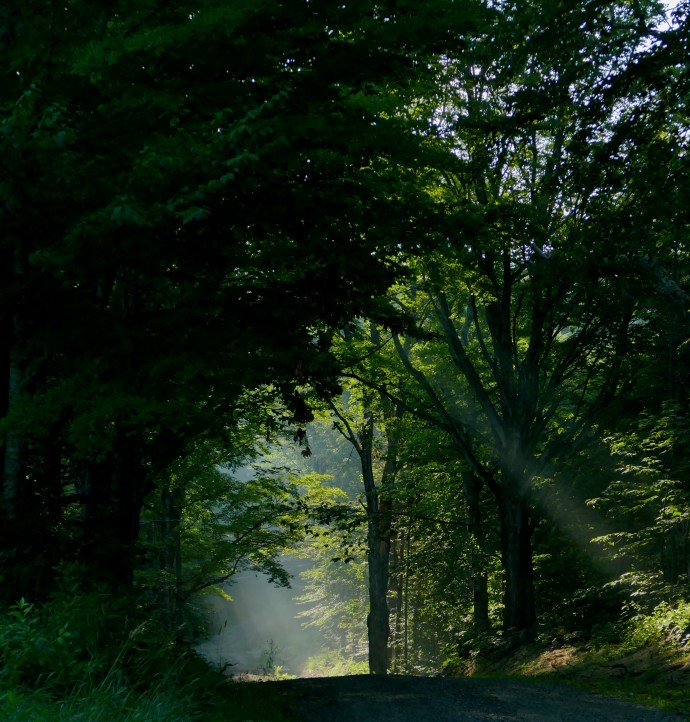
A muttering thunder cloud in NW––gradually rising ––& with its advanced guard hiding the sun–– & now & then darting forked lightning–– The wind rising ominously also drives me home again.
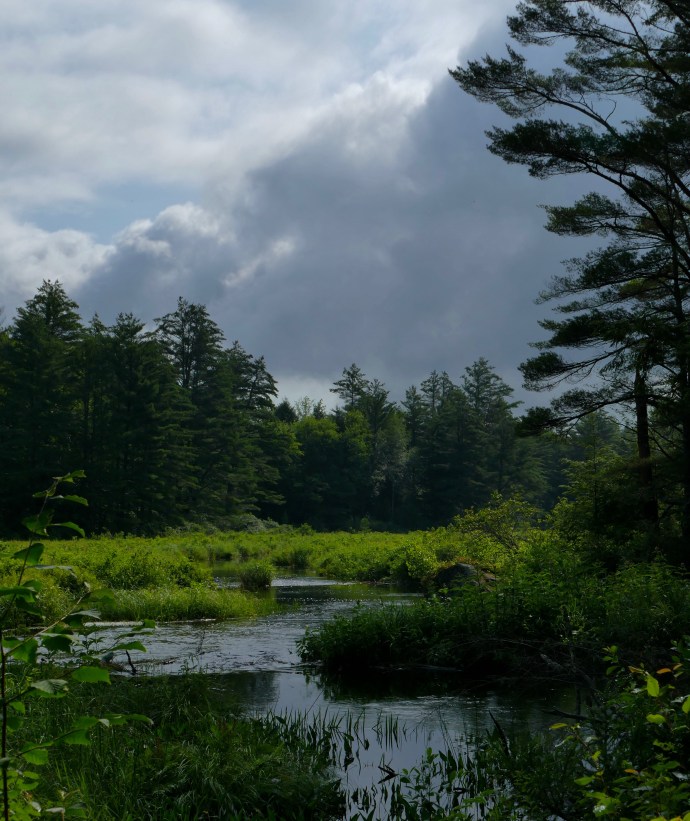
At length down it comes upon the thirsty herbage beating down the leaves with grateful tender violence. & slightly cooling the air.
in Thoreau’s Journal:
In the maple swamp at Hubbards Close the great cinnamon ferns are very handsome…

Clintonia berries in a day or 2.

in Thoreau’s Journal:
Methinks the asters & golden rods begin–like the early ripening leaves, with mid-summer heats.

Now look out for these children of the sun. When already the fall of some of the very earliest spring flowers has commenced.
in Thoreau’s Journal:

A thick fog began last night & lasts till late this morning, first of the kind methinks…
in Thoreau’s Journal:
I go to observe the lilies.

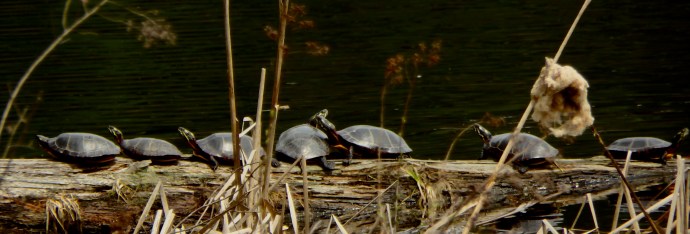
I see a rail lodged in the weeds with 7 tortoises on it––and another with 10––another with 11 all in a row sunning now at midday hot as it is. ––They are mostly the painted tortoise. Apparently no weather is too hot for them thus to bask in the sun.
The pontederia is in its prime alive with butterflies yellow & others– I See its tall blue spikes reflected beneath the edge of the pads on each side–pointing down to a heaven beneath as well as above–

in Thoreau’s Journal:
Rained still in forenoon, now cloudy
Fields comparatively deserted today & yesterday –hay stands cocked in them on all sides––Some being shorn are clear for the walker. It is but a short time that he has to dodge the haymakers– This cooler-–still cloudy weather after the rain is very autumnal & restorative to our spirits– The robin sings–still–but the goldfinch twitters over oftener–& I hear the link link of the bobolink (one perfect strain!) and the crickets creak more as in the fall– All these sounds dispose our minds to serenity– Perhaps the mosquitoes are most troublesome such days in the woods if it is warm enough. We seem to be passing or to have passed a dividing line between spring & autumn–& begin to descend the long slope toward winter….
….the meadow is the broad dark green rank of pickerel weeds &c &c (polygonum &c) then the light reflecting edging of pads–& then the smooth still cloud reflecting water. My thoughts are driven inward–even as clouds and trees are reflected in the still smooth water– There is an inwardness even in the mosquitoes hum–while I am picking blueberries in the dank wood.
Rhexia near the R. Copallina [winged sumac]–ap yesterday XXX….

Rexia virginica
in Thoreau’s Journal:
awake to a day of gentle rain––very much needed—none to speak of for nearly a month methinks. The cooler & stiller day has a valuable effect on my spirits….It holds up from time & then a fine misty rain falls. It lies on the fine reddish tops of some grasses thick & whitish like morning cobwebs. The stillness is very soothing. This is a summer rain. The earth is being bedewed. There is no storm or violence to it.

Health is a sound relation to nature.
in Thoreau’s Journal:
A Journal.–– a book that shall contain a record of all your joy––your extacy….
The dark purple amelanchier are the sweetest berries I have tasted yet.

One who walks the woods & hills daily—expecting to see the first berry that turns—will be surprised at last to find them ripe & thick before he is aware of it—ripened he cannot tell how long before—in some favorable situation. It is impossible to say what day almost what week the huckleberries begin to be ripe unless you are acquainted with & daily visit every huckleberry bush in the town—at least every place where they grow.
in Thoreau’s Journal:
What art can surpass the rows of maples & elms and swamp white oaks which the water plants along the river––I mean the variety & gracefulness––conforming to the curves of the river–

in Thoreau’s Journal:
Now is the time for meadow walking (I am in the meadow north of Hubbards Bridge.) You go dry shod now through meadows which were comparatively impassable before. Those western reserves which you had not explored. We are thankful that the water has preserved them inviolate so long. There is a cheerful light reflected from undersides of the ferns in the dryer meadows now––and has been for some time––especially in breezy weather. It was so in June. The dusty roads & roadsides begin to show the effects of drought–– The corn rolls. The bass on Conantum is now well in blossom. It probably commenced about the 9th. Its flowers are conspicuous for a tree & a rather agreeable odor fills the air. The tree resounds with the hum of bees on the flowers. On the whole it is a rich sight. Is it not later than the Chestnut? The elder is a very conspicuous & prevalent flower now––with its large flat cymes. Pogonias & Calopogons are very abundant in the meadows.
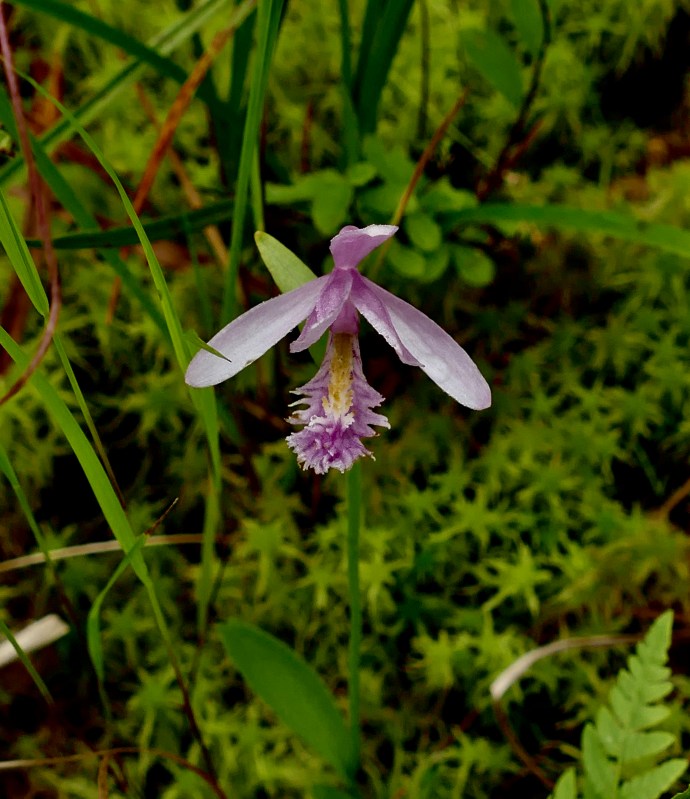
July 10, 2017 (Pogonia)
in Thoreau’s Journal:
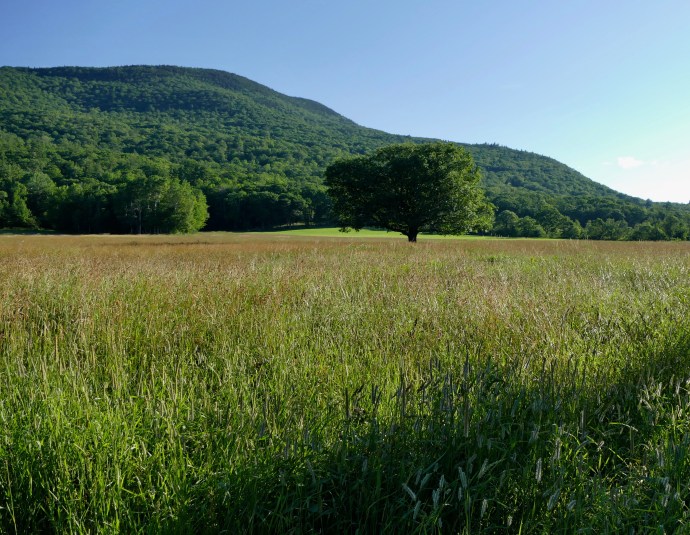
The rye-fields are now quite yellow and ready for the sickle. Already there are many flavous colors in the landscape––much maturity of small seeds. The nodding heads of the rye make an agreeable maze to the eye….The robin methinks is oftener heard of late–even at noon.
in Thoreau’s Journal:
An aurora fading into a general saffron color. At length the redness travels over partly from east to west, before sunrise, and there is little color in the east. The birds all unite to make the morning hour, sing rather faintly, not prolonging their strains. The crickets appear to have received a reinforcement during the sultry night.

There is no name for the evening red corresponding to aurora. It is the blushing foam about the prow of the sun’s boat, and at eve, the same in its wake. ––I do not often hear the bluebird now except at dawn. ––I think we have had no clear winter skies, no skies the color of a robin’s egg and pure amber….for some months. ––
“The flower opens, and lo! another year.” [ancient Chinese saying]

There is something sublime in the fact that some of the oldest written sentences should thus celebrate the coming in of spring. How many times have the flowers opened and a new year begun! Hardly a more cheering sentence could have come down to us. How old is spring, a phenomenon still so fresh! Do we perceive any decay in Nature? How much evidence is contained in this short and simple sentence respecting the former inhabitants of this globe! It is a sentence to be inscribed on vessels of porcelain, suggesting that so many years had gone before, in observation as fit then as now.
in Thoreau’s Journal:
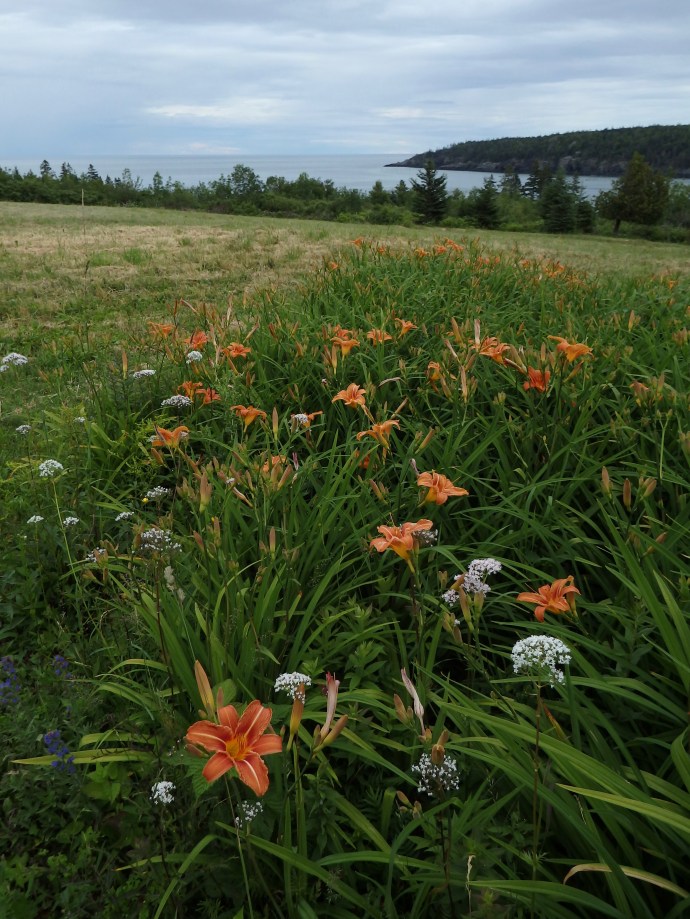
Who can write the history of these fields?
in Thoreau’s Journal:
4 AM. The first really foggy morning yet before I rise I hear the song of the birds from out it––like the bursting of its bubbles with music–the head on liquids just uncorked. The song gilds thus the frost work of the morning– As if the fog were a great sweet froth on the surface of land and water–whose fixed air escaped–whose bubbles burst with music. The sound of its evaporation–the fixed air of the morning just brought from the cellars of the night escaping.– The morning twittering of birds in perfect harmony with it. I came near awaking this morning. I am older than last year the mornings are further between– The days are fewer– Any excess is fatal to the morning’s clarity–– but in health the sound of a cow bell is celestial music. O might I always wake to thought & poetry––regenerated.
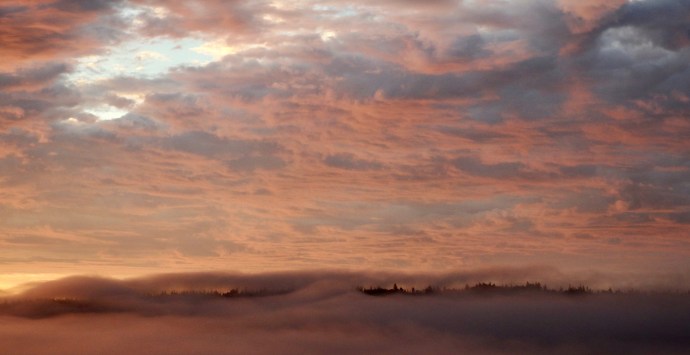
July 7, 1851 in Thoreau’s Journal:
Be ever so little distracted, your thoughts so little confused, your engagements so few, your attention so free, your existence so mundane, that in all places and in all hours, you can hear the sound of crickets in those seasons when they are to be heard.
in Thoreau’s Journal:
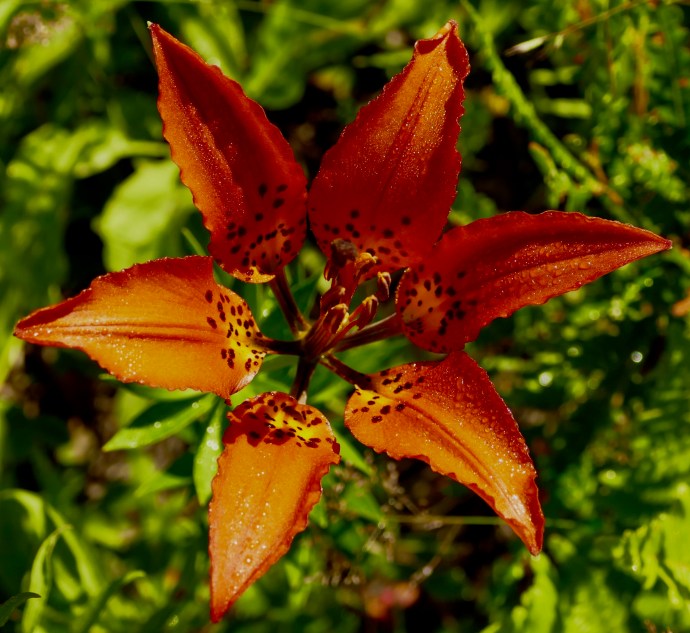
The red lily ilium Philadelphicum– This has very open petals of a dark vermilion color–freckled within & grows in rather dry places–by wood paths &c & is very interesting & handsome–
in Thoreau’s Journal:
The progress of the season is indescribable–– It is growing warm again—but the warmth is different from that we have had— We lie in the shade of locust trees–haymakers go by in a hay-rigging–
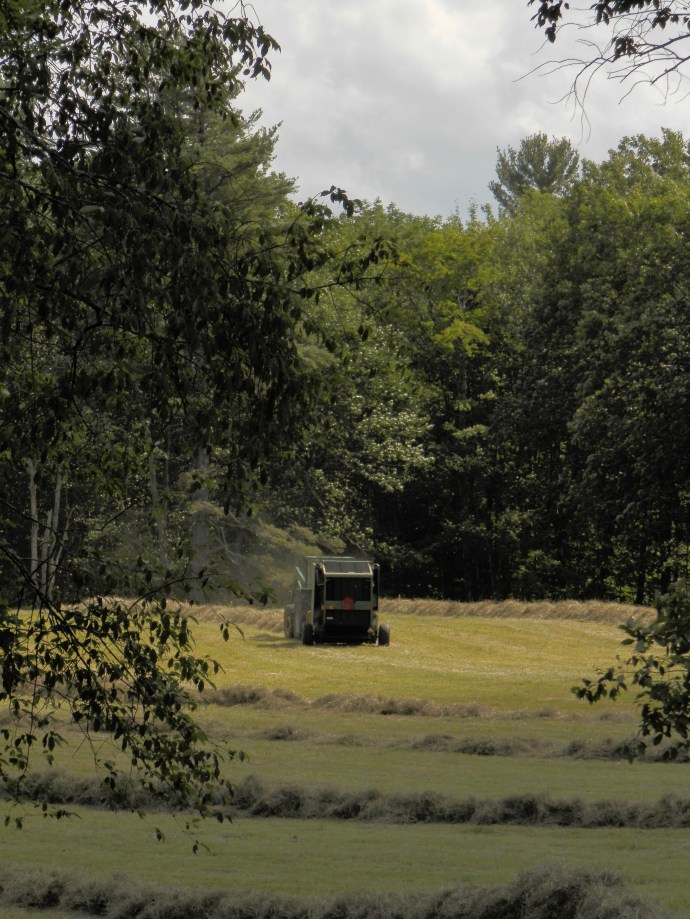
I am reminded of berrying– I scent the sweet fern & the dead or dry pine leaves––cherry-birds alight on a neighboring tree. The warmth is something more normal–& steady-ripening fruits. Campanula Aparinoides slender bell-flower
in Thoreau’s Journal:
To Conantum. –to see the lilies open– I hear an occasional crowing of cocks in distant barns as has been their habit for how many thousand years. It was so when I was young; and it will be so when I am old- I hear the croak of a tree toad as I am crossing the yard– I am surprised to find the dawn so far advanced. There is a yellowish segment of light in the east paling a star–& adding sensibility to the light of the waning & now declining moon. There is very little dew on the uplands. I hear a little twittering & some clear singing from the seringo & the song sparrow– as I go along the Back Road–and now and then the note of the bull frog from the river– The light in the east has acquired a reddish tinge near the horizon Small wisps of cloud are already fuscous & dark seen against the light as in the W at evening. It being Sunday morning I hear no early stirring farmer driving over a bridge– The crickets are not remarkably loud at this season– The sound of a whippoorwill is wafted from the woods– Now on the Corner Road the hedges are alive with twittering sparrows–a blue bird or two &c. The day light now balances the moonlight. How short the nights. The last traces of day have not disappeared much before 10 o’clock or perchance 9 1/2 and before 3 Am you see them again in the East. (probably 2 1/2) leaving about 5 hours of solid night– The sun so soon coming around again. The robins sing–but not so loud & long as in the spring– I have not been awakened by them latterly in the mornings– Is it my fault–ah! those mornings when you are awakened in the dawn by the singing of the Matins of the birds. I hear the dumping sound of frogs now on the causeway. Some small clouds in the east are reddish fuscous. There is no fog on the river nor in the meadows. The king-bird twitters? on the Black willows. Methinks I saw the not yet extinguished lights of one or two fireflies in the darker ruts in the grass in Conant’s meadow. The moon yields to the sun–she pales even in the presence of his dawn. It is chiefly the spring birds that I hear at this hour—& in dawn the spring is thus revived–– The notes of the sparrows & the blue-birds & the robin have a prominence now which they have not by day The light is more & more general & some low bands begin to look bluish as well as reddish. (Elsewhere the sky wholly clear of clouds) The dawn is at this stage far lighter than the brightest moonlight–– I write by it––yet the sun will not rise for some time. Those bars are reddening more above one spot. They grow purplish or lilac rather. White & whiter grows the light in the eastern sky–– (And now descending to the cliff by the river side I cannot see the low horizon & its phenomena) I love to go through these old apple orchards so irregularly set out. Sometimes two trees standing alone together– The rows of grafted fruit will never tempt me to wander amid them like these. A bittern leaves the shore at my approach–– I suppose it is he whose excrement has whitened the rocks–as if a mason had spilled his whitewash–– A night hawk squeaks & booms– before sunrise. The insects shaped like shad flies (some which I see are larger & yellowish) begin to leave their cases (and selves?) on the stems of the grasses & the rushes in the water. I find them so weak they can hardly hold on. I hear the blackbirds carqueree & the king-fisher darts away with his alarum– and outstretched neck. Every lily is shut Sunrise––I see it gilden the top of the hill behind me but the sun itself is concealed by the hills & woods on the E shore…
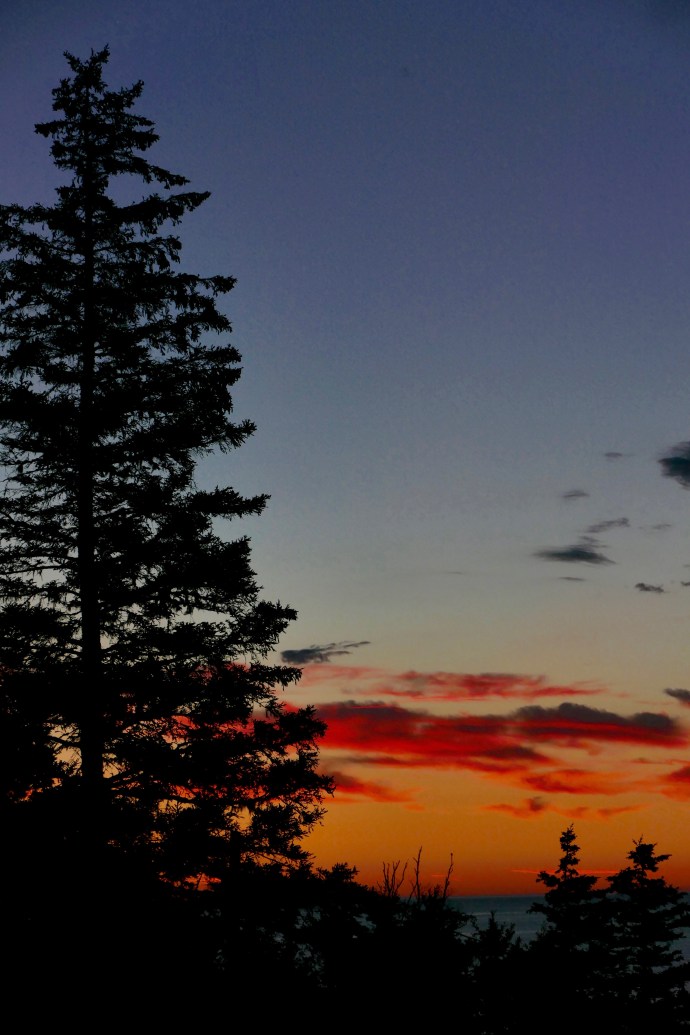
July 4, 2017 Photo
in Thoreau’s Journal:
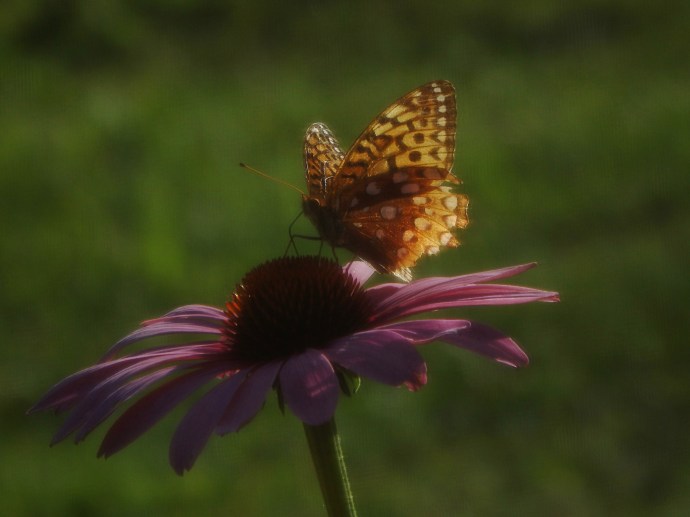
A cone flower–(new plant) Rudbeckia hirta (except that I call its disk not dull brown but dull or dark purple or maroon) in Arethusa meadow)— However Wood calls it dark purple saw one (plucked June 25) —blossomed prob about that time–– Many yesterday in meadows beyond alms house. Prob. introduced lately from west.


You must be logged in to post a comment.