in Thoreau’s Journal:
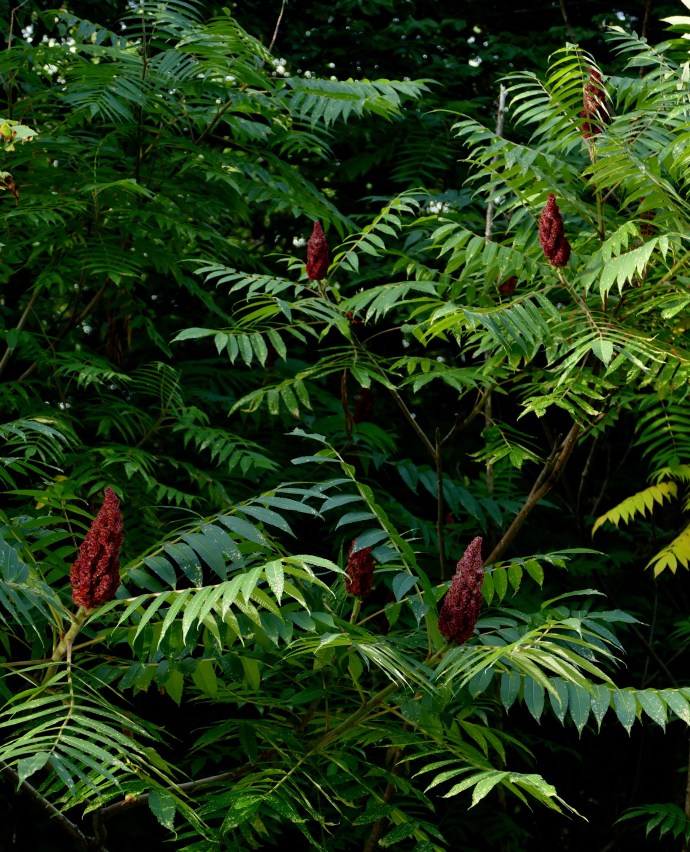
There was much mt sumach close by turning scarlet —& sweet ferns also browning & yellowing.

August 14, 2017 Photos
in Thoreau’s Journal:
There was much mt sumach close by turning scarlet —& sweet ferns also browning & yellowing.
August 14, 2017 Photos
in Thoreau’s Journal:

I perceive the scent of the earliest ripe apples in my walk— How it surpasses all their flavors….
in Thoreau’s Journal:
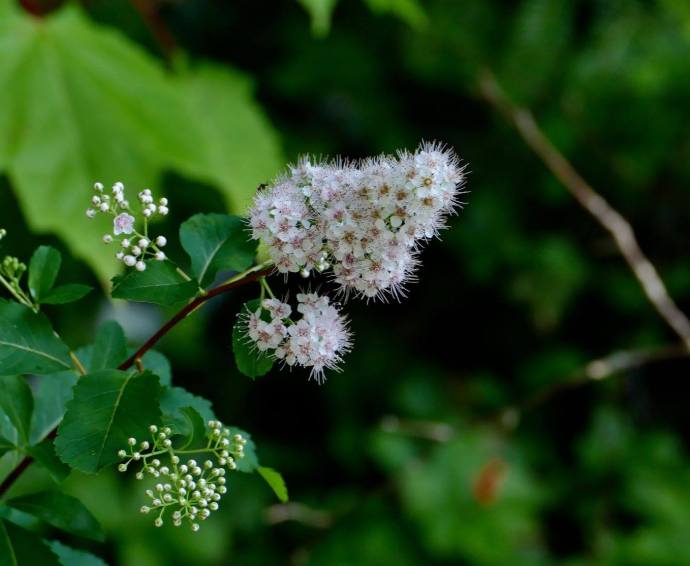
The clethra must be one of the most conspicuous flowers not yellow at present.
I sit 3/4 up the hill. The crickets creak strong & loud now after sun-set. No word will spell it. It is a short strong regular singing sound as of a thousand exactly together—though further off some alternate—repeated regularly & in rapid time perhaps 2ce in a second. Methinks their quire is much fuller & louder than a fortnight ago — Ah! I need solitude. I have come forth to this hill at sunset to see the forms of the mts in the horizon—to behold & commune with something grander than man— Their mere distance & unprofanedness is an infinite encouragement— It is with an infinite yearning & aspiration that I seek solitude—more & more resolved & strong—but with a certain genial weakness that I see society ever. I hear the night hawk squeak—& a whippor-will sing. I hear the tremulous squealing scream of a screech owl in the Holden woods—sounding somewhat like the neighing of a horse—not like the snipe. Now at 7 3/4 perhaps 1/2 hour after sunset—the river is quite distinct and full of light in the dark landscape a silver strip of sky—of the same color & brightness with the sky— As I go home by Haden’s I smell the burning meadow— I love this scent It is my pipe. I smoke the earth.
in Thoreau’s Journal:
The change decay & fall of the brakes in the woods &c is perhaps more autumnal than any sight….
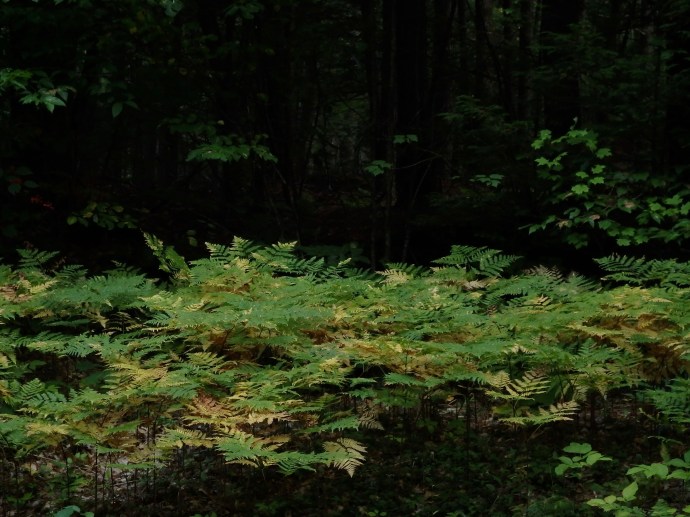
Some are quite brown & shriveled—others—yellow—others yellow & brown —other yellow, brown, & green—making a very rich & particolored or checkered work as of plaited straw-bead or straw work—or ivory— Others are still green with brown spots. In respect to these and many other plants of this size & habit it is already fall. They stand yellow & yellowing all through the woods—

in Thoreau’s Journal:
I see some naked vib. berries—red & some purple now-
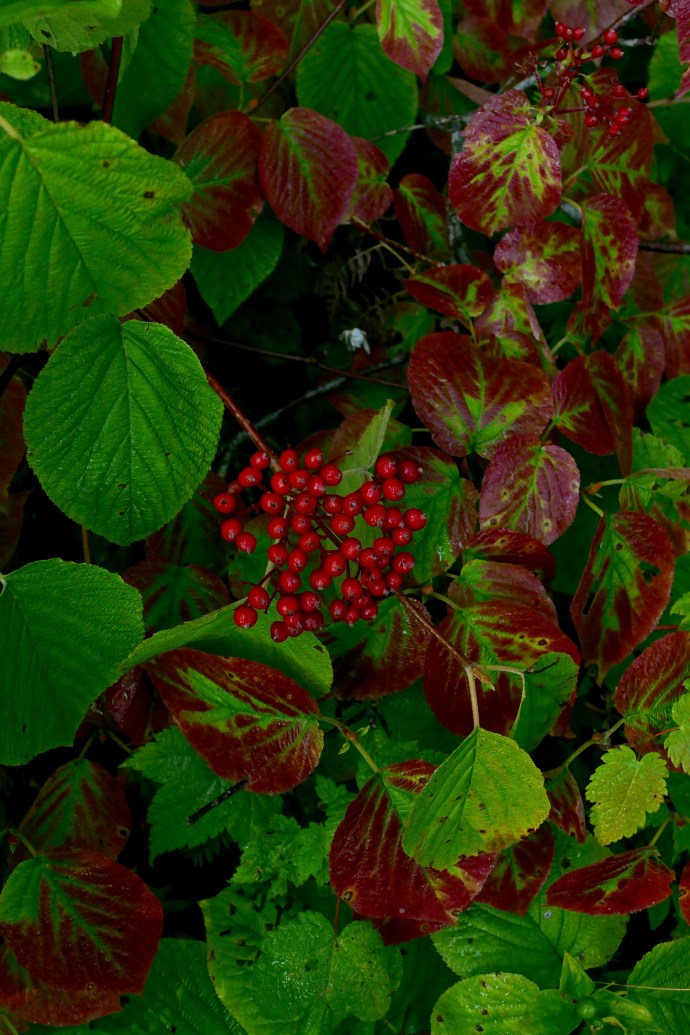
There are berries which men do not use, like choke berries—which here in Hubbards swamp grow in great profusion & blacken the bushes. How much richer we feel for this unused abundance & superfluity. Nature would not appear so rich—the profusion so rich if we knew a use for everything—
in Thoreau’s Journal:
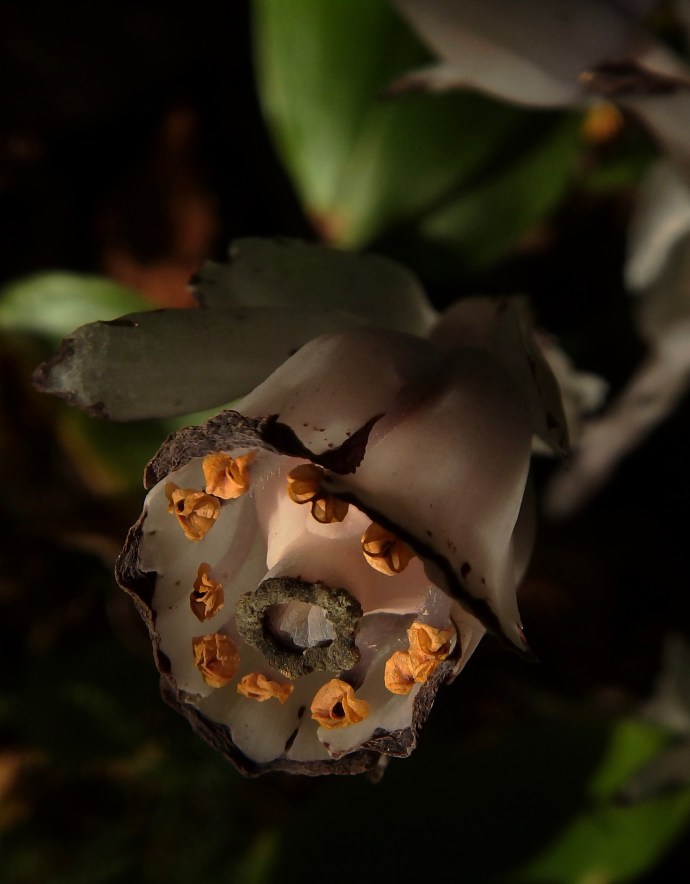
I see many tobacco pipes — now perhaps in their prime, if not a little late—and hear of pinesap. The Indian pipes, though coming with the fungi and suggesting no doubt a close relation to them (a sort of connection link between flowers and fungi) is a very interesting flower and will bear a close inspection when fresh.
in Thoreau’s Journal:
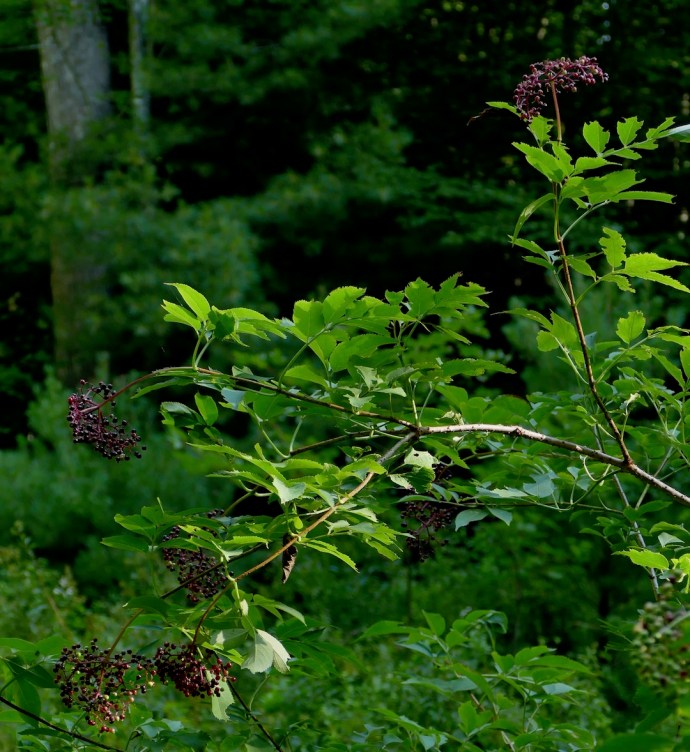
Walden Published. Elder berries.
in Thoreau’s Journal:
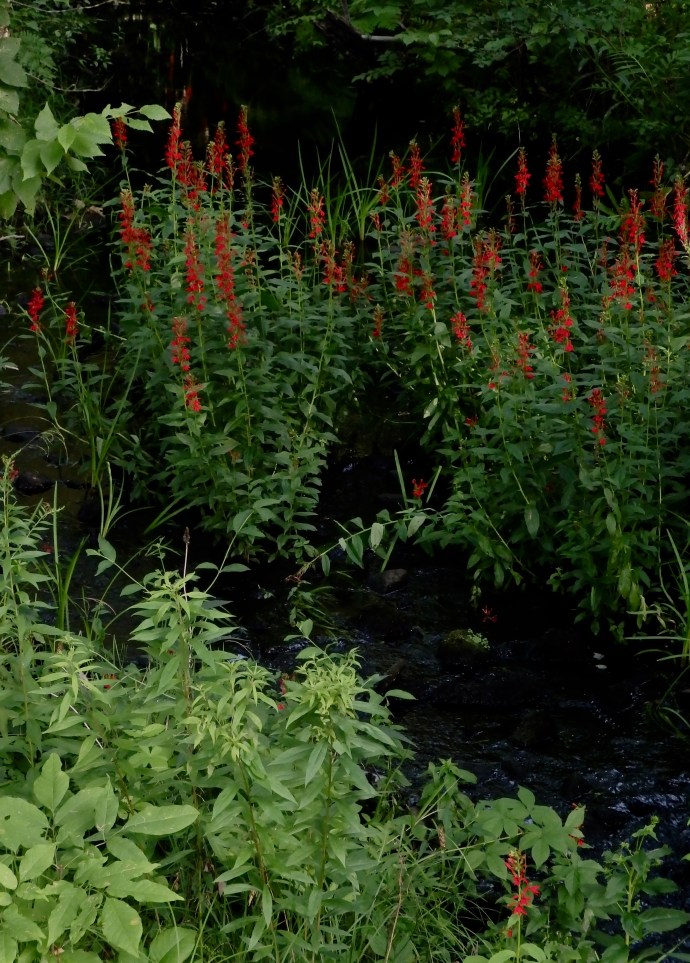
The cardinals are in perfection—standing in dark recesses of the green shore, or in the open meadow. They are fluviatile & stand along some river or brook—like myself.
in Thoreau’s Journal:
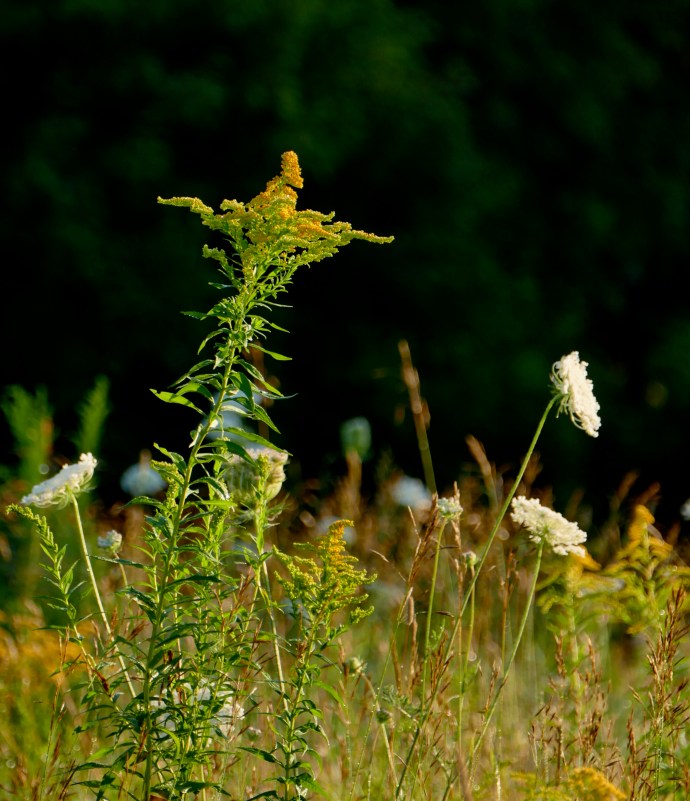
The rough golden rod, solidago altissima—a day or 2. I will call that sharply serrate narrow or linear (?) lanceolate leafed smooth stemmed very tall golden rod with a large broad dense pyramidal head of panicle drooping every way—which grows under the RR bank against Ebby Hubbards land the S. Arguta for the present. It has been out say 1 week or more.
in Thoreau’s Journal:
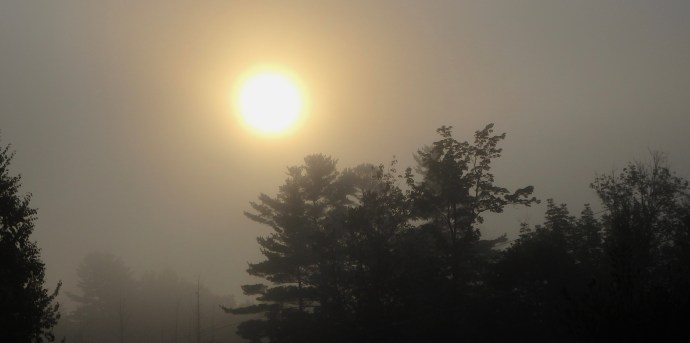
The sun now at 9 AM has not yet burst through the mists. It has been warmer weather for a week than for at least 3 weeks before—nights when all windows were left open though not so warm as in June.
in Thoreau’s Journal:
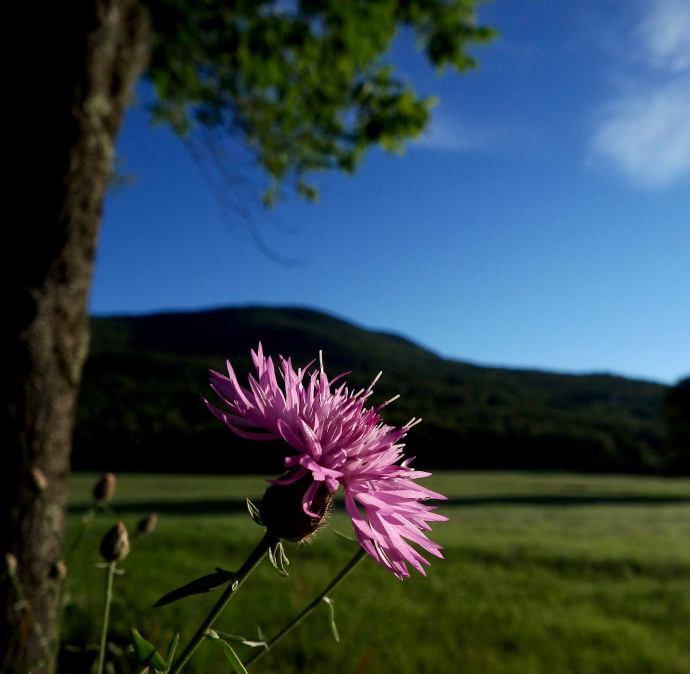
Centaurea well out, how long?
in Thoreau’s Journal:
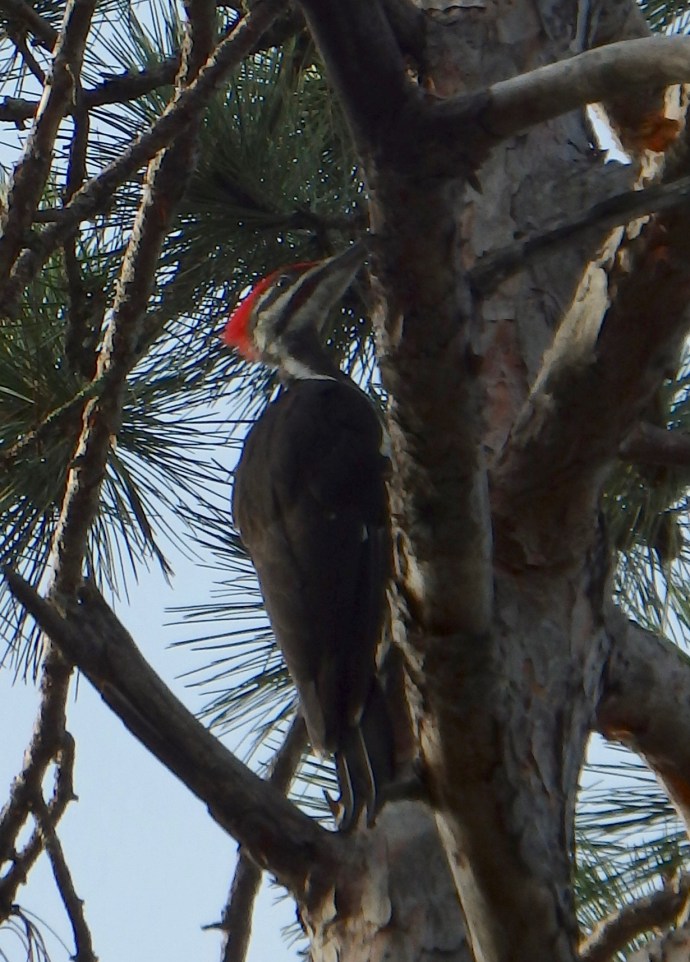
A still cloudy day with from time to time a gentle august rain–– Rain & mist constrict our horizon & we notice near & small objects….I hear the pigeon woodpecker still — wickoff-wickoff-wickoff-wickoff…
in Thoreau’s Journal:
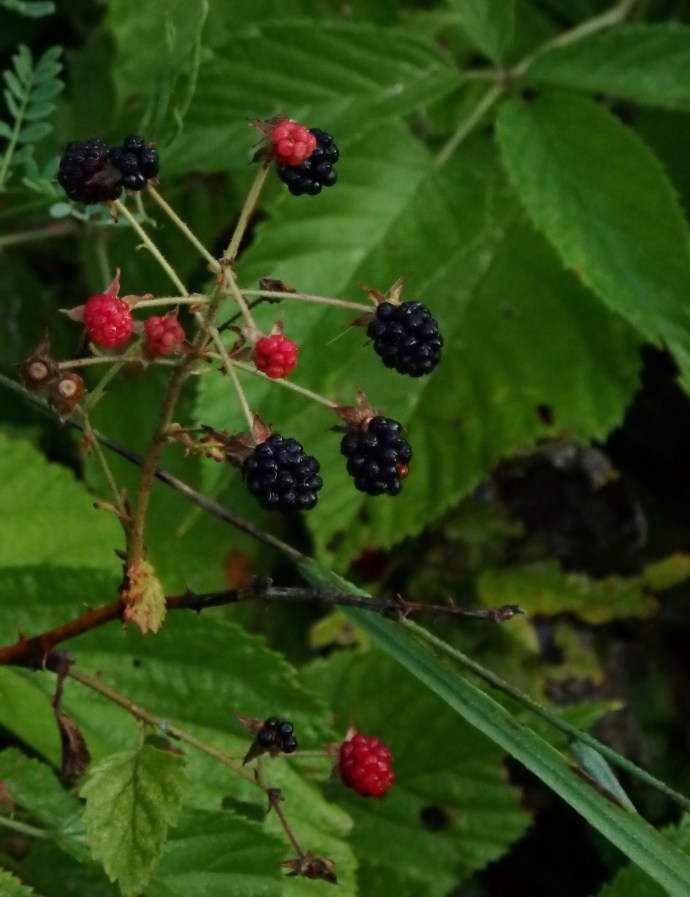
High blackberries begin to be ripe.
in Thoreau’s Journal:
At 5 1/2 this morning saw from Nawshawtuct the trees on the great meadows against & rising out of the dispersing wreathes of fog—on which the sun was shining…

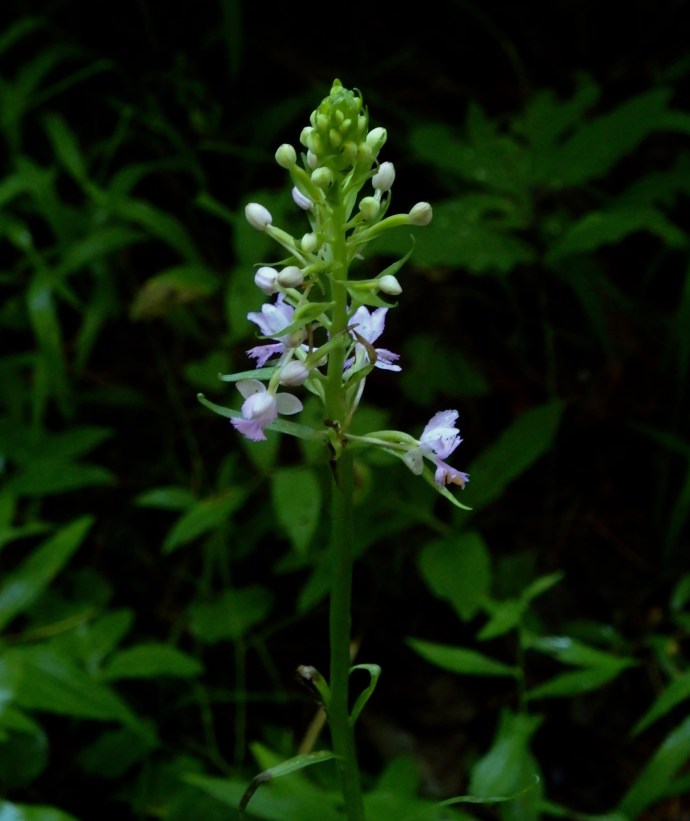
It is a new era with the flowers when the small purple fringed orchis as now is found in shady swamps standing along the brooks. (It appears to be alone of its class— Not to be overlooked it has so much flower though not so high colored as the Arethusa).
in Thoreau’s Journal:
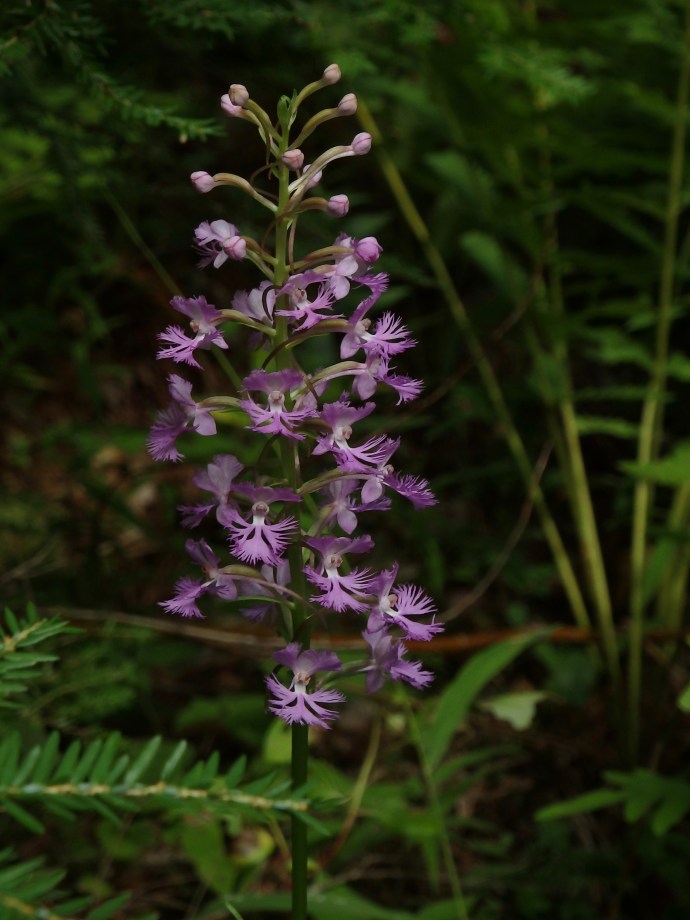
Found a long dense spike of the Orchis psycodes–- Much later this, than the great orchis —the same only smaller & denser—not highly colored enough
in Thoreau’s Journal:
There is more shadow under the edges of woods & copses now— The foliage appears to have increased so that the shadows are heavier & perhaps it is this that makes it cooler especially morning and evening though it may be as warm as ever at noon.

in Thoreau’s Journal:
In every meadow you see far or near the lumbering hay-cart with its mountainous load––& the rakers & mowers in white shirts–– The bittern hardly knows where to lay its legs. By the way I have heard no stake driver for some time. If the meadows were untouched I should no doubt see many more of the rare white & the beautiful smaller purple orchis there as I now see a few—along the shaded brooks & meadow’s edge.

July 29, 1853 in Thoreau’s Journal:
Most fields are so completely shorn now that the walls & fence sides where plants are protected appear unusually rich. I know not what aspect the flowers would present if our fields & meadows were untouched for a year––if the mower were not permitted to swing his scythe there. No doubt some plants contended long in vain with these vandals & at length withdrew from the contest. About these times some hundreds of men with freshly sharpened scythes make an irruption into my garden when in its rankest condition & clip my herbs all as close as they can––& I am restricted to the rough hedges & worn out fields which had little to attract them to the most barren & worthless pastures— I know how some fields of Johnswort & golden rod look left in the natural state —but not much about our richest fields & meadows—

July 29, 1857 in Thoreau’s Journal
I am interested in an indistinct prospect, a distant view, a mere suggestion often, revealing an almost wholly new world to me.

I rejoice to get, and am apt to present, a new view.
in Thoreau’s Journal:
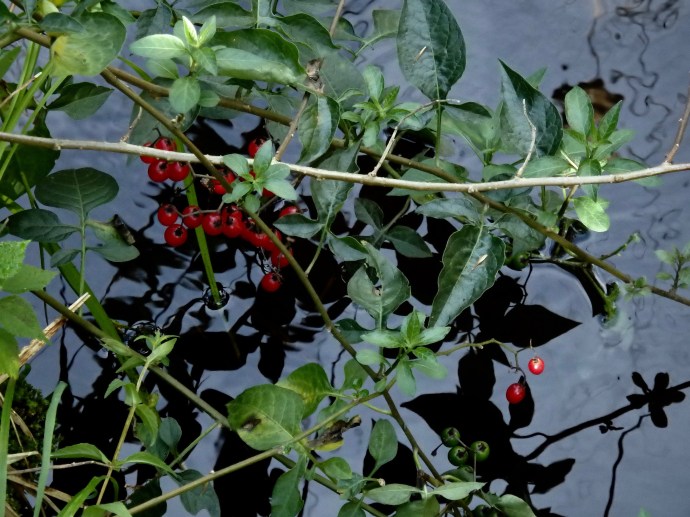
Night shade berries begin to ripen. to be red.
in Thoreau’s Journal:
It is pleasing to behold at this season contrasted shade and sunshine on the side of neighboring hills.
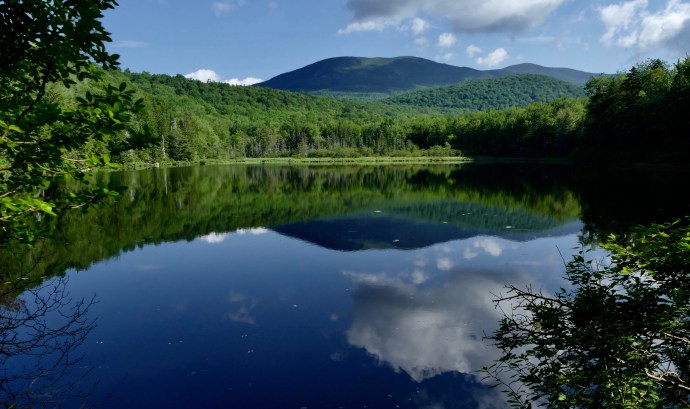
They are not so attractive to the eye when all in the shadow of a cloud or wholly open to the sunshine. Each must enhance the other.


You must be logged in to post a comment.