in Thoreau’s Journal:
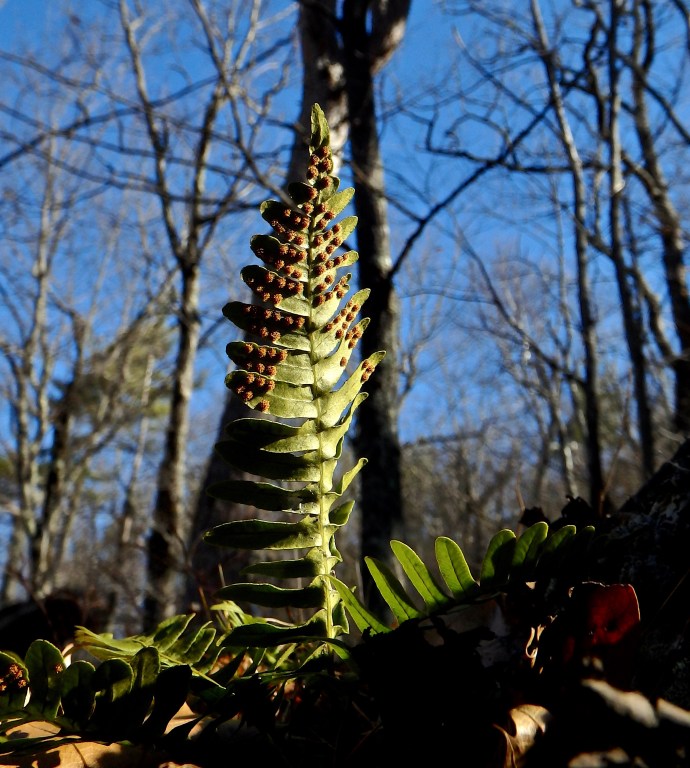
Do you imagine its fruit to stick to the back of the leaf all winter? At this season polypody is in the air….
in Thoreau’s Journal:
Do you imagine its fruit to stick to the back of the leaf all winter? At this season polypody is in the air….
in Thoreau’s Journal:
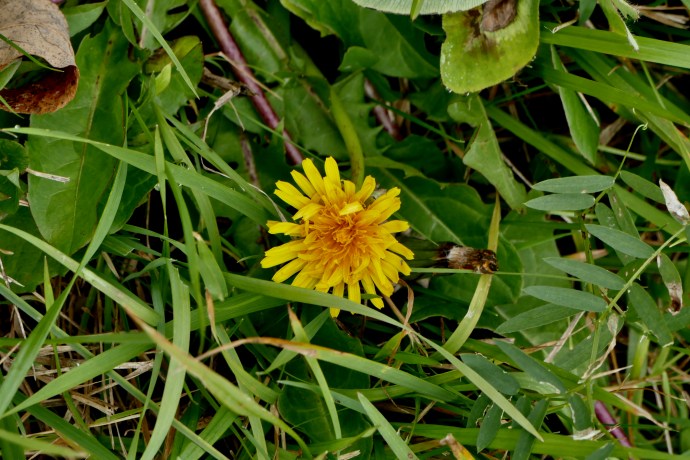
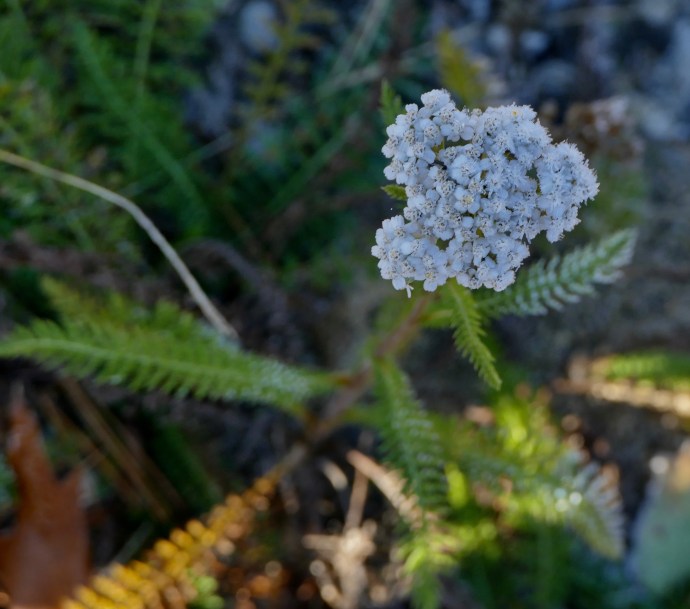
Autumnal dandelion and yarrow.
Must be out of doors enough to get experience of wholesome reality, as a ballast to thought and sentiment. Health requires this relaxation, this aimless life, this life in the present. Let a man have thought what he will of Nature in the house, she will still be novel out-doors….
My thought is part of the meaning of the world, and hence I use a part of the world as a symbol to express my thought.
November 1, 2016 Photos
in Thoreau’s Journal:
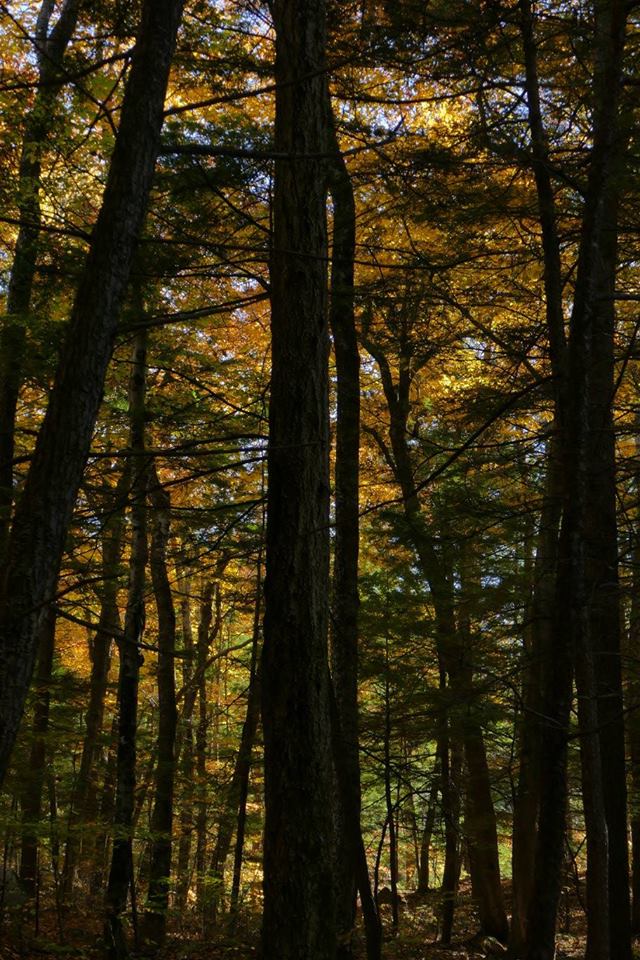
Our woods and fields are the perfection of parks and groves, and gardens and grottoes and arbors, and paths and parterres, and vistas and landscapes.
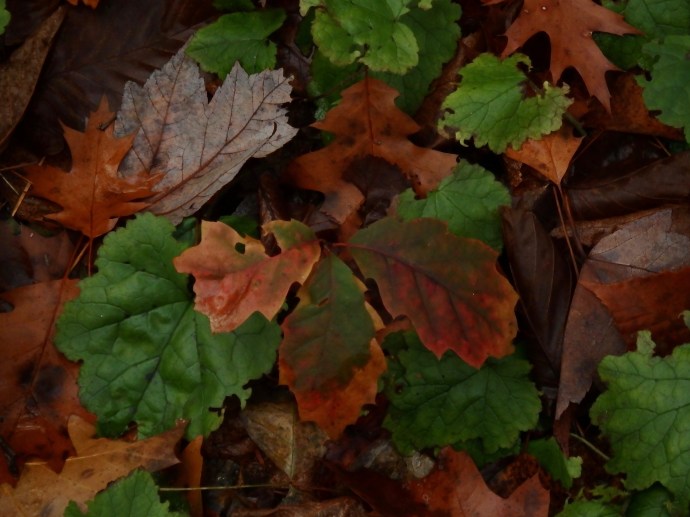
They are the natural consequence of what art and refinement we as a people have. They are the common which each village possesses, the true paradise, in comparison with which all elaborately and willfully wealth-constructed parks and gardens are paltry imitations. No other creature effects such changes in nature as man.
in Thoreau’s Journal:
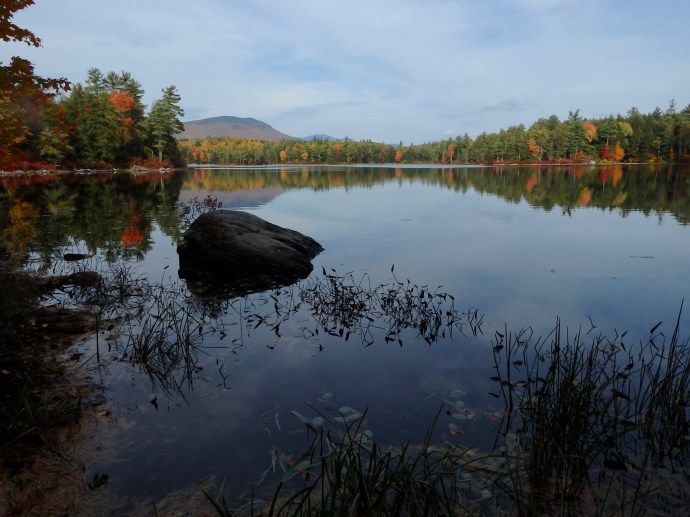
It is only a reflecting mind that sees reflections.
in Thoreau’s Journal
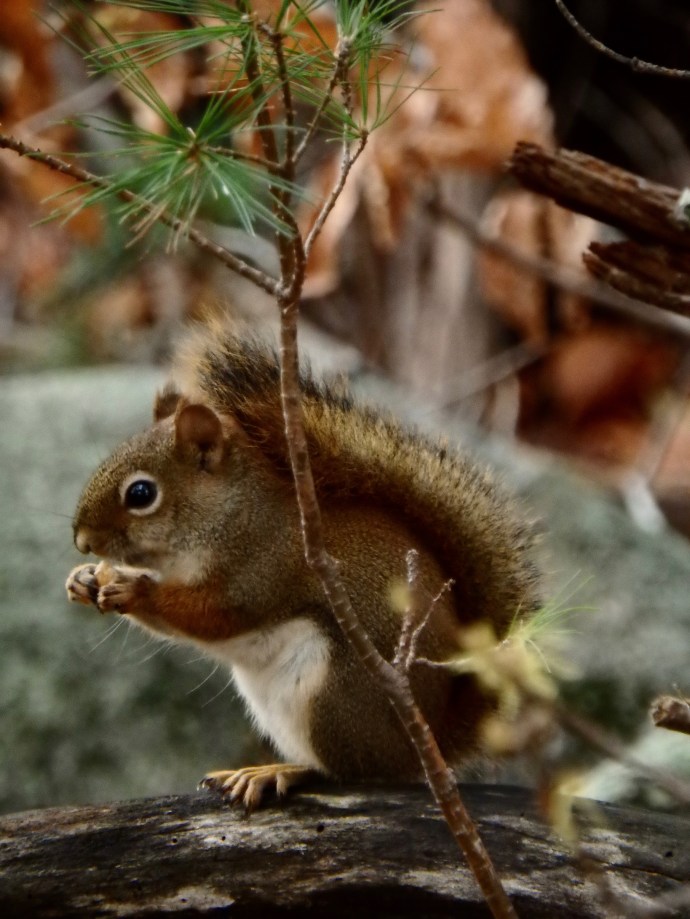
It is not true–as I noticed today, that squirrels never gnaw an imperfect & worthless nut–
in Thoreau’s Journal:
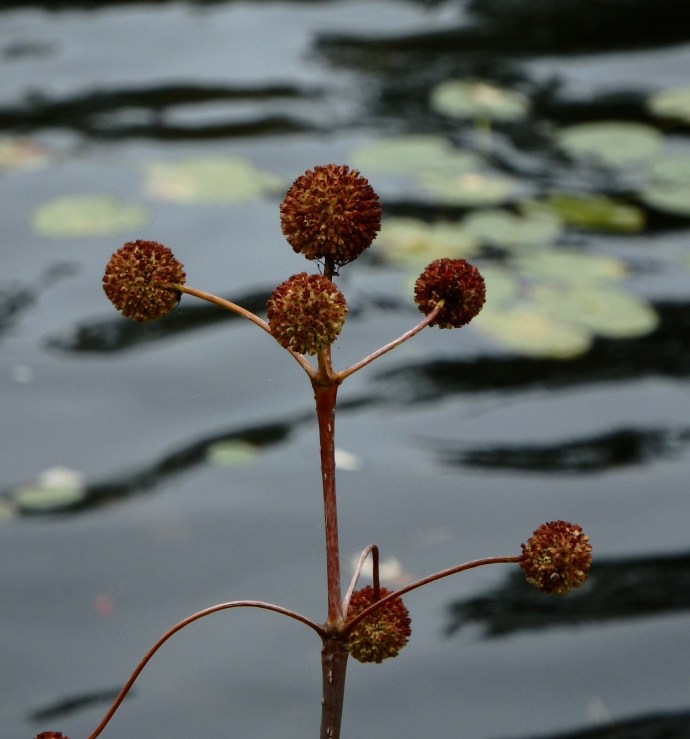
It is a beautiful, warm, and calm Indian-summer afternoon….the water so smooth and glassy….
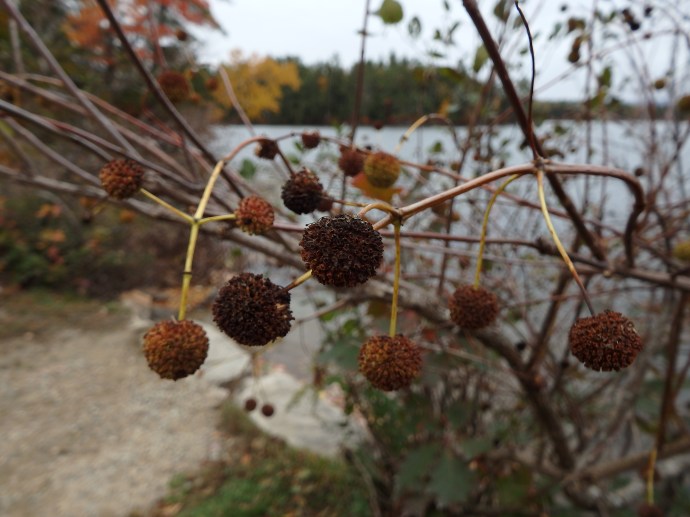
The coarse withered grass, and the willows and button-bushes with their myriad balls, and whatever else stands on the brink is reflected with wonderful distinctness….
in Thoreau’s Journal:
What with the rains & frosts & winds the leaves have fairly fallen now— You may say the fall has ended. Those which still hang on the trees are withered & dry….the autumnal tints are gone….the woods have for the most part acquired their winter aspect— And coarse rustling light colored withered grasses skirt the river & the woodside—

This is November— The landscape prepared for winter without snow—
in Thoreau’s Journal:
Some afternoons when the lower strata of the atmosphere is filled with a haze like mist the hills in the horizon seem from an eminence are visibly divided into distinct ranges
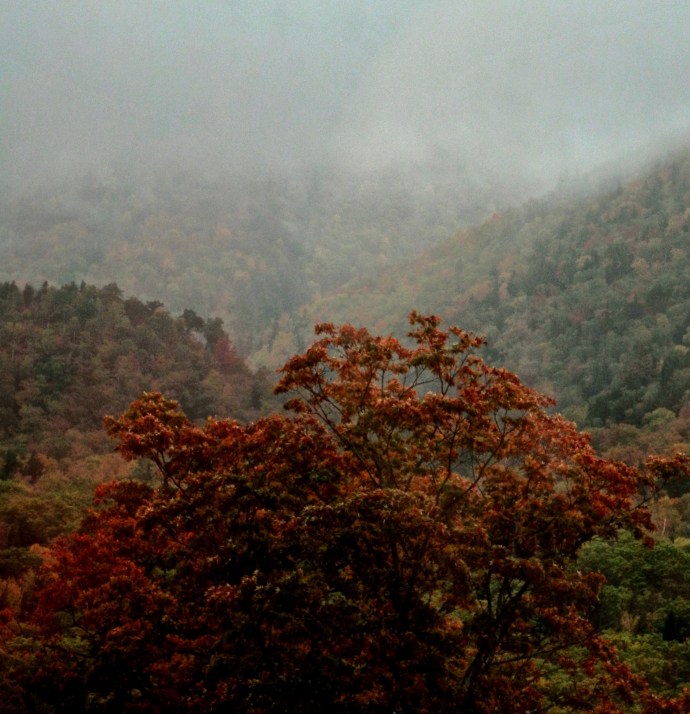
—& it is easy to refer each to its own chain to tops of the chain rising above the mists which fill the vallies.
in Thoreau’s Journal:
Four months of the green leaf make all our summer, if I reckon from June 1st to October 1st, the growing season, and methinks there are about four months when the ground is white with snow. That would leave two months for spring and two for autumn. October the month of ripe or painted leaves; November the month of withered leaves and bare twigs and limbs.


in Thoreau’s Journal:
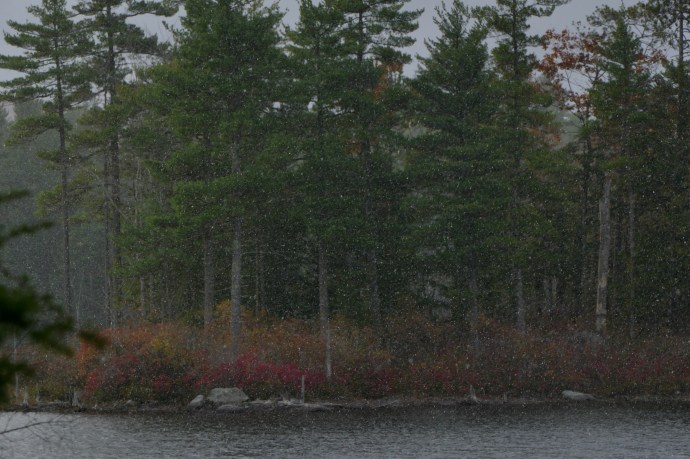
The colors of the fields make haste to harmonize with the snowy mantle which is soon to invest them and with the cool, white twilights of that season which is itself the twilight of the year.
in Thoreau’s Journal:
It is surprising how any reminiscence of a different season of the year affects us. When I meet with any such in my Journal, it affects me as poetry, and I appreciate that other season and that particular phenomenon more than at the time. The world so seen is all one spring, and full of beauty. You only need to make a faithful record of an average summer day’s experience and summer mood, and read it in the winter, and it will carry you back to more than that summer day alone could show. Only the rarest flower, the purest melody, of the season thus comes down to us.


in Thoreau’s Journal:
The autumnal tints grow gradually darker and duller, but not less rich to my eye. And now a hillside near the river exhibits the darkest crispy reds and browns of every hue, all agreeably blended. At the foot, next the meadow, stands a front rank of smoke-like maples, bare of leaves, intermixed with yellow birches. Higher up are red oaks, of various shades of dull red, with yellowish, perhaps black oaks, intermixed, and walnuts now brown, and near the hill-top or rising above the rest, a still yellow oak, and here and there amid the rest or in the foreground on the meadow, dull, ashy, salmon-colored white oaks, large and small, all these contrasting with the clear, liquid sempiternal green of pines. The sheen on the water blinds my eyes. Mint is still green and wonderfully recreating to smell. I had put such things behind me. It is hard to remember lilies now.
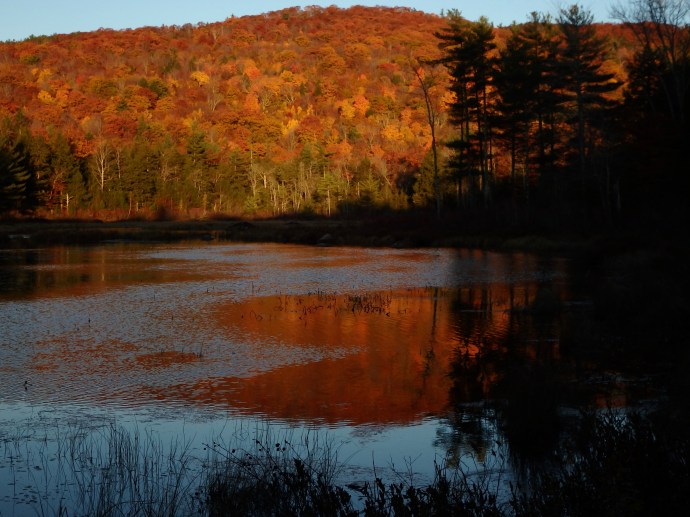
October 24, 2016 Photo
in Thoreau’s Journal:
A northeast storm, though not much rain falls to-day, but a fine driving mizzle. This, as usual, brings the geese, and at 2:30 P.M. I see two flocks go over, faintly honking. A great many must go over today, and also alight in this neighborhood. This weather warns them of the approach of winter, and this wind speeds them on their way.

The brilliant autumnal colors are red and yellow, and the various tints and shades of these. Blue is reserved to be the color of the sky, but yellow and red are colors of the earth-flower. Every fruit on ripening, and just before its fall, acquires a bright tint. So do the leaves; so the sky before the end of the day, and the year near its setting. October is the red sunset sky, November the later twilight. Color stands for all ripeness and success. The noblest feature, the eye, is the fairest-colored, the jewel of the body.
in Thoreau’s Journal:
October has been the month of autumnal tints. The first of the month, the tints began to be more general, at which time the frosts began. There were scattered bright tints long before, but not till then did the forest begin to be painted.

By the end of the month, the leaves will either have fallen, or be seared and turned brown by the frosts, for the most part.
in Thoreau’s Journal:

As for the complex ways of living, I love them not, however much I practice them. In as many places as possible, I will get my feet down to the earth.
in Thoreau’s Journal:
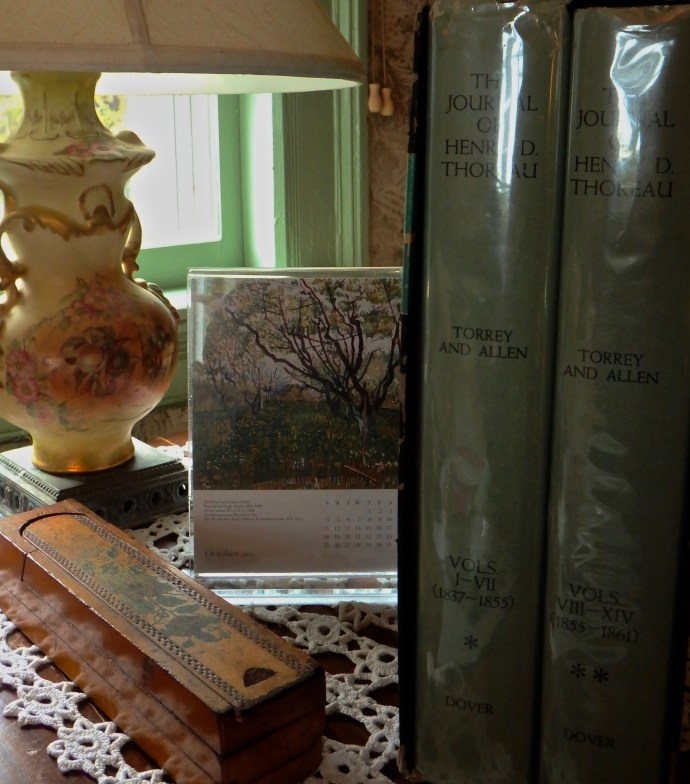
Now again as in the spring
we begin to look for sheltered and sunny places where we may sit.
in Thoreau’s Journal:

How pleasant to walk over beds of these fresh crisp & rustling fallen leaves…How beautiful they go to their graves—how gently lay themselves down—& turn to mould! Painted of a thousand hues and fit to make the beds of us living.
in Thoreau’s Journal:
The leaves have fallen so plentifully that they quite conceal the water along the shore—& rustle pleasantly when the wave which the boat creates strikes them—

On Sunday last I could hardly find the Corner spring—& suspected even it had dried up—for it was completely concealed by fresh fallen leaves & when I swept them aside & revealed it it was like striking the earth for a new spring.
in Thoreau’s Journal:
I distinguish the dark moist layer of weeds deposited last night, on what had dried in the sun. The tall bulrush & wool grass is dry & yellow except a few in deep water.— but the rainbow rush—j. militaris is still green. The autumnal tints though less brilliant & striking are perhaps quite as agreeable—now that the frosts have somewhat dulled & softened. Now that the forest is universally imbrowned they make a more harmonious impression.

Wooded hill sides reflected in the water are particularly agreeable….Chicadees & jays are heard from the shore as in winter. Saw 2 or 3 ducks which fly up before & alight far behind.
October 17, 2016 Photo
in Thoreau’s Journal:
I think the reflections are never purer and more distinct than now at the season of the fall of the leaf, just before the cool twilight has come, when the air has a finer grain. Just as our mental reflections are more distinct at this season of the year, when the evenings grow cool and lengthen and our winter evenings with their brighter fires may be said to begin.
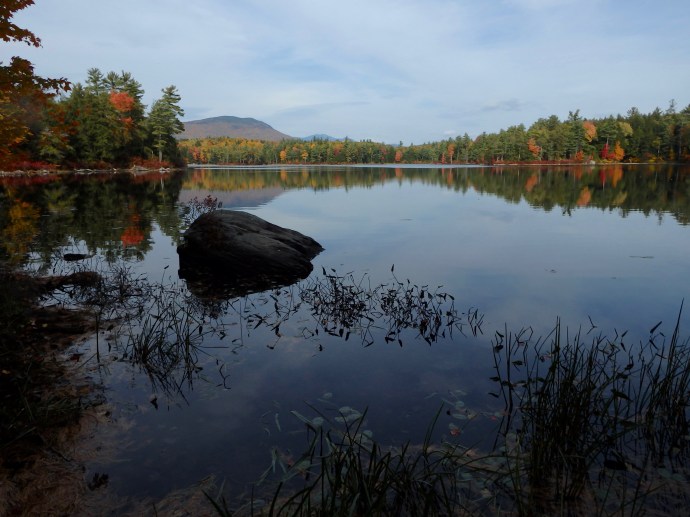
October 16, 2016


You must be logged in to post a comment.