in Thoreau’s Journal
Solidago Altissima?

beyond the corner bridge out some days at least—but not rough hairy Golden rod & asters have fairly begun

i.e. there are several kinds of each out.
Photos: July 27, 2016
in Thoreau’s Journal
Solidago Altissima?
beyond the corner bridge out some days at least—but not rough hairy Golden rod & asters have fairly begun
i.e. there are several kinds of each out.
Photos: July 27, 2016
in Thoreau’s Journal
I observe grape vines with green clusters almost fully grown hanging over the water—& hazel nut husks are fully formed & are richly autumnally significant. Viburnum denatum elder—& red-stemmed cornel—all with an abundance of green berries help clothe the bank—and the asclepia incarnata & meadow rue fill the crevices. Above all there is the Cardinal flower just opened—close to the water’s edge—remarkable for its intense scarlet color—contrasting with the surrounding green.

in Thoreau’s Journal
Almost Every bush now offers a wholesome & palatable diet to the wayfarer—large & dense clusters of v. vacillances—largest in most moist ground sprinkled with the red ones not ripe—
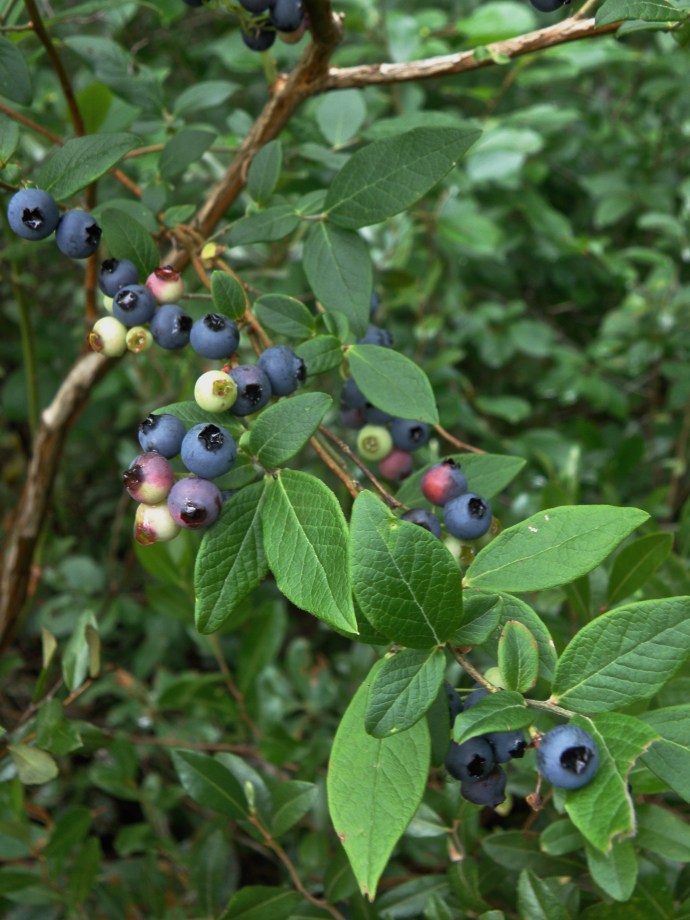
Great high blue berries—some nearly as big as cranberries—of an agreeable acid—huckleberries of various kinds some shining black—some dull black—some blue—& low black berries of 2 or more varieties.
in Thoreau’s Journal
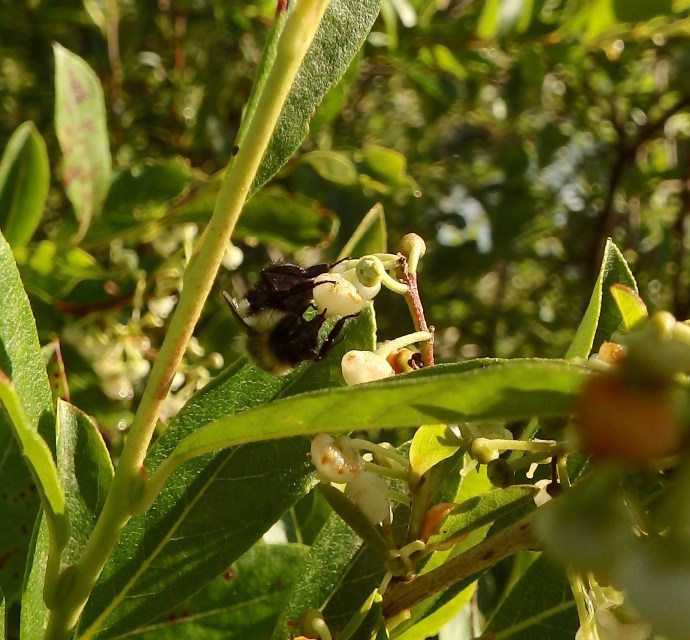
It is a rare music the earliest bee’s hum amid the flowers—revisiting the flower bells just after sunrise.
“A year indoors is a journey along a paper calendar; a year in our outer nature is the accomplishment of a tremendous ritual.”
from The Outermost House by Henry Beston
in Thoreau’s Journal
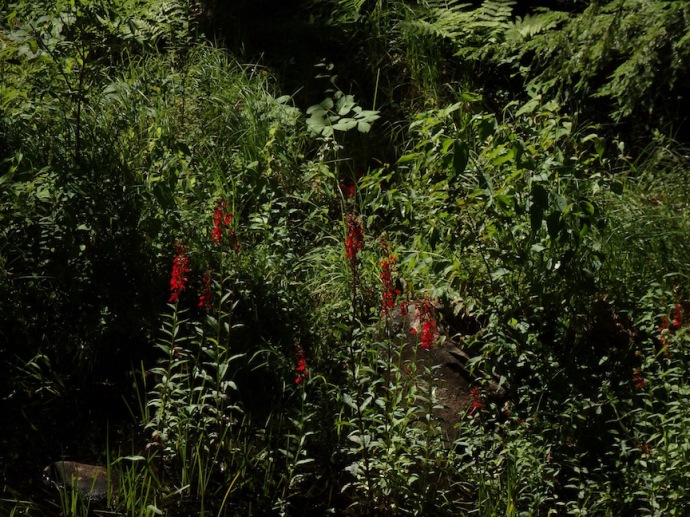
The Cardinal flower probably open today. The quails are heard whistling this morning near the village.
in Thoreau’s Journal
But this habit of close observation— In Humboldt-Darwin & others. Is it to be kept up long—this science— Do not tread on the heels of your experience.

Be impressed without making a minute of it. Poetry puts an interval between the impression & the expression—waits till the seed germinates naturally.
in Thoreau’s Journal

Spear leaved thistle ap several days….

in Thoreau’s Journal

Nature is beautiful only as a place where a life is to be lived. It is not beautiful to him who has not resolved on a beautiful life.
July 21, 1851
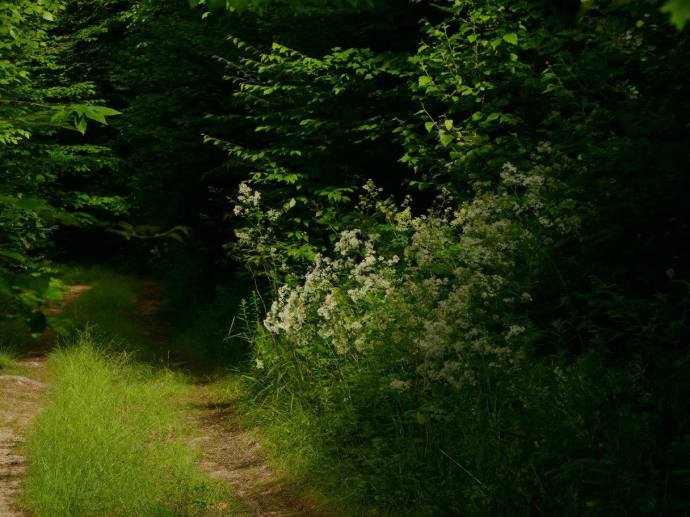
Now I yearn for one of those old, meandering, dry, uninhabited roads, which lead away from towns, which lead us away from temptation, which conduct to the outside of the earth…where you may forget what country you are travelling…It is wide enough, wide as the thoughts it allows to visit you…There I can walk and stalk and pace and plod. That’s the road I can travel, that’s the particular Sudbury I am bound for…There I can walk, and recover the lost child that I am without ringing any bell…The deliberate pace of a thinker never made a road the worse for travelling on.
in Thoreau’s Journal

The Rhexia virginica is in bloom.
in Thoreau’s Journal
Yesterday it was spring & to-morrow it will be autumn— Where is the summer then? First came the St. Johns wort & now the golden rod to admonish us. I hear too a cricket amid these stones under the blackberry vines—singing as in the fall. Ripe blackberries are multiplying.

I see the red-spotted berries of the small solomons seal in my path.

in Thoreau’s Journal

The surface of the water is the place to see the Pontederia from, for now the spikes of flowers are all brought into a dense line—a heavy line of blue a foot or more in width—on one or both sides of the river. The pontederias are now in their prime—there being no withered heads, they are very freshly blue. In the sun when you are looking west they are of a violaceous blue.

in Thoreau’s Journal

The meadows on the Turnpike are white with the meadow rue now more than ever. They are filled with it many feet high.
in Thoreau’s Journal

The Rhixia Virginia the meadow beauty high colored, more beautiful than you remembered.
in Thoreau’s Journal
I hear a bay wing on the wall near-by sound far away—a fainter song spar—strain somewhat— I see its open mouth & quivering throat yet can hardly believe the seemingly distant strain proceeds from it—yaw yaw / twee twee / twitter twitter-te twee twe tw tw tw & so ends with a short & rapid trill— Again I am attracted by the Clam shell reach of the river running E & W—as seen from Hubbard’s fields—now beginning to be smoothed as in the fall— First next the meadows is the broad dark green rank of pickerel weeds &c &c (Polygonum &c) then the light reflecting edging of pads—& then the smooth still cloud reflecting water.
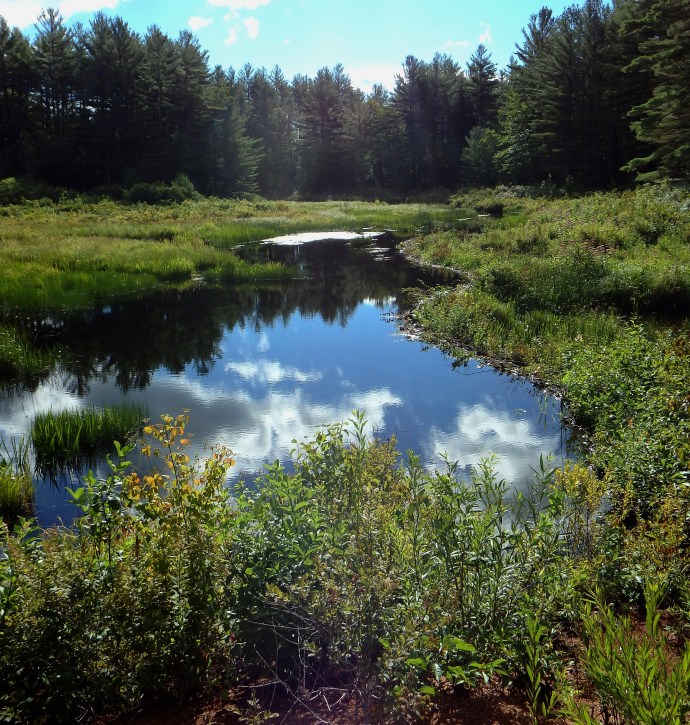
My thoughts are driven inward—even as clouds and trees are reflected in the still smooth water— There is an inwardness even in the mosquitoes hum—while I am picking blueberries in the dank wood.
in Thoreau’s Journal

I see a rose now in its prime by the river in the water amid the willows & button bushes—while others lower on shore are nearly out of bloom.
in Thoreau’s Journal
A Journal. —a book that shall contain a record of all your joy—your extacy….

The northern wild red wild cherry is ripe—handsome bright red but scarcely edible—
in Thoreau’s Journal
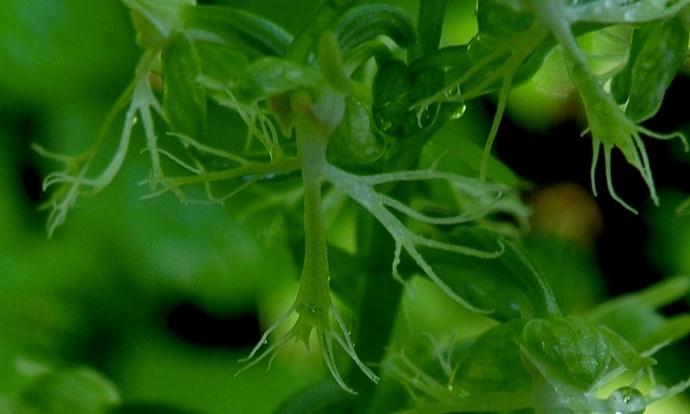
The Green flowered lanceolate leafed orchis at azalea brook will soon flower…

in Thoreau’s Journal

I pluck the blossom of the milkweed….& find how sweet it smells.
in Thoreau’s Journal
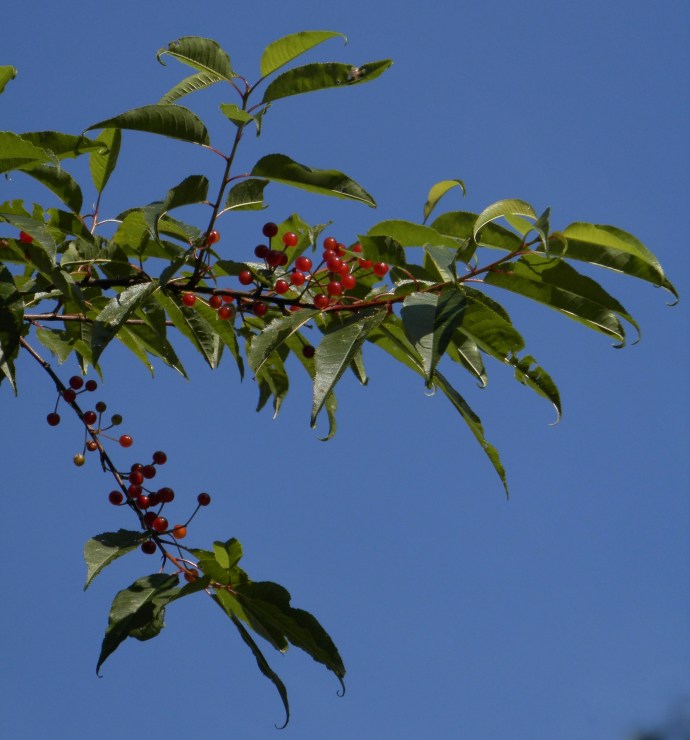
Northern wild red cherry ripe ap some days.
in Thoreau’s Journal
The red lily with its torrid color and sun-freckled spots, dispensing, too, with the outer garment of a calyx, its petals so open and wide apart that you can see through it in every direction, tells of hot weather.

It is of a handsome bell shape, so upright, and the flower prevails over every other part. It belongs not to spring.


You must be logged in to post a comment.