Four months of the green leaf make all our summer, if I reckon from June 1st to October 1st, the growing season, and methinks there are about four months when the ground is white with snow. That would leave two months for spring and two for autumn. October the month of ripe or painted leaves; November the month of withered leaves and bare twigs and limbs.
It is impossible to describe the infinite variety of hues, tints, and shades, for the language affords no names for them, and we must apply the same term monotonously to twenty different things…When the tints are the same they differ so much in purity and delicacy that language to describe them truly would not only have to be greatly enriched, but as it were, dyed to the same colors, itself, and speak to the eye as well as the ear. And it is the subtle differences which especially attract and charm our eyes. Where else will you study color under such advantages?
To describe these colors you must use colored words…In describing the richly spotted leaves, for instance, we find ourselves using ineffectually words which merely indicate faintly our good intentions, giving them in our despair a terminal twist toward our mark,-–such as reddish, yellowish, purplish, etc. We cannot make a hue of words for they are not to be compounded like colors, and hence we are obliged to use such ineffectual expressions as reddish brown, etc. They need to be ground together.
It is surprising how any reminiscence of a different season of the year affects us. When I meet with any such in my journal, it affects me as poetry, and I appreciate that other season and that particular phenomenon more than at the time. The world so seen is all one spring, and full of beauty.
You only need to make a faithful record of an average summer day’s experience and mood, and read it in the winter, and it will carry you back to more than that summer day alone could show. Only the rarest flower, the purest melody of the season, thus comes down to us.
Near the end of causeway, milkweed is copiously discounting….It apparently bursts its pods after rain especially (as yesterday’s), opening on the underside away from succeeding rains. Half a dozen seeds or more, attached by the tips of their silks to the core of the pod, will be blown about there a long time before a strong puff launches them away, and in the meanwhile they are expanding and drying their silk.
Every part of nature teaches us that the passing away of one life is the making room for another. The oak dies down to the ground, leaving within its rind a rich virgin mould, which will impart a vigorous life to an infant forest – – The pine leaves a sandy and sterile soil—the harder woods a strong and fruitful mould. – –
So this constant abrasion and decay makes the soil of my future growth. As I live now so shall I reap. If I grow pines and birches, my virgin mould will not sustain the oak, but pines and birches, or, perchance, weeds and brambles, will constitute my second growth. – –
October has been the month of Aut. tints. The 1st of the month the tints began to be more general—at which time the frosts began. Though there were scattered brights tints long before—but not till then did the forest begin to be painted.
By the end of the month the leaves will either have fallen or be sered & turned brown by the frosts—for the most part….
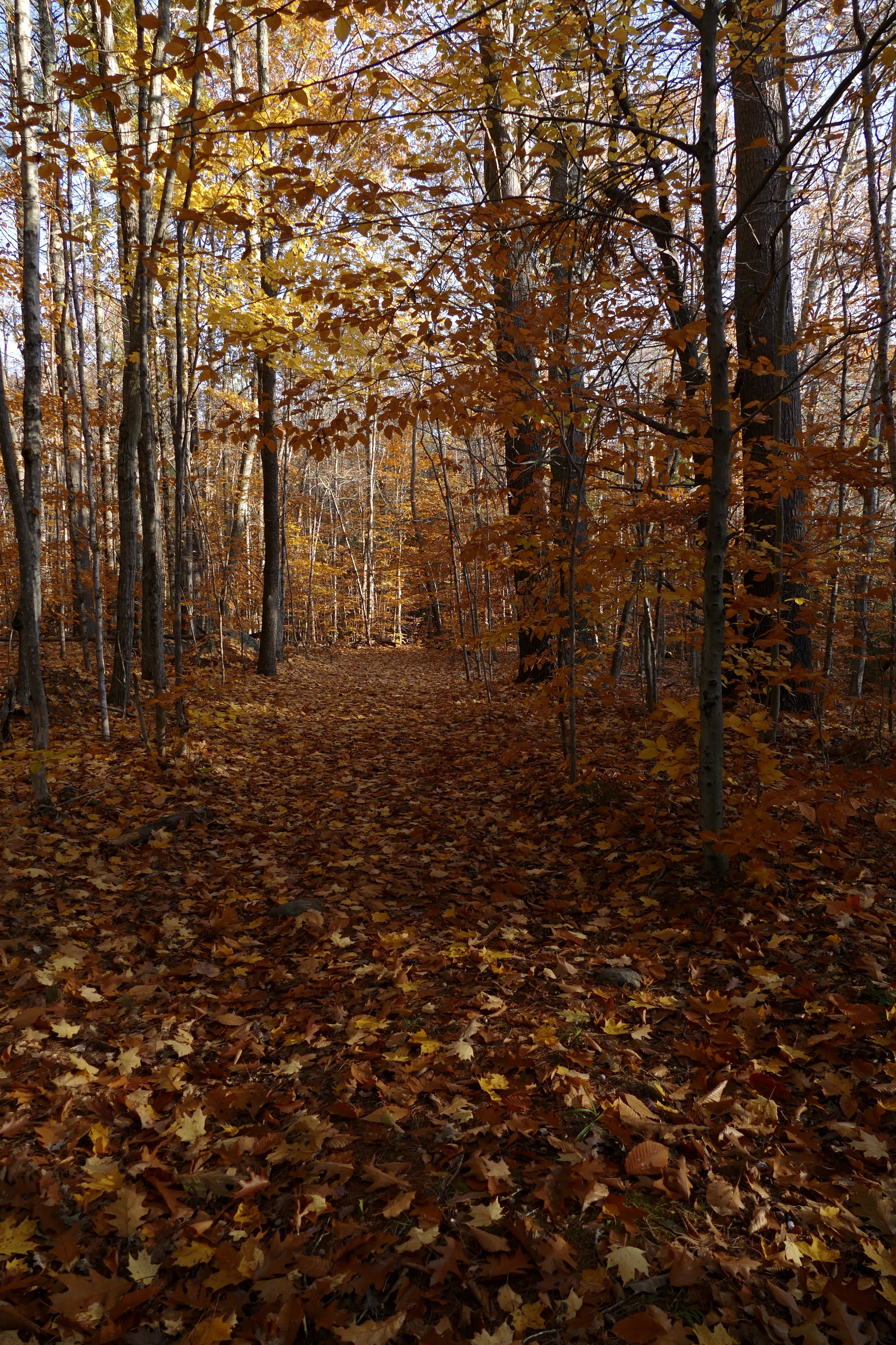
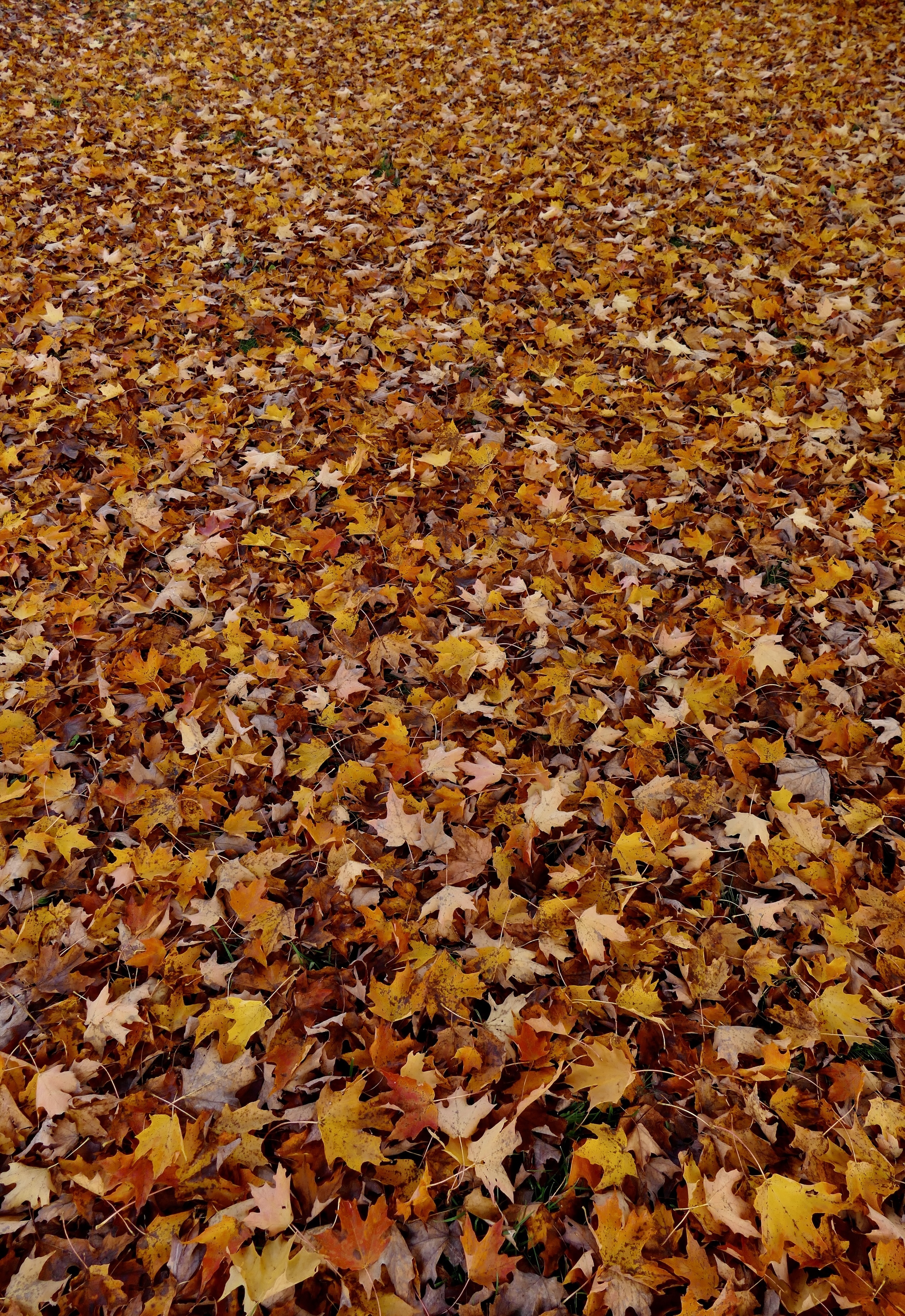
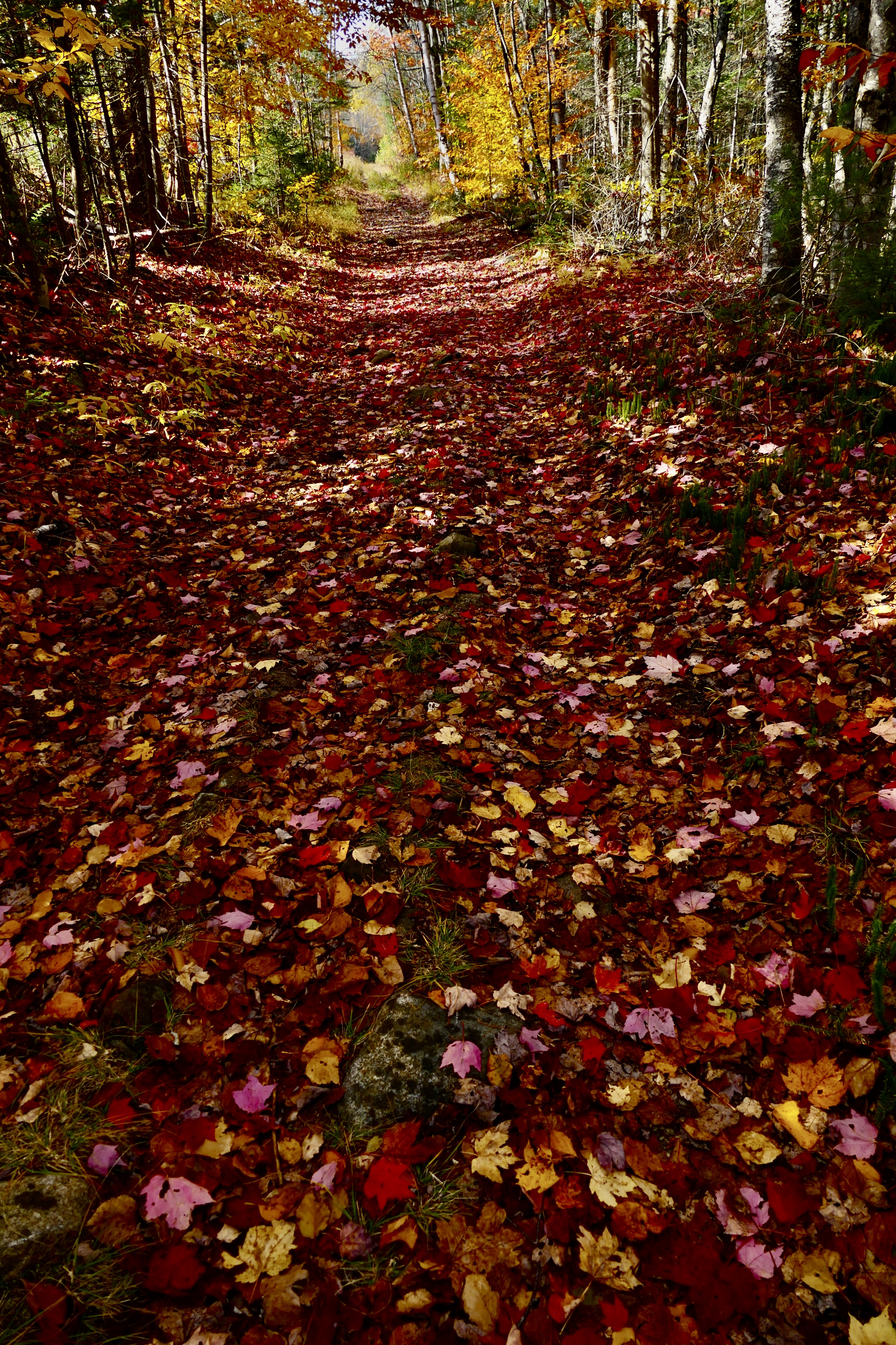
How pleasant to walk over beds of these fresh crisp & rustling fallen leaves…
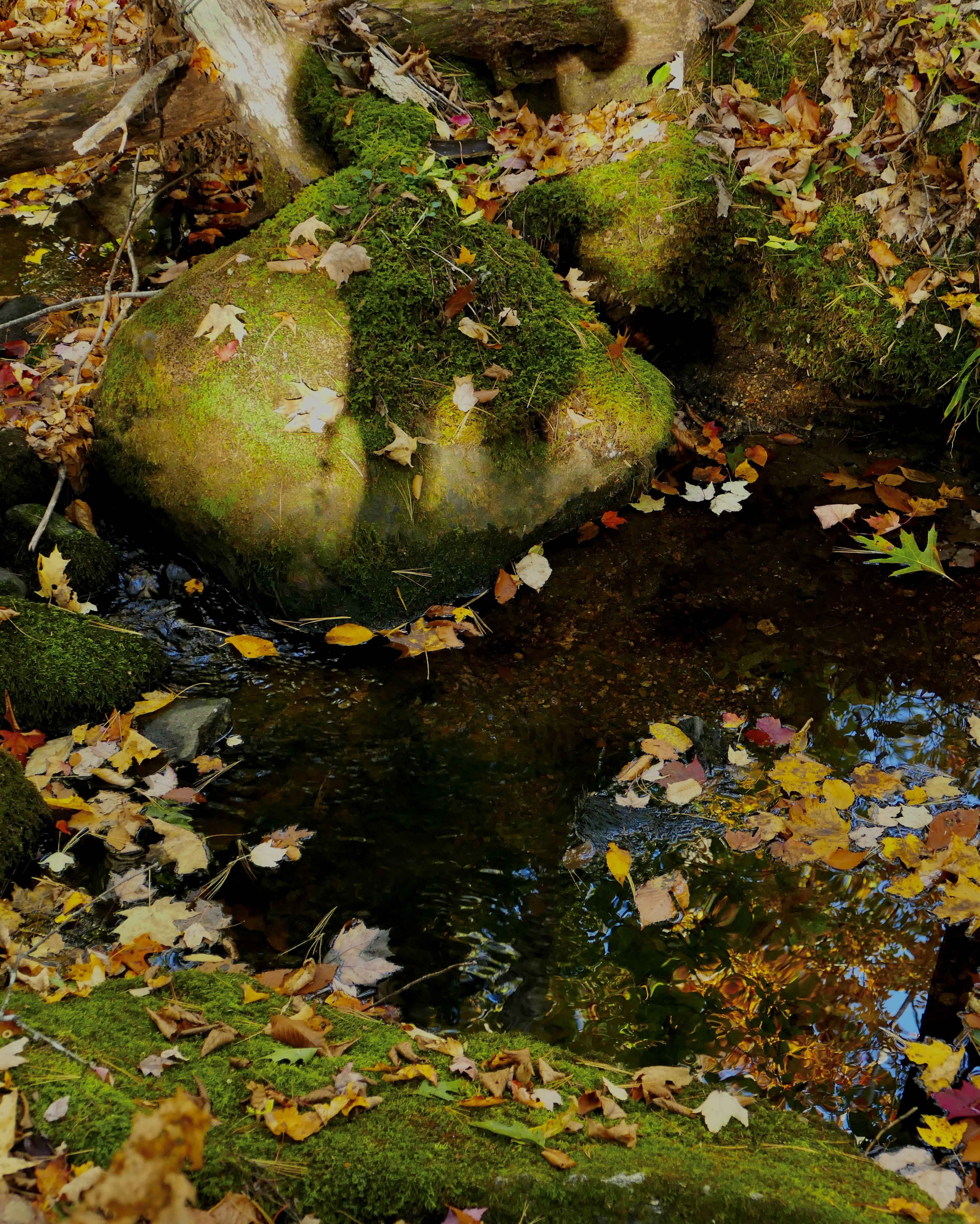
How beautiful they go to their graves—how gently lay themselves down—& turn to mould! Painted of a thousand hues and fit to make the beds of us living.
At this season of the year, when each leaf acquires its peculiar color, Nature prints this history distinctly, as it were an illuminated edition.
Every oak and hickory and birch and aspen sprinkled amid the pines tells its tale a mile off, and you have not to go laboriously through the wood examining the bark and leaves. These facts would be best illustrated by colors, ––green, yellow, red, etc.
P.M. — To Smith’s chestnut grove and Saw Mill Brook.
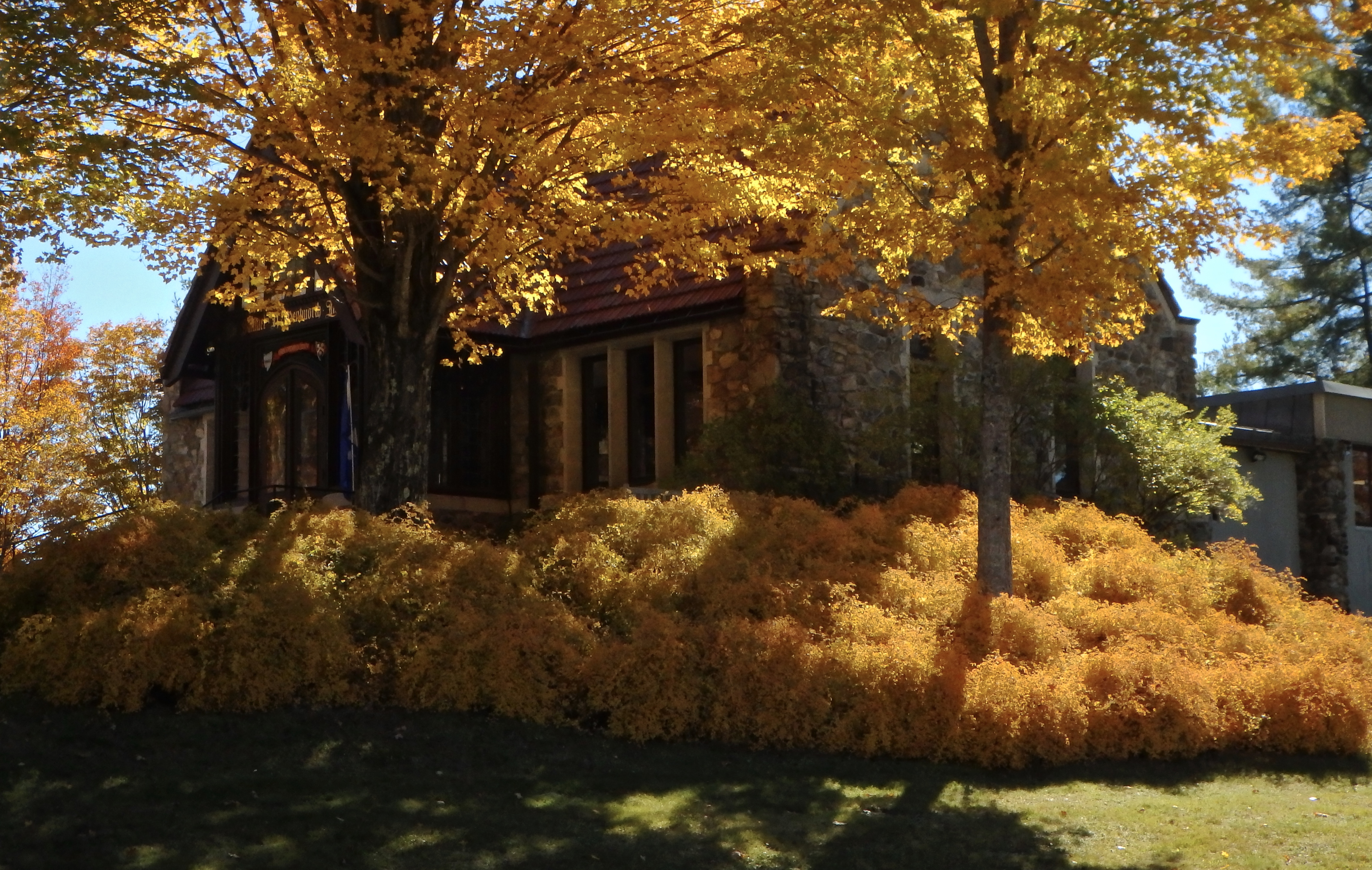
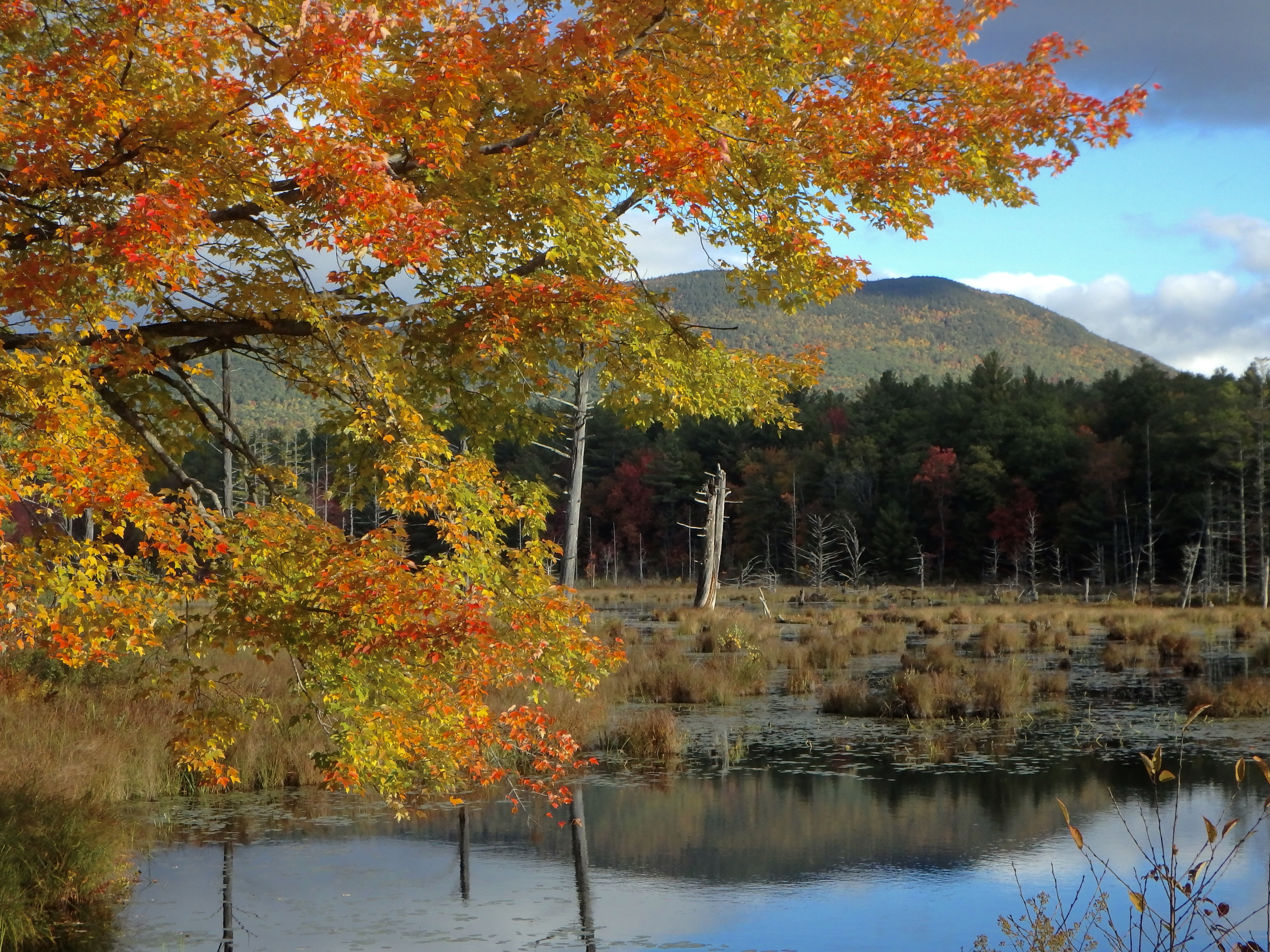
The large sugar maples on the Common are now at the height of their beauty. One, the earliest to change, is partly bare. This turned so early and so deep a scarlet that some thought that it was surely going to die. Also that one at the head of the Turnpike reveals its character now as far as you can see it. Yet about ten days ago all but one of these was quite green, and I thought they would not acquire any bright tints. A delicate but warmer than golden yellow is the prevailing color, with scarlet cheeks. They are great regular oval masses of yellow and scarlet. All the sunny warmth of the season seems to be absorbed in their leaves. There is an auction on the Common, but its red flag is hard to be discerned amid this blaze of color. The lowest and inmost leaves next the bole are of the most delicate yellow and green, as usual, like the complexion of young men brought up in the house.
Little did the fathers of the town anticipate this brilliant success then they caused to be imported from further in the country some straight poles with the tops cut off, which they called sugar maple trees, —and a neighboring merchant’s clerk, as I remember, by way of just planted beans about them. Yet these which were then jestingly called bean-poles are these days for the most beautiful objects noticeable in our streets. They are worth all and more than they have cost, —though one of the selectmen did take the cold which occasioned his death in the setting them out, —if only because they have filled the open eyes of children with their rich color so unstintedly so many autumns. We will not ask them to yield us sugar in the spring, while they yield us so fair a prospect in the autumn. Wealth may be the inheritance of a few in the houses, but it is equally distributed on the Common. All children alike can revel in this golden harvest. These trees, throughout the street, are at least equal to an annual festival and holiday, or a week of such, —not requiring any special police to keep the peace, —and poor indeed must be that New England village’s October which has not the maple in its streets. This October festival costs no powder or ringing of bells, but every tree is a liberty-pole on which a thousand bright flags are run up. Hundreds of children’s eyes are steadily drinking in this color, and by these teachers even the truants are caught and educated the moment they step abroad. It is as if some cheap and innocent gala-day were celebrated in our town every autumn, —a week or two of such days.
What meant the fathers by establishing this living institution before the church, —this institution which needs no repairing nor repainting, which is continually “enlarged and repaired” by its growth? Surely trees should be set in our streets with a view to their October splendor. Do you not think it will make some odds to these children that they were brought up under the maples? Indeed, neither the truant nor the studious are at present taught colors in the schools. These are instead of the bright colors in apothecary shops and city windows. It is a pity we have not more red maples and some hickories in the streets as well. Our paint-box is very imperfectly filled. Instead of, or besides, supplying paint-boxes, I would supply these natural colors to the young.
I know of one man at least, called an excellent and peculiarly successful farmer, who has thoroughly repaired his house and built a new barn with a barn cellar, such as every farmer seems fated to have, who has not a single tree or shrub of any kind about his house or within a considerable distance of it.
No annual training or muster of soldiery, no celebration with its scarfs and banners, could import into the town a hundredth part of the annual splendor of our October. We have only to set the trees, or let them stand, and Nature will find the colored drapery, —flags of all her nations, some of whose private signals hardly the botanist can read. Let us have a good many maples and hickories and scarlet oaks, then I say. Blaze away! Shall that dirty roll of bunting in the gun-house be all the colors a village can display? A village is not complete unless it has these trees to mark the season in it. They are as important as a town clock. Such a village will not be found to work well. It has a screw loose; an essential part is wanting. Let us have willows for spring, elms for summer, maples and walnuts and tupelos for autumn, evergreens for winter, and oaks for all seasons. What is a gallery in a house to a gallery in the streets! I think that there is not a picture-gallery in the country which would be worth so much to us as is the western view under the elms of our Main Street. They are the frame to a picture, and we are not in the dilemma of the Irishman who, having bought a costly gilt picture-frame at an action, found himself obliged to buy a picture at private sale to put into it, for our picture is already painted with each sunset behind it. An avenue of elms as large as our largest, and three miles long, would seem to lead to some admirable place, though only Concord were at the end of it. Such a street as I have described would be to the traveller, especially in October, an ever-changing panorama.
A village needs these innocent stimulants of bright and cheery prospects to keep off melancholy and superstition. Show me two villages, one embowered in trees and blazing with all the glories of October, the other a merely trivial and treeless waste, and I shall be sure the in the latter will be found the most desperate and hardest drinkers. What if we were to take half as much pains in protecting them as we do in setting them out, —not stupidly tie our horses to our dahlia stems? They are cheap preachers, permanently settled, which preach their half-century, and century, aye, and century and a half sermons, with continually increasing influence and unction, ministering to many generations of men, and the least we can do is to supply them with suitable colleagues as they grow infirm.
Children are now everywhere playing with the brown and withered leaves of elms and buttonwoods, which strew the trees and are collected into heaps in the sluiceways. In the woods even the little pea-vine turns a delicate yellow and is more conspicuous than ever, and in the now neglected gardens the asparagus-beds, greenish without, glow yellow within, as if a fire were bursting out there.
As I go down the Turnpike past Clintonia Swamp, I am struck by the magical change which has taken place in the red maple swamps, which just a fortnight ago were splendid masses of scarlet and yellow and crimson, rising amid the yet green trees, —pines and oaks, etc., —like immense flower-beds on one side of the town, visible for miles, attracting the eyes of all travellers; now, —though a few late ones are bright as ever in some places, —all their splendor gone, wafted away, as it were by a puff of wind, and they are the mere ghosts of trees, unnoticed by any, or, if noticed at all, like the smoke that is seen where a blaze is extinguished, or as the red clouds at evening change suddenly to gray and black, — so suddenly their glory departs, —desolate gray twigs.
The Salix alba is a light and silvery green. Since the red maples generally fell, the chestnuts have been yellowing, and the oaks reddening and yellowing. The chestnuts are now in their prime, though many leaves are fallen. The forest, which showed but little ripeness ten days ago, except about its edges and here and there as you looked down on it from a height, is now seen to be generally of a mellow brownish yellow, like perfectly ripe fruit, which we know to be more perfectly ripe for it being a little specked. By the brook, witch-hazel, as an underwood, is in the height of its change, but elsewhere exposed large bushes are bare. Rheus toxicodenron is fallen. The hornbeam is a greenish yellow, or yellow as it were dusted with green. The maple-leaved viburnum, now at its height, varies, with more or less of shade, from dark crimson through a delicate pale crimson to whitish. The sage willow, a light yellow, in prime, though hardly noticed amid the more conspicuous oaks. Larches have begun to change in water.
As I come though Hubbard’s Woods I see the wintergreen, conspicuous now about the freshly fallen white pine needles. Their shining green is suddenly revealed above the pale-brown ground. I hail its cool unwithering green, one of the humbler allies by whose aid we are to face the winter.
Saw, October 14th, a snake a Ball’s Hill, like a stiriped snake, but apparently yellow-spotted above and with the flatter head? Noticed a little snake, eight or nine inches long, in the rut in the road in the Lincoln woods. It was brown above with a paler-brown dorsal stripe, which was bounded on each side by a row of dark-brown or blackish dots one eighth inch apart, the opposite rows alternating. Beneatg, light cream-color or yellowish white. Evidently Storer’s Coluber ordinatus. It ran along the deep sandy rut and would probably be run over there.
See larks, with their white tail-feathers, fluttering low over the meadows these days.
Minott was sitting outside, as usual, and inquired if I saw any game in my walks these days; since, now that he cannot go abroad himself, he likes to hear from the woods. He tried to detain me to listen to some of his hunting-stories, especially about a slut that belonged to a neighbor by the name of Billlings, which was excellent for squirrels, rabbits, and partridges, and would always follow him when he went out, though Billings was “plaguy made about it;” however, he had only to go by Billlings to have the dog accompany him. B. afterward carried her up country and gave her away, the news of which almost broke Minott’s heart. He said he could have cried when he heard of it, for he had dreamed of her several nights. She was a plaguy good dog for squirrels, etc, but her pups were none of them equal to herself. It was not time for squirrels now, because the leaves were not off enough. He used sometimes to take his old king’s-arm on these excursions. It was heavy, but it was sure. His present gun has a flint lock and has often been repaired, and he said he didn’t suppose it would fetch more than a dollar if put up at auction now. But he wouldn’t take twenty dollars for it. He didn’t want to part with it. He liked to look at it.
As leaves fall along the river and in the woods, the squirrels and musquash make haste to shelter and conceal themselves by constructing nests and cabins.
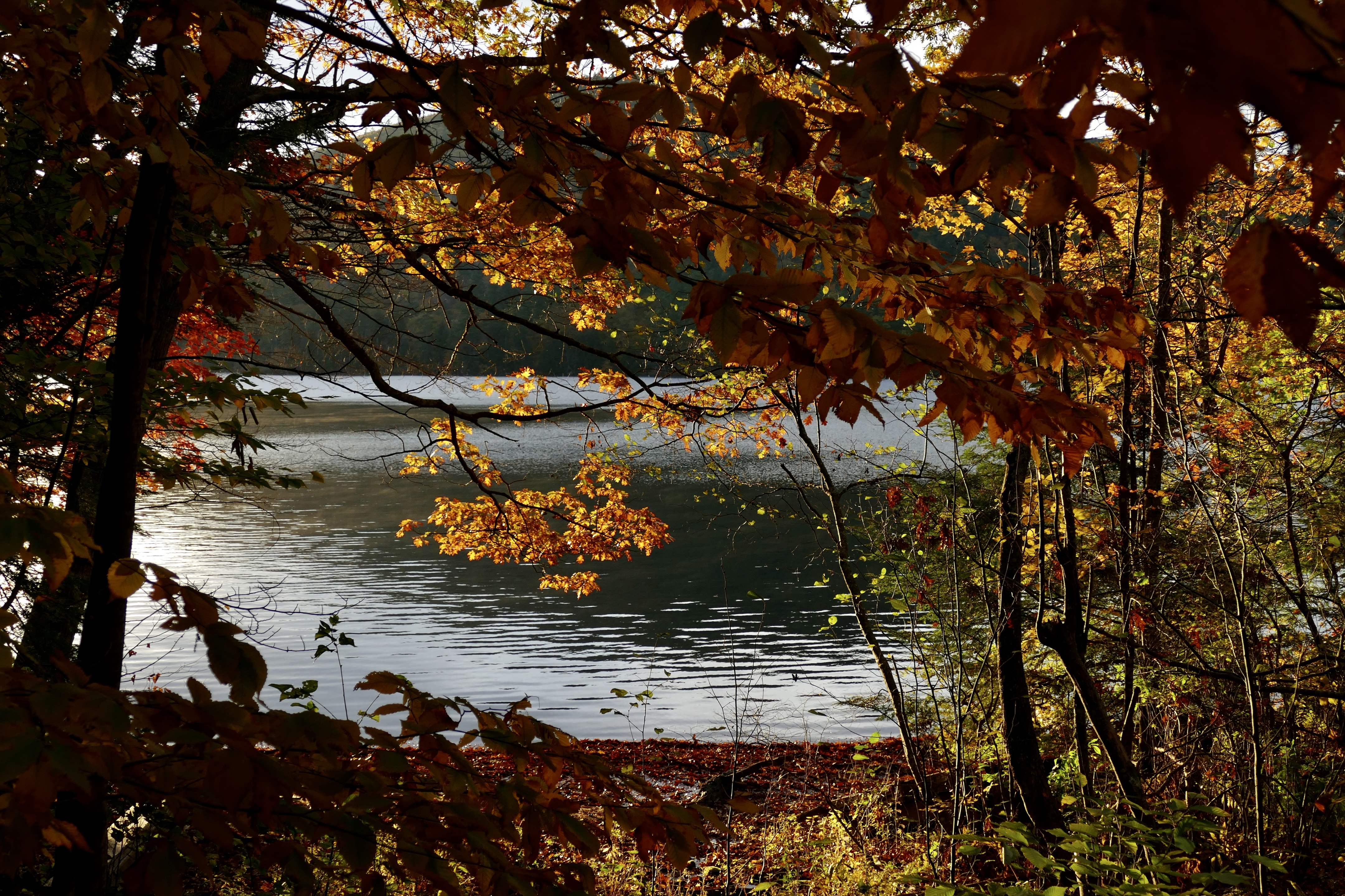
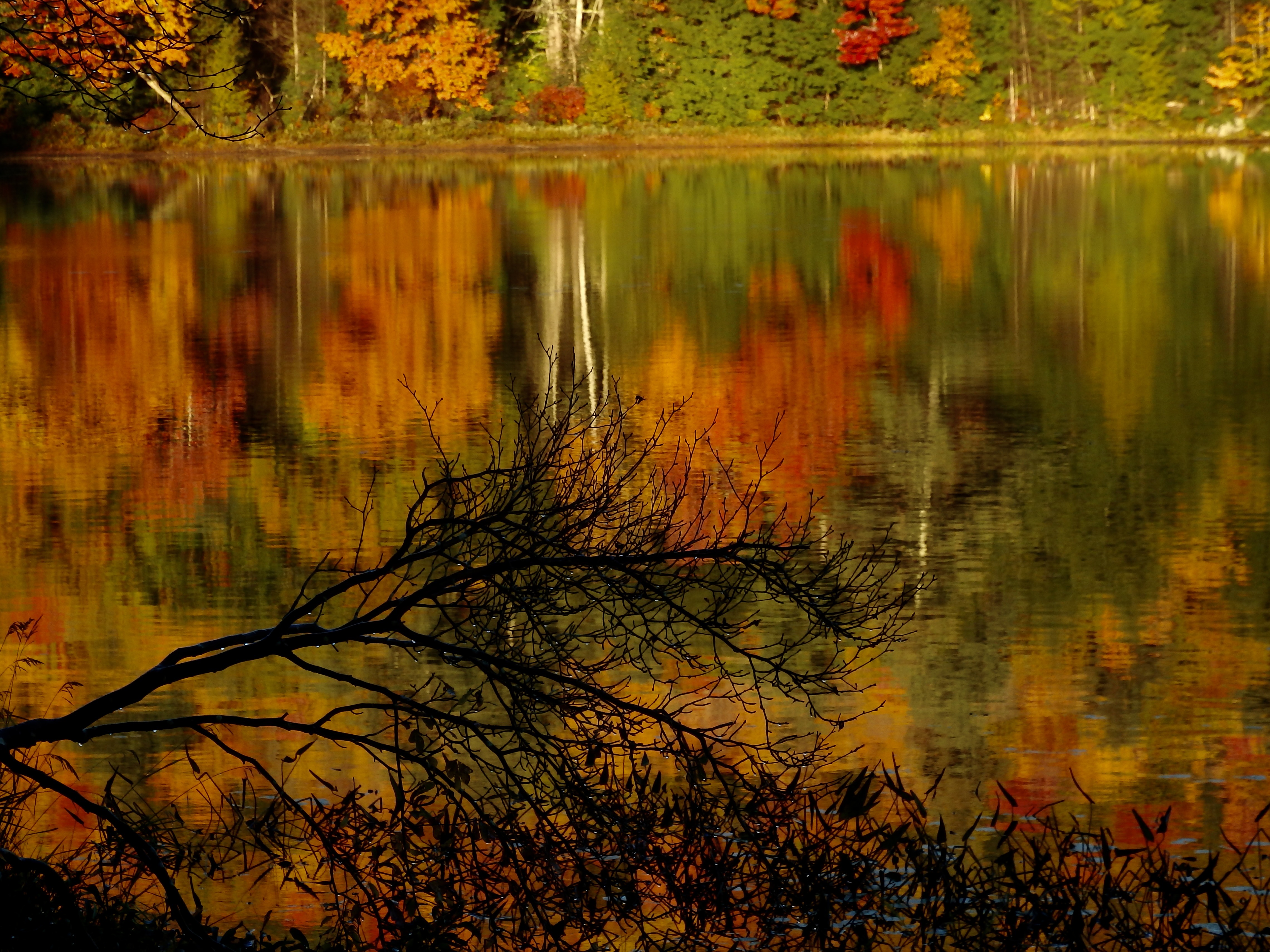
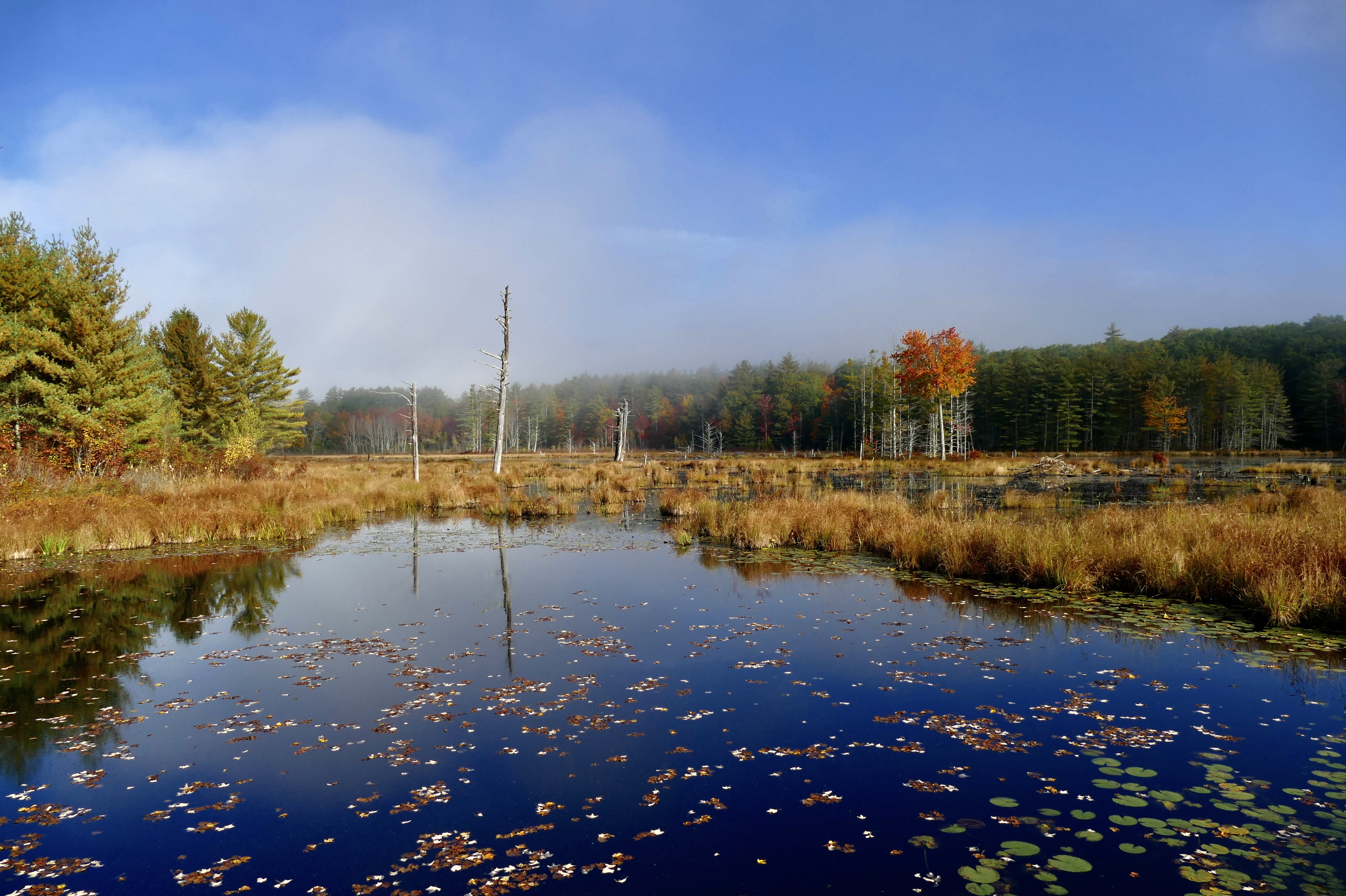
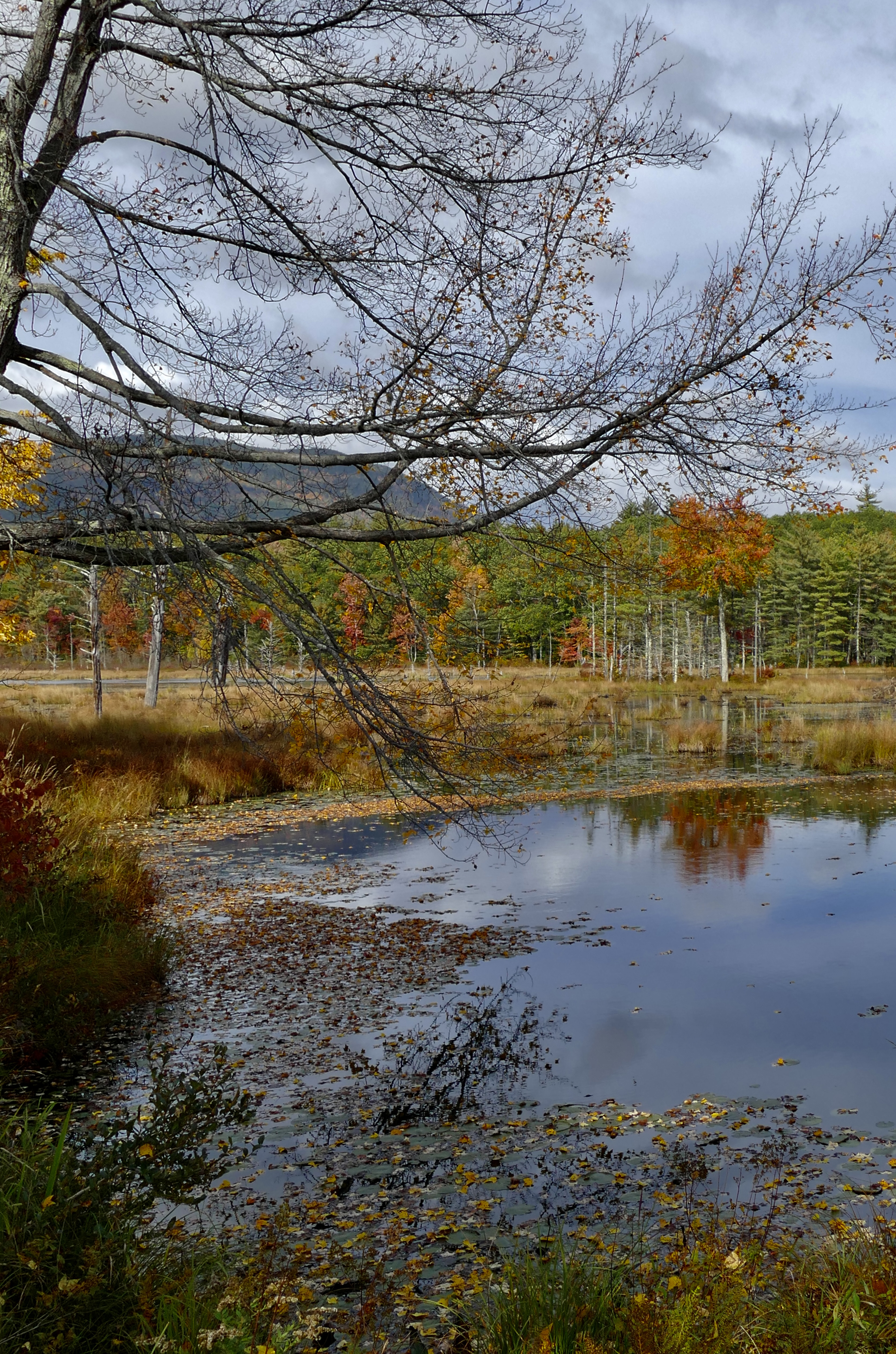
Methinks the reflections are never purer and more distinct than now at the season of the fall of the leaf, just before the cool twilight has come, when the air has a finer grain.
Just as our mental reflections are more distinct at this season of the year, when the evenings grow cool and lengthen and our winter evenings with their brighter fires may be said to begin. And painted ducks, too, often come and sail or float amid the painted leaves.
I think that the principal stages in the autumnal changes of trees are these, thus far, as I remember, this year: ––
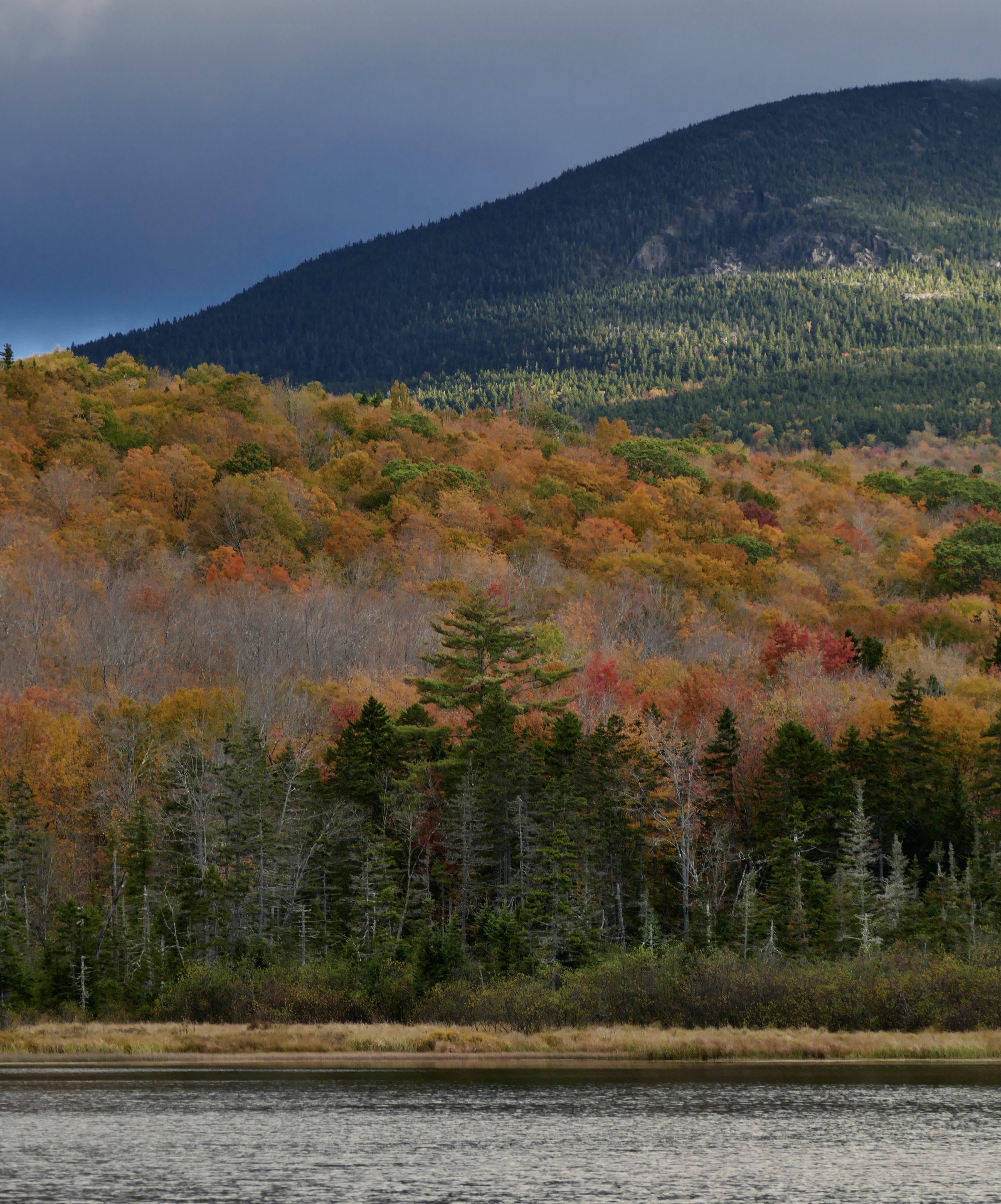
First, there were in September the few prematurely blushing white maples, or blazing red ones in water, that reminded us of October. Next, the red maple swamps blazed out in all their glory, attracting the eyes of all travellers and contrasting with other trees. And hard upon these came the ash trees and yellowing birches, and walnuts, and elms, and the sprout-land oaks, the last streaking the hillsides far off, often occupying more commanding positions than the maples.
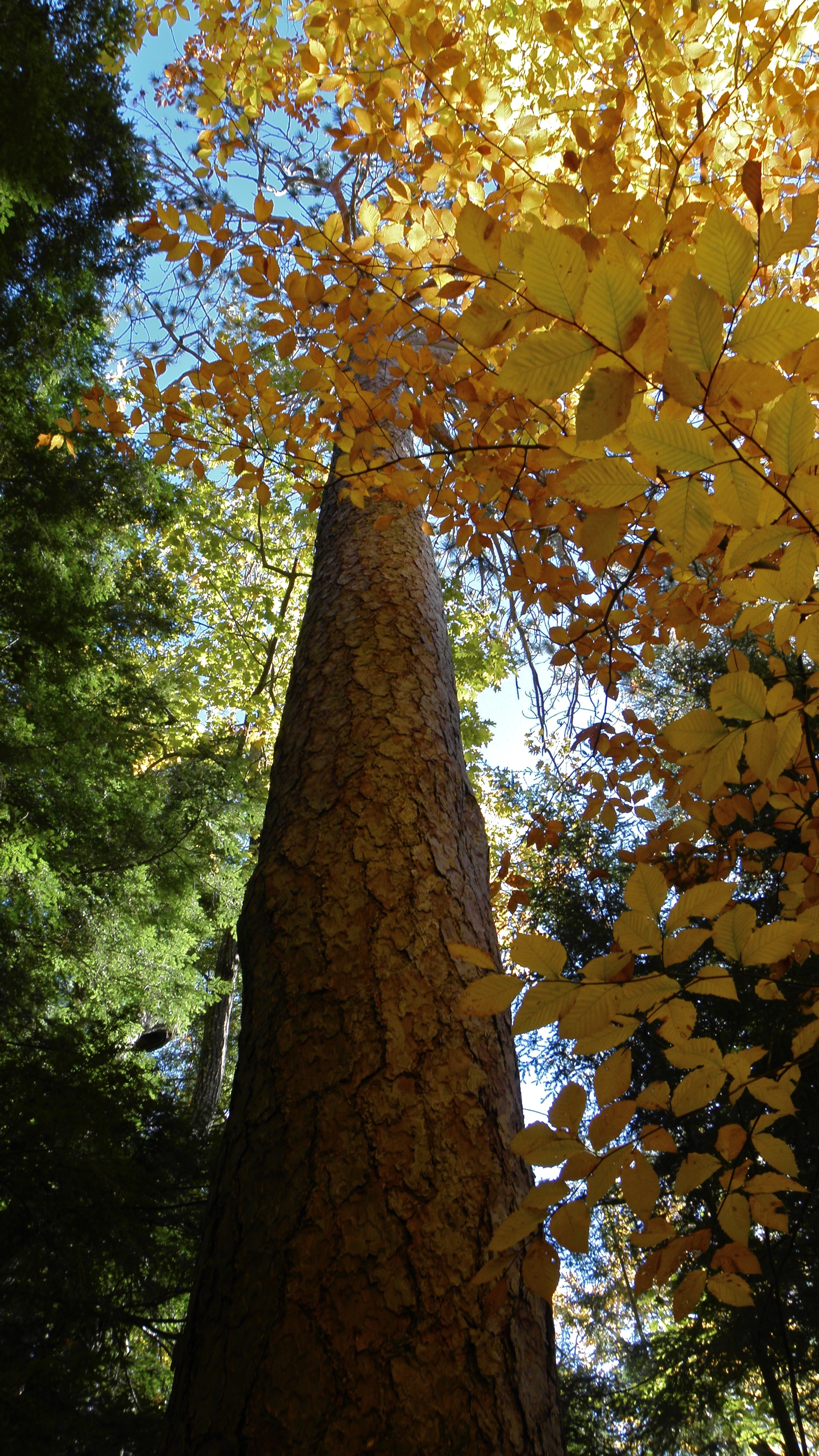
All these add their fires to those of the maples. But even yet the summer is unconquered. Now the red maple fires are gone out (very few exceptions), and the brightness of those accompanying fires is dulled, their leaves falling; but a general, though duller, fire, yellowish or red, growing more reddish, has seized the masses of the forest, and betrays the paucity of the evergreens, but mingled with it are the delicate tints of aspens, etc., and, beneath, of protected underwoods whose exposed specimens gave us such promise.
Each town should have a park, or rather a primitive forest, of five hundred or a thousand acres, where a stick should never be cut for fuel, a common possession forever, for instruction and recreation. We hear of cow-commons and ministerial lots, but we want men-commons and lay lots, inalienable forever. Let us keep the New World new, preserve all the advantages of living in the country. There is meadow and pasture and wood-lot for the town’s poor. Why not a forest and huckleberry-field for the town’s rich? All Walden Wood might have been preserved for our park forever, with Walden in its midst, and the Easterbrooks Country, an unoccupied area of some four square miles, might have been our huckleberry-field. If any owners of these tracts are about to leave the world without natural heirs who need or deserve to be specially remembered, they will do wisely to abandon their possession to all, and not will them to some individual who perhaps has enough already. As some give to Harvard College or another institution, why might not another give a forest or huckleberry-field to Concord? A town is an institution which deserves to be remembered.
We boast of our system of education, but why stop at schoolmasters and schoolhouses? We are all schoolmasters, and our schoolhouse is the universe. To attend chiefly to the desk or schoolhouse while we neglect the scenery in which it is placed is absurd. If we do not look out we shall find our fine schoolhouse standing in a cow-yard at last.
This year, on account of the very severe frosts, the trees change and fall early, or fall before fairly changing. The willows have the bleached look of November. Consider how many leaves there are to fall each year and how much they must add to the soil.
Coultas (in What may be Learned from a Tree) finds that a single beech twig twenty-seven inches and three lines long and six years old was ” the leaf-labor of one hundred and fifty-five leaves,” and quotes from Asa Gray’s ” First Lessons in Botany ” that ” the Washington Elm at Cambridge —a tree of no extraordinary size—was some years ago estimated to produce a crop of seven millions of leaves, exposing a surface of 200,000 square feet, or about five acres, of foliage.” Supposing this to be true, and that the horizontal spread of this (like other the largest elms) is one hundred feet, then, if all its leaves should be spread evenly on the ground directly under it, there would be about twenty-five thicknesses. An ordinary forest would probably cover the ground as thickly as this tree would. Supposing a leaf to be of the same thickness with an ordinary sheet of letter-paper, and that the mass is compressed as much as paper packed in a ream, the twenty-five would be about one sixteenth of an inch thick. This is a rude calculation.
We have had a remarkably fertile year. Let us see now if we have a cold winter after it.
The red of oaks, etc., is far more general now than three or four days ago, but it is also much duller, so that some maples that were a bright scarlet can now hardly be distinguished by their color from oaks, which have just turned red….
PM To Poplar Hill. Maple fires are burnt out generally, and they have fairly begun to fall and look smoky in the swamps. When my eyes were resting on those smoke-like bare trees, it did not at first occur to me why the landscape was not as brilliant as a few days ago. The outside trees in the swamps loose their leaves first.
I am struck by the superfluity of light in the atmosphere in the autumn––as if the earth absorbed none––& out of this profusion of dazzling light came the autumnal tints. Can it because there is less vapor?
Most leaves are already somewhat faded and withered. Their tints are not so bright. The chestnut leaves already rustle with a great noise as you walk through the woods, as they lie light, firm, and crisp. Now the chestnuts are rattling out. The burs are gaping and showing the plump nuts. They fill the ruts in the road, and are abundant amid the fallen leaves in the midst of the wood. The jays scream, and the red squirrels scold, while you are clubbing and shaking the trees. Now it is true autumn—all things are crisp & ripe.
Generally speaking, the autumnal tints affect the color of the landscape for only two or three miles, but I distinguish maples by their color half a mile north of Brooks Clark’s, or some three miles distant, from this hill, —one further east very bright.
Also I see them in the northeast, or on or near, apparently, a road between Bedford and Billerica, at least four or five miles distant ! ! This is the furthest I can see them.








 allandibiase.com
You must be logged in to post a comment.