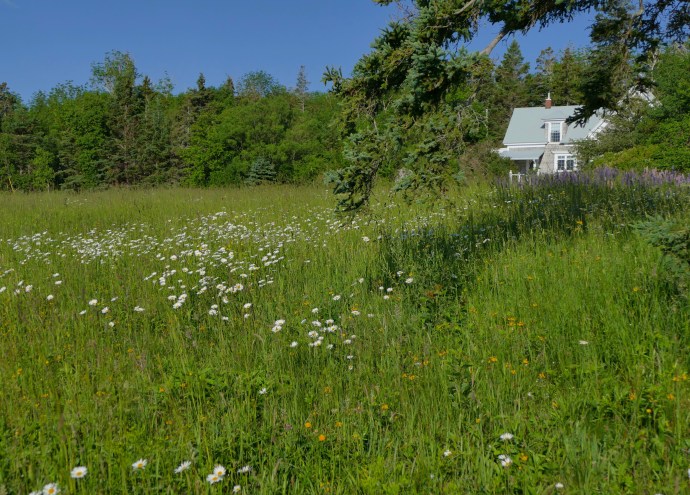
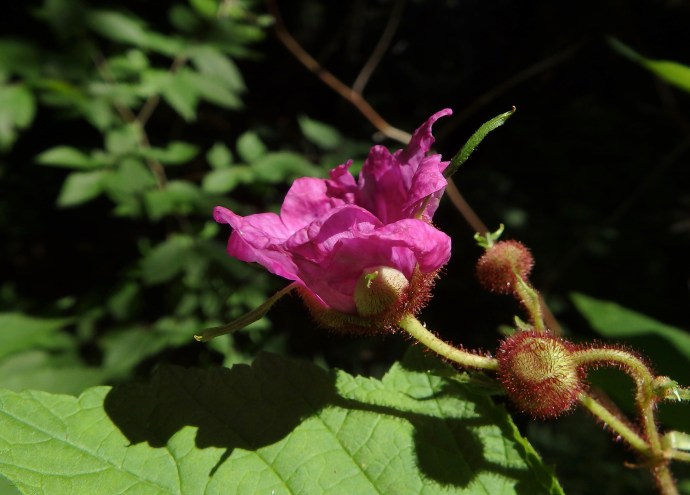
in Thoreau’s Journal:

I see the yellow water ranunculus in dense fields now in some places on the side of the stream, two or three inches above water, and many gone to seed…
in Thoreau’s Journal:

I see the yellow water ranunculus in dense fields now in some places on the side of the stream, two or three inches above water, and many gone to seed…
in Thoreau’s Journal:

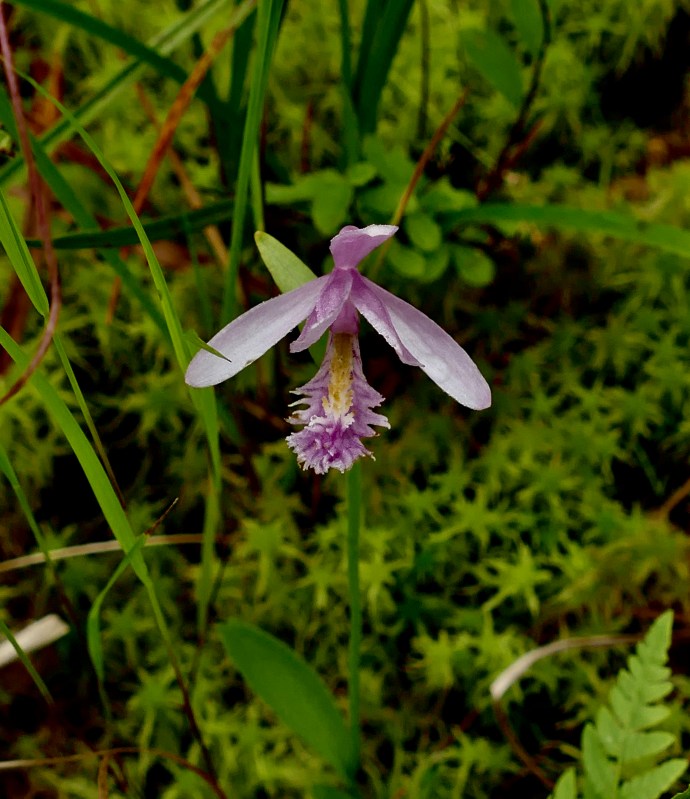
Visited the great orchis which I am waiting to have open completely. It is emphatically a flower; its great spike six inches by two, of delicate, pale purple flowers which begin to expand at bottom, rises above and contrasts with the green leaves of hellebore, skunk-cabbage, and ferns (by which its own leaves are concealed), in the cool shade of an alder swamp. It is the more interesting for its variety and secluded situations in which it grows, owing to which it is seldom seen, not thrusting itself upon the observation of men. It is a pale purple, as if from growing in the shade. It is not remarkable in its stalk and leaves, which, indeed, are commonly concealed by other plants.
in Thoreau’s Journal:
No one to my knowledge, has observed the minute differences in the seasons. Hardly two nights are alike. The rocks do not feel warm to-night, for the air is warmest; nor does the sand particularly. A book of the seasons, each page of which should be written out-of-doors, or in its own locality wherever it may be.
[Later the same June, Thoreau used his book A Week on the Concord and Merrimack Rivers to explain what he meant by a book written “out-of-doors:”]
June 29, 1851
I thought that one peculiarity of my “Week” was its hypaethral character, to use an epithet applied to those Egyptian temples which are open to the heavens above, under the ether. I thought that it had little of the atmosphere of the house about it, but might have been written wholly, as in fact it was to a great extent out of doors. I was only at a late period in writing it, as it happened that I used any phrases implying that I lived in a house or led a domestic life. I trust it does not smell so much of the study and library, even of the poet’s attic, as of the fields and woods, that it is a hypaethral or unroofed book, lying open under the ether, and permeated by it, open to all weathers, not easy to be kept on a shelf.

in Thoreau’s Journal:
Lupines their pods & seeds–1st the profusion of color. spikes of flowers rising above & prevailing over the leaves.– then the variety in dif clumps rose? purple-blue & white-then the handsome palmate leaf made to hold dew. Gray says from lupus wolf because they “were thought to devour the fertility of the soil.” This is scurrilous. Under Fair Haven. First grew the V. pedata here–then Lupines mixed with the delicate snapdragon. This soil must abound with the blue principle. Is that the tephrosia so forward. The fruit of the cerasus pumila is puffed up, is puffed up like Haw’s plums. The aralia nudicaulis already shows small green berries. The lupine has no pleasant fragrance. The cistus a slight enlargement of the Cinquefoil. The June? cinquefoil

––what the summer can do.
in Thoreau’s Journal:
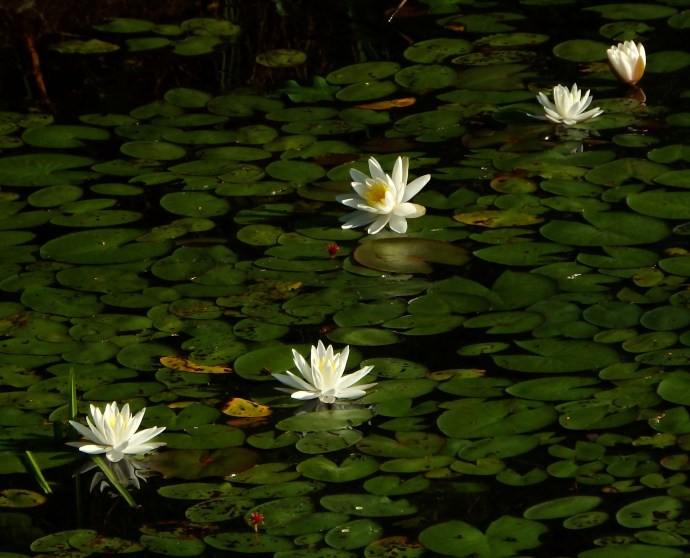
1852
The buck-bean in Hubbards meadow just going out of blossom. The yellow water ranunculus is an important flower in the river now rising above the white lily pads whose flower does not yet appear. I perceive that their petals washed ashore line the sand conspicuously. The green briar in flower. For a week past we have had washing days– The grass waving and trees having leafed out their boughs wave and feel the effect of the breeze. Thus new life & motion is imparted to the trees– The season of waving boughs–and the lighter under sides of the new leaves are exposed. This is the first half of June. Already the grass is not so fresh & liquid velvety as green–having much of its blossom & some even gone to seed–& it is mixed with reddish ferns & other plants–but the general leafiness–shadiness & waving of grass & boughs in the breeze characterise the season. The wind is not quite agreeable–because it prevents your hearing the birds sing. Meanwhile the crickets are strengthening their quire. The weather is very clear & the sky bright. The river shines like silver. Methinks this is a traveller’s month. The locust in bloom– The waving undulating rye. The deciduous trees have filled up the intervals between the (pines.) evergreens. & the woods are bosky now. Is that the Thalictrum Cornuti that shows green stems? at the Corner spring? Gathered strawberries on Fair Haven. rather acid yet.

1853
4:15 Am To Nawshawtuct by boat
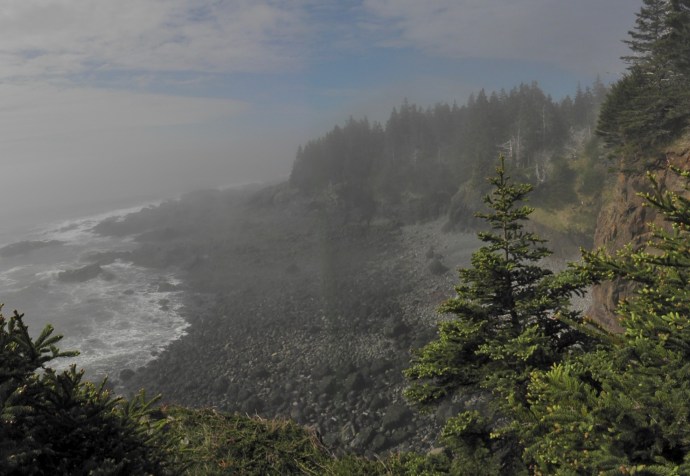
A prevalent fog through not quite so thick as the last described–it is a little more local–for it is so thin SW of this hill that I can see the earth through it–but as thick as before NE–yet here & there deep valleys are excavated in it–as painters imagine the red sea for the passage of Pharaoh’s host–wherein trees and houses appear as it were at the bottom of the sea. What is peculiar about it is that it is the tops of the trees which you see first & most distinctly before you see their trunks–or where they stand on earth. Far in the NE there is as before apparently a tremendous surf breaking on a distant shoal. It is either a real shoal i.e. a hill over which the fog breaks or the effect of the sun’s rays on it.

in Thoreau’s Journal:
Within a day or two has begun that season of summer when you see afternoon showers, maybe with thunder, or the threat of them, dark in the horizon,

and are uncertain whether to venture far away or without an umbrella.
in Thoreau’s Journal:
Clover begins to redden the fields generally. The quail is heard at a distance. Buttercups of various kinds mingled, yellow the meadows, the tall, the bulbous, the repens.

The cinquefoil, in its ascending state, keeping pace with the grass, is now abundant in the fields. Saw it one or two weeks ago. This is a feature of June. Still both high and low blueberry and huckleberry blossoms abound. The hemlock woods, their fanlike sprays edged or spotted with short, yellowish green shoots, tier above tier, shelf above shelf, look like a cool bazaar of rich embroidered goods.

in Thoreau’s Journal:
This is June, the month of grass and leaves…Already the aspens are trembling again, and a new summer is offered me. I feel a little fluttered in my thoughts, as if I might be too late. Each season is but an infinitesimal point. It no sooner comes than it is gone. It has no duration. It simply gives a tone and hue to my thought.

Each annual phenomenon is a reminiscence and prompting. Our thoughts and sentiments answer to the revolutions of the seasons as two cog-wheels fit into each other. We are conversant with only one point of contact at a time, from which we receive a prompting and impulse, and instantly pass to a new season or point of contact, A year is made up of a certain series and number of sensations and thoughts, which have their language in nature. Now I am ice, now I am sorrel. Each experience reduces itself to a mood of the mind.

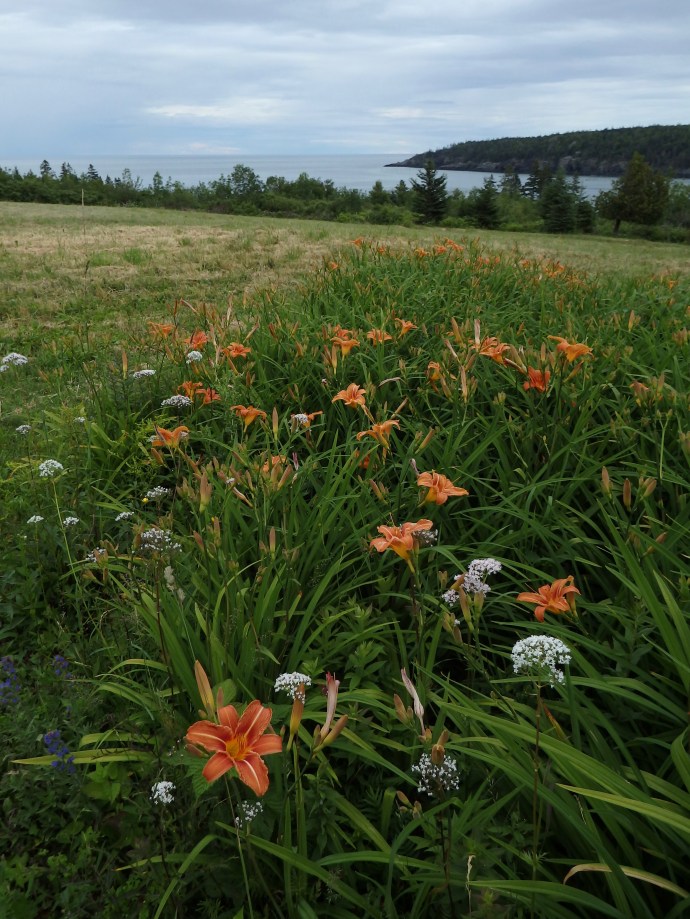
June 6, 2017 Photos
in Thoreau’s Journal:
The lupine is now in its glory.

It is the more important because it occurs in such extensive patches even an acre or more together––and of such a pleasing variety of colors, purple-pink or lilac–and white–especially with the sun on it, when the transparency of the flower makes its color changeable.

It paints a whole hill side with its blue–making such a field––(if not meadow) as Proserpine might have wandered in. Its leaf was made to be covered with dew drops– Such a profession of the heavenly–the elysian color–as if these were the elysian fields. They say the seeds look like babies’ faces and hence the flower is so named. No other flowers exhibit so much blue. That is the value of the lupine. The earth is blued with them. Yet a third of a mile distant I do not detect their color on the hill side– Perchance because it is the color of the air. It is not distinct enough.

You passed along here perchance a fortnight ago & the hill-side was comparatively barren––but now you come & these glorious redeemers appear to have flashed out here all at once. Who planted the seeds of lupines in the barren soil? Who watereth the lupines in the fields?


in Thoreau’s Journal:

Going up Fair Haven Hill the blossoms of the huckleberries & blue berries imparted a sweet scent to the whole hill-side.
in Thoreau’s Journal:

The pinxter flower growing as it does as an underwood in the shade of larger trees––the naked umbels of its lively rose pink flowers are seen flashing out against a back ground of green or of dark shaded recesses–
in Thoreau’s Journal:

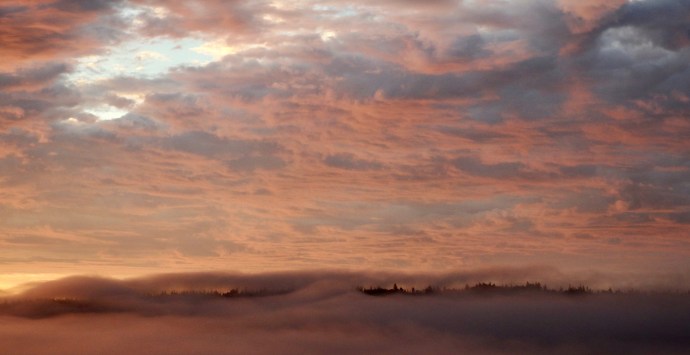
Quite a fog this morning.
Does it not always follow the cooler nights after the first really warm weather about the end of May?
June 1, 2017 Photo
in Thoreau’s Journal:
A cold southeast wind.

Blue-eyed grass, apparently in pretty good season.
in Thoreau’s Journal:
The common blue-flag––

just out at Ball’s Hill.
in Thoreau’s Journal:

That exceedingly neat & interesting little flower blue-eyed grass now claims our attention.
in Thoreau’s Journal:

This warm hazy afternoon the sun is shorn of his beams now at six o clock––& the lupines do not look so well for it––

their lilac tints show best looking at them towards the sun for they are transparent.
in Thoreau’s Journal:

Blue eyed grass has been out some time….
in Thoreau’s Journal:
1852

The air is full of the odor of apple blossoms— Yet the air is fresh as from the salt water. The meadow smells sweet as you go along low places in the road at sundown.
1853

A new season has commenced – summer- leafy June….The buttercups in the churchyard are now in perfection.
1854

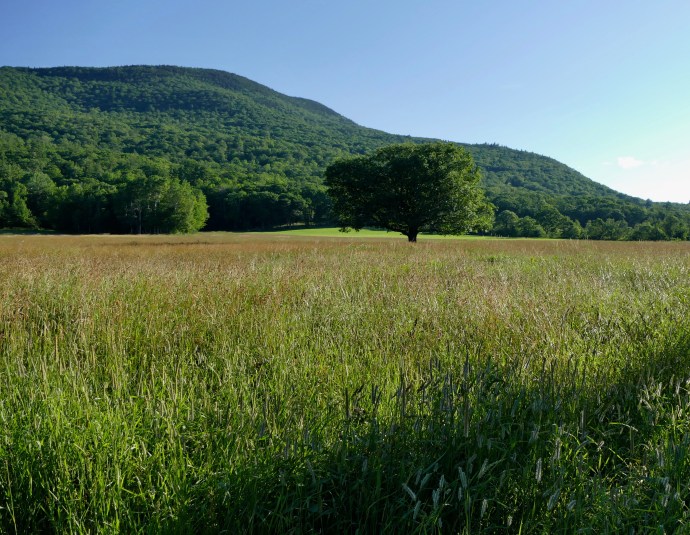
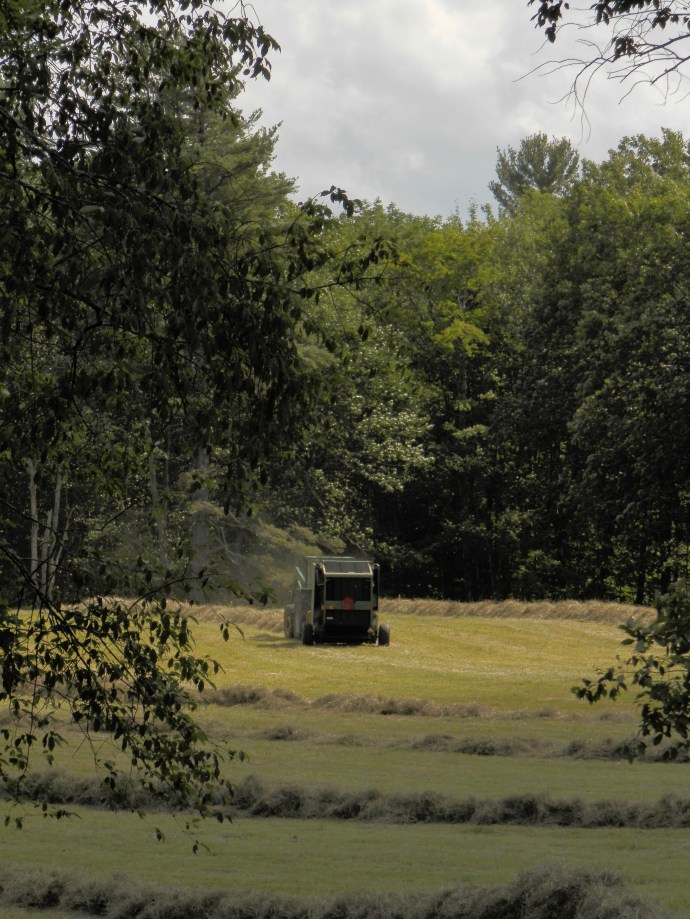
The season of grass, now everywhere green and luxuriant.
in Thoreau’s Journal:
Within the last week or so the grass & leaves have grown many shades darker––& if we had leaped from last wednesday to this we should have been startled by the change—the dark bluish green of the rank grass especially. How rapidly the young twigs shoot—the plants trees—shrubs—no sooner leaf out than they shoot forward surprisingly as if they had acquired a head by being repressed so long.

They do not grow nearly so rapidly at any season. Many do most of the growing for the year in a week or two at this season. They shoot—they spring & the rest of the year they harden & mature. & perhaps have a 2nd spring in the later part of the summer or in the fall.
You must be logged in to post a comment.