August 4, 1854

in Thoreau’s Journal:

AUG4.jpg

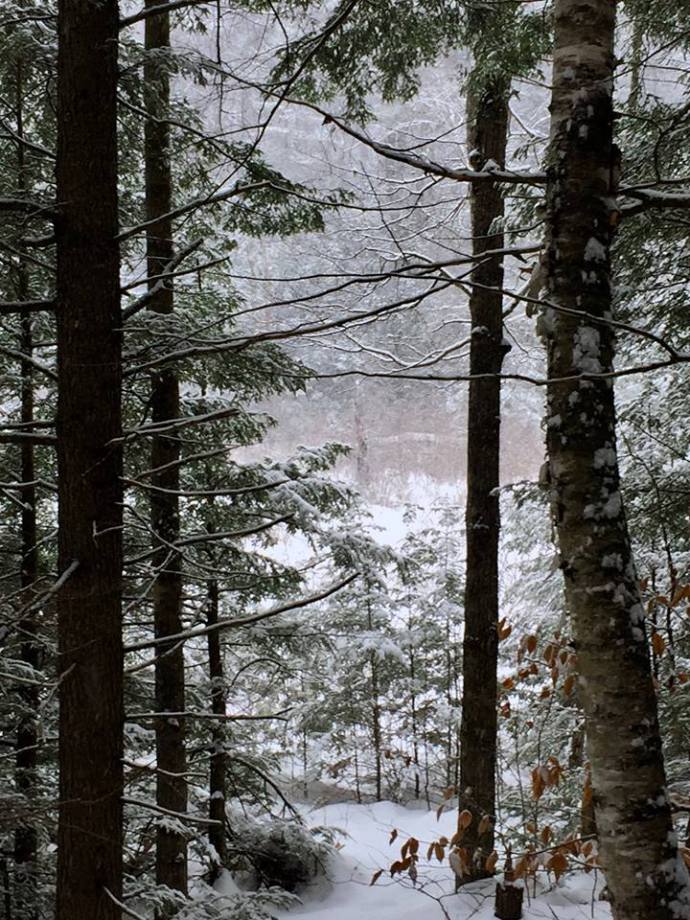
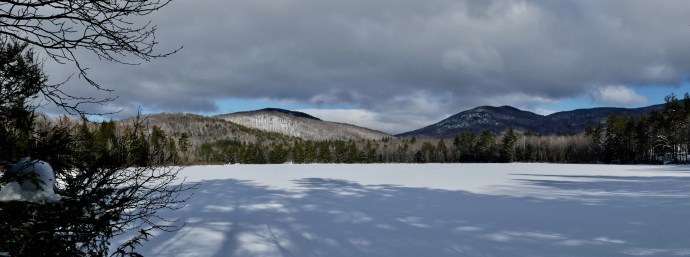
A still cloudy day with from time to time a gentle august rain––  Rain & mist constrict our horizon & we notice near & small objects….I hear the pigeon woodpecker still — wickoff-wickoff-wickoff-wickoff… 

August 2, 1852

in Thoreau’s Journal:

At 5 1/2 this morning saw from Nawshawtuct the trees on the great meadows against & rising out of the dispersing wreathes of fog—on which the sun was shining…

p1000922.jpg

It is a new era with the flowers when the small purple fringed orchis as now is found in shady swamps standing along the brooks. (It appears to be alone of its class— Not to be overlooked it has so much flower though not so high colored as the Arethusa).

p7240015.jpg

July 31, 1852

in Thoreau’s Journal:

There is more shadow under the edges of woods & copses now— The foliage appears to have increased so that the shadows are heavier & perhaps it is this that makes it cooler especially morning and evening though it may be as warm as ever at noon.

P1070765.jpg

July 30, 1853

in Thoreau’s Journal:

In every meadow you see far or near the lumbering hay-cart with its mountainous load––& the rakers & mowers in white shirts–– The bittern hardly knows where to lay its legs. By the way I have heard no stake driver for some time. If the meadows were untouched I should no doubt see many more of the rare white & the beautiful smaller purple orchis there as I now see a few—along the shaded brooks & meadow’s edge.

P7260045.jpg

July 29th

July 29, 1853 in Thoreau’s Journal:

Most fields are so completely shorn now that the walls & fence sides where plants are protected appear unusually rich. I know not what aspect the flowers would present if our fields & meadows were untouched for a year––if the mower were not permitted to swing his scythe there. No doubt some plants contended long in vain with these vandals & at length withdrew from the contest. About these times some hundreds of men with freshly sharpened scythes make an irruption into my garden when in its rankest condition & clip my herbs all as close as they can––& I am restricted to the rough hedges & worn out fields which had little to attract them to the most barren & worthless pastures— I know how some fields of Johnswort & golden rod look left in the natural state —but not much about our richest fields & meadows—

P1070251.jpg

July 29, 1857 in Thoreau’s Journal

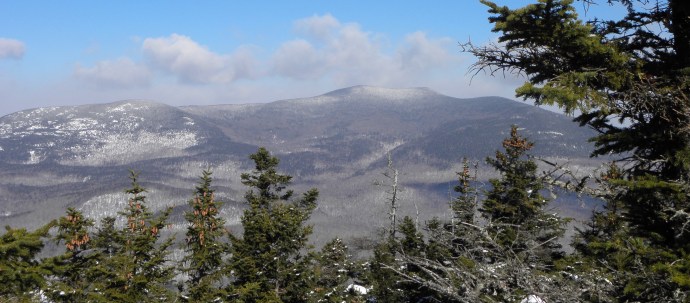
I am interested in an indistinct prospect, a distant view, a mere suggestion often, revealing an almost wholly new world to me.

P1070281.jpg

I rejoice to get, and am apt to present, a new view.

July 27, 1852

 in Thoreau’s Journal:

It is pleasing to behold at this season contrasted shade and sunshine on the side of neighboring hills.

P1070337.jpg

They are not so attractive to the eye when all in the shadow of a cloud or wholly open to the sunshine. Each must enhance the other.

July 26, 1853

in Thoreau’s Journal:

I mark again the sound of the crickets or locusts about alders &c about this time when the first asters open––which makes you fruitfully meditative–– Helps condense your thoughts–like meldews in the afternoon– This the afternoon of the year. How apt we are to be reminded of lateness–even before the year is half spent. Such little objects check the diffuse tide of our thoughts & bring it to a head–which thrills us– They are such fruits as music, poetry, love which humanity bears. Saw one of the common wild roses R. lucida (?) The swamp-black berry ripe X in open ground. The rhus copallina is not yet quite out, though the glabra is in fruit. The smaller purple-fringed orchis has not quite filled out its spike– What a surprise to detect under the dark damp cavernous copes––where some wild beast might fitly prowl this splendid flower silently standing with all its eyes on you. It has a rich fragrance withal. Rain in the evening.

P7300102.jpg

July 23, 1852

in Thoreau’s Journal:

A comfortable breeze blowing. Methinks I can write better in the afternoon, for the novelty of it— if I should go abroad this morning— My genius makes distinctions which my understanding cannot— and which my senses do not report. If I should reverse the usual— go forth & saunter in the fields all the forenoon then sit down in my chamber in the afternoon, which it is so unusual for me to do—it would be like a new season to me & the novelty of it inspire me. The wind has fairly blown me out doors—the elements were so lively & active— & I so sympathized with them that I could not sit while the wind went by. And I am reminded that we should especially improve the summer to live out of doors— When we may so easily it behoves us to break up this custom of sitting in the house. for it is but a custom—and I am not sure that it has the sanction of common sense. A man no sooner gets up than he sits down again….Is the literary man to live always or chiefly sitting in a chamber—through which Nature enters by a window only? What is the use of the summer?

P7280065.jpg

….but here outdoors is the place to store up influences.

July 20, 1854

in Thoreau’s Journal:

A muttering thunder cloud in NW––gradually rising ––& with its advanced guard hiding the sun–– & now & then darting forked lightning–– The wind rising ominously also drives me home again.

P1070479.jpg

At length down it comes upon the thirsty herbage beating down the leaves with grateful tender violence. & slightly cooling the air.

July 18, 1854

 in Thoreau’s Journal:

Methinks the asters & golden rods begin–like the early ripening leaves, with mid-summer heats.

P1010114.jpg

Now look out for these children of the sun. When already the fall of some of the very earliest spring flowers has commenced.